12/21/2025 Youtube Video Summaries by Google Gemini, Grok AI, and Microsoft Copilot AI
Fascinating Facts About Money: A Curated Summary
Money isn't just paper, coins, or digital entries—it's a window into history, economics, human folly, and innovation. Here are 50 intriguing facts distilled into key themes and standout stories for an engaging ~10-minute read (around 2,000 words).
Ancient and Enduring Currencies
The British pound sterling stands as the oldest currency still in continuous use, tracing back over 1,200 years to Anglo-Saxon silver pennies minted around 760–775 AD under kings like Offa of Mercia. It evolved into the modern pound, outlasting empires and economic upheavals.
Historical oddities abound: The Yap people of Micronesia used massive Rai stones—limestone disks larger than a person—as currency. Ownership transferred via oral agreement without moving the stones. Edible money once thrived, from salt (origin of "salary" from Roman salarium) to cocoa beans in Mesoamerica and turmeric balls in the Solomon Islands. Animal pelts, like beaver skins in North America (hence "bucks" for dollars) or squirrel fur in medieval Russia/Finland, also served as tender.
Hyperinflation Nightmares
Hyperinflation has wrecked economies repeatedly. Hungary's pengő (1927–1946) suffered the worst recorded case post-WWII, printing notes up to one sextillion (10^21) pengő. Zimbabwe's dollar hit absurdity in 2009 with a 100 trillion dollar note amid prices doubling daily; these notes now sell as souvenirs. Weimar Germany in the 1920s saw marks become worthless—used as wallpaper or toys. Even Nazis weaponized it via Operation Bernhard, forging British pounds using concentration camp labor.
Modern Mishaps and Millionaires
Accidents create fortunes or disasters. Welsh engineer James Howells discarded a hard drive with 8,000 Bitcoin keys in 2013; by 2025, worth ~$750–950 million, it lies buried in a landfill (excavation denied). A 2018 "fat finger" error at Samsung Securities accidentally issued billions of shares to employees, briefly making 2,000 multimillionaires before correction tanked the stock 11%.
Rumors can cripple banks: In 1973 Japan, teen girls' casual chat spiraled into a rumor collapsing Toyokaba Shinkin Bank, sparking a run by 5,000 customers.
Rare and Restricted Money
The 1933 U.S. $20 Double Eagle gold coin remains mostly illegal to own—minted but never circulated due to the Gold Reserve Act; most melted, a few stolen. Only one is legally privately owned (sold for $18.9 million in 2021); others are government property, hunted by the Secret Service.
Giant coins exist: Canada's 220-pound, 99.999% pure gold "Big Maple Leaf" ($1 million face value) is worth ~$12 million in metal. The UK has non-circulating £100 million "Titans" backing Scottish/Northern Irish notes. Palau's 2007 silver dollar includes actual Lourdes holy water.
Dirty, Durable, and Deceptive
Cash is filthy: U.S. bills harbor bacteria, once including cocaine traces. Yet durable—U.S. notes (75% cotton, 25% linen) withstand 4,000 folds before tearing. Security features include Eurion constellation (Orion-like patterns) to foil photocopiers, UV-glowing threads (color-coded by denomination), and coin ridges to prevent shaving/counterfeiting (and aid flipping).
U.S. bills' lifespans vary: $1 lasts 6.6 years, $100 up to 22.9 years. The $2 bill persists (1.6 billion in circulation), despite superstitions leading some to tear corners. Australian notes are tough—rip one over 20% and it retains proportional value.
Not all cash is vegan: UK, Australian, and 20+ others use beef tallow in polymer notes.
Cultural and Ceremonial Twists
Chinese "hell money" (joss paper resembling banknotes) burns for ancestors' afterlife wealth—insulting if given to the living. Post-dictator Congo punched holes in notes to erase Mobutu's face. India's "zero rupee" notes mock corrupt officials as protest bribes.
Superstitions influence markets: Hong Kong's "Ting Hai effect" links actor Adam Cheng's TV appearances to stock dips.
Economic Oddities and Powerhouses
The Kuwaiti dinar reigns as the world's strongest currency in 2025, bolstered by oil wealth and low inflation (1 KWD ≈ $3.26 USD).
Only ~8–10% of global money is physical cash; the rest is digital entries. There are ~180 official currencies (excluding cryptos). U.S. postage stamps temporarily served as legal tender during the Civil War coin shortage. Knights Templar pioneered early banking with credit letters for pilgrims.
Great Depression "scrip" (local IOUs) kept communities afloat. TSA collects millions in forgotten airport change annually.
U.S. Specifics and Wealth
Producing a penny costs ~3.69 cents (2024 data), leading to its phase-out debates. Colonial notes warned: "To counterfeit is death." Pablo Escobar spent $2,500 monthly on rubber bands for cash stacks.
Harvard's ~$57 billion endowment (2025) could theoretically fund free tuition forever, but distributions cover ~37% of operations.
Financial literacy lags: Only ~27% of U.S. adults pass basic tests.
ATMs exist on every continent, including Antarctica's McMurdo Station.
Fun Finales
The dollar sign ($) likely evolved from overlapping "PS" for Spanish pesos. Monopoly prints ~$50 billion annually—more family drama than real money. Pigeons once sped financial news across Europe pre-telegraph.
Money reveals humanity: from cheese (Parmigiano-Reggiano as Italian bank collateral) to trillion-dollar coin proposals (rejected U.S. debt ceiling fix). It's filthy, fragile, and fictional—yet drives the world.
These tales show money's evolution from stones and salt to bits and bytes, blending utility, absurdity, and power.
The Overload of Tipping Culture: From Gratitude to Guilt
Tipping in North America has transformed from a voluntary "thank you" for exceptional service into an ubiquitous expectation that's fueling widespread frustration. What started as a way to supplement low wages in restaurants has "crept" into nearly every transaction—from quick oil changes and bowling alleys to coffee counters, takeout orders, delivery apps, and even self-service kiosks. This tip creep, amplified by digital payment screens prompting 18–30% options (often before service), has led to tip fatigue: a growing resentment among consumers who feel emotionally manipulated into subsidizing business payrolls.
The Origins and Rationale
Historically, tipping emerged in the US to bridge the gap for workers paid a subminimum "tipped wage." Federally, this remains $2.13/hour (unchanged for decades), with employers required to top up if tips don't reach the full $7.25/hour minimum (frozen since 2009). The idea: customers directly reward service, incentivizing better performance. Many states, however, mandate higher bases or eliminate the tipped wage entirely.
In Canada, especially Ontario, servers earn the full minimum wage ($17.60/hour as of late 2025), with no subminimum for tips. Yet tipping persists at 15–20% in restaurants, driven by custom rather than necessity.
Proponents argue tipping allows high earners (some servers make $80–100k+ in busy spots) and keeps menu prices artificially low—a $20 entrée might cost $25–30 without it.
Why It's Spiraling
- Digital Frictionlessness — Card taps and flipped screens make adding $1–3 effortless, but it adds up. Cash made tipping feel more tangible; now, it's abstract.
- Business Benefits — Owners quote lower prices to attract customers, then rely on tips for labor costs. Small business owners (e.g., hairdressers charging $100 but expecting 20%) underprice services, weaponizing social awkwardness—most people over-tip to avoid judgment.
- Inconsistency and Arbitrariness — Tip a bartender for opening a beer? Yes. Tip a grocery cashier doing similar work? No. Percentage-based tips mean more for expensive items, regardless of effort. Pre-service tips on apps feel like bribes.
- Rising Expectations — Suggested amounts climb (now often starting at 20–25%), and low tips signal "bad service" even if satisfactory.
The Downsides
For workers → Income volatility (dependent on generosity and busyness), power imbalances (tolerating abuse to avoid no tip), and "tip-outs" to kitchen staff (serving a non-tipper can cost money).
For customers → Guilt, shame, and higher costs amid inflation. Many now refuse tips in non-traditional spots or patronize tip-free businesses.
For society → Masks wage stagnation. Corporations (e.g., Starbucks, where CEO pay hit ~$96M in 2024 while median baristas earned ~$15k) profit while shifting responsibility to consumers.
Current State in 2025
Surveys show ~90% of Americans view tipping as "out of control," up sharply. Tip amounts have dipped in restaurants as fatigue sets in. In Canada, it's less aggressive but growing in counter-service spots.
Some restaurants experiment with no-tip models (higher prices, stable wages), tip pooling (sharing with kitchen), or service charges—but many revert as servers prefer tip potential.
Change feels unlikely soon: it benefits owners (lower visible prices) and high-earning servers. But pushback grows—consumers tipping less selectively, advocating for living wages.
Ultimately, everyone deserves fair pay without customers acting as unofficial payroll. Transparent pricing (higher menus, no tips) could reduce stress, though it might mean fewer frivolous outings. In a high-cost world, tipping's evolution highlights broader inequities: why subsidize businesses that can't (or won't) pay properly?
Maintaining Dirt Roads on Rural Property: Low-Cost Strategies to Prevent Erosion
Managing dirt roads on forested or rural land requires proactive steps to combat erosion, especially after rains. Water is the primary enemy—it creates ruts, washes out sections, and carries soil downstream. The key is promoting quick runoff while minimizing damage, often through simple, low-tech interventions rather than expensive graveling.
Core Principles of Dirt Road Maintenance
The foundation of a durable dirt road is proper shaping and drainage:
- Crowning or Side-Sloping — Roads should be higher in the center (crowned) or sloped to one side so water sheets off quickly instead of pooling or channeling down tire tracks. A good crown is about 1/2–3/4 inch per foot of width (e.g., 5–7 inches high on a 20-foot road). Flat roads invite ruts; crowned ones shed water naturally.


- Timing Inspections and Work — Check roads right after the first seasonal rains. Look for accumulating dirt (indicating upstream erosion) or emerging ruts. Avoid heavy equipment in wet conditions—it compacts and worsens mud.
Quick Fix: Installing and Maintaining Water Bars
When a section shows early rutting due to insufficient slope, install a water bar—a shallow diagonal ditch across the road that diverts water into a ditch or off the hillside before it gains speed.
- Dig the bar just uphill of the problem spot with a shovel (ideal for soft soils like decomposed granite) or pick mattock.
- Angle it ~30–45 degrees to guide water gently off.
- Pile excavated soil (tailings) on the downhill side as a small berm to reinforce and prevent overflow.
- Direct outflow into vegetation or a dispersal area to slow it and filter sediment.
Water bars need periodic cleaning, especially mid-rainy season. Long straight stretches may require multiple bars to avoid overloading downhill ditches or culverts. In high-volume spots, a permanent culvert is ideal for smoother travel, though more expensive.
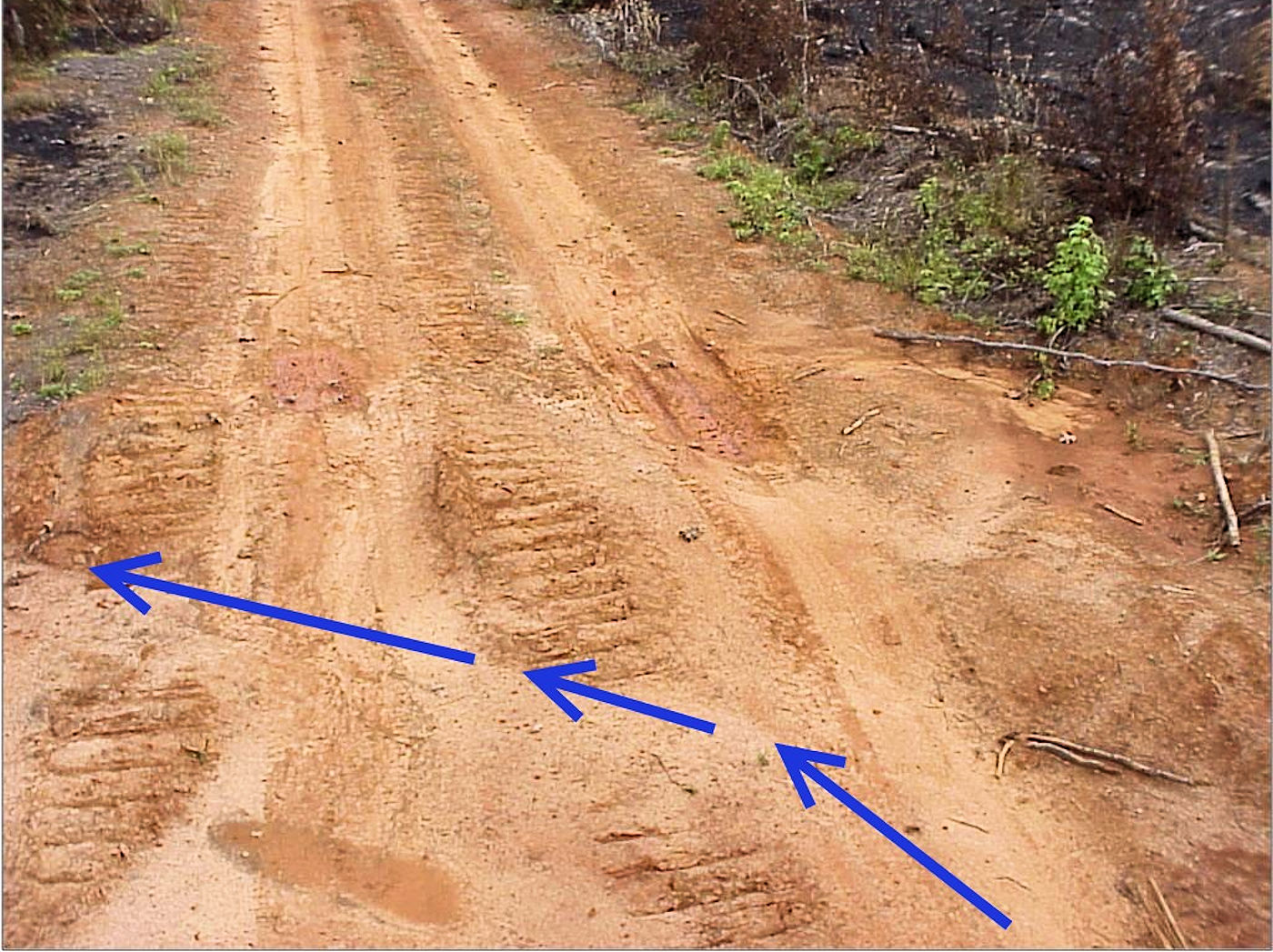



Without intervention, small ruts quickly deepen:


When to Choose Gravel (and When Not To)
Gravel provides all-weather access and stability, great for frequently used roads in wet climates.


However, gravel is costly to haul and spread, especially remotely. More critically, it limits future flexibility:
- Forestry and Timber Harvest → Dragging (skidding) long logs (common in the West for 32–40+ foot lengths to mills) mixes dirt into gravel, displaces it, or ruins layered surfaces (e.g., base + finer top rock). Carrying logs requires specialized equipment, raising costs. Post-logging re-graveling is often needed.
- Road Modifications → Gravel locks in the surface—harder to regrade, widen, or alter for new needs.
- Other Activities → Heavy machinery or changes (e.g., wildfire line construction) can push gravel aside.
For low-use roads, especially in managed forests, staying dirt allows easier modifications while avoiding wet-season driving (just stay off when muddy). Spot-gravel highly erosive sections (e.g., steep, granitic soils) as a compromise.
Final Thoughts
Minimal regular maintenance—inspecting after rains, clearing water bars, and eventual regrading for crown—keeps dirt roads functional for years with little cost. It prevents major washouts and expensive rebuilds. Think long-term: gravel shines for constant access but can complicate activities like logging or fire management. Tailor your approach to usage, soil type, climate, and future plans for sustainable, low-stress rural road management.
Turning the "Worst House in Town" into a Profitable Rental: A Fixer-Upper Case Study
In a cold Midwestern winter (temperatures dipping to -2°F recently, 17°F on tour day), real estate investors tour what they call the worst house in town—a small, neglected property bought as a high-return rental project. This 800 sq ft, 2-bedroom, 1-bath home on a crawl space foundation exemplifies why small fixer-uppers appeal: low purchase price, manageable rehab costs, and strong rental demand in a market favoring compact 2-bed units near downtown.

The exterior looks rough—snow-covered yard, peeling paint, rotted siding boards, and a detached garage needing repairs—but the structure is solid. Siding mostly needs power washing and repainting, with spot board replacements. The garage has minor rot, a working manual door, and trip hazards fixable with concrete filler. The roof requires full replacement, but the small footprint (~800 sq ft house) keeps costs down. Gutters clean and rehang fine. No large backyard exists, ideal for young professionals or couples who prioritize low maintenance and proximity (5–15 minutes) to downtown.

Inside, the house feels chaotic: dark wood paneling, collapsing foam drop ceilings, outdated fixtures, and general filth. Yet, positives emerge—no basement issues, solid floors (no sponginess despite heavy footsteps), and intact paneling that cleans up well with paint.
Living Room: Small but functional; remove drop ceiling for drywall and LED lights, new flooring throughout.
Bedrooms: One larger primary, one smaller (perfect for office in this demographic). Subfloor looks rough but stable; new windows, drywall ceilings, paint.
Kitchen: Tiny and cheap to upgrade—only ~5–6 cabinets needed, minimal quartz countertops and tile backsplash (one case). Bar top adds appeal.


Utility/Laundry Room: New water heater, plumbing/electrical hookups intact.
Bathroom: The worst spot—fully collapsed floor requiring new joists, subfloor, tub, toilet, vanity, and tile.

Mechanicals: Furnace in its own room (replace with new for reliability), new windows throughout, full roof replacement.
Drop Ceilings and Paneling: Common in older homes; removal and drywall upgrade modernizes cheaply.

The Numbers: Why This "Worst" House Wins
- Purchase Price — $30,000 + ~$5,000 closing/holding costs = ~$35,000 all-in acquisition.
- Rehab Budget — $60–70,000 (includes new roof, windows, HVAC, full interior refresh, bathroom rebuild, kitchen, flooring, paint, exterior cleanup).
- Total Investment — ~$100,000 (including financing charges).
- After-Repair Value (ARV) — $120,000.
- Equity/Profit Potential — Refinance at ARV could pull out ~$96,000, leaving ~$5–6,000 in the deal (plus strong cash flow as a rental exceeding the 1% rule—rent ≥1% of purchase price monthly).
This creates a low-equity, high-cash-flow long-term hold in a market flooded with demand for affordable 2-bed rentals.
Key Lessons from This Project
Small size keeps rehab affordable—minimal materials (cabinets, tile, countertops) and labor.
Ugly but structurally sound properties often yield the best returns; cosmetics scare off retail buyers but are fixable.
Target market fit matters: Young professionals want turnkey, low-maintenance homes near work, not big yards.
Bundling services (real estate + construction) can secure better deals for clients/investors.
After renovation, envision a clean, modern space: fresh paint, new flooring, quartz counters, efficient layout—transforming from eyesore to desirable rental.



Projects like this show that the "worst" house can become a smart, profitable asset with disciplined buying and straightforward rehab—ideal for building wealth through rentals in working-class markets.
ChrisFix's Top Affordable Christmas Gift Ideas for Car Enthusiasts (2025 Edition)
YouTuber ChrisFix shares his annual unsponsored list of practical, budget-friendly tools and accessories he personally uses and recommends for DIY car mechanics and detailers. The focus is on affordability, versatility, and quick-shipping options for last-minute holiday shopping. The list includes 5 main gifts (often bundled as two-for-ones) and 5 stocking stuffers, all filling common gaps in toolboxes or garages.
1. Cordless Portable Air Blowers/Dusters (Large & Mini)
Rechargeable via USB-C, these powerful blowers (up to 100 mph on high) replace bulky leaf blowers or canned air. The large one excels at touchless car drying after washes—pushing water from paint, mirrors, and tight spots without streaks or scratches. The mini fits in a glovebox for quick interior vent cleaning or inflating pool floats.
Versatile uses include snow removal (light/fresh snow, better than scratchy brushes), clearing leaves from truck beds/porches/driveways, and more. Battery life: ~10 minutes on high for large, longer on lower settings. Adapters included; durable with 1-year warranty.


Stocking Stuffer #1: Light-Up (Glow) Fuse Kit Assorted automotive fuses that illuminate when blown, making diagnostics instant—no more pulling fuses blindly or consulting manuals. Replaces standard fuses; kit includes multiples for spares. Huge time-saver for hard-to-access fuse boxes.


2. Cordless Heat Guns
Battery-powered (compatible with major brands like Milwaukee/DeWalt) for mobility without cords/extension hassles. Ideal for heat-shrink tubing (with included concentrator nozzle for precise, waterproof electrical connections), removing decals/stickers/tint/vinyl wraps (heats adhesive for clean peel-off), and more.
No power outlet needed—perfect for remote or quick jobs.


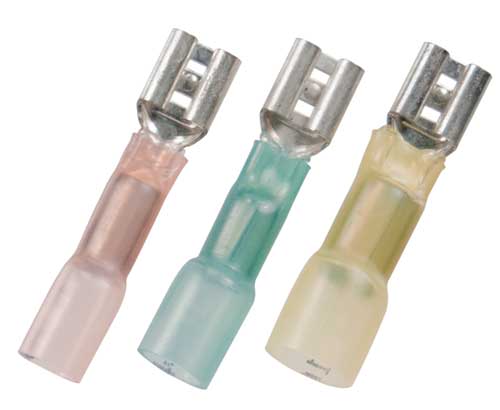
Stocking Stuffer #2: Solder-Seal Heat-Shrink Butt Connectors All-in-one wire connectors: twist wires, slide over, heat—solder melts for strong bond, adhesive shrinks for waterproof seal. No crimping needed; stronger/more reliable than standard crimp heat-shrink. Assorted sizes (10-26 gauge).

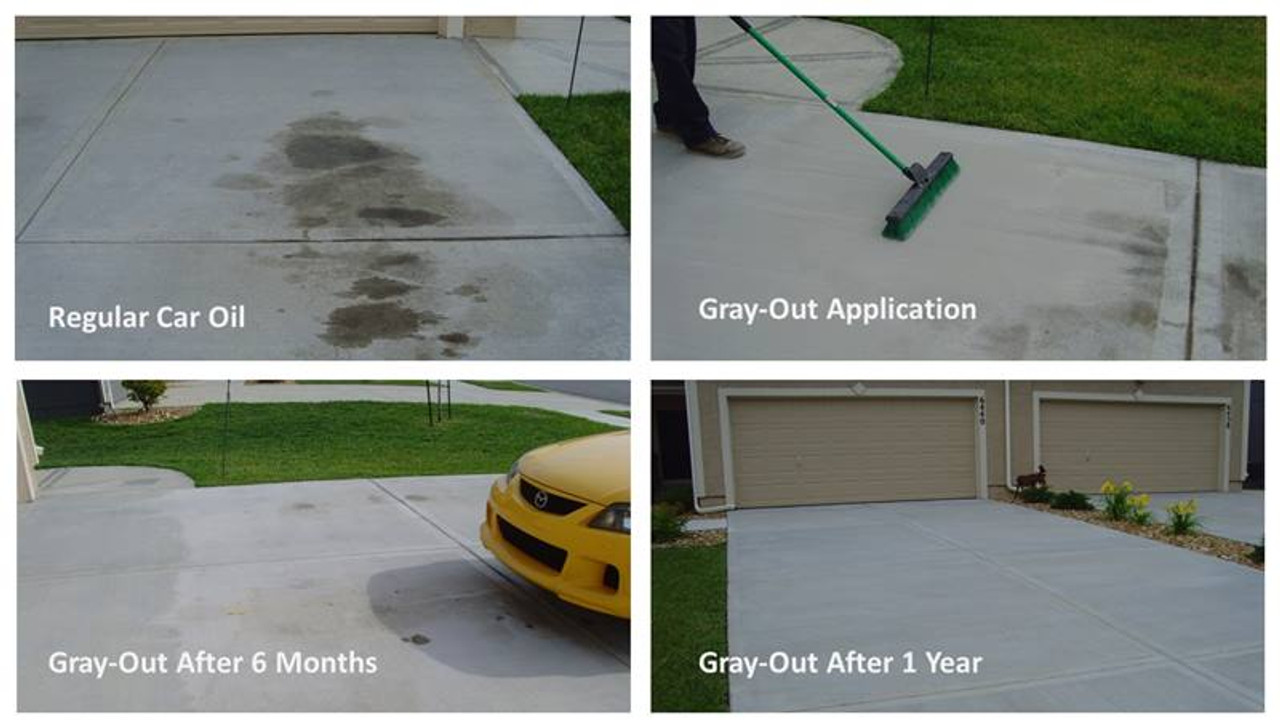
3. Oil Stain Remover for Concrete/Pavers
Microbe-based cleaner eats embedded oil leaks/spills. Brush on, let sit 12+ hours, sweep/vacuum/rinse. Dramatic before-after on year-old stains; safe for driveways (not ideal for asphalt).

Stocking Stuffer #3: See-Through Grinding Discs for Angle Grinder Flap/grinding wheels with cutouts for visibility—see exactly what you're grinding (e.g., welds) for precision, avoiding over/under-grinding. Simple but game-changing design.


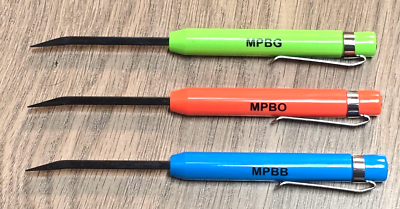
4. Pocket Pry Bar Set (Made in USA)
Compact (5-inch) pry bars with pocket clips: one straight (magnetic tip for retrieving dropped fasteners/screws), one angled (27° for leverage). Black oxide finish prevents rust. Uses: popping clips, disconnecting connectors, removing O-rings, tightening clamps, even opening boxes. Proceeds support charity.

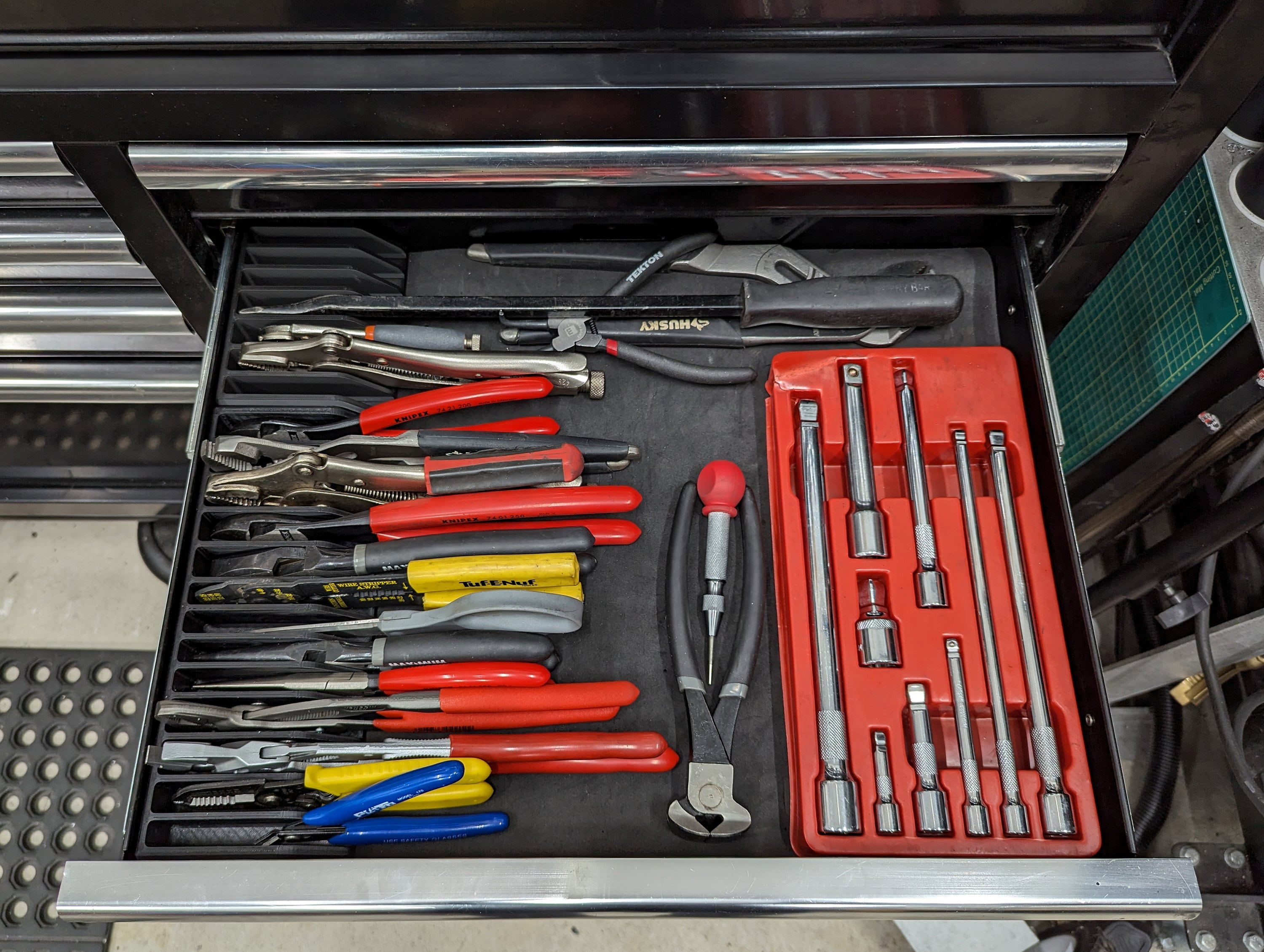
Stocking Stuffer #4: Modular Toolbox Drawer Organizers (e.g., Drawhive for Pliers/Screwdrivers) Interlocking rubber holders customize drawers—secure pliers/screwdrivers upright or flat. Stays put when moving toolbox; transforms chaotic drawers into efficient storage.

5. Foam Cannon + Swivel Sprayer Kit (with Stainless Steel Wall/Cart Organizer)
Durable (brass/stainless) foam cannon produces thick suds for easier car washing (touchless or wipe-down). Paired with ergonomic swivel sprayer (light trigger, anti-kink swivel, quick-connect) for comfort/control. Organizer mounts tools neatly. Supports a small business started by a subscriber.


Stocking Stuffer #5: Drill Brush Attachment Kit Multi-piece brushes/sponges attach to drill for powered scrubbing—excels at deep-cleaning carpets/floor mats (removes stains/mud quickly). Vacuum/extract after for pro results.


These picks emphasize real-world utility, durability, and value—tools ChrisFix grabs often. Links typically in video description for easy purchase. Bonus: Affordable ChrisFix children's books for young car fans. Happy holidays from a practical gearhead perspective!
Understanding the Bosch VE Injection Pump: Cold Start and Timing Advance Mechanisms
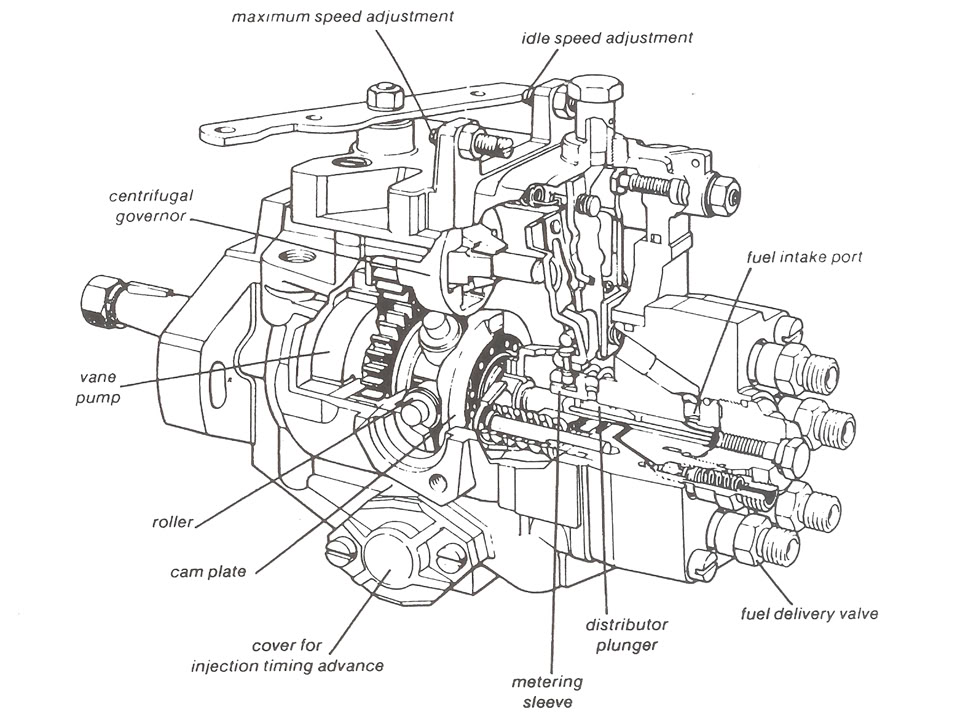
In a VW diesel-swapped Chevy S10 project, the creator investigates potential issues with the Bosch VE rotary distributor injection pump, common in older VW diesels (e.g., 1.6L) and other engines. Unlike inline pumps with multiple plungers per cylinder (requiring calibration), the VE uses a single plunger and cam plate to meter and distribute high-pressure fuel (~2,000+ PSI) sequentially, simplifying balance across cylinders—no special tools needed for equalization.
The pump acts like a gasoline distributor: rotating shaft distributes fuel instead of spark, with variable timing advance for optimal performance across RPMs.
A seized used pump (pitted internals from contamination) serves as a teardown demo, revealing problems like stuck components from old/varnished fuel after long storage.
Quick On-Engine Diagnosis
Test the cold start lever (often cable-actuated):
- Pull slightly—it should "bounce back" via internal spring pressure.
- Bounce indicates free movement; linked mechanisms likely work.
- No bounce suggests stuck timing advance piston/plunger—both cold start (mechanical ~4° advance for easier starting) and hydraulic advance (for higher RPMs) fail, robbing power/efficiency.
Secondary check: With dial indicator on plunger height (for timing setup), activating cold start should change reading—if not, confirms issue.
On the project truck (low-mileage but sat 12 years), no bounce/dial movement confirms stuck plunger.
How Cold Start and Timing Advance Work
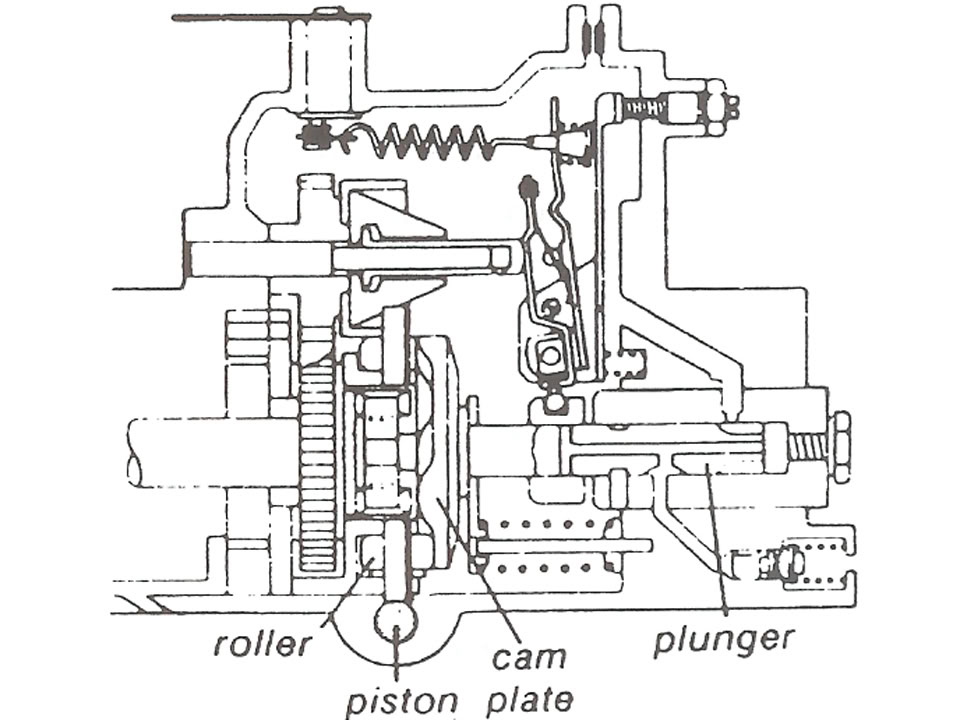
The systems are mechanically linked via a piston/plunger in a bore, normally lubricated/filled with clean diesel.
- Cold Start — Lever mechanically pushes plunger for slight advance, aiding cold ignition. Some pumps add high-idle linkage.
- Timing Advance — Hydraulic: Internal rotary vane pump (also acts as lift pump drawing fuel from tank) builds pressure with RPM. Pressure overcomes spring, pushing plunger to rotate cam plate/shaft for advance (variable curve).
- Shims behind spring adjust curve; some remove one for "performance" (risky).
Stuck plunger (common from contamination) locks timing—either retarded (poor power) or fully advanced (other issues). Vane pump wear reduces pressure, impairing advance; electric lift pumps can compensate for feeding but not internal hydraulics.

Teardown Insights and Repair Tips
Disassembly/reassembly is DIY-feasible but precise—photograph/measure everything:
- Throttle arm indexing, cold start marks, idle/max screws, governor shaft protrusion, fuel quantity screw.
- Specialized sockets (~$25 kit) for certain fasteners.
- Remove covers, governor, distributor head, cam plate to access plunger.
Plunger connects via shaft/pin to cold start and advance assembly. Excessive force risks bending shaft/damaging housing—remove linkages first if hammering.
Contamination (varnish from old fuel) sticks plunger/vanes. Cleaning: Denatured alcohol + brushing worked better than ATF/diesel soak (little effect here).
Reassembly follows specific order (referenced another video for steps).
Project Outlook and Experiments
Truck pump needs removal for full repair (clean/unstick plunger, new seals). Planned "enemas": Run concentrated Diesel Purge or Sea Foam through pump (alternative container, engine running to circulate/warm mixture, soak periods)—unconventional but internet-suggested for loosening gunk without teardown.
If successful, restores function cheaply; otherwise, full rebuild. Goal: Proper variable advance for full diesel performance.
This deep dive highlights why clean fuel matters—VE pumps rely on it for lubrication/operation. Stuck advance is diagnosable on-vehicle, fixable with care, and critical for efficiency in classic diesels.
Mechanic vs. Engineer: Who Changes Oil Faster? (Sponsored by Mobil 1)
In this fun, timed challenge, professional mechanic Charles (13 years experience, ~10,000 oil changes) races against engineer/host Jason to perform a full oil change. The goal: prove who’s quicker under pressure, while highlighting best practices and pitfalls of rushing.
Jason chooses his low-slung Subaru (no jack needed, quick access) for speed advantage. Charles uses a lifted Miata on a shop lift but faces a large underbody pan.
Key rules: Start to finish—including drain, filter swap, refill, level check, leak inspection. No catastrophic spills or errors.
The Race Breakdown
Jason (Engineer) Starts First
- Pops hood early to avoid dirty hands inside.
- Uses giant breaker bar on drain plug (admits he's "not very strong").
- Forgets drain pan initially (pressure moment).
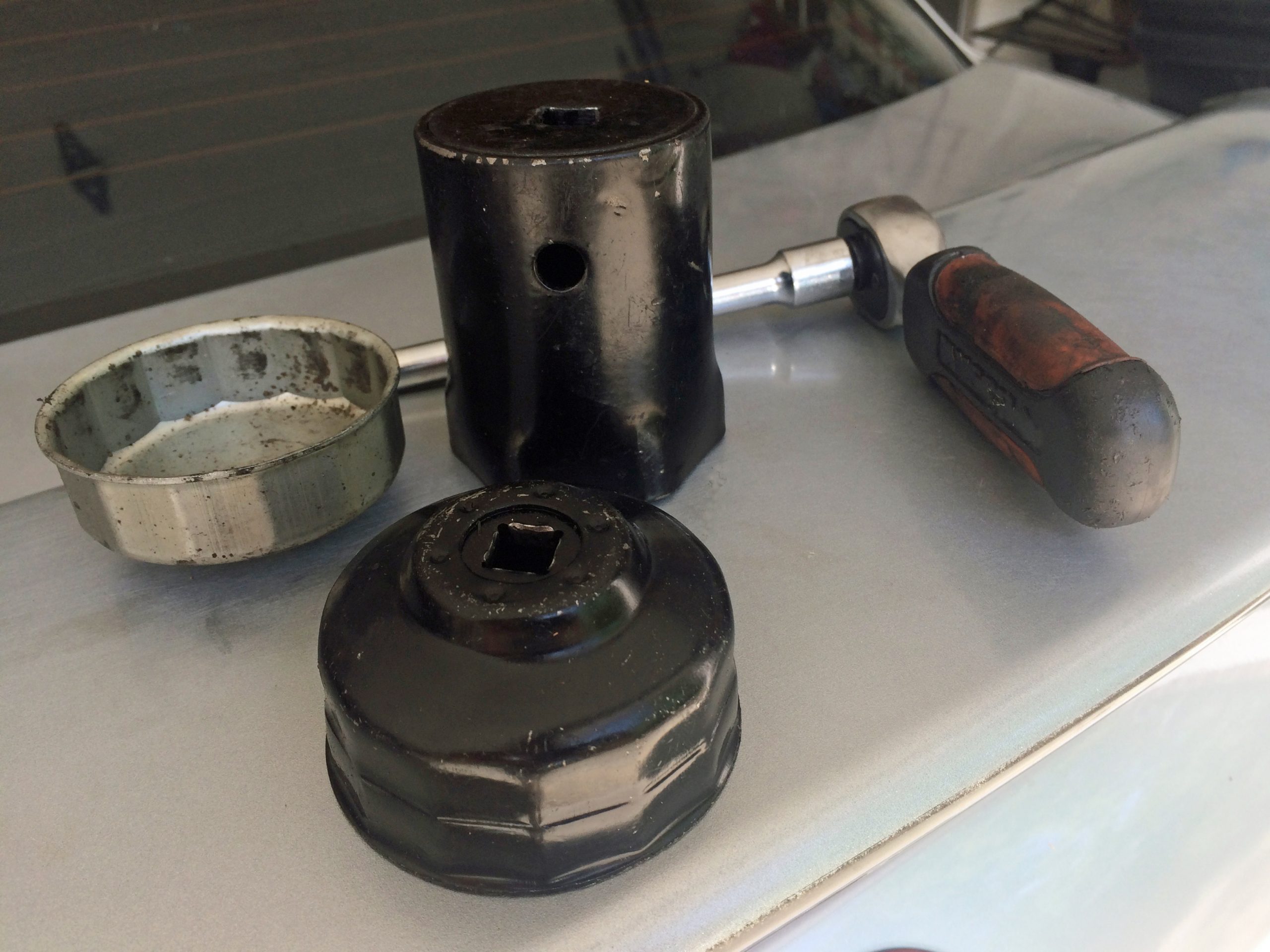
- Removes filter with pro cap tool (Charles notes it's expensive/top-tier).
- Lubricates new filter gasket with fresh oil.
- Calculates "7/8 turn" precisely (0.875 rotations) post-hand-tight.
- Overlaps tasks: filter while oil drains.
- Chooses Mobil 1 0W-20 for faster cold pour.
- Pulls dipstick (myth? claims faster fill—debunked).
- Finishes confidently, minimal mess.
Charles (Mechanic) Goes Second
- Lifts car quickly but removes big belly pan.
- Starts with filter (overlaps drain time; notes center drain in housing).
- Uses multiple crush washers on drain plug (jokingly "one per cylinder").
- Torque wrench for precision.
- Leaves tools/bucket scattered (flat-rate hustle vibe).
- Pours thicker oil slower.
- Checks level post-run, inspects leaks.
Engineer Jason wins by ~2 minutes, thanks to optimized car (no lift/pan), thinner oil pour, task overlap, and tools like filter socket.
Key Takeaways and Tips
- Don't Rush → Oil changes seem simple (6–7 steps), but most shop errors happen here—leading to leaks, stranded customers, engine/turbo damage. Flat-rate pay (~24 minutes allotted) pressures techs, but safety first.
- Pro Techniques → Lube gaskets/seals, overlap drain/filter, fresh crush washer or new plug, torque properly, check levels/leaks after run.
- Tool Advantages → Cap-style filter wrenches speed cartridge filters; lifts save time but not always needed.
- Oil Choice → Synthetic like Mobil 1 offers superior wear protection, high-temp stability, cold flow (0W pours faster, starts easier in winter).
- Myths Busted → Pulling dipstick doesn't speed fill; pour direction on jug doesn't matter if oil gets in.
The video blends humor (banter, mistakes under timer) with education: Experience shines for accuracy, but optimization/tools win races. Rushing risks disasters—take time for proper DIY maintenance.
Sponsored by Mobil 1, emphasizing full-synthetic benefits for protection and performance.



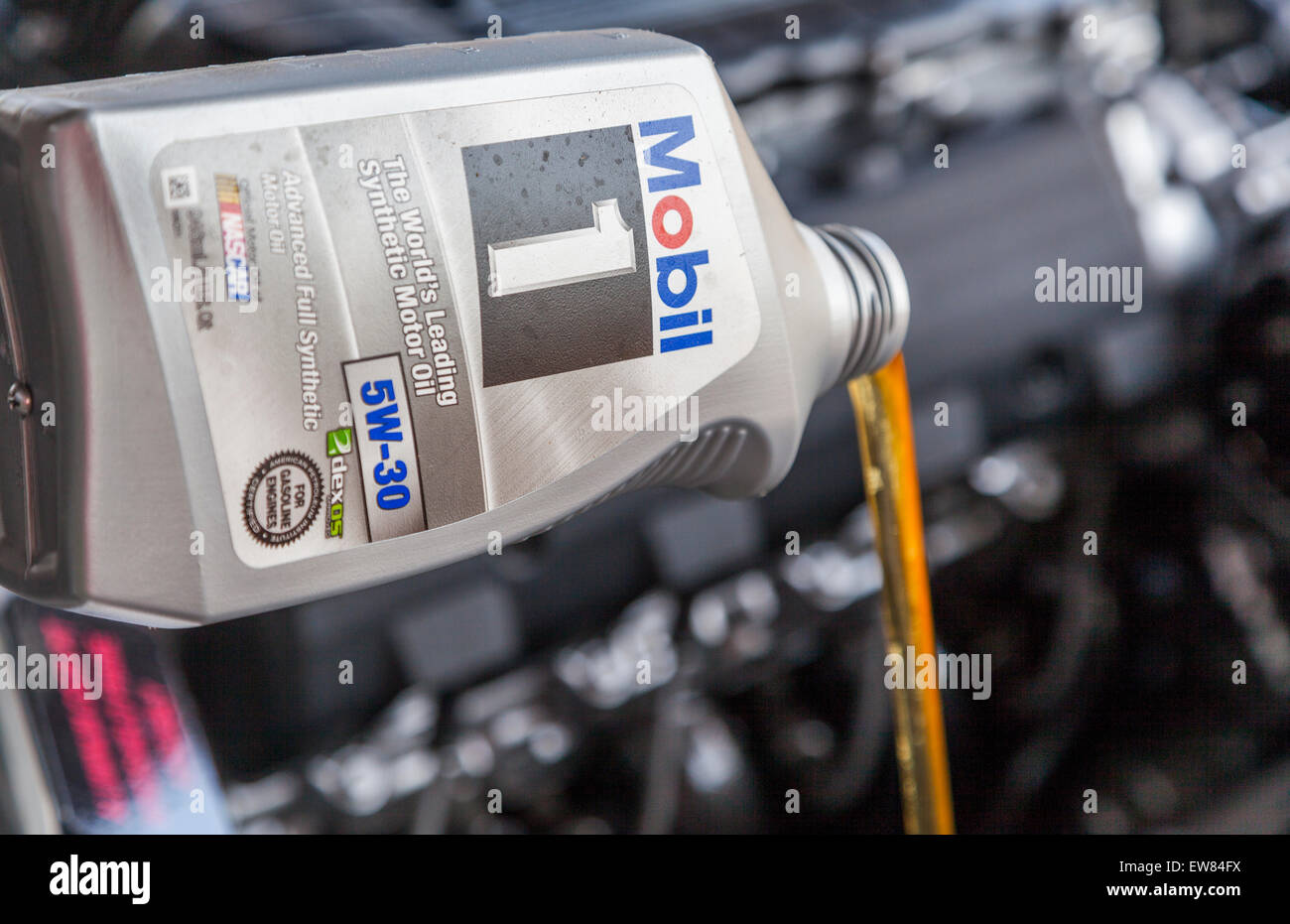

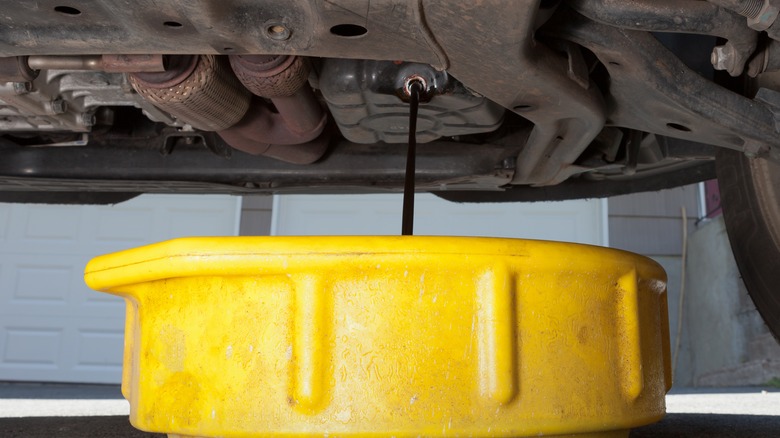


Entertaining proof that in a optimized setup, an engineer edges a seasoned mechanic—but real-world advice: Prioritize correctness over speed for engine longevity.
Why Modern Engine Failures (Hemi Tick, Cam Failures) Stem from Oil Contamination
Modern engines face rising issues like Hemi tick (lifter noise/failure), roller camshaft pitting, and bearing wear. Lake Speed Jr., "The Motor Oil Geek," argues the root cause isn't just build quality—it's oil contamination acting on systems that use engine oil as hydraulic fluid.
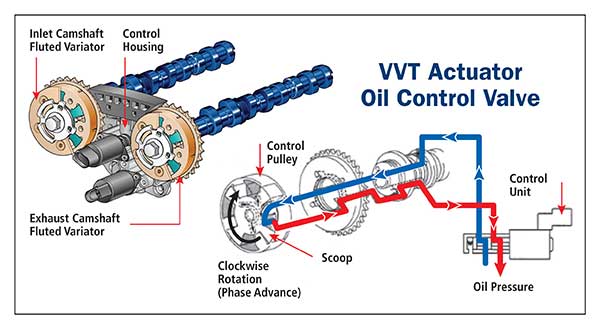
Features like variable valve timing (VVT), displacement on demand (cylinder deactivation), turbos, and hydraulic roller lifters rely on oil pressure for actuation. Tight clearances (<20 microns) make them vulnerable to particles.

%20solenoid-min.png)
Oil as Hydraulic Fluid: Cleanliness Is Critical
Industrial standards (e.g., AISE Lubrication Engineers Manual) treat oil in hydraulics with high priority—cleanliness extends life dramatically.
Studies (Chevron, Timken, Noria) show:
- 82% of wear from particulate contamination.
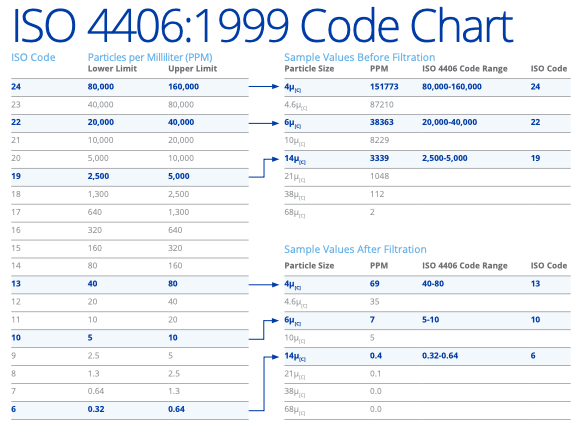
- Dirtier fluid (higher ISO cleanliness code, e.g., >17/15/13) shortens life exponentially.
Particles cause abrasion, erosion, and fatigue—invisible (<40 microns, often clearance-sized).



Avoid aftermarket additives with solids (e.g., nanoparticles)—they increase particulates.
Break-In Period: Peak Wear and Contamination
Highest wear occurs during initial break-in (up to 10,000 miles):
- Silicon (dirt/machining debris) >60 ppm vs. ~12 ppm post-break-in.
- Total wear metals 3x higher.
Debris circulates, embedding/scarring surfaces. Filters miss sub-micron particles.
Joe Gibbs Racing example: Roller lifters lasted 2x longer due to multiple early oil changes (removing break-in debris).
OEM long first intervals (5k–15k miles) allow debris to cause permanent damage.

Viscosity's Role in Dirty Oil
Thicker oils (e.g., 5W-30/0W-40 vs. 0W-20) protect better in contaminated environments (e.g., diesels with soot).
Thinner oils separate particles less effectively under load, increasing contact/wear.
Fuel dilution (dirty injectors) further thins oil.
Failure Mechanism: Subsurface Fatigue
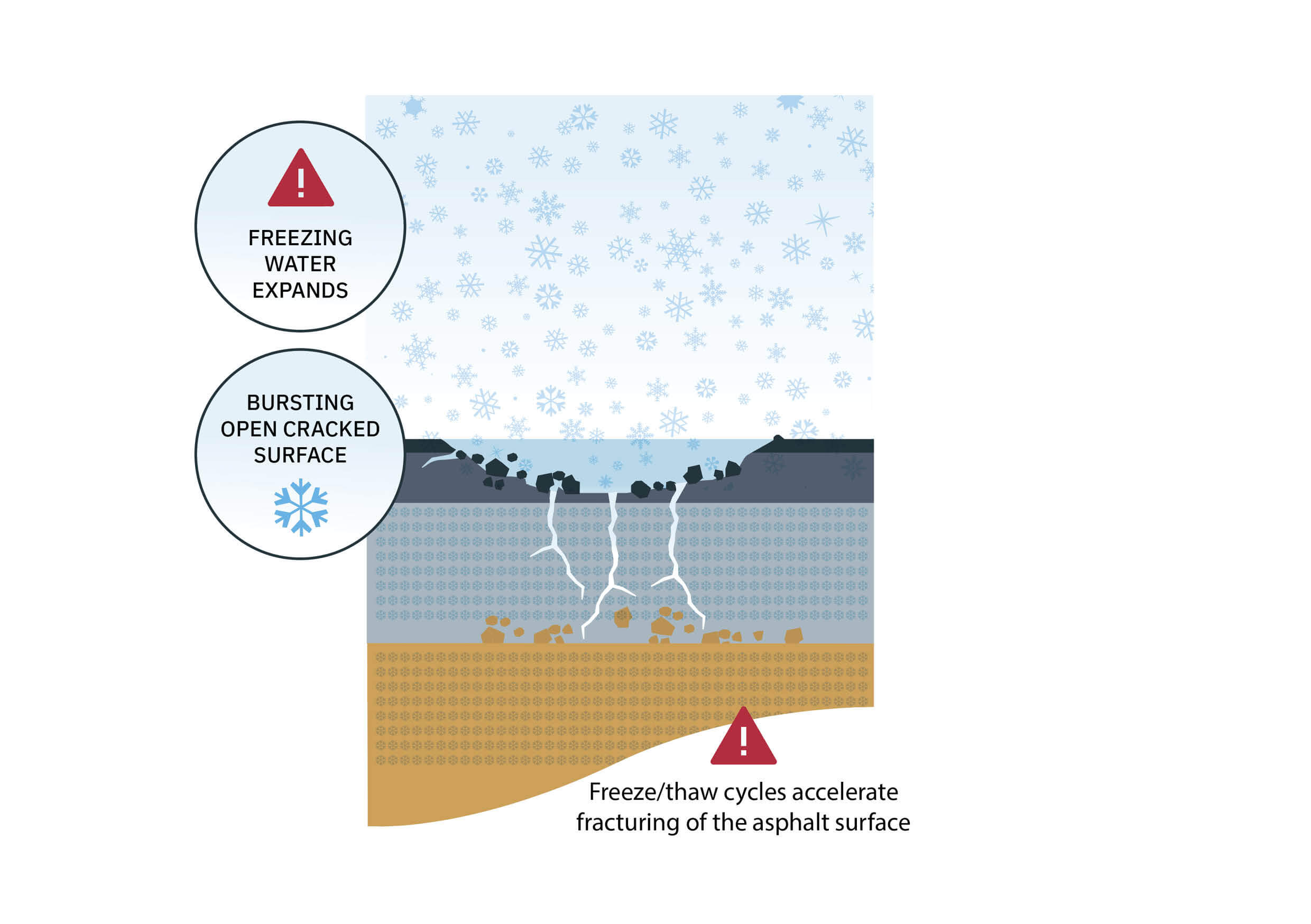
Analogous to potholes: Water freezes subsurface, expands, propagates crack → visible pothole.
In engines: Hard particle trapped → concentrated load exceeds material strength → subsurface dislocation → propagates to pitting/spalling (e.g., cam/lifter failure).

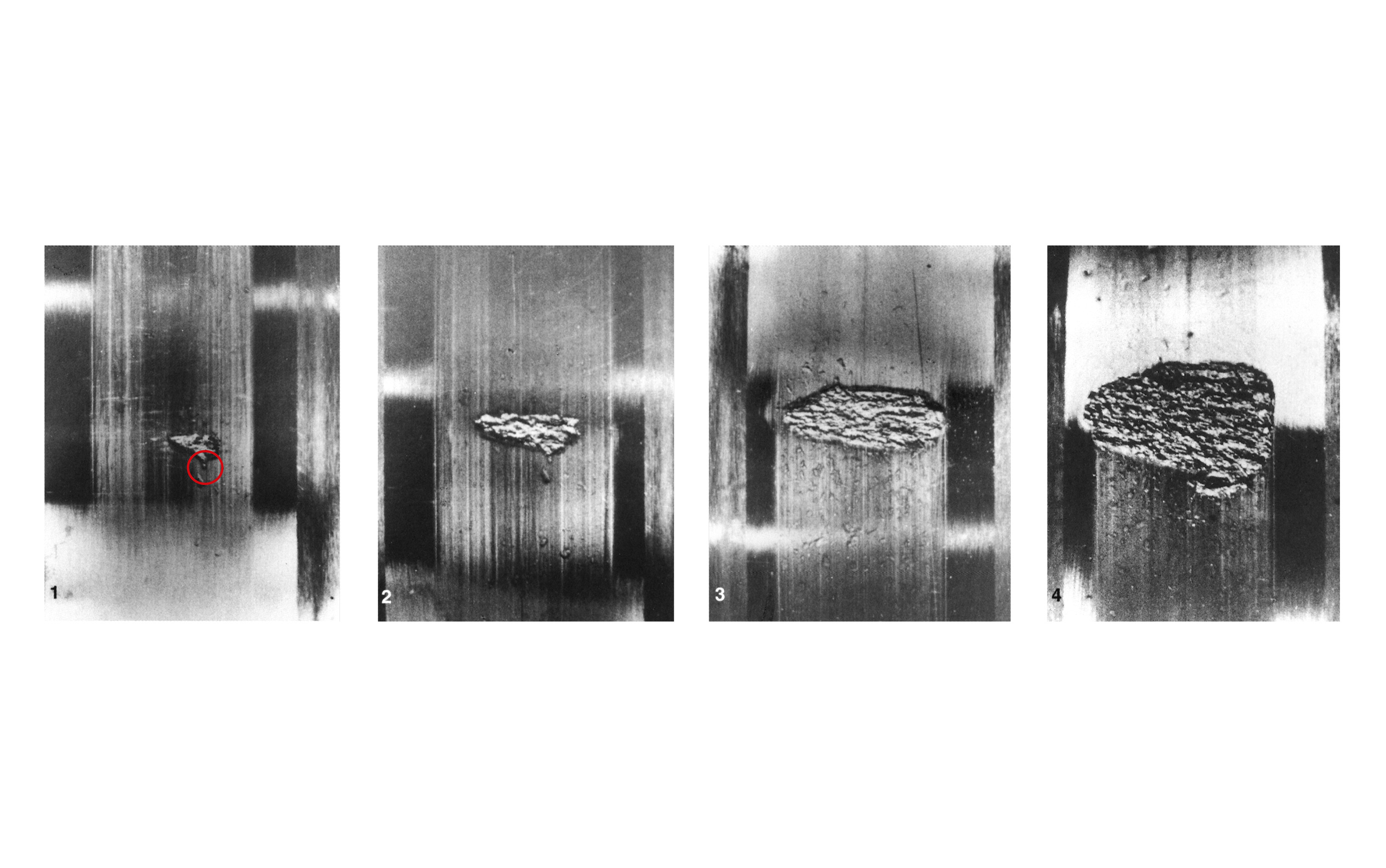
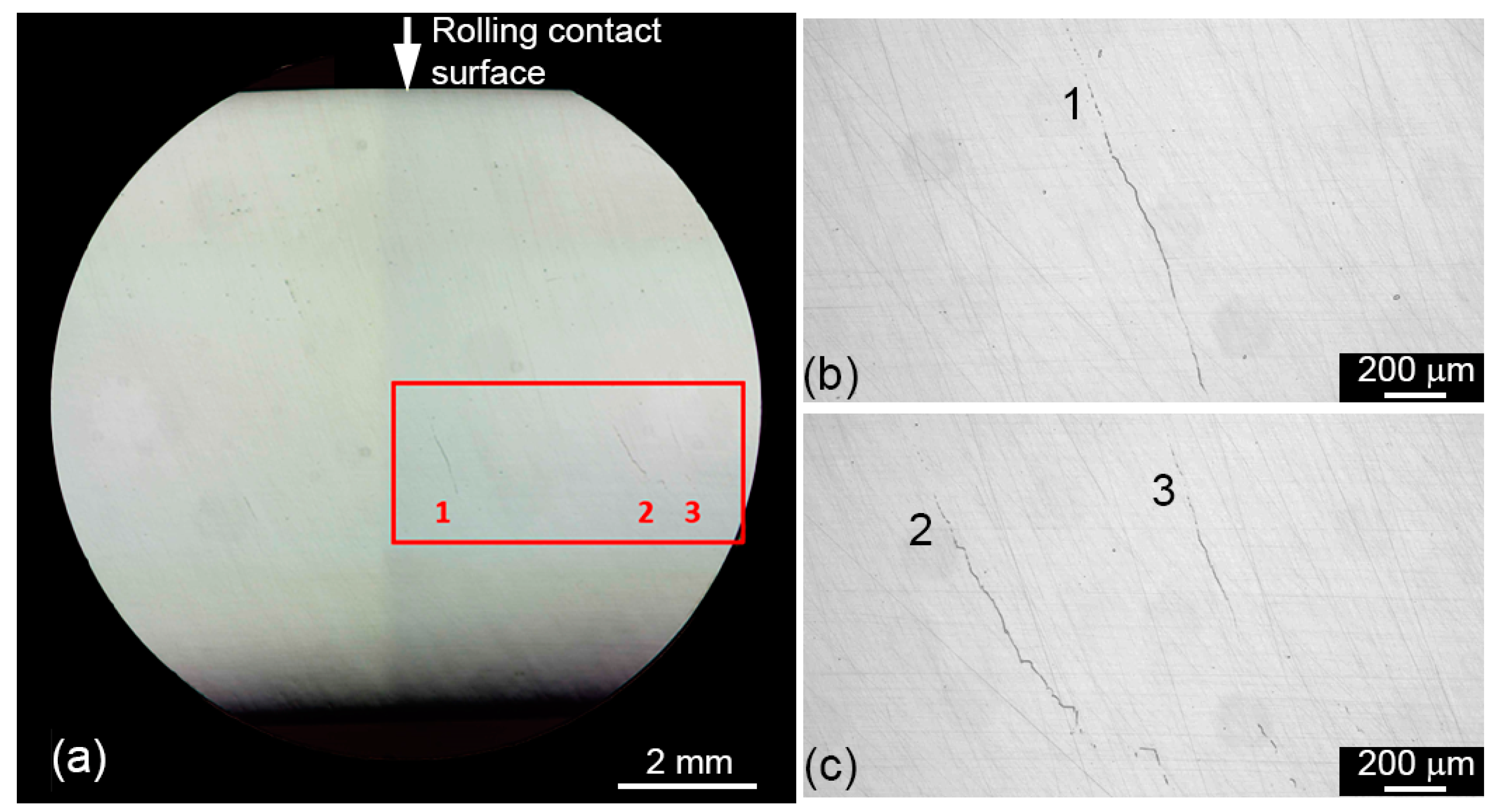
Machining debris from factory accelerates this.
Practical Advice for Longer Engine Life
- Early Life → Short intervals (e.g., 1k–3k miles first few changes) to remove break-in debris.
- Mid-Life → Extend (filters improve with use; new oil starts "dirtier" per ISO until filtered).
- Late Life → Shorten again (wear increases as surfaces over-smooth).
- Use top-tier fuel (clean injectors → less dilution).
- High-efficiency (not just high-flow) air/oil filters.
- Consider bypass/centrifugal filters for extended intervals.
- Prioritize cleanliness over brand.
Clean oil = longer life in hydraulic-dependent modern engines. OEM intervals/viscosities often prioritize emissions/economy over durability—data shows contamination drives failures.
Commentary: reliable, older engines tend to be less powerful, hence having less wear-and-tear compared to more powerful engines, thus contributing to their longevity.
Szarekh, the Silent King: What Terrified a Necron Immortal and Brought Him Back
In Warhammer 40k lore, Szarekh, the Silent King, last ruler of the Necrons, returns from intergalactic exile not for conquest, but with a warning: the Tyranids are coming—and something worse may lurk behind them. An immortal machine-god who plans in centuries and commits genocide via spreadsheets doesn't panic. If he flinches, the galaxy should quake. He saw "hunger with a travel budget," realizing our Milky Way is just the next stop on a cosmic feast.
The Necrontyr's Fall: From Flesh to Eternal Regret
Szarekh ruled the Necrontyr—short-lived, radiation-scarred humanoids desperate for time. Facing extinction, they pacted with the C'tan star gods for biotransference: flesh to living metal immortality. Victory? Souls stripped, emotions dulled, enslaved to gods they later shattered.
- The Great Sleep: Szarekh ordered dynasties into tombs to outwait galactic chaos (Eldar, humans fighting over scraps).
- The Sacrifice: He destroyed command protocols, freeing Necrons at the cost of anarchy—spreading blame for atrocities.
- Exile: Crowned with a guilt-weighted Triarchal crown, he wandered the void, confronting memories of lost humanity in endless silence.
Void isolation: No stars, no sound—pure proof the universe doesn't care. His "heart" echoes with ghosts: "You used to have a heartbeat."
The Void Encounters: Driftwood Before the Tsunami
Beyond the galactic rim, Szarekh finds anomalies:
- Rogue planets with Tyranid residue: Titan fragments, nightmare organisms.
- Bio-ships: Organic asteroids pulsing like dreams, drifting predatorily.
- Shadow in the Warp: Psychic blackout—signals fail, logic glitches. For Necrons, unfamiliar = lethal.
He engages: Gauss flayers unravel hulls. Bugs adapt—grow armor, angle bodies. No central command; hive mind coordination like "one animal across space." Victory feels like surviving a trailer—scale dawns: Not a fleet, a migration. Locusts with infinite patience, starving worlds methodically.
Math terrifies: Tendrils strip worlds faster than resistance forms. Hive Fleets in-galaxy? Foragers, not the hand.
Three Buckets of Horror: What Did He Really See?
Lore teases mysteries—three core theories:
- The Full Mass: Main Tyranid body intergalactic—scouts only. No border, just gradient density. Our "invasions" = appetizers.
- Devoured Galaxies: Sterile voids—no life, just reset rocks. No biomass = no Necron reversal. Protect the "pantry" (humans/Eldar/Orks) for future flesh-restoration.
- The Chaser: Tyranids fleeing. Hurt bio-ships suggest non-battle damage. Something eats structure—information, not meat. Turns hive mind lonely; galaxy next victim of refugees' predator.
All imply: Galaxy as last buffet.
Why Warn the Imperium? Strategy Over Sentiment
Necrons need biomass—no eat, no breed. Szarekh's dream: Reverse biotransference, reclaim sensation.
- Fractured Kin: Dynasties petty; warning unifies his people first.
- Cursed Alliances: "Don't die yet—I need your organs." Necron tech (null fields, pylons) starves swarms—makes galaxy "expensive."
- Imperium Tension: Inquisition probes, Marines itch to shoot—but shared bugs force truces.
Warning = surrender: Admits vulnerability. Humiliating for a control freak.
The Visual Nightmare: A King's Perspective
- Eclipse Swarm: Stars blotted by meat-wall.
- Clean Apocalypse: Planets scrubbed—no ruins, just sterile spin.
- Chewing Silence: Future echo—empty warp, no souls/snacks.
Szarekh: "I've seen the ocean; we're beachside with forks." Fears irrelevance—legacy as "museum pieces" in curated void.
Guilt survives metal: "Not yet"—grim prayer from 40k's oldest veteran. Tyranids = entropy with teeth; galaxy defends against famine.
Thesis: Szarekh saw the end—civilizations to calories. His return: Lock the last door. In 40k, alliances are hostage deals; survival, the least-horrible punchline.
Roasting Subscriber Portfolios: Insights from Teens to 40s (Episode 4)
In this episode, the host reviews four subscriber portfolios across life stages: a 19-year-old high earner, a 22-year-old mega-saver, a 33-year-old in high-cost San Diego, and a mid-40s father of six aiming for early retirement. Each highlights unique challenges, smart moves, and tweaks for long-term success.
Profile 1: Mid-40s Father of 6 (Denver Area)
- Income/Expenses: ~$60k/year (~$4,160/month take-home). Wife stays home; kids 5–17. Monthly surplus ~$1,000 after ~$3,128 essentials (rounded to $40k/year expenses).
- Goals: Retire 55–60 with family experiences. Medium-aggressive risk (past Facebook IPO loss scared him hands-off).
- Net Worth: ~$920k ($600k paid-off home = 65%; $334k investments; $25k HYSA).
- Portfolio: Classic three-fund (US stocks, international, bonds) at ~80/20 stocks/bonds via Fidelity/Schwab ETFs (~52% S&P 500). Plus Apple (~14%), Berkshire, tiny Tilray.
- Performance Outlook: Historical 6–10% average returns. Needs ~$889k–$1M investable for 4–4.5% rule.
- Takeaways: Solid Boglehead-style setup—simple, low-cost, diversified. Home heavy (common mid-life). Continue consistency; seek income boosts (e.g., commission-based mortgage role). Kids' costs unpredictable—prioritize investments. On track if income rises slightly; options like downsizing/reverse mortgage later.
Profile 2: 22-Year-Old Business Analyst (~$67k/year)
- Lifestyle: Lives home; expenses ~$700/month (bills, food, gas). Saves ~80% take-home.
- Goals: House (~$400k median); retire 45. Aggressive risk.
- Portfolio: ~90% individual stocks (Microsoft, Google, Ulta, AMD, etc.—tech/consumer heavy); 4% VOO; 6% crypto.
- House Math: 20% down = $80k needed + ~$1,817/month mortgage (5.5% rate). Affordable on salary, but needs more capital (few years saving).
- Takeaways: Crushing it—research-driven stock picks (green flag). Diversified across sectors; crypto small = reasonable wildcard. Slightly tech-overweight (mirrors market). Exit plan advised for downturns. Consolidate if overwhelmed; otherwise, active approach fits youth/energy. Ahead of peers; consistency = strong start.
Profile 3: 33-Year-Old Food Science Director (San Diego, ~$145k → $155k)
- Expenses: ~$6,800/month ($2,900 rent dominant). Saves ~19% (~$1,200–1,500/month).
- Goals: FIRE by 60; $250k net worth <2 years; raise savings to 25%+. High risk but "lazy" (simple preferred). No tax-advantaged accounts.
- Net Worth: ~$164k (68% invested, 32% cash/car/bike; emergency in 5% money market).
- Portfolio: Heavy VTI (total market) + SWPPX (S&P 500); small Fundrise (exiting).
- Projections: 25% savings + current trajectory = FIRE ~21 years (age ~54). $48k added investments + 15–18% growth = $250k goal achievable.
- Questions:
- Housing: Parents offer co-buy (50% down/monthly). Take it—rare leg-up in pricey CA; builds equity without full burden.
- "Behind" Feeling: Median 30s net worth ~$35k—he's ahead. Startup/low-income 20s built skills; social media skews perception. Max Roth IRA; taxable brokerage fine (solo 401k/SEP if side income).
- Takeaways: On FIRE track—simple indexing fits "lazy high-risk." Grateful mindset + stability = strong. Parental help = smart wealth accelerator.
Profile 4: 19-Year-Old Operations Specialist ($75k/year)
- Lifestyle: Lives parents; ~$1,000/month expenses. Army stint next 9 months (~$30k after-tax expected).
- Goals: Post-Army multifamily home (~$250k) for rental income. Medium risk; 30-year horizon.
- Net Worth: ~$60k ($40k invested—VOO/SPY/QQQM dominant; small stocks/ETFs; $20k cash).
- House Plan: Post-Army ~$50k cash = solid down payment. Avoid liquidating investments now.
- Takeaways: Phenomenal start—better than most 20s/30s. Indexing core + fun positions = balanced. Consolidate to 1–2 ETFs for simplicity. Avoid shiny objects (gambling, leverage, lifestyle creep). Discipline + time = likely wealthy future.
Overall Themes & Advice
- Age Diversity: Youth = aggression/time advantage (stock/crypto dabbling); mid-life = balance/family protection (three-fund simplicity).
- Common Wins: High savings rates, low-cost indexing, consistency.
- Tweaks: Early frequent changes (break-in wear—implied via diligence); income boosts; parental help if offered; avoid overcomplication.
- Mindset: Perception vs. reality ("behind" often false); long-term beats get-rich-quick.
Strong episode—subscribers crushing goals relative to stage. Join Discord for review chance; community emphasizes simple, diversified, patient investing.
Top 10 Accidental Inventions That Changed the World
Many everyday icons started as desperate fixes, wartime hacks, or petty revenge—turning mishaps into multi-billion-dollar legacies.
#10: Caesar Salad (1924)
Chef Caesar Cardini in Tijuana ran low on supplies during a busy July 4th weekend. With romaine, eggs, cheese, stale bread, and Mexican limes, he improvised a dramatic tableside show—tossing dramatically for flair.



Customers loved the crunch (croutons) and tang; it exploded in popularity. (No original anchovies—brother added later.) Americans eat ~70 million restaurant Caesars yearly.
#9: Fanta (1940)
WWII cut Coca-Cola syrup to Germany. Manager Max Keith improvised with apple fiber (cider waste) and whey (cheese byproduct)—fermented into a cloudy, fruity soda named "Fanta" (fantasy).


Wartime rationing made it a hit; post-war, Coke refined to orange flavor. From "garbage" to global billion-dollar brand.
#8: Ctrl+Alt+Delete (1980s)
IBM engineer David Bradley needed quick reboots without full power cycles. He coded this distant-key combo to avoid accidents.



Developer-only secret leaked; Bill Gates popularized via Windows login. Now the universal "pray it works" reset.
#7: Potato Chips (1853)
Chef George Crum at Moon's Lake House faced a picky customer's repeated complaints about thick fries. In revenge, he sliced potatoes paper-thin, over-fried, and over-salted.

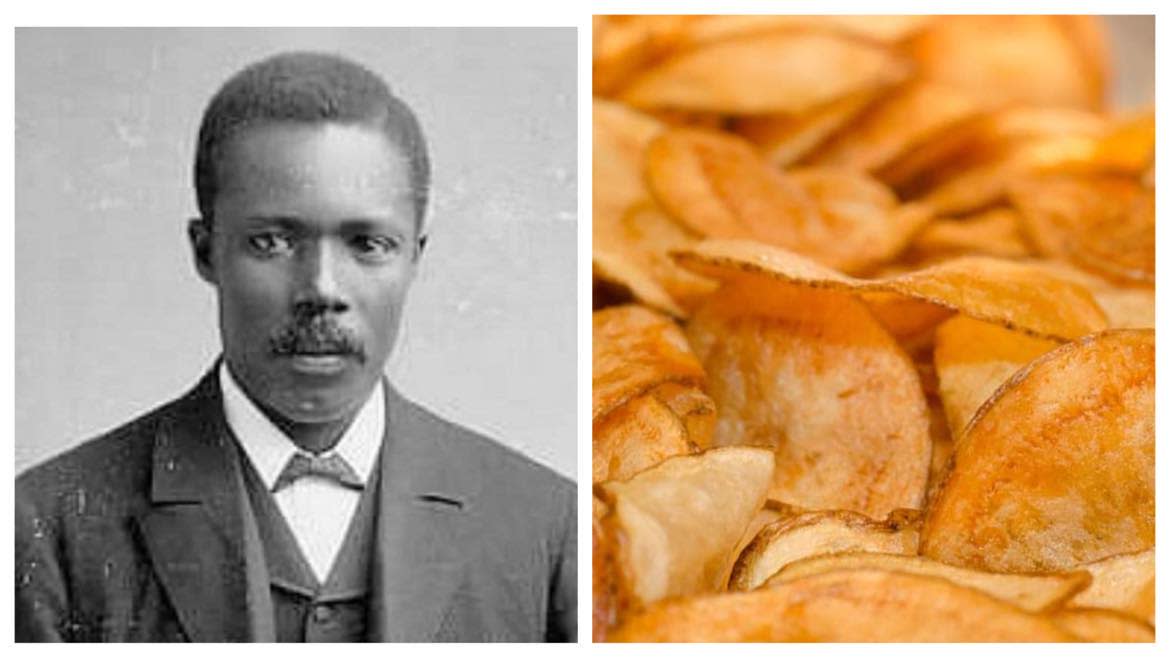

Customer adored them ("Saratoga chips"); became menu star, then mass-produced. Global consumption: ~1.85 billion tons/year.
#6: Super Glue (1942/1950s)
Dr. Harry Coover's WWII gun-sight experiment yielded ultra-sticky failure—discarded. Years later, rediscovered utility.



Vietnam medics sprayed on wounds for instant sealing. Reacts with water (skin/blood); medical versions close incisions today.
#5: Comic Sans Font (1994)
Designer Vincent Connare rushed a casual font for Microsoft Bob's cartoon dog (stuck in serious Times New Roman).



Unused in Bob; bundled in Windows 95. Overused/hated by designers, but irregular letters aid dyslexia readability.
#4: Basketball Backboard (1893)
Early games used peach baskets; balcony fans interfered with shots. Wooden board blocked them.
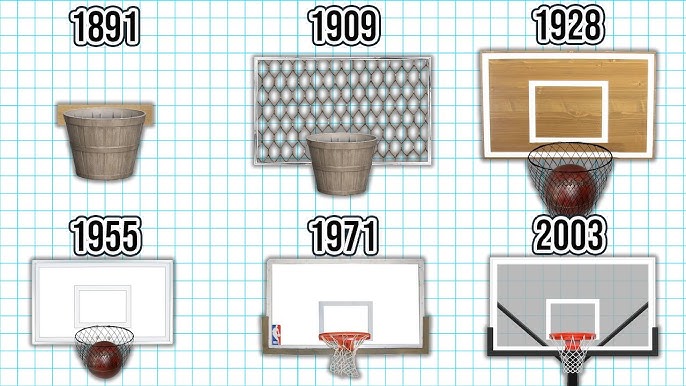


Players banked shots off it—new strategy born. Switched to glass; breakaway rims added post-shattering dunks (Dawkins, Shaq).
#3: International Space Station Russian Dependence (1990s–Present)
Post-Cold War budget crisis: NASA incorporated discounted Russian modules/tech.
Russian thrusters still vital for orbit boosts—$150B station relies on "yard sale" Soviet hardware decades later.
#2: Triage System (Napoleonic Wars)
Surgeon Dominique Jean Larrey faced battlefield chaos; prioritized treatable wounded (best survival chance) over rank.


Three categories: Walking wounded, doomed, urgent. Saved lives; modern ERs use it daily.
#1: Duct Tape (WWII)
Factory worker/mom Vesta Stoudt proposed waterproof tape for ammo boxes (wet rounds useless). Military adopted; soldiers fixed everything ("100 mph tape").
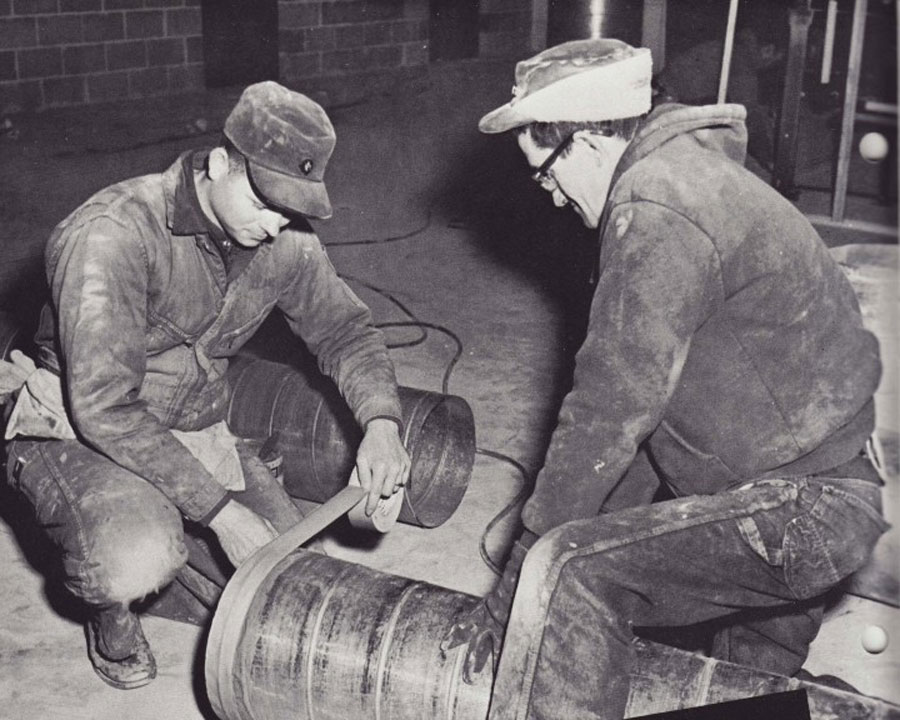


Post-war, silver for ducts (poorly—name stuck). NASA used on Apollo lunar rover.
These stories show necessity sparks genius—panic, spite, or scarcity birthing enduring innovations.
Dividend vs. Growth Investing: Which Builds Better Wealth (and Income)?
Two investors start with identical capital. 20 years later:
- One has a larger portfolio but must sell shares (and pay taxes) for income.
- The other has slightly less total value but lives off growing passive dividends—without touching principal.
The video breaks down dividend investing vs. growth investing, their mechanics, risks/rewards, and who each suits best.
How Dividend Stocks Work
Companies sharing profits via regular cash payments (usually quarterly).
- Yield: Annual dividend ÷ stock price (e.g., $4 dividend on $100 stock = 4%).
- Dividend Aristocrats: S&P 500 firms raising payouts 25+ consecutive years (Coca-Cola, Procter & Gamble, McDonald's, Johnson & Johnson)—stable, mature cash machines.
- Reinvestment (DRIP): Use dividends to buy more shares → compounding snowball. Example: $10k at 4% yield + modest appreciation → ~$80k in 30 years with DRIP vs. ~$45k without.
Warren Buffett's Coca-Cola holding: Recovered initial investment multiple times via dividends alone—hundreds of millions yearly.
Pros: Predictable income, lower volatility, tax-advantaged (qualified dividends often lower rates), preserves principal in retirement.
How Growth Stocks Work
Companies reinvest all profits for expansion—no dividends.
Focus: Rapid scaling (new products/markets/acquisitions). Value rises via stock price appreciation.
Examples:
- Amazon: Never paid dividend; early investors up >20,000%.
- Tesla/Nvidia: Massive runs (Tesla 10x+ in years; Nvidia 10x+ 2019–2024).
Trade at high P/E ratios (50–100x or unprofitable) betting on future dominance.
Pros: Explosive potential (15–20%+ annual returns possible). Compounding via price growth staggering over decades.
Cons: Extreme volatility (50–70% drawdowns common). Requires conviction to hold through crashes—no income cushion.
Head-to-Head Comparison ($50k Start, 20 Years)
- Growth (15% avg. annual): ~$818k total. High wealth, but spending requires selling shares + taxes.
- Dividends (lower growth + yield): ~$636k total, but ~$25k+/year passive income. Live indefinitely without depleting capital.
Dividends often win on after-tax spending power in retirement.
Who Should Choose Which?
Not "better"—depends on life stage/goals:
- 20s–30s (Accumulation): Favor growth. Time absorbs volatility; higher compounded returns build max wealth.
- 40s–50s (Transition): Balanced (e.g., 70% growth/30% dividends). Growth still, but add income buffer.
- Near/In Retirement (Preservation): Favor dividends. Cash flow without selling; sleep better in downturns.
Smartest: Hybrid portfolio—both for growth + income. Adjust allocation with age/risk tolerance.
Key Takeaways
- Dividends = Rent-like stability; ideal for income needs.
- Growth = Wealth rocket; ideal for long horizons.
- Reinvest early; harvest later.
- Match strategy to timeline: Young = aggressive growth; older = dividend tilt.
No one-size-fits-all—align with when you'll need the money and your emotional tolerance for swings. Team Dividend for peace; Team Growth for max upside; most: Both for balanced success.
The Great EV Retreat: Why the Electric Revolution Stalled in the West (Late 2025)
Three years ago, automakers chased Tesla's valuation with bold EV pledges: VW 80% electric in Europe by 2030, Stellantis 100%, GM phasing out ICE by 2035. Subsidies and low rates fueled factories and hype. By late 2025, reality hit—policy shifts, consumer skepticism, and economics forced a dramatic pullback.
Policy U-Turns Kill Artificial Demand
- US: Trump ended the $7,500 federal EV tax credit (phased out September/October 2025). EV sales plunged—Q4 projected 30% drop; October post-credit declines sharp (e.g., Hyundai/Kia models down 50–70%).
- Europe: Commission diluted 2035 ICE ban to 90% CO2 reduction (December 2025), allowing plug-in hybrids, range-extenders, and offsets (e.g., e-fuels, green steel). First major green policy retreat amid manufacturer pressure.
Subsidies drove demand—Germany sales fell 40% when incentives paused; Italy's scheme exhausted instantly. Without "purchased" buyers, Western EV growth stalled.
Consumer Resistance: EVs as Downgrades
Mainstream buyers (one-car households, street parking) view EVs as inconvenient/expensive:
- Higher upfront cost, faster depreciation (e.g., 1-year-old Audi e-tron down 27% more than diesel equivalent).
- Reliability fears (Tesla ranked least reliable used brand).
- Charging hassle, winter range loss.
Early adopters (wealthy, home-charging, second car) forgave quirks; pragmatists don't. Hertz dumped 20,000 EVs citing repairs/customer disinterest.
Industry Capitulation and Losses
Legacy makers overbuilt for subsidized boom:
- Ford: $19.5B write-down (Q4 2025), scrapped pure-EV models (including large pickup); Model e lost billions (2024–2025). Pivots to hybrids/extended-range (small ICE recharger).
- GM: $1.6B charge scaling back.
- VW: First German plant closure in 88 years.
- Tesla: Sales declining (global ~7% drop projected 2025); pivots narrative to robots/FSD amid shrinking car business.
Big vehicles (80% US sales) invert EV math—larger battery destroys margins vs. profitable ICE trucks/SUVs.
China's Unstoppable Dominance
China controls ~85% lithium-ion capacity, near-total key minerals. Builds profitable, cheap EVs; floods Europe (tariffs block US).
Western firms: Protected but unprofitable (~$6k loss/EV). Chinese scout factories in Europe/Mexico, bringing supply chains.
Future: Hybrids, Realism, and Looming Threats
West realigns to customer demand (trucks, affordability) over policy fantasy. Extended-range/hybrids compromise.
AI/data centers compete for grid power—threatens cheap charging.
EV transition "rescheduled"—Western growth flat/declining; China surges. Automakers admit over-optimism; follow market, not mandates.
From inevitability to fragmentation: West stalls, China accelerates—geography now defines EV future.
Why "Being Smart" Often Holds You Back in Business—and How to Overcome It
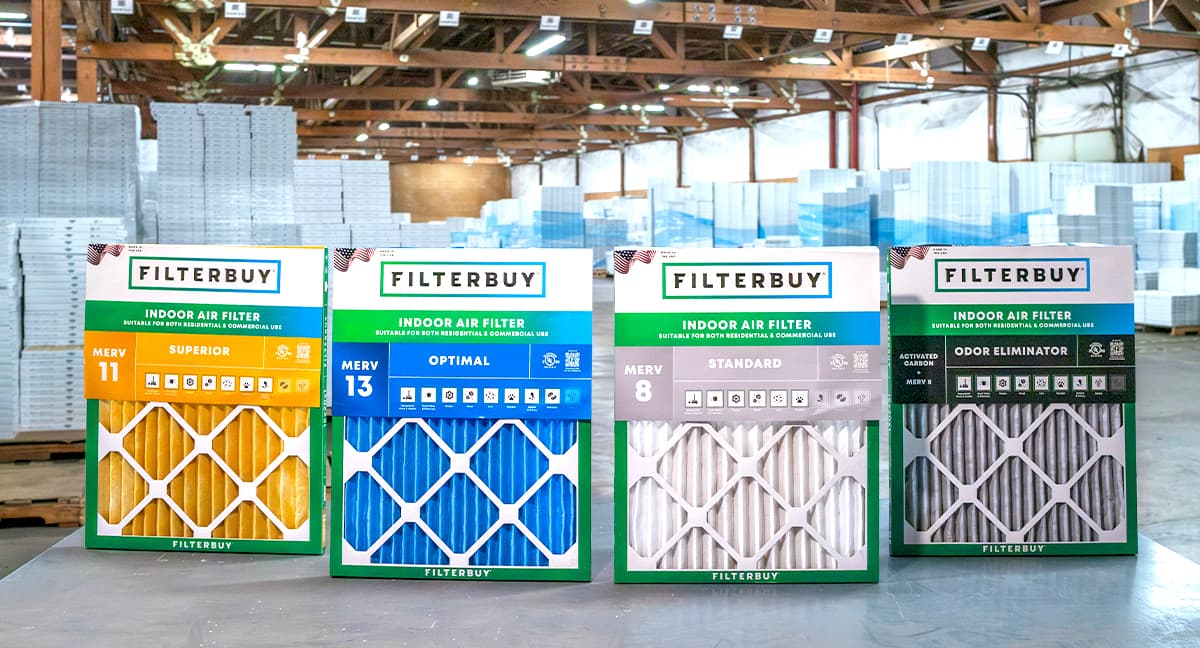
David Heacock (CEO of Filterbuy, a ~$250–400M annual revenue air filter company) argues that high intelligence can sabotage success. Smart people overthink, skip basics, and fear failure—while "less smart" executors build empires through action, repetition, and humility.



Heacock's journey: Wall Street expert to air filter novice—ignorance forced basics mastery, leading to innovation (e.g., box-to-order model improving economics).

The Intelligence Paradox
- Overanalysis Paralysis: Smart friend Evan spotted every flaw in idea—never launched. Less-informed competitor did (similar product succeeded).
- False Confidence: Intelligence excuses skipping execution/fundamentals.
- Ego Barrier: Fear looking stupid prevents trying "obvious" ideas experts dismiss.
Mastery Through Basics (Not Complexity)
Kobe Bryant: Superstar yet drilled fundamentals early/pre-practice—repetition created greatness.


Bruce Lee: "I fear not the man who has practiced 10,000 kicks once, but... one kick 10,000 times."
Business: Reward consistent simple systems, not brilliance. Smart skip basics (seem "beneath"); masters repeat until automatic.
Embrace Ignorance & First Principles
Beginner status: Humble, curious—break problems to core truths.
Heacock's switch: No manufacturing knowledge → reinvented processes (e.g., custom boxing scaled uniquely).
Experts copy norms; outsiders find better ways.
Survival Intelligence > Book Smarts
"Learning disabled" friend mastered real-world building via trial/error—outperformed "geniuses" fearing failure.
Standardized IQ misses practical navigation.
Clarity Over Complexity
Adlai Stevenson (brilliant speeches) lost landslides to Eisenhower ("I Like Ike" simplicity)—voters choose clear action.


Drew Houston: VCs rejected Dropbox (tech-savvy overcomplicated user needs)—real people wanted simple drag-folder sync.

Curiosity/playfulness > ego/analysis.
Key Takeaways
- Tolerate Looking Stupid: Exceptional results seem "dumb" initially.
- Bias to Action: 5 minutes planning beats 5 years theorizing.
- Repetition + Humility: Basics compounded = empires.
Heacock: Biggest unlock—stop pretending omniscience; become lifelong learner.
For entrepreneurs: Embrace beginner mindset, execute simply/consistently. Intelligence aids; action wins.
Rome's $3.2 Trillion Debt: How Conquest Created—and Destroyed—an Empire
The video claims Rome's expansion debt equates to $3.2 trillion today (likely adjusted empire GDP or cumulative costs). Rome appeared invincible at peak—marble forums, marching legions—but financial rot from endless wars, elite profiteering, and currency debasement caused internal collapse before barbarians arrived.



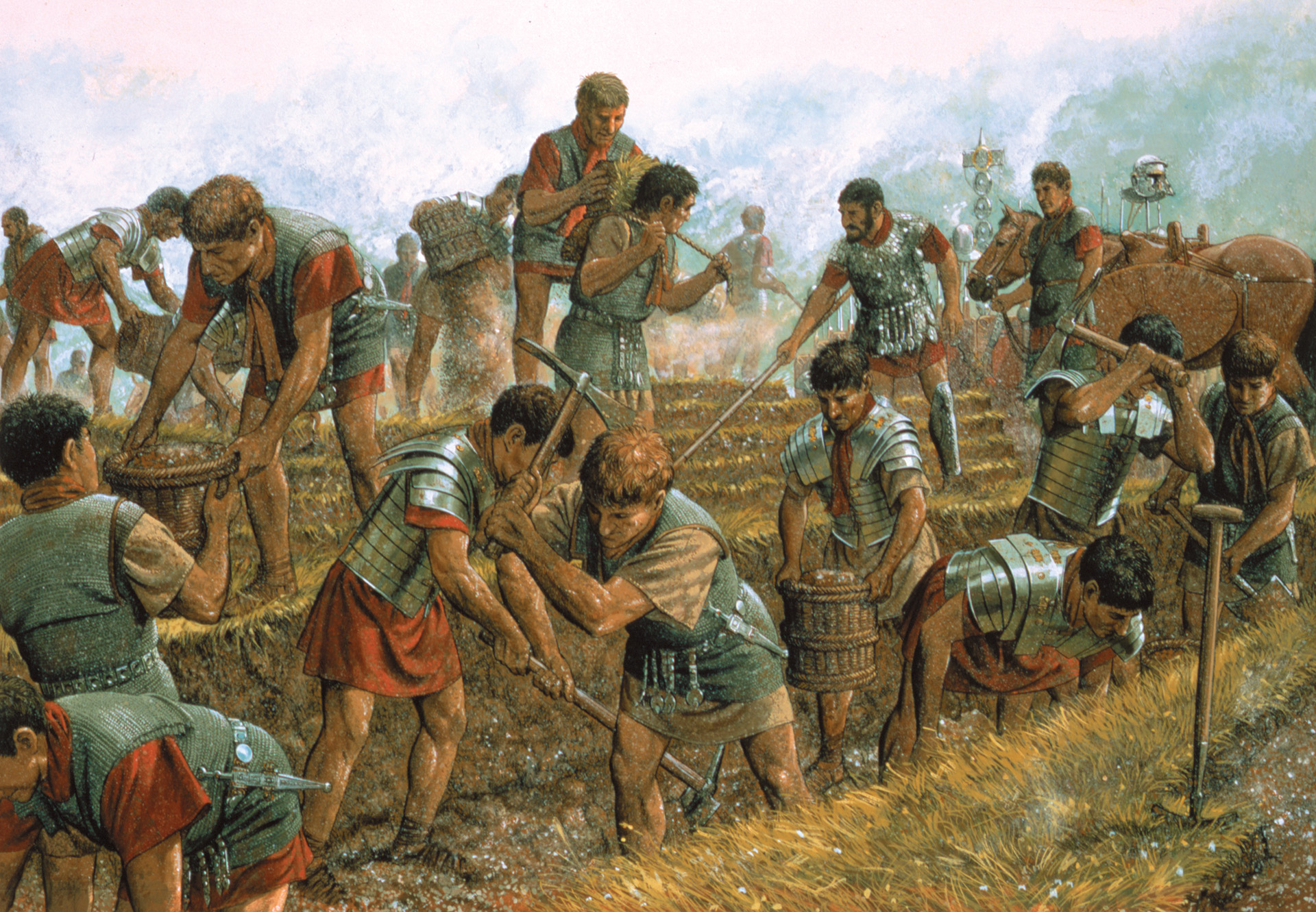


168 BC: Conquest Becomes Profitable Addiction
Battle of Pydna crushed Macedonia—massive plunder (gold, statues, bullion) suspended Roman citizen taxes for years.


/https%3A%2F%2Fengelsbergideas.com%2Fwp-content%2Fuploads%2F2022%2F08%2FMy-Post-16-1-ordusnbxtizmy6agtnu3v2xf4yj7mk8ng85ov3jf6g-1.jpeg)
War turned business: Elite financed campaigns, loaned to generals, profited immensely—early military-industrial complex.
From Citizen Farmers to Professional (Expensive) Armies
Early Rome: Temporary citizen-soldiers farmed between campaigns; low taxes.
Expansion demanded permanent forces (~300k men peak, legions + auxiliaries). Costs soared—up to 75–80% imperial budget on military (forts, roads, supplies, pay).
Publicani: Privatized Tax Farming Fuels Elite Wealth
Revenue shortfall → publicani corporations bid for provincial tax rights, paid treasury upfront, squeezed subjects (often brutally with soldiers).


Shifted power to private elite; provinces ravaged.
Geography Trap: No Rich Enemies Left
Borders stretched 5,000+ miles; loot dwindled, but costs persisted.
Debasement: Death of the Denarius
Trusted ~98% silver denarius (Augustus era) debased gradually (Nero onward), sharply 3rd century (~2% silver by mid).

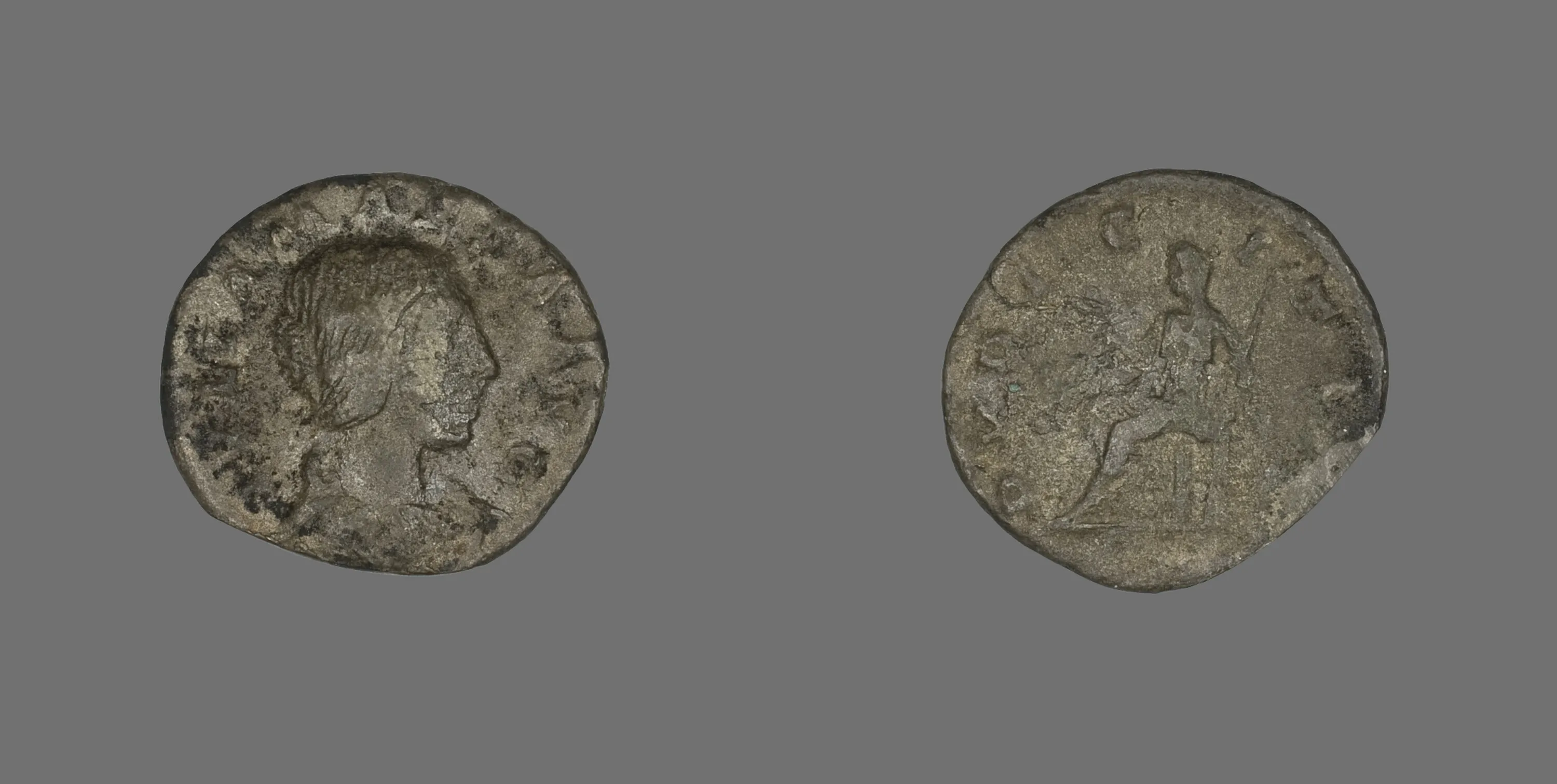

Confidence collapsed; hyperinflation (~6,000%+ over centuries). Diocletian's 301 AD price freeze failed.


Merchants hoarded/refused coins; riots; economy paralyzed.
Elite Thrive, Masses Suffer
Wealthy stored in land/gold/slaves—expanded estates amid decay.
Poor: Savings wiped, shops closed, slavery for tax relief.
Lesson: Financial Collapse Precedes Physical Fall
By 406 AD barbarian Rhine crossing/sack of Rome (410), economy/currency/army already hollow.
Core Warning: Empires die from internal financial rot (debt, extraction, debasement)—not just external invasion. Ruins symbolize aftermath, not cause.
Modern parallels implied: Overextension, inequality, currency trust vital for sustainability.
The Rise and Fall of Vertical Farming—and Dyson's Smarter Hybrid Solution
In the 2010s–early 2020s, vertical farming promised revolution: Stacked indoor crops in urban warehouses, LED-lit, pesticide-free, weather-independent, low-transport food.
COVID supply disruptions + subsidies fueled billions in funding (AeroFarms ~$1B, Plenty, Infarm). Vision: Solve agriculture's crises—70% global freshwater use, 40% habitable land.
By 2025, most collapsed: AeroFarms bankrupt, Plenty shuttered, sector graveyard.
Core Flaws: Fighting Physics and Economics
- Artificial Light Cost: Replacing free sunlight with LEDs (12–16 hours/day) = massive electricity. 2022 European energy crisis doubled prices—margins vanished.
- High Labor: Needed engineers/specialists (not cheap farm workers).
- Wrong Crops: Low-margin lettuce/herbs with million-dollar tech = doomed math.
- Over-Expansion: VC pressure for rapid scaling → huge capex before single-site profitability ("valley of death").
- Depreciation/Reliability: Fast tech obsolescence + repair issues scared buyers.
Result: "Field of Dreams" bust—if built, buyers didn't come without subsidies.
James Dyson's Contrarian Fix: Hybrid Greenhouse Farming
Billionaire inventor (bagless vacuums, bladeless fans) reframed question: Why abandon free sunlight?
Dyson Farms (Carrington, UK): Not sealed warehouse—vertical in transparent greenhouse.
- Rotating Towers: Million+ strawberry plants in 24m-long, 5.5m-high structures rotate for even natural light.
- Free Resources: Sunlight primary; rainwater collected; heat trapped.
- Circular System:
- 28,000 acres traditional crops → waste to anaerobic digester → biogas (powers LEDs winter + 10,000 homes + farm vehicles).
- Digester CO2/heat piped to greenhouse (boosts photosynthesis, warms).
- Digestate = organic fertilizer.
- Smart Automation: Robots pick ripe berries; UV kills mold; beneficial insects released; AI cameras target weeds (90% less herbicide); sensors/drones optimize water/fertilizer.
- Regenerative Practices: Rotation, cover crops, agroforestry, restored waterways, sheep grazing.
Yield: 2x conventional greenhouse (1,250 tons strawberries/year). Premium price (£4.5/250g) for superior winter flavor/sweetness (>9% Brix).
Why Dyson Succeeds Where Others Failed
- Right Question: Use nature's free inputs (sun, rain, waste) instead of fighting them.
- Integrated Efficiency: Waste = resource; circular loops slash costs/emissions.
- Cautious Scaling: Started simple (2021 single-level), iterated, evidence-based—not VC-fueled blitz.
- Economics Align: Viable without massive subsidies; practical over glamorous.
Broader Lesson: Hype Cycle to Reality
Vertical farming's "trough of disillusionment"—initial model flawed (closed warehouses).
Dyson's hybrid: Proof controlled-environment agriculture works when physics/economics respected.
Future food: Less sci-fi skyscrapers, more intelligent greenhouses—higher yields, lower impact, profitable.
From billion-dollar bust to pragmatic breakthrough: Sometimes outsider (vacuum designer) sees what experts miss. Sustainable agriculture may be quieter, but finally real.
The Slow Fall of the Roman Empire: From Republic to Ruin
The Roman Empire, at its peak under Trajan (117 CE), spanned from Britain to Iraq—largest in history, seemingly eternal.


Fall spanned centuries (3rd–5th CE), no single cause—interwoven military decline, political chaos, economic strain, barbarian pressures.
Republic to Empire: Seeds of Instability
Rome started as Republic; Julius Caesar's dictatorship (44 BCE) sparked crisis.


Assassination → civil wars; Octavian (Augustus) emerged emperor (27 BCE), ending Republic.

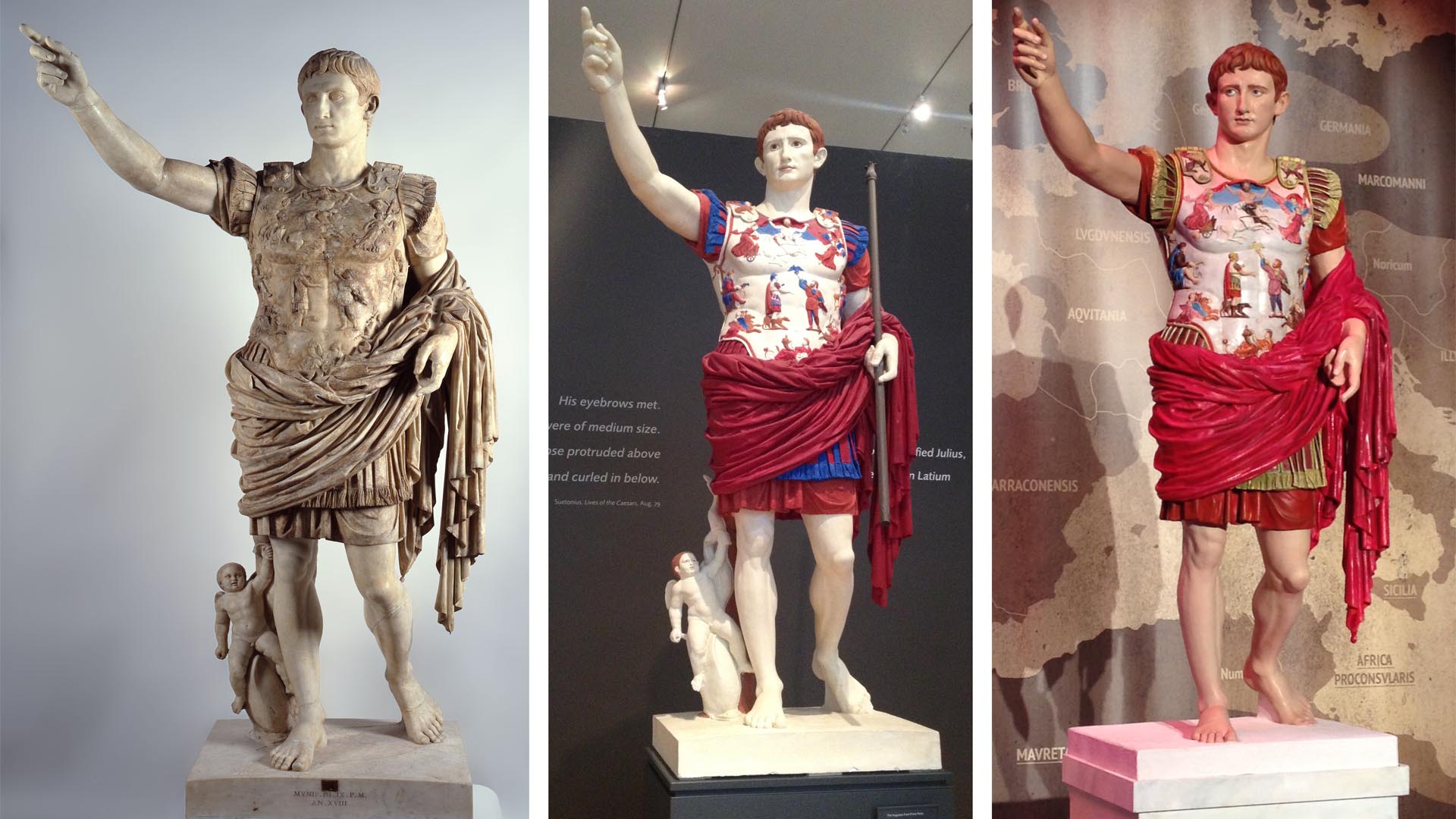
Provinces semi-autonomous (taxes/loyalty required); "Pax Romana" (27 BCE–180 CE) stable, but hereditary rule risked weak leaders.
Cracks Appear: Bad Emperors and Chaos
Commodus (180–192 CE): Teenage tyrant, gladiator obsession, cult of personality—assassinated.


"Year of Five Emperors" (193 CE): Civil wars.
3rd Century Crisis: Breakaways (Gallic/Palmyrene Empires); Aurelian reconquered, Diocletian stabilized (regional courts, abdicated voluntarily).
Constantine (306–337 CE): Converted to Christianity (vision of cross), legalized faith, new currency, army reforms.

Peak territory, but patronage/corruption lingered.
Division and Barbarian Pressures
337 CE: Sons split empire—East (Byzantine) endured 1,000+ years; West weakened.
Huns displaced Goths → refugee crisis across borders.
Corrupt officials exploited migrants → resentment → uprisings.
Attila the Hun ravaged fringes.


Military: Mercenaries (disloyal), high costs, spread thin.
Final Blow: 476 CE
Odoacer (barbarian king) deposed teen Emperor Romulus Augustulus—spared him, pensioned off.
Senate transferred symbols to East; West "fell."
Sack of Rome (410 CE Visigoths) symbolic earlier shock.





Key Causes: Interconnected Decline
- Political Instability: Assassinations, weak heredity, civil wars.
- Military Weakness: Mercenaries, overstretch, corruption.
- Mismanaged Invasions: Exploited refugees → internal enemies.
- Economic Strain: Taxes, patronage drained coffers.
- Religious Shifts: Christianity's rise altered unity.
Fatal mistake: Poor handling of Gothic migration—neither repelled nor integrated.
Legacy: Not Total End
Western government ended, but Byzantine continued; Roman Catholic Church became Europe's dominant institution (1,000+ years power).
Rome's fall: Gradual internal rot + external pressures—not one battle/barbarian horde. Lesson: Empires crumble from within first.
Japan's Silver Boom and Bust: How Resource Riches Led to Centuries of Isolation
In 1526, merchant Kamiya Jutō discovered the Iwami Ginzan silver mine in remote Japan. Using advanced Korean smelting (Haifuki-hō), miners tapped volcanic deposits rich in easily extractable silver. By early 1600s, Japan produced ~200 tons annually—1/3 global supply, second only to Spanish Americas.
This "silver rush" transformed feudal Japan into a global economic power, funding unification, military tech, and trade—but depletion triggered crisis, isolation, and long-term stagnation.
Boom: Silver Fuels Rise and Global Ties
- Output Peak: Iwami Ginzan ~38 tons/year; total Japan ~200 tons. Soft volcanic rock + hot-spring deposits enabled efficient mining.
- Domestic Impact:
- Warlords (daimyo) bought Portuguese firearms; silver = war currency.
- Funded unification: Oda Nobunaga, Toyotomi Hideyoshi, Tokugawa shogunate consolidated power (monopoly on mines post-1601).
- Global Trade:
- Chinese demand (post-1436 paper money collapse) drove exports.
- Ports (Hirado, Nagasaki) boomed; Portuguese/Chinese merchants.
- Silver reached Europe via Manila galleons—Japan central in Asian trade web.
Wealth enabled stability (Tokugawa era) and military dominance.
Bust: Depletion and Economic Crisis
- Decline: Peak early 1600s → 60 tons by 1640 (70% drop). Deeper mining = flooding, collapses, higher costs.
- Consequences:
- Global silver shortage (Japan flooded markets earlier → inflation abroad).
- Domestic shortages: Reduced imports, deflationary pressure.
- Currency debasement: Reduced gold/silver content eroded trust.
- Inflation from boom → hardship for commoners (benefits to elites/merchants).
By 1691, most Iwami shafts closed.
Response: Sakoku Isolation (1633–1639 onward)
Tokugawa shogunate enacted Sakoku ("closed country"):
- Severe trade limits (Nagasaki only, Dutch/Chinese).
- Banned Japanese travel abroad; foreigners restricted.
Motives: Preserve dwindling silver/gold; control Christianity/foreign influence; centralize power.
Result: Short-term resource protection, but long-term stagnation—cut off tech/ideas while West industrialized.
Long-Term Legacy: Vulnerability and Forced Opening
- Economic Rigidity: Silver-dependent economy lacked diversity; isolation hindered manufacturing/tech.
- Meiji Restoration (1868): Perry's 1853 "black ships" forced unequal treaties. Japan industrialized rapidly to catch West—shifted from resource extraction to manufacturing/military.
- Irony: Silver enabled unification/power, but depletion + isolation left Japan vulnerable to Western dominance.
Lessons: Resource Curse in History
Japan's "abundance curse":
- Boom created dependencies (military spending, elite extraction).
- Bust exposed fragility—economy oriented around temporary resource.
- Isolation traded short-term preservation for long-term lag.
Silver built empire but undermined sustainability—highlighting risks of resource reliance without diversification/tech investment. From global player to isolated nation, then forced modernization: Prosperity's seeds became crisis.
BlackRock's 2026 Global Outlook: "Pushing Limits" – Key Highlights and Implications
BlackRock ($14T AUM) released its 2026 Global Outlook: Pushing Limits (December 2025), authored by executives. The report is bullish on AI-driven US growth but warns of risks from debt-fueled spending, rising rates, and concentration.
AI: Transformational or Bubble Risk?
- Massive Buildout: $5–8T annual global AI spending to 2030 (much debt-financed).
- Breakout Growth: AI could accelerate innovation (self-improving discovery in materials/drugs/tech), pushing US GDP above historic ~2% trend ("this time different").
- Employment: Current "no hire/no fire"—AI replaces entry-level, retains experienced. Future "new revenue pools" (unspecified).
- Positioning: Overweight US stocks (AI theme); "stay risk-on."
Caveat: Rising tech bond yields signal skepticism on returns; excessive issuance could crowd out other debt.
Bonds, Rates, and Diversification Challenges
- Corporate vs. Government Debt: Tech bond flood competes with Treasuries → higher yields/rates → slows non-tech sectors.
- No Safe Havens: US bonds no longer diversify; gold short-term hedge only. Crash = everything falls (including gold/bonds).
- Alternative: Private credit/infrastructure (despite stress in private credit).
Energy Constraint
AI data centers → 15–20% US grid by 2030. Scaling bottleneck; praise for China's faster energy/land deployment.
Digital Assets & Tokenization
Stablecoin growth (Genius Act boost) → tokenized finance (BlackRock active on Ethereum). Efficiency + control/surveillance potential.
Regional Views
- Bullish: US (AI), Japan, India (demographics).
- Neutral: Emerging markets (dollar trend reversed).
- Bearish: Europe (structural issues; military spending "solution").
What It Means for Markets
- Continuation of 2025 Trends: Flows into US tech/AI; concentration worsens.
- Potential Feedback Loop: Tech bonds → higher foreign yields → capital flight to US → AI stocks balloon further.
- No Escape in Crash: Global correlation → systemic risk.
- Implied Strategy: Follow flows (even bubble); prepare "Plan B" (vague—private credit/infrastructure).
Critique: Neutral/hedged tone despite concentration warnings; echoes pre-2008 "contained" stress views on private credit.
Bottom Line: 2026 likely extends US tech dominance (AI narrative + flows). Risks: Debt overload, rate spikes, energy limits. BlackRock stays overweight US/AI—signaling "ride the wave" until break. Cash/gold as potential hedges implied but downplayed. Report reflects flow-driven reality: Returns chase momentum, diversification failing.
The End of Japan's "Free Money" Era: BOJ's December 2025 Rate Hike and Yen Carry Trade Risks
On December 19, 2025, the Bank of Japan (BOJ) raised its benchmark rate by 25 basis points to 0.75%—the highest in 30 years (since 1995). Governor Kazuo Ueda signaled further hikes amid recovering economy, tight labor, rising wages, and persistent inflation.
Markets expected it (~86% probability), but direction matters more than level. This starts a tightening cycle, ending decades of near-zero rates that fueled the yen carry trade.
What Is the Yen Carry Trade?
Investors borrow cheap yen, convert to higher-yield currencies/assets (US stocks, crypto, emerging bonds)—profit from differential as long as yen weak/stable.
- Scale: Estimates $500B–trillions (including derivatives).
- Enabler: Japan's ultra-low rates (post-1990s bubble/deflation fight).
- Risk: Yen strengthening → repay costlier loans → forced unwind (sell assets, buy yen).
For 30 years, Japan subsidized global risk-taking—cheap funding boosted stocks/crypto/EM.
Immediate Impacts (December 2025)
- Yen Reaction: Initial spike (USD/JPY ~157 → 153), then volatile.
- Markets: Stress in carry targets (crypto dips, EM currencies weaken—peso/real/lira slip).
- Japanese Assets: 10-year JGB yield ~2% (multi-decade high)—attractive domestically.
BOJ: Real rates "significantly negative"; accommodative continues—but more hikes likely (terminal ~1–2.5%).
Why Now? Japan's Shift
- Inflation/Wages: Above 2% target; broad wage gains.
- No Longer Deflation: Economy moderate recovery.
- Global Divergence: Others cut/pause; Japan tightens → narrowing differentials.
Contrast: US Fed easing; Japan hawkish → yen support.
Bigger Threat: Carry Trade Unwind and Capital Repatriation
Japan holds ~$1.1–1.2T US Treasuries (largest foreign holder) + $4.9T overseas assets.
- Higher Yields Home: Pull funds back (repatriation).
- Unwind Mechanics: Rising costs → deleverage → sell risk assets → yen buy → vicious cycle.
- Contagion: Affects exporters (Toyota/Sony), EM (funded by yen), global liquidity.
Strategists: BOJ tightening > Fed impact on US equities (regime shift vs. known easing).
Risks to US/Global Economy
- Liquidity Drain: Unwind → forced selling (stocks/crypto down).
- Rate Spillover: Less foreign Treasury demand → higher US yields/rates.
- No Quick Crash Likely: Gradual (costs rise slowly); but accelerating if hikes continue (2026 targets discussed).
- Vulnerable Assets: Crypto, EM bonds, high-growth stocks.
Japan (largest US debt holder) tightening could indirectly pressure US markets via reduced foreign buying/flows.
Outlook: Regime Change
"Free money" era ends—not one-off; tightening cycle start.
- Japan: Stronger yen hurts exporters but curbs import inflation.
- Global: Less cheap funding → higher risk premia, potential volatility/crisis if rapid unwind.
BOJ not bluffing—watch 2026 hikes. Risks rising, but gradual shift likely. US economy vulnerable via liquidity/carry contagion. Stay tuned—dynamics evolving fast.
China's Ongoing US Treasury Unwind: De-Dollarization and Strategic Leverage (December 2025)
China continues reducing US Treasury holdings—down to ~$688–700B (October 2025 data, lowest since ~2008–2009 levels).
From peak >$1.3T (2013), ~50% cut via sales/maturity non-reinvestment.
Motivations: Sanctions-Proofing and Economic Warfare
- De-Dollarization: Post-Russian asset freezes (2022) + US chip curbs/trade war—China avoids funding "own containment."
- Raise US Costs: Less demand → higher Treasury yields (10-year ~4.1–4.2% December 2025, rebounding post-Fed cuts).
- Historical Contrast: China aided US in 2008 crisis (bought debt amid Russian dump attempt); now adversarial.
Rare earths: Magnet exports to US fell 11% November (~582 tons vs. 656 October)—leverage amid US efforts (e.g., "Pack Silica" declaration) to diversify.
US Vulnerabilities Exposed
- Debt Burden: Interest payments ~$1.24T/year (>4% GDP)—unsustainable without cuts or inflation.
- 10-Year Yield: >4.1% despite 75bp Fed cuts (2025)—bond market "revolt" on AI war/reshoring costs.
- Tariff Backfire: Higher consumer prices; "refunds" (~$2k/household proposed) divert tariff revenue, worsen deficit.
- Foreign Holders: Down to ~32% total debt (from 51% 2008); Japan (~$1.2T), UK (~$877B), France leading—vulnerable to shifts.
US reshoring/AI race expensive; tariff war inflationary—no reversal.
Global Implications
- Stronger Yuan/Chinese Bonds: De-dollarization boosts dim sum bonds; attracts flows.
- Carry Trade Echo: Parallels Japan hike (0.75% December 2025)—but China dumping adds pressure.
- Endgame Risks: Dollar devaluation/inflation; foreign repatriation → higher rates/crisis.
China signals: No financing US rivalry—elevates borrowing costs, exploits vulnerabilities. US trapped: Spending up, trust down. 2026: Continued unwind likely; watch repatriation/contagion. Geopolitical finance weaponized.
Commentary: This is likely to keep the yuan afloat, so that the exchange rate does not surpass 8 yuan per US dollar.
Why "Responsible" Investing While in Debt Keeps You Broke—and How to Fix It
You're diligently throwing $200 into stocks/ETFs each payday, feeling adult. But your credit card balance lingers, minimum payments mostly interest. One car repair? Investments sold at loss. You're not alone—Federal Reserve data shows ~37% of US adults can't cash-cover a $400 emergency (2025 survey); median savings ~$600, 21% nothing (Empower 2024).
Host Joe (obsessed with "how money works") argues: It's not laziness—it's order. Banks/apps profit from out-of-order habits (interest, fees, trades). Flip priorities: Fix leaks (debt/emergencies) before investing. Your next dollar's job? Highest impact first.
This isn't advice—educational framework. Consult pros for personalization.
The Real Problem: A Leaky Bucket
Paycheck splits: Debt interest (banks win), emergencies (force sales), taxes/fees (quiet cuts). Investing early feels right, but high-interest debt (e.g., 22% card) outpaces market returns (~7–10% historical). You're compounding against yourself.
Minimum payments trap: $5k at 22% = ~$1,100/year interest. 2% min (~$100) = $92 interest, $8 principal. Balance doubles over time.
Solution: "Money Ladder"—sequence maximizes each dollar.
Step 1: Emergency Fund – Your Safety Switch
Not "boring savings"—protection against forced sales/swipes.
- Stage 1: $500–1k ASAP (sell stuff, cut leaks). "Car noise" buffer.
- Stage 2: 1 month core expenses (rent, utilities, food, min payments—not lattes).
- Stage 3: 3+ months (more if freelance/unstable income).
Why? No buffer = one surprise nukes progress. Buffer = invest calmly.
Step 2: Kill High-Interest Debt – Your "Guaranteed Return"
Debt tiers:
- Tier 1 (> mid-teens, e.g., cards/personal loans): Attack aggressively post-starter fund. Paying 22% = risk-free 22% "return" (beats stocks).
- Tier 2 (6–7%, e.g., some private student/car loans): Lean toward payoff before extra investing.
- Tier 3 (<6%, federal student loans with protections): Can simmer while laddering.
Snowball (small debts first for momentum) or avalanche (highest rate first) methods work.
Step 3: Employer 401(k) Match – Boring Cheat Code
~Majority have access; many under-contribute (BLS/Vanguard).
Example: 50% match up to 6% salary ($50k job = $3k contribution → $1.5k free = 50% instant return).
Grab full match even with debt—upfront boost outweighs fees. Funds may be mediocre, but match is separate.
Step 4: IRA – Freedom from Fee Trap
Workplace plans often limited/high-fee (active funds ~0.85% vs. index ~0.05%).
IRA (at low-cost broker): Low-fee index funds (e.g., total market).
- Roth: Pay taxes now (low bracket?); tax-free growth/withdrawals.
- Traditional: Deduct now (high bracket?); tax later.
Math: $10k/year, 30 years, 7% return: Tax-advantaged ~$945k vs. taxable ~$791k (0.8% fee drag = $154k lost).
Split if unsure.
Step 5: HSA – Triple Tax Hack (If Eligible)
High-deductible health plan? HSA qualifies.
Triple advantage:
- Pre-tax/deductible contributions.
- Tax-free growth (invest!).
- Tax-free medical withdrawals.
2025: $147B in 39M accounts—but many treat as checking (swipe = lost growth).
Advanced: Pay small bills out-of-pocket; invest HSA; reimburse later (no time limit, keep receipts). ~$4.3k/year, 30 years, 7% = ~$400k (covers Fidelity's $172.5k retiree healthcare estimate).
Not for high medical costs/big deductibles.
Step 6: Max 401(k) – Dial Up Retirement
Post-IRA/HSA: Increase workplace contributions (beyond match) to limits.
Step 7: Taxable Brokerage + Fun Money – Goals and Experiments
Extra long-term: Taxable accounts (flexible, but dividends/gains taxed).
Cap "fun" (stocks/crypto): 5–10% sandbox—experiment without risking core. Real investors underperform funds (Dalbar 2025: S&P 25% vs. average equity 16.5%—timing errors).
Special Cases
- Student Loans: See tiers; federal low-rate can wait.
- Late Starters: Fix order now—future dollars compound forward.
- No Match/Accounts: Prioritize debt/fund, then taxable.
Two Versions of You (Same Income)
- A (Out-of-Order): Invests while debt leaks/emergencies force sales. 20 years: Wobbly net worth.
- B (Ordered): Fixes leaks first. Same paychecks = secure wealth (e.g., $150k+ tax/fee savings over career).
Ladder = every dollar pushes same direction. You're not "behind"—fixing now stops leaks.
Action: Next paycheck—assign jobs per ladder. Comment "pay off debt first" if committing.
China's EUV Breakthrough: The End of Western Chip Supremacy? (Early 2025)
In early 2025, Chinese researchers in a secretive Shenzhen lab achieved a milestone long thought impossible: a working extreme ultraviolet (EUV) lithography prototype—the core technology for cutting-edge semiconductors (3–7nm nodes powering AI, smartphones, military systems).
Reuters investigation revealed the machine generates EUV light (hardest barrier) and is testing. Goal: Commercial chips by ~2028–2030—years ahead of Western estimates (10+ years).
This threatens ASML's monopoly (only commercial EUV supplier) and US-led export controls designed to keep China "one generation behind."
Why EUV Matters: The Ultimate Tech Chokepoint
EUV etches circuits thousands of times thinner than human hair (13.5nm wavelength light).
Process: Lasers hit tin droplets 50,000x/second → plasma → EUV light reflected via ultra-precise mirrors (atomic-level accuracy).
- Cost: ~$250M/machine, 180 tons, bus-sized.
- ASML (Netherlands) sole producer; relies on Zeiss (Germany) optics + global suppliers.
No EUV = no leading-edge chips (Nvidia/Apple/TSMC/Samsung).
US/Dutch blocked sales to China (2018–2022+); expanded to older DUV tools.
How China Did It: "Manhattan Project" Mobilization
Huawei coordinates national effort under Xi's semiconductor self-sufficiency drive.
- Talent: Recruited ex-ASML engineers (many Chinese-born) with $400–700k bonuses, housing, aliases/false IDs for secrecy.
- Reverse Engineering: Second-hand ASML machines (auctions via shells); Nikon/Canon parts.
- Scale: Thousands engineers; isolated teams (compartmentalized like WWII Manhattan Project).
- Prototypes: Early failures (compactness); current large but functional (full floor).
- Progress: EUV light generated (2025); optics improving (Changchun Institute patents).
Not ASML-perfect, but "good enough" for AI/military/sovereign needs (yield less critical than independence).
Paradox of Sanctions: Fueling Chinese Innovation
Pre-restrictions: China incrementally upgraded via global chains.
Post-2018 curbs: "Partial access worst"—forced total vertical integration (costly but self-reliant).
US goal (keep China behind) → mobilized state effort; restrictions removed dependence incentive.
Implications: Shifting Global Power
- Loss of Leverage: Controls ineffective once domestic EUV viable.
- AI/Military Race: China accelerates without foreign permission.
- Supply Chain: West's denial strategy backfires—China builds parallel ecosystem.
- Timeline: Commercialization ~2028–2030 realistic (faster than ASML's 18-year prototype-to-market).
ASML CEO (April 2025): "Many years" needed—now questioned.
Broader Lesson
Like Manhattan Project (secrecy, centralization, talent poaching), China's EUV drive shows state-directed tech mobilization.
Western "chokepoint" strategy assumed irreplaceable knowledge/ecosystem—underestimated determination + reverse engineering.
From containment to competition: EUV breakthrough signals end of tech denial era. China closer to semiconductor sovereignty than anticipated—reshaping AI, military, economic balances.
Japan's Quiet Disappearance—and Europe's Looming Demographic Collapse
Japan and much of Europe face a silent crisis: demographic decline. No war, famine, or disaster—just shrinking populations despite longer lifespans. Stable societies need ~2.1 births/woman; Japan (~1.3), Italy (1.2), Spain (1.3), Greece (1.3), Hungary (1.5) fall far short.
Japan: From 123M today → ~75M by 2050 (40% drop). Europe trails ~10 years but accelerating.
Japan's Path: Prosperity to Stagnation
1980s Boom: Tech/manufacturing dominance; Tokyo real estate soared; wages topped US.
Prosperity paradox: Urban costs (housing, childcare ~$200k+/child) delayed/deterred families. Marriage/fertility collapsed.
1990s Bust: Bubble burst—stocks -60%, real estate crash, bad debt, wage stagnation. Uncertainty crushed births (1.57 in 1989 → lower).
Result: ~30% over 65; dependency ratio ~2 workers/retiree (from 11 in 1960). Empty schools/hospitals, €1 Italian homes, abandoned villages.
Europe's Fast-Forward Version
Urban GDP ~80%; housing surges (Berlin +70%, Lisbon +120%) force micro-living—children unaffordable.
Fertility drivers: Cost, climate anxiety (~40% reconsider kids), work culture.
Consequences: Closing maternity wards (Portugal), rural depopulation (Italy/Eastern Europe forests reclaim villages), pension strain (>20% budgets Germany/France).
Economic Loop of Decline
Shrinking workforce → fewer consumers/taxpayers → slower growth (<1% ECB warning) → higher taxes/debt → more pressure on young → lower births.
Pensions: Built for growth; collapse under contraction.
Failed Fixes
- Cash Incentives (Hungary): Limited impact.
- Immigration: EU +2.5M (2022) but still shrank; political backlash; can't replace structural birth decline.
- Tech/Robotics: Can't fill millions missing (care/construction need people).
Core Problem: Systems Punish Families
Modern life: Housing speculative, education/childcare expensive, welfare for individuals/elderly—not parents.
Children = luxury; economies assume endless youth.
Prevention: Rebuild for Families
- Affordable housing (not investor profit).
- Family-supportive tax/education/childcare.
- Pension reform for longevity/shrinkage.
- Immigration complements (not replaces) births.
Japan accepted quiet fade; Europe resists but risks same.
Warning: Silent Erosion
Decline starts empty schools → staff shortages → deficits → closed services → weaker growth → fewer families.
No headlines—until irreversible.
Choice: Family-friendly systems or disappearance. Demographics shape budgets, power, survival—nations need children to inherit them. Europe has time; Japan shows cost of delay.
Breaking Generational Money Trauma: Emotional Navigation and Mindset Shift for Financial Freedom
Money troubles plague millions—high-interest debt, stagnant wages, emergencies wiping savings. But the root often isn't lack of income—it's deep-seated beliefs around money, passed generationally, creating scarcity even amid abundance.
Speaker (experienced investor/educator) outlines navigating emotional barriers and rewiring mindset for wealth-building.
Core Problem: Misaligned Beliefs Block Action
Outcome desired: Financial freedom/wealth.
Path: Actions (invest, save) → Thoughts (I can do this) → Subconscious beliefs (true driver).
"Think and Grow Rich" starts at thoughts—but if subconscious contradicts ("Money evil," "Rich bad," "We can't afford nice things"), actions fail.
Generational cycle: Parents (well-intentioned, limited) teach scarcity ("We can't have that—rich people evil"). Kids internalize → repeat with own families.
Result: Consume to "look rich" (cars, vacations) vs. build wealth (investments).
Emotional Navigation: Confronting the "Lie"
Realization painful: Loved ones' advice (protect from disappointment) limited you.
Steps:
- Accept Intent vs. Outcome: Parents meant well but lacked knowledge—don't blame, release.
- Take 100% Responsibility: Beliefs yours now—change them.
- Reframe Money:
- Duty to Become Wealthy: Not greed—enable freedom, care for family, options (healthcare, education, experiences).
- Money Abundant: Trillions printed; world full—small slice = millions.
- Money Tool: Amplifies who you are (good/bad person unchanged). Fuel for options/freedom.
- You Will Become Wealthy: Affirmation aligns subconscious.
Avoid "smoke screens": Judging rich ("evil," "don't need fancy things") often masks insecurity/inability to afford.
Wealth vs. Income: The 5-Step Cycle
Making money ≠ building wealth (many high-earners broke; lottery winners bankrupt).
Cycle:
- Earn Money (job, business, hustle).
- Don't Spend All (most spend > earn via debt).
- Buy Investments ("middleman" works for you).
- Reinvest Profits (compound—key to growth).
- Earn More (fund more investments).
Difficulty: Spending visible/rewarding (likes, status); investing invisible/long-term.
Over career: Even $50k/year = millions earned—most nothing to show (consumption).
Practical Mindset Shift
- Decide Priority: Look rich (spend) or be rich (invest)?
- Balance: Extreme frugality unnecessary—allocate % to investments first, enjoy rest guilt-free.
- Long Game: Millions flow lifetime—keep more via investments.
Emotional peace: Understand money's role (options, care, freedom)—release scarcity guilt.
Break cycle: Model abundance—teach kids "We can have nice things" via actions (investing).
Outcome: Aligned beliefs → thoughts → actions → freedom. Not overnight—start with next dollar's "job."
Four Flashpoints That Could Ignite World War 3 (Late 2025)
80 years after WWII (70–85M deaths), global stability frays. No single trigger, but four hotspots risk escalation to global conflict—more destructive via nukes/cyber/AI.
1. Russia-Ukraine: Expanding Ambitions and NATO Provocations
- Invasion Evolution: 2022 "special operation" (liberate east) → full conquest aims. Putin rejects ceasefires; demands territory, no NATO for Ukraine, Zelenskyy replacement.
- Trump's 28-Point Plan (November 2025): Ukraine cedes land, scales military, NATO blocked. Europe criticizes as rewarding aggression—fears precedent for further invasions (e.g., Baltics).
- Escalation Signs: Russian airspace incursions (Poland/Estonia/Romania); hypersonic missile production; "Flying Chernobyl" nuclear cruise missile test.
- NATO Response: Eastern members (Latvia/Lithuania/Poland/Estonia/Finland) exit landmine treaty, fortify borders. Article 5: Attack on one = attack on all (32 members).
- Risk: Russia + allies (North Korea/Iran/possibly China) vs. NATO → global war.
Putin prioritizes power over losses (1.1M+ casualties); battlefield gains encourage persistence.
2. China-Taiwan: Reunification Deadline Looms
- Core Goal: Beijing views Taiwan integral; aggressive drills (Taiwan Strait, near Vietnam/Australia); new invasion tech (landing barges, cable cutters).
- Triggers: Taiwan's DPP third term (2024); US support (arms, politics). Trump-Xi tariff spats worsen.
- Timeline: Possible 2027 (PLA centennial); experts warn dual-front crisis if Russia presses Ukraine.
- Military Buildup: World's largest navy; nuclear expansion (~600 warheads → more).
- US Commitment: Defend Taiwan → direct war risk.
China: Sanctions fueled self-sufficiency push; sees US weakening.
3. North Korea: Volatile Wildcard on Korean Peninsula
- Provocations: Border fences (first since Korean War); 10+ incursions (2025); South fires warnings.
- Military: Frequent missile tests; nuclear-capable destroyer.
- Russia Ties: Troops/ammo to Ukraine → tech/funds back (avoids food crisis).
- Risk: Miscalculation (e.g., warning shot kills soldier) → full war. Kim abandons peaceful unification.
- Broader Plot: China may pressure NK attack to distract US from Taiwan.
South Korea: Scrapped 2018 non-hostility pact; President warns "very dangerous."
4. Middle East: Iran Nuclear Push Amid Regional Chaos
- Iran's Program: ~1,000 lbs enriched uranium post-US strikes (June 2025—Trump claimed destroyed, debunked).
- Motivations: Proxies weakened (Hezbollah/Hamas); strikes raise "nuclear deterrence" calls.
- Instability: Ongoing Israel-Hamas clashes despite Trump-brokered deal; Yemen/Iraq/Syria violence.
- Nuclear Fear: Experts warn Iran/NK/Russia deployment possible—luck "running out."
Why Now? Interconnected Risks
- No Clear Deterrence: Putin rejects deals; China ignores controls; NK unpredictable; Iran cornered.
- Alliances: Russia-NK-Iran axis; potential China coordination.
- Nuclear Shadow: Escalation → mutually assured destruction risk higher.
No inevitability—but flashpoints converging. Experts: Dual fronts (Ukraine + Taiwan) or miscalculation most likely paths.
World on brink: Not 1940s redux, but modern tech (hypersonics, nukes, cyber) makes deadlier. Prevention fragile amid distrust.
What "Rich" Really Means in America (2025 Numbers)
Most chase vague "rich" dreams—fancy cars, watches—while net worth stagnates. True wealth isn't income or lifestyle; it's net worth thresholds defining security/freedom.
Alex (wealth stats analyst) uses Federal Reserve/Census data (adjusted 2025) to clarify brackets. Key: Income ≠ Wealth. High earners can be "broke" (spend all); modest earners wealthy (invest difference).
Income vs. Net Worth: The Critical Distinction
- Income: Flows in (temporary—job loss wipes it).
- Net Worth: What you keep (assets - liabilities; permanent through crises).
Trap: Lifestyle inflation—earn more, spend more → zero net worth growth.
Wealth = systematic asset-building (convert income to appreciating investments).
2025 Income Thresholds (Household)
- Top 10%: ~$170k/year (achievable dual professionals, e.g., teachers/nurse + developer).
- Top 5%: ~$300k (doctors, execs, entrepreneurs).
- Top 1%: ~$700k (business owners, C-suite, major passive income).
Caveat: High income enables wealth—but only if not spent. Many top earners bottom-50% net worth.
2025 Net Worth Thresholds (Assets - Liabilities)
- Top 10%: ~$1.2M (e.g., paid-off $600k home + $500k retirement + $100k investments).
- Top 5%: ~$3M (needs growth/business—salary/house alone insufficient).
- Top 1%: ~$12M ($400–500k/year passive income possible; true freedom).
Psychology shift: Below thresholds = earning/survival mode. Above = growth mode (assets generate income).
Why Most Miss These Milestones
- Consumer Culture: Ads/social media push spending ("look rich").
- Confusion: Income focus (visible) vs. net worth (invisible).
- Inflation Trap: Earn more → upgrade lifestyle → no savings.
- Geography: $170k luxurious rural; tight coastal.
Example: $500/month car payment invested 20 years @7% → ~$244k future wealth lost.
Behavioral Economics: Poor/Middle vs. Wealthy Mindsets
- Poor: Victims (luck/connections needed).
- Middle: Earners (work harder = rich).
- Wealthy: Asset builders (convert income to growth).
Wealthy: Delayed gratification, opportunity cost thinking ($ today > $ tomorrow via compounding).
Tax favor: High net worth often lower effective rates (capital gains/dividends vs. ordinary income).
Practical Path: Ladder Approach
Target next rung systematically:
- Starter Emergency Fund ($500–1k).
- Full Buffer (1–3 months expenses).
- Kill High-Interest Debt (>8–9%).
- Max Employer Match (free money).
- IRAs (low-fee index funds; Roth/traditional choice).
- HSAs (if eligible—triple tax advantage).
- More 401(k)/Taxable + capped "fun" (5–10% stocks/crypto).
Geography arbitrage: Build in high-income area, retire lower-cost.
Hard Truths & Motivation
- Time Value: Delay = lost compounding forever.
- Late Start?: Still fix—future dollars compound forward.
- Real "Rich": Options/freedom (healthcare, education, lifestyle)—not status symbols.
Numbers data-driven (Fed surveys/Census 2025-adjusted). Choice: Look rich (spend) or be rich (build). Understanding thresholds shifts from emotional to strategic—wealth achievable systematically.
Die with Zero: Why Hoarding Money Until Death Is the Ultimate Financial Failure
Bill Perkins' "Die with Zero" philosophy challenges traditional saving: Don't maximize net worth at death—optimize life experiences. Aim for ~$0 balance when you die (after securing basics).
Money = stored life energy (finite hours traded). Hoarding unused = working free.
Richard's Tragedy: The "Successful" Failure
Richard: Disciplined engineer, modest life, maxed 401(k), retired $2.5M.
Stroke at 67 → 3 bedridden years → died at 70 with $2.8M.
Society: "Successful millionaire."
Reality: Wasted 45 years stressing/sacrificing for unused money. Traded prime for surplus statistic.
Money's True Nature: Tool, Not Score
- Not Goal: Dopamine from rising net worth misleading.
- Battery of Time: Each dollar = hours traded. Unspent at death = free labor.
- Utility Curve: Dollar value declines with age/health.
- $10k ski trip: 25yo = max joy; 45yo = good but limited; 85yo = low/miserable.
Life variables: Youth (health/time, no money); Midlife (money/health, no time); Old age (money/time, no health).
Hoarding for 80s illogical—consumption ability lowest.
Why We Hoard: Fear + Legacy Myths
- Fear of Outliving Money: Valid (longevity risk).
- Solution: Annuities/long-term care insurance (guaranteed income/health coverage), not excess pile.
- Kids/Legacy: Average inheritance age ~60—low impact (mortgage paid, retired).
- Better: Give early (30s)—house down payment, debt relief, business seed. "Warm hand, not cold."
- Joy: See impact alive.
Memory Dividends: Experiences as Compounding Assets
Experiences ≠ fleeting—memory dividends (stories, photos, joy recalled lifelong).
- Early spend: 60+ years dividends (25yo trip).
- Delayed: ~15 years (65yo trip).
Time Buckets: Slot goals by age (ski Japan 30–40; read books 70–80; kid camping pre-teen).
Bucket list fails (drawer until too old); time buckets force action—windows close.
Math of De-Accumulation: Spend Strategically
- Survival Number: Basic costs + healthcare to ~95 (annuitized).
- Excess = Consumption Capital: Spend/give (or wasted).
- Peak Net Worth: Often late 40s/early 50s—then shrink deliberately.
De-accumulation hard (accumulation ingrained); but hoarding post-"win" = free work.
Who This Isn't For
- Debt/struggling: Survival/accumulation first.
- Applies: Savers/coast-FIRED guilty spending; hit security but delay joy.
Core Shift: Enjoyment Over Scoreboard
- Wealth = Experiences/Memories: Not graveyard riches.
- Legacy: Impact seen (kids helped young; stories shared).
- Regrets: Delayed life for unused future.
Not reckless—calculated: Secure basics, then convert energy to lived life.
Die with zero regrets—play the game, not hoard chips. Balance security with memory-building now.
Commentary: people need free housing, and it would be great to guarantee future children free housing, until the free housing is provided by government. Also with money, people can establish trust funds that actually use the money for good, like helping people reduce expenses by subsidizing repairs, instead of enabling grandchildren and future generations to buy fancy cars and unnecessary designer clothing.
Fixing a Sight-Unseen Auction Mercedes G-Wagon on a Budget
Alex bought a 2002–2003 Mercedes G500 (G-Wagen) at auction (~$18k) without inspection—loaded with issues: aftermarket alarm (random no-starts), all warning lights, rough running, half-stolen catalytic converter, non-working differential lockers, corroded ESP module/connector (~$2k new), oil leak, shaky windows, old filters/fluids, bad tires.
Goal: Fix on cheap (DIY ingenuity) → flip for profit (good examples ~$30k).
Major Fixes & Savings
- Rough Running: Free—vacuum leak repair.
- Exhaust: Welded back stolen cat section.
- Differential Lockers: Complex vacuum/hydraulic diagnosis → repaired with shop supplies (~few dollars vs. expensive parts/labor).
- ESP/ABS Module ($2k Mercedes part): Corroded connector/pins. Sent to specialist (pin replacement)—$200 repair vs. $2k new. Reprogrammed/coded → cleared most lights (including false locker warnings).
- Oil Leak: Common oil level sensor O-ring → new sensor (~$100) + lower pan gasket.
- Power Steering: Leaking reservoir/filter → new unit (~$50–70).
- Fuel Filter: Original (2001 date)—replaced (black/dirty inside).
- Air Filters/MAF: Cleaned sensor; new filters.
- Window Regulators (shaky/sticking): Common failure (~$800 each new). Shortened stretched cable (butt connector crimp), spaced rails with washers → fixed both for $0 (vs. $1,600 parts).
- Steering Damper: Leaking → replaced.
- SRS/Airbag Light: Chafed wires grounding → taped/repositioned + recoded.
- TeleAid/Other Codes: Coded out obsolete systems.
- Tires: Swapped to aggressive Nitto Ridge Grapplers (taller/meaner look).
- Infotainment: Old/non-working → modern Android unit with bezel (~$150)—YouTube/Apps/Wi-Fi.
- Interior: Removed cheap seat covers; cleaned/conditioned leather; swapped damaged seat back (~$300 eBay).
- Misc: New clamps, fluids (Amsoil), skid plate work.
Outcome
- Warning Lights: From ~8 → none critical (ABS relearned via drive/steering procedure; minor coded out).
- Drive: Smooth, powerful, straight—feels "brand new."
- Look: Tires + cleaned interior transform (mean OEM+ stance).
- Bonus Finds: Spare shifter, hood star, car cover, mats in trunk.
Total spent: Low thousands (parts mostly ECS Tuning/cheap sources). Savings: Thousands vs. dealer/shop (e.g., $1,600 windows, $2k module, lockers).
Plan: Sell mid-upper $20k—solid profit on clean, sorted, non-rusty example.
Series highlights DIY diagnostics, patience, ingenuity—turning "problem" luxury SUV into reliable driver cheaply. Fun bloopers + sponsor (Avalon King ceramic).
Easy DIY Aerocrete: Lightweight, Insulating, Fireproof Cement Using Grocery Items
Aerocrete (aerated concrete): Ultra-lightweight (~60–75% air), highly insulating (better than R6 foam board), fireproof, sound-blocking, durable (cures to rock-like strength), uses <50% cement vs. regular concrete.
Traditional method: Complex/expensive—foam generator, air compressor, calibrated detergent, precise mixing (failure-prone).
Ben's breakthrough: Simple, reliable, no special tools—uses xanthan gum (grocery thickener) + dish soap to generate stable foam directly in cement.
Why It Works
Cement (heavy/alkaline) destroys foam/detergent bubbles. Xanthan gum pre-hydrated protects detergent's foaming, slows water absorption—bubbles form/survive in mix.
Recipe (Scalable)
Part 1: Gel Base
- 15g xanthan gum (~$ cheap bulk/online; grocery ok).
- Splash rubbing alcohol/mouthwash (wets xanthan, prevents clumps).
- 60ml (¼ cup) dish soap (Dawn Ultra or similar surfactants).
- 1L water.
Mix → thick gel (rest 5–10 min to hydrate).
Part 2: Mix with Cement
- 1 part gel : 2 parts Portland cement (by volume).
- Stir (hand, paint stick, drill paddle, or cement mixer).
Stirring = expansion control:
- Less stirring → denser/stronger.
- More stirring → lighter/more insulating (up to ~75% air).
- Over-stir → open-cell (breathable/filtration uses, fragile).
Mark container for consistency.
Tools Needed
- None special: Bucket/drill (small batches), cement mixer (larger—works but slightly denser).
- Mask (dry cement dust).
Properties & Test
- Insulation: 1-inch sample ~R6.3 (beats R6 foam board).
- Weight: ~40–50% regular concrete/cinder block.
- Curing: Same as concrete (~1 week 75% strength). Keep moist 4–5 days (cover plastic/damp cloth—prevents drying/cracking).
Applications
- Blocks, panels, insulation, soundproofing, lightweight structures.
- Open-cell variant: Breathable/filter uses.
Advantages Over Traditional
- No foam machine/compressor.
- Grocery items + cement.
- Reliable first-try (no calibration).
- Scalable (cement mixer viable, though hand/drill max foam).
Ben's innovation: Grocery xanthan enables direct foaming—democratizes aerocrete for DIY/home use.
Support via Patreon; past videos for more inventions. Simple, revolutionary material—fireproof "styrofoam" from cement.
Budget Rust-Oleum Paint Job on a Dodge Caravan: From Multi-Color Mess to Metallic Red
Cam's daily driver Dodge Caravan (early 2000s): Faded multi-red panels, peeling clear coat (roof), starting rust, mismatched bumpers/textured plastic.
Goal: Single color refresh (not show-quality)—clean rust, unify look on tight budget.
Prep Work
- Stripped: Mirrors, handles, lights, trim (Cam's routine—many Caravans done).
- Sanded: Entire body.
- Bodywork: Filled rust spots (filler + primer).
- Masked: Windows, lights, tires.
Textured plastic (handles/bumpers): Scuffed 240-grit → high-build primer → scuff → paintable/smooth.
Paint Choice: Budget Hack
Factory Inferno Red quoted ~$1,200 (single-stage).
Instead: Canadian Tire Rust-Oleum "Regal Red" (~$20/quart)—close match (no factory metallic).
Mix: 50/50 paint + reducer + hardener (Trim Clad issues—fisheyes/curdling first coat; salvaged with thinner mix + light coats).
Coats: Base red (good coverage despite issues).
Clear Coat with DIY Metallic Flake
Cheap Omni clear.
Hack: Add Chrysler silver paint (heavy metallic) to clear—few drops/batch (too much = silver overspray).
Result: Subtle factory-like flake without expensive pearl additive.
Process & Tips
- Gun: $200 Princess Auto/Harbor Freight (1.3mm tip, ~35 PSI, reduced fan).
- Coats: Heavy base; multiple light clear (avoid runs).
- Issues: First clear batch over-metallic (dumped/remixed); minor runs buffed later.
Total supplies ~$400 (paint, clear, primer, tape, sandpaper).
Reassembly & Finishing
- Black accents: Grill/handles (sportier look).
- Options debated: Black rims suggested.
Outcome
- Unified vibrant red with metallic sparkle.
- Smooth painted plastic (no faded texture).
- Looks "factory-ish" (close to sport model).
- Drives great—no mechanical focus.
Savings: ~$800 vs. factory match; total < van purchase price.
Fun, practical daily refresh—proves budget paint (Rust-Oleum + ingenuity) viable for beaters. Cat chaos bonus.
Wendelstein 7-X: Stellarator Breakthrough Brings Steady-State Fusion Closer (2025)
Germany's Wendelstein 7-X (W7X) stellarator—twisted magnetic sculpture—achieved major milestones in 2025, proving stable plasma confinement for minutes, advancing fusion toward practical power.
Why This Matters: Fusion Basics
Fusion: Mimic sun—fuse hydrogen isotopes (deuterium/tritium) → helium + energy. Vast potential: Seawater fuel, no meltdown risk, low-waste vs. fission.
Challenge: Plasma ~100M°C must float in magnetic "bottle"—wall contact ends reaction.
Tokamaks vs. Stellarators
- Tokamaks (dominant): Symmetric torus; plasma current aids confinement. Simple build, but "disruptions" (current collapse) → pulses, restarts. Not ideal grid (steady power needed).
- Stellarators: External coils only (no plasma current)—inherent stability, continuous operation possible. Complex twisted coils—hard design/build.
Early stellarators abandoned (too difficult); W7X revives path.
W7X Achievements (2025)
- 8-Minute Stable Plasma: Calm, predictable—power plant needs long holds.
- 43-Second Record (May): High "triple product" (density/temperature/confinement)—matched larger tokamaks with less power.
- Tech Keys:
- 50 unique superconducting magnets (-270°C).
- Pellet fueling (Oak Ridge injector—70–90 timed hydrogen pellets).
- Microwave heating (>20M°C, peaks ~30M).
- Eurofusion coordination (models/cameras/controls).
Proves stellarator geometry works—stable without disruptions.
From Lab to Power: Proxima Fusion
2023 spinout (Max Planck/W7X team).
Stellaris Concept (2025 paper):
- High-temperature superconductors (easier cooling ~ -196°C).
- Stronger/shrink magnets → compact/cheaper.
- Continuous operation.
Roadmap:
- 2027: Test magnet.
- ~2031: Alpha demo (net energy steady-state).
- Mid-late 2030s: 1GW Stellaris (~750k homes).
Uses existing materials/supply chains—engineering focus.
Fusion Advantages
- Clean/Reliable: No CO2, always-on (vs. intermittent renewables).
- Fuel: Deuterium (seawater); tritium bred (lithium blanket).
- Safety: Tiny fuel (~grams); failure = instant stop (no runaway).
- Waste: Activated materials decay ~50–100 years (vs. millennia fission).
- Heat Bonus: High-temp for industry (steel/cement).
Outlook: Competitive Race
Tokamaks lead headlines; stellarators gain (stability edge).
W7X: "Bottle" proven—continuous fusion viable.
2030s possible grid power if timelines hold.
Public investment (Germany/EU >€1B W7X) enables private leaps.
Fusion not "if"—path clearer; stellarators reshape race.
UK Immigration Crisis and the Looming China Threat: A Conversation on Cultural and Economic Shifts
In a candid discussion, speakers explore Britain's immigration challenges—echoing US issues but amplified by cultural clashes—and pivot to China's rising economic dominance as a greater long-term threat. The talk highlights how unchecked immigration strains societies, while China's ascent could force global realignments.
UK's Immigration Dilemma: Beyond Borders
The conversation opens with Britain's 20-year fixation on immigration, outpacing even US-Mexico border concerns. Unlike potential Mexican influx (seen as benign), UK arrivals often from regions perceived as hostile to British values spark deeper unease.
Brexit exemplifies "failed democracy": Voters backed it as an immigration fix, but it merely shifted sources—from Europe to elsewhere—without addressing core issues. Policies promised control; reality delivered unchecked flows (e.g., ~1,000 daily dinghy crossings from France).
Personal anecdotes illustrate shock: Walking London reveals "Little India," "Little Africa," or "Little Pakistan"—enclaves feeling detached from British identity. One speaker notes neighborhoods "not London anymore," with visible tensions (e.g., groups angry at others).
Surveys underscore divide: 40% British Muslims favor Sharia law; 53% want homosexuality outlawed. Speakers argue this fragmentation erodes cohesion—countries thrive on shared culture/values.
Anti-Immigration Stigma: Purpose vs. Ideology
Why the taboo? Society conditions "anti-immigration" as immoral, framing it as a "human right" or "democratic good." Reality: Immigration invented for survival—import skilled labor or fill gaps locals can't/won't.
If immigrants don't benefit host (e.g., unskilled, unassimilated), they're "transplants"—draining resources without contribution. Analogy: Don't let stray animals into home if they ruin it; same for nations.
US example: Mexican labor aids (e.g., unskilled jobs), but UK gets less integrable groups. Contrast: Immigrants building nations (e.g., US history) vs. those exploiting without loyalty.
Emotional navigation: Evolved social cohesion desires "goodness," but unchecked aid risks self-harm. Square by prioritizing national "home"—protect family/property first.
Existential Threats: Beyond Immigration to China
Shifting gears, China poses bigger risk—not military, but economic. As US/China compete, China's rise erodes Western dominance.
US systems (free trade) vs. China's (forced deals, law manipulation)—if China wins, global business in Mandarin, simplified characters (Beijing-style).
Impact on average person: Learn Chinese for trade? Dollar weakens; economies reliant on US suffer.
Broader: Two superpowers reaching parity—US loses twice (actual power + relative advantage). Others shift to China as "underdog" climbs.
Broader Reflections
Discussion ties personal (cultural shock) to global (power shifts). Immigration: Balance compassion with self-preservation—benefit host or reject.
China: Economic war—US reshoring/AI race costly; tariffs inflationary. World watches lines drawn.
Call to action: Question conditioned beliefs—immigration not unlimited right; protect "home" unapologetically.
Insightful on societal fractures, economic realignments—warnings for Western nations navigating identity, power in multipolar world.
Top 10 Affordable Amazon DIY Tools Under £25 (2025 Must-Haves)
Host shares 10 everyday tools (<£25 each) he relies on for DIY—practical, time-saving, no gimmicks. Great gifts or personal upgrades.
1. Windbag Air Wedges (£15 each, pair recommended)
- Inflatable bags lift/hold up to 135kg.
- Pump for lift; button for fine release.
- Uses: Level doors/washing machines, hold heavy items, pry without damage.
- Heavy lifter—versatile for alignment tasks.
2. Armeg Twister Bit Holders + Bits (£19.50 set)
- One-touch bit insertion (no collar pull).
- Strong magnet holds long/heavy screws.
- 6mm "Twister" drill bit with depth stop (~40–45mm)—prevents over-drilling walls.
- Carabiner organization.
- Starter set (PZ2 holder + drill bit); expandable.
3. Stud Buddy Magnetic Stud Finder (£12.89)
- Simple magnet finds nails/screws in studs.
- No batteries/electronics—reliable, cheap vs. £100+ digital.
- Precise for hanging heavy items on plasterboard walls.
4. Tajima Convoy Super Caulk Gun (~£20–25)
- Ergonomic handle; no "creep" (silicone keeps flowing post-release).
- Precise control—wastes less, cleaner jobs.
- "Bees knees" of caulk guns.
5. Marksman Upside-Down Marker (£7)
- Pressurized paint canister—marks through holes/templates.
- Ideal for hard-to-reach (e.g., CCTV mounts, overhead).
- Wipes off if wrong.
6. Camelon PowerBlade 2 Tape Measure (8m, £13.50)
- Robust nylon-coated blade (rust/scratch-resistant).
- Double-sided printing; magnetic hook.
- Strong standout (>2.5m vs. standard ~2m).
- Belt clip—hands-free solo work.
7. Halter 300mm Speed Square (£25–28)
- Daily essential for marking/squaring timber.
- Guide for circular saw straight cuts (no miter saw needed).
- Roof angles/other complex marks.
8. Halter Mechanical Carpenter Pencils (£9.65)
- Deep-hole marking; strong refillable lead (no breaks).
- Built-in sharpener (hip-accessible).
- Durable mechanism—lasts months heavy use.
9. Stanley FatMax Wire Stripper/Cutter/Crimper
- Fast sheath stripping + individual cores.
- Built-in crimpers.
- Outperforms expensive alternatives (e.g., Knipex) for speed.
10. Stanley FatMax Retractable Knife (£14.95)
- Quick blade change (top storage, magnetized).
- Ergonomic rubber grip; lock prevents accidents.
- Intuitive vs. jamming competitors.
Overall Insights
- Total ~£150–200 for all—game-changers for DIY efficiency.
- Focus: Practical daily use (no fluff).
- Links in description (2025 prices).
Tools elevate basic jobs—save time/money, reduce frustration. Perfect stocking stuffers or personal kit upgrades. Which would you grab first?
Rehab Estimate: Foreclosed Rural Michigan Home Hit by Car (Hour North of Detroit)
Client bought county-auction foreclosure (likely vacant/derelict). Major damage: Car crashed into garage—collapsed door, shifted brick veneer/studs, cracked foundation elements across front.
Tour reveals extensive interior neglect + structural/flood issues. Goal: Full rehab for livable/rental-ready (not luxury).
Exterior/Garage Damage (Major Cost Driver)
- Impact Zone: Garage door destroyed; brick veneer torqued/cracked entire front (one side swaying—only mortar holding).
- Ripple Effect: Shift affected opposite garage side + front steps/porch (differential settlement visible).
- Fix: Reframe/square garage, replace door (~same cost as repair), remove/reinstall veneer brick, tuck-point cracks.
- Grading: Peaks/valleys pool water → basement risk. Backfill + regrade.
- Patio/Steps: Sunken/cracked concrete. Options weighed: Full replace (costly), infill, or overlay pressure-treated wood deck (chosen—cheaper, durable, aesthetic).
- Positives: Newer roof/gutters—no leaks.
Interior: Multi-Layer Mess + Flood Evidence
- Floors: 4+ layers (hardwood, subfloor, vinyl, etc.) + uneven levels throughout (hallways/kitchen/bedrooms). Rip all, new subfloor + LVP (consistent).
- Kitchen: Dated/custom once—now filthy. Rip cabinets, range hood, flooring; new modern setup.
- Living Room: Easiest—drywall/paint, LVP over hardwood, fireplace cleanup.
- Bedrooms (3): Drywall/trim, new doors/closets/fans/lights, windows, flooring (carpet per owner preference despite good hardwood).
- Bathrooms: Main—mold (shower no fan), poor DIY; rip/tile shower + tub, new fixtures. Half-bath (basement)—redo toilet/vanity.
- Hallways/Entry: Uneven floors, missing doors, trim/DIY fixes.
Basement/Mechanical Wins
- Foundation: Excellent—no cracks/water.
- Plumbing/Electrical: Mostly new (main lines/panel)—big savings.
- HVAC: Train furnace (2018), good condition water heater—no replacement.
- Issues: Asbestos tile abatement/drylok, minor plumbing (laundry).
Windows/Doors
- Only 3 good vinyl; ~16–18 old wood (many broken/non-functional).
- Replace all + 4 exterior doors.
Budget Notes
- Savings: Roof/gutters/HVAC/plumbing/electrical/foundation solid.
- Big Costs: Windows, garage structural/brick, full flooring/subfloor, kitchen/bath reno, deck overlay.
- Approach: Practical rehab (LVP, carpet, functional)—not high-end.
Rural deep lot + barn bonus (pallets given away).
Comprehensive flip: Structural safety + modern livable—significant work but solid base. Car crash amplified existing neglect.
Stopping Ocean Plastic at the Source: Planet Wild & Plastic Fischer's Mumbai Mission (2025)
Rivers dump ~1–2.5M tonnes plastic into oceans yearly (~80% total marine plastic)—projected quadruple by 2050 without action. Once open ocean, near-impossible cleanup (microplastics/food chain).
Planet Wild (community-funded rewilding) partners Plastic Fischer (founded 2019, Karsten Hirsch) for low-tech river interception.
The Problem: Rivers as Plastic Highways
Mumbai (populous, fast-developing): Poor waste management → trash in storm drains/rivers → mangroves/ocean (threatens 100k+ flamingos).
Reclaimed islands → flood-prone; drains collect/funnel waste.
Global: ~1,000 rivers ~80% emissions; focused intervention possible.
The Solution: TrashBoom System
After failed waterwheel, developed floating barrier + net skirt:
- Intercepts surface waste.
- Fish/animals pass under.
- Local materials (recycled plastic floats).
- No heavy machinery install/repair.
- Monsoon-durable; community-maintainable.
- Upgrade: Tidal Compensator (adjusts levels—no side leakage).
Scalable: Village streams to major rivers.
Mumbai Mission (2025)
Planet Wild funds largest boom (42m wide drain) + cleanup + facility expansion.
- Stops ~10k kg/month.
- Heavy buildup cleanups (trucks/machinery).
- Processing: Sort (10% recycled; rest co-processed energy/cement).
- Local teams (100+ Asia; marginalized hires—jobs/income).
Total impact: >65 booms Asia; ~2.5M kg prevented (pre-2025); scaling fast.
Harish (India lead): Coastal upbringing → passion; aims pride in clean waters.
Why It Works & Scales
- Low-tech/local → replicable globally.
- Community-led → sustainable.
- Upstream prevention > ocean cleanup.
Future: Blueprint worldwide; infrastructure + less production needed long-term.
Planet Wild: Backer-funded missions (join via link).
Transformed polluted drains → clean; protects ecosystems.
Simple, effective—proves river interception viable at scale. Hope: End daily plastic flow with awareness/action.
DIY Portable Battery-Powered Air Conditioner: Efficient, Compact Cooling
Hyperspace Pirate builds a lightweight (~3.1kg), battery-powered AC using a tiny brushless refrigeration compressor—ideal for personal cooling, small spaces, camping, or off-grid.
Core Challenge & Innovation
Standard ACs bulky/heavy; car battery + inverter inefficient (induction motors ~40–60% efficient).
Solution: eBay-sourced mini rotary compressor with three-phase brushless motor (efficient, variable speed).
- No expansion valve needed—speed controls cooling.
- Scavenged coils (tabletop ice makers—cheap surplus).
- Propane refrigerant (R290—high pressure but works; alternatives R134/isobutane).
Key Components & Build
- Compressor: Rolling piston, brushless (drives like drone motor).
- Initial RC ESC failed (back-EMF timing needs high RPM).
- Switched to general-purpose 3-phase controller (max ~36V).
- Power: 2× 4-cell Li-ion batteries (~32V, 2200mAh each).
- Coils: Condenser/evaporator from ice makers.
- Filter-dryer + capillary tube (6mm ID—critical diameter).
- Custom gauge lines (capillary + NPT fittings).
- Fans: Small for air circulation.
- Enclosure: 3D-printed panels (screw-together, vented).
- Top: Power meter, switch, throttle pot.
- Side battery hatch.
Performance
- Input: ~41W (compressor + fans).
- Cooling: ~40W (COP ~1.0—respectable vs. commercial ~2–3, better than Peltier).
- Evaporator: Drops air ~10–15°C below ambient (feels like car AC low/medium).
- Runtime: ~Hours on 2200mAh packs (scalable with larger).
- Test: Iced evaporator fast; cooled insulated box effectively.
Issues & Notes
- Propane higher pressure (overloads slightly)—R134 safer/legal alternative.
- Capillary orientation ideally bottom-feed (avoid liquid return).
- Leak checks critical (bathtub test).
Future Ideas
- Personal cooling vest/jacket (water circulation—20–30W removes major heat).
- CPU cooler blocks for ultra-compact loop.
- Belt-mounted + solar for all-day.
Portable, efficient personal AC—~3kg, hand-held, viable small-space/off-grid cooling. Proves DIY brushless refrigeration practical/affordable.
27 Lessons from 2025: Business Wins, Personal Losses, and Life Reflections
Alex Hormozi reflects on a transformative 2025: $250M+ revenue, Guinness record-breaking book ($106M in 3 days), but profound loss (mother's death). Distills into 27 key lessons from texting himself insights—focusing mindset, leadership, growth, failures.
Lesson 1: Fear Exists in the Vague
Spell out fears in detail—what exactly happens if you fail? Often not catastrophic. Vague dread paralyzes; clarity reveals it's survivable. Dare greatly—failure's not fatal. Public goals (e.g., $100M book launch) build resilience.
Lesson 2: Mental Toughness > Motivation
Toughness: 1) High tolerance before events change behavior; 2) Minimal deviation if changed; 3) Quick rebound (resilience); 4) Emerge stronger (adapt). Trauma = permanent negative change; aim for positive adaptation. Life happens for you—victim to victor.
Lesson 3: Record Outcomes Need Record Work
No shortcuts for unprecedented results (e.g., 36 A/B tests for book promo). Effort unseen; reinforce self. Winners prepare alone—demonstration's the tip.
Lesson 4: Prioritize Personal Lives for Professional Success
Support employees' home lives (e.g., spouse buy-in)—unlocks potential. Burnout-prone? Force rest. Discretionary effort from stability.
Lesson 5: Think for Yourself or the World Will
Unique life = high agency. Avoid "off-shelf" identities (e.g., hipster/redneck stereotypes). Question: What do I want? Does this help? Discrepancies from norms = interest/authenticity.
Lesson 6: Hard Conversations Upfront Save Years/Millions
Friendships founded on business > reverse. Contracts clarify—avoid assumptions. Frontload discomfort (e.g., exit clauses, disagreements). 8 lawsuits this year from vague deals—trust earned via track record.
Lesson 7: Do More Than Required
Comply beyond minimums (e.g., 36 compliance checks). Educate on laws/contracts—proactive fixes reduce stress/risk.
Lesson 8: Plan Life First—Career Fills Cracks
Model rise, not peak. Shifted to life-first (travel, unplug, sleep hygiene)—business adapts. Quality judgment > quantity work for high-level scaling.
Lesson 9: What Do You Want? What Boosts Odds?
Gut reactions often counterproductive. Ask: Desired outcome? Probability-boosting action? Often: Do nothing—saves energy, avoids escalation.
Lesson 10: More/Better/New Framework
"More" (scale working) highest ROI—solves constraints (e.g., culture fix = 18 months). "Better" = tweaks; "New" risky (limit 1/year). Avoid distractions—focus on real problems.
Lesson 11: It's Okay to Just Make Money
Delay gratification forever = wasted effort. Reap appropriately—e.g., avoid low-multiple revenue if scalable alternatives exist. Purists miss opportunities.
Lesson 12: Clear Beats Clever
Repeat relentlessly—no one listens. One big idea + 10 reasons > 10 ideas. Offers textable (simple, compelling).
Lesson 13: Offer Is King
Irresistible offers (e.g., free books + shipping) outperform everything. Bonuses > total value; simple, no explanations.
Lesson 14: Ads Work via Volume/Creative
Thousands ads (same message) for book launch success. 2026: Hyper-personalization (AI permutations).
Lesson 15: Side Quests Aid Main Quest
Distractions (e.g., books) prevent main business disruption—scratch "new" itch without resource drain.
Lesson 16: Delegation = Scaling's Price (Loss of Control)
Spiritual entrepreneurship: Relinquish control stepwise (doing → managing → leading → vision). Feel useful via high-level bets.
Lesson 17: Real Estate Big Win
Learned tax laws; bought hundreds millions (with partner). Builds compounding vehicle—credibility for sharing.
Lesson 18: Best ROI = Talent
A-players amplify (e.g., $150k headhunter for $700k profit dentist). Fire underperformers—eights become nines without sixes.
Lesson 19: A-Players Make You Rich
Cost more/head, but elevate all. Fire mediocre leaders/teams—great leaders turn mediocre teams great.
Lesson 20: Money Attracts Talent; Culture Keeps It
Pay for entry; non-financials (e.g., winning team) retain. Winners prioritize victory > pay.
Lesson 21: Decentralization Wins
Independent leaders/P&Ls—focused revenue lines (e.g., AWS vs. Amazon logistics). Bottom-line incentives.
Lesson 22: World-Class EA = Superpower
Speed > all (60s response); high intelligence; time-block (maker/manager). 0/12 prior—13th (psychopath match) promising.
Lesson 23: Leader Always the Problem
Mediocrity? Leader fault (fires team or drags down). Axe bad leaders—team rebounds.
Lesson 24: In AI World, Brand = Moat
AI commoditizes—brand (associations) differentiates. Give secrets, sell implementation—demonstrate skill.
Lesson 25: Brand Needs Constant Reinforcement
Push envelope—relevance requires bigger feats (e.g., defending title).
Lesson 26: Greatest Business Risk = Founder Burnout
Willpower exhaustion kills businesses—not cash. Worth suffering for? External purpose sustains.
Lesson 27: Enough Is Enough—But Keep Going
Hit goals? Shift play (life-first). Secure basics; reap wisely—delayed forever = pointless.
Reflections & Failures
- Book launch: Guinness record, but PR flop (no major articles).
- Lawsuits: Vague deals—frontload contracts.
- Talent: Young hires need guidance; A-players self-manage.
2025: Grief, records, growth—life/business intertwined. Focus: Mindset, talent, offers, agency. Scale via decentralization; prioritize life.
Nanobots in Medicine: Real Progress or Overhyped Headlines? (2025 Update)
Nanobots—tiny machines for drug delivery, diagnostics, or treatment inside the body—have fueled headlines for decades: "Sperm bots" navigating uterus, "nose robots" clearing sinuses, "nanobots in bloodstream by 2030."
Reality check: Most "nanobots" are hype—not autonomous robots, but externally powered/steered micro-particles (~tens of micrometers, not nano-scale).
Core Challenges: Physics & Engineering Dominate
- Environment: Wet, warm, viscous fluids; walls can't be touched (melts plasma-like heat).
- Needs: Propulsion, power, steering, cooperation (swarms), biocompatibility (no immune attack/toxicity).
Biology secondary—main hurdles: Maneuvering, energy, control.
Why "Nanobots" Misleading
- Size: Often micro (10–100μm), not nano (<100nm).
- Not Autonomous:
- Power: External (light via fiber—body dark; magnetic fields).
- Steering: External magnets—patient immobilized.
- No self-navigation/programming.
- Examples:
- "Bowel cancer robot": ~1cm, externally steered.
- "Sperm bots": Bacteria-hybrid carriers.
- "Sinus-clearing swarm": Magnetic goo (drugs attached)—optical fiber power, magnets guide.
- Analogy: Calling drug-coated beads steered by doctor a "bot" = shopping cart as self-driving car.
Trials: Mostly mice/rabbits—no human bloodstream use (too big/risky).
Potential Real Applications
- Near-Surface Infections: Lungs, sinuses, urinary tract (biofilms block antibiotics).
- Delivery: Direct drugs/data where absorption poor.
- Not Sci-Fi: No free-swimming vein swarms performing tasks.
Why Hype Persists
- Sensational headlines drive clicks/funding.
- "Nanobot" evokes futuristic promise—reality incremental engineering.
Future Outlook
True nanobots (autonomous, nano-scale, self-powered/steered) still distant—major physics barriers.
Current "bots": Useful targeted delivery tools, but remote-controlled carriers.
Verdict: 9/10 headlines overhyped—"remote-controlled beads with ambition." Progress real but modest—no bloodstream revolution soon.
Sponsor: Ground News (bias/blindspot checker)—40% Vantage discount.
Bottom line: Exciting field, but temper expectations—medicine advancing, not magic.
Reviving a $3,500 Cadillac ELR: Hybrid Efficiency Test & Dealership Visit
Creator bought 2014 Cadillac ELR (luxury Volt-based hybrid) for $3,500 (~$80k original). Prior fixes: Coolant leak, bodywork, coil pack (enabled gas generator charging battery), mode button repair.
Updates: Matte black/carbon fiber wrap (cheapest color—satin black criticized as "cheap").
Cadillac Dealership Visit
- Quote for degraded high-voltage battery replacement (~250k miles; 20mi EV range vs. original 40mi).
- Cost: ~$12k parts (no labor)—dealership won't sell pack directly; prefers module swaps (full pack if >2 bad).
- Social experiment: Dressed casually—ignored (assumed not buyers). No sales pressure—walked lot freely.
Test Drive: Max MPG Challenge
20-mile loop following viewer tips:
- City: Tour mode (EV priority).
- Highway: Hold mode (gas maintains battery).
- Regen braking; efficient driving.
Results:
- ~6mi EV, 15mi gas.
- 50.1 MPG overall.
- Smooth ride, no rattles (aged well).
- EV range held/improved slightly (efficient driving boosted estimate).
Praise: Quiet, smooth, luxurious—hidden gem vs. gas guzzlers (e.g., TRX ~$40k gas to 100k miles).
Battery/Recycling Issues
- Tesla/Model 3 packs piling up—Tesla refuses recycle unless they remove.
- Local recycler no answer.
- Frustration: EV "green" narrative vs. disposal reality.
Next Project Tease
Abandoned Coca-Cola electric delivery van (unique, single-door, goofy design).
- Coke ditched fleet (unreliable?).
- Dead on site—creator intrigued ("weird stuff").
- Potential shop van/delivery prank vehicle.
Fun, practical hybrid revival—proves cheap used EVs/hybrids viable (robust GM Volt tech). Dealership indifference humorous; MPG impressive for $3.5k luxury coupe. Coke van cliffhanger.
DIY Home Media Server: From $89 Dell Micro to Self-Hosted Jellyfin (Worth It?)
Creator, tired of $50+/month streaming subs (Disney+/Netflix for daughter's shows), builds portable home server for owned media—tests if "easy/cheap" claims hold.
Hardware Choice: Tiny Mini Micro
- Advice from Hardware Haven (Colton): 6th-gen+ Intel for 4K playback.
- Bought used Dell OptiPlex 9020 Micro ($89 eBay)—i5, SSD, Wi-Fi.
- Compact (hospital/office-grade); VGA/DisplayPort only (needed VGA cable/monitor).
OS & Setup
- Ubuntu Server 24.04 LTS (headless—no GUI).
- Install quirks (reboot fixed boot issue).
- SSH access via IP.
Software Stack
- Docker: Container manager—pulled images, tested "hello-world."
- Jellyfin: Self-hosted media server (vs. Plex's paid remote).
- Visibility issues (container isolation)—reinstall fixed.
- Tailscale: VPN for remote access (watch from anywhere).
- SMB: File sharing (drag/drop media).
Media Sourcing
- Ripped DVDs (MakeMKV + external Blu-ray drive)—slow (~1hr/disc).
- Public domain/old cartoons.
- Torrent stack (VPN + tools)—complex troubleshooting (3hrs); ironic time vs. ripping.
Test: Streamed ripped Bluey remotely—works offline/no subs.
Costs & Time
- ~$200 total (PC $89, drive, DVDs).
- Full week troubleshooting (CLI/SSH/Docker new).
Pros/Cons & Verdict
- Pros: Ownership (no subs/licenses revocable); local/offline; share family/friends; empowering.
- Cons: Low-res (DVD 480p); time-intensive (vs. subs' 4K/convenience); ongoing maintenance.
- Daughter young—resolution fine.
Reflection: Not "easy" for beginners (terminal heavy); worth for control/long-term savings. Alternative: Simple DVD player.
Empowering but rabbit hole—ideal if value ownership over convenience. Creator: Yes for him; maybe not everyone.
Extended Warranty Nightmare: Denied Claim Over Tire Size (2019 Nissan Titan)
Shop shares cautionary tale: Client's 2019 Nissan Titan (200k miles) needs transmission valve body (TCM integrated)—costly partial fix, but prior shifting issues suggest full rebuild.
Good news? Extended warranty (Endurance)—$3,500 purchased at dealership (~2 years ago, ~$113/month financed, ~$2,200 paid).
Diagnosis & Claim Process
- Symptoms: Key stuck on, communication errors, no drive.
- Warranty inspector visits—photos VIN, tires, placard.
- Claim denied.
Denial Reason: Non-Factory Tire Size
- Truck bought with current tires (285/55R20 vs. factory 275/60R20).
- Difference: ~0.66 inch circumference (~half-inch diameter).
- Warranty claims tires "modified" vehicle—voids transmission coverage.
Shop/owner outraged:
- Tires on truck at purchase (dealership sold as-is).
- No post-purchase changes (client confirmed).
- Minor size difference unlikely caused failure.
- Inspector routinely photos tires—SOP to find loopholes?
Broader Issues with Extended Warranties
- Companies seek denial reasons (e.g., mods, service records, lighting—unrelated to claim).
- Inspectors: Short notice, demand immediate access (disrupt shop).
- "Looking for loopholes"—not covering clear components.
- Common traps: Aftermarket parts (even dealer-installed), lifts, tires.
Advice: Buyer Beware
- Due diligence critical—read fine print.
- Document everything at purchase (photos, videos, "as-is" confirmation).
- Ask: Modifications covered? Get in writing.
- Factory vs. dealer add-ons (e.g., lifts/tires)—clarify warranty impact.
- Service records vital.
Takeaways
- Warranties profitable for denials—$3,500 collected, nothing paid.
- Client stuck—can't afford fix; out $2,200+ payments.
- Shop: Jumps hoops for clients, but frustrated with "gotcha" tactics.
Planned video: Data on warranty companies (hold times, denials)—more comments = faster release.
Message: Question everything pre-purchase—leverage highest before money changes hands. Warranties not always safety nets.
1955 Ford F-100 Build Progress: Firewall, Suspension, Floor Welding & Wiring (Lunchbox Truck)
Creator continues restoring 1955 Ford F-100 ("Lunchbox"—evaporator box resemblance; open to better names).
Key Updates from Recent Episodes
- Firewall/AC Box: Cut hole for modern evaporator ("lunchbox" protrusion); patched/sealed sheet metal; painted—watertight, ready for final engine install.
- Mustang II Front Suspension: Fully installed (brake calipers on). Excited for handling upgrade.
- Floor/Transmission Tunnel:
- Welded removable tunnel permanent (no leaks/heat/fumes).
- Patched random holes (e.g., old fuel sender).
- Seam-sealed welds (overkill for practice—thin steel).
- Wiring Overhaul: Kwik Wire 20-circuit universal harness (USA-made, thick copper, quality crimps).
- Why chosen: Reliable (no fire risk vs. cheap imports); integrates LS swap electronics.
- Routing: Split interior/exterior; firewall grommet; front/rear branches protected along frame.
- Grounding: Body + frame-to-battery.
- Fuse/relay blocks mounted under dash.
Ongoing/Next Steps
- Route remaining wires (headlights, fans, horns, tail lights).
- Battery cables/junction to starter.
- Final engine/transmission install imminent.
Build focuses modern upgrades (AC, suspension, wiring) while retaining classic look. Practical, detailed—sealing/welding for durability. "Lunchbox" nickname sticks for now. Excited for drivability.
Berg Hirashima Branch: Japan's Ultimate Value Western-Style Diner (All-You-Can-Eat Rice/Curry/Soup)
Berg Hirashima Branch (Higashi-Hiroshima, Okayama Prefecture): Family-run ~50-year-old German-inspired Western diner famous for massive portions, hearty steaks/hamburgers/fried items, and free unlimited refills (rice, curry, soup, coffee, water) with any main.
Atmosphere & Staff
- Energetic, welcoming team—including 78-year-old "grandpa" owner (10+ years running).
- Long-term staff (some 5+ years); student-era returns post-kids—family-friendly workplace.
- Busy lunch rushes; lightning service.
Signature Free Refills
- Consommé egg-drop soup.
- House curry (aged for flavor—roux simmered daily).
- Steaming rice.
- Coffee/water post-meal.
Self-service corner central—customers pile plates high.
Popular Menu Highlights
- Daily Special (~¥1,080–1,188): Jumbo fried shrimp + meat-packed hamburger + fried chicken breast (sizzling plate).
- Jumbo Fried Shrimp: Whole-head black tiger—crispy, massive.
- Meaty Hamburger: Hand-kneaded, juicy, thick.
- Fried Chicken/Karaage: 10 pieces ~¥500—bargain.
- Steaks: Japanese Black beef jumbo loin/sirloin; skirt/kalbi.
- Other: Pork cutlet, croquette combos; sauces (ketchup-based Western, soy Japanese).
Prep: Handmade patties, fresh frying, griddle searing—constant during rush.
Customer Scenes
- Solo diners, families, workers—refill frenzy.
- Praise: Value, portions, flavor (e.g., "best curry," "can't stop seconds").
- Packed lunches; takeout karaage.
Behind-the-Scenes
- Constant prep: Cutting lemons/shrimp, simmering curry, kneading patties.
- Staff meals: Generous (pork steak, teppanyaki).
- Community feel: Longtimers, pride in service.
Why Special
- Insane value: Huge quality meals ~¥1,000–1,400 with unlimited sides.
- No-chemical seasoning; fresh daily.
- Nostalgic yet vibrant—50+ years thriving.
Berg: Heartwarming, belly-filling diner—ultimate bang-for-buck Japanese "yōshoku" (Western-inspired). Free refills + friendly chaos = repeat crowds. Perfect hearty reward meal.
Building Real-Life Wall-E: Episode on Custom Tracks (Industrial Robot Replica)
Creator builds functional Wall-E (Pixar robot) as realistic industrial machine—focus: Tracks (must fit compact "box" mode).
Design Evolution
- Movie-accurate tracks too large—don't contract.
- Scaled functional version: Fits body; durable for real movement.
Goal: All track parts ready by video end (machining, 3D printing, outsourcing).
Materials & Machining
- Aluminum Plate: Salvaged 1-inch thick (unknown alloy—cheap but rough/holey).
- Circular saw rough cuts (no large tool).
- CNC milling: Face top/bottom; drill/tap holes.
- Challenges: Crashes (CAM errors, overtravel); tool chips; coolant mess.
- Multiple runs (air cuts for safety); switched tools (endmill vs. fly cutter).
- Drilling Jigs: 3D-printed (fast resin) for precise manual tapping.
3D Printing
- Treads/Rollers: Formlabs printer (Tough 2000 resin + black dye).
- 11 per plate → 68+ needed (experiments).
- Wash/cure process.
- Other Parts: Decorative/hub caps.
Outsourced Components
- Lathe-turned parts (no shop lathe)—PCBWay (high-quality CNC).
Assembly Tease
- Custom hubs, bearings, etc.
- Next: Tread design complications (unique functions—beyond standard).
Challenges & Realism
- Frustration pile-up (crashes, CAM learning, footage issues).
- "Productive hum": CNC + printer running simultaneously.
- Amateur machining—acceptable results despite imperfections.
Series: Full functional Wall-E (welding, electronics, actuators). Tracks foundation—compact, strong, innovative. Next episode: Tread experiments. Sponsored: Formlabs/PCBWay.
DIY Epoxy Granite CNC Router Build: Design, Casting, Specs & Future Plans
Creator showcases 2023-built desktop CNC router with epoxy granite base—rigid, vibration-damped; work area 1500×760×230mm.
Motivation & Design
- Previous UHPC mill (600×400mm) too small for larger parts.
- Workshop rebuild for space; sold UHPC mill (400kg—special movers needed).
- C-Frame Base: Heavy epoxy granite; front cutout for vertical clamping.
- Gantry: 200×100mm extrusion (epoxy-filled); massive aluminum risers.
- Rigid (minimal deflection); wide/shallow for stability.
- Weight ~700kg; footprint 1900×1140mm.
Specs
- Drives: Delta servos (400W X, 750W dual Y, 200W Z with brake).
- Spindle: Water-cooled 4kW, 30k RPM, SK30 ATC.
- Table: Dual 500×500mm vacuum zones or vices.
- Vertical Fixture: 940×100mm parts (340mm height).
Mold & Casting
- Mold: 25mm MDF (3 sections + strips); aluminum-lined interior (alignment, no release agent/sealing needed).
- Inserts: 7075 aluminum threaded (outsourced).
- Mix: ~12.5% epoxy (tested ratios—balanced strength/brittleness); Fuller curve aggregates.
- Process: 12×20kg buckets; hand-mixed/poured (3.5hrs); hammer-compacted.
- Finish: Sealed/leveled epoxy; top aluminum plate (sandwich).
Assembly & Alignment
- Built on final bench (EPDM foam pads unevenness).
- Risers leveled (gauge blocks → machined spacers → leveling compound).
- Gantry/Z-axis aligned; software squaring.
Wiring & Control
- Reused cabinet from prior mill.
- Servo autotuning (inertia-based).
Fixture Plates
- 30mm 7022 aluminum; M8 grid + dowel holes.
- Vertical fixture (movable jaw, cam clamps).
- Faced for flatness.
Performance & Issues
- Excellent rigidity/quiet; handles aggressive cuts.
- Chip management tough (desktop—manual cleanup; storage below).
Future (2026)
- Custom watchmaker CNC order (full enclosure, ATC, vacuum).
- New larger shop space.
- Next build: Bigger UHPC machine (basement mills too heavy).
Detailed recap (older footage)—epoxy granite practical/logistical win over UHPC for basement. Exciting scaling ahead.
All-Aluminum Custom Snowcat Build: Hydrostatic Controls & Linkages Progress
Cole (Centerline Designs) advances 3-year DIY all-aluminum snowcat—fully custom (designed/built himself, including stamped track grousers).
Focus: Hydrostatic Drive Controls
- Tandem piston pumps (turbo diesel → hydrostatic).
- Connect push-pull cables (control levers to pumps).
- Issues: Large bend radius → rotate pump ~25–30° for smooth routing.
- Machine intermediate shaft (jaw coupling clearance); custom brackets/yolks.
Pump-End Linkages
- Threaded yolks (3/8 bolts → shank for lever hole).
- Square keys filed to 8-point "star" (45° neutral alignment).
- Cables secured (jam nuts); minor clearances.
Control Assembly (from Prior Video)
- Weld gussets/lever arms.
- Challenges: Set screws on aluminum shaft sloppy → needs keying (future fix—slop in left lever transfer).
Body Panels
- Dad helps: Polyurethane adhesive + final screwing (permanent install).
Other Notes
- Heater noise (-30°C shop).
- Excitement: Near driving; 3 weeks off → major progress.
Setbacks realistic (reworks common in custom). Controls nearly done (keying pending)—engine install imminent. Snow testing soon. Authentic, detailed fabrication.
20 Tools Under $10: Hits, Misses & Surprises (Amazon 2025)
Creator tests 20 Amazon tools (<$10 each)—practical shop/DIY focus. Categories: Scraping, Cutting, Grabbing, Turning, Fastening.
Scraping Winners
- Plastic Scrapers + 100 Blades ($5.68): Non-scratch razor blades—perfect stickers/goo on plastic/glass/car. Pair with hairdryer.
- 4-Pack Putty Knives ($7.50): Flimsy (~0.025–0.033" thick vs. premium 0.05")—good for nasty glue jobs (disposable).
Cutting Standouts & Duds
- Slice Ceramic Box Cutter ($9.18): Finger-safe; cuts tape/paper well, cardboard okay. Kid-safe alternative.
- Utility Knife Shootout:
- WorkPro Premium ($8.99 + blades): Basic—skip (no rubber grip/storage vs. Husky ~$9).
- 4-Pack Meepo Folding ($9.99): Ultra-light (~66g)—feels cheap; avoid.
- Recommendations: Husky/Cobalt/DeWalt folding (~$10–20) for heft/quality.
- WorkPro 100 Blades Dispenser ($9.98): Convenient ejector (child-safe?); no used-blade storage—solid value.
- Ian Precision Side Cutters ($5.26): Beefy—cuts 12–16 gauge cleanly (tight spaces vs. lineman pliers).
- W&G Wire Strippers/Crimpers ($8.89): No spring-open; wide grip—hate; skip.
- Fun Bro Carabiner Knife ($9.99–12): Novelty (sprinkle donut version fun); small blade—kid backpack/opener.
- Bates PVC Cutter ($9.98): Ratchet—clean schedule 40 cuts; crushes thinner pipe.
- General Revolving Punch ($9.98): 6 sizes—clean leather holes (minor tear-out).
Grabbing Tools
- 3-Piece Magnetic Pickup Set ($9.99): Telescopic (~30"), flexible, pocket—lifts ~8–27g washers. Essential dropped screws.
- 6-Pack Tweezers ($4.98): Sharp tips (~$0.83 each)—great splinters/electronics (one flat-nose).
Turning/Fastening Mixed
- 4-in-1 Keychain Screwdriver ($1.99): Emergency (remote batteries); low torque—novelty.
- Amazon Basics 27-Pc T-Handle Ratchet ($8.68): Multi-position; no lock—return/skip.
- Lexivon Impact Socket Adapters ($9.87): 1/4–1/2" + bit holder—okay; Milwaukee better ~$11.
- Craftsman Push-Fire Staple Gun ($9.97): Reverse grip easy; plastic build concern—decent light-duty.
- Bates 10:1 Caulk Gun ($9.88): Drip-free; basic—solid budget.
- Mr. Pen Mini Hammer ($6.82): Tiny/novelty ("women's"? sexist marketing)—finish nails only; weird reviews.
Verdict
- Hits: Plastic blades/scrapers, ceramic cutter, magnetic pickups, tweezers, side cutters, punch—practical/shop essentials.
- Misses: Cheap knives/strippers, non-locking ratchet, mini hammer—feel flimsy/unusable.
- Themes: Under $10 viable for specialty/disposable; quality varies wildly. Prefer known brands (Husky/Milwaukee) slightly over.
Fun, honest testing—many usable (non-scratch blades standout). Balance novelty/practical. Shop smarter—check reviews/specs.
Living Off Dividends: Realistic Amount Needed (Far Less Than You Think)
Common myth: Need millions (e.g., $1.6M in JNJ for $48k/year at 3% yield) to live off dividends—unrealistic for most.
Reality: With smart strategy (dividend growth + reinvestment), far less—~20–30 years of consistent investing.
Key Mistakes in Typical Calculations
- Ignore Inflation: $4k/month today → ~$7.25k in 30 years (2% avg.).
- Ignore Taxes: Adds 10–20% more needed (qualified dividends, location, accounts vary).
- No Reinvestment: Dividends compound—critical accelerator.
Scenarios Tested (Custom Model: $1k/month contributions, $4k initial monthly expenses)
- High-Yield Stocks (7.5% yield, 2% price growth, 0% dividend growth):
- No reinvest: ~$1.7k/month after 30 years ($360k contributed)—fails.
- Reinvest: ~$4.4k/month—still fails vs. inflated expenses.
- Dividend Growth Stocks (3.5% yield, 7% price growth, 9% dividend growth):
- No reinvest: ~$6k/month—close but fails.
- Reinvest: Crosses line Year 23 (~$283k total contributed)—monthly dividends exceed inflated costs.
Why Dividend Growth Wins
- Compounding: Reinvested dividends buy more shares → exponential late growth.
- High-yield often stagnant growth—slower compounding.
Adjusted for Taxes/Realism
- +10–20% contributions needed.
- Rising income → larger monthly investments → faster timeline (e.g., creator projects ~17 years).
Why Pursue Dividend Income?
- Ultimate passive: One-time invest → lifelong payments (bank direct).
- Freedom: Retire early/part-time enjoyable work—control time vs. 45-year grind (avg. male retirement 65).
Takeaways
- Not millions upfront—consistent growth-focused investing.
- Reinvest early; growth > yield for speed.
- Model accounts inflation/taxes/contributions.
Join journey: Subscribe/portfolio updates; Patreon for spreadsheet/community.
Dividend growth + compounding = realistic early financial independence. Far less than "millions" myth.
2025 Housing Bust: Delistings Surge as Lower Rates Fail to Stimulate
Miami/Florida Leads Nation in Delistings: Sellers pulling homes off market—signal worsening conditions.
- Delistings: Homes removed without sale (expired/withdrawn).
- Oct 2025: +45.5% YTD, +37.9% YoY—highest since tracking (2022).
- Started June (not seasonal Oct)—~6% active listings delisted monthly since.
- Miami: 45 delistings per 100 new listings (Oct); peaked 60 (Aug)—vs. 34 prior year.
Why 2025 Was Supposed to Recover (But Didn't)
- Narrative: Lower rates = stimulus → buyers return → sales/prices rise.
- Real estate "most interest-rate sensitive"—textbook expectation.
- Sellers listed early (2024–2025) anticipating boom.
Reality: Sales flat/scraping bottom; prices soft (FL down ~1% YoY); inventory drops (delistings > new listings).
- NAR (Nov): Existing sales ~4.13M annual rate (unchanged Oct; below expected 4.2M).
- Transactions: Slight rise from June low—but no meaningful recovery; 1% below Nov 2024 despite lower rates.
Bigger Issue: Macro Context Trumps Rates
- Jobs/Incomes Weak: Buyers sidelined—layoffs, hour cuts, uncertainty.
- Ownership Costs Soared: Insurance +70% (5 years); taxes/HOA/utilities/maintenance up (2021–2022 "supply shock").
- Affordability crushed—not just mortgage, but total costs.
Lower rates reflect weakness, not stimulus—market prices low growth/inflation → rates fall → Fed follows (not leads).
Florida Canary
- Overbuilding (2021–2022 bubble)—supply overhang.
- Buyers absent → softer prices → discouraged sellers → delistings.
Economist Optimism vs. Reality
- NAR's Yun: +14% sales 2026 (rates ~6%, 2 more Fed cuts, no "tariff uncertainty").
- Narrative shift: 2025 weakness = temporary (tariffs)—2026 rebound.
Counter: Persistent labor weakness; rates low because economy soft—not stimulus.
Implications
- Rate cuts fail most sensitive sector → no broad stimulus.
- Reinforces negatives: Soft prices → buyer hesitation → economic drag.
- Low rates = warning (bad conditions), not boost.
Housing signals deeper macro slowdown—jobs/incomes key. Delistings confirm: No recovery; bust ongoing. 2026 forecasts likely wrong again.
Easy One-Pot Meals: Cajun Sausage Pasta, Enchilada Skillet & Dumpling Bake
Three flavorful, minimal-cleanup dinners—perfect busy nights. All beginner-friendly; customizable.
1. Cajun Sausage Pasta (~30–40 min)
Creamy, spicy one-pot pasta—rich sauce clings perfectly.
Ingredients (4–6 servings):
- 1 lb andouille sausage (or preferred), sliced.
- 1 bell pepper + 1 onion (diced).
- 6 garlic cloves (chopped).
- Parsley (garnish).
- 1 lb rotini (or pasta).
- 3 Tbsp butter (divided).
- 2 tsp tomato paste.
- 3 Tbsp Cajun seasoning.
- 2.5 cups heavy cream.
- 1.5 cups Parmesan (grated).
- Pasta water (as needed).
Steps:
- Boil salted water; cook pasta al dente. Reserve water; drizzle pasta with oil.
- Sear sausage (medium-high, ~10–12 min); remove.
- Sauté veggies + garlic (~5 min); add tomato paste, remaining butter, Cajun seasoning (~2 min).
- Pour cream; simmer. Stir in cheese (~3–5 min).
- Add pasta water to thicken/emulsify; season.
- Fold in pasta/sausage. Garnish Parmesan/parsley.
Tip: Adjust cheese for thickness; hairdryer + plastic scraper for stickers (unrelated bonus).
2. Enchilada Skillet (~45 min)
Cheesy, tortilla-filled "dip"—like deconstructed enchiladas.
Ingredients (4–6 servings):
- 2 large chicken breasts (or rotisserie/canned).
- 2 bell peppers (red/green), onion, garlic, jalapeño (diced).
- Canned: Black beans, corn, fire-roasted chilies.
- 8 oz pepper jack (grated).
- 7 small tortillas (cut into 8ths).
- Seasoning: Chili powder, garlic/onion powder, oregano, cumin (or enchilada sauce shortcut).
- 1 cup chicken stock + 1 cup heavy cream.
Steps:
- Season/rub chicken (oil + spices); sear low/slow (~20 min thick breasts); shred.
- Sauté veggies/garlic; add spices/tomato paste.
- Pour stock/cream; add drained beans/corn/chilies + shredded chicken; simmer ~8 min.
- Fold in tortillas + half cheese; top with rest. Lid on ~1 min (melt).
- Garnish (optional).
Tip: Enchilada sauce simplifies spices/stock.
3. Dumpling Bake (~30–35 min) — Easiest & Creator's Favorite
Creamy Thai-inspired coconut curry—dump, bake, done.
Ingredients (4 servings):
- 13.5oz coconut milk.
- 1/4 cup red curry paste.
- 2 Tbsp peanut butter (creamy).
- 2 Tbsp brown sugar.
- 2 Tbsp light soy sauce.
- 1 Tbsp rice vinegar.
- 2 tsp sesame oil.
- 4 garlic cloves + 1" ginger (grated).
- 5 baby bok choy (halved).
- ~20 small frozen dumplings.
- Garnishes: Green onion, sesame seeds, chili oil, cilantro.
Steps:
- Whisk coconut milk, curry paste, peanut butter, sugar, soy, vinegar, sesame oil, garlic, ginger.
- Pour baking dish; arrange bok choy + dumplings.
- Cover foil; bake 375°F ~20–27 min.
- Garnish/serve.
Tip: Thinner-wrapper dumplings cook faster.
Overall Notes
- One-pot truly (minimal bowls optional for prep).
- Flexible: Swap proteins/veggies; adjust spice.
- Fast, flavorful—great weeknights.
Creator's enthusiasm shines—simple, satisfying meals anyone can nail. Dumpling bake standout for ease/flavor.
Rebuilding a Grinding TR6060 Manual Transmission in a 2009 Camaro SS
Alex bought a 2009 Camaro SS (manual, 6-speed TR6060) with grinding 1-2 shift (~$157k auction). Prior fixes: Coolant leak, bodywork, coil pack (for charging), mode button (for gas engine engagement). Now: Full transmission rebuild (DIY first-timer) + more.
Diagnosis & Disassembly
- Symptoms: 1-2 grind (high RPM shifts okay); reverse fine.
- Root Cause: Worn 2nd gear synchros (teeth chipped/slanted; heated/blocker ring damaged). Other gears/synchros good.
- Process: Full teardown (air cuts, heat, pullers); catalog parts (zip ties/photos).
- Key Parts:
- Synchros (carbon fiber upgrade).
- 2nd gear (~$150).
- Slider/hub (~$150).
- Master rebuild kit (seals, bearings, snap rings ~$1,000 total).
- Tools: 3-jaw puller, heat, snap ring pliers; DIY 2-jaw extension.
Rebuild Highlights
- Synchros: Blocker/outer/inner rings—friction cones slow gears for meshing.
- Bearings/Spacers: Heat/press fit; measure gaps (e.g., 0.015" feeler).
- Shifter: Bronze pads, roll pins, detents.
- Seals: Rear main, input shaft, slave cylinder.
- Reassembly: Reverse order; RTV seals; torque specs.
Additional Fixes
- Clutch: New factory kit (flywheel, pressure plate, throwout bearing).
- Rear Main Seal: Replaced.
- Pilot Bearing: New.
Outcome & Next Steps
- Shift smooth/no grind (manual test).
- Test drive: Strong, quiet—ready for more (tires, cosmetics, power upgrades).
- Cost: ~$1k parts (vs. $3–4k shop rebuild).
DIY viable with patience/tools—great savings, learning. TR6060 robust (no major carnage). Excited for future (Eco Camaro?). Fun, detailed rebuild—proves manuals rebuildable at home.
Fixing a Mechanic Special 2006 BMW 325Ci: $3,500 Steal to $1,200 Road-Ready
Creator buys 2006 BMW 325Ci (E46, 94k miles) as "mechanic special"—overheating/misfire per invoice (~$3.5k repairs quoted). Tests drive: Smooth engine, but clunky suspension/brakes, crusty bumper, dusty motor.
Goal: DIY fix for under quote—budget rebuild.
Initial Inspection & Receipts
- Issues Confirmed:
- Oil filter housing gasket leak (oily mess).
- Thermostat (overheating concern—no visible leak, but replaced).
- Front lower control arms (brake clunk).
- Receipts Breakdown (~$3.5k total):
- Power steering pump/belt: $82.
- Rear shocks: $734.
- Rear control arms: $646.
- Intake runner: $649.
- Fuel line: $277.
- Engine mounts/exhaust: $1,044.
- Starter: $1,223.
- Coolant reservoir: $564 ($220 labor—overpriced).
- Extras: Blown hood struts, missing wheel (mismatched set), sunroof untested.
Teardown & Diagnosis
- Prep: Disconnect battery; remove radiator fan, serpentine belt, alternator, airbox (filthy filter), power steering hoses.
- Oil Filter Housing: Confirmed leak—caked oil. Replaced gasket/housing (~$300 part, DIY ~30 min).
- Thermostat: Upgraded aluminum (crack-resistant); new gasket (~$100).
- Bleeding: Collapsed hose → air pockets; multiple bleeds + incline/ramps → hot heat, no overflow.
Block test: No head gasket failure (blue coolant unchanged).
Reassembly & Fixes
- Accessories: Cleaned alternator; new banjo bolt washers (copper, leak-proof).
- Hood Struts: Replaced (hissing failure—hood collapsed mid-job).
- Air Filter: New Bosch.
- Oil Change: 5W30 synthetic (6.9 quarts) + new Man filter/gasket.
Test Drive & Verdict
- ~Month post-fix: No CEL, no leaks, smooth running.
- Total Cost: ~$1,200 (parts/labor)—$2.3k under quote.
Next Steps
- Front bumper replacement (crusty; paint-match hunt).
- Control arms/shocks (clunk fix).
- Tires/wheel set (mismatched).
- Sunroof test.
E46 steal: Low miles, healthy engine—DIY saved big. BMWs rust-prone, but this East Coast example solid. Tips: Document receipts, block test early.
Retro Cartridge-Based PC v2: Open-Source, Usable Console-Inspired Build
Creator revisits failed 2-year-old cartridge PC—aims sturdy, real, usable device. Visual: TurboGrafx/nostalgic consoles. Features: Modern CPU (movies/games); swappable cartridges; open-source (GitHub: PCBs, 3D files, code—no instructions).
Core Components
- SBC: LattePanda Iota (Intel N150 x86; built-in RP2040 for GPIO/buttons/LEDs).
- Ports: USB/HDMI; rerouted power (USB-PD board → custom 4-pin).
- Cartridge Reader: Custom USB SD reader (large connector—SD cards in adapters).
- Power: USB-PD controller (fixed voltage); RGB matrix status LED.
- Button: Low-profile keyboard switch (tactile, expert-picked).
Custom PCBs (Home CNC—Mara Carve Air)
- GPIO breakout, power board, button mount.
- Process: Engrave traces (0.1mm bit); UV solder mask (roll-on/cure/remove); drill/cutout.
- Through-hole—easy solder.
Case (3D Printed—Bamboo Lab X1C Preferred)
- Multi-color (black metallic + transparent PETG).
- Exposed heatsink; cartridge slot; diffused RGB.
- Feet (stability); alignment lips (no light bleed).
Software
- Ubuntu (fast boot/BIOS).
- Claude AI-assisted script: Auto-load cartridge content (games/movies/etc. via cart.yml).
- Installable background service.
Build Challenges
- Order-of-ops mishaps (e.g., backward Iota → thermal paste redo).
- Heat/press fits; precise alignment.
- Printer comparison: Creality K2 Pro (slower, textured) vs. X1C (faster, glossy).
Outcome
- Boots quickly; cartridge insert → auto-load (e.g., movie).
- Power button: Sleep/wake; status glows.
- Feels premium—sturdy, satisfying click/shift.
Open-source—DIY possible (advanced). Joyful redo: Functional retro-modern console. Future: Ecosystem (monitor/keyboard/mouse). Creator thrilled despite illness.
China's Quiet Entry into Ukraine War: Drones, Supply Chains & Global Fallout
In 2025, as the Russia-Ukraine war enters its fourth year, a pivotal shift emerges: Drones, once sidelined, now dominate—scouting, decoying, and destroying. But a new twist—Russia deploys fully Chinese-made drones, escalating tensions and exposing Beijing's indirect role. This isn't about overt alliances; it's a story of supply chains, economic warfare, and geopolitical ripple effects. From kamikaze strikes draining billions to sanctions straining East-West ties, China's tech fuels the conflict—potentially reshaping global power dynamics.
Drones: From Sideshow to War's Heartbeat
February 2022: Invasion begins with tanks/artillery dominating headlines. Drones? Mere extras—useful scouts, but not game-changers.
By mid-2022: Reality shifts. Ukraine leverages cheap commercial drones (hobby-store models) for reconnaissance—spotting trenches/troops without risking lives. Russia counters with Iranian Shahed-136 (renamed Geran-2)—cheap ($20k) kamikaze explosives, flying long distances to detonate.
Escalation: Russia launches 2,000+ Shaheds—nightly swarms over Kyiv (40+ some nights). Buzzing "moped" sound terrorizes civilians; parents rush kids to basements. Not all hit—Ukraine downs many—but survivors destroy infrastructure (power stations, apartments).
Drones evolve:
- Recon: Live video guides artillery—replaces satellites/planes (cheaper, stealthier).
- Decoys: Force costly decisions—shoot ($150k–500k missile) or risk real threats.
- Saturation Strategy: Overwhelm defenses—Russia sends 20 if 10 downed.
Result: Not just destruction—economic bleed. Ukraine spends millions intercepting; Russia/Iran produce cheaply.
Economic Warfare: Drones as Budget Drainers
Shahed math: $20k drone vs. $150k–500k missile—7–25x imbalance. 2,000 launches? Hundreds millions drained.
Compare: US 2022 Ukraine aid (~$50B) could buy 2.5M drones (Iranian supply). Marshall Plan (post-WWII Europe rebuild) ~$130B today—drones match destructive scale fractionally.
Goal: Exhaust Ukraine/West faster than Russia. Prolongs war via resource strain.
Global Patchwork: Drones' Hidden Origins
Captured drones reveal: Not pure Russian—mix of Iranian shells, Russian wiring, Western chips, increasingly Chinese (80% electronics by 2024).
2025 Breakthrough: Ukraine recovers CBTS-6110—fully Chinese:
- Flight Controller/Navigation/Antennas/Sensors: CUAV Technology (Guangdong; hobby/survey/farm drones).
- Engine: Mil Hatsong Technology—light/efficient (15kg payload).
- Camera: Foxier (FPV for racing/filming).
- Transmission: RFD900X copy (40km range; mesh networks).
Smaller/lighter than Shahed—cheaper, mass-producible. Weaponized recon/decoy—strikes trucks/buildings/squads.
Supply Chain: China's "Neutral" Role Exposed
Not direct shipments—maze of middlemen:
- Manufacturers: CUAV/Foxier/Mil Hatsong—civilian-focused (farming/mapping/racing).
- Distributors/Resellers: Bulk buys → Dubai/Istanbul → Russia (untraceable).
- Online: AliExpress—hobbyists/farmers buy; contractors too.
- Smuggling: Mislabeled (e.g., "refrigerator parts").
China's oversight weak—massive exports (millions tons electronics/year)—hard to track dual-use (peaceful vs. military).
2022 Promises: Some firms pledged no Russia/Ukraine sales. 2025 Reality: Logos on battlefield wreckage.
Geopolitical Fallout: From Neutral to Threat
- US/EU Response: Sanctions—EU's 18th package (2025) targets Chinese banks (first time).
- NATO Shift: China now "security problem"—not just economic rival.
- Trade Boom: Russia-China $240B+ (2024 record)—energy (discounted oil/gas); tech (cars/electronics filling Western voids—BYD/Chery/Xiaomi).
- Dependency: Russia pivots east—more reliant on Beijing.
- Escalation Risks: US threatens ties; China pushes back (South China Sea/Taiwan). Taiwan: Drones signal aggression—US doubles defenses.
Trump's Balancing: Wants China deal; threatens tariffs—pushes allies tougher.
Broader Implications
- Perception: China less "neutral"—forms "new axis" with Russia.
- Global Trade: Policies reduce China dependency.
- War Prolongation: Chinese tech sustains Russia—harder for Ukraine/West.
Drones redefine modern war: Cheap, overwhelming, economic weapons. China's role—intentional or not—shifts alliances, risks escalation. Ukraine fights on; world watches East.
1. The Vision: Modernizing a 22-Year Project
The car was originally a stock WS6 purchased in 2003. Over two decades, it evolved into a 9-second street car with a large turbo. The current project involves replacing "hacked" teenager-era modifications with professional-grade components from Holley and Racetronix.
Primary Goal: A "legit street car" that can drive to the track, run 9-second quarter-mile passes, and drive home with the AC on.
The Big Switch: Moving from a factory ECU with a piggyback methanol injection system to a Holley Terminator X Standalone ECU and full E85 fuel.
2. Revamping the Fuel System
Running E85 requires significantly more volume than gasoline. The entire fuel delivery system was gutted and replaced:
The "Trap Door" Mod: The owner revisited his 18-year-old modification—an access panel cut into the rear floor to reach the fuel pump without dropping the entire rear axle and tank.
Dual Pump Setup: Replaced old twin 255/340 LPH pumps with two Racetronix 450 LPH pumps. To fit these larger pumps into the factory sending unit, the plastic bucket had to be "staggered" and notched using a die grinder.
Fuel Lines & Injectors: Swapped old steel-braided lines for PTFE (Teflon) lines, which are resistant to ethanol corrosion. Installed high-flow 132 lb/hr injectors and new Racetronix fuel rails.
3. 3D Printing Custom Parts
To avoid "gaudy" universal brackets, the owner utilized a Bambu Lab H2S 3D printer to create bespoke automotive components:
Custom Mounts: Printed heat-resistant, carbon-fiber-infused brackets for the fuel filter, boost control solenoids, and a custom dashboard mount for the Holley Terminator screen.
Efficiency: Using the printer allowed for specific fitment on the Trans Am's floorboard that off-the-shelf parts couldn't provide.
4. Wiring: The "Hacked" vs. The Professional
The engine bay wiring underwent a massive cleanup to integrate the new standalone system while keeping factory comforts.
The Hybrid Harness: The owner stripped the factory loom to its bare wires, removing roughly 2 lbs of unnecessary sensors (like old knock sensors and automatic transmission wiring).
Factory Integration: He retained specific factory circuits to ensure the AC, alternator, and dashboard gauges still function like an OEM car.
The Holley Install: A new hole was sawed into the firewall (fitted with a professional grommet) to route the Holley harness. This provides modern features like internal data logging and advanced boost control.
5. Mechanical Integration & Final Touches
Coolant Sensors: A clever workaround was used where a secondary "plug" in the cylinder head was replaced with a temp sensor, allowing one sensor to feed the Holley ECU and the other to feed the factory dashboard gauge.
Regulator & Flex Fuel: Installed a boost-reference fuel pressure regulator directly onto the rail and added a Flex Fuel sensor with AN adapters to allow the ECU to adjust tuning automatically based on ethanol content.
Ten‑Minute Summary: Restoring the Neglected LS430 Interior
The video opens with the creator welcoming viewers back to what he calls “the most neglected car I own”—a Lexus LS430 that has slowly been returning to life. Mechanically, the car is now in excellent shape: the engine is sorted, the transmission is healthy, and only an alignment remains. But as often happens with project cars, something else has broken, and he’ll need to address it later. Today’s focus, however, is the interior.
Why the Interior Is a Disaster
The mess inside the car isn’t accidental. During the famous 600,000‑mile LS430 project, the team completely redid that car’s interior. Unfortunately, the original seats were too far gone—600k miles had destroyed the leather beyond repair. Despite Jason from Car Supplies Warehouse putting in heroic effort, the seats simply couldn’t be saved.
In a last‑minute decision, the creator borrowed the seats from this LS430 to finish the 600k‑mile car. That meant gutting a perfectly good interior and tossing everything back into the donor car afterward. The result: a chaotic, mismatched, partially disassembled interior full of random parts, bolts, and components that don’t belong.
The Plan for Today
The goal is to:
Remove all the junk and leftover parts
Lightly clean the carpet and interior surfaces
Install a set of used replacement seats (front and rear)
Repair a wiring issue caused by stealing a connector pin
Reassemble the interior panels and seat belt guides
This isn’t a full detailing session—just enough to make the car whole again.
Sorting Through the Chaos
The first step is emptying the interior. The car has become a storage bin for:
Old seals and gaskets
Random bolts of unknown origin
A headrest
A center console from the 600k‑mile Lexus
Trim pieces from multiple cars
A floor mat set of mysterious origin
Seat components from both the original and donor interiors
Most of the bolts don’t even belong to this car. The creator sorts them into piles, trying to identify which ones are seat bolts, seat belt bolts, rear seat hardware, and center console fasteners. Some pieces clearly belong to other vehicles entirely.
Removing the Old Seats
The LS430 seats are notoriously heavy—some of the heaviest Toyota ever made. Removing them is a workout. The creator admits he would never normally remove seats this way (risking scratches), but these seats are already trashed.
The original seats are beyond saving. They were previously restored for the 600k‑mile car, but the leather was too far gone. They’re now destined for retirement.
A Wiring Confession
While preparing the 600k‑mile Lexus, the team needed a connector pin for the cooled seat wiring. They stole one from this car. Now, reinstalling the correct seats, the missing pin becomes a problem.
The creator attempts to repair the harness:
Finds a similar‑colored wire
Realizes the pin is the wrong size
Searches again
Finds a correct‑sized pin
Splices the wire with heat‑shrink
Reassembles the connector
He jokes that “they’re never going to know,” before admitting that, of course, everyone will know because it’s on YouTube.
Installing the Replacement Seats
The used seats sourced for this restoration are in decent shape:
Front seats: Some wear, but good leather; one had new foam installed
Rear seats: Nearly perfect, typical for post‑facelift LS430s
Front Seats
The front seats are installed first:
They plug in and function correctly
Seat belt bolts are reattached
Trim covers are installed (one is broken and will need replacing)
Power headrests and power seat belt presenters work
Rear Seats
The rear seats are trickier:
They initially drop in place but must be removed again because the seat belts were trapped underneath
Seat heaters must be reconnected
Seat belt guides fight back, especially one flimsy two‑piece guide
Eventually everything snaps into place
Once installed, the interior finally looks like a real car again.
Reinstalling Trim Panels
Some trim clips stayed behind in the body, so they’re transferred back to the panels. The creator notes that Lexus still sells one side of the trim panel but not the other—an odd parts‑availability quirk.
The rear center drawer is discovered to be from a pre‑facelift LS430, which uses a larger drawer. The post‑facelift car needs a smaller one, so another part will need to be sourced.
Cleaning the Interior
A light vacuuming and stain cleanup are performed. The creator warns viewers not to follow his detailing techniques—he’s a mechanic, not a detailer, and relies on Jason for that.
The carpet has some staining, but since the car’s purpose has changed, perfection isn’t required.
Closing Thoughts
The episode ends with the interior mostly reassembled and the seats fully installed. The creator acknowledges the video ran long, so the rest of the interior repairs will continue in the next episode. Despite saying “no more mechanical repairs,” the car has other plans.
He signs off with gratitude and a blessing for viewers.
Ten‑Minute Summary: Detroit’s Best Abandoned Apartment Buildings
The video begins with the creators shifting gears from their usual tours of Detroit’s worst abandoned buildings to something far more surprising: two large apartment buildings that might actually be the best abandoned buildings in Detroit. A buyer has both under contract and wants to renovate them. The team walks through every floor, basement, and unit to assess the condition, costs, and renovation strategy.
1. First Impressions: Surprisingly Solid
The first building immediately stands out. Unlike the typical collapsed floors and destroyed interiors they’re used to, this one is:
Structurally sound
Filled with intact hardwood floors
Equipped with original tile bathrooms in great shape
Protected from vandalism thanks to Detroit’s Green Light Project, which streams security footage directly to police
The plaster needs work, and there are some leaks, but compared to the usual Detroit abandoned building, this is a dream.
2. Renovation Goals: Full Gut or Strategic Preservation?
The buyer wants the buildings to feel completely new, but the team walks through the pros and cons of saving versus replacing:
Floors
Original hardwood is in excellent condition
Refinishing hardwood is more expensive than installing LVP
Hardwood increases building value; LVP reduces cost
Bathrooms
Many bathrooms have intact vintage tile
Replacing tile would cost thousands per unit
Glazing and minor repairs could preserve them cheaply
Walls & Layout
Many unnecessary walls exist from old heating practices
Removing walls can open up units and modernize layouts
Some units may be combined into larger 2–3 bedroom apartments
3. The Window Dilemma: The Most Expensive Problem
The biggest cost in the entire project will be the windows. The buildings have large, beautiful, old‑style crank windows. The team outlines three options:
Option 1: Restore the originals
Middle‑range cost
Requires sanding, painting, repairing cranks
Maintains historic charm
No insulation value
Option 2: Replace with custom replicas
Most expensive
Every window would be a custom order
Preserves the look but at a huge cost
Option 3: Frame down to standard sizes
Cheapest
Allows buying off‑the‑shelf windows
Slightly changes the look of the building
Given the building’s condition, restoring the originals may be the best balance of cost and aesthetics.
4. HVAC Strategy: Furnaces or Mini‑Splits?
The buildings originally used radiators, but all radiators are gone. The team discusses:
Option A: Individual furnaces per unit
Works well for lower floors
Requires ductwork, which can damage walls
More complex installation
Option B: Mini‑splits (heat pumps)
Provide heating and cooling
No ductwork needed
Common in renovated Detroit buildings
Likely the most cost‑effective
5. Electrical & Plumbing: Shockingly Updated
In the basement, the team discovers:
Brand‑new electrical meters
New wiring
Updated plumbing stacks
PEX lines already installed
This dramatically reduces renovation costs. The previous owners clearly started upgrades but ran out of money.
6. The Basement: Massive and Mostly Dry
The basement is huge and mostly dry except for one area where a missing window lets water in. Key findings:
No asbestos insulation—just fiberglass
Foundation looks solid
Old boiler may be removable or even sellable as an antique
Plenty of space for mechanical rooms or tenant storage
7. Roof Condition: Surprisingly Good
The roof is flat but in decent shape:
Only a few small problem spots
Some old damage from attempted copper theft
Likely only needs patching or a new coating
Far from the catastrophic roofs they usually see
8. Unit Layouts: Should They Combine Units?
Each floor currently has six units, but the buyer is considering combining some into larger apartments.
The team debates:
Pros of combining units
Creates spacious 3‑bedroom apartments
Higher‑end rental potential
Attractive layouts with corner windows
Cons
Cost of demolition and reframing
Might not increase rent enough to justify the cost
Existing one‑bedrooms are already large
Their conclusion: Combining units may not be worth it financially, especially since the buyer got the buildings at an excellent price and will cash‑flow regardless.
9. Why Was the Price So Low?
The buyer explains the backstory:
The buildings were briefly on Detroit’s demo list
They were removed because they were not actually open to the elements
The seller bought a portfolio of 17 properties and is offloading the last six
These two are the best of the remaining six
The seller assumed renovation would cost $40–50k per unit
The buyer disagreed, made a lower offer, and it was accepted
The team agrees: She stole these buildings.
10. The Second Building: Rougher but Still Good
The second building is slightly worse:
Some units have strange layouts
A few have water damage
Kids threw rocks through windows
One floor has compromised areas
But the structure is still solid
Electrical upgrades are present here too
Even the worst unit is far better than what they typically see in Detroit.
11. Renovation Strategy: One Building at a Time
To manage costs and cash flow:
Renovate Building 1 first
Get it rented
Use rental income to fund Building 2
Keep both secured and maintained to avoid vandalism
12. Final Thoughts: A Rare Detroit Gem
By the end of the walkthrough, the team is genuinely impressed:
24 units in each building
Solid structure
Updated mechanicals
Beautiful original features
Minimal water damage
Great location
Huge upside potential
They admit they’re jealous they didn’t find these buildings first.
The video ends with a question to viewers: Would you have bought these buildings?
Why Pakistan Is Drifting Away From China
For decades, China and Pakistan described each other as “iron brothers”—a bond portrayed as unbreakable. Pakistan was expected to stand by China in every crisis, and China reciprocated with military hardware, infrastructure projects, and diplomatic support. But by late 2025, cracks in this relationship became impossible to ignore.
Pakistan’s sudden pivot toward Turkish drones was the first visible sign of a deeper strategic shift. What looked like a simple procurement decision was actually the culmination of years of frustration with Chinese military equipment, economic pressure, and geopolitical misalignment.
1. The Drone Problem: Chinese UAVs Fail in Real Combat
Pakistan’s Air Force had long relied on Chinese drones like the Rainbow and Wing Loong series. But operational experience—especially in Kashmir—revealed serious flaws:
High‑Altitude Failure
Kashmir’s thin air reduces engine intake.
Chinese piston‑engine drones lose power, becoming slow and unstable.
Operators must over‑rev engines, causing severe vibration.
Vibrations distort targeting imagery, making precision strikes impossible.
Overheating in Hot Climates
In southern Pakistan’s desert heat, sensors overheated within an hour.
Thermal cameras turned into white blurs.
Jordan had previously returned similar drones for the same reason.
Vulnerability to Jamming
India’s Israeli-made jammers easily disrupted Chinese drone signals.
Drones lost connection mid‑flight and crashed.
Cheap civilian‑grade chips and poor circuit boards were blamed.
Local Production Was a Mirage
Pakistan’s “domestic production line” was mostly assembly.
Engines, chips, and radars still came from China.
Sanctions and supply chain issues delayed shipments.
Promised output of 30 drones per year dropped to fewer than 10.
In contrast, Turkey offered:
TB2 and Akinci drones with proven battlefield performance.
Deep technology transfer, not just assembly.
Reliable delivery schedules.
Pakistan’s shift was not symbolic—it was practical.
2. The Broader Collapse of Trust in Chinese Weapons
Drones were only the beginning. Across Pakistan’s military branches, Chinese equipment repeatedly failed to meet expectations.
Navy: F‑22P Frigates Become Liability
Pakistan bought four Chinese frigates, but they suffered from:
Engines that overheated and damaged cylinders.
Radars that malfunctioned in humid ocean conditions.
Air defense missiles that frequently missed targets.
A naval officer summed it up:
“They look impressive in port, but in battle we become sitting ducks.”
Air Force: JF‑17 Fighter Problems
The JF‑17, co‑developed with China, faced:
Russian engines requiring constant maintenance.
Short airframe fatigue life.
Avionics instability.
Spare parts shortages.
At one point, 40% of the fleet was grounded.
Pakistan realized that political slogans couldn’t fix broken engines.
3. Why Chinese Weapons Underperform: Corruption and Rushed Production
The root cause lies in China’s military‑industrial system.
Mass Arrests Expose Deep Corruption
In the past two years, China arrested:
A former defense minister
Rocket Force commanders
Heads of equipment development
These were the people overseeing procurement and R&D.
Kickbacks Over Quality
Insider leaks revealed:
Funds meant for R&D were siphoned off through subcontracting.
Manufacturers used lower‑grade materials to save money.
Civilian chips replaced military‑grade components.
Engines were tested for only 200 hours instead of 1,000.
This explains why frigate engines burned out and drones failed under stress.
Political Deadlines Replace Engineering Standards
To meet propaganda goals:
Companies rushed prototypes.
Testing phases were shortened.
Delivery dates were prioritized over reliability.
Inside China, failures can be hidden. But exports—especially to a country facing real conflict—expose the truth.
Pakistan’s generals saw Chinese officials being arrested for corruption and began asking:
“If the people who sold us these weapons were corrupt, what does that say about the weapons themselves?”
4. Turkey’s Rise and the U.S. Shadow
Pakistan’s pivot is not just technical—it’s geopolitical.
Turkey’s Ambitions
President Erdoğan wants:
Influence across the Islamic world
A revived Ottoman‑style leadership role
Strategic footholds in South Asia
Turkey sells Pakistan:
Drones
Frigates
Technology transfers
This positions Turkey as an alternative to both China and the West.
Why the U.S. Quietly Approves
The U.S. doesn’t want:
To re‑engage deeply in South Asia
Pakistan to fall fully into China’s orbit
Turkey, despite tensions, is still a NATO member. So Pakistan buying Turkish weapons keeps it indirectly connected to the West.
For Pakistan’s Western‑educated elite, this is a smart balancing act.
5. CPEC: From “Friendship Corridor” to Debt Trap
The China‑Pakistan Economic Corridor (CPEC) was once the crown jewel of the Belt and Road Initiative. But by 2025, it had become a burden.
Economic Pain
Pakistan owes China billions for power projects.
Electricity prices skyrocketed.
Businesses shut down.
Ordinary citizens suffered.
Security Crisis
Attacks on Chinese workers increased:
Dasu hydropower bombing
Confucius Institute suicide attack
Multiple ambushes
China demanded more security—even hinting at sending its own forces. Pakistan saw this as a threat to sovereignty.
IMF Bailout Blocked by China
When Pakistan sought an IMF rescue:
Western lenders demanded China reduce its debt claims.
China refused.
Pakistan felt abandoned by its “iron brother.”
The emotional bond shattered under financial pressure.
6. The Strategic Reality: Pakistan Is Normalizing
Pakistan is no longer acting like China’s unquestioning satellite. Instead, it is:
Diversifying military suppliers
Rebalancing between China, the U.S., Turkey, and the Arab world
Reducing dependence on Chinese loans
Prioritizing reliability over political slogans
China, meanwhile, is left trying to maintain the illusion of unbreakable friendship while knowing the relationship is deteriorating.
7. The Bigger Lesson for China
Pakistan’s pivot exposes a painful truth for Beijing:
Money can buy contracts, but not loyalty.
Cheap weapons can fill warehouses, but not win wars.
Corruption can inflate numbers, but not build trust.
When even China’s closest ally begins hedging its bets, it signals a deeper isolation.
The document ends with a stark conclusion:
A regime that cuts corners, exports unreliable products, and relies on propaganda cannot maintain alliances. Eventually, even its “iron brothers” will walk away.
The Rare Quadrasteer Sierra Rescue
The story begins with the narrator spotting a seemingly ordinary 2005 GMC Sierra at an online auction. At first glance, it looks like a clean, rust‑free GMT800 pickup—nothing unusual. But a few subtle clues reveal something special: marker lights on the bed and a strange rear‑end rack. These details confirm it’s one of the extremely rare Quadrasteer trucks—GM’s short‑lived four‑wheel‑steering system offered from 2002–2005.
Most bidders apparently didn’t notice. The narrator placed a max bid of $10,000 but ended up winning the truck for $5,700 (about $6,140 with fees). The seller accepted the “if bid,” making this an incredible deal given the skyrocketing value of clean GMT800 trucks.
1. Arrival and First Impressions
The truck is shipped from Atlanta for $450. When it arrives, the narrator is stunned:
Rust‑free southern truck
Unique Quadrasteer bed (impossible to replace)
Mint cab corners and rockers
Factory billet‑style wheels
Brand‑new tires
Clean interior with minimal seat wear
Rear entertainment system
Sunroof with unusual sliding shade
Factory fog lights and roof work lights
8‑lug wheels
6.0L Vortec engine
4L80 transmission
Four‑wheel drive with Auto 4WD
Quadrasteer control button with trailer mode
This is an extremely rare configuration: a 1500‑series truck with heavy‑duty drivetrain components, luxury options, and the discontinued Quadrasteer system.
The paint is faded and peeling, but the body is straight and the bones are excellent.
2. Quadrasteer Test: It Works
The narrator tests the rear‑steer system:
The rear wheels turn dramatically at low speeds.
The mechanism underneath is clean and rust‑free.
The system switches between 2‑wheel steer, 4‑wheel steer, and trailer mode.
This alone makes the truck a unicorn.
3. Mechanical Issues: Misfire and Tick
The engine has:
A noticeable tick
A rough idle
A flashing check‑engine light
A clear misfire
Scanning the truck reveals a P0300 random misfire, but live misfire data shows cylinders 7 and 8 misfiring heavily—especially cylinder 8.
Thermal imaging confirms:
Front cylinders are hot (normal combustion)
Rear cylinders are cold (not firing properly)
The narrator begins diagnosis.
4. Diagnosis: Step‑by‑Step Troubleshooting
Fuel Pressure
Perfect at ~62 psi
Not the issue
Vacuum Leaks
None detected
Ignition
Coils appear new
Spark confirmed at coil and plug
Spark plug on cylinder 8 is old but not dead
New plugs and wires installed anyway
Compression
Cylinder 8 shows ~115 psi
Enough to run
Injector Pulse
NOID light shows the ECU is firing the injector
But listening with a stethoscope reveals:
Other injectors tick loudly
Cylinder 8’s injector is nearly silent
This points to a stuck injector.
5. A Surprise Failure: Heater Hose Fitting Breaks
While diagnosing, the narrator accidentally snaps a brittle plastic heater hose fitting—a common failure on older GM trucks. Thankfully, it’s not the heater core.
A new aluminum replacement fitting is installed using a special disconnect tool. Crisis averted.
6. The Injector Fix: A Classic LS Trick
Instead of replacing the injector immediately, the narrator tries an old‑school method:
Tap the injector body with a punch and hammer while the engine runs.
After several taps:
The engine smooths out
Misfire counter drops to zero
Cylinder 8 injector begins ticking normally
Idle becomes silky smooth
The stuck injector is freed—no replacement needed.
7. The LS Engine: Built to Survive
The narrator celebrates the resilience of the Gen IV 6.0L LS:
Stronger rods and pistons
Full‑floating wrist pins
Known to last well beyond 200k miles
Paired with the bulletproof 4L80E transmission
This truck has 187,000 miles, but the drivetrain is barely breaking a sweat.
8. Final Touches and Future Plans
With the misfire fixed, the narrator plans:
Full fluid replacement with Amsoil
Fuel system cleaning
Exhaust manifold bolt repair
Paint correction or respray
Full inspection on the lift
Continued restoration
The truck is now running beautifully and ready for the full “Legit Street Cars” treatment.
9. Why This Truck Is So Special
This Sierra is a rare combination of:
Quadrasteer (only offered 2002–2005)
6.0L Vortec
4L80E transmission
1500 chassis
8‑lug wheels
Luxury interior
Sunroof
Fog lights
Rear entertainment
Rust‑free southern body
And it was purchased for $6,100—a fraction of its true value.
10. The Takeaway
What started as a gamble at an online auction turned into an incredible find:
A rare, highly optioned, rust‑free Quadrasteer Sierra
Bought for a bargain
Mechanically revived with simple diagnostics and clever fixes
Ready for restoration and enjoyment
It’s a perfect example of why enthusiasts love hunting for forgotten gems—and why the LS platform continues to earn its legendary reputation.
Inside Three Dangerous, Fire‑Damaged Detroit Buildings Bought Sight‑Unseen
The video follows a team inspecting three Detroit apartment buildings on behalf of an out‑of‑state client who purchased them sight unseen. What begins as a routine evaluation quickly turns into a disturbing exploration of structural failure, fire damage, illegal utilities, and active criminal activity. The tone shifts from professional assessment to genuine concern for safety as the team realizes the buildings are not just distressed—they’re potentially dangerous.
1. First Building: Fire Damage, Structural Failure, and Illegal Utilities
Exterior & Entry
The building is over 100 years old.
Surprisingly, the original tile in the entryway is intact and worth saving.
Rainy weather provides a perfect test for water intrusion.
Basement: Immediate Red Flags
Water meter bypassed—someone illegally straight‑piped the water supply.
Furnace stolen—ductwork ripped out, gas lines disconnected, and ceiling damaged.
Electrical hazards—wires run through rotted floors, behind joists, and in unsafe configurations.
Structural failure:
Floor joists cracked, sagging, or improperly “repaired.”
Makeshift supports using scrap wood.
Fire‑damaged beams and charred framing.
Evidence of past fire:
Soot, ash, melted wiring.
Burn patterns extending across the basement.
Signs of squatting:
Clothing, medications, chargers, and makeshift living areas.
Drop Ceiling Problems
Old drop ceiling tiles hide mechanical issues.
HVAC ducts sweat and drip, creating false leak signals.
Any future ductwork replacement requires removing the entire ceiling.
Fire Safety Violations
Locked interior doors with no fire escape—illegal and deadly in a fire.
Upper Floors
Tight, non‑code hallways.
Poorly installed drywall.
Floors that shift underfoot.
Original tile in kitchens surprisingly intact.
Signs of a major fire climbing from basement to second floor.
Overall Condition
Structurally compromised.
Fire‑damaged.
Unsafe electrical and plumbing.
Evidence of squatting.
Still technically salvageable—but expensive.
2. Second Building: Fire, Flooding, and More Structural Issues
Exterior
Porches are rotted and unsafe.
Roof visibly deteriorated.
Basement
Initially looks better—until deeper inspection.
Fire damage again present:
Charred beams.
Melted wiring.
Flood cuts in drywall indicate:
Either basement flooding or fire‑department water damage.
Improper plumbing repairs:
Incorrect PVC connections.
Pipes installed against gravity.
Electrical hazards:
Burned wires still in use.
Circuits possibly shared between units.
Signs of Occupancy
Someone appears to be living in the basement despite no windows.
The team hears noises from upstairs—likely tenants or squatters.
Ground Floor Units
Old plaster behind drywall is salvageable.
But major structural issues:
A 4×4 post holding up an entire floor.
Rotted flooring beneath the support.
Sagging joists.
Upper Units
Clear signs of squatting:
Beds, coats, blankets.
Drug paraphernalia.
Active heat sources.
Roof leaks visible.
Floors flex dangerously.
Overall Condition
Similar to Building 1 but with more active occupancy.
Requires full rewiring, replumbing, and structural reinforcement.
Fire and water damage throughout.
3. Third Building: The Most Dangerous Situation Yet
The third building looks promising from the outside—a solid brick structure. But the moment the team approaches, the atmosphere changes.
Suspicious Activity Outside
Cars coming and going.
People shaking hands.
A high‑end Denali parked out front.
The team immediately senses something is wrong.
Inside the Building
Signs of active criminal activity:
Women’s coats, bags, and belongings.
Drug paraphernalia (needles, lighters).
Alcohol bottles.
Beds and makeshift living areas.
The team suspects:
Prostitution
Drug use
Human trafficking
A door slams upstairs—someone is definitely inside.
The team becomes visibly tense and cautious.
Booby Traps
A suspicious wire stretched across a doorway—possibly live.
The team refuses to enter the basement due to safety concerns.
Structural Condition
Same issues as the other buildings:
Fire damage.
Water intrusion.
Unsafe wiring.
Floors sagging.
But the human danger is far greater here.
Decision
The team performs a quick walkthrough.
Confirms no bodies or immediate emergencies.
Leaves immediately due to escalating risk.
4. Final Assessment Across All Three Buildings
Common Problems
Fire damage in all three buildings.
Structural instability.
Illegal electrical and plumbing work.
Stolen furnaces and water heaters.
Water intrusion and roof failure.
Evidence of squatting and criminal activity.
Unsafe living conditions.
Financial Reality
Restoring these buildings will require:
Full electrical replacement
Full plumbing replacement
Structural reinforcement
New HVAC systems
Roof replacement
Interior gut and rebuild
Security measures to prevent re‑entry
This is a full‑scale redevelopment, not a cosmetic renovation.
Why Inspections Matter
The client bought these buildings sight unseen from Arizona. Without a professional inspection:
They would have walked into a financial disaster.
They would have inherited dangerous, illegally occupied buildings.
They would have faced massive unexpected repair costs.
The team’s walkthrough highlights the importance of:
Licensed, insured contractors
On‑site inspections
Understanding Detroit’s unique challenges
Recognizing signs of fire, water, and structural failure
5. Closing Thoughts
The video ends with the team leaving the third building quickly, shaken by what they encountered. They will prepare an estimate assuming complete replacement of all systems.
The walkthrough is a stark reminder that:
Distressed properties can hide serious dangers.
Fire damage is often deeper than it appears.
Squatting and criminal activity complicate renovations.
Buying sight unseen is extremely risky without trusted professionals.
The team encourages viewers to watch more inspections and to contact them if they need similar evaluations.
China’s New Strategic Roadmap for Latin America and the Caribbean
As the creator opens the video, they announce upcoming changes to their platform: more content will move to Substack and Patreon, including interviews, written analysis, and subscriber‑only chats. After this brief update, the discussion shifts to a major geopolitical development that received surprisingly little media attention: China’s release of a new strategic policy paper for Latin America and the Caribbean.
This is not a routine update. It is a major signal about how Beijing views the region’s role in the next phase of global power realignment.
1. Why This Policy Paper Matters
This is China’s third official policy paper on Latin America and the Caribbean, and the first since 2016. The world has changed dramatically since then:
The U.S.–China rivalry is now explicit.
The global order is more fragmented.
The idea of a single U.S.-led system is no longer assumed.
Against this backdrop, China’s new roadmap is not just about trade or infrastructure. It is a statement about how Beijing sees the world—and where Latin America fits into that vision.
2. Latin America as Part of the Global South
One of the most striking elements of the document is how strongly China frames Latin America and the Caribbean as part of the global south. This is not a geographic label—it is a political identity.
China positions the region as:
A critical force in shaping a multipolar world
A partner in resisting unilateralism and hegemony
A contributor to a “community with a shared future”
The language is deliberate. Beijing is saying:
The old U.S.-dominated system is fading, and Latin America should help build what comes next.
This directly clashes with the Monroe Doctrine, the long‑standing U.S. policy that treats Latin America as its sphere of influence. The timing is notable, given rising U.S. pressure on Venezuela.
3. Political Engagement: Beyond Diplomacy
China’s political expectations begin with the One China principle. Beijing emphasizes that Taiwan is a core interest and values Latin American governments that recognize this stance.
In return, China promises:
Mutual support on sovereignty
Respect for territorial integrity
Non‑interference
But the political strategy goes far deeper than head‑of‑state diplomacy. China wants:
Cooperation between legislatures
Engagement with political parties
Institutional partnerships across government sectors
Crucially, the Chinese Communist Party states it will work with any political party, regardless of ideology—left, right, populist, technocratic. This is a major contrast with Western political engagement, which often hinges on ideological alignment or shared adversaries.
China’s approach is framed as pragmatic and non‑ideological, focused on long‑term influence and mutual benefit.
4. Economics: Beyond Infrastructure to Financial Realignment
Infrastructure remains central—especially under the Belt and Road Initiative—but the real shift is financial.
China is openly encouraging:
Reduced dependence on the U.S. dollar
Local currency trade
Currency swap agreements
Deeper cooperation between central banks
This is not framed as anti‑American, but as pro‑sovereignty. After the U.S. used the dollar as a sanctions tool, many countries—China, Russia, Iran, and others—have sought ways to insulate themselves from U.S. financial pressure.
For Latin America, this means:
More trade in yuan or local currencies
Less vulnerability to U.S. monetary policy
Access to Chinese banks and financial institutions
A parallel financial ecosystem is slowly emerging—one that challenges decades of U.S.-centric global finance.
5. Security and Defense: A New Frontier
The document also expands China’s role in regional security. Beijing proposes:
More military exchanges
More training programs
More high‑level defense visits
Cooperation on counterterrorism
Disaster relief and humanitarian assistance
Peacekeeping coordination
This is framed under China’s Global Security Initiative, which positions itself as an alternative to U.S.-led security frameworks.
The message is subtle but powerful:
China is not just an economic partner—it is a security partner.
And unlike Western alliances, China offers cooperation without political conditions.
This is a direct challenge to U.S. influence in the region.
6. Technology, Space, and Soft Power
The policy paper also includes:
Technology partnerships
Digital infrastructure cooperation
Space collaboration
Cultural and educational exchanges
These areas are crucial for long‑term influence. Technology and space cooperation, in particular, deepen strategic ties that are difficult to unwind.
7. The Bigger Question: How Will Latin America Respond?
China is not offering a single project or a short‑term investment. It is offering:
A place in a new world order
A long‑term strategic partnership
An alternative to U.S. dominance
For Latin American governments, this presents both opportunity and risk.
If they move toward China’s vision:
They gain economic autonomy
They diversify partnerships
They reduce dependence on the U.S.
But the consequences—strategic, economic, geopolitical—are hard to reverse. The United States will challenge any shift that undermines its influence in what it still calls its “backyard.”
The creator raises a provocative point:
If the U.S. can engage with Taiwan, why shouldn’t China engage with Latin America?
It’s a symmetry Washington may not want to acknowledge.
8. Closing Thoughts
The creator ends by inviting viewers to continue the discussion on Substack and Patreon, where they will explore the technology, space, and soft‑power dimensions in more detail.
The key takeaway:
China’s new roadmap is not a routine policy update. It is a blueprint for reshaping global power—and Latin America is central to that vision.
The region now faces a pivotal choice: remain within the U.S.-led order, or participate in China’s emerging multipolar world.
Reviving a 1968 Camaro — Engine Fixes, Fuel System, and Major Upgrades
The episode centers on the ongoing restoration of a 1968 Chevrolet Camaro convertible, a car the creator loves for its looks, sound, and classic ‘60s charm. After discovering major internal engine problems in earlier episodes — including a camshaft missing a lobe, a collapsed lifter, worn‑out carburetor, and heavy cast‑iron heads — the car has been undergoing a full mechanical refresh.
The Camaro now runs with a Holley Sniper 2 EFI system, new aluminum heads, a modern LS‑style firing‑order camshaft, hydraulic roller lifters, roller rockers, and a low‑rise intake. The engine bay looks dramatically cleaner with Holley vintage valve covers and air cleaner. After correcting a firing‑order mistake, the engine ran beautifully.
But this episode dives into the next phase: fixing a critical oversight, rebuilding the front of the engine, installing a new water pump, redoing accessories, and completely upgrading the fuel system.
1. Fixing a $3 Part That Requires Hours of Work
Despite the recent upgrades, the creator realizes he forgot a small but important component: a camshaft button. Because the engine now uses a roller cam and roller lifters, the camshaft no longer has the natural rearward thrust that flat‑tappet cams create. Without a retainer plate (common on LS engines), the cam can walk forward at high RPM.
Even though the double‑roller timing chain is extremely tight, viewers pointed out that cam walk could still occur. Rather than risk long‑term damage, the creator decides to tear the front of the engine apart again.
This requires:
Removing the harmonic balancer
Dropping the oil pan
Removing the timing cover
Installing a new timing cover with an integrated roller‑bearing cam button
Reassembling everything
It’s a lot of work for a tiny part, but it ensures the camshaft stays properly located.
2. Installing the New Timing Cover and Cam Button
The new timing cover includes:
A metal roller‑bearing cam button
Adjustable preload via a slotted screw
A new front crank seal
After installing the cover, the creator adjusts the cam button so it lightly contacts the camshaft, then backs it off slightly to achieve the recommended .001"–.003" end play.
With the timing cover done, the oil pan is re‑sealed and the harmonic balancer reinstalled.
This resolves the cam walk concern and gives peace of mind for high‑RPM driving.
3. Replacing the Water Pump and Accessory Brackets
The old water pump was destroyed internally — likely from years of running plain water instead of coolant. The bearing had massive play, and rust buildup was visible inside.
A new water pump is installed along with:
Cleaned and refinished brackets
New hardware
Reinstalled alternator
Reinstalled power steering pump
A small hiccup occurs: the aftermarket water pump casting interferes with belt alignment. The creator trims the casting and taps missing threads to correct the issue.
Once fixed, all belts align perfectly.
4. Installing a Cooler Thermostat
A 160° thermostat is installed. On old small‑block Chevys, coolant flows through the intake manifold, so a cooler thermostat can slightly improve performance and drivability. It’s not a big horsepower gain, but it helps the engine run cooler and happier.
5. Flushing and Reinstalling the Radiator
Because the previous owner ran water instead of coolant, the cooling system was full of rust. The radiator is flushed repeatedly until the water runs clear. The aluminum radiator itself is still in good shape.
Reinstallation is awkward — the Camaro’s radiator mounts rely solely on bolts with no locating pins — but it goes back in cleanly.
6. Major Fuel System Upgrade: Sniper EFI + New Tank
To support the Sniper EFI system, the entire fuel system is upgraded.
New components include:
A brand‑new Holley fuel tank
Holley in‑tank pump module with built‑in regulator
New sending unit
New filler hose
New fuel filter
Custom‑mounted filter bracket
New fuel lines from the tank to the throttle body
The old tank was dented and varnished inside, so replacing it was the right call.
The new tank is coated inside and out, and the pump module drops in after some maneuvering with the float arm.
The creator fabricates a clean, factory‑looking fuel filter mount using a salvaged bracket and custom modifications.
He also flares the factory hard line to ensure the hose cannot slip off under 58 PSI of EFI pressure.
The result is a simple, clean, reliable returnless fuel system.
7. Wiring the EFI, Ignition, and Fans
The Holley Power Distribution Module (PDM) is mounted next to the ignition coil. This allows:
Fuel pump power
Electric fan control
Ignition coil power
Sniper EFI integration
All wiring is loomed, routed cleanly, and secured with high‑quality hardware. The creator praises Holley for their clear instructions and integrated system design.
8. Removing the Digital Gauge Cluster
The episode ends with the creator removing an aftermarket digital gauge cluster. He prefers analog gauges for this classic car and plans to replace the cluster with something more period‑correct.
Final Thoughts
This episode is a deep dive into the mechanical heart of the Camaro:
Fixing a critical camshaft issue
Rebuilding the front of the engine
Installing a new water pump and accessories
Flushing and reinstalling the radiator
Completely upgrading the fuel system
Wiring the EFI and ignition systems
The car is getting closer to running and driving under its own power with modern reliability and classic style.
The next steps will involve finishing wiring, installing the exhaust, and finally getting the Camaro back on the road.
1. The Scotch Yoke: Fixturing Small Parts
The Scotch yoke is a tiny bronze component that must be machined with high precision. Because the part is too small to hold securely in a vise using traditional methods, the maker uses soft solder fixturing:
The Technique: A piece of bronze is soldered to a brass "fixture plate" using plumbing solder and flux. This provides a solid base with known reference edges, ensuring the part stays parallel to the machine.
Advantage over Superglue: While superglue is common for larger surfaces, its strength depends on surface area. For a part this small, the cutting forces would snap a superglue bond. Soft solder is "orders of magnitude" stronger.
The Slot: Using a delicate $1/16$-inch endmill, a slot is cut into the bronze. This slot must be offset from the piston mounting hole to ensure the "power stroke" of the crank is perfectly vertical, maximizing force and minimizing deflection.
2. Creating the Crank and Drive Shaft
The yoke is driven by a crank disc made from 1144 steel. The construction involves several nuanced design choices:
Threaded Connection: Unusually, the crank threads onto the drive shaft. To mitigate the risk of threads causing misalignment (wobble), a tiny counterbore was bored into the crank to provide a square registration shoulder for the shaft to seat into.
The High-Speed Steel (HSS) Pin: The drawing specifies using a number 53 drill bit to create the crank pin. Since HSS is incredibly hard and durable, it serves as an excellent bearing surface for the bronze yoke. Because HSS cannot be filed, the pin's final length had to be adjusted using a hand stone.
3. The Drive Shaft and Bearings
The drive shaft is made from precision ground rod with an E-clip groove for retention. It passes through a shouldered brass nut that serves as both the bearing and the axial thrust face for the mechanism.
The "One-Take" Challenge: The maker showcases the production of the brass bearing nut in a single, unedited (but sped up) 18-minute sequence, highlighting the constant tool changes and minor mishaps (like dropping parts into the oil tank) that define manual machining.
4. Final Assembly and Testing
The assembly requires a specific sequence: the piston is installed, the yoke is Loctited to it, the crank is slipped into position, and the drive shaft is threaded in from the back.
Performance Results: Despite the mechanism's small size, it operates with "basically zero resistance."
Oil Pressure: The pump is designed to generate up to 200 PSI, a necessity for forcing oil into the steam cylinders against the high pressure of the boiler.
Observed Behavior: During testing, the maker noticed the Scotch yoke had a slight tendency to "walk" sideways. This will be addressed by adding a bronze shim to set the "end float" once the final 40:1 ratio ratchet mechanism is completed in the next phase.
Key Takeaways for Model Engineers
| Challenge | Solution |
| Holding tiny parts | Use sacrificial soft solder fixture plates. |
| Cutting deep slots | Pre-drill the ends to reduce plunging stress on $1/16$-inch endmills. |
| Durable pins | Repurpose the shanks of broken or dull HSS drill bits. |
| Precision alignments | Combine threads with counterbores to ensure components sit square. |
The Out‑of‑State Renovation That Turned Into a Construction Nightmare
This episode revisits a house the team inspected previously — but this time, they discover the situation is far worse than anyone realized. After a professional inspector documented over 300 issues, the team walks through the property to show just how badly the project has gone off the rails. What emerges is a cautionary tale about hiring the cheapest contractors, managing projects from out of state, and trusting unqualified labor.
1. The Exterior: A Fence and Porch So Bad It’s Comical
The problems begin before even entering the house.
The Porch
Only a small portion of the porch was replaced.
The contractor attempted to cut through a structural post, got the blade stuck, and simply gave up.
The blade snapped and was left embedded in the wood.
The Fence
The fence is a masterpiece of incompetence:
Boards stacked on top of each other with no structural logic.
Posts unevenly spaced — some 5 inches apart, others 12.
No proper anchoring.
Screws driven into nothing.
A string line was started, then abandoned.
The fence leans, twists, and is expected to collapse by spring.
The team jokes that if the fence is still standing in a few months, they’ll buy the viewer dinner — that’s how certain they are it will fail.
The Gutters
Ironically, the only good work on the exterior is the oversized commercial gutters. Everything else — siding, fence, porch — is a disaster.
2. The Core Problem: Lowest Bidder + No Project Manager
The homeowner hired the cheapest contractors for every task and tried to manage the project remotely. The result is predictable:
No oversight
No quality control
No accountability
No code compliance
The team emphasizes that progress photos can be misleading. A contractor can take flattering angles that hide structural issues. Without someone physically present, you have no idea what’s actually happening.
3. Inside the House: Structural Failure and Dangerous Mistakes
Once inside, the problems escalate dramatically.
Load‑Bearing Wall Removed Incorrectly
A load‑bearing wall was removed to create an open floor plan. The contractor attempted to install a microlam beam but:
Did not properly support the structure with temporary walls.
Caused the floor above to drop.
Snapped joists in the basement while trying to jack the house back up.
Left the beam misaligned, with nails barely biting into the wood.
This is a catastrophic structural error that will cause:
Sagging
Twisting
Cracked drywall
Long‑term instability
Daylight Visible Through Window Framing
Standing inside, you can literally see daylight through gaps around the picture window. This is not only a code violation — it’s a weatherproofing and security failure.
Flooring Issues
Large holes where plumbing stacks used to be.
Uneven subflooring.
Gaps over an inch wide.
Impossible to install flooring without major reconstruction.
4. HVAC and Plumbing: Amateur Work Everywhere
Vents Installed in Ridiculous Places
One vent is placed inside the base of a kitchen cabinet, ruining the focal point of the kitchen and complicating cabinetry layout.
Ductwork and Venting
Vents placed in non‑code‑compliant locations.
No logic to airflow.
Poor planning that will cost thousands to fix.
Plumbing
Old stacks removed without proper patching.
No thought given to future fixture placement.
5. Kitchen Layout Disaster: 46 Feet of Cabinetry Needed
Because of poor planning, the kitchen now requires:
20 feet of cabinets on one wall
Additional cabinets on adjacent walls
Upper cabinets
An island
Total: 46 feet of cabinetry, far more than most homes. This is a massive expense the homeowner likely never anticipated.
6. Upstairs: Framing Errors Everywhere
The upstairs framing is a mess:
Baffles Installed Incorrectly
Baffles placed where they don’t belong.
Insulation plan makes no sense.
Crooked Walls and Ceilings
Ceiling lines drop unevenly.
Walls are not plumb.
Drywall will have visible bumps and waves.
Door Framing Errors
Missing king and jack studs.
“Hillbilly headers” instead of proper structural headers.
Door openings the wrong width.
Spray foam used behind trim pieces for no reason.
Trim Installed During Framing
Trim boards — which should be installed after drywall — were used as framing material. This wastes money and complicates finishing.
Gaps Everywhere
Walls not touching floors.
Walls not touching ceilings.
Nothing lines up.
The team repeatedly says: none of this makes sense.
7. The Basement: Snapped Joists and More Structural Damage
The earlier attempt to jack up the house caused:
Multiple cracked joists.
Load transferred incorrectly.
Structural members crushed or split.
This is extremely dangerous and expensive to fix.
8. The Inspector’s Report: A Phone Book of Problems
The inspector documented hundreds of issues across:
Electrical
Plumbing
HVAC
Structural
Framing
Windows
Flooring
Code compliance
The team says the report is essentially a phone book of failures.
9. The Real Lesson: Remote Renovation Without Oversight Is a Disaster
The homeowner originally hired the team only for framing and drywall. But after seeing the extent of the problems, she now wants them to finish the entire house.
The team explains why this is difficult:
They must undo bad work before doing good work.
They must redesign the finish plan.
They must correct structural issues.
They must coordinate trades.
They must rebuild the house properly.
Time and cost are now completely unpredictable.
10. Final Takeaway
This project is a perfect example of:
Why you should never hire the cheapest contractor
Why you need a local project manager
Why remote renovation is risky
Why progress photos can be misleading
Why unlicensed or unskilled labor ends up costing more
The team ends by reminding viewers that they are local, they work in Detroit daily, and they can help prevent disasters like this for out‑of‑state investors.
Eisenhower, Patton, and the Most Important Confrontation of WWII
In September 1944, at Supreme Headquarters Allied Expeditionary Force (SHAEF) in Versailles, General Dwight D. Eisenhower prepared for one of the most consequential meetings of the war. His most brilliant — and most volatile — field commander, General George S. Patton, had crossed a line. Patton was being summoned for insubordination, and everyone at headquarters knew the stakes: Eisenhower might relieve him of command.
To understand the gravity of that moment, we must rewind to the events that led to this confrontation.
1. Patton’s Explosive Success — and Explosive Mouth
In August 1944, Patton’s Third Army achieved one of the fastest and most devastating advances in modern warfare:
Over 400 miles crossed in less than a month
Dozens of towns liberated
65,000 German prisoners captured
A clear path toward the German heartland
Patton believed he could end the war by Christmas — if he received fuel and ammunition.
But on August 28th, Eisenhower halted Patton’s advance. Supplies were diverted to British Field Marshal Bernard Montgomery for Operation Market Garden, a bold but risky plan to strike through Holland.
Patton was furious. He believed:
Montgomery was being favored for political reasons
Eisenhower was too accommodating to the British
The halt allowed Germany to regroup
And he didn’t keep these opinions private.
Patton complained openly — to staff, to fellow officers, even in writing. His comments spread quickly through Allied command. Eisenhower heard every word.
2. Bradley’s Warning — and Patton’s Defiance
General Omar Bradley, Patton’s immediate superior, tried to intervene. He warned Patton that his criticisms were undermining Eisenhower’s authority.
Patton refused to back down.
“Maybe he should relieve me, because I’m not going to pretend I agree with decisions that are costing us the war.”
Bradley knew then that Patton was headed for disaster.
3. Eisenhower Reaches His Breaking Point
Eisenhower was under immense pressure:
Churchill wanted Montgomery supported
Roosevelt wanted American victories
The Combined Chiefs demanded faster progress
The alliance was fragile
Now Patton — a three‑star general — was publicly questioning his leadership.
Eisenhower had defended Patton before, most notably after the infamous slapping incident in Sicily. But this was different. This was deliberate insubordination.
On September 7th, Eisenhower summoned Patton to Versailles.
Patton’s staff knew what that meant. Patton himself wrote to his wife that he might be coming home.
4. The Meeting: Two Titans Behind a Closed Door
At 2 p.m. on September 10th, Patton entered Eisenhower’s office in full dress uniform. The door closed. Only fragments of the conversation survive, but together they paint a vivid picture.
Eisenhower opened with controlled fury:
Patton had criticized his decisions
Undermined Allied unity
Ignored repeated warnings
He demanded to know why.
Patton did something unexpected: he admitted it.
He didn’t deny the criticism. He didn’t soften it. He said he stood by every word — because he believed Eisenhower’s strategy was wrong.
Eisenhower’s anger peaked, but he stayed composed.
He explained the difference between professional disagreement and public insubordination — and Patton had crossed that line.
5. Patton Offers His Stars
Then Patton made a dramatic offer:
“If you believe I’m hurting this command, relieve me now. I’ll hand you my stars on the spot.”
This stunned Eisenhower. Patton wasn’t begging for forgiveness — he was accepting the consequences.
Eisenhower paused, weighing everything:
Patton’s brilliance
His volatility
The political pressures
The needs of the alliance
The lives of hundreds of thousands of soldiers
Relieving Patton could change the course of the war.
6. Eisenhower’s Decision: Discipline Without Destruction
Finally, Eisenhower spoke.
He acknowledged:
Patton might have been right strategically
The halt in August may have cost momentum
Patton was the best offensive commander he had
But he also made clear:
He commanded a coalition, not a single army
He had to balance politics, logistics, and diplomacy
Patton’s behavior threatened Allied unity
Then Eisenhower offered a deal:
Patton must stop public criticism
Bring disagreements privately
Follow orders without undermining command
One more incident — and he would be relieved immediately
Patton agreed.
Eisenhower extended his hand.
“George, I need you. This army needs you.”
Patton shook it.
“You have my word, sir.”
7. Aftermath: A New Patton — and a Stronger Alliance
Patton left the meeting humbled but determined. His diary that night showed newfound respect for Eisenhower’s burden:
“My job is to win battles. His job is to win the war. Those aren’t the same thing.”
Eisenhower wrote to General Marshall that he believed Patton understood the boundaries — and was worth the risk.
For the next three months, Patton kept his promise:
No public criticism
Disagreements handled privately
Third Army continued its advance
Then came December 1944 — the Battle of the Bulge.
When Eisenhower asked Patton to pivot his entire army 90 degrees and attack north within three days — an impossible task — Patton didn’t argue.
He simply said:
“Yes, sir. I’ll be there.”
And he was.
The relief of Bastogne became one of Patton’s greatest achievements — and proof that the September meeting had worked.
8. Legacy: Leadership, Accountability, and Second Chances
Historians view the Eisenhower–Patton confrontation as one of the most important leadership moments of WWII.
It teaches four major lessons:
1. Great leaders discipline without destroying.
Eisenhower could have fired Patton. Instead, he corrected him — and kept his greatest weapon.
2. Accountability goes both ways.
Eisenhower held Patton accountable, but also acknowledged Patton’s strategic insight.
3. Honest confrontation can strengthen relationships.
The meeting cleared the air and built mutual respect.
4. Great victories require different kinds of leaders.
Eisenhower the diplomat and Patton the warrior needed each other.
Final Reflection
Patton walked into that office ready to lose everything. He walked out with a second chance — and a renewed mission.
Eisenhower’s wisdom in that moment preserved the Allied command structure, kept Patton in the fight, and ultimately helped win the war.
It remains one of the clearest examples in history of how leadership, humility, and discipline can turn a crisis into a turning point.
A Full Interior Detail in Under 3 Hours
The video begins with the detailer setting himself a bold challenge: completely clean a car’s interior in just three hours, without removing the seats. This isn’t a random vehicle — he cleaned it two years earlier, along with the owner’s utility van. But after two years of dogs, dirt, and daily use, the car is in rough shape.
The biggest obstacles are obvious from the start:
Dog hair embedded deep in the carpet fibers
Soil and sand ground into the floor mats and trunk
Plastic trim coated in layers of dirt, not just dust
Despite the difficulty, he’s confident something impressive can be achieved in three hours.
1. The Initial Assessment: A Bigger Job Than Expected
Once everything is disassembled — mats removed, trunk emptied, trim lifted — the true extent of the work becomes clear. The carpets are heavily soiled, the trunk is filthy, and even under the floor mats, gravel has somehow accumulated.
He jokes about the mystery of stones under the carpet:
“If you know how they got there, tell me.”
The plastics are worse than expected. Dirt isn’t just sitting on the surface — it’s embedded, requiring far more than a simple wipe‑down.
2. Vacuuming: The First Battle
The first 30 minutes are spent vacuuming, and it’s already clear that:
A vacuum alone won’t remove the sand
The carpet fibers are holding onto debris
Time is slipping away
He brings out the Tornador, a compressed‑air cleaning tool that blasts dirt out of fibers. For anyone who’s never used one, he warns:
“You’ll be shocked by how effective it is.”
But even with the Tornador, sand keeps appearing — a detailer’s nightmare. The more you clean, the more sand rises to the surface.
Still, after half an hour, progress is visible.
3. Steam Cleaning: The Real Time‑Saver
With the carpets pre‑cleaned, he switches to steam cleaning, which:
Disinfects
Loosens embedded dirt
Saves significant time
The downside? The machine is extremely loud, and the steam clouds make it hard to see the floor. But the results are worth it.
Door frames aren’t too dirty, but they still get a full refresh with steam.
He pauses to invite viewers to contact him if they have an abandoned barn‑find car — he’d love to feature one in a future video.
4. Time Pressure: Night Falls Early
After an hour of work, they’re still not halfway done. It’s only 4 p.m., but the sun is already setting.
He worries they may have to finish by flashlight — not ideal when the goal is deep detailing, not a quick wash.
He also addresses a common viewer complaint: Some detailers don’t make cars look “like new.” But if a customer pays only 50 euros for a full interior and exterior, the number of hours spent will naturally be limited.
5. Plastics, Scrubbing, and the Forgotten Areas
Working quickly but carefully, he scrubs plastics with:
A scrub sponge
Brushes
Steam
Some areas require multiple passes. He also reminds viewers that seatbelts are among the dirtiest parts of a car — second only to the steering wheel — and must never be forgotten.
He considers removing a trim piece but decides against it due to time constraints. He notes that removing it is easy — but only worth doing if the client is paying for the extra labor.
6. Filming While Working: A Race Against the Clock
To film the process, he enlisted his employee. With only three hours available, he couldn’t afford to lose a single minute.
Normally, he prefers taking his time to avoid missing any details. But today, speed is essential.
7. Cleaning the Seats: The Final Major Step
He finally moves on to the seats — and gives a tip for mobile detailers:
Always clean the seats before the plastics. That way, the seats are nearly dry by the end.
He applies cleaner, scrubs with a scrub sponge, and extracts dirt with an injector‑extractor. The dirty water shows just how badly the seats needed attention.
He even removes a piece of chewing gum using a special product.
8. Final Touches: Dressing, Reassembly, and Customer Pickup
With the main cleaning done, he:
Vacuums the carpets one last time
Applies dressing to all plastics for a clean, UV‑protected finish
Cleans the windows
Reinstalls seats, mats, and the rear bench
A customer arrives to pick up an order — someone whose car he recently detailed, though he missed their reaction due to an injury.
With a few minutes left before the three‑hour mark, he finishes reassembly.
9. The Result: Challenge Completed
Total time: 2 hours and 50 minutes Tasks completed:
Full carpet cleaning
Seat extraction
Plastic scrubbing and dressing
Door frames
Windows
Trunk
Reassembly
He shows the final result — a dramatically cleaner interior — and proudly declares the challenge validated.
He ends with a reminder to like and subscribe.
1. The Backstory and "Damage" Mystery
The vehicle was owned by Mercedes-Benz USA and appears to have been an AMG Driving Academy car.
Structural Damage: The "damage" reported by the auction was actually just factory protective wrap on the door hinges that had never been removed.
Modifications: The car featured an aftermarket V-band exhaust modification, likely used to swap between street-legal and catless race downpipes.
The "Defective" Engine: Initial inspection showed coolant in cylinder #1, and the car had a voided factory warranty despite being corporate-owned.
2. Engine Health Check
Before attempting to start the twin-turbo V-8, a series of rigorous tests were performed to ensure it wouldn't self-destruct:
Borescope Inspection: The technician looked directly into cylinder #1. While wet initially, after cleaning and drying, the cylinder walls and head gasket appeared intact. A 20 PSI cooling system pressure test showed no active leaks into the combustion chamber.
Compression and Leak-down: * Initial dry tests showed one low cylinder ($97$ PSI) compared to others ($200$ PSI).
After "fogging" the cylinders with oil (as the car had sat for 4 years), compression jumped back to healthy levels ($170$-$180$ PSI), suggesting the rings were just dry from disuse.
Leak-down test: Showed nearly $0\%$ leakage at $100$ PSI, confirming the internal mechanical health of the engine.
3. Solving the Electrical "No-Crank" Issue
The car initially refused to turn over using the push-button start, even with a fresh lithium-ion battery.
The Culprit: A blown 20-amp fuse (#20) in the passenger footwell SAM (Signal Acquisition Module). This fuse powers the starter relay.
The Fix: Replacing the fuse allowed the car to communicate with the starter. The technician also discovered that the "battery current limiter" (a pyro-fuse module) was functioning, but the car was simply not sending a start signal due to the blown fuse.
4. The First Start
Despite the fuel being roughly 4 years old, the car fired up on the first attempt after the fuse was replaced.
Performance: The engine idled smoothly with no "miss" and no white smoke (which would indicate burning coolant).
Digital Health: A post-start scan showed the Engine Control Unit (ECU) passed with no active faults. All undervoltage codes from the dead battery were cleared.
Features: The "Magno" paint and yellow-stitched interior (including the complex $9$-stage traction control dial) all functioned, though the leather on the dashboard has completely peeled and requires a $5,670$ replacement.
Mercedes-AMG GT R vs. Standard GT Statistics
The GT R is a significantly more track-focused variant than the base AMG GT.
| Feature | AMG GT (Base) | AMG GT R |
| Horsepower | $469$ hp | $577$ hp |
| 0-60 mph | $3.9$ Seconds | $3.5$ Seconds |
| Top Speed | $189$ mph | $198$ mph |
| Estimated Value | ~$90,000$ | ~$150,000$ - $180,000$ |
The $1,500 Off‑Road Hooptie Challenge
The Grumpy Monkey Garage crew kicks off a chaotic, comedic, and surprisingly competitive adventure featuring three off‑road “hoopties,” each purchased and built for roughly $1,500. The teams will face five challenges: turn radius, gas mileage, mountain climb & suspension test, cold start, and a final 0–60 run after a night of camping and abuse.
The vehicles:
Team Leaky Luna – A Jeep Grand Cherokee resurrected from family storage with a donor engine, cheap eBay lift, and a transmission on its last legs.
Team Grizzard (Tahoe) – A Chevy Tahoe bought in a package deal, sporting giant wheels, a rebuilt transmission, and a mysterious past as a clockmaker’s mobile workshop.
Team Liberty Biberty – A Jeep Liberty rescued from mold, emissions issues, and overheating, now lifted and refreshed with new converters and tires.
1. Turn Radius Challenge
Using a mop stick and chalk, each team draws the smallest possible circle with a full‑lock right turn.
Leaky Luna performs surprisingly well despite worries about wheelbase.
Grizzard’s Tahoe struggles with its massive size and wide tires.
Liberty Biberty absolutely dominates with its short wheelbase and tight steering.
Results:
Liberty Biberty – 15 points
Leaky Luna – 10 points
Grizzard – 5 points
Scoreboard after Challenge 1: Liberty 15, Luna 10, Grizzard 5
2. Gas Mileage Challenge
The teams fill up and begin a long drive to North Georgia, where the real off‑roading begins. Along the way, mechanical issues and pranks start piling up.
Mechanical Drama
Leaky Luna begins slipping gears and later overheats repeatedly on the mountain climb.
Grizzard runs on 6 of 8 cylinders at times.
Liberty struggles with cold starts and sketchy steering at highway speeds.
Pranks Begin
Vaseline on door handles.
Zip‑tied drive shafts.
Sardines and mackerel hidden in vents.
Mud‑drawn insults.
Endless laughter and disgust.
Breakdown
Leaky Luna overheats four times within 20 feet of the trail. The fan clutch is dead. The team rewires the condenser fan to run constantly, bleeds the system, and limps back into the competition.
Gas Mileage Results
Leaky Luna: 17.8 mpg — shockingly good
Grizzard: 16.8 mpg
Liberty: 10.9 mpg — abysmal
Points (with –10 for Luna’s breakdown):
Liberty: 20
Grizzard: 15
Luna: 15
3. Suspension Challenge: The Water Jug Test
Each vehicle gets a jug of water duct‑taped to the hood. The teams must complete a rough mountain loop, hitting mud holes and steep climbs. Points are awarded for:
Water retained
Fastest time
Liberty Biberty
Braden drives carefully, prioritizing water retention. The stiff suspension and removed sway bar help keep the jug stable. They spill almost nothing.
Leaky Luna
Mark tries to balance speed and caution. The Jeep’s lack of bump stops makes the ride violent, but they retain a decent amount of water.
Grizzard
Andrew goes full send. He knows he can’t beat Liberty’s water retention, so he aims for the fastest time. The Tahoe slams through whoops and mud, losing the most water but finishing in a blazing 4:17.
Results:
Water retention: Liberty (15), Luna (10), Grizzard (5)
Time: Grizzard (15), Luna (10), Liberty (5)
Updated totals:
Liberty: 45
Grizzard: 35
Luna: 30
The competition is still wide open.
4. Camping & Night‑Time Pranks
The teams camp overnight in freezing temperatures.
Sleeping Conditions
Liberty team sleeps in the Jeep with the heater blasting — sweating all night.
Grizzard team freezes in the Tahoe — “like hugging the abominable snowman then diving into a glacier.”
Luna team sleeps in a hammock — terrible decision.
Pranks Escalate
Glitter bombs on tires and windshields.
Pickled eggs and mackerel smeared on the Tahoe.
Silly string ambushes.
A harmonica zip‑tied to Liberty’s driveshaft (failed but hilarious attempt).
5. Cold Start Challenge
Morning arrives with frost everywhere. Each vehicle must start cleanly:
Liberty fires up instantly — 15 points.
Leaky Luna also starts immediately — 15 points.
Grizzard, despite starter issues the day before, starts perfectly — 15 points.
Everyone ties the challenge.
Where the Episode Leaves Off
The teams prepare for the final challenge: a 0–60 test after all the abuse, breakdowns, pranks, and cold weather. The standings are tight enough that any team could still win depending on the last two events.
The episode ends with high spirits, lingering glitter, fishy smells, and the promise of more chaos to come.
Transforming a Neglected Mercury Milan Into a Like‑New Interior
In this episode of Stford Garage, the detailer takes on a heavily soiled Mercury Milan belonging to a subscriber. The car arrives with deep grime, makeup stains, embedded dirt, and years of neglected carpet contamination. The goal: restore the interior to a “brand‑new” appearance using a full suite of tools, chemicals, and extraction techniques — and finish with the owner’s reaction.
1. Assessing the Disaster
The before‑shots reveal:
White patches of makeup on the steering wheel, shifter, and door panels
Coffee‑colored stains throughout the carpet
Grease buildup in the driver’s footwell
Pet hair
Trash and debris under the seats
A generally dull, grimy interior
The car clearly needs a full deep clean, including seat removal, carpet extraction, leather restoration, and interior plastics rejuvenation.
2. Disassembly & Vacuuming
The first step is always vacuuming — and this detailer goes all‑in:
Seats are removed for full access
The battery is disconnected to avoid SRS/airbag issues
The floor is vacuumed thoroughly
Pet hair is removed using a Lily Brush
Hidden debris under the seats includes candy wrappers, coins, and even a personal photo from the previous owner
The vacuuming alone dramatically improves the interior and reveals the true extent of the stains.
3. Carpet Pre‑Treatment & Extraction
With the interior stripped, the detailer begins the most labor‑intensive phase: carpet extraction.
Pre‑Treatment
Two main products are tested:
Flex — a versatile, powerful fabric cleaner
Chemical Guys Upholstery Shampoo — used for scent and deeper cleaning
The process:
Spray the product generously
Let it dwell
Agitate with a drill brush
Extract with hot water
The first pass produces little foam because the top layer of grime absorbs the product. Subsequent passes create more suds as the dirt breaks down.
Stain Types
Driver’s side: heavy grease and embedded dirt
Passenger side: likely coffee or soda
Rear footwells: lighter staining, cleaned in one pass
The extractor pulls out dark brown, tea‑colored water, showing how long the stains have been sitting.
Floor Mats
The mats are the dirtiest part of the car:
Multiple rounds of pre‑treating, scrubbing, and extracting
Slow‑motion shots highlight the dramatic transformation
The final extraction water is nearly black
By the end, the mats look shockingly clean compared to their original state.
4. Leather Seat Restoration
The leather seats undergo a full rejuvenation:
Vacuuming
Application of a dedicated leather cleaner
Agitation with a soft‑bristle drill brush (never the carpet brush)
Wipe‑down
Hydrating top‑coat to restore softness and sheen
A side‑by‑side comparison shows a dramatic difference — the cleaned half looks several shades lighter and far more supple.
The detailer admits he always forgets to clean the top of the seat first, causing cleaner to drip onto the freshly cleaned bottom — a relatable detailer moment.
5. Door Panels, Plastics & Dashboard
Using an all‑purpose cleaner diluted 1:10:
Door panels are scrubbed
Makeup residue is removed
Buttons, knobs, and tight crevices are agitated with detailing brushes
Compressed air blows out loosened grime
Silk Shine is applied to restore a factory‑fresh finish
Windows are cleaned with Invisible Glass
A chrome shifter bezel is popped off to reveal hidden coffee buildup underneath — a common but often overlooked area.
6. Air Vents & Headliner
Air Vents
A steam cleaner is used to:
Kill bacteria
Loosen dust
Clean vent fins without harsh scrubbing
Headliner
Because headliners are delicate, the process is gentle:
Light APC mist
Soft bristle brush
Minimal moisture
Flex used sparingly for stubborn stains
The before‑and‑after shows a clean, uniform fabric without damage.
7. Seat Belts
Seat belts are cleaned using:
APC
Flex
A drill brush
Steam for grease breakdown
Some discoloration remains due to wear, not dirt — a realistic outcome.
8. Final Touches & Reassembly
After all upper surfaces are cleaned, the carpets receive a final vacuum to remove any dust that fell during the process. Seats are reinstalled, plastics are wiped down, and the interior is given a final inspection.
The transformation is dramatic:
Carpets look nearly new
Leather seats are soft, clean, and conditioned
Plastics shine without being greasy
The car smells fresh thanks to the lemon‑scented upholstery cleaner
9. The Subscriber’s Reaction
The owner is blown away:
Shocked at how clean the carpets became
Amazed at the smell
Surprised at how new the interior looks
Thrilled to show friends the before‑and‑after
Their reaction confirms the detail was a complete success.
10. Closing Notes
The detailer wraps up by:
Encouraging viewers to subscribe
Inviting locals in Columbus, Ohio to book a detail
Announcing new Fox Clean products coming soon (brushes, drill brushes, microfiber towels)
The episode ends with a final look at the restored Mercury Milan — a night‑and‑day transformation from neglected to nearly showroom‑fresh.
Amazon Workers in Southern California Walk Out for Higher Pay, Safety, and Dignity
In Southern California, workers at Amazon’s DJT6 facility in Riverside have organized a major walkout, marking a significant moment in the growing national movement for better pay and working conditions in warehouse and logistics jobs. What began with just three workers forming a committee has grown into a coordinated action involving both night‑shift and day‑shift employees. Their demands are clear: $30 an hour, free healthcare, safer working conditions, and a unionized workplace.
Workers describe the moment as empowering, emotional, and long overdue. Many say they never thought organizing was possible, but persistence and solidarity turned a dream into reality. They hope their action inspires other Amazon warehouses across the country to follow suit.
1. Why Workers Walked Out
The walkout centers on several key issues:
Low Pay in a High‑Cost Region
Many warehouse workers in California earn $17–$22 an hour, depending on role and shift.
Some reports show wages as low as $14–$21 an hour.
Workers argue that in California — one of the most expensive places to live in the U.S. — these wages are not enough to cover rent, food, transportation, or healthcare.
They point out that other major retailers like Walmart and Target already pay similar or slightly higher wages in some states, despite Amazon’s reputation for demanding physical labor.
Demanding, Physically Exhausting Work
Workers describe:
Heavy lifting
Fast-paced quotas
Long shifts
High injury rates
Older workers struggling to keep up
People working multiple jobs just to survive
One worker shares that a coworker in her 60s works three jobs and sleeps in the parking lot between shifts. Others talk about chronic back pain before age 30.
Safety Concerns
Employees report:
Frequent injuries
Lack of proper compensation
Workers being fired after getting hurt
Amazon allegedly denying or delaying medical care for workplace injuries
One worker says a friend developed a hernia from lifting heavy packages and never received the surgery he needed.
Healthcare and Benefits
Workers want:
Free healthcare
Better injury support
More humane scheduling
Respect and dignity on the job
2. The Push for Unionization
Workers emphasize that unionizing is legal and necessary. They say Amazon tries to make workers feel powerless or replaceable, but the walkout proves otherwise.
Chants like “Teamsters fight, Teamsters win” reflect the growing partnership with established labor organizations.
The walkout includes:
A march around the building
On‑site sign‑ups for union cards
Public statements from workers
A call for other warehouses to join
Workers say they feel “excited,” “empowered,” and “proud” of their coworkers for taking action.
3. The Broader Debate: Are $30 Wages for Entry‑Level Jobs Sustainable?
The text also includes commentary from a content creator analyzing the situation. They acknowledge:
California’s cost of living is extremely high
Amazon workers perform physically demanding labor
$30 an hour may be reasonable in that region
But they also raise concerns about the economic ripple effects of raising wages for entry‑level jobs:
Potential Consequences They Discuss
Companies may raise prices to offset higher labor costs
Hours could be cut, as seen in some UPS facilities after wage increases
Entry‑level roles traditionally require no degree, certification, or specialized training
Paying $30 an hour for such roles could reshape the entire wage structure of the economy
They argue that raising wages alone doesn’t solve the underlying issue — the cost of living. If inflation continues, wage increases may simply chase rising prices.
Their view:
Wages do need to rise because the gap has become too large
But raising wages is not the long‑term solution
The real fix would be reducing the cost of living or slowing inflation
They acknowledge this is a complex issue with no easy answers.
4. Worker Testimonies: The Human Side
Several workers share personal stories that highlight the urgency of the walkout:
Injuries and Lack of Support
Workers say Amazon treats them as “replaceable numbers.”
Injured employees are allegedly denied care or fired.
One worker’s friend was denied surgery for a workplace hernia.
Exhaustion and Overwork
Many workers feel they “live at the warehouse.”
Some older employees push themselves beyond safe limits.
Younger workers already suffer chronic pain.
Financial Strain
Workers live paycheck to paycheck.
Some sleep in their cars between shifts.
Many cannot afford rent or healthcare despite working full‑time.
Emotional Toll
Workers describe:
Feeling undervalued
Being afraid to speak up
Wanting dignity and respect
Wanting time with family
The walkout represents a breaking point — a collective decision to demand better.
5. The Bigger Picture: Corporate Power vs. Worker Power
The text ends with a broader reflection:
Amazon is one of the wealthiest companies in the world.
Workers argue that the company can afford to pay more.
They believe the imbalance between corporate profits and worker wages has become too extreme.
When millions of workers organize, they can shift the balance of power.
The message from workers is clear: They are essential to Amazon’s success, and they deserve compensation and treatment that reflects that.
6. What Comes Next?
The walkout is described as:
Not the first
Not the last
A sign of growing momentum
Workers hope:
More warehouses will join
Corporate leadership will listen
Conditions will improve
A union will be formally established
Whether Amazon responds remains to be seen, but the movement is gaining visibility and support.
The Forbidden Zhukov Interview and the Truth About the Battle of Moscow
In 1966, Soviet writer and war correspondent Konstantin Simonov recorded a rare, candid interview with Marshal Georgy Zhukov to commemorate the 25th anniversary of the Battle of Moscow. Given Zhukov’s status as the legendary defender of the Soviet capital and one of the most celebrated commanders of World War II, the interview should have been a major national event. Instead, it was buried.
The Soviet leadership refused to air it. Some accounts even claim the footage was ordered destroyed. Only decades later, in 2010, did the public finally see it—thanks to film engineer Vladimir Posner Sr., who secretly preserved a copy. What emerged was a startlingly honest account of the darkest days of 1941, one that contradicted the carefully curated mythology of Soviet wartime heroism.
1. Why the Interview Was Suppressed
The interview was recorded during a politically sensitive moment. Khrushchev had been ousted in 1964, and the Brezhnev leadership was consolidating power. They were wary of any narrative that exposed failures, panic, or uncertainty during the early months of the war.
Zhukov himself was still viewed with suspicion. Although rehabilitated under Khrushchev after Stalin’s death, many in the Politburo feared his influence and his willingness to contradict official history. His frankness in the interview—especially his criticism of Stalin-era decisions—made the footage politically dangerous.
The Soviet narrative demanded:
Unbroken confidence in victory
Flawless leadership from Stalin and the high command
A capital that was never truly at risk
Zhukov’s testimony shattered all three.
2. The Real Situation in October 1941
Zhukov described the first half of October 1941 as the most perilous period of the entire war. From October 6–13, the fate of Moscow hung by a thread.
The Mozhaisk Line Was Barely Defended
He explained that:
The defensive line west of Moscow was incomplete and weak.
Only small, scattered forces were present.
Had the Germans pushed decisively, they could have reached the outskirts of the capital with minimal resistance.
This contradicted the official claim that Moscow was always well‑fortified and secure.
3. The Crucial Role of Encircled Soviet Units
Zhukov credited the survival of Moscow not to flawless planning, but to the desperate resistance of Red Army units trapped west of Vyazma and Bryansk.
These surrounded troops:
Fought knowing escape was unlikely
Tied down major German forces
Bought precious time to reinforce the Mozhaisk line
Their sacrifice, Zhukov insisted, was decisive.
4. The Government Prepared to Evacuate—and Possibly Surrender Moscow
One of the most explosive revelations was that Soviet leadership seriously considered evacuating the capital.
Zhukov stated that:
Secret, sealed orders were distributed to front commanders.
These instructions outlined evacuation plans for the government, party leadership, and key industries.
They may have included directives to destroy critical infrastructure if the Germans entered the city.
This directly contradicted the myth of Stalin’s unwavering confidence and refusal to contemplate retreat.
Censors demanded this entire section be removed. The footage was slated for destruction.
5. The Purges and Their Impact on the Red Army
Zhukov also spoke openly about the devastating effect of Stalin’s 1930s purges on the military.
He named:
Tukhachevsky
Blyukher
Yegorov
These were taboo figures—executed or disgraced during the Great Terror. Zhukov said their loss weakened the Red Army’s leadership on the eve of war.
Such statements were unacceptable in the 1960s, when the regime still avoided acknowledging the full consequences of Stalin’s repressions.
6. The People’s Militia: Brave but Unprepared
Zhukov described the volunteer militia divisions raised in Moscow:
They were motivated and courageous.
But they lacked training and equipment.
Many were older men, intellectuals, and engineers thrown into battle with minimal preparation.
They suffered enormous casualties but helped slow the German advance.
7. German Intelligence Advantages
Zhukov admitted that early in the war:
Soviet radio communications were poorly encrypted.
German forces intercepted headquarters traffic.
They even used radio deception to issue fake orders.
This helped the Wehrmacht exploit weaknesses and advance rapidly.
8. No Early Plan for a Counteroffensive
Contrary to later propaganda, Zhukov said there was no grand plan for a winter counterattack until late November.
The initial goal was simply:
Stop the Germans
Wear them down
Push them away from Moscow
Only when German forces were exhausted and unable to advance did Zhukov and the high command push for a large‑scale counteroffensive.
By early December:
German commanders like Hoepner and Guderian realized the battle was lost.
They began retreating without orders.
Both were punished by Hitler for doing so.
This signaled to Soviet leadership that the moment to strike had arrived.
9. A Hard‑Won Victory—But Not a Complete One
Zhukov called the Battle of Moscow the hardest of his life. The Soviet counteroffensive pushed the Germans back 200–250 km and liberated large areas. But it was not a total victory.
Army Group Center was not destroyed.
The Germans retained the Rzhev–Vyazma salient.
Brutal fighting continued there for two more years.
Still, the strategic initiative began shifting to the Red Army.
10. Why the Interview Mattered
For Soviet ideologues, Zhukov’s honesty was intolerable. He revealed:
Panic at the highest levels
Real consideration of abandoning Moscow
The consequences of Stalin’s purges
The Red Army’s early unpreparedness
The militia’s tragic losses
This contradicted the myth of unbroken Soviet strength and leadership infallibility.
The interview was hidden for 44 years.
When it finally aired in 2010, viewers described it as:
“A punch to the stomach”
“The most honest 10 minutes ever shown on state TV”
It revealed how much of the war’s early history had been sanitized or suppressed.
11. The Larger Significance
Zhukov’s testimony highlighted:
The Red Army’s resilience despite catastrophic setbacks
The bravery of ordinary soldiers and militia volunteers
The respect German officers had for Soviet tenacity
The moment when the myth of Wehrmacht invincibility collapsed
It also showed how political agendas can bury historical truth—even when spoken by one of the central architects of victory.
This summary explores a high-stakes automotive experiment involving a 2008 Porsche Cayenne Turbo suffering from a catastrophic engine failure known as piston slap, caused by bore scoring.
1. The Diagnosis: Why the Porsche is "Junk"
Despite its beautiful blue paint and smooth idle, this Cayenne’s 4.8L V8 is mechanically compromised.
The Issue: The Alusil cylinder liners in early Cayennes are prone to wearing away. This creates excessive clearance between the piston and the cylinder wall.
Piston Slap: As the piston moves up and down, it rocks and "slaps" against the cylinder wall, creating a rhythmic knocking sound that mimics a lifter tick.
The Data: Cylinder 8 showed massive scoring and compression of only 120 PSI, well below the factory spec of 217–260 PSI.
Leak-down Test: Cylinder 8 had a 63% leakage rate, with air escaping through both the piston rings and the intake valves.
2. Part 1: The Intake Valve "Fix"
Before testing "miracle" additives, the mechanic addressed the leaking intake valves.
Carbon Buildup: Heavy carbon deposits were preventing the valves from seating fully.
The Result: After soaking the valves in a performance improver and cleaning them, leakage in Cylinder 8 dropped to 47%, and compression rose to 160 PSI. While still "broken," this proved that some of the power loss was due to top-end maintenance rather than just the scored block.
3. Baseline Performance: The 0–60 Test
To see if a "dead" engine can still perform, the Cayenne was taken to the street for a Dragy-verified 0–60 mph run.
Initial Run: 6.89 seconds. This was sluggish compared to the factory 4.9 seconds.
The Discovery: A boost leak was found at the throttle body. After securing it, the car transformed.
The "Hurt" Run: 5.32 seconds. Remarkably, despite having a scored cylinder and low compression, the turbochargers compensated enough to bring the car within 0.4 seconds of its original factory performance.
4. Part 2: The Snake Oil Experiment
The core of the video is testing whether chemical additives can "repair" metal or at least mask the damage.
Step 1: Engine Flush: An AMSOIL engine flush was used to clean out carbon and lifters.
Step 2: Thicker Oil: The factory 5W-40 was replaced with AMSOIL Dominator 15W-50 racing oil. The thicker viscosity acts as a physical "cushion" to dampen the noise of the piston hitting the cylinder wall.
Step 3: The Additives: Two controversial products were added:
Engine Restore: Claims to use "CSL technology" to fill in microscopic scratches in cylinder walls.
RVS Technology: A ceramic-gel treatment that claims to bond to metal surfaces and "internally repair" wear.
5. The Road Test & Reliability Paradox
After the "cocktail" of additives and thick oil, the Cayenne was put back into daily service.
The Results: The knocking sound persisted but was slightly muffled by the thicker oil.
Ghost in the Machine: An "Oil Pressure Monitoring Failure" warning appeared almost immediately, though the driver suspected a faulty sensor rather than a mechanical failure of the oil pump.
The 700-Mile Gamble: Despite the engine technically being a "ticking time bomb," the driver decided to use it to tow a trailer on a 700-mile road trip to pick up another project car. This serves as the ultimate "torture test" for the additives.
Summary of Engine Health (Cylinder 8)
| Metric | Before Cleaning | After Valve Cleaning | Factory Spec |
| Compression | 120 PSI | 160 PSI | 217+ PSI |
| Leak-down | 63% (Critical) | 47% (Poor) | <15% (Healthy) |
| 0–60 mph | 6.89s (Leaking Boost) | 5.32s (Fixed Boost) | 4.9s |
This summary covers a high-stakes automotive rescue mission involving a cross-country trade, a "parts car" safari in Florida, and the mechanical autopsy of a rare 1993 GMC Typhoon.
1. The Great Trade: "Fake-ablo" for a "SuperDuty"
The journey began with a trade between two automotive YouTubers. The narrator traded a Supercharged LS-powered Lamborghini Diablo kit car (the "Fake-ablo") back to its previous owner, Freddy ("Tavarish").
The Deal: In exchange for the Diablo body, the narrator received a 2001 Ford F-350 SuperDuty Lariat Dually, a parts-car GMC Typhoon, and $5,000 cash.
The Truck: The F-350 is a 7.3L Power Stroke diesel with nearly 300,000 miles. It is heavily modified with Banks Power upgrades (intercooler, intake, turbo housing, and fuel pressure regulator). Despite its age, it is a rust-free Florida truck capable of towing 15,000 lbs, making it the perfect vessel to haul the next project back to Chicago.
2. The $4,200 GMC Typhoon Gamble
The primary mission in Florida was to acquire a 1993 GMC Typhoon that had been sitting for 15 years. While it looked like a total loss from the outside, the narrator bought it for a specific reason.
The "Unicorn" Part: The center console. These parts are nearly impossible to find; used units alone sell for $1,500. By buying the whole truck for $4,200, the narrator essentially got the rest of the vehicle (cladding, engine, transmission) for $2,700.
The "Built" Rumor: The truck was rumored to have a built engine and transmission, but lacked paperwork.
Condition: Despite being a "parts car," the frame and floors were found to be remarkably solid and rust-free, making it a potential candidate for a full restoration rather than just a donor.
3. The Mechanical Autopsy: Scrambling for Clues
Back at the shop, the team performed a "boroscope" and valve-cover inspection to verify the engine's health.
The Pistons: A boroscope revealed incredibly clean pistons with visible cross-hatching on the cylinder walls, suggesting the engine had been rebuilt and barely run before being abandoned.
The Internals: Removing a valve cover revealed ARP head bolts and dual valve springs, confirming that this was indeed a "built" performance engine.
The Surprise: The engine featured an aluminum oil pan, a sign of a newer-generation V6 block (likely from a later Vortec model) rather than the original 1993 steel-pan version.
4. Comparative Value: The 7.3L Power Stroke Diesel
The 7.3L engine in the F-350 is legendary for its longevity, often reaching 1,000,000 miles if maintained.
| Component | Standard F-350 (7.3L) | This "Banks" Upgraded Truck |
| Air Intake | Restricted Factory Box | Banks Ram-Air System |
| Cooling | Standard Radiator | Massive Banks Intercooler |
| Exhaust | 3.5-inch restrictive | Full 4-inch Performance Exhaust |
| Tuning | Stock (235 hp / 500 lb-ft) | Banks "Spicy" Tune (Est. 300+ hp) |
| Chicago Market Value | ~$10,000 (Rusty) | $15,000 - $25,000 (Rust-free) |
5. A Piece of History: The V6 Turbo Corvette
During the trip, the team visited a specialized shop and discovered a "Holy Grail" of GM history: a C4 Corvette Factory Race Car.
It is the only one in the world equipped with a factory-experimental V6 Turbo engine (producing nearly 1,000 hp).
GM used this car in the late 80s to test whether V6 power could replace V8s in racing, similar to the technology found in the Grand National and Typhoon.
Comments
Post a Comment