12/23/2025 Youtube video summaries using Grok AI
Affordable Home-Based Product Filling Line: A Complete Guide (10-Minute Read)
If you're running a small business selling jarred products (like sauces, creams, lotions, or similar viscous liquids), scaling from hand-filling to a semi-automated process can be a game-changer. In this guide—based on a real-world setup costing around $700—the creator demonstrates how to fill, seal, and label over 1,000 jars per day by hand with just a few affordable machines. The entire line uses three core pieces of equipment:
- Pneumatic piston filler
- Handheld induction sealer
- Manual label applicator roller
With a three-person team, they achieved ~439 finished 8-oz jars in about 2 hours. Below is a step-by-step breakdown of the full process, from setup to cleanup.
1. Equipment Overview & Initial Setup Cost
- Total investment: ≈$700
- Key machines:
- Pneumatic piston filler (pulls product from a 30-gallon drum and dispenses precise volumes)
- Induction sealer (melts foil liner to create tamper-proof seal)
- Manual label roller/applicator
- Additional needs: compressed air source (shop compressor), basic tools (clamps, bung wrench, drill with mixing paddle), and 30-gallon drums.
This setup is ideal for startups wanting professional results without outsourcing to co-packers (which can add 30–50% to cost of goods due to higher labor, shipping, and minimums).
2. Setting Up the Piston Filler
The piston filler is the heart of the line—affordable, reliable, and capable of high daily output.
Assembly Steps:
- Install the large piston gasket into the cylinder and secure with the largest clamp (tight seal prevents leaks).
- Attach the dispensing hose/nozzle: Choose the one-way valve that points downward, add gasket, insert into front port, tighten smaller clamp.
- Attach the intake (fill) hose: Use the valve that points sideways/inward, gasket, and clamp.
- Critical: All clamps must be very tight to create suction. Loose seals = no suction.
Pre-Operation Prep:
- Set air pressure regulator to 90 PSI.
- Add pneumatic oil/lubricant to the reservoir (cheap at Harbor Freight).
- Mix product thoroughly in the drum using a high-torque corded drill and mixing paddle—prevents separation/layering (color often changes dramatically when mixed).
- Remove drum lid, open bung cap with a bung wrench, wipe intake hose clean, and insert it all the way to the bottom of the drum. Stuff paper towel around bung hole to block contaminants.
- Connect power and compressed air line.
Machine Controls:
- Dispenser head volume: Adjusted via magnetic switch on the piston rod (position determines fill volume—dial in using test jars).
- Suck speed (blue dial) and discharge speed (red dial).
- Modes: Manual (one pedal press = one fill) or Automatic (continuous).
- Emergency stop and power button.
Calibration Example (8-oz jar): Test fills → adjust magnetic switch until fill level is perfect (slightly overfill initially, then dial back).
3. Filling the Jars
- Place empty jar under nozzle, press pedal → precise fill.
- Wipe any spillover from jar rim immediately (clean rim required for proper sealing).
4. Induction Sealing
- Machine: Handheld induction sealer.
- Wipe jar rim clean again if needed.
- Apply lid (with foil liner inside).
- Reset sealer to known settings (example: power level 8, time 1.2–2.2 seconds for 8-oz jar).
- Place sealing head (“ice cream cone”) centered over lid, press button → electromagnetic field heats foil, melting wax backing to create airtight, tamper-evident seal.
- Lid feels warm immediately after.
5. Labeling with Manual Roller Applicator
This machine is tricky to thread initially but fast once dialed in.
Setup:
- Orient label roll so bottom of jar design faces the correct direction.
- Thread labels through guides, bars, and rollers—keep everything perfectly straight (key to bubble-free application).
- Route backing paper around take-up reel/crank handle.
- Adjust optical sensor (sight indicator) to detect gap between labels.
- Position applicator arm to rest lightly in center of jar.
Application Process:
- Place sealed jar on cradle.
- Lower applicator arm with light pressure.
- Crank handle → label peels, applies smoothly, and backing paper winds up.
- When sensor detects gap, label is fully applied—lift jar.
- Speed tip: Every ~100 jars, tear off excess backing paper from take-up reel (diameter growth increases force needed and speeds up application).
Result: Clean, bubble-free, professionally aligned labels in seconds per jar.
6. Production Example
- 439 jars completed in ≈2 hours.
- Team: 1 filling, 1 sealing, 1 labeling.
- Realistic solo or small-team output: 1,000+ jars/day possible with practice.
7. Cleanup Process (Essential for Hygiene & Machine Longevity)
Flush the Lines:
- Empty drum → hang nozzle off table edge.
- Pump remaining product out (automatic mode into waste container).
- Wipe intake hose with damp paper towel as you pull it from drum.
- Cycle clean water → soapy water → final clean water through the entire system.
Disassembly & Deep Clean:
- Emergency stop → power off → disconnect air.
- Place bucket under machine to catch water.
- Remove clamps, one-way valves, and hoses.
- Rinse hoses thoroughly (sink recommended).
- Drain and wipe internal cylinder.
- Machine is now ready for storage or next batch.
Final Thoughts: Why Do It In-House?
- Lower cost of goods vs. co-packers (30–50% savings).
- Faster turnaround, full quality control, no large minimum orders, reduced shipping damage.
- Highly nimble—ideal for Amazon, Shopify, or retail sellers testing formulas or running small–medium batches.
This $700 setup delivers professional, scalable results without massive investment. Once volume grows significantly, options include upgraded fillers or eventual co-packing—but many brands stay in-house for the control and margins.
Perfect for entrepreneurs needing an efficient, affordable way to get viscous products into jars at scale.
2-Year Review: Diesel Fuel Cooler on a Duramax LBZ – Busted Myth or Worth It? (10-Minute Read)
This video from a long-time Duramax owner (his 2007 Chevy Silverado 2500HD LBZ, nicknamed "Old Red") delivers a candid 2-year update on a popular diesel mod: adding an auxiliary cooler to the fuel return line to supposedly improve MPG by lowering fuel temperature. Spoiler: After extensive real-world testing, the creator concludes it's a complete bust—no MPG gains, potential downsides, and classic "snake oil."
Here's a typical 2007 Silverado Duramax LBZ like the one in the video:


The Experiment Setup
The creator rigged a PPE transmission cooler (normally for cooling ATF) as a fuel cooler on the return line, routing hot return fuel through it before sending it back to the tank's filler neck. The goal: Cool the returning diesel (which hits ~130°F from the injectors and fuel rail) to increase fuel density for better combustion and efficiency.
Example of a PPE cooler (similar to what was used in the mod):

He monitored parameters, drove in all seasons (including hot summers and freezing Michigan winters), and logged data over two years. Some online claims suggested 2–4 MPG gains.
Why People Think Fuel Cooling Works
- Hot return fuel warms the entire tank and supply.
- Cooler fuel = denser fuel = better atomization and more energy per volume.
- Stock trucks already have some fuel cooling, and high-HP drag racers use extreme cooling for performance.
- Aftermarket kits once existed promising big MPG boosts.
The Verdict: Absolutely No Benefit
After thousands of miles, zero MPG improvement. The needle didn't budge. In fact, it might have slightly hurt efficiency or reliability.
Key scientific reasons why it doesn't work (and could backfire) for daily driving:
- Modern ECM Compensation: Duramax (and most modern diesels like Cummins/Powerstroke) have fuel temperature sensors. The engine control module (ECM) adjusts injection timing and quantity based on fuel temp. Over-cooling fights the designed operating window.
- Viscosity Issues: Diesel is a light oil—too cold, and it thickens, leading to poorer injector spray pattern (less fine mist, incomplete burn, wasted fuel).
- Ignition Delay: Cold fuel takes longer to ignite in the cylinder, shifting timing away from peak efficiency. ECM compensates but can't fully optimize.
- Winter Risks: In cold climates, an exposed front-mounted cooler could promote earlier fuel gelling (paraffin wax crystallization) before full-on gel point.
Many past aftermarket fuel cooler kits have disappeared from the market—likely because they didn't deliver.
If a simple $200 cooler truly added 4 MPG to heavy trucks, OEMs (GM, Ford, Ram) would factory-install them. They don't, because the gains aren't real.
Added downside: Extra fittings/lines = more potential leak points or failure spots.
Better Alternatives for Real MPG & Performance Gains
Skip the fuel cooler gimmick. Focus on proven basics:
- Clean air filters
- Proper tire pressure
- Light right foot (easy on throttle)
- Quality fuel additives
- Regular injector maintenance
Top recommendation: Upgrade to a quality lift pump like AirDog or FASS. These filter water/air/dirt, deliver cleaner pressurized fuel, protect injectors, and often yield noticeable MPG boosts (creator saw gains with his AirDog 165 GPH).
Examples of AirDog/FASS lift pumps:


Other solid bolt-ons: Downpipes, high-flow manifolds, cold air intakes.
The creator scrapped plans for a "Phase 2" with bypass thermostats or different mounting—data showed it wasn't worth it.
Bonus: Project Updates
The video shifts to shop talk on his ongoing builds:
- Square Body Duramax Swap: Acquired a clean bed via trade. Mounted it, but alignment issues require frame mods (possibly moving rear axle forward by cutting rivets). Using parts from a salvaged LML Duramax.
Typical Duramax square body swaps:

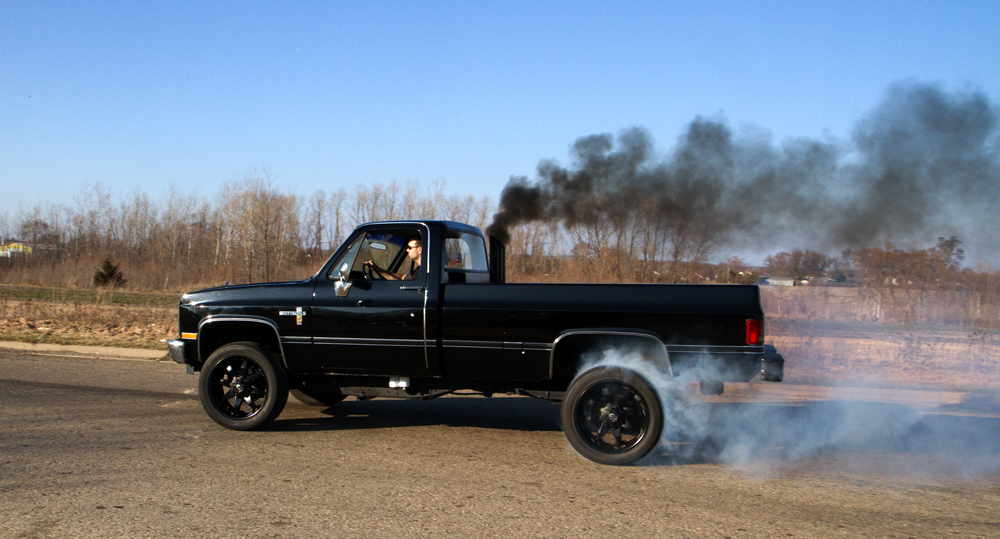

- Parting Out a Salvaged 2019 Silverado 2500HD: Bought cheap from Copart (bent frame, smashed cab). Stripping rust-free doors, bed, diffs, interior for resale to recoup costs. Cab/bed removed with tractor; chassis headed to scrap.
- Passed on a potential flatbed dually project (LMM with broken crank)—too expensive to fix.
Overall, a straightforward, no-BS review from a hands-on owner who's tested tons of mods on his 11+ year channel truck. If you're chasing diesel MPG, save your money on fuel coolers and invest in proven upgrades. Debate welcome in comments!
Heartbreaking Revelation: The True Story Behind Himouto! Umaru-chan (10-Minute Read)
In late December 2025, Sankaku Head (real name often stylized as Sankakuhead), the mangaka behind the beloved comedy series Himouto! Umaru-chan, shared a deeply personal and emotional story on his YouTube channel. After nearly a decade of silence, he revealed that the iconic protagonist, Umaru Doma, was directly modeled after his real-life younger sister, who tragically passed away in 2017 from a serious, incurable illness.
This confession has profoundly changed how many fans view the series—a lighthearted slice-of-life comedy about a "perfect" high school girl who transforms into a lazy, otaku shut-in at home. What was once pure goofy fun now carries an undercurrent of tribute and grief.
Here are key visuals of the character at the heart of it all:


Background on the Series
Himouto! Umaru-chan (translated as "Dried-Fish Little Sister! Umaru-chan") began as one-shots in 2012 before serializing in Weekly Young Jump from 2013 to 2017 (12 volumes). It exploded in popularity with two anime seasons (2015 and 2017 by Doga Kobo), OVAs, and spin-offs. The story follows Umaru, outwardly flawless and admired, but secretly a chibi hamster-hoodie-wearing gamer who lounges, snacks, and pesters her older brother Taihei.
The anime ended on a cliffhanger after Season 2, and fans long wondered why no Season 3 materialized despite the manga's cultural impact (memes, merchandise, enduring fandom).
The Timeline of Tragedy
- Early Inspiration: Sankaku Head and his sister shared a close bond, often drawing manga together as kids. Umaru's dual personality—elegant outside, lazy at home—mirrored his sister's real traits. She was thrilled when the manga got approved for serialization.
- 2015 (Volumes 6–7 Era): Around the first anime season's peak popularity, his sister was diagnosed with a severe, rare illness requiring long-term hospitalization. Sankaku Head stayed positive, visiting her and encouraging recovery.
- 2017 (Volumes 10–11): The disease worsened, and she passed away. Overwhelmed by grief, the author struggled to continue drawing Umaru—requesting hiatuses from his editor. The manga ended abruptly in November 2017, shortly after her death.
During this time, conflicting emotions tore at him: Celebrating the anime's success (e.g., attending launch parties) while privately mourning.
Hidden Tribute in the Manga
One poignant detail: In Volume 11's author section (often featuring Umaru-related photos), there's an image of someone wearing a Umaru-themed t-shirt. Sankaku Head quietly revealed this was his sister herself—her wearing a gift shirt. It was his subtle way to immortalize her without saddening readers of a comedy series.
Volume 11 cover and related images:


Why Reveal It Now?
Sankaku Head warned viewers upfront: This story is heavy and may forever alter perceptions of the fun, carefree series. He kept silent for years to preserve its joyful tone—no one wanted a comedy overshadowed by real tragedy.
Now, marking 20 years as a mangaka and feeling stronger mentally, he chose openness on his personal YouTube channel. Choking up, he said:
"Umaru-chan as a character is my sister. I hope people don't forget about her. Umaru is proof that she was alive. If I never had a sister, Umaru-chan would have never existed. I only want Umaru-chan to never be forgotten forever—it means my sister will be remembered by you all."
For him, the series is now a living legacy.
Fan and Community Reaction
The news spread quickly across Reddit, MyAnimeList, 4chan, and anime sites. Many fans expressed heartbreak, vowing never to forget Umaru as a tribute. Some reflected on past complaints—"Umaru is annoying"—now regretting them in light of the context.
Others praised Sankaku Head's healing process: Sharing after years of private grief shows growth. Communities encouraged sending positive messages to his channel.
Why No Anime Continuation?
Everything suddenly makes sense: The manga's abrupt end stemmed from unbearable grief. Continuing Umaru meant constantly reliving loss. No Season 3 likely ties to this—prolonging the series would have been too painful.
Final Thoughts
This revelation transforms Himouto! Umaru-chan from mere escapist comedy into something profoundly human—a brother's love letter to his sister, ensuring her spirit lives on in a character adored worldwide.
As one fan put it: "Umaru is now eternal."
If you've never watched/read it, the goofy antics hit differently now. And if you have, revisit with new eyes—knowing it's not just fiction, but proof someone wonderful existed.
Honda R18 Engine Teardown: Why Simplicity Made It Reliable (10-Minute Read)
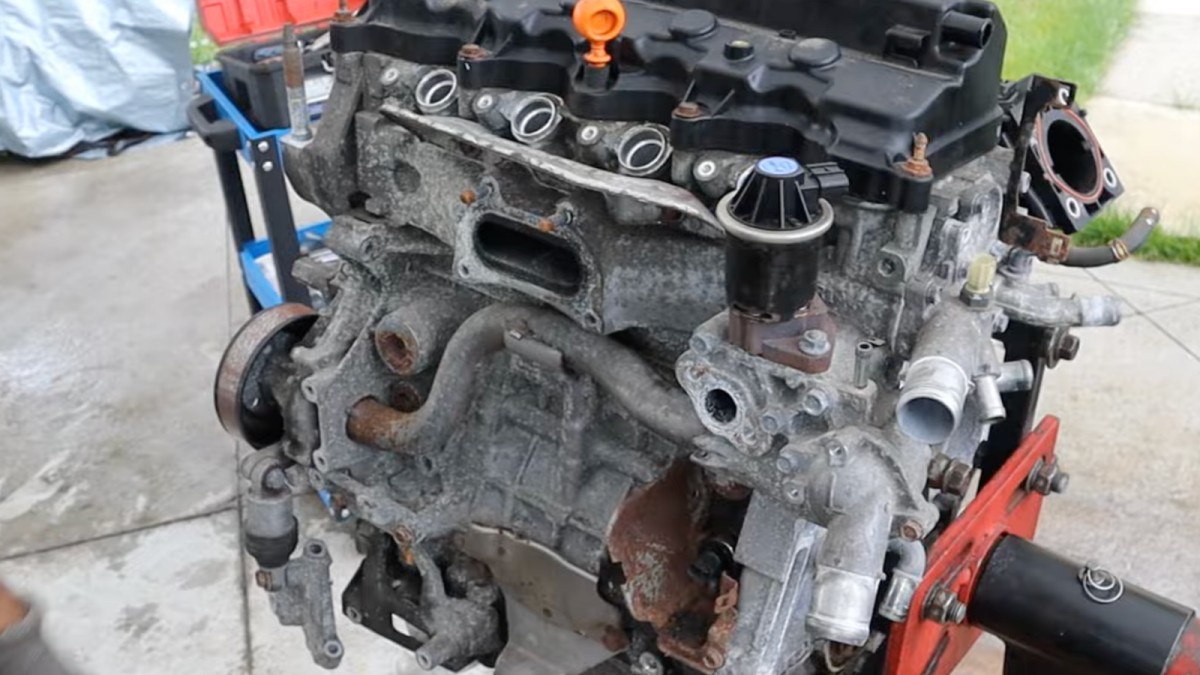
The Honda R18 (1.8L SOHC i-VTEC) powered 9th-gen Civics (2006–2011 in many markets) and similar models. This teardown examines a high-mileage example (~210,000 km / ~130,000 miles) from a 9th-gen Civic with a suspected head gasket leak. Despite the failure, the engine shows impressive durability, highlighting why the R18 earned a reputation for reliability—except early blocks prone to cracking.
Overall verdict: A simple, robust design from the pre-turbo/direct-injection era that prioritizes longevity over complexity. Modern Honda engines (e.g., L15 turbo) often sacrifice this for emissions and power.
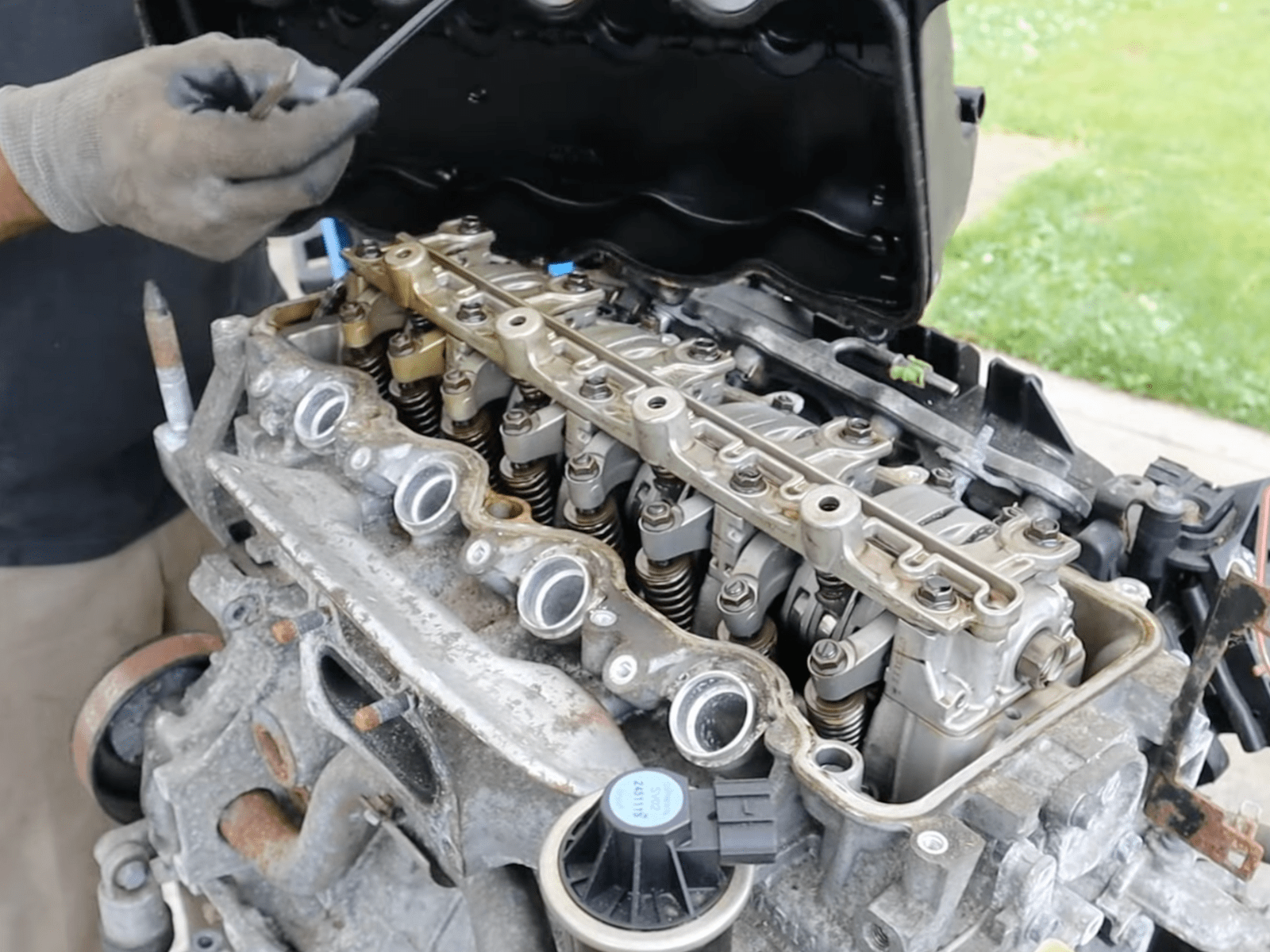
Here are views from a typical R18 teardown:


Top End: Economy-Focused i-VTEC System
The plastic valve cover is basic—no captive bolts, just an oil cap and PCV hose. Underneath sits the rocker arm assembly on a central shaft.
Key feature: "Economy" i-VTEC (not full performance VTEC):
- One cam lobe per valve pair is flat → one intake valve stays mostly closed at low RPM for fuel efficiency (reduced pumping losses).
- At higher RPM, oil pressure locks the rockers together → both valves follow the taller lobe for full airflow.
- Activation via VTEC solenoid sending oil through the shaft to a locking pin.
This differs from aggressive VTEC (e.g., B/K-series) with wild high-RPM lobes. Requires periodic manual valve lash adjustments.
Rocker arm assembly close-ups:



Intake manifold: Plastic, simple port injection (no direct injection → no carbon buildup on valves). Cheap, replaceable injectors. Includes tumble control valves for better combustion.
Common issues: Clogged EGR valve/passages (sooty) and VTEC solenoid screen (oil starvation affects performance).
Timing Side: Ultra-Simple Chain Drive
External belt-driven water pump (metal impeller, easy access). Timing cover doubles as engine mount—chunky cast aluminum.
Inside:
- Single timing chain (thin but adequate) with hydraulic tensioner and plastic guides (reliable, unlike some VW/Audi).
- Crank-driven gear-type oil pump integrated into cover—no extra chains.
Timing chain and cover details:


The Failure: Blown Head Gasket
Head bolts (14mm 12-point) came off easily—two were loose. Between cylinders 2 and 3: Burn marks, rust, and crusty coolant residue on head and block. Inner cylinders (2/3) showed steam-cleaning effect from coolant intrusion; outer ones looked normal.
Likely causes:
- External coolant leak → low levels → overheating concentrated on inner cylinders (less cooling jacket exposure).
- Loose bolts → head lift/warp (chicken-or-egg with overheat).
Preventable if driver noticed overheating warning.
Damage visuals (similar failures):


Bottom End: Built Like a Tank
Aluminum oil pan, windage tray (steel), plastic pickup tube. Oil filter mounts on pan (potential O-ring leak point).
Strong ladder-frame main bearing girdle with side bolts. Bearings pristine at 210k km—minimal wear. Connecting rod bearings/bolts (10mm) robust compared to newer engines.
Pistons: Lightweight, low skirt wear ("polka dots" from manufacturing). Minor oil ring carbon—normal oil consumption starting.
Crank and bottom end:


Lubrication & PCV Systems
Gear oil pump → filter → main gallery → cylinder wall squirters, mains, head (for i-VTEC), chain tensioner. Simple, no variable displacement.
PCV: Labyrinth baffle in block separates oil from crankcase vapors.
Camshaft rides directly in aluminum head (no inserts) but showed excellent condition.
Final Thoughts: A Reliable Classic
Despite the head gasket failure (owner neglect/external leak), internals were remarkably clean and unworn. Simplicity shines: Port injection, robust bottom end, minimal extras.
Pros over modern Hondas: Easier/cheaper maintenance, no DI/turbo issues, proven longevity (transmissions often fail first).
The R18 proves "they don't make 'em like they used to"—reliable daily-driver engineering before emissions regs forced complexity. Great for economy cars, though lacking aftermarket excitement compared to K-series.
Reflections of a 60-Year-Old Bicycle Nomad: Freedom, Aging, and Planning for the End (10-Minute Read)
A 60-year-old man, living full-time as a bicycle nomad, pulls over on a rural road lined with power lines and cemeteries to record a raw, heartfelt video. The bleak landscape mirrors his mood after visiting a friend in senior affordable housing, forcing him to confront aging, mortality, and loss of independence.
Typical views from long-distance bicycle touring on rural highways:



Rural scenes with power lines and distant cemeteries:
The Trigger: Visiting a Friend in Senior Housing
He spent time with a fellow 60-year-old friend in regulated senior affordable housing. The friend feels trapped on a "conveyor belt to dry here" – surrounded by death (neighbors passing away), strict rules (no barbecuing, limited activities), and constant reminders of decline.
The friend plans to leave, seeking more freedom. This hits home hard for the nomad, who values autonomy above all.
Exterior views of typical senior affordable housing complexes:



Personal Fears: What Happens When the Bike Life Ends?
Living mostly on his heavily loaded touring bike, he cherishes the freedom – no rules, no inspections, just open road. But at 60, reality looms: An injury could end it instantly. "Where am I going to go?"
He recalls his parents' struggles in similar housing: Surprise inspections (including closets), no personal touches like grilling, feeling invaded and controlled.
His Alaskan roots – years in off-grid "dry cabins" (no running water/electricity) – make sterile facilities unbearable. He refuses to spend his final days regimented and confined.
Off-grid dry cabins in Alaska's wilderness:


Proactive Planning: Having a Backup
In recent months, he's made progress:
- Plan A → Relocate abroad (South America) for affordable, freer living.
- Plans B & C → Ready if geopolitics or changes block Plan A.
- Key advice: If solo like him, have at least one reliable contact for emergencies (hospital logistics, decisions).
He's no longer "freaked out" – having a plan brings peace.
Older cyclists on long journeys, reflecting solitude and endurance:


Community & Holidays Alone
He addresses viewer comments: "What happens when you can't ride anymore, old man?" His videos share research to help others facing similar fears.
Christmas will be solo, but he's hosting a live stream on Christmas Eve (6 PM West Coast time) for anyone alone, lonely, or just wanting company.
Core Message
Aging is inevitable – "we get old, we're going to die" – but losing freedom accelerates decline. He chooses bike life for vitality, while planning ahead to avoid institutional traps.
Raw, vulnerable reflection from someone living unconventionally: Prioritize independence, build safety nets, and face the future head-on. Inspiring for nomads, retirees, or anyone pondering "what next?" in later years.
$3,700 Liquidation Appliance Haul: Auction Wins, Chaos, and Big Profit Potential (10-Minute Read)
Experienced reseller Cory dives into a new niche: liquidation appliances from a live auction. He spent ~$3,700 (including tax/fees) on 10 major appliances (mostly high-end brands like KitchenAid, Wolf, Jenn-Air, Bosch) plus a bonus lot of recessed lights. These are a mix of customer returns, scratch-and-dent, and unknowns—big risk, but massive upside.
Retail value of the haul: ~ $30,000+ (including lights). Expected gross sales: $9,000–$12,000. Projected profit: $6,000–$8,000 after cleaning/listing/selling.
This is Part 1—actual sales in a future Part 2.
Typical liquidation auction warehouse scenes:

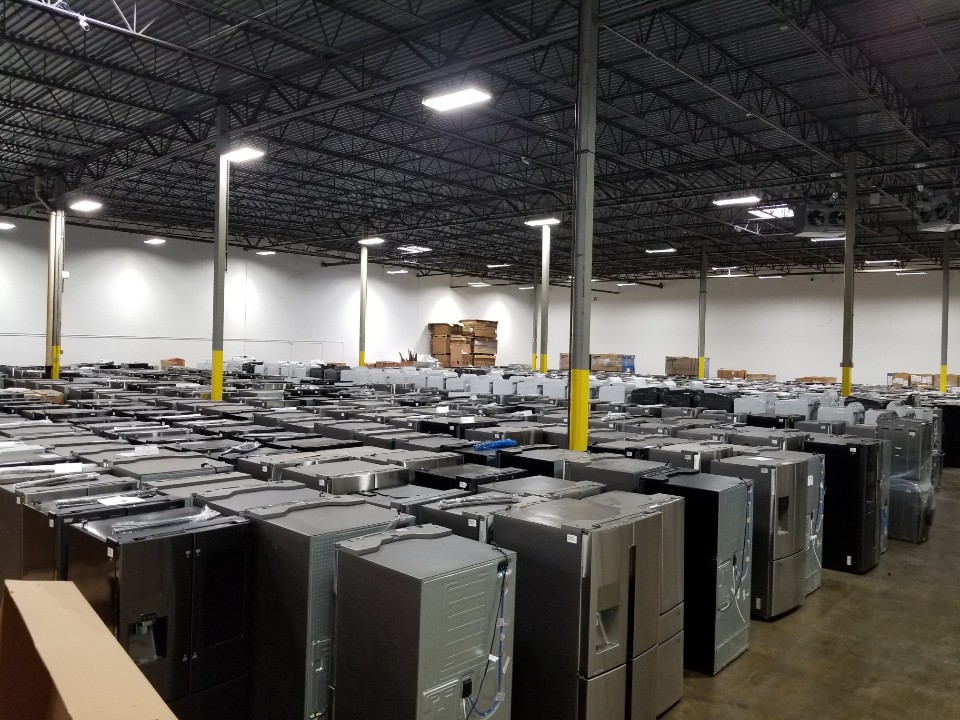
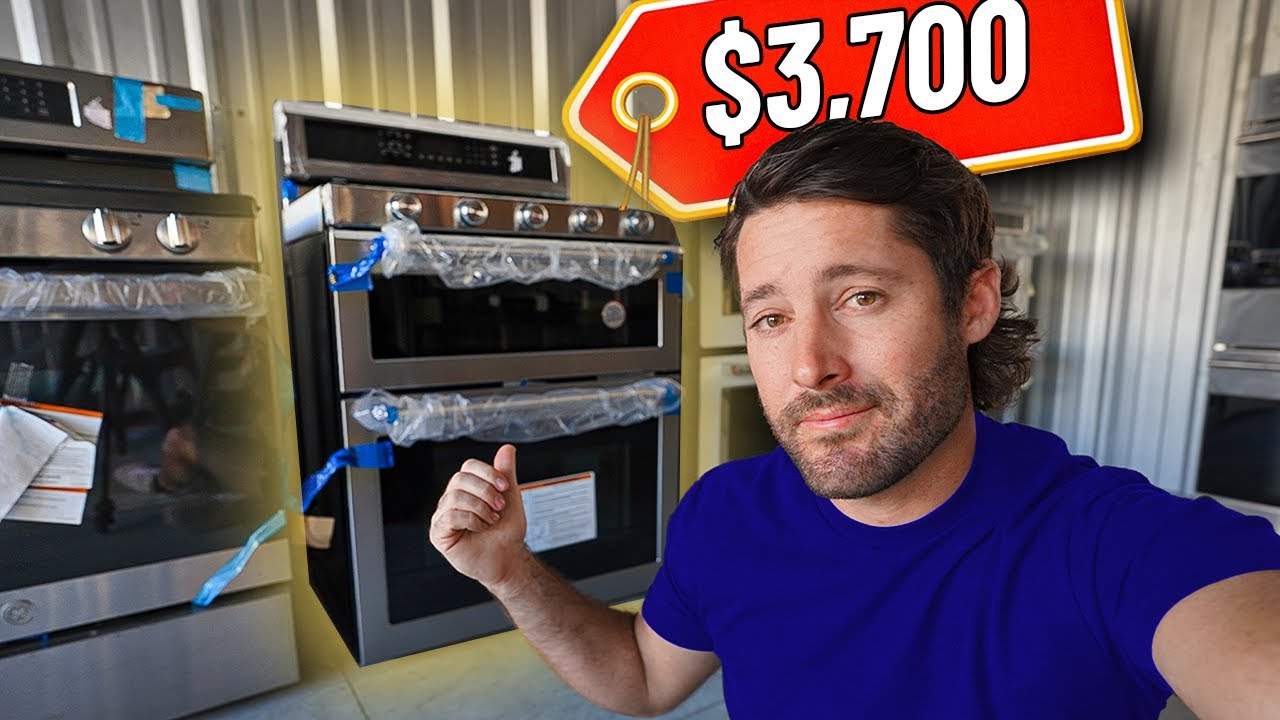
The Auction: Late Arrival, Gut Bids
Cory arrives late to a packed house—limited inspection time. Quick scans for dents/damage, focusing on premium brands.
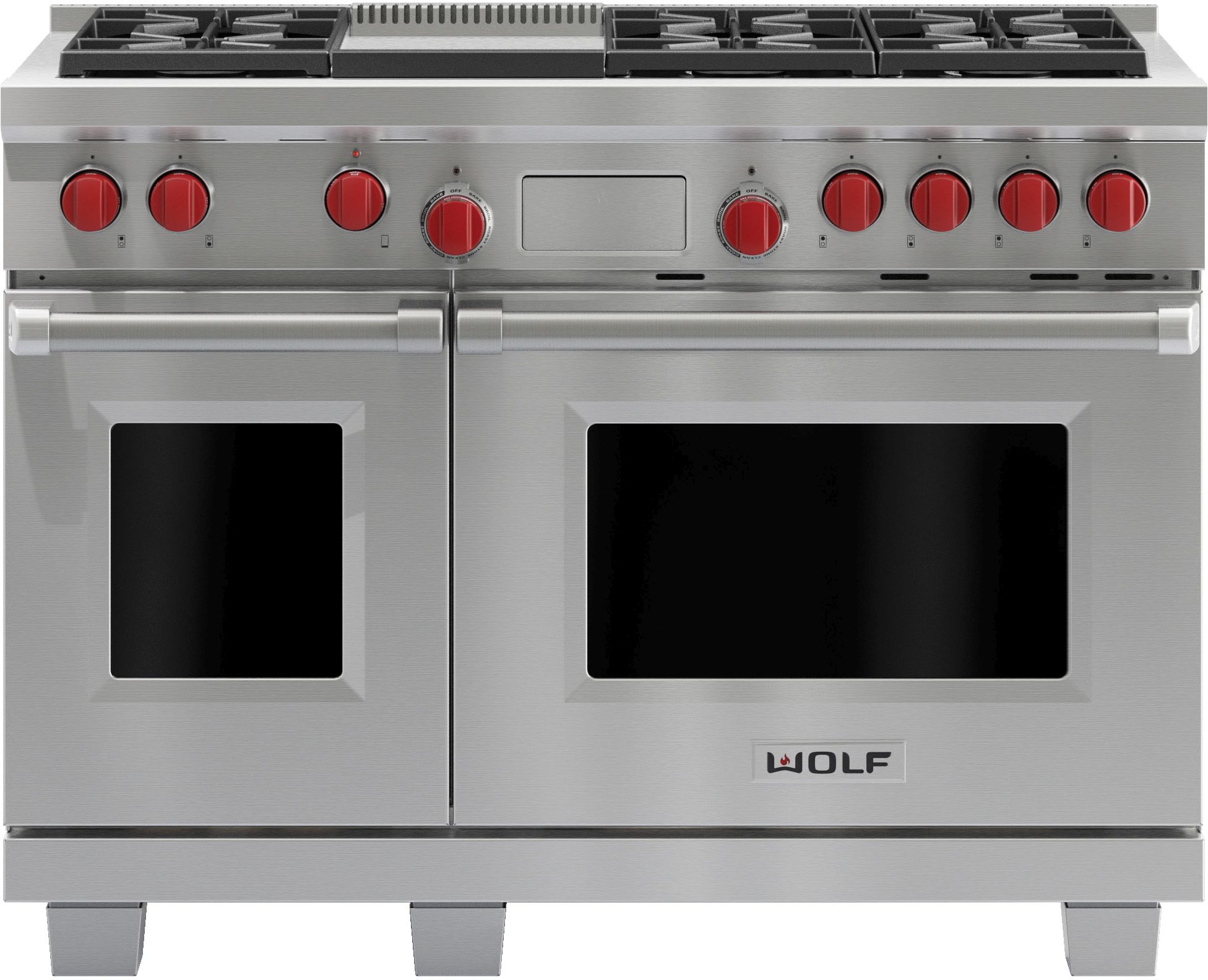
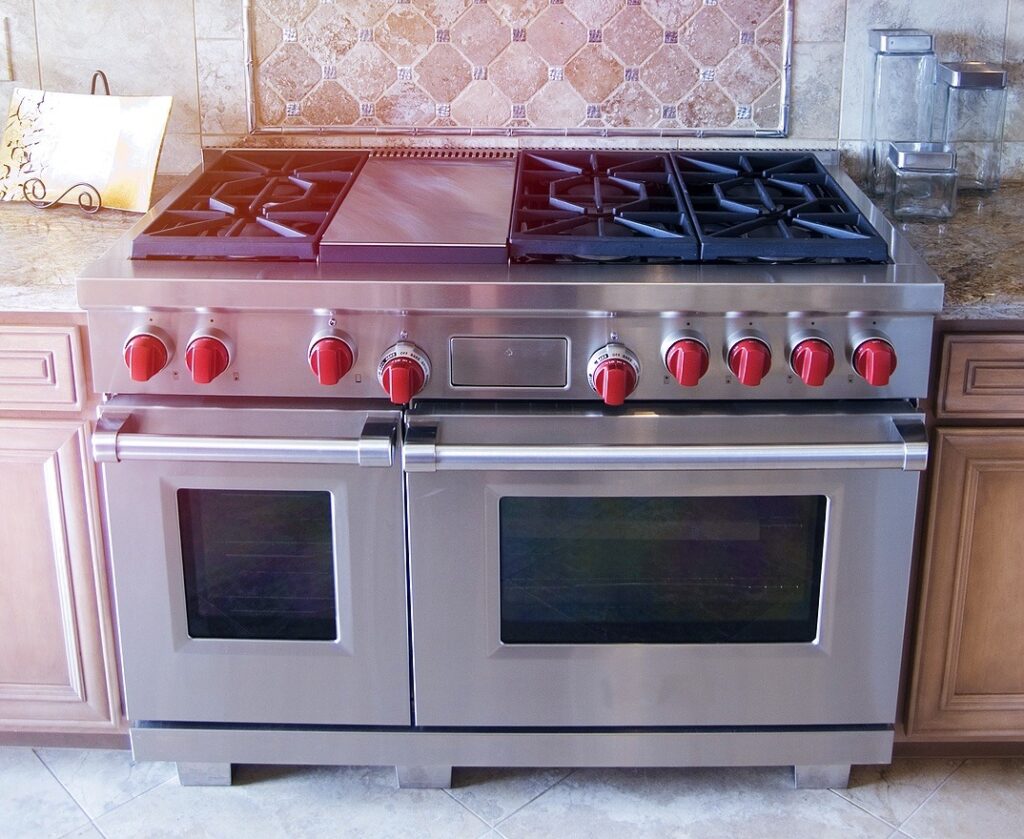
- Misses a massive Wolf dual-fuel range (retail ~$10–15k) by bidding conservatively ($1,000 final).
- Aggressively wins the rest, outbidding rivals.
Heavy loading chaos—trailers, dollies, and help from a friend:


Pickup day: Two trips to a new storage unit. One fridge too tall for the unit—ends up in his garage for testing. Pure "gong show" logistics, but everything secured.
Storage unit packed with the haul:

The Haul Breakdown
Mostly wall ovens, ranges, microwaves—many still in original packaging, near-mint or minor cosmetic issues.
Standouts:
- 2 KitchenAid Double Wall Ovens (one stainless, one white): Look brand new. Retail ~$4–6k each. Plans to sell ~$1,500–$2,000 each (potential $1k+ profit per unit).



- Wolf Double Oven (the "sleeper"): High-end brand (retail ~$8,000+). Top pristine, bottom has minor rust (seeks viewer tips to fix). Huge upside if cleaned up.
- Jenn-Air & Other Microwaves: Drawer-style and over-range. Good condition; one used but solid.

- Bosch & Gas Ranges: Including a 6-burner commercial-style. Boxed, minimal damage.


- Bonus: 144 Recessed Lights (12 boxes): Low-effort experiment. Sell locally/eBay ~$10/box.
Next Steps & Strategy
- Clean everything thoroughly.
- Test what he can (plug-in items at home; hardwired sold "as-is" with return window).
- List on Facebook Marketplace/eBay at ~50% retail (scratch-and-dent disclosure).
- Emphasize condition transparency for trust.
Cory's excited—this haul feels like a winner, branching from his usual flips into bigger margins. Part 2 will reveal real sale prices/profits.
Great intro to appliance flipping: High reward for those handling heavy logistics and minor fixes. If you're into reselling, liquidation auctions offer deep discounts on premium goods—just arrive early!
China's E-Bike Regulations: Crackdowns, Confiscations, and Economic Cycles (10-Minute Read)
A podcast discussion highlights frustrations with China's e-bike policies, portraying them as repeated cycles of promotion, regulation, and confiscation. Hosts describe owners destroying bikes to prevent seizure, massive "graveyards" of impounded vehicles, and allegations that confiscated e-bikes are resold abroad (e.g., Africa) for government profit.
While some elements ring true—China has enforced strict e-bike rules for safety—the narrative exaggerates with unverified claims of widespread theft and export scams.
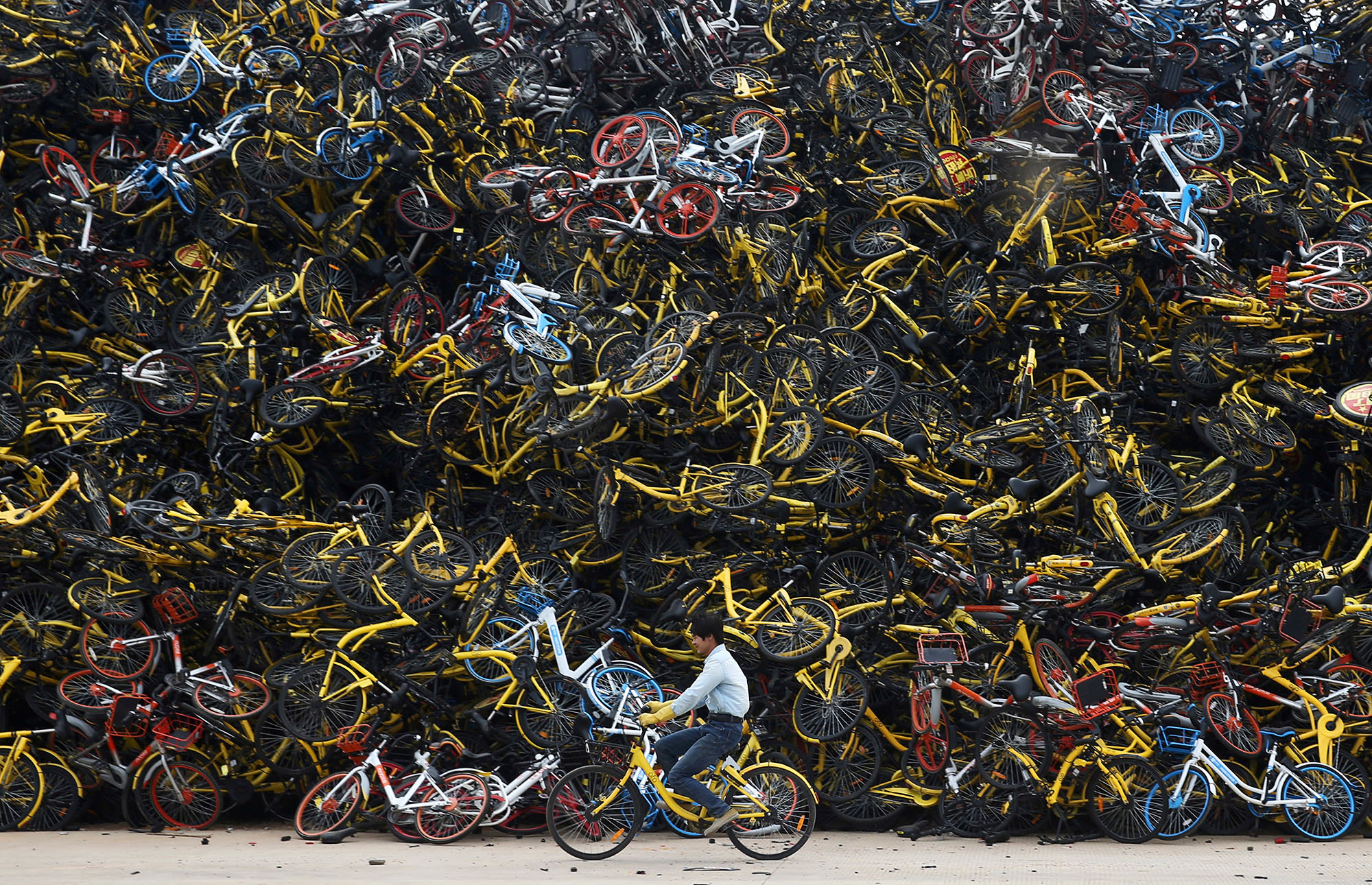
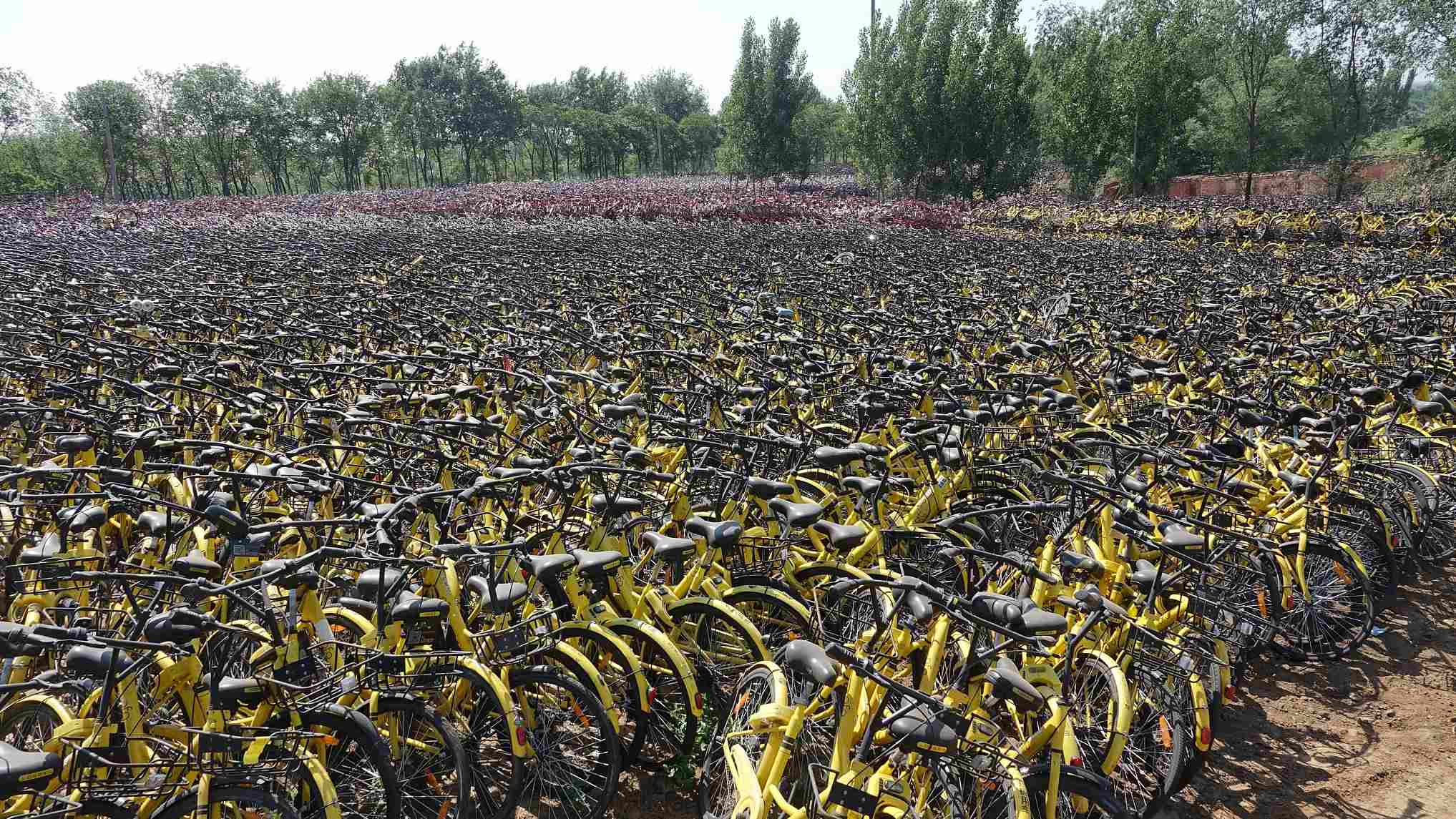
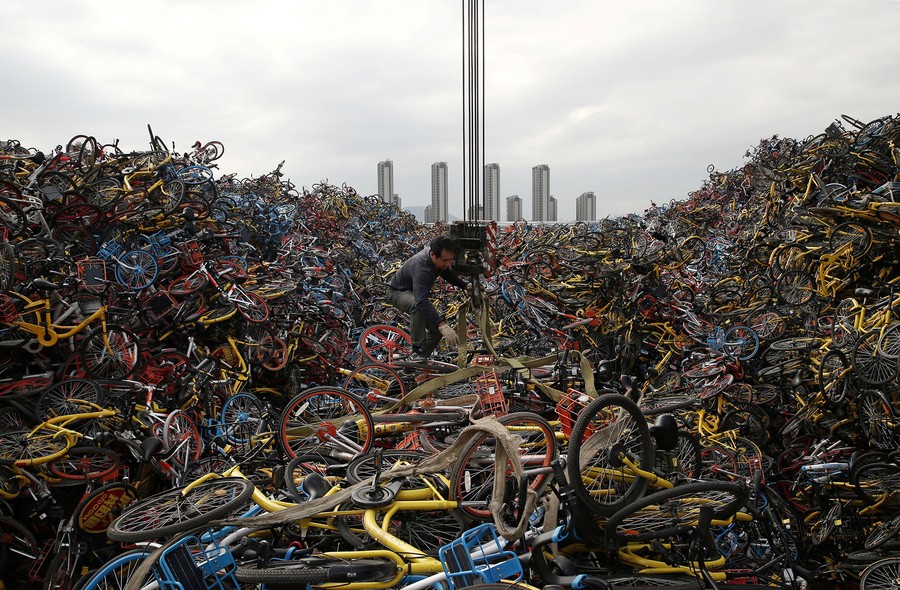
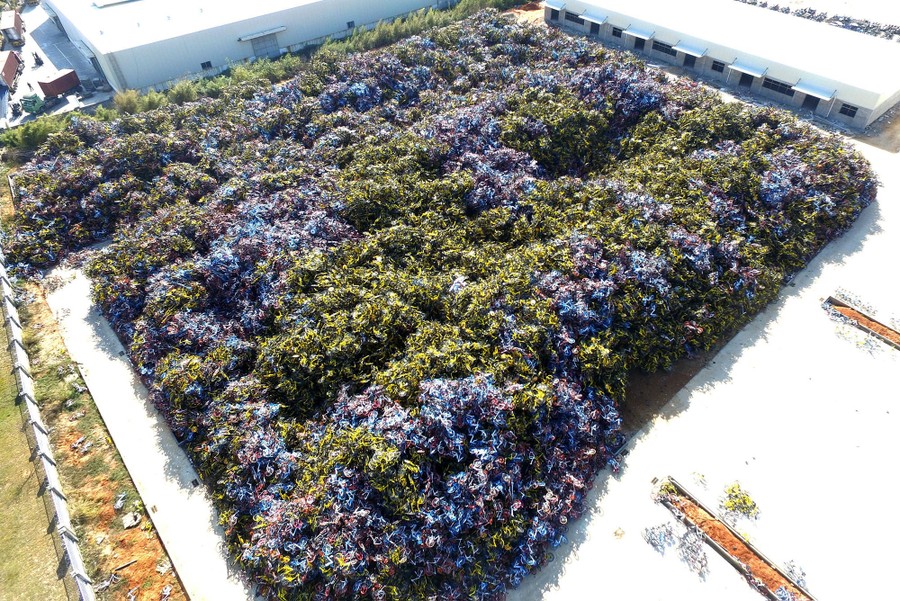
Massive piles of impounded or abandoned bikes in China (often from past share-bike oversupply or enforcement):

Current Regulations (2025 Updates)
China implemented the new national standard GB 17761-2024 for electric bicycles:
- Effective September 1, 2025 (full sales enforcement December 1).
- Max speed: 25 km/h (motor cuts power above this; no sudden braking).
- Fire safety: Flame-retardant materials (e.g., foam seats allowed if compliant; plastics ≤5.5% of weight); anti-tampering designs.
- No specific ban on under-seat storage mentioned—focus on battery safety to prevent fires.
- Older compliant bikes remain road-legal; trade-in subsidies encouraged.
Goals: Reduce fires (down 44.7% in early 2025) and accidents from modifications/over-speeding. ~380 million e-bikes in use.
Police enforcing e-bike rules (historical crackdowns):



Confiscations & "Graveyards"
Past crackdowns (e.g., 2010s–2020s) targeted non-compliant or modified e-bikes, leading to seizures and impound lots ("bicycle graveyards"). Many images stem from 2017–2018 bike-share oversupply collapse (millions abandoned/dumped).
Recent enforcement focuses on sales of old-standard bikes, not mass home seizures. Owners of pre-2025 compliant models keep them; no widespread uncompensated theft reported in 2025.
Scenes of people damaging bikes to avoid confiscation (older incidents):



Resale to Africa Claim
Podcast alleges government sells seized bikes abroad (with Chinese plates visible). Searches yield anecdotal YouTube videos but no verified reports from credible sources.
China exports millions of new/used e-bikes globally (including Africa), but no evidence ties this to systematic resale of confiscated personal vehicles. Some second-hand markets exist, but claims of "stolen" bikes flooding Africa appear unsubstantiated or exaggerated.
Examples from searches (limited matching images):


Broader Critique
Hosts view it as a "scam": Force new purchases for economic stimulus, create waste (rusting bikes/batteries harmful to environment), burden citizens (e-bikes cost ~$300–500 USD, vital for delivery/commuting).
Valid points: Regulations disrupt owners; past oversupply led to waste. But 2025 changes prioritize safety (fires down significantly), not arbitrary theft. Environmental impact from production/waste is real in China's massive e-bike industry.
E-bikes remain popular/essential in China—new compliant models sell briskly with subsidies.
The discussion mixes real issues (strict enforcement, economic pressure) with hyperbole. China's approach contrasts Western leniency but stems from safety/data needs in a dense, high-usage market.
Sodium-Ion Batteries: CATL's Breakthrough and the Path to Cost Competitiveness (10-Minute Read)
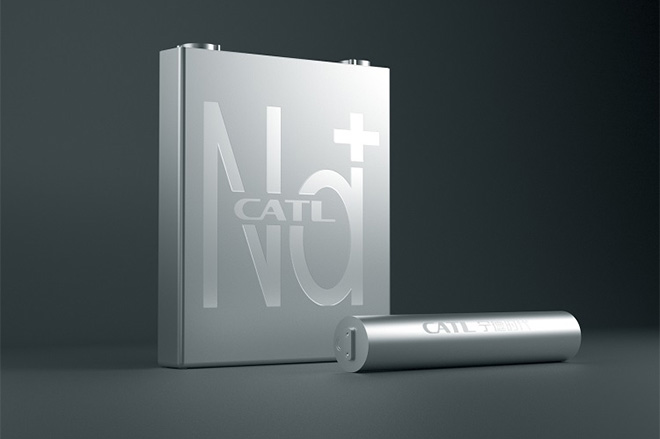
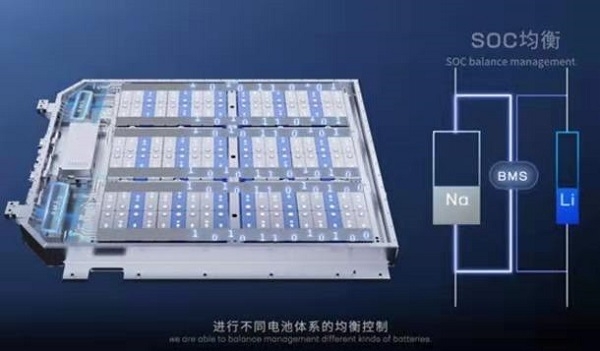
Sodium-ion batteries have generated excitement for their potential low cost, abundant materials, safety, and performance in extreme temperatures. However, they lag lithium-ion in energy density, efficiency, and current pricing. Battery giant CATL is pushing hard with its second-generation tech, branded Naxtra, launched in 2025—making sodium-ion viable for EVs and grid storage sooner than expected.
CATL's Naxtra sodium-ion battery cells and packs:


Sodium-Ion vs. Lithium-Ion Basics
Both use ion shuttling between anode and cathode. Sodium ions are larger, leading to higher internal resistance (lower efficiency) and typically lower energy density.
Advantages of sodium-ion:
- Cheaper/abundant materials (no lithium, cobalt, nickel).
- Better safety (less fire risk).
- Excellent low-temperature performance (e.g., CATL claims operation at -40°C).
Drawbacks:
- Lower energy density (historically ~160 Wh/kg vs. LFP's ~180–200 Wh/kg).
- Steeper voltage drop during discharge in some chemistries → requires robust power electronics, higher currents (more heat/losses).
- Lower round-trip efficiency.
Example discharge curves: Lithium-iron-phosphate (LFP) stays flat; some early sodium-ion drop sharply.


CATL's Progress
First-gen (2021): Prussian white cathode → 160 Wh/kg, flat-ish curve, water-based manufacturing (cheap, compatible with LFP lines).
Second-gen Naxtra (2025): 175 Wh/kg (highest for sodium-ion, rivals LFP), >500 km EV range potential, >10,000 cycles. Mass production ramping, full scale by late 2025/2026.
Cathode options:
- Prussian white: Safe, manufacturable, but caps density ~160–170 Wh/kg.
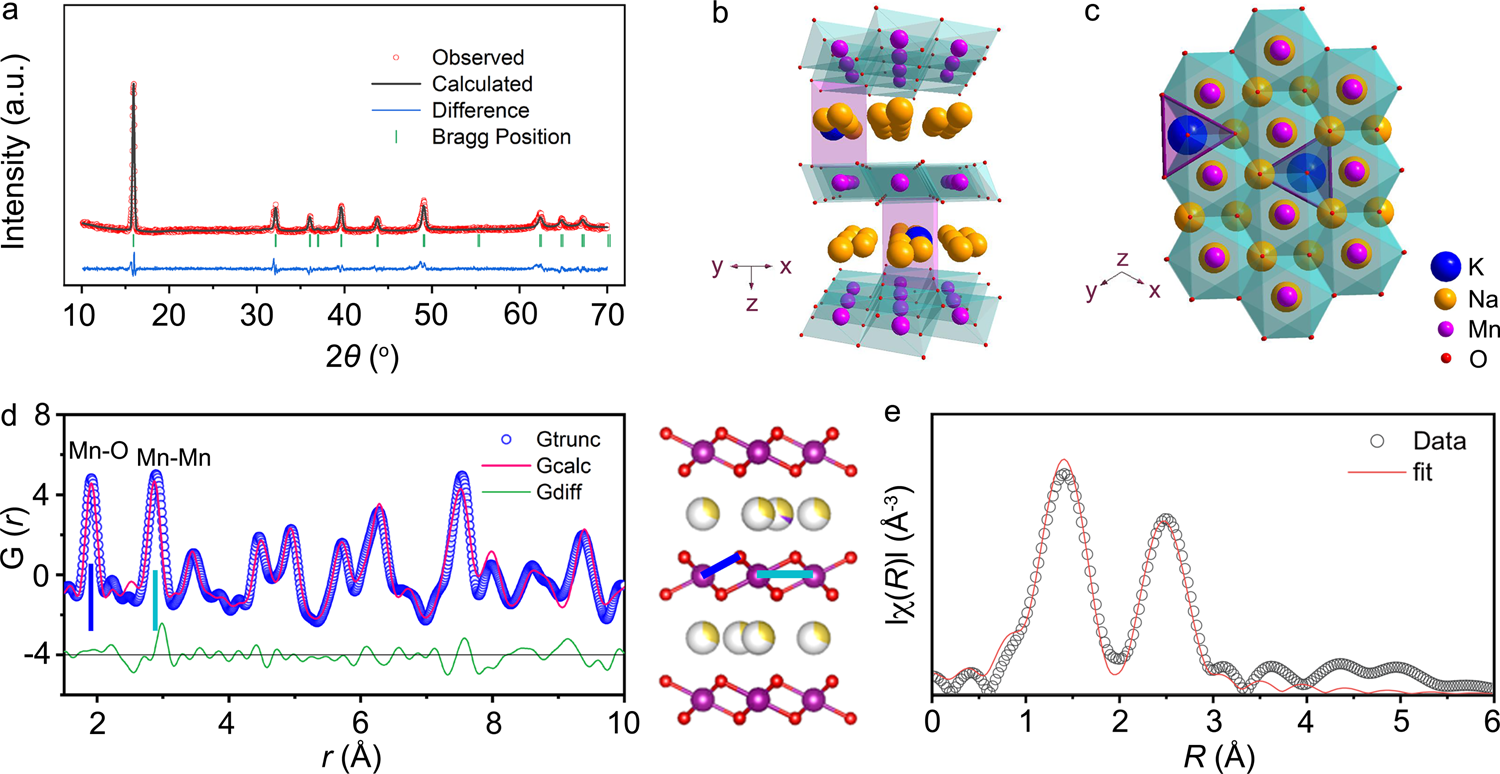
- Layered oxides: Higher density potential (~175–200+ Wh/kg) but traditionally moisture-sensitive (require expensive/toxic solvents) and steeper discharge curves.
Layered oxide cathode structures:

Prussian white structures:

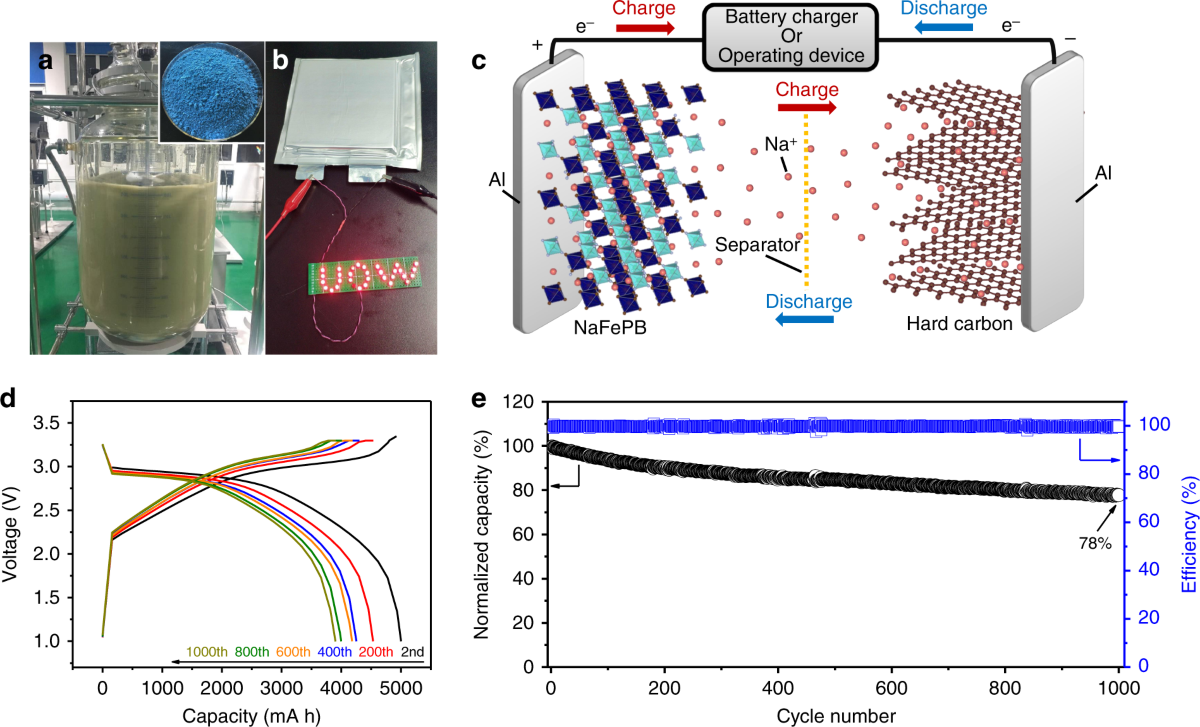
The Key Innovation
CATL shifted to layered oxide cathodes for higher density. Challenge: Moisture sensitivity prevented cheap water-based processing.
Breakthrough (patents/advances): Dopants/additives make layered oxides water-resistant → enable low-cost water-based slurry (same as LFP lines). Flatter/higher voltage curves possible.
Result: Cheaper manufacturing + higher density → suitable for EVs (80% of battery demand) → massive scale → true cost reductions.
A Stanford 2025 study shows sodium-ion raw materials cheaper but current cells costlier due to low volume. Scaling (via EVs) + innovations could drop below LFP sooner—potentially <$25/kWh long-term.
Implications
- Transport: Affordable EVs in cold climates, entry-level models.
- Grid storage: Safer, cheaper for large-scale.
- Timeline: Noticeable market share in 2030s; CATL may subsidize initially.
Sodium-ion won't replace lithium-ion overnight but complements it—especially where cost/safety/cold performance matter. CATL's push (world's largest maker) signals a tipping point. Exciting decade ahead as densities approach 200+ Wh/kg and costs plummet.
Chinese Nationalism Abroad: Clashes Over Taiwan in Unexpected Places (10-Minute Read)
A podcast episode dissects two recent incidents where Chinese nationalists aggressively asserted that "Taiwan is part of China" in international settings, escalating minor disputes into political spectacles. These stories highlight growing tensions fueled by stoked nationalism, with commentary on cultural attitudes like viewing Chinese as the "human language." The hosts criticize such behavior as rude and out of place, drawing parallels to broader geopolitical issues.
The Narita Airport Incident: Seats, Shouts, and Sovereignty
In September 2025, at Japan's Narita Airport, five Chinese tourists from the mainland occupied around 20 seats by lounging and placing luggage on them—likely to sleep while waiting for flights. A Taiwanese traveler, needing a seat, politely asked them to make room, sparking an argument.
The tourists responded with hostility, shouting that "Taiwan is part of China" and cursing at him. Tensions rose when airport police arrived. The Taiwanese man, fluent in Japanese, explained the situation to officers in their language. This prompted one woman (visible in video stills) to yell: "What the hell are you saying? Speak human language. You're speaking dog language." ("Human language" refers to Chinese; "dog language" derogatorily dismisses Japanese.)
The hosts note the irony: Insulting Japanese in Japan while making territorial claims over Taiwan. They share personal experiences in China where non-Chinese languages were mocked as "bird language" or "dog language," reflecting a chauvinistic worldview where China is central.
Footage and reports from the Narita incident:

The episode suggests this isn't isolated—similar outbursts occur amid rising nationalism encouraged by the Chinese government.
The French Tea Competition Protest: Brewing Political Drama
Shifting to a lighter but equally absurd event: In December 2025, at an international tea competition in France (likely the AVPA Teas of the World Contest), Taiwanese teas took top honors. An Indian judge praised Taiwan as the "best country for tea," highlighting its quality.
Present were Chinese officials, possibly including an ambassador, as Chinese brands competed. Upon Taiwan's win, they stood and shouted "Taiwan is part of China," disrupting the ceremony. Video shows finger-pointing and chaos, with audience members retorting, "If you don't like it, get out."
The hosts mock this: "Just let them win the tea competition. They deserve it." They contrast Taiwan's "pure" teas (grown in clean environments) with China's, allegedly from "polluted soil" and "radioactive water." Taiwan's teas, like oolong from high-altitude farms, are renowned globally.
This underscores obligatory nationalism: Officials risk trouble back home if they don't protest perceived slights to China's claims.
Scenes from the French tea competition and related Taiwanese tea production:


Tea originated in China but thrives in Taiwan's ideal conditions—beautiful factories under blue skies, as shown in clips.
Broader Commentary: Nationalism and Cultural Superiority
The hosts tie these to a pattern: Aggressive claims abroad, even in neutral venues like airports or awards. They argue it reflects government-fueled nationalism, more intense than ever, portraying China as the world's center—"the only place that is human."
Personal anecdotes: In China, foreigners speaking English were told to "stop speaking bird language." Such attitudes extend to geopolitics, dismissing other cultures/languages as inferior.
Implications: These incidents damage China's image, alienate neighbors, and highlight hypocrisy (e.g., protesting in sovereign nations while claiming others). The episode calls for toning it down: "Keep that rhetoric for when you're there."
The podcast ends abruptly, possibly cutting to unrelated content (e.g., AI banter)—irrelevant to the main discussion.
These stories offer insight into escalating cross-strait tensions, where everyday encounters become flashpoints. As arms sales to Taiwan increase, such nationalism may intensify, but the hosts urge: "This nonsense needs to stop."
The Tough 2025 Job Market for Recent College Graduates: Data, Stories, and Advice (10-Minute Read)
As of late 2025, the job market for new college graduates remains challenging—one of the toughest in a decade outside the pandemic. Unemployment rates for recent grads (ages 22–27 with bachelor's degrees) hover around 5–6% (e.g., 5.3% in Q3 per NY Fed), often exceeding the national average (~4.2%). This reverses historical trends where college degrees provided a clear edge.
Historical unemployment chart for recent graduates vs. all workers (showing recent decoupling):
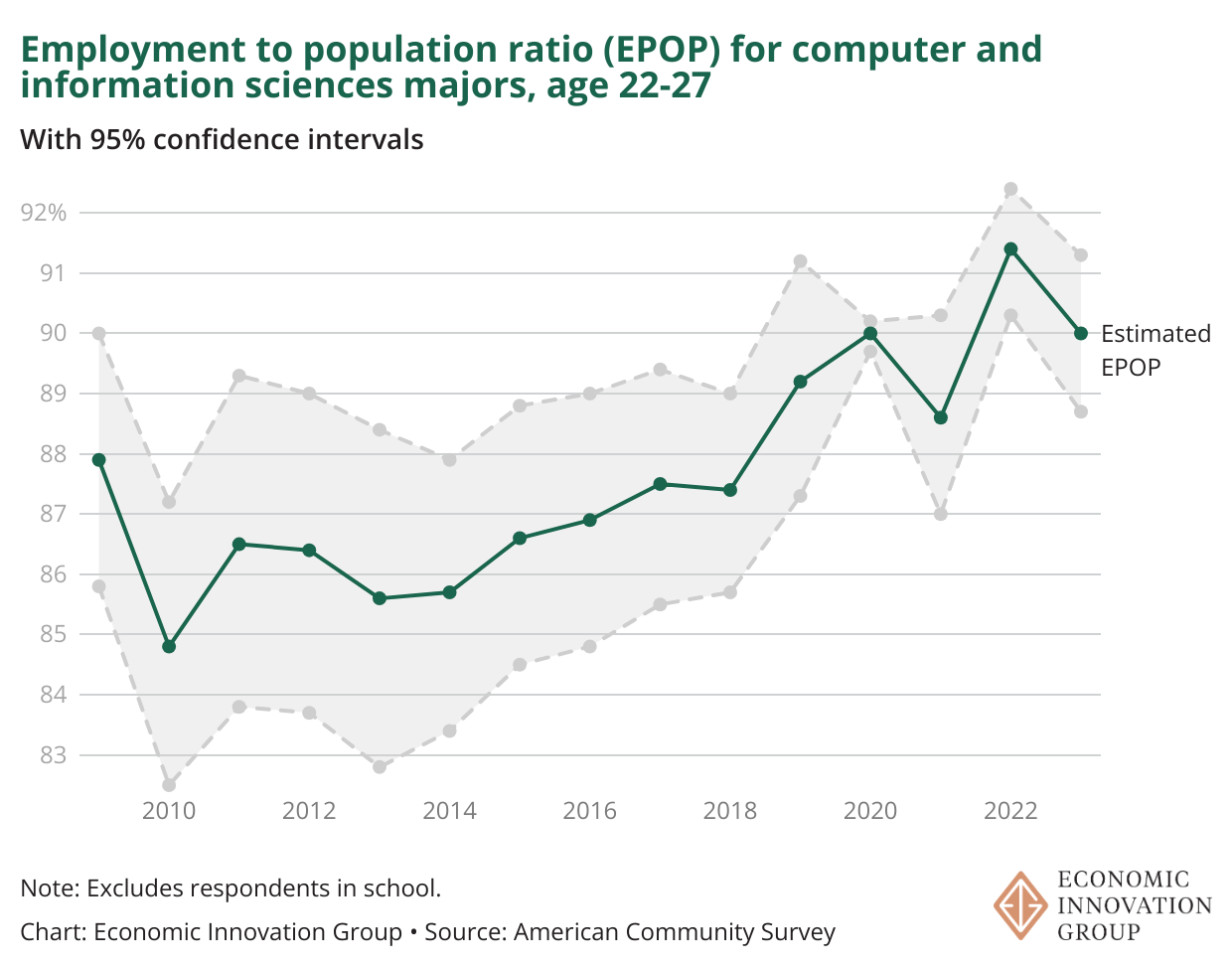
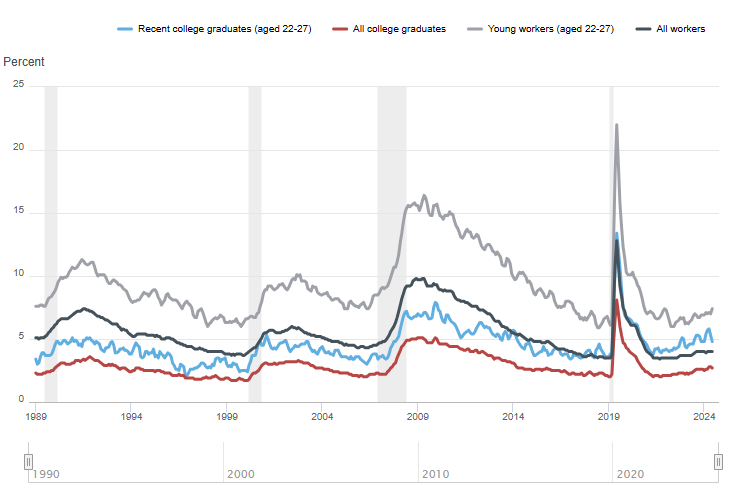
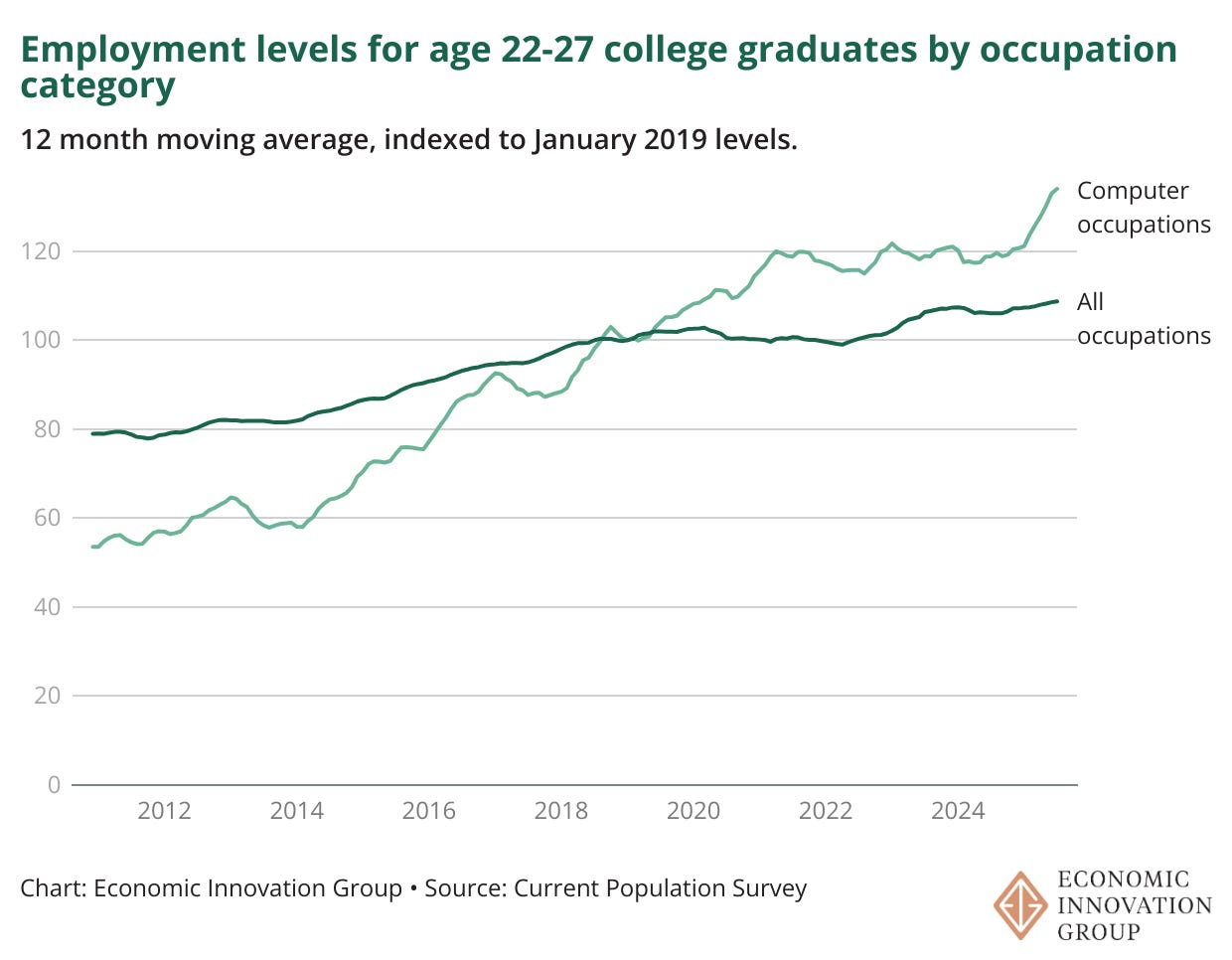
Key Data Points Driving the Difficulty
- Higher Unemployment for New Grads: First time in decades surpassing overall workers; gap with experienced grads at all-time highs (~3%).
- Overcrowded Market: ~317,000 federal layoffs in 2025 (via DOGE initiative) flooded experienced workers into private sector, competing for entry/mid-level roles.
- Fewer Openings: Job openings ~7.7 million (Oct 2025 BLS), down from post-pandemic peaks (>11M).
- Low Turnover: Workers holding jobs tightly (low quits/layoffs) → fewer vacancies.
- AI Impact: Eliminating/replacing many entry-level tasks (e.g., data entry, basic analysis).
- Cautious Hiring: Companies cut training programs; demand 2–5 years experience even for "entry-level."
Overcrowded entry-level competition visuals:


Real Stories from Grads
Many feel misled by promises of jobs via extracurriculars, internships, and high GPAs—yet face hundreds of rejections.
- Marketing/management double-major: 200+ applications in a year, multiple internships/TA roles/study abroad → no job, mounting debt.
- Top-25 uni, 3.9 GPA: 300 applications → only 3 responses (part-time).
- Others note competing against prior grads still searching + mid-career workers "reverse mobilizing" downward.
Frustrated grads job searching:


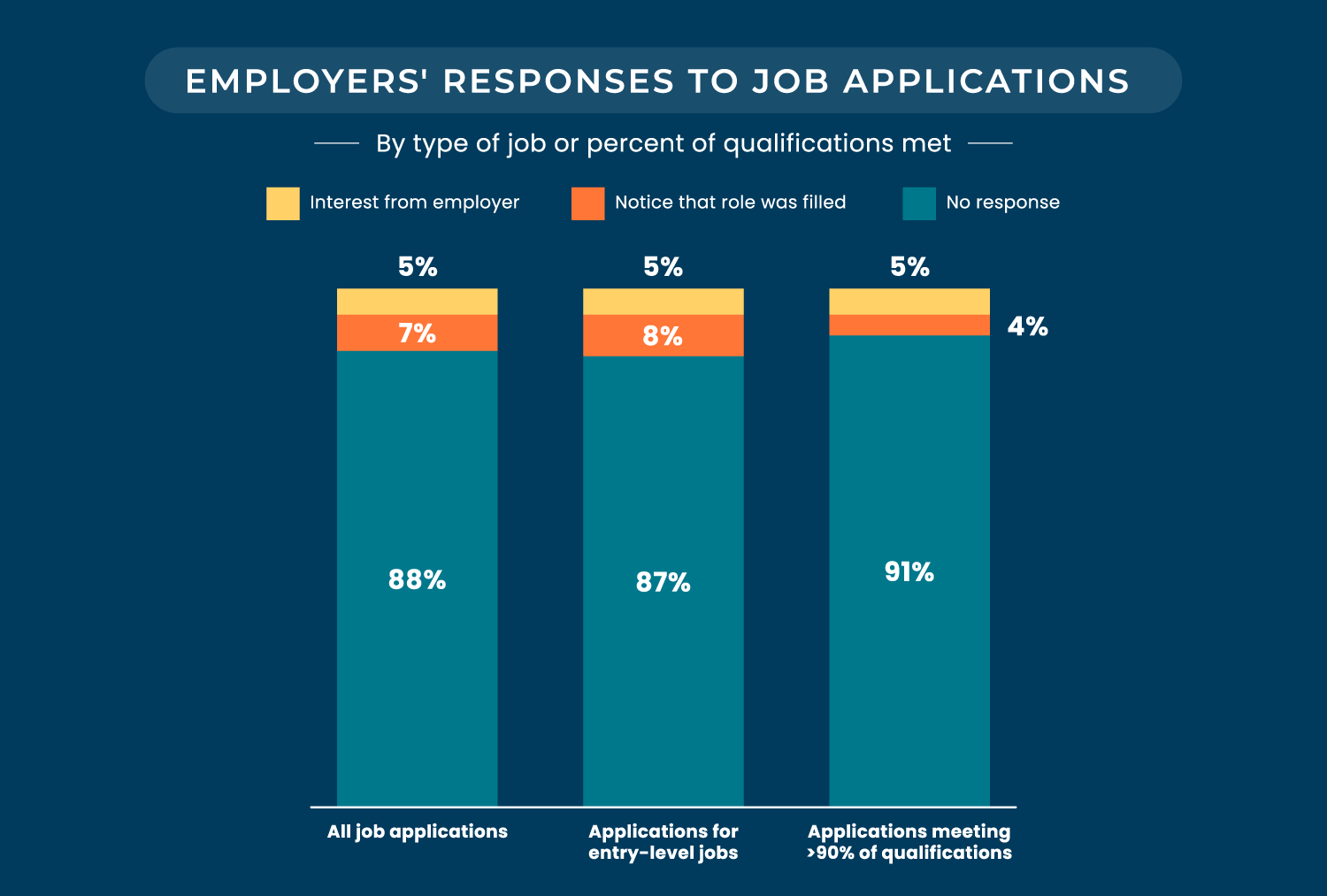
Why It's Happening
- Perfect Storm: Layoffs + AI + prior unemployed grads + low mobility.
- Mismatch: Degrees oversupply in some fields; skills gaps in others.
- ATS/AI Screening: Resumes filtered aggressively (keywords critical).
Not impossible—jobs exist, but hyper-competitive.
Practical Advice for New Grads
- Volume & Persistence: Apply aggressively (far beyond 200/year); it's a numbers game.
- Internships Early/Aggressively: Relevant experience trumps extra degrees (avoid more debt/time unless specialized field like MBA/PhD).
- Network Heavily: Use university career services, LinkedIn, alumni—referrals bypass ATS.
- Flexibility: Drop geographic limits; consider contracts/part-time/gigs in field.
- Tailor Resumes: Mirror job postings authentically (keywords without copying).
- Avoid Overqualification Trap: Extra degrees can price you out of entry roles.
Market stinks short-term, but long-term college edge persists. Focus on grit, strategy, and building real skills/experience. Companies still hire—position yourself advantageously.
Surviving Winter: Medieval Farming Techniques in Freezing Climates (10-Minute Read)
In medieval Europe, especially northern regions, growing food through harsh winters was a life-or-death struggle. Farmers developed ingenious, low-tech methods—deep plowing, hardy crops, heat traps, natural insulation, and soil regeneration—to ensure survival. These strategies turned hostile conditions into advantages, often boosting yields significantly without modern tools.
Medieval farmers deep plowing fields with oxen before frost:


Autumn Preparation: Setting the Foundation
Before frost hardened the ground, farmers prioritized deep plowing with iron-tipped wooden plows pulled by oxen—keeping soil loose and aerated. They spread thick layers of manure, straw, and leaves as mulch (warming soil ~10°F and enriching nutrients). Extensive ditch networks drained excess water, preventing frozen heaving that uprooted plants.
Timing followed lunar phases and community calendars—e.g., plowing during waning moons for better yields.
Hardy Crops: Choosing Winter Survivors
Farmers selected cold-tolerant varieties through trial and error.
- Winter grains like rye (70%+ of northern grain) → planted in autumn, dormant under snow, sprouting early in spring. Rye fields prepared for winter:


- Vegetables (turnips, cabbages, onions) → planted late summer; cabbage fermented into sauerkraut.
- Companion planting: Beans/peas climbed grain stalks (fixing nitrogen); taller plants sheltered shorter ones (up to 25% yield increase).
Creating Artificial Warmth
- Manure hotbeds → trenches filled with decomposing waste (heating soil 15°F+ for weeks). Manure hotbeds and compost heating:



- Windbreaks (woven wattle fences) → reduced damage (30% more yield).
- Early greenhouses: Bell-shaped cloches (glass/clay) over plants; cold frames for rows (extending season 40 days). Medieval-style cloches and cold frames:


Harnessing Natural Heat
- South-facing stone walls → absorbed daytime sun, releasing heat at night (microclimates several degrees warmer).
- Slope placement → south-facing hills (40% more sunlight).
- Livestock proximity → animal body heat warmed adjacent gardens (up to 4°F boost).
Seed & Plant Storage
- Seeds → dried, stored in clay pots with herbs (cool cellars ~constant temperature).
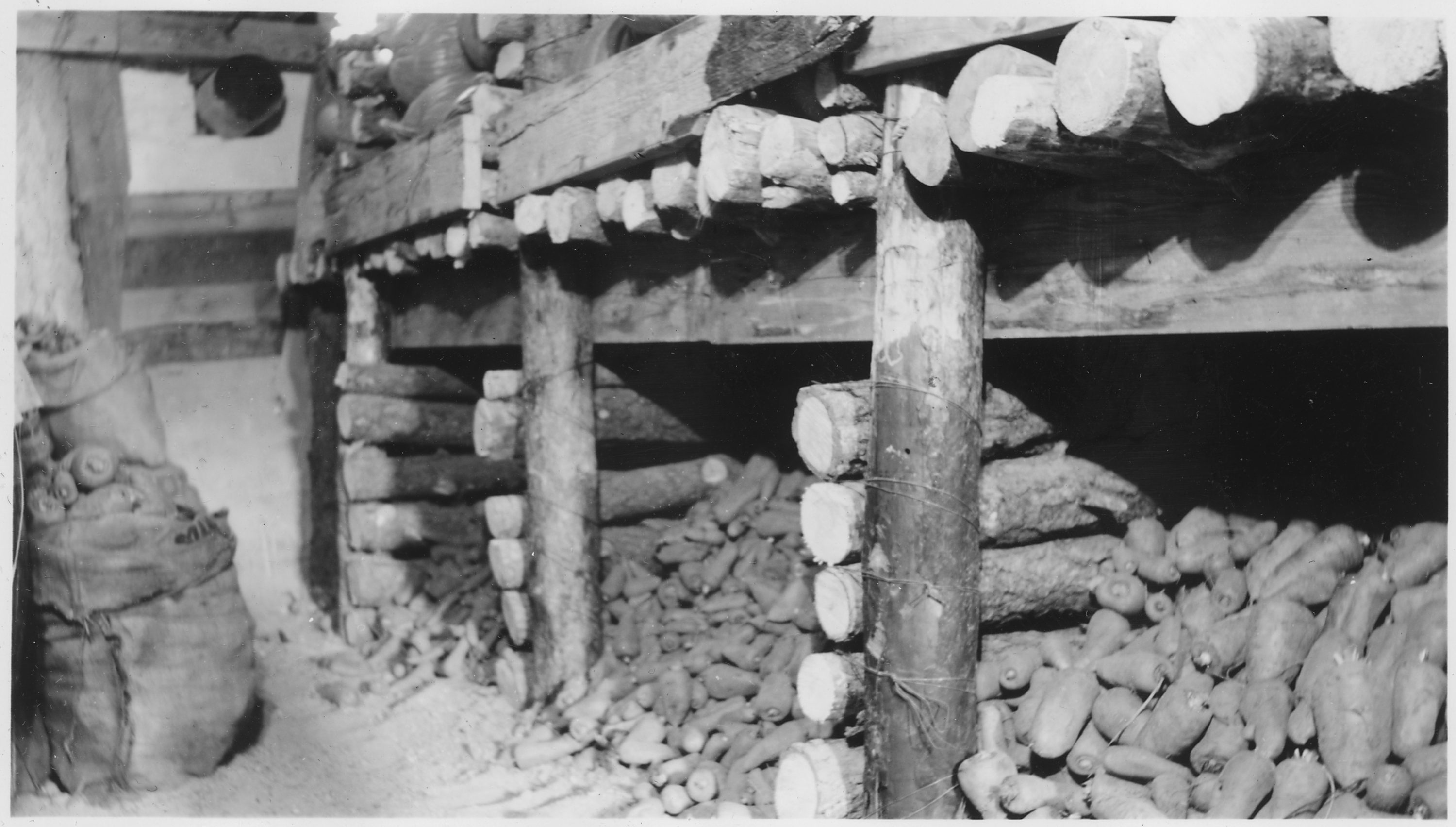
- Roots → packed in damp sand below frost line (33–40°F). Medieval root cellars and storage pits:


Turning Winter into an Ally
- Snow insulation → protected plants (up to 30°F warmer underneath; 20% higher yields).
- Ice pools → slow spring melt irrigation.
- Freeze-thaw → naturally tilled heavy soils (40% less spring work).
Harvest Timing & Winter Greens
- Staggered harvests → based on weather signs; frost-sweetened kale/cabbage (40% more vitamin C).
- Indoor/monastery herbs; compost-heated greens; sprouted grains (quick, nutrient-rich).
Soil Health: The Three-Field System
Iconic rotation: One field winter grain, one spring crops, one fallow (boosted yields ~33%). Added ash, bones, cover crops (nitrogen-fixing clover), marling, animal grazing, green manuring.
Three-field rotation illustration:


These sustainable, resourceful techniques sustained populations through brutal winters—proving medieval farmers were innovative survivors, recycling waste into "gold" and coaxing life from frozen earth. Many ideas (hotbeds, cloches, rotation) influence modern organic/permaculture farming today.
AI Leaders Going Silent: Fears of 2026 Backlash and Mass Job Losses (10-Minute Read)
A late-2025 video warns of a brewing storm: AI executives are retreating from the spotlight amid rising public resentment and predictions of massive job displacement in 2026–2027. Former Stability AI CEO Emad Mostaque claimed many CEOs have canceled appearances, anticipating a "next wave" of anti-AI sentiment as the tech becomes "good enough" to replace workers at scale.
Silicon Valley bunkers and compounds built by leaders like Sam Altman, Mark Zuckerberg, and others:



Growing Public Backlash (Phase 1: Now)
Anti-AI sentiment is mainstream in 2025, fueled by "slop" content and perceived threats to creativity/jobs.
- Viral hate on X/Twitter: "F AI," "Pure evil" posts garner millions of impressions.
- Corporate missteps: McDonald's AI-generated Christmas ad (Netherlands) pulled after "creepy" backlash; similar for Coca-Cola and Google features.
Examples of public AI hate tweets and sentiment:
Impending Job Crisis (Phase 2: 2026–2027)
AI shifts from "not good enough" to viable replacement, hitting entry-level white-collar hardest.
- Senate Democrats' report (Oct 2025): AI/automation could eliminate ~100 million US jobs in a decade (ChatGPT-modeled; fast food/accounting/trucking most vulnerable).
- Goldman Sachs: Modest/temporary impact (6–7% displacement), but early signs in tech/entry roles.
- Real data: Entry-level postings down 15–35%; thousands of 2025 layoffs tied to AI; young tech unemployment rising.
Graphs showing AI-related unemployment trends and job losses in 2025:
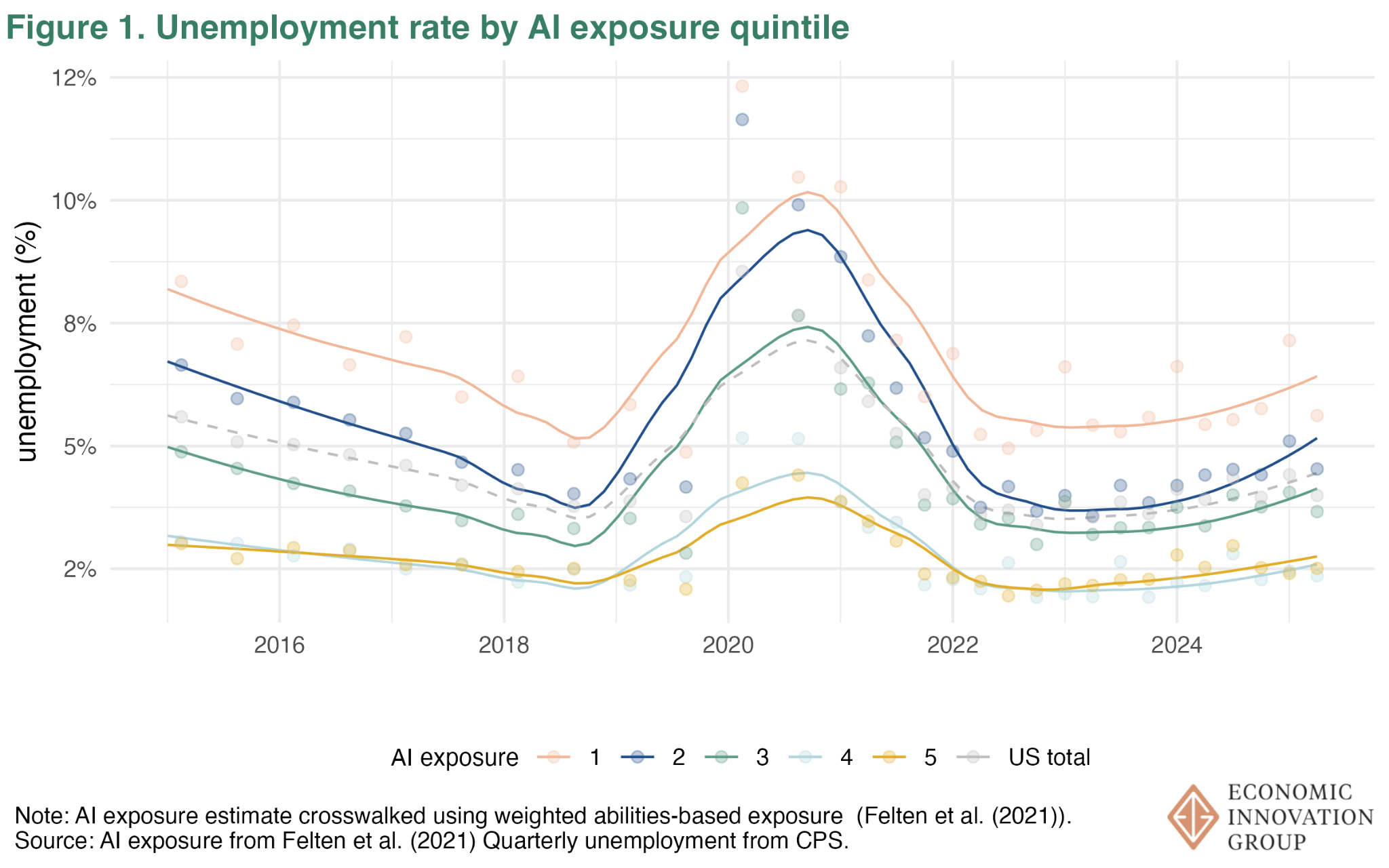
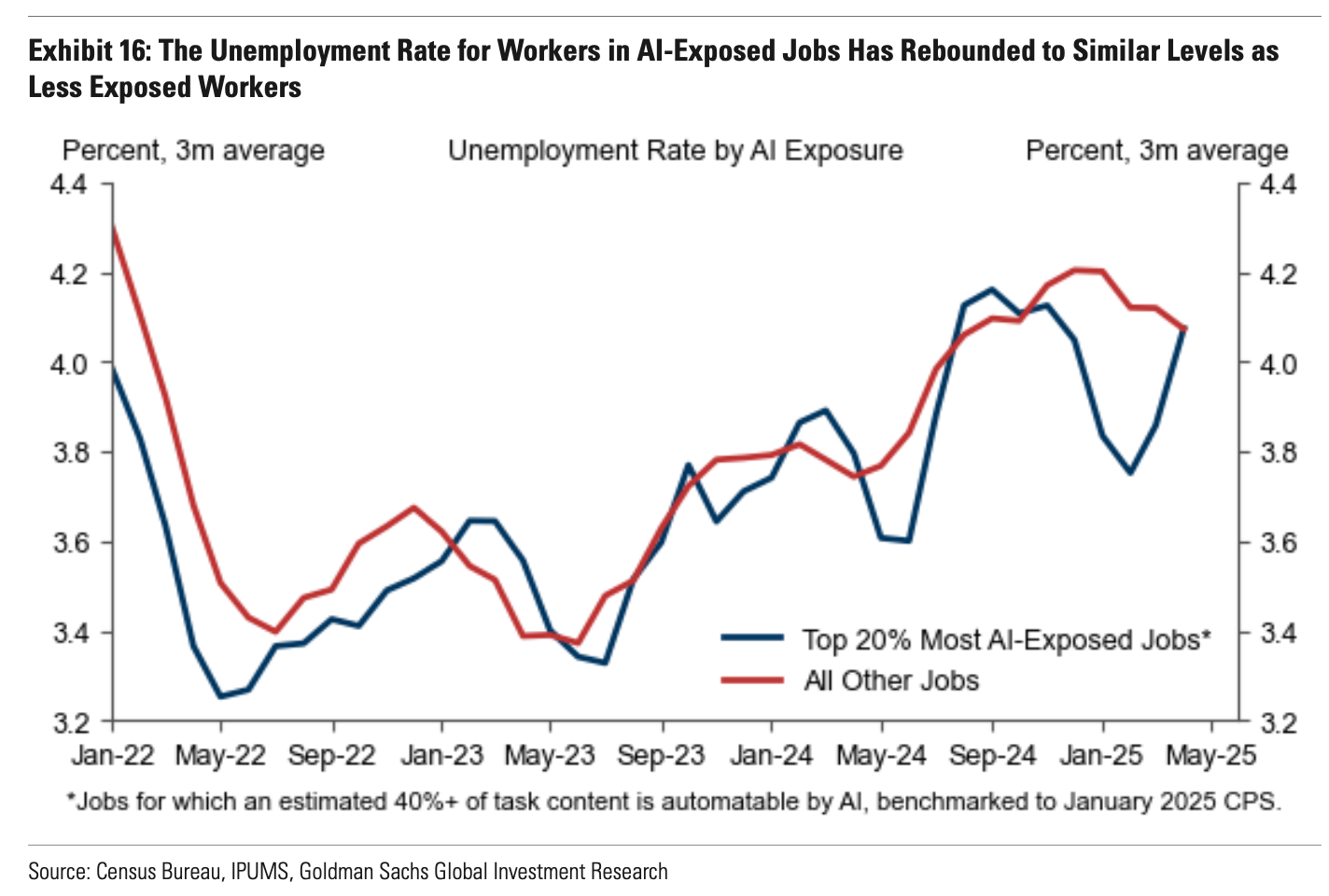
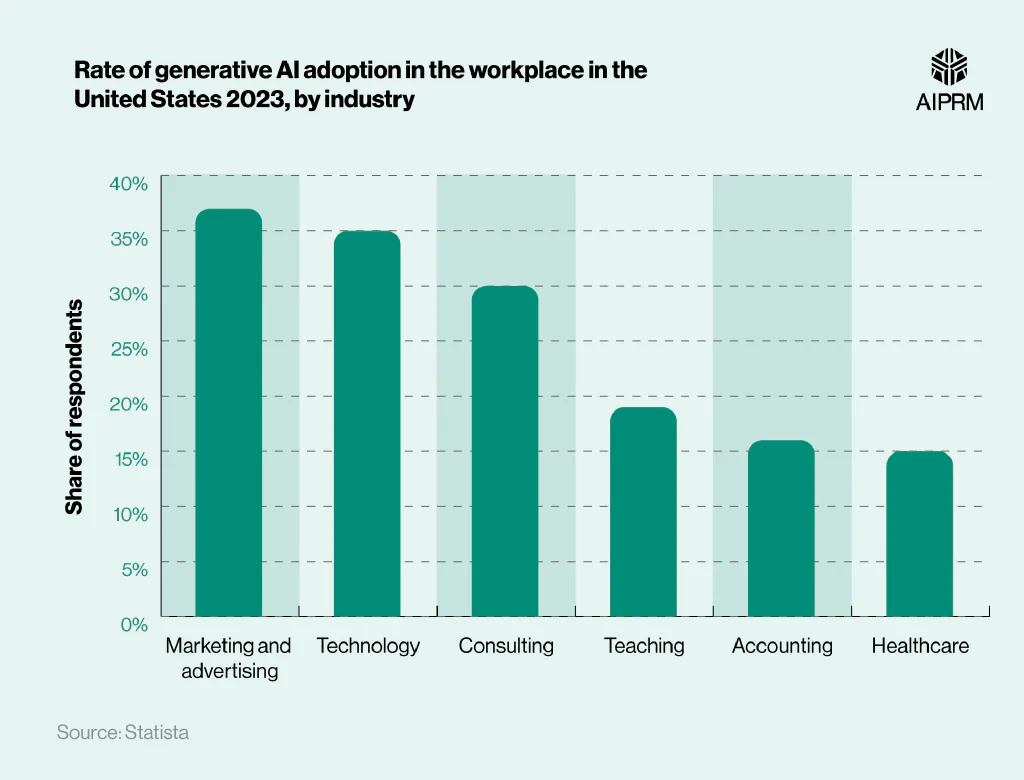
Quotes: Companies ask, "Do I need humans with liabilities when AI is cheaper/better?" (Mostaque). Wealth concentration: Bigger pie in fewer hands (Anthropic CEO).
Potential Social Unrest (Phase 3: 2027+)
No government transition plans + resentment + inequality → fracture/violence risk. Leaders prepare "safe havens" (Altman's reinforced basement, Zuckerberg's Hawaii compound, Sutskever's past bunker talk)—not just for rogue AI, but societal backlash.
Reality Check
- Exaggerated? No widespread reports of mass CEO cancellations; AI hype often overpromises short-term disruption.
- Real concerns: Entry-level struggles evident; public fatigue with AI content growing; job data shows cooling market with AI factor.
The video promotes upskilling via "First Movers" labs—positioning for AI benefits amid risks.
Pattern recognition or overreaction? Backlash is real, displacements accelerating—but experts debate scale/timeline. 2026 could test predictions as AI matures.
The End of the NVIDIA Tax? Google's TPU Challenge in 2025 (10-Minute Read)
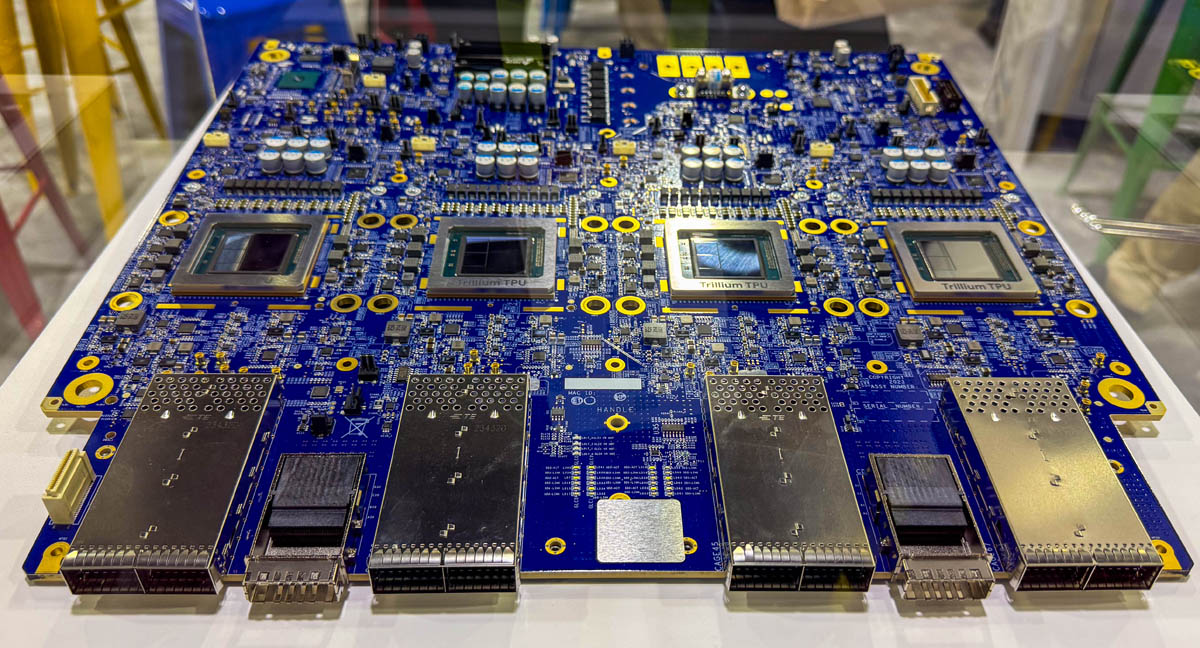
For years, NVIDIA dominated AI hardware with its GPUs, charging a "NVIDIA tax"—premium prices for must-have chips like H100/Blackwell. By late 2025, cracks appear as Google's Tensor Processing Units (TPUs), especially Trillium (v6e) and Ironwood (v7), emerge as efficient alternatives, particularly for inference at scale.
NVIDIA Blackwell B200 GPU designs:


Google Trillium TPU hardware:


Philosophy: Swiss Army Knife vs. Scalpel
- NVIDIA GPUs — General-purpose (graphics + AI); flexible for training/research/gaming. Complex, power-hungry (high margins ~70%).
- Google TPUs — Specialized ASICs for tensor operations (AI-focused). Stripped extras → smaller, cooler, cheaper to run. Full stack control (hardware to software).
Hardware Comparison (2025 Flagships)
- NVIDIA Blackwell B200 → ~20 PFLOPS FP4/9 PFLOPS FP8; 192GB HBM3e; excels single-chip/training.
- Google Trillium (v6) → ~918 TFLOPS BF16/chip; pods scale massively.
- Ironwood (v7) → ~4.6 PFLOPS FP8/chip (matches B200); pods up to 9,216 chips (42.5 exaFLOPS, 1.77PB shared HBM).
Single-chip: NVIDIA often leads. Cluster-scale/inference: Google wins on efficiency (40% less power, better perf/dollar).
Illustrations of NVIDIA vs. Google AI chip rivalry:

Inference Shift: The Real Threat
AI moved from training (brute-force, NVIDIA strong) to inference (serving billions queries cheaply). TPUs optimized for high-volume/low-latency inference (4x perf/dollar claims). Companies like Anthropic/Meta explore TPUs to cut costs.
Google's Secret Weapons
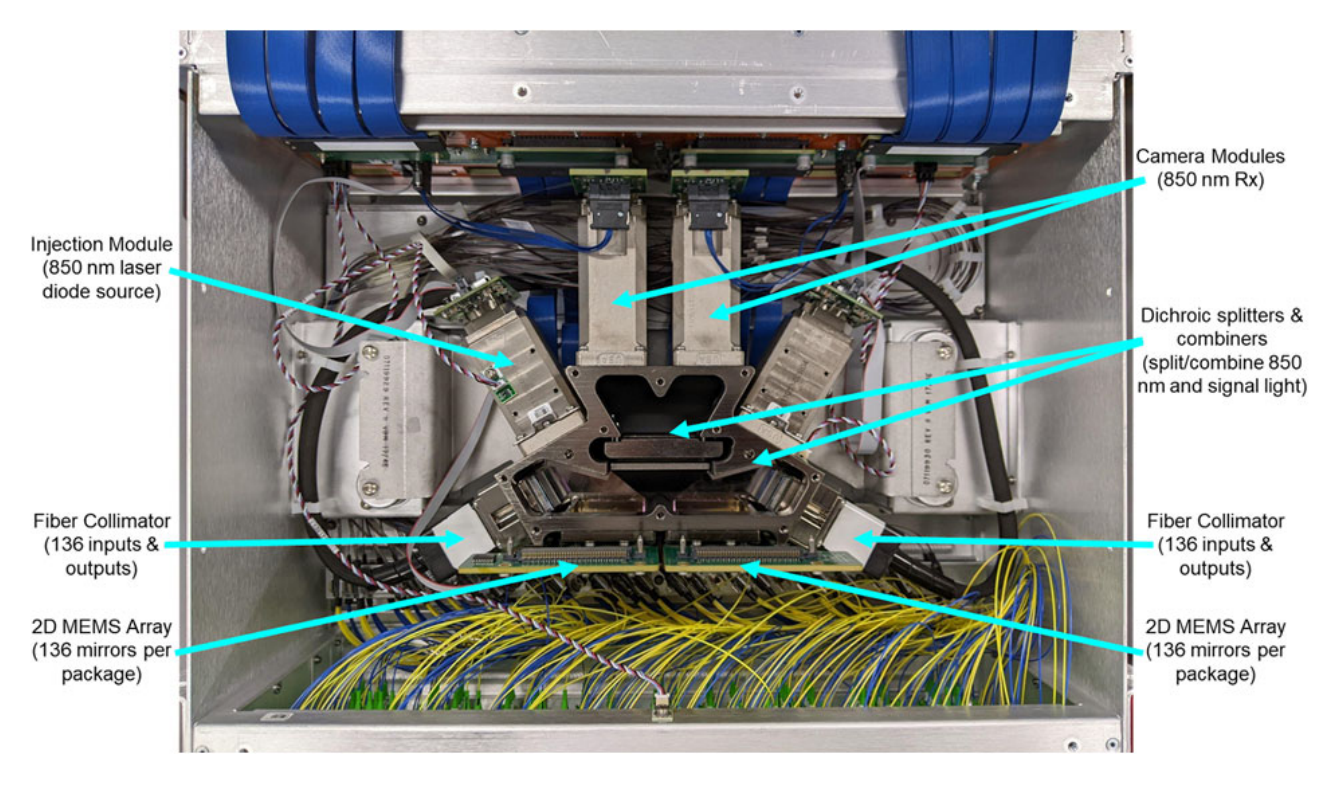
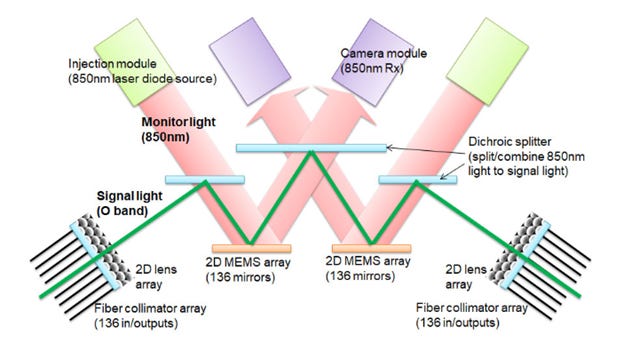
- Optical Circuit Switching (OCS) → Mirrors/lasers route data optically (no O-E-O conversion); dynamic reconfiguration, 40% power/30% cost savings, massive scale without bottlenecks.
OCS with mirrors and lasers in data centers:

- JAX/XLA → Hardware-agnostic compiler; reduces lock-in vs. NVIDIA's proprietary CUDA. Growing adoption (PyTorch integration efforts).
Market Impact (Late 2025)
NVIDIA holds ~90%+ share, especially training/flexibility. Google gains in inference (Anthropic deals, Meta talks). NVIDIA priced for perfection; risks margin compression as hyperscalers (Google/Amazon/Microsoft) build own chips.
Not monopoly end—multipolar: NVIDIA for bleeding-edge/training, Google for efficient scale/inference. Power constraints favor efficiency winners.
2026 could accelerate shift as inference dominates and costs matter more. Exciting multipolar AI hardware era ahead.
Starcraft 2 Forums: Quirky Discussions, Nostalgia, and a Mysterious Bot (10-Minute Read)
In late 2025, the Starcraft 2 subreddit and Battle.net forums feel quieter, reflecting a shrinking but passionate community. Discussions range from speculative game balance tweaks, nostalgic gripes about missing maps, to a bizarre bot account with nearly 400,000 games. The aging fanbase (mostly 30+) mixes serious critique with chaotic, unpolished rants, offering a window into the game’s enduring yet niche appeal.
Screenshots of Starcraft 2 gameplay and forum discussions:
Game Balance Ideas: Ravagers and Battlecruisers
Fans propose wild tweaks, often poorly articulated:
- Ravager Ability: Replace instant Corrosive Bile with a Liberator-style ground-targeting circle (range 7–10). Regular bile shot retained. Critics mock the sloppy phrasing, joking it reads like a rushed email.
- Battlecruiser Teleport: Complaint that teleport is free, unlike Zerg units requiring research. Suggests it should cost resources, sparking debate over fairness.
These posts highlight the community’s creativity but also its casual, unfiltered style—prompting laughs over professionality.
Nostalgia: Missing Maps and 3D Support
- Lost Maps: Fans lament removed Legacy of the Void (2015–2018) and older maps (e.g., Metalopolis, Zel’Naga Caverns). Official Blizzard versions vanished, leaving fan recreations. Nostalgia drives frustration, as maps tied to the game’s peak are gone.
- 3D Support: A 2010 promise from then-production director Chris Sigaty for NVIDIA 3D Vision support (patched briefly) resurfaces. Fans ask if anyone played the campaign in 3D, stirring memories of Blizzard’s ambitious past.
Anecdote: The host recalls an embarrassing 2015 encounter with Sigaty at a Legacy of the Void launch, unaware of spinach in their teeth during a 15-minute chat.
Images of Starcraft 2 maps and 3D gameplay:
The Mysterious “Computer” Account
The standout topic: A bot-like account named “Computer” on the NA ladder, active since Wings of Liberty (2010), with 399,000 2v2 games.
- Behavior: Joins 2v2, builds ~12 workers, then leaves after ~30–60 seconds, amassing losses to tank MMR (matches weaker players). Also plays co-op, earning achievements (e.g., Alarak commander) but quits early.
- Stats: ~50 games in 7 hours; muted (likely mass-reported). No 1v1 games; campaigns partially completed (Wings/HOTS, not Void).
- Theories: Likely a Blizzard-run bot for testing or filler. No human could play 24/7 for 15 years (realistic max ~50,000–110,000 games for diehards). Fans are baffled, with some reporting it for years.
Screenshots of “Computer” account stats and gameplay:
Forum Decline: Protoss Imbalance Rant
A 2015 thread (resurfaced 2025) blames Protoss imbalance for killing forums:
- Claim: Protoss (especially Skytoss) overpowered, driving Zerg/Terran players to quit. Protoss players then quit due to PvP mirrors exposing design flaws.
- Analogy: Compares Protoss players to an entitled woman in her 20s, bitter when attention fades in her 30s. Critics call it incel-like and convoluted.
- Impact: Alleged “PPP” coalition (Protoss fan group) trolled dissenters, pushing posters like “Reno” to leave. Forum activity dropped from vibrant (2010–2015) to ~1–5 daily posts.
The rant’s logic falters (e.g., claiming Protoss players quit after switching races), and the poster (“WildWolf”) contradicts themselves elsewhere, hating on Zerg while possibly playing Protoss.
Protoss gameplay and forum screenshots:
Takeaway
The Starcraft 2 community, while smaller, remains a mix of nostalgia, quirky debates, and mysteries like the “Computer” bot. Balance gripes and map losses reflect a game past its prime but still beloved. The forums’ raw, sometimes absurd posts capture a dedicated fanbase grappling with legacy and change—occasionally with spinach-in-teeth-level charm.
Scaling a Turo Fleet: From 4 to 5 Cars in Milwaukee (10-Minute Read)
A Milwaukee-based Turo host, running a small peer-to-peer car rental side hustle, shares real-world insights on scaling from zero to a potential six-figure business. After restarting on Turo a year ago, he grew to four cars, generating solid revenue but modest profits after depreciation/expenses. Focus shifts to cheaper used cars for better ROI, culminating in buying a fifth via a co-hosting deal.
Typical Turo rental fleet vehicles (e.g., Toyota Corolla, Subaru Forester):
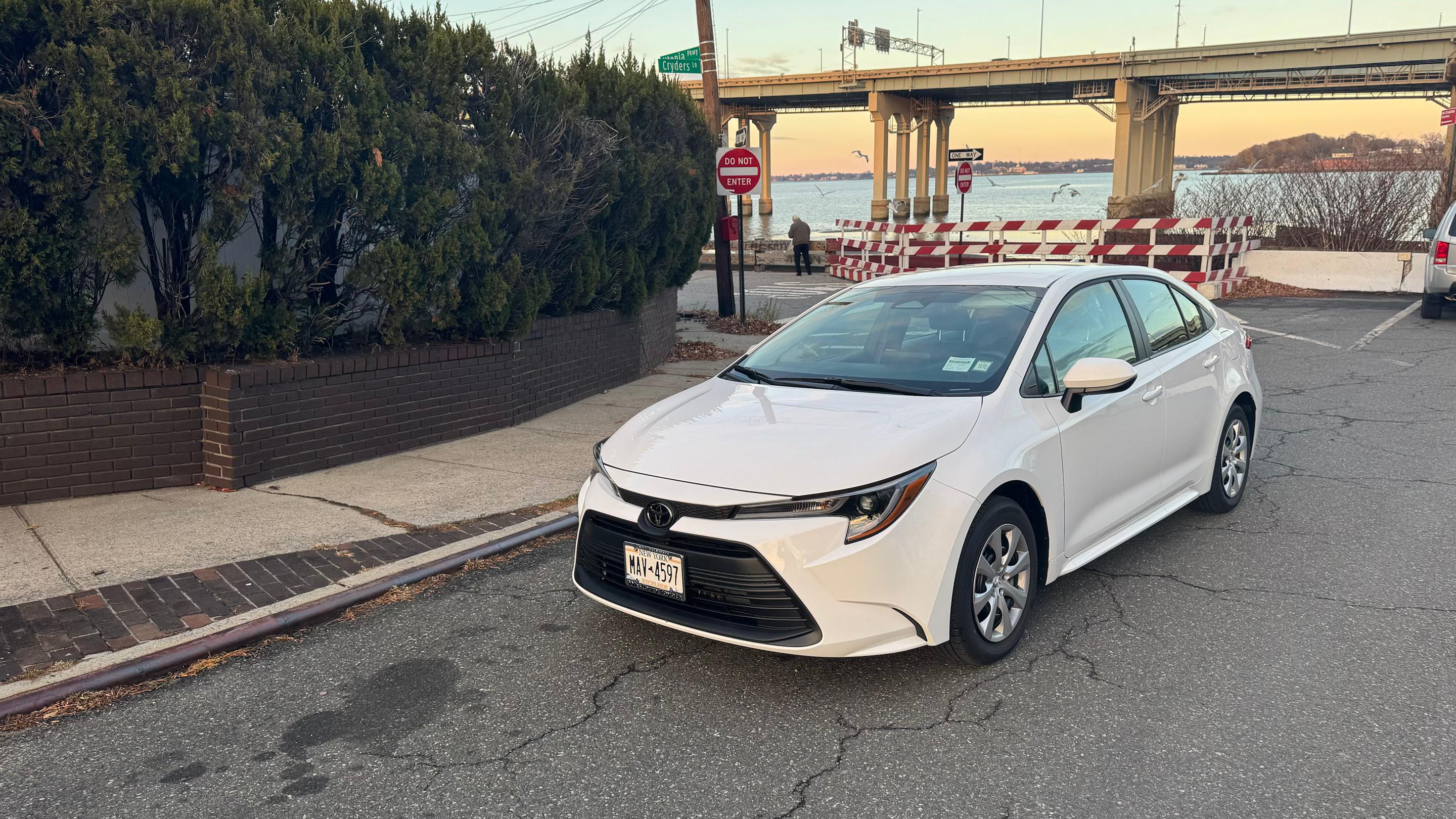





Current Fleet Performance (Late 2025)
- Four cars (e.g., Subaru Forester, VW Jetta, Nissan Sentra): ~$6,700 monthly revenue peak; ~$2,200 operating profit; but only ~$650 after depreciation/damage claims.
- November: ~$3,700 bookings; ~$1,500 operating profit.
- December (partial): Projected ~$3,000; peak daily ~$214 before Turo's cut.
- Shift strategy: Newer cars depreciate fast → target cheaper used (<$15k, <130k miles, <12 years old, clean title) for higher ROI.
The Co-Hosting Opportunity
An overseas subscriber funds a car; host manages/rents it on Turo (30% revenue to host, 70% to owner). Experiment to hit five-car fleet goal by year-end. Saved ~$850 from profits—not enough alone.
Car Hunting on Facebook Marketplace
Sourced budget options in snowy Milwaukee:
Facebook Marketplace-style car listings:

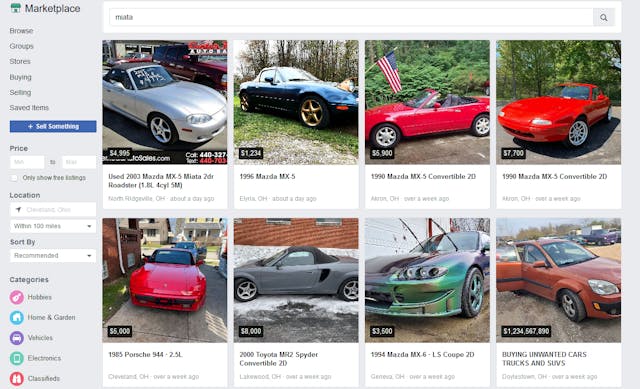

- Subarus (top performer: $983 bookings one month; ~$5k profit YTD on $14.5k purchase).
- Hondas/Toyotas (reliable, high-demand hatchbacks).
- Leads: 2015 Forester ($7.9k), 2018 Impreza ($?), 2012 Yaris ($9.5k), Honda Fits ($7–8.7k), 2015 Civic ($11k).
- Many sold quickly; some ineligible (e.g., Subaru VIN fail).
One near-miss: 2013 Mazda (~$6.4k) with accident history—VIN ineligible (likely salvage). $200 deposit refunded after a week.
Winter car shopping in snowy Milwaukee lots:



The Purchase: 2015 Toyota Corolla
Final choice: 2015 Corolla (~113k miles, clean) for $9,300 cash (negotiated slightly). Bought at night in Kenosha lot—test drive to lighted area revealed minor issues (jiggly seat, missing tire caps—fixable).
- Paid cash (withdrawn $9,500; aimed for $9k but settled).
- Uber rides for viewings (~$47 each way).
Turo listing photos and app setup:
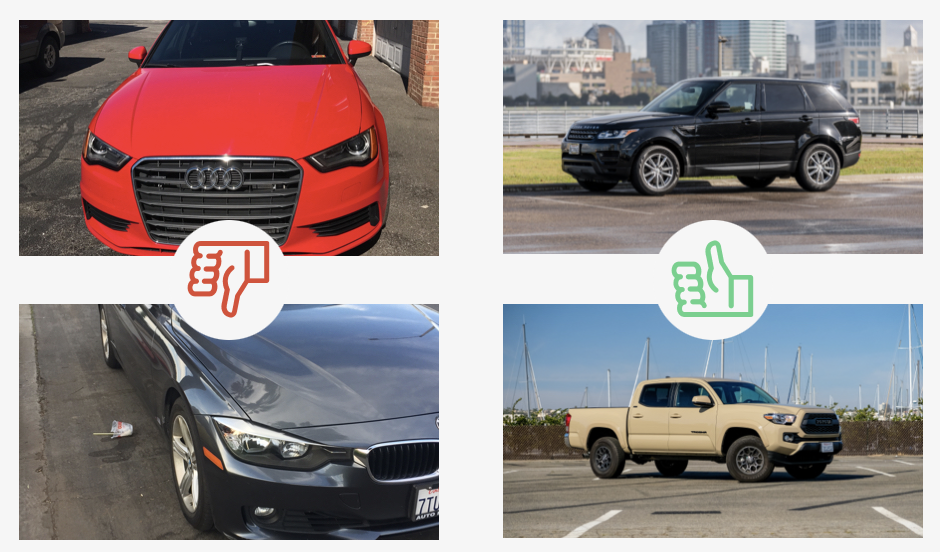


Registration Hack & Listing
Registered via client's Montana LLC (no sales tax; low fees—$87 annual, permanent after 11 years) vs. Wisconsin's high taxes/wheel fees.
Car listed immediately; ready for bookings once plated.
Key Insights on Turo Scaling
- Realistic ROI: Possible six figures with capital/time, but profits thin after expenses/depreciation (~10–20% net often).
- Tips: Cheap/reliable used cars (Subaru/Honda/Toyota); co-hosting for growth; cheap insurance via comparison tools.
- Challenges: Fast-selling Marketplace; VIN eligibility; winter hurdles; damage claims.
Host aims for consistent uploads—fleet now five, experimenting with managed model for passive income. Solid side hustle in competitive markets like Milwaukee.
Restoring a 1970s VW Westfalia Camper: Major Body Panel Replacement (10-Minute Read)
A DIY restorer tackles extensive bodywork on a 1970s Volkswagen Westfalia pop-top camper van, aiming to transform it into the "ultimate 1970s Road Tripper." The van already features a reupholstered interior and a Toyota Tacoma engine swap (for reliability/power), but the exterior is rough—covered in house paint, thick Bondo filler, rust, and damage. The owner, new to bodywork, invests ~$500 in replacement panels (quarter panel and nose cone) to fix it.
Classic 1970s VW Westfalia pop-top campers:



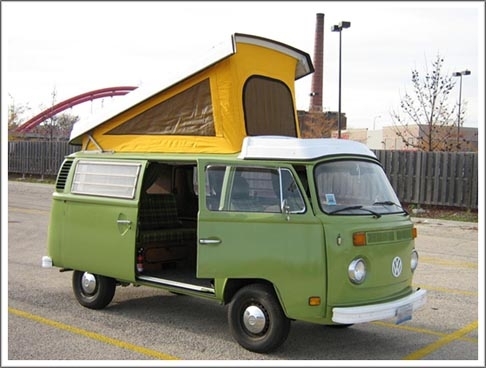
Reupholstered Westfalia interiors:

Toyota engine swaps into VW buses:

Prep: Stripping to Bare Metal
Moved van into garage. Removed sliding door for access. Stripped paint/Bondo around damaged areas (rear quarter and front nose) to assess rust/damage. Discovered extensive filler and hidden issues—more than expected.
Rust and Bondo-heavy VW bus bodywork:

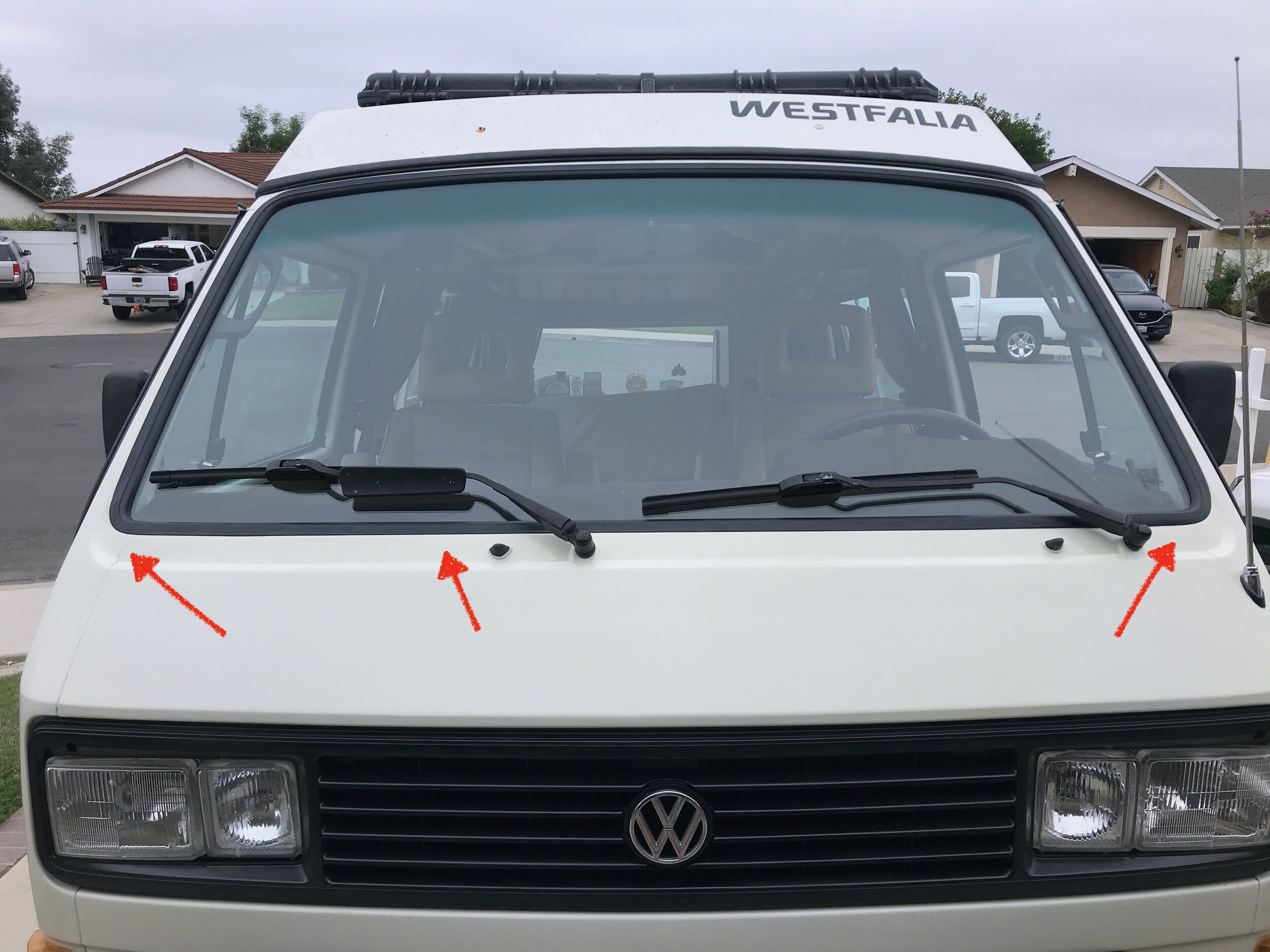

Fun find: A well-preserved 1975 penny trapped inside during cutting.
Cutting Out Damage
Marked cuts conservatively (leaving extra metal). Used grinder/cut-off tools to remove rear quarter panel (severely damaged) and front nose cone (crinkled/rust/Bondo-filled). Process grueling—hours of hammering/smashing spot welds.
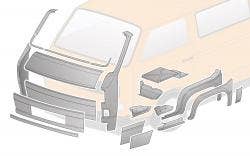
Replacement panels (quarter and nose cone):


Fitment Challenges
Mocked up new panels with clamps/hammer. Alignment tricky—prior damage warped structure; some areas "floating." Recreated weather seal channel on quarter. Left flanges on nose for initial placement, later cut for butt welds.
Applied weld-through primer everywhere (hidden seams, factory spots) for rust prevention.
Welding & Initial Results
Tacked panels in place. Fitment good overall—major improvement over old damage/Bondo. Nose top ugliest due to prior crinkling, but body line helped pull it straight.
Owner admits amateur methods (e.g., grinder-heavy, hammer adjustments)—expects criticism but prioritizes progress.
Ongoing Struggles & Teasers
Underestimated workload—constant new rust/Bondo discoveries discouraging. More damage remains higher up.
Incoming parts: Surfaced cylinder head, gasket kit, head bolts—hinting at engine work (tied to Tacoma swap?).
Project far from done, but panels transformed appearance significantly. Owner motivated for the "ultimate 1970s Road Tripper" vision.
Harvard Business School Crash Course: Key Lessons in 29 Minutes (10-Minute Read)
In this fast-paced episode of the Tiger Sisters Podcast (Season 4), sisters Jean (Harvard MBA 2017) and Cherie (Stanford MBA recent grad) deliver a mini-MBA crash course. They condense core business school concepts—strategy, marketing, product development, and finance—into ~30 minutes, using real-world examples like Starbucks, Warby Parker, and Netflix.
Jean (ex-Goldman Sachs, product roles at Zynga/Snapchat, 50+ AI patents) and Cherie (co-founder of Sisters Matcha) share insights from their top-tier MBAs, saving viewers the ~$250,000+ cost.
Strategy 101: Porter’s Five Forces – Starbucks Case
Michael Porter’s framework (developed at HBS) analyzes industry competition through five forces:
- Threat of New Entrants — Low for Starbucks due to massive brand, prime real estate, and supply chain scale.
- Bargaining Power of Suppliers — Low; Starbucks buys in huge volumes → strong leverage.
- Bargaining Power of Buyers — Moderate; customers have alternatives (Dunkin’, local shops), but loyalty programs, app ecosystem, and “third place” experience lock in loyalty.
- Threat of Substitutes — Moderate; home/office coffee, pods, beans exist, but Starbucks diversified into retail products to mitigate.
- Rivalry Among Competitors — High, but Starbucks differentiates via premium service/experience.
Key takeaway: Choose cost leadership (Walmart: lowest prices) or differentiation (Starbucks: premium experience, personalization like names on cups). You can’t win on both.
Marketing 101: STP (Segmenting, Targeting, Positioning) – Warby Parker Case
Warby Parker disrupted Luxottica’s near-monopoly (owns most eyewear brands, high prices).
- Segmenting — Identified three groups: luxury brand-seekers, ultra-cheap buyers, and cost-conscious Millennials wanting trendy/affordable glasses.
- Targeting — Chose Millennials: online-first, price-sensitive, socially conscious.
- Positioning — Modern, chic, accessible, digital-native brand with “buy one, give one” social impact (similar to TOMS shoes’ early success).
Result: $95–$100 frames, home try-on, sustainability narrative → billion-dollar valuation, boutiques nationwide.
Takeaway: Hyper-focus on one segment and build everything around their needs/values. Serving everyone = serving no one well.
Product Development 101: Know Your Customer Deeply – Netflix Case
Netflix excels at understanding user behavior through relentless testing.
- A/B Testing — Constantly experiments (e.g., different thumbnails for the same title based on user preferences—Cherie sees Henry Golding more often).
- Iteration — Pivot fast based on data. Reed Hastings emphasizes deep customer insight.
Takeaway: Don’t guess—test rigorously, iterate, and pivot when data shows what users actually want.
Finance 101: Key Terms for CEO-Level Conversations
HBS trains future CEOs to understand finance enough to talk to CFOs/boards confidently—not to become accountants.
- Revenue vs. Profit — Revenue = money in; profit = after all costs. Netflix has huge revenue but massive content spending → sometimes low/no profit.
- Cash Flow — Actual cash on hand (vs. accounting assets). Netflix spends billions upfront on shows (capitalized as assets), so cash flow matters more.
- Unit Economics — Profitability per unit (e.g., per Netflix subscriber). Marketing cost vs. lifetime value.
- Runway & Burn Rate — How long cash lasts at current spending. Critical for startups.
- Valuation Metrics (P/E, EV/EBITDA) — Context-dependent; compare within industry.
Takeaway: Understand enough to make smart decisions and communicate with financial experts.
Final Thoughts
The sisters emphasize intentional choices—whether strategy, targeting, customer focus, or financial awareness—drive success. They tie concepts to their own premium matcha brand (Sisters Matcha), which chose differentiation over cost leadership.
This mini-MBA covers the essentials. They promise more deep dives in future episodes. Great for aspiring entrepreneurs, professionals, or anyone curious about business fundamentals—delivered in a fun, relatable way.
"Job Hugging": Why Workers Are Clinging to Jobs in 2025—and Why It Might Backfire (10-Minute Read)
In late 2025, a new workplace trend has emerged: job hugging—staying in a job you don't love out of fear of economic uncertainty. Coined amid cooling hiring, inflation worries, recession signals, and political volatility, it's the opposite of the Great Resignation (2021–2023), when 50+ million Americans quit for better opportunities. Now, workers "hold on for dear life," per Korn Ferry, leading to a "frozen" labor market.
The Shift from Loyalty to Fear
- Pre-1970s: Lifetime employment common—steady wages, benefits, pensions for workers; experienced staff for employers.
- 1970s–1980s Onward: Stagflation → neoliberalism ("retain and reinvest" → "downsize and distribute"). Companies prioritized shareholders via layoffs, stock buybacks—eroding mutual loyalty.
Iconic 1998 book "Who Moved My Cheese?" (Spencer Johnson): Motivational fable urging adaptation to change (criticized as "downsizing propaganda" by some, like Barbara Ehrenreich).
Result: Workers rebranded as "free agents" ("Brand You" era)—always job-hunting, avoiding company-specific skills.
Great Resignation vs. Great Stay
- 2021–2023 (Great Resignation): Tight market + stimulus → mass quits over low pay, poor conditions, burnout. Employers struggled to retain staff.
- 2025 (Great Stay/Job Hugging): Hiring slowed dramatically; workers pessimistic (Eagle Hill study: rising intent to stay 6+ months). Employers "scarred" from COVID shortages—reluctant to fire.
ZipRecruiter: Labor market "frozen"—everyone waiting out uncertainty.
Downsides of Job Hugging
- For Workers: Complacency, stalled skills, resentment ("quiet quitting"), mental health strain.
- For Employers: Lower productivity, toxic workplaces, potential exploitation (poor conditions tolerated).
- For Economy: Reduced mobility → slower innovation, mismatched skills.
If market tightens again → another resignation wave.
Advice from Career Experts
Don't stagnate:
- Build skills/networks now.
- Prioritize internal relationships (referrals key in slow hiring).
- Jump when opportunities arise—especially early-career (variety builds strengths).
Change is scary, but stagnation costs more long-term.
Sponsored by Monarch Money (financial app for budgeting, tracking, goal-setting). Use code "twocents" for 50% off first year.
Takeaway: Job hugging feels safe short-term, but mutual loyalty's erosion means proactive career management is essential in volatile times.
The Sparrow and the Bell: A Lesson in Embracing Change (10-Minute Read)
This timeless fable, retold in a modern inspirational video, uses a simple story of a sparrow to illustrate a profound life lesson: What feels like devastating loss is often life's way of pushing us toward something greater. When comfort zones shatter, resilience and openness lead to unexpected beauty.
A serene mountain temple with an ancient bronze bell:
The Comfortable Nest
In an ancient, moss-covered temple stood a massive bronze bell, untouched for years—dusty and silent. A small sparrow discovered its hollow interior: cool in summer, sheltered from rain—a perfect, safe home.
She tirelessly built her nest twig by twig, lining it with soft feathers. "This is my safe place," she thought. "Nothing can hurt me here." Days passed peacefully: singing mornings, restful afternoons. She believed the bell would never ring again—her world secure forever.
A sparrow building a nest in an unexpected place:
The Shattering Bell
One morning, monks gathered in the courtyard. After years of silence, they decided to ring the bell again—to call villagers to prayer.
Unaware, the sparrow sat contentedly in her nest. Then—BOOM! The mallet struck. Thunderous vibrations shook the bell. The nest disintegrated: twigs scattered, feathers flew. Terrified, the sparrow burst out, circling the courtyard in panic.
Her safe world destroyed in an instant. Heartbroken, she cried: "Why me? What did I do wrong? Why has life taken my home?"
She flew away, wings heavy with grief.
The dramatic moment of the bell ringing:
Wandering and Despair
For days, she wandered valleys and forests. Temporary branches offered no comfort. Hunger and exhaustion set in. She nearly gave up.
Yet a quiet inner voice urged: "Keep flying. Keep searching. Don't stop now."
She pressed on, trusting something better awaited.
Discovery of Paradise
One afternoon, following the sound of water, she entered a hidden forest glade. Sunlight filtered through trees; fresh air carried sweet scents. Berry bushes overflowed; a sparkling stream flowed nearby. Thick, soft branches perfect for nesting.
She paused in awe—this was paradise.
Renewed with hope, she built again: stronger twigs, careful construction. The new nest surpassed the old—larger, sturdier, in a vibrant home.
A beautiful forest glade with stream and berries:
A sparrow in a lush new nest:
The Realization
Settling into her superior home, the sparrow reflected: "If the bell had never rung, I'd still be trapped in that dark hollow. I never would have found this beautiful place."
The destruction wasn't punishment—it was liberation. The same force that ended her old life opened the door to a far better one.
The Life Lesson
We all build "nests"—jobs, homes, relationships—feeling secure. But life sometimes "rings the bell": loss, failure, upheaval.
In pain, we ask "Why me?" Yet these moments aren't endings—they're beginnings in disguise.
Like the sparrow, keep flying through grief. Trust the journey. The next chapter may be the most beautiful yet.
Loss is not the end. It's life pushing you to fly higher.
Zillow's 2025 Class-Action Lawsuit: Alleged Kickbacks in Lead Programs (10-Minute Read)
In November 2025, Zillow faced a major class-action lawsuit filed on November 7 in U.S. District Court (Western District of Washington), accusing the company of illegally tying agent leads to referrals for its in-house lender, Zillow Home Loans (ZHL). This could reshape online real estate platforms if successful.
Zillow app interface showing agent contacts and listings:
Zillow Home Loans branding and mortgage features:
Core Allegations
The suit (led by plaintiff Araba Armstrong, an Alaska buyer) claims Zillow violated the Real Estate Settlement Procedures Act (RESPA)—banning kickbacks/referral fees in mortgage services—plus Washington Consumer Protection Act and aiding fiduciary breaches by agents.
- Quid Pro Quo System: Agents in Premier Agent and Flex programs faced ZHL pre-approval quotas/leaderboards. High referrers got better/more leads; low performers risked cuts or removal.
- Steering & Monitoring: Calls scripted/monitored; agents pressured to push ZHL (allegedly higher rates/fees, cherry-picking qualified buyers).
- Lack of Transparency: Buyers unaware agents' lead access depended on ZHL referrals—believed agents independent.
Zillow captures ~2/3 of U.S. listing traffic; Flex agents pay up to 40% commission referral fees (undisclosed to buyers/sellers in some claims).
Tie to "Super App" Strategy
Internal docs (cited from Feb 2025 investor materials) reveal Zillow's goal: a "housing super app" capturing search → agent → mortgage → closing. Aim: Raise "enhanced market partner" agents (paired with ZHL) from 27% to 35% (2025) → 75% long-term.
Lawsuit calls it a "mortgage funnel" leveraging leads for dominance.
Zillow's "super app" vision illustrations:
Related/Consolidated Cases
- September 2025 Suit (Taylor): Focused on Flex deception (hiding referral fees, routing to Flex vs. listing agents).
- Merged December 2025: Combined cases; amended adds RICO claims, 12 insider witnesses (agents/loan officers alleging quotas, in-person pressure, inaccurate disclosures).
- Prior: 2023 settlement over co-marketing program (pre-ZHL).
Zillow denies violations, calls claims meritless/mischaracterizations.
Potential Impacts
If successful:
- Nationwide Class: Treble damages under RESPA; injunction halting practices.
- Industry Shift: Redefine "kickbacks" in lead/referral models; force transparency in integrated platforms.
- Consumer Harm: Alleged higher rates/fees; lost impartial advice.
ZHL originated billions in 2024–2025; rapid growth at stake.
Video creator (real estate agent) recommends local realtors/MLS over portals like Zillow (criticizes hidden listings).
Ongoing case—could be landmark for digital real estate amid Zillow's multiple 2025 lawsuits (antitrust, etc.).
Employee vs. Owner Mindset: The Key to Building Real Wealth (10-Minute Read)
This inspirational talk (echoing Warren Buffett/Charlie Munger principles) contrasts the employee mindset (linear, time-for-money) with the owner mindset (exponential, compounding value). The core message: Most work 40 years and retire poor not from laziness, but from thinking like employees—trapped by incentives, authority, and social proof. Shift to owner thinking (even while employed) for financial independence.
Warren Buffett and Charlie Munger—icons of owner thinking:
The Employee Mindset Trap
- Trade time for money: Linear income—bounded by hours/rates.
- Wait for permission: Defer to bosses/policies; optimize safety over upside.
- Let others define worth: Celebrate raises/paychecks; measure in hours, not outcomes.
- Incentive bias: Paid by time → focus on time spent, not value created.
- Authority tendency: Boss thinks for you (their goal: extract value, not make you rich).
- Social proof: Herd climbs ladder → you follow (herd ends in dependency).
Result: Fair compensation for time, but no path to wealth. Employers pay enough to retain, not enrich you—mathematical reality.
Employment vs. Wealth Building
- Job = income source (cash flow)—excellent for stability.
- Wealth = owning compounding assets (businesses, real estate, IP, skills creating enterprise value).
Separate them: Job funds life; owner thinking builds wealth.
Examples:
- Warren Buffett: Salaried at Graham-Newman, but studied businesses, saved aggressively, invested wisely.
- Andrew Carnegie: Low-wage start; studied railroads/steel, bought ownership stakes.
- Benjamin Franklin: Owned printing/publication systems, not just worked them.
Speaker: Practiced law (80% effort) but allocated 20% to business study/investing—made wealthy.
Owner Thinking: Exponential & Multidisciplinary
- Exponential math: Build once → compounds (15% annual returns over decades).
- Linear ceiling: Hours limited; raises modest.
- Opportunity cost: Each employee-thinking year = lost compounding.
Inversion test: What guarantees poverty?
- Never own anything.
- No skills beyond job.
- Don't study wealth creation.
- Follow herd.
Do opposite: Own (even small), build enterprise-value skills, study deeply.
Key Mental Models
- Circle of competence: Deep understanding (beyond job title) for sound judgments.
- Multidisciplinary: Psychology (incentives/errors), economics (tradeoffs), math (compounding/probability), history (patterns).
- Deprival-superreaction: Fear loss more than gain → cling to "secure" job.
- Consistency tendency: Commit to employee identity → reject contrary info.
- Optionality: Multiple paths → never trapped.
- Asymmetric opportunities: See value others miss.
Avoid stupidity: Consistent rational decisions > brilliance.
Practical Steps (While Employed)
- Study businesses: Annual reports, unit economics—free.
- Allocate capital: Every dollar = investment opportunity; discipline > amount.
- Build enterprise skills: System improvement > task efficiency.
- Learn broadly: Biographies, mental models—compounds value.
- Patient waiting: Big money in holding, not trading.
Psychological & Economic Reality
- Social pressure: Friends/family won't understand studying over leisure—payoff in 30 years (independence vs. dependency).
- Future risks: AI/automation commoditize tasks → employee thinking obsolete; owner skills (capital allocation, psychology) irreplaceable.
- Trajectory check: Look 20 years ahead on current path—if not independent, change now.
Final Insight
Same 30 years: Employee → modest comfort/dependency. Owner → compounding wealth/independence.
Shift mindset first—no cost, no permission needed. Job provides seed capital; owner thinking grows it.
"You cannot think like an employee and build wealth." Choose owner thinking—today.
10 Game-Changing Entrepreneurship Books: Lessons That Moved the Needle (10-Minute Read)
A seven-figure entrepreneur and YouTuber shares 10 books (from 50+ read) that profoundly shaped their business journey. These aren't fluffy reads—most are either "completely useless" or "game-changing." Focus: mindset shifts, leverage, scrappiness, systems, hiring, fundamentals, compounding, offers, innovation, and power dynamics.
The books (with key takeaways):
1. Mindset by Carol Dweck
Core idea: Fixed vs. Growth mindset.
- Fixed: Abilities innate ("I'm not a numbers person").
- Growth: Skills develop with effort ("I'm not good at marketing... yet").
Takeaway: Add "yet" to self-limiting beliefs. Everyone successful was once terrible—they persisted. Huge for resilience in entrepreneurship (trying, failing, iterating).
2. The Almanac of Naval Ravikant (compiled by Eric Jorgenson)
Naval's distilled wisdom on wealth.
Big shift: Leverage over hard work.
- Labor/capital leverage need permission.
- Code/media: Permissionless—create once, reach millions (e.g., YouTube video earns indefinitely).
Takeaway: Stop trading time for money. Build scalable outputs (content, products) that multiply effort.
3. Anything You Want by Derek Sivers
Short, contrarian: Don't think big—be yourself.
- Skip massive visions/scaling pressure.
- Authenticity attracts customers/talent.
Takeaway: Start scrappy/imperfect. Early rawness builds deeper trust than polished perfection.
4. The E-Myth Revisited by Michael Gerber
Biggest entrepreneur mistake: Confusing technical skill with business skill.
- "Entrepreneurial myth": Great baker ≠ great bakery owner.
- Trap: Work in business (tasks) vs. on business (systems).
Solution: Build like a franchise from day one—document processes so business runs without you.
Takeaway: Avoid bottleneck; create scalable systems early.
5. The Diary of a CEO by Steven Bartlett
33 laws of business/life.
Standout: Hire people better than you.
- Corporate fear: Threat to ego/job.
- Reality: Leader's role—orchestrate experts excelling in their domains.
Takeaway: Surround yourself with superior talent for greatness.
6. The Personal MBA by Josh Kaufman
No MBA needed—core business accessible.
Five parts: Value creation, marketing, sales, delivery, finance.
Takeaway: Strip jargon; master fundamentals practically. More useful than many formal degrees.
7. The Slight Edge by Jeff Olson
Success = small daily choices compounding.
- Easy to do (read 30 mins, save)—easy not to.
- No immediate feedback → people underestimate.
Takeaway: Consistency in "easy" disciplines separates winners. No big breaks—just compounded edges.
8. $100M Offers by Alex Hormozi
Struggle often from bad offers, not bad products.
Offer = product + pricing, guarantees, bonuses, packaging.
Takeaway: Craft irresistible offers ("feel stupid saying no"). Universal for any business.
9. Zero to One by Peter Thiel
Best businesses create new markets (0→1), not compete in existing (1→n).
- Competition = for losers (price wars, thin margins).
- Monopoly via uniqueness.
Takeaway: Avoid crowded spaces; build defensible innovation.
10. The 48 Laws of Power by Robert Greene
Controversial—48 historical laws of power dynamics.
Value: Awareness of unspoken workplace/social rules (promotions, politics not always merit-based).
Takeaway: Understand (not necessarily apply) dynamics to navigate/protect yourself.
Bonus mention: Fearless Pricing by Robin Waite (pricing frameworks).
These books shifted mindset from employee (time-for-money) to owner (leverage, systems, compounding). Practical, actionable—highly recommended for entrepreneurs/side-hustlers. Links in original video description.
12 Daily Habits That Built Wealth: Steal These for Financial Success (10-Minute Read)
A successful entrepreneur shares 12 repeatable habits that transformed their finances—not flashy tactics, but "boring" daily disciplines backed by data and personal experience. Key theme: Wealth comes from systems, not goals. Most people fail by thinking like employees (time-for-money); success requires owner habits (compounding, leverage, discipline).
The habits:
1. Throw Out Your TV (or Severely Limit It)
Average American: ~3 hours/day TV → 45+ days/year lost.
- Studies: More TV → lower achievement, higher unemployment risk (even controlling for income/education).
- TV = passive consumption; wealth = active creation.
Rules: One TV max; multitask only (workout, work). Cancel 2+ streaming subs; track screen time; replace with ROI activities (read, walk).
2. Morning Movement (Workout/Walk First Thing)
Non-negotiable: Exercise before emails/chaos.
- Meta-analysis (2,700+ trials): Regular movement boosts cognition/executive function → smarter decisions.
- Clears anxiety; sparks ideas.
Start: Clothes out night before; favorite podcasts only during workout; 20 minutes minimum; every day (even weekends).
3. Negotiate One Thing Daily
Never accept first offer—rent, salary, purchases.
- Study: Negotiated starters earn ~$5k more/year → $600k+ lifetime (with raises).
- Reframe: Not conflict; asking for value.
Practice small (coffee discounts); research market rates; ask "Is that the best you can do?"
Bonus: Start Before You're Ready
Perfection kills progress—launch scrappy.
(Sponsored nod to GoDaddy Airo for quick brand/website setup.)
4. Surround Yourself with Wealthier People
"Rich friend" effect: Stockholm study—low-income kids with one wealthy peer earned more as adults.
- Expand worldview/aspirations/connections.
- Audit circle: "Treadmill" (energize) vs. "couch" friends.
Join higher-level rooms (meetups, masterminds); listen more than talk.
5. Audit Equity Weekly
Track ownership, not just effort.
- Top 1%: 40–50%+ wealth in private businesses.
- Weekly review: Assets growth? Personal P&L (worth, liabilities).
Simple sheet: Asset type, value, change.
6. Audit Your Calendar Weekly
Code blocks: Green (makes money), yellow (neutral), red (drains).
- Kill/delegate one red weekly.
- Protect green time.
7. Reduce Social Media Drastically (50%+)
Studies: Significant cuts → sharper focus, better mood, less stress.
- Tiny reductions ineffective; real benefits from big cuts.
8. Headphones On, World Off
Visible focus signal → 46% fewer interruptions (study of 400+ workers).
- Guard flow state (best ideas).
- No-lyrics music preferred.
9. Do One Unpopular Thing Daily
Embrace discomfort → creativity, persistence (psychological study).
- Builds grit; avoids crowd mediocrity.
10. Create a "Not-To-Do" List
Success = refusing low-value.
- CEOs delegate/eliminate busywork.
- Personal examples: No unsolicited calls, no "pick your brain" coffees, no gossip.
Write 5+ drains; enforce.
11. One Ask a Day
Brave outreach (DM, call)—volume game.
- Opportunities from single uncomfortable actions.
12. End & Start Day with Most Important Task
Sales example: List calls night before; execute first morning.
- Ensures priority completion.
Core Philosophy
- Systems > Goals: Rise/fall to habits.
- Employee (linear) vs. Owner (exponential).
- Wealth = leverage, compounding, discipline.
- Start small; consistency compounds.
Steal, stack daily—transform finances over years. No 10-year plan needed; just today's habit.
Who Should NOT Be an Entrepreneur—and When to Quit (10-Minute Read)
In this candid interview clip, a seasoned entrepreneur (with experience founding/selling multi-billion companies and teaching at top business schools) delivers blunt advice: ~2/3 of people should avoid entrepreneurship. It's not for everyone—success demands risk tolerance, passion over profit-chasing, and resilience to defining setbacks. He contrasts "employee" safety with "owner" freedom, using personal stories and stark realities.
Key insights:
Who Should NOT Be an Entrepreneur
- Risk-Averse People: Entrepreneurship = jumping "across a chasm" without seeing the other side. If you can't forego stability (e.g., $200k salary at 28), you'll fail.
- Consultants as Example: ~Half of elite MBA classes become consultants—high pay ($3–4M peak), zero consequential decisions. "Life of mediocrity"—generating opinions, not building/owning.
- Fixed Mindset/Comfort-Seekers: If events don't "jolt" you off the safe path, stay employed.
Speaker's trigger: Fired first day on job → realized others controlling life intolerable → never worked for anyone again.
Born or Made?
Not innate—life events redirect trajectory (like a meteorite nudge). Successful entrepreneurs share a "defining moment" shifting course. Risk tolerance develops from jolts, not DNA.
Passion vs. Profit Hunger
- Money-Driven = 100% Failure: Chasing riches guarantees misery. Wealth is byproduct, not goal.
- Passion-Driven Success: Love the game—work "25 hours/day, 8 days/week" because you enjoy competing/building.
- Real freedom: "Personal freedom"—no boss, optional work (yet harder than ever).
Examples: Founders wake up "filthy rich" unexpectedly (e.g., speaker's $4.2B exit)—focused on value creation, not exit math.
Signal vs. Noise: The Essential Trait
Great entrepreneurs filter relentlessly—ignore distractions (ideas, requests) off-mission.
- "Noise" derails; focus on "signal" (core mission) = freedom.
Example Venture: Watch Insurance Disruption
Speaker launching specialized watch insurance—sees market gap:
- Traditional policies (riders, Chubb/Lloyd's) undervalue appreciating watches (e.g., Rolex Daytona $12k → $58k).
- His product: Daily market-scraped value; flexible (activate/deactivate per trip); international coverage; tailored theft/loss language.
- Leverage: Personal brand (known collector) → instant demand (2k requests from one ad).
Philosophy: Spot holes → build better mousetrap → force competition to improve.
When to Give Up?
Implied: If no passion/risk tolerance, quit early—entrepreneurship amplifies traits.
- No "mediocrity" shame—consulting/corporate fine for many.
- But if jolted toward ownership: Persist despite hardships.
Core Message
- Entrepreneurship = Freedom Path: Risk, passion, focus → potential wealth/independence.
- Most Shouldn't: Lack guts/event for chasm jump → safer (lucrative) corporate/consulting life.
- Wealth from value creation/competing—not calculated exits.
Harsh but motivating: Assess honestly—are you wired for the leap? If not, thrive elsewhere. If yes, embrace the jolt.
3I/Atlas: The Interstellar Visitor's Catastrophic Mystery (10-Minute Read)
In July 2025, astronomers discovered 3I/Atlas—humanity's third confirmed interstellar object (after 'Oumuamua in 2017 and Borisov in 2019)—hurtling toward the Sun from beyond our solar system. What started as routine observations quickly escalated into a scientific puzzle, with Harvard astrophysicist Avi Loeb proposing explosive disintegration into millions of fragments... or something far stranger. As of December 23, 2025, the object's behavior defies standard comet models, and the observational window is closing fast.
Hubble Space Telescope images of interstellar objects like 'Oumuamua and Borisov (similar to 3I/Atlas):
JWST infrared views of cometary activity (conceptual for 3I/Atlas):
Discovery and Initial Observations
Detected July 1 by Chile's ATLAS survey telescope, 3I/Atlas entered the inner solar system at over 150,000 mph. By late August, JWST's infrared imaging revealed a massive carbon dioxide envelope ~348,000 km wide (nearly lunar distance). Spectroscopy showed odd iron/nickel ratios—unlike typical comets.
As it approached perihelion (closest Sun point, October 29), activity intensified: Outgassing rates jumped from 330 kg/s to ~2 million kg/s—a 6,000x spike, ejecting ~2 million tons/second at peak. Daily mass loss hit billions of tons.
Trajectory plots and velocity graphs of interstellar comets:
The Energy Paradox
Loeb's calculations exposed a core issue: Solar radiation (~700 J/m²/s at perihelion) demands a ~14.3 km nucleus for observed mass loss (via CO2/H2O sublimation). Required surface area: ~617 square miles.
But Hubble's July images (3 weeks post-discovery) capped it at 1–2 km. 16-fold discrepancy—Hubble can't miss 14 km of material.
Solution? Catastrophic breakup into millions of fragments, exposing collective surface area for outgassing.
Anomalous Behaviors
- Blue Wavelength Shift: Comets redden from dust scattering longer wavelengths; 3I/Atlas blue-shifted—suggesting metallic compounds, not icy norms.
- Organized Jets/Anti-Tail: November 9 images (BAA observers) showed 7+ columnated jets, not random debris. Anti-tail extended ~950,000 km toward Sun (defying solar wind); main tail ~2.85 million km opposite.
- Acceleration: ~94 km/day² beyond gravity—unexplained thrust.
Jet structures and anti-tails in comets (similar anomalies):
Loeb's Dual Hypotheses
- Natural Fragmentation: Tidal forces/Sun disintegrated 1–2 km nucleus into millions of pieces—explaining mass loss without massive core. Fits physics, but organized jets/anti-tail unusual for chaotic breakup.
- Technological Origin: If natural models strain, consider propulsion. High-velocity exhaust (vs. slow sublimation) needs less mass; directional thrusters explain geometric jets. Not claiming aliens—framing rigorously testable alternatives.
Loeb: "Physics is quantifiable; mathematics precise." Data decides.
Comparisons to Predecessors
- 'Oumuamua (2017): No outgassing; inert, tumbling—odd shape/acceleration sparked Loeb's initial "artificial" hypothesis.
- 2I/Borisov (2019): Standard comet—predictable sublimation/fragmentation.
3I/Atlas: Cometary composition but unprecedented dynamics—impossible middle ground.
Reconstructions of 'Oumuamua and Borisov:
The Collapsing Window
Earth closest approach: December 19, 2025. Hubble/JWST spectroscopy (Nov-Dec) critical—resolve debris vs. anomalies.
- January 2026: Fades beyond detection.
- Spring 2026: Past Jupiter, outbound forever.
Data from these weeks = eternal record. Miss it? Ambiguity permanent.
3I/Atlas frequency (3 in 8 years) suggests interstellar visitors common—implications profound if anomalous.
Loeb emphasizes science: Hypotheses equal until measurements rule. Either expands comet knowledge—or reveals interstellar surprises. As window closes, telescopes race for answers.
36 Essential Business Books: Key Lessons to Build Wealth (10-Minute Read)
A YouTuber/entrepreneur (after reading 40+ books) distills the "game-changing" ones into practical advice, cutting fluff. Books grouped into four categories (plus bonus), with core takeaways to start/grow a business—often scrappy, leveraging strengths, and focusing on execution over perfection.
Part 1: How to Start with No Money
Focus: Strengths, ideas, planning, MVP, execution.
- Mindset (Carol Dweck): Fixed vs. growth mindset—add "yet" to limits ("not good at sales... yet"). Success from persistence, not innate talent.
- The Almanac of Naval Ravikant: Wealth via leverage (labor, capital, permissionless code/media). Multiply effort (e.g., one video reaches millions).
- Anything You Want (Derek Sivers): Start scrappy/authentic—imperfection builds trust faster than polish.
- The E-Myth Revisited (Michael Gerber): Technical skill ≠ business skill. Build systems/processes early (think franchise)—work on business, not in it.
- Business Model Generation: Visualize via 9 blocks (value prop, customers, channels, relationships, revenue, resources, activities, partners, costs). Example: Membership platform for YouTubers.
- The Lean Startup: Build MVP fast (e.g., Dropbox fake video → 70k waitlist). Test demand before full build.
- The 12 Week Year: Treat quarters as years—creates urgency/deadlines for faster progress.
- Extreme Ownership: Navy SEAL discipline for accountability/procrastination.
- Give and Take: Build relationships via giving (referrals, value first).
Part 2: How to Sell Anything to Anyone
Master persuasion—frame, rapport, attunement, collaboration, closing.
- Pre-Suasion (Robert Cialdini): Prime receptivity (e.g., anchor high to avoid discounts).
- Style & The Man: Dress/non-verbals frame perception (55% communication).
- The Art of the Deal (Donald Trump): Constant touchpoints keep you top-of-mind.
- Crushing It (Gary Vaynerchuk): Personal brand via social → nurtured connections.
- To Sell Is Human (Daniel Pink): Attune to prospect's thoughts → higher deals.
- Pitch Anything (Oren Klaff): Focus on their mindset, not yours.
- Never Split the Difference (Chris Voss): Calibrated questions ("How am I supposed to do that?") → collaboration.
- Better Small Talk: Questions as superpower.
- Objections (Jeb Blount): Secure micro-commitments; handle objections firmly.
- The Charisma Myth (Olivia Fox Cabane): Charisma learnable/trainable.
Part 3: How to Market Your Business
Stand out, validate, message, upsell, drive demand.
- Purple Cow (Seth Godin): Be remarkable (purple cow in brown field)—worthy of talk.
- YouTube Secrets: Viral content tactics.
- The Mom Test (Rob Fitzpatrick): Ask about their life/problems → real data (avoid biased encouragement).
- Blue Ocean Strategy: Low-competition/high-demand spaces.
- Building a StoryBrand (Donald Miller): Hero's Journey—customer as hero, you as guide.
- Copywriting Secrets (Jim Edwards): Clear messaging.
- DotCom Secrets (Russell Brunson): Value ladder → upsells.
- Expert Secrets (Russell Brunson): Webinars for scaled selling.
- Oversubscribed (Daniel Priestley): Limit supply → higher prices/demand (e.g., Rolex waitlists).
- Don’t Make Me Think (Steve Krug): Simple UX/messaging.
Part 4: How to Manage Money Like the 1%
Monitor, profit-first, tax optimize, independent thinking, risk mitigation.
- The Total Money Makeover (Dave Ramsey): Track finances rigorously—3-month runway test.
- Profit First (Mike Michalowicz): Sales - profit = expenses (force efficiency).
- Tax-Free Wealth (Tom Wheelwright): Use code incentives (most pages on savings, not paying).
- The Intelligent Investor (Benjamin Graham): Ignore "Mr. Market" emotions—rational valuation.
- Thinking, Fast and Slow (Daniel Kahneman): Slow/analytical over fast/intuitive → avoid risks.
Bonus Books
- The One Minute Manager
These 35 books (plus mentions) emphasize practical, mindset-shifting lessons. No MBA needed—apply fundamentals, leverage strengths, build systems, sell effectively. Great for aspiring/scaling entrepreneurs.
7 "Boring" High-Paying Remote Jobs for 2025–2026 (10-Minute Read)
A YouTuber highlights 7 underrated, "boring" remote jobs with strong pay and demand—often overlooked due to lack of glamour, but low competition and AI-resistant. Jobs ranked across 5 categories (Earning Power, Beginner-Friendliness, Growth Potential, Survivability vs. AI, Freedom Factor) like Top Trumps cards.
Realistic salary ranges (Indeed/2025 data); many scalable with performance.
1. Short-Form Strategist
Spot viral moments in long-form videos; advise editors on cuts/hooks (no creating/filming).
- Earning: $48k starter → $172k top (Indeed); realistic ~$60–100k+ with bonuses.
- Beginner: 9/10 (learn pacing/hooks via consumption).
- Growth: 8/10 (plan full videos, view bonuses).
- Survivability: 8.5/10 (AI poor at creative strategy).
- Freedom: 9.5/10 (location-independent).
2. Customer Service Coordinator
Human backup for AI chatbots—step in for complex/emotional issues.
- Earning: ~$65k average ($52–120k).
- Beginner: 8/10 (communication/patience key).
- Growth: 10/10 (every business needs; efficient hybrid model).
- Survivability: 7.5/10 (AI handles basics; humans for nuance).
- Freedom: 9/10 (remote, flexible once bots tuned).
3. Remote Tech Specialist
Help small businesses/offline owners adopt tools (e.g., dashboards, invoicing—tools like Odoo).
- Earning: ~$60k.
- Beginner: 7/10 (software confidence; no degree needed).
- Growth: 9.5/10 (tech adoption mandatory; e-invoicing laws).
- Survivability: 9/10 (AI aids, but setup/customization human).
- Freedom: 9/10 (remote check-ins).
4. Funeral Sales Specialist (Pre-Need Planning)
Help families plan funerals ahead—peace of mind sales.
- Earning: $75k average → $100k+ top (commissions).
- Beginner: 7/10 (empathy/sales; no quals needed).
- Growth: 9.5/10 (aging population; rising deaths).
- Survivability: 10/10 (irreplaceable human empathy).
- Freedom: 6/10 (emotional weight; some scheduling).
5. Statistics Validator
Fact-check marketing claims/stats to avoid lawsuits (e.g., "9/10 dentists recommend").
- Earning: $40–64k+ bonuses.
- Beginner: 6/10 (analytical/stats skills; learnable online).
- Growth: 10/10 (ad spend rising; legal risks high).
- Survivability: 8.5/10 (AI misses nuance/legal intent).
- Freedom: 8/10 (remote, standard hours).
6. Remote Setter
Qualify leads via DMs/calls for high-ticket sales (courses/coaching)—book appointments for closers.
- Earning: $36–84k (commission-based).
- Beginner: 9/10 (talkative/outgoing; training common).
- Growth: 9/10 (scales with business performance).
- Survivability: 8.5/10 (human trust/timing key).
- Freedom: 7/10 (tied to inbox/campaigns).
7. Content Risk Reviewer
Flag risky/inappropriate content for platforms (protect ad revenue—post-"Adpocalypse").
- Earning: ~$80k.
- Beginner: 8/10 (content consumption + judgment).
- Growth: 9/10 (500+ hours video/minute uploaded).
- Survivability: 10/10 (AI fails nuance; humans essential).
- Freedom: 8.5/10 (remote; disturbing content downside).
Final Scoreboard Winners
- Earning Power: Remote Setter.
- Beginner: Short-Form Strategist / Remote Setter.
- Growth: Customer Service Coordinator / Statistics Validator.
- Survivability: Funeral Sales / Content Risk Reviewer.
- Freedom: Short-Form Strategist.
Takeaway: "Boring" = low competition, steady demand, AI-resistant. Pick based on priorities—many scalable/remote. Great for stable, high-paying work without glamour chase.
7 Moves to Build Millionaire Wealth as an Employee (10-Minute Read)
This motivational talk challenges the "must-be-entrepreneur" myth: Most U.S. millionaires built wealth via careers, not startups. Speaker (ex-corporate leader turned millionaire) shares 7 strategic moves for high-growth 9-to-5 paths—focusing on industry choice, mindset, performance, proximity, risk, finance, and reflection.
Move 1: Pick the Right Industry
Industry choice impacts lifetime earnings more than degree (Georgetown study).
- Growth industries reward innovation/risk (tech, biotech, finance).
- Stagnant ones limit upside.
Even mid-career pivots possible:
- Angela Duckworth: Consultant → teacher → professor → bestselling author ("Grit") in mid-40s.
- Jim McKelvey: Glassblower → fintech co-founder (Square billionaire) in mid-40s.
Action: Industry fit audit (5 questions: Growing > GDP? Rewards risk? Equity culture? Clear paths? AI impact?). Talk to 2–3 people in target industries.
Move 2: Choose the Right Path (Specialist vs. Generalist)
David Epstein's "Range": Generalists excel in synthesis roles (strategy, BD, GM); specialists in deep expertise (neurosurgery, quant trading).
Career phases:
- 0–5 years: Build depth (everyone starts specialist).
- 5–10 years: Fork—double down (specialist) or branch (generalist).
- 10+ years: Accelerate (deeper or broader/leadership).
Avoid "career fog" mushy middle.
Action: Talk to specialist/generalist 5–10 years ahead—learn decision factors.
Move 3: Build Your Performance Engine (RPM Framework)
Rev three gauges:
- Mastery: Edge via unseen effort (e.g., Tiger Woods' relentless practice).
- Reputation: Trusted in high-stakes (Buffett: "20 years to build, 5 minutes to ruin").
- Production: Create 10x value captured.
Action: Weekly review—helped unexpectedly? Extra value created? Hard learning?
Move 4: Get Closer to the Customer
"Proximity is power"—revenue proximity = leverage.
Example: Investment bank MD drove Uber weeks pre-IPO pitch → understood customers → won $40M fees.
Internal roles impact too (e.g., finance insights → better customer relationships).
Action: Map role-to-customer distance; volunteer one revenue-closer project.
Move 5: Make Asymmetric Bets
High-upside, low-downside risks.
Example: Speaker took $20k pay cut for admired company + equity → historic exit years later.
Framework (2x2):
- Worst realistic outcome?
- Recover in 12 months?
- Best outcome?
- Upside 5x+ downside?
Action: Identify 1–2 bets this quarter/year (bold pitch, industry switch).
Move 6: Master the Financial Forest
Avoid traps; build habits.
Principles:
- Don't act rich early (upgrade savings, not lifestyle).
- Automate systems (save first, spend rest).
- Negotiate everything (CareerBuilder: Negotiators +$5k/year → $600k lifetime).
Equity crucial in growth industries.
Action: Learn equity basics (ESOPs, RSUs, vesting); meet successful negotiator.
Move 7: Meditate to Monetize
Daily reflection sharpens strategy.
Harvard study: 15-min end-of-day reflection → 23% better performance.
Questions:
- What moved forward?
- What learned?
- What matters most tomorrow?
Action: Block 15 mins daily/weekly.
Core Message
Wealth possible without founding—via intentional career in rewarding industries.
Magnificent 7 tech firms alone created tens of thousands of millionaires (employees).
You're on the path—keep refining. No entrepreneur mandate for millionaire status.
9 Habits of the Wealthy: Backed by Data to Build Real Riches (10-Minute Read)
A millionaire YouTuber (radio control models + stock investing background) shares 9 daily habits common among the rich—simple, repeatable actions that compound into wealth. Not flashy tactics, but "boring" disciplines separating top 1% from average. Backed by studies (e.g., Thomas Stanley's "Millionaire Mind," surveys).
Habit 1: Negotiate Daily
Rich people negotiate everything—coffee to contracts.
- Data: 94% of millionaires cite negotiation as key wealth skill (Stanley). 69% ask discounts vs. 41% general population.
- Mindset: Never complacent; "their margin = your expense."
Start: Small daily (coffee discounts); use "Is that the best you can do?"
Habit 2: Increase Urgency to Action
Shrink timelines—act fast on ideas.
- Example: Bill Perkins (billionaire): "I move faster than anyone."
- Rule: Replace "next week" with "24 hours."
Start: 24-hour rule—circle back tomorrow, not next meeting.
Habit 3: Surround Yourself with Winners
"Ally" > friends—people pushing forward.
- Data: 79% wealthy network 5+ hours/month vs. 16% poor. Kids with "rich friend" earn 33% more as adults (economic connectedness).
- PayPal Mafia: Small group → $1T+ companies (Tesla, YouTube, LinkedIn).
Start: Audit circle (treadmill vs. couch friends); join higher rooms (meetups); send thoughtful outreach (e.g., Butterfingers box led to mentorship).
Habit 4: Consume Books, Not TV/Social Media
Wealthy read for growth; limit screens.
- Data: 88% wealthy read 30+ mins/day education/self-improvement vs. low % poor. 67% wealthy ≤1 hour TV/day vs. 77% poor >1 hour.
- Biographies/blueprints: "Built from Scratch" (Home Depot), "Poor Charlie's Almanack" (Munger), "Made in America" (Walmart).
Start: Books > TV; audiobooks on commutes.
Habit 5: To-Do List—One Thing First
Focus on high-impact task.
- Data: 81% wealthy have to-do lists vs. 19% poor; 80% focus 1–5 goals vs. 12% poor.
- The One Thing (Gary Keller): One task making others easier/irrelevant.
Start: Daily "one thing" (non-negotiable before sleep).
Habit 6: Save Aggressively (Never Act Rich Early)
Lifestyle < income; automate.
- Data: 94% wealthy save 20%+ vs. 5% poor.
- Reframe: Save first → spend rest (force efficiency).
Start: Automate 20%+ savings; no "impress" buys.
Habit 7: Fitness Daily (Movement Habit)
Body/mind link → better decisions.
- Data: 76% wealthy exercise 4+ days/week vs. 23% poor.
- Morning routine clears anxiety, sparks ideas.
Start: "Lazy girl" guide—10k steps, cold plunge, weights 3–4x/week.
Habit 8: Create > Consume Mornings
No social/email first—create/write.
- Wealthy prioritize creation (e.g., inspired reading → own ideas).
Start: Inspiration sources (books/music) → immediate creation.
Habit 9: Wake Up Early/Consistent
Carve pre-work time.
- Data: 44% wealthy wake 3 hours before work vs. 3% poor.
- Consistency > exact time.
Start: 3 hours buffer; accountability partner.
Core Message
Wealth = habits compounding (not ideas/hard work alone). Rich think differently: leverage, urgency, networks, discipline.
Track progress—share in comments for accountability. Book coming: "Main Street Billionaire." Subscribe for more.
9 Steps to Reinvent Yourself in 90 Days: Become Unrecognizable (10-Minute Read)
This high-energy motivational video outlines a 90-day transformation plan—not "woo-woo" manifestation, but disciplined "war" on distraction/stagnation. Goal: Look different, earn more, live better by stacking simple, intentional habits. Core theme: Obsessed people win—turn "work" into "fun" (examples: Brad Jacobs loving pressure; Todd Graves funding Raising Cane's via dangerous fishing job).
Speaker's transformation visuals (wardrobe shifts, disciplined routines):
Step 1: Clean Your Closet (Physical + Mental Reset)
- Clutter = mental chaos; scarcity mindset.
- Donate clothes not fitting "future you."
- Dress for desired role: Studies show clothing impacts cognition/behavior (e.g., lab coat → increased attention).
Action: Upgrade wardrobe intentionally—signal abundance.
Step 2: Set One Clear Monetary Goal ("Freedom Method")
- Pick one money-making way; attach dollar target (e.g., sell 12 Etsy designs).
- Hitting goals creates positive feedback loop—neurological compounding ("I'm someone who achieves").
Action: Define 90-day financial outcome; execute relentlessly.
Step 3: Write Your Better Story
- Author your life—narrative shapes identity.
- Script "hero's journey": Who becomes? Challenges? Opportunities?
Action: Notebook exercise—first/second/third act of desired life.
Step 4: Build Leverage Stack
Naval Ravikant framework: Multiply effort via audience (content), team (operators), code (AI/tools).
- Layer identities/knowledge for "hard to kill" advantage.
Action: Identify leverage (e.g., media for reach, systems for scale).
Step 5: Create a Not-To-Do List
Success = refusing low-value.
- Eliminate drains (e.g., no stilettos → more walking/productivity).
Action: List 5+ time/energy thieves; enforce.
Step 6: Eliminate Distractions Ruthlessly
- Grayscale screens: Reduces addiction.
- Phone in bathroom alarm: Forces movement.
- Marshmallow test mindset: Delay gratification → long-term wins.
Action: Timer limits; "hot 15" mornings (no phone first 15 mins).
Step 7: Outwork Everyone (Early Rise + Consistency)
- Wake 1 hour earlier → edge over lazy majority.
- Mel Robbins' 15-minute rule: Fight for first 15 mins (no distractions).
Action: Consistent wake time (ideally early); prioritize high-impact.
Step 8: Move in Silence
- Don't announce goals—avoid "evil eye" (jealousy/contagion).
- Achieve first, reveal later.
Action: Silent execution 90 days.
Final Challenge
90 days → unrecognizable life. Obsession + discipline → freedom.
Comment progress; speaker bets transformation. Upcoming live event for business buyers.
Motivational transformation visuals (before/after style, disciplined routines):
Core Message: Reinvention via identity shift, leverage, focus. Start today—small habits compound into millionaire-level life.

Comments
Post a Comment