12/25/2025 Youtube Video Summaries using Grok AI, Google Gemini, Microsoft Copilot AI, and ChatGPT
The text is a raw, emotional compilation of personal stories, social media posts, and commentary reflecting widespread anxiety about China's economic situation in late 2025, particularly around unemployment, wage issues, and declining living standards. It paints a grim picture of job scarcity, salary cuts/delays, and despair among workers, especially in major cities like Beijing, Shanghai, Shenzhen, and Dongguan.
Personal Stories of Struggle
The core narrative comes from individuals facing extreme hardship:
- Families unable to afford basic meals, with some unable to withdraw even small amounts like 200 yuan.
- A former HR professional with 11 years at a listed company who laid off 685 people — only to be laid off herself. She describes the humiliation of returning her computer and badge, and receiving a bitter message from a former colleague she once fired.
- Job interviews where salaries have plummeted (e.g., offers at 8,000 yuan/month, with 6-month probation at 20% less, netting under 5,000 yuan after deductions), intense competition from fresh graduates, and high risk of quick dismissal.
- Older workers (over 35–45) struggling the most, often limited to low-paying roles like security guards, cleaning, food delivery, or couriers. Many face family pressures, debt, and even divorce.
These accounts highlight a sense of hopelessness: people sleeping on streets (e.g., Beijing's second ring road or Dongguan train stations), migrant workers returning home because factories are closing or moving to Southeast Asia, and freelancers/underemployed individuals everywhere.
Broader Economic and Job Market Challenges
The text emphasizes structural issues:
- High competition and falling wages — Even gig/part-time roles (e.g., live streaming sales) have seen hourly rates drop from 200 yuan to as low as 50–80 yuan, with dozens applying instantly.
- Mass layoffs in resilient sectors like tech (e.g., references to BU/BYD and Lenovo), with long-term employees suddenly jobless after decades of loyalty.
- Record graduates — 12.22 million university graduates in 2025 entering a brutal market, leading to phrases like "the term year of concentrated unemployment" and predictions of worse conditions in 2026.
- Wage delays/non-payment — Common in private firms and even some state-owned enterprises, with reports of 7–9 months without pay. Workers stay because quitting means no alternatives.
- Regional despair in manufacturing hubs like Guangdong (Shenzhen, Dongguan), where factories are shuttered, workers are stranded, and homelessness is rising.
Official Data vs. Public Perception
Official figures from the National Bureau of Statistics (as of November 2025) show the urban surveyed unemployment rate steady at 5.1% (averaging 5.2% for the first 11 months), with youth (16–24, excluding students) at around 16.9%. Rural migrant worker unemployment is lower (4.4%).
However, the text strongly disputes this, claiming the real rate is much higher — people only realize it when job-hunting. It cites unverified claims (e.g., from overseas commentator "Yuran Honging"/similar sources) of:
- Only 60% employment for 2025 graduates (including gig/flexible work), implying ~5 million purely unemployed that year, plus accumulated totals up to 20 million.
- Beijing civil servants receiving only 8–9 months' pay in 2025 (except one district), signaling severe fiscal strain spreading nationwide.
These claims align with broader sentiment that official stats understate the crisis, especially for middle-aged groups supporting families and carrying debt.
Warnings of Deeper Crises
The text warns of an irreversible economic decline due to:
- Foreign investment/company exits.
- Supply chains shifting abroad (potentially 30 million job losses in 3 years).
- Four major crises: unemployment, housing, debt, and deflation.
- Rising protests (e.g., strikes over wages in Shenzhen, delivery driver disputes in Changsha).
It suggests society is becoming "too realistic and tough," with young people losing hope and older generations facing poverty.
Note on the Final Portion
The text ends abruptly with an advertisement for a health supplement ("WBM Rex"), which appears unrelated — likely a copy-paste artifact from a social media post or video source.
Overall Takeaway
This is a snapshot of real pain and frustration felt by many in China during late 2025's economic slowdown. While official data indicates relative stability (unemployment around 5.1%, youth higher but easing slightly), anecdotal evidence and public perception reveal a much harsher reality: fierce job competition, wage erosion, delayed payments, and fear of worse to come in 2026. It's a cry for relief in a society where "just being alive is a blessing" amid mounting pressures. The situation underscores deep structural challenges, even as some policy responses (e.g., stimulus hints) aim to stabilize things.
Here’s a clear, practical summary of the video transcript — a top 12 list of must-have tools to level up your car repair toolbox beyond the basics. The creator (a professional technician and DIY enthusiast) shares tools he actually uses daily or frequently, emphasizing real-world value over flashy unboxings. Many are affordable, modern innovations that save time, frustration, and damaged parts.
The list mixes power tools, hand tools, diagnostics, and even a forward-looking pick. Here's the breakdown:
1. Milwaukee M12 FUEL Bandfile
A cordless belt sander (like a mini band sander) that's surprisingly versatile for mechanical/electrical work. It quickly smooths rough edges, deburrs parts, or does custom fabrication. Two speeds, forward/reverse, and 360° arm rotation make it a "find excuses to use it" tool. Once niche for body shops, now a favorite for anyone filing metal.
Here are some examples of the Milwaukee M12 Bandfile in action on metal:


2. Brake/Power Steering Line Clamps (Hose Clamps Kit)
Simple rubber-padded clamps that pinch off hoses to prevent leaks when the system is open for hours (e.g., during brake jobs). Far better than crushing lines with vise grips, which can permanently damage them. Cheap (~$20 kit) and prevents messy fluid spills.
3. Articulating Borescope (Inspection Camera)
Modern USB versions plug into your phone, cost ~$50, and feature flexible/articulating heads for tight spots. Great for viewing pistons/valves in spark plug wells, inside HVAC ducts, under carpets, or anywhere hidden. A game-changer from the days when decent ones cost thousands.
Examples of an articulated borescope inspecting an engine:
4. Koken Nut Grip Sockets
These special sockets have spring-loaded balls that grip nuts/bolts firmly (no magnets needed), preventing drops when using extensions or working upside-down/overhead. A huge time-saver for awkward starts — the bolt stays put until you want it out.
5. Power Probe Wireless Temperature Kit
Dual-zone wireless thermometer for monitoring AC/heater vents (ambient vs. output). Essential for diagnosing uneven cooling/heating, clogged heater cores, or low refrigerant. Not daily, but invaluable seasonally at shops.
6. NOCO Battery Maintainer/Trickle Charger
Hooks up to every car that enters the shop to prevent battery drain during long programming/flashing sessions (which can brick modules if voltage drops). Automatic, reliable, and protects customer batteries. A "must" for pros and serious DIYers.
7. Rivet Nut Tool (with Metric/SAE Dies)
Installs threaded inserts quickly for fabrication or repairs (e.g., custom brackets, battery relocation). Once you have one (~$80), you'll use it everywhere instead of makeshift methods. Extra dies make it future-proof.
8. Underhoist Utility Stand (Quick-Adjust Screw Jack/Stiff Knee)
For lift users: supports engines/transmissions with quick clips for fast height adjustment — no endless spinning. Saves time and arm-banging frustration on jobs like engine mounts.
9. Knipex Cobra Pliers (Water Pump Pliers)
Adjustable, self-tightening jaws grip almost anything (nuts, pipes, rounded bolts) without slipping — the more pressure, the tighter they hold. Add rubber pads to avoid marring surfaces. Versatile, durable, and often carried in pockets/backpacks.
Here are classic Knipex Cobra pliers gripping a bolt:

10. Pocket Oscillscope (Single-Channel)
Easy-to-use digital scope for capturing fast electrical signals (e.g., PWM switches, sensors) that a multimeter averages out. Great for advanced diagnostics on modern cars — affordable (~few hundred bucks) and portable.
11. Coolant Filling Funnel
Raises coolant level to bleed air from the system during refills. Simple, cheap (~$30), and effective for most cars. Pair with hot heat/fan to speed up air removal; drain excess back into the bottle for zero mess.
12. Milwaukee M12 Stubby 1/2" Impact Wrench
Compact, lightweight battery-powered impact (no air compressor needed) with massive torque for wheels, suspension, etc. Often replaces bigger 18V/air tools — fast, portable, and powerful enough for most shop jobs.
Here are shots of the Milwaukee M12 Stubby 1/2" impact wrench:

The Future Tool: A 3D Printer
The "out-of-left-field" pick — increasingly useful for custom automotive parts, adapters, brackets, or tools (many free files online). The creator notes how tools like borescopes and stubby impacts became affordable/unexpectedly powerful over time — 3D printers are following the same path for specialty fabrication.
Here are examples of a 3D printer creating custom automotive parts:

Overall takeaway: Focus on tools that solve real problems, save time, and get dirty from actual use. Many are cordless M12 ecosystem items for convenience, and prices have dropped dramatically in recent years. Great list for DIYers or pros looking to upgrade!
China's real estate market, once a pillar of explosive growth and wealth creation, is in a prolonged and deepening slump as of late 2025. Even in Beijing — the political heart of the country and a traditionally resilient Tier-1 city — housing prices have fallen sharply, with dramatic examples of massive losses for owners who bought during the boom years.
The transcript highlights personal stories and on-the-ground footage of desperate sellers unloading properties at steep discounts:
- A condo originally worth around $184,000 (or over $100,000 after finishes) now sells for as low as $50,000–$54,000 — a loss of 70% or more. Some units over 100 square meters come fully finished and ready to move in.
- In high-end areas like Guangqu Jinmao Mansion (near East Fourth Ring Road), a 206 m² apartment dropped from a potential 3.112 million yuan offer (~$430,000+) to a reserve price of 2.546 million yuan (~$350,000), representing a $566,000 loss in just half a year.
- A young buyer in Wangjing paid $658,000 for a 55 m² one-bedroom in 2021; now it's listed around $338,000, a loss of over $320,000 (prices back to ~2015 levels).
- Villas near Beijing, once over $1 million, are now available for $400,000–$500,000.
These aren't isolated cases. Speculators who piled in around 2016–2021 (when prices hit $1,000–$1,800+ per square meter in suburban areas) are now exiting at fire-sale prices, often $400 per square meter or less.
Here are some stark visuals of the Beijing real estate downturn — empty apartments, stalled projects, and desperate listings symbolizing the crisis:



Official Data vs. Market Reality (November–December 2025)
National Bureau of Statistics figures show ongoing weakness across China:
- New home prices in 70 cities fell 2.4% year-on-year in November (29th straight month of declines), with Beijing seeing sharper drops in some segments.
- Secondhand home prices in top-tier cities (including Beijing) dropped 1.1% month-on-month — the fastest pace in over a year — and widened year-on-year declines.
- In Beijing specifically, new home sales plunged (~31% month-on-month and 50%+ year-on-year for residential units), while secondhand transactions rose modestly month-on-month but fell year-on-year.
Prices in many areas have returned to 2014–2015 levels, with some older complexes seeing daily markdowns to clear inventory. Agents note frantic price changes, prompting buyers to "wait another day."
More visuals of the price crash in Beijing's luxury and mid-tier segments:


Suburban Collapse: The Yanjiao Example
Yanjiao (in Hebei province, marketed as "Beijing-adjacent" during the boom) exemplifies the bubble's burst. Prices skyrocketed from ~$500–600 per square meter in 2009 to $5,000–$6,000+ by 2016–2017 amid hype about quick commutes to Beijing's CBD. Now, secondhand averages hover at $1,840–$2,122 per square meter — down over 50–60% from peak. Transactions are sluggish, restrictions are gone, but demand has evaporated. Many owners who bought high are trapped in negative equity.
Ghostly scenes from areas like Yanjiao highlight the fallout — empty villas and stalled developments:


Broader Implications and Expert Views
The crisis reflects a fundamental shift: housing is no longer seen as a surefire investment or wealth-preservation tool. Surveys show ~33% of potential buyers bearish on prices in the next year, with many shifting to gold or overseas assets. Economist David Hang notes middle-class families are liquidating properties and moving money abroad amid shrinking "rigid demand."
Commentators like Wong Hur compare it to Japan's bubble burst (which took 20+ years to recover), arguing China's is worse due to government controls delaying a full release — a 60% overnight drop could collapse the financial system, so authorities are cautiously managing the decline.
Despite stimulus (eased restrictions, lower rates), the market remains weak: excess inventory, fragile sentiment, and no large-scale bailout in 2025. Forecasts suggest prices may fall another 2–3%+ in 2026 before any stabilization.
The transcript ends with a sobering message: Beijing's struggles signal nationwide pain, reshaping how Chinese people view homeownership amid economic tightening. The era of treating property as a major life milestone appears over for many.
Here's a cozy, detailed summary of this Adorable Living Spaces video spotlight — a perfect deal-of-the-day property in rural West Virginia that screams value, space, and potential. (As of late December 2025, West Virginia's housing market remains buyer-friendly overall, with median home prices around $246,900–$249,000 statewide and affordable rural gems like this one standing out amid stabilizing trends.)
Featured Property: Raised Ranch in Clendenin, WV
- Location: Clendenin (often spelled Clendenin), Kanawha County, West Virginia — a quiet, small-town spot nestled in the Appalachian hills. It's roughly 30 minutes from Charleston (the state capital), so you get peaceful mountain living without total isolation. Easy access to city amenities, shopping, jobs, and highways while surrounded by nature.
- Type & Size: Raised ranch-style home with 3 bedrooms and 2 bathrooms. Over 2,000 square feet of living space — that's a generous amount of house for the money in this market.
- Land: Sits on approximately 6 acres of usable, private terrain. Plenty of room for gardening, outdoor projects, animals (think small homestead or hobby farm), recreation, or just soaking in the serene wooded surroundings. The acreage offers real privacy and that classic "Almost Heaven" West Virginia vibe.
- Condition & Opportunity: Described as a "ready to finish" home — meaning it's structurally sound and livable in parts, but has unfinished areas ripe for customization. Ideal for DIY enthusiasts, flippers, or anyone wanting to add personal touches (updates, modern finishes, extra rooms) to boost value and comfort.
- Why It's a Standout Deal: In a state known for affordability, this combo of big square footage + significant land + proximity to a city is rare. It's positioned as a flexible option: full-time family home, weekend retreat, investment property, or starter for homesteaders/first-time buyers.
Here are some beautiful examples of raised ranch homes in the West Virginia hills on wooded acreage — evoking the peaceful, spacious feel of this Clendenin gem:

![216 Angel Country Ln, Paw Paw, WV 25434 [Updated 11/22]](https://ap.rdcpix.com/23b0d358267f0e5ca9bdd4c08f58d9a5l-b939943175rd-w1280_h960.webp)

The video emphasizes the potential — imagine transforming the unfinished spaces into your dream layout, adding value through sweat equity while enjoying the quiet mountain air, wildlife, and low-key lifestyle.
Broader Appeal & Market Context
West Virginia's rural areas like Clendenin offer some of the country's best bang-for-buck real estate right now. With homes often lingering longer on the market and inventory up slightly in some spots, buyers have negotiating power. Properties with land (especially 5+ acres) remain highly sought-after for those escaping urban hustle, starting homesteads, or seeking affordable escapes.
Visual Vibes Inside & Out
Picture open, flexible layouts waiting for your vision — here's a glimpse of what unfinished/ready-to-finish raised ranch interiors often look like, with roomy potential in 3-bedroom setups:
And the surrounding West Virginia countryside near Clendenin — rolling hills, forests, and open space that make those 6 acres feel expansive:


The host calls it a rare find: "Deals like this don't come around often." If you're dreaming of country living with elbow room, this Clendenin raised ranch on 6 acres is the kind of property that could check every box — peace, space, customization potential, and unbeatable affordability. Check Zillow or local listings for similar current options, as the market moves fast! If you love these hidden gems, the channel shares more daily affordable homes, cabins, and land deals.
China's economy — the world's second-largest — appears invincible from the outside: towering skyscrapers, high-speed rail networks, mega-factories churning out everything from smartphones to electric vehicles. Yet beneath this polished surface, a structural time bomb is ticking. The transcript argues that deep imbalances, built up over decades, are now reaching critical mass, threatening not just domestic stability but global ripples. This is not a sudden crisis; it's the inevitable consequence of a growth model pushed too far, too fast, without necessary corrections.
The Core Contradiction: Giant Economy, Modest Living Standards
China boasts massive total GDP (second globally in nominal terms, often first in PPP), rivaling or surpassing the United States in aggregate output. But GDP per capita tells a starkly different story. As of 2025 estimates:
- China's per capita GDP hovers around $13,000–$14,000 (nominal), roughly 15–20% of the U.S. level (~$86,000+).
- In PPP terms (adjusting for purchasing power), it's still less than 30% of America's.
This gap is jarring: futuristic cities coexist with incomes and living standards more akin to middle-income nations. The reason? Early post-reform growth (1978 onward) delivered explosive productivity jumps as millions moved from farms to factories. That phase was genuine and lifted hundreds of millions from poverty. But once that low-hanging fruit was picked, sustained growth required efficiency, innovation, and smart resource use — shifts China largely avoided.
Instead, the system obsessed over headline GDP as the ultimate metric for political success. In a centralized hierarchy, officials' careers, promotions, and survival hinged on hitting growth targets. Provinces and cities competed fiercely, often inflating numbers through wasteful projects. The result: historic overproduction and misallocation of capital.
Here are haunting examples of China's ghost cities — vast empty developments built for growth stats, not people:

The Overcapacity Trap and Export Desperation
China now holds ~30% of global manufacturing capacity — far beyond domestic demand. Factories produce endlessly to maintain employment and stability (key to political legitimacy). Excess floods abroad at rock-bottom prices: solar panels, EVs, batteries, steel. This isn't pure competitiveness; it's dumping driven by necessity.
Recent examples from 2025:
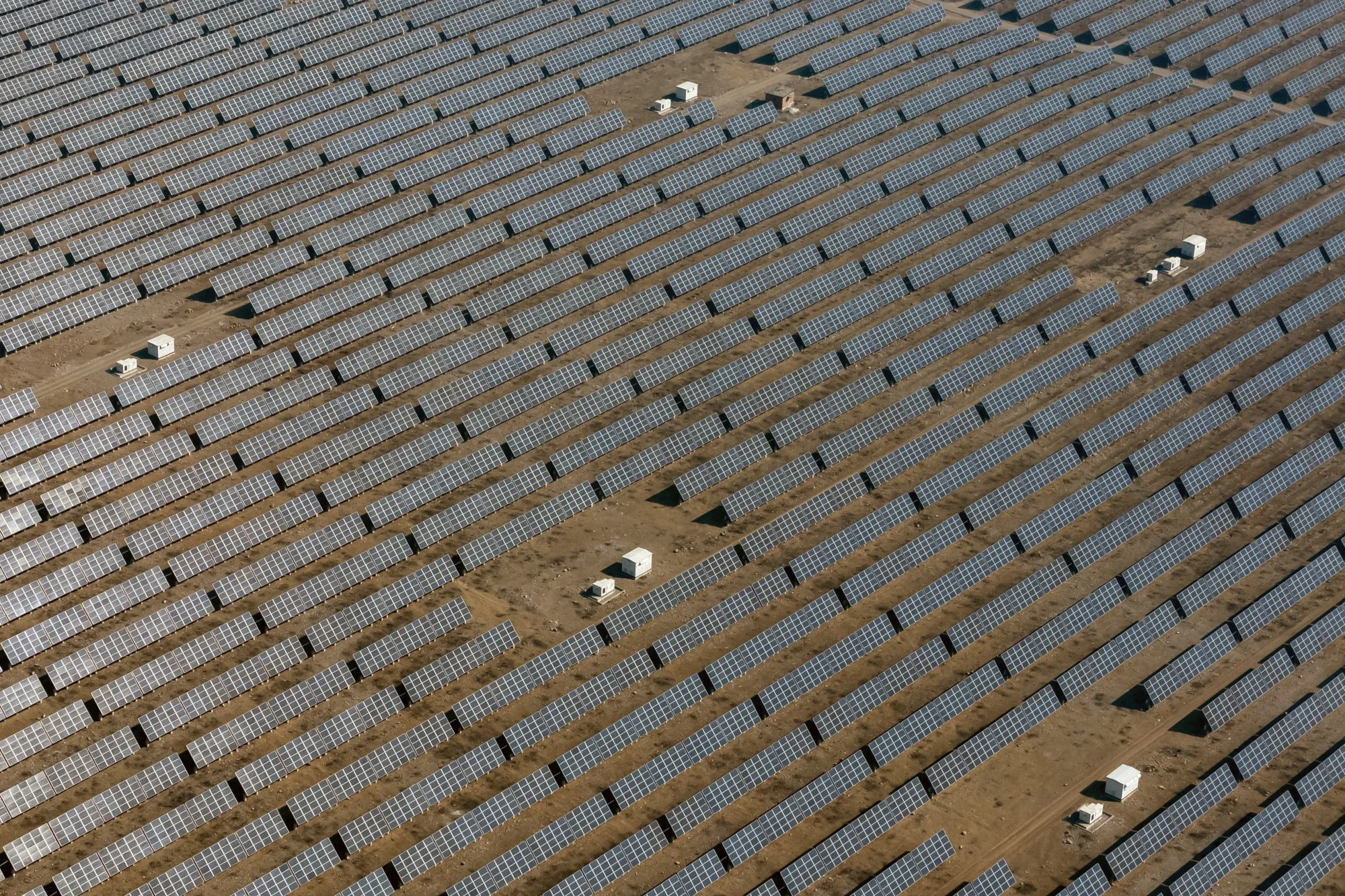
- Solar sector: Massive overcapacity led to price wars, billions in losses for manufacturers, and exports dominating global markets (e.g., 40% of modules to Europe in early 2025).
- EVs: Capacity three times domestic needs, fueling low-margin exports and trade conflicts (tariffs from the U.S., EU, India, Brazil).
These visuals show solar panel factories overwhelmed by excess production and inventory:

The world is pushing back: tariffs rise, markets resist absorbing endless surplus. Redirecting to poorer regions fails — purchasing power matters. Global initiatives (Belt and Road lending, port acquisitions) breed resentment when debts go unpaid.
Hidden Corrosion: Corruption, Weak Feedback, and Stalled Wages
Corruption embeds in bureaucracy, approvals, and regulations — raising costs and slowing efficiency. Thin social safety nets fuel high savings (fear-driven, not cultural), weak consumption, and deflation. Households save instead of spend; the economy stays imbalanced.
Official GDP growth for 2025 hovered around 5% (first three quarters reported ~5.2%), but independent estimates (e.g., Rhodium Group) suggest real growth was 2.5–3% — half the headline figure — due to collapsing investment and persistent deflation.
The Property Sector as Warning Shot
The real estate crash (triggered by 2021's "three red lines" debt curbs) was a preview: Evergrande's $300+ billion debt default, unfinished projects, and oversupply (hundreds of millions of unsold units). Even in 2025, the fallout lingers — developers like Vanke struggle, prices fall, confidence erodes.
These images capture the human cost of the Evergrande/property crisis — abandoned, unfinished apartments trapping families:


The Dangerous Phase: Shrinking Options and Global Fallout
Solutions are paradoxes:
- Stimulus → more debt.
- Cut production → unemployment risks unrest.
- Reform → threatens powerful interests.
- Delay → worsens imbalances.
When confidence breaks (psychological tipping point), capital flees, spending freezes, and collapse accelerates.
Globally: Supply chains fracture, commodity prices swing, emerging markets suffer, financial markets reprice risk. The myth of unstoppable China shatters.
The transcript's sobering close: The model worked brilliantly until it didn't. Industrialization succeeded, but without guardrails, success bred excess. Economics delays consequences but doesn't forgive them. The question isn't if the bomb explodes tomorrow — it's whether adaptation can outpace pressure before the fuse burns out.
This is a stark, critical view of China's structural vulnerabilities in late 2025, blending real data (low per capita income, overcapacity, property scars) with warnings of deeper systemic flaws. While official narratives emphasize resilience, the imbalances are hiding in plain sight — behind the glow of progress.
This is a fun, chaotic episode of what feels like a real-life automotive adventure vlog — think "junkyard treasures meets impulse buys" — where the creator (a mechanic/tow truck guy with a knack for rare oddballs) spontaneously snags two derelict 2003–2004 London Taxi International TX2 black cabs (rare in the US) from a friend's shop yard. They're purple, imported, non-running parts cars from a hotel fleet, and he buys them on a whim because "they're different and cool." Total cost: around $400 for both, plus some haggling and cleanup effort.
The TX2 (also called TXII) is the iconic modernized London black cab from the early 2000s, famous for its boxy shape, huge rear passenger space (seats 5–6 comfortably), tight turning circle, wheelchair ramp, and that classic "turn on a sixpence" handling. These US-spec versions are left-hand drive, super rare stateside — most Americans have never seen one in person, let alone owned a pair.
Here are some classic shots of the iconic TX2 London Taxi in its signature style (these purple ones are extra unique):



The Pickup Chaos
The two cabs are sitting in a yard, heavily cannibalized:
- One is mostly intact but non-running (no radiator, missing parts, on one lug nut, but steerable).
- The other is a true parts car — valve cover off, intake manifold gone, no steering linkage, brakes missing, seats pulled (likely swapped into running hotel units).
The creator doesn't research first ("If I can't buy 'em, who cares?") — classic impulse buy logic. He unloads tire machines from his tow truck, heads over, inspects the purple beasts, and negotiates. The shop owner plans to scrap them (~$200–250 each value), but the seller thinks they're worth more ($550?). Deal lands at $400 total — a steal for imported oddities.
Loading is pure mayhem:
- Jack stands tipping, rusty bolts snapping (left-hand thread surprises), dragging one with no steering/brakes.
- Kicking wheels straight, zip-tying loose parts, dodging flying bits.
- One cab's key breaks in the ignition; bumpers snag; hydraulic fluid spills.
- The second requires more improvisation — jacking, winching, avoiding fence damage.
Here are close-ups of the Ford Duratorq 2.4L turbodiesel engine (the "Puma" ZSD-424 codename family, common-rail injected in these years, ~90–100 hp, torquey for city work):


Back at the Shop: Research & Plans
Towed home without major disasters (one bumper snag, a few leaks, flat tires). The cabs are now parked proudly among other imports (Delica, etc.). Quick digging reveals:
- Engine: Ford Duratorq 2.4L (ZSD Puma) turbodiesel — common-rail (not mechanical like hoped), from Transit vans. Parts are pricey/scarce in the US (e.g., $430 valve cover).
- Challenges: Non-running (missing ignition, wiring, injectors?), parts cannibalized, metric everything.
- Future ideas: Fix one for the road (it has a title!), swap in something wild (manual trans, 2JZ, forklift engine?), or just enjoy as shop art/oddity.
The vibe is pure enthusiast energy — zero regrets, lots of laughs at the absurdity ("Feel like Austin Powers!"), banter with buddies (Tommy, Hank), and a call to action: Comment what engine/manual swap you'd do!
This is junkyard collecting at its finest: rare, impractical, expensive-to-fix imports bought "because why not?" Now the purple beasts sit as project queens — saved from scrap, ready for whatever mad plan comes next. If you've ever impulse-bought something wild, this episode is for you.
In the Russian-occupied territories of eastern Ukraine's Donbas region (primarily Donetsk and Luhansk oblasts), a severe, ongoing water crisis has become one of the war's most devastating humanitarian and environmental tragedies as of late 2025. This is not a natural drought but a man-made disaster rooted in war damage, deliberate neglect, corruption, and the weaponization of basic resources. Millions live in daily desperation: taps run dry for days or weeks, forcing families to queue for hours at rusty tanker trucks delivering limited, often brown and contaminated water — sometimes just 60 liters per household to last several days. The crisis affects an estimated 3–3.5 million remaining residents (down from a pre-2014 population of ~6.5 million due to displacement), turning survival into a grinding routine of rationing, boiling murky water multiple times, skipping hygiene, and risking preventable diseases.
The Lifeline That Was Destroyed
The region's backbone was the Siverskyi Donets–Donbas Canal (SDD Canal), a Soviet-era engineering marvel built in the 1950s–1960s. This ~130–135 km concrete channel once pumped ~25 million liters per hour from the Siverskyi Donets River (near Sloviansk, now under Ukrainian control) over hills to the arid steppe, feeding cities, industries, agriculture, and homes across Donetsk and beyond. Seven massive pumping stations and reservoirs ensured reliable, clean supply — water flowed freely from any tap.
War shattered this system:
- Russian forces crossed and damaged the canal in the early weeks of the 2022 full-scale invasion.
- Shelling, explosions, and power losses crippled pumps and infrastructure.
- By mid-2022, flow dropped sharply; today, it's reportedly at 12–15% capacity (or less), far below pre-war levels.
- Attempts to replace it with alternatives (like a new Don–Donbas pipeline from Russia) have failed to meet demand, delivering only a fraction of needs due to breakdowns, low capacity, and losses (up to 60% in some networks).
Occupation officials (e.g., Denis Pushilin, head of the so-called "Donetsk People's Republic") blame Ukraine, claiming full restoration requires capturing Sloviansk to regain the canal's source — a justification for continued military advances. Independent analyses (including from ISW and Ukrainian experts) hold Russia responsible as the occupying power under international law (Geneva Conventions require providing essentials like clean water).
Daily Life in the Crisis
In cities like Donetsk, Yenakiieve, Horlivka, and Mariupol:
- Running water arrives a few hours every 2–4 days (or less), often discolored, metallic-tasting, and unsafe.
- Residents haul buckets, old bottles, pots, and canisters to tanker trucks guarded by armed personnel (sometimes with favoritism for "loyal" areas).
- Families ration drastically: no flushing toilets unless essential, minimal laundry (only when unbearable), repeated boiling of the same water for tea, cooking, and cleaning.
- Children join long queues; elders struggle with stairs.
- Last winter, some areas went 11+ days without deliveries amid freezing temperatures, forcing people to melt snow in plastic bags or on makeshift fires.
Here are haunting images of residents queuing for precious tanker deliveries in occupied Donetsk during the 2025 heatwave and shortages:
Toxic "Solutions" and Health Risks
When canal water fails, authorities promote pumping from flooded coal mines — a deadly gamble. Donbas's hundreds of abandoned mines (pumps stopped due to war/neglect) fill with acidic, heavy-metal-laden water (iron, manganese, sulfates, arsenic, petroleum residues, and even radionuclides). Long-term use risks organ damage, weakened immunity, cancer, and skin/intestinal diseases.
A chilling example: The Yunkom (Yunyi Komunar) mine near Yenakiieve hosted a 1979 Soviet underground nuclear test (0.3 kt "peaceful" explosion). Flooding since ~2018–2022 risks mobilizing radioactive contaminants (cesium, strontium) into groundwater. Experts warn surface contamination could reach drinking sources by 2026 or sooner, creating a "ticking environmental bomb."
Reports from 2025 highlight:
- Rising cholera, dysentery, scabies, impetigo, and chemical burns from bathing.
- Hospitals ration water, cancel surgeries, or use contaminated sources, tripling post-op infections.
- Doctors forbidden from documenting water-related causes (labeled "seasonal disorders").
- Methane-rich tap water ignites in some villages.
These visuals show the polluted, rusty mine water and contaminated rivers now used as desperate alternatives:
Corruption, Control, and Propaganda
Billions of rubles (~$300M+) allocated for repairs (2022–2025) vanish into fake contracts, inflated budgets, and cronies' pockets. Staged events show "new" equipment (borrowed for cameras, then removed) or ribbon-cuttings at empty plants. Tankers favor loyal neighborhoods; dissenters face "mechanical issues." Propaganda films heroic restorations (often staged far away) while real taps stay dry.
Humanitarian aid (filters, bottles, tablets from Red Cross, Médecins Sans Frontières, churches) is frequently blocked at checkpoints, taxed, or confiscated — worsening the crisis.
Broader Context and Long-Term Threat
The 2023 Kakhovka Dam destruction (blamed on Russia) compounded southern issues, salinizing soil and worsening shortages. Crimea (annexed 2014) faces its own crisis post-North Crimean Canal cutoff, with reservoirs critically low and desperate measures like trucking water from shrinking sources.
Residents show remarkable resilience: secret networks track tankers, hidden pumps in "coffins," mechanics welding in darkness. Yet children grow up normalizing brown water and queues — a generation shaped by deprivation.
International law views deliberate deprivation as a potential war crime; experts call it "water weaponization." Aid groups warn of spreading diseases and irreversible pollution (50+ years for some aquifers).
As 2025 ends, the crisis boils over: petitions to Putin, viral child videos begging for water, and whispers of "the dirty year" ahead. This is not just infrastructure failure — it's a slow, deliberate erosion of life in occupied Donbas. The world watches, but on the ground, every drop remains a battle.
The Silent Crisis in American Education: A Ten‑Minute Read
Across the United States, teachers are sounding an alarm that grows louder every year: the profession is collapsing from the inside, and the people inside it — teachers, students, and families — are being crushed by a system that no longer functions.
This isn’t a story about laziness, political agendas, or “kids these days.” It’s a story about structural failure, cultural shifts, and a generation of children growing up in a world fundamentally different from the one schools were designed for.
Below is a synthesized narrative of what teachers across the country are reporting.
1. Teaching in 2025 Is Not the Job It Used to Be
Teachers describe a profession that has transformed dramatically since the pandemic. What was once a challenging but meaningful career has become, for many, unrecognizable.
Classrooms are more chaotic.
Behavioral issues are more extreme.
Administrative support is thinner.
Parents are less engaged.
Students are more anxious, more apathetic, and more dependent on technology.
Many teachers say they no longer spend their days teaching content. Instead, they spend most of their time:
Managing disruptive behavior
Mediating conflicts
Regulating emotions
Handling crises
Filling in for missing staff
Completing endless administrative tasks
The job has expanded far beyond academics, but without the training, resources, or authority to match.
2. A Wave of Mid‑Year Resignations
Teachers aren’t just leaving the profession — they’re leaving mid‑year, something that used to be rare and stigmatized.
Why?
Because staying often means sacrificing mental health, physical safety, and family stability.
One teacher describes being threatened by a student who wasn’t even assigned to her class. When she sought help, the student faced minimal consequences, and she was expected to return to teaching immediately after a panic attack. Videos of the incident circulated among students. She left the profession a month later.
Stories like this are no longer unusual. Teachers emphasize:
They’re not quitting because they don’t care.
They’re quitting because the system no longer lets them teach.
They’re quitting because self-preservation has become necessary.
3. A Breakdown in Student Behavior and Social Skills
Teachers across grade levels report a dramatic shift in student behavior — not just misbehavior, but developmental gaps.
Common issues include:
Inability to follow multi-step directions
Difficulty sitting still or focusing
Extreme emotional reactions
Physical aggression
Disrespect toward adults
Lack of conflict-resolution skills
Minimal resilience or perseverance
One teacher describes a student breaking a classroom wand — something purchased with the teacher’s own money — while staring her in the eyes, then laughing when she reacted.
Another describes first graders unable to answer basic comprehension questions even after explicit instruction.
Another describes students spitting on each other, hitting autistic classmates, or threatening teachers.
These aren’t isolated incidents. Teachers say this is now daily life.
4. Academic Decline: “They Can’t Read Their Own Notes”
Many teachers report that students are years behind academically — not just in reading or math, but in basic cognitive processing.
Examples include:
Middle schoolers reading at kindergarten levels
Students unable to decode simple sentences
Inability to infer, connect cause and effect, or track multi-step ideas
Students copying instructions instead of completing assignments
Kids unable to read analog clocks, count money, or tie shoes
Students who don’t know their address, phone number, or parents’ names
One teacher describes students writing down “Maryland was founded as a safe haven for Catholics,” then being unable to answer the question “Where were the Catholics?” even with the notes in front of them.
Teachers say this isn’t laziness — it’s a cognitive and developmental gap they’ve never seen before.
5. The Role of Technology and AI
A new and alarming trend: students questioning the value of learning at all.
Teachers report children — even in elementary school — asking:
“Why do I need to read if a computer can read for me?”
“Why do I need to learn math if AI can do it?”
Some students refuse to learn foundational skills because they assume technology will always be available.
Teachers warn that this creates a generation dependent on tools they don’t understand, with no backup if technology fails.
6. Parents and Administrators: Missing in Action
Teachers consistently describe a lack of support from both parents and administrators.
Parents:
Don’t answer calls
Don’t discipline their children
Defend harmful behavior
Are disengaged or distracted
Sometimes don’t know what their children are doing
One story describes a 6‑year‑old verbally attacking an adult at a soccer game while his parents sat on their phones, unaware.
Administrators:
Avoid suspensions
Minimize consequences
Pressure teachers to “keep the peace”
Prioritize data over safety
Expect teachers to absorb every problem
Teachers say they are told to:
Keep bodies in the room
Pass students who haven’t learned
Avoid escalating issues
Handle everything themselves
This leaves teachers feeling powerless and unprotected.
7. A Generation Losing the Ability to Dream
One high school teacher describes an assignment where students share their biggest dreams.
Ten years ago, students dreamed of college, careers, and accomplishments.
Now, most students dream of:
Winning the lottery
Getting rich instantly
Acquiring money without effort
Only a handful dream of meaningful achievements.
Teachers interpret this as a sign of a generation that sees:
A world without opportunity
A society that values wealth over purpose
Adults who are stressed, cynical, and exhausted
Students are absorbing that worldview.
8. The Emotional Toll on Teachers
Teachers describe:
Crying in stairwells
Panic attacks
Feeling unsafe
Feeling disrespected
Feeling helpless
Feeling like failures despite giving everything
Many say they love teaching — the act of teaching — but they no longer get to do it.
They spend their days firefighting, not educating.
The heartbreak comes from wanting to stay, wanting to help, wanting to make a difference — but being unable to survive the conditions.
9. The Larger Cultural Shift
Teachers point to broader societal changes:
Kids raised on screens instead of play
Parents overwhelmed or disengaged
A culture of instant gratification
Declining attention spans
Erosion of respect for institutions
Mental health crises among youth
Technology replacing foundational skills
They argue that schools are being asked to fix problems they didn’t create — and can’t solve alone.
10. The Conclusion: Something Has to Give
Teachers across the country agree:
The system is breaking.
Teachers are burning out.
Students are struggling academically, socially, and emotionally.
Parents and administrators must step up.
Society must rethink what education is for.
This isn’t about blaming kids. It’s about recognizing that children are growing up in a world that no longer aligns with the structure of school, and teachers are caught in the middle.
The message is clear: If nothing changes, public education as we know it will not survive.
How to Move to Japan: A Comprehensive Ten‑Minute Guide
Moving to Japan is a dream for many people, but the process is far more complex than simply buying a plane ticket. Japan’s immigration system is structured, rule‑bound, and heavily dependent on two things: money and credentials. While there are pathways that don’t require a degree, most long‑term, stable options do.
This guide walks through the major visa categories, the realities behind each, and what you need to know before making the leap.
1. The Two Big Requirements: Money and a Degree
Money
Japan expects incoming residents to be financially stable. Whether you’re applying for school, work, or a cultural program, you’ll need to show proof of funds — often $15,000–$25,000 USD or a sponsor who can verify that amount.
Even if a visa doesn’t explicitly require savings, arriving with too little money puts you at risk. Many people online claim they moved with $2,000, but that leaves you vulnerable to:
predatory employers
unexpected expenses
housing barriers
emergencies
A realistic minimum recommended by experienced expats is $10,000 USD.
A Bachelor’s Degree
For most long‑term visas — especially work visas — a bachelor’s degree is the standard requirement. There are exceptions, but they’re narrow and often unstable.
2. Student Visas: Language School, University, and Trade School
A student visa is one of the most common entry points into Japan.
Language School
Maximum stay: 2 years
Good for improving Japanese
Allows part‑time work (up to 28 hours/week)
BUT: finishing language school does not qualify you for a work visa unless you already have a degree
Many people mistakenly assume that speaking Japanese well is enough. It isn’t. Without a degree, job options are extremely limited.
University
Two types exist:
Japanese universities (courses taught in Japanese)
International universities (degrees taught in English)
If you complete a degree in Japan, you become eligible for work visas afterward.
Trade Schools
Shorter programs, but like language schools, they don’t lead to work visas unless you already hold a bachelor’s degree.
Financial Requirements
To get a student visa, you must show:
Bank statements proving $15,000–$25,000 USD
A guarantor (often required)
3. Work Visas: The Most Direct Path
If you’re hired by a Japanese company, they sponsor your visa. Requirements vary by field, but most jobs require:
A bachelor’s degree OR
10+ years of documented professional experience
English Teaching
This is the most common route for foreigners.
Programs like JET are reputable and pay well
Private companies vary widely in quality
Applying from inside Japan is easier than applying from abroad
JET’s downside: you cannot choose your placement.
4. Digital Nomad Visa: New, Limited, and Not Renewable
Japan recently introduced a 6‑month digital nomad visa, but it comes with major limitations:
Cannot be renewed
No resident card
Income requirement: 10 million yen/year (~$64–65k USD)
Hard to rent long‑term housing
Essentially a long tourist stay, not a path to residency
It’s useful for temporary stays, not relocation.
5. Cultural Visa: Study Traditional Arts
This visa is for people studying Japanese cultural practices such as:
martial arts (e.g., karate, kendo)
tea ceremony
calligraphy
traditional crafts
Requirements:
Proof of funds
Sponsorship from a dojo or cultural institution
No work allowed
This is a niche but legitimate pathway.
6. Artist Visa and Specialist Visa
Artist Visa
For people who can prove they earn a living from their art.
You must show:
5+ years of professional artistic work
Income records
Portfolio and proof of recognition
Specialist Visa
For highly skilled professionals with:
10+ years of experience in a specialized field
Documentation of expertise
Example: a master pastry chef from Paris could qualify.
7. Nikkei Visa (Japanese Ancestry)
If you have Japanese heritage, you may qualify for a long‑term residency visa.
Third‑Generation Descendants
If your grandparents were Japanese citizens, you can apply.
Fourth‑Generation Descendants
Possible, but stricter requirements and more obligations.
This visa allows long‑term stays and work, but not everyone qualifies.
8. Spouse Visa: Marriage to a Japanese Citizen
If you marry a Japanese national:
You can live and work in Japan
You do not need a degree
This is one of the most flexible visas
However, it’s obviously not a visa you can pursue for immigration purposes alone.
9. Working Holiday Visa: Limited to Certain Countries
Working holiday visas allow young people (usually ages 18–30) to live and work in Japan for 1–2 years.
BUT:
Only certain countries qualify
Americans cannot apply
This is a great option for those who qualify, but it’s not universal.
10. Business Manager Visa and Startup Visa
Business Manager Visa
Previously required ~$30,000 USD investment. Now requires $200,000 USD (30 million yen).
You must show:
A business plan
Office space
Financial capability
Possibly Japanese language ability
Startup Visa
A more flexible, temporary version of the business manager visa.
Lower requirements
Shorter validity
Intended to help entrepreneurs get started
11. Retirement in Japan: Not Possible
Japan does not offer a retirement visa.
If you want to retire in Japan, you must:
Qualify for another visa type
OR stay short‑term on tourist visas
Buying property does not grant residency.
You can own a home in Japan without living there, but it does not help with immigration.
12. Final Thoughts: Plan Carefully, Save Money, Know Your Path
Japan offers many visa categories, but each has strict rules. The most reliable long‑term paths are:
Work visa (with a degree)
Student visa → university → work visa
Spouse visa
Nikkei visa (if eligible)
Business manager visa (if wealthy)
Everything else is temporary or limited.
The key takeaways:
Save as much money as possible
A degree opens most doors
Research your visa path thoroughly
Avoid arriving with too little money
Understand that not all visas lead to long‑term residency
This summary distills the insights from a former CIA officer on how to detect deception, the mechanics of emotional questioning, and the psychological transition from elite intelligence work to everyday life.
1. The Myth of "Micro-Expressions"
Forget the viral TikTok trends about tiny facial twitches. Real-world lie detection isn’t about spotting a single "tell" like scratching a nose. Instead, it’s about observing effort.
Lying is Cognitively Taxing: Even for professionals, lying requires immense mental energy. Truth is effortless; lies are a performance.
The "Feelings" Question: To test someone, ask a question that requires an emotional response (e.g., "How did you feel when your child was born?").
Truth: The response is usually immediate, accompanied by natural facial movement (smiling, brow furrowing, eye movement).
Lies: There is often a notable pause (the "record scratch") where the brain "audits" the question to decide which fake emotion to present.
2. Reading the Eyes: The Chronology Shift
One of the most effective tools discussed is observing eye movement relative to a person’s primary language.
Left-to-Right Readers: In English speakers, looking up and to the left often indicates someone is accessing a chronological memory (searching for a factual event).
The "Dead Eye" Look: When someone is forced to lie about an emotional topic, their face often becomes rigid. During the experiment in the text, the subject’s eyes remained locked and unmoving—an "inhuman" absence of the natural movement that accompanies genuine memory recall.
3. Practical Tools for Everyday Life
The CIA identifies three types of people: those who manipulate, those who motivate, and those who are controlled. To move into the first two categories, the speaker suggests two main tactics:
The "10% Rule"
The most universal tool for the average person is to stop talking.
If you talk 10% less, you will learn 30% more.
Holding a pause when you feel the urge to speak forces others to fill the silence, often revealing more than they intended.
"OpThink" (Operational Thinking)
This is the specialized mindset used by intelligence officers to strip away emotional bias and observe "observables." It involves training the brain to see objective physical facts rather than interpreting them through your own feelings.
4. The "Spy Kids" Reality & Technology
The conversation touches on the disparity between Hollywood and reality:
Gadgets: While "button weapons" exist, the more impressive technology is in intelligence collection. This includes audio bugs that require no battery power and micro-cameras far more advanced than those seen in films.
Authenticity: Most spy movies are inaccurate. The speaker’s favorite is Spy Kids, not for its realism, but because it doesn’t pretend to be a serious documentary of the trade.
5. The Heavy Cost of the "Mask"
The discussion concludes with a vulnerable look at the mental health of intelligence officers.
Hyper-vigilance: Growing up in volatile homes often creates the "scanning" skills necessary for spying, but it makes "coming home to yourself" difficult.
The Transition: The speaker reveals that leaving the CIA led to a marriage crisis because he and his wife (also a CIA officer) were "wired" for operations, not domestic intimacy.
Creative Outlet: "Everyday Spy" began not as a business, but as a form of therapy—a way to process the trauma and secrets of elite service through writing and teaching.
The Home Insurance Crisis in America: A Ten‑Minute Read
A growing number of Americans are discovering that something once considered routine — renewing home or auto insurance — has become a financial and logistical nightmare. What used to be a simple annual task is now a source of anxiety, uncertainty, and in some cases, outright panic. The story you shared is a perfect example of how widespread and personal this crisis has become.
This summary breaks down the situation into clear themes: the personal experience, the national trends, the financial collapse of insurers, the skyrocketing premiums, the shrinking availability of coverage, and the systemic forces driving the crisis.
1. A Personal Story That Reflects a National Problem
The narrator has just received a non‑renewal notice from their homeowner’s insurance company, Edison Insurance. They’ve owned their condo for only two years, have never filed a claim, and carry only minimal coverage — yet they’re being dropped.
This is not an isolated case. It’s happening to homeowners across the country, especially in states like:
Florida
California
Texas
Colorado
The Carolinas
The narrator’s situation highlights the emotional shock many homeowners feel: “What happens if no one will insure me?”
For anyone with a mortgage, insurance is not optional. Losing coverage can put a homeowner at risk of foreclosure or force them into expensive state‑run insurance pools.
2. The Collapse of the Traditional Insurance Market
Insurance companies across the U.S. are in trouble. Many are:
Losing billions
Pulling out of entire states
Refusing to write new policies
Quietly closing offices
Dropping long‑time customers
Requesting massive rate increases
Even major companies like Allstate, State Farm, Farmers, and Nationwide are struggling.
Examples:
Allstate lost billions and is dropping customers after failing to secure rate increases in some states.
State Farm lost $13 billion in 2022, its worst year ever, and stopped writing new homeowner policies in California.
Nationwide is refusing to renew 105,000 policies in hurricane‑prone areas of North Carolina.
Farmers raised rates by 23% for thousands of customers.
This is not a regional issue anymore — it’s national.
3. Premiums Are Exploding Everywhere
Across the country, homeowners and drivers are seeing unprecedented premium increases:
Auto insurance up 20% nationally
Some individuals seeing increases of 50–70%
Home insurance up 30–60% in many states
Some HOAs seeing 100%+ increases
One Las Vegas driver with a 2012 Mazda saw his Geico premium jump 72% in one year — with no accidents or tickets.
The narrator’s own auto insurance jumped 26%, forcing them to cut coverage just to keep the bill manageable.
4. Why Is This Happening?
Insurance companies blame:
Climate change
Extreme weather
Wildfires
Hurricanes
Flooding
Rising car repair costs
Higher home values
More expensive materials
Increased labor costs
But the narrator points out a crucial nuance: Losses are rising partly because more people now live in high‑risk areas, and everything they own is more expensive than it used to be.
A chart referenced in the video shows global insured losses from extreme weather steadily rising since 2000 — but so have population density and asset values.
5. Insurers Are Losing Money — Fast
U.S. property and casualty insurers reported:
$32.2 billion in underwriting losses in the first nine months of 2023
That’s $7.6 billion worse than the same period in 2022
The final quarter of 2023 isn’t even counted yet
From 2018 to 2020, insurers made nearly $5 billion in profit each year. Now they’re losing $25–33 billion annually.
This financial collapse is driving the rate hikes and non‑renewals.
6. Insurance Deserts: A New Reality
The CEO of Allstate has warned that “insurance deserts” are coming — areas where insurance becomes:
Unavailable
Unaffordable
Unsustainable
Florida is already experiencing this. California is close behind. Other states are following.
When insurers can’t raise rates enough to cover risk, they simply leave.
7. The Quiet Exit Strategy: “Insurance Company Quitting”
Many insurers don’t publicly announce their withdrawal. Instead, they:
Stop accepting new customers
Close local offices
Reduce advertising
Make renewal requirements impossible
Demand obscure paperwork (e.g., proof of plumbing upgrades)
Drop customers quietly
Geico did this in California — closing every office in the state.
8. Reinsurance Costs Are Exploding Too
Insurance companies buy insurance themselves — called reinsurance — to protect against catastrophic losses.
In 2023, reinsurance costs rose 30–50%, and those costs are passed directly to consumers.
This creates a chain reaction:
Reinsurers raise prices → insurers raise prices → homeowners get crushed.
9. Lawsuits and Fraud: The Florida Factor
Florida’s insurance crisis is worsened by:
Excessive lawsuits
Roofing scams
Fraudulent claims
In 2022:
Litigated claims cost 6× more than normal claims
28% of claims in South Florida ended in lawsuits
Statewide average is 10%
However, insurers still made $16 billion in profit in 2022 — raising questions about how much of the crisis is weather vs. corporate strategy.
10. The Human Impact: Fear, Anger, and Uncertainty
The narrator expresses what millions of homeowners feel:
Vulnerability
Frustration
Confusion
Fear of losing their home
Anger at insurance companies
Anxiety about the future
Insurance used to be a background expense. Now it’s a financial threat.
People are asking:
What if no one will insure me?
What if my premiums double?
What if my mortgage lender steps in?
What if I can’t afford to drive?
These are no longer hypothetical questions.
11. A Broken Business Model
The narrator argues that insurers are essentially destroying their own industry:
Dropping customers
Raising rates beyond affordability
Cutting services
Outsourcing customer service overseas
Prioritizing shareholders over policyholders
If this continues, many insurers may lose so many customers that they collapse under their own pricing.
12. What Happens Next?
The narrator is now searching for a new policy — likely through Citizens, Florida’s insurer of last resort. But even that is uncertain.
The broader message is clear:
The U.S. insurance system is in crisis, and homeowners are caught in the middle.
This is not a temporary spike. It’s a structural breakdown.
Here’s a clear, structured, ten‑minute‑read summary of the investing guide you provided. I’ve organized it into a smooth narrative that teaches the concepts in the same order as the original, but with tighter explanations and cleaner flow.
Investing for Beginners: A Complete Ten‑Minute Read
Investing can feel intimidating when you’re just starting out. There’s jargon, charts, strategies, and a seemingly endless list of things you “should” know. But the truth is: investing doesn’t have to be complicated. With a few core concepts, anyone can begin building long‑term wealth.
This guide breaks down the essentials:
Why investing matters
How investing works
What to invest in
How to personalize your strategy
Where to invest
When to start
How much to start with
A walkthrough of how to buy your first investment
Let’s dive in.
1. Why You Should Invest
Your money needs to work for you
If your savings sit in a traditional bank account, they earn almost nothing — often 0.01% interest. That means $1,000 earns about 10 cents a year.
Compare that to investing:
At 5%, $1,000 becomes $1,050
At 10%, it becomes $1,100
Over decades, the difference becomes enormous
Compound interest
This is the engine of wealth building. It means:
Your money earns interest, and then that interest earns interest.
Example:
Year 1: $1,000 → $1,100
Year 2: $1,100 → $1,210
Year 20: $1,000 becomes $6,727
Time is the secret ingredient.
Inflation
Inflation reduces your purchasing power every year. If inflation is 6–8% and your savings earn 0.01%, you’re losing money in real terms.
A stamp cost 8¢ in 1971. Today it’s 63¢. That’s inflation in action.
Investing helps your money grow faster than inflation.
2. How Investing Works
You can invest in many types of assets:
Stocks
You buy ownership in a company. If the company grows, your investment grows.
Real estate
Homes appreciate over time. A house bought for $100,000 in the 1990s might be worth $1 million today.
Collectibles
Items like Pokémon cards or rare art can increase in value — but this is unpredictable.
The stock market
This is the most common and historically reliable way to grow wealth over long periods (10+ years).
The S&P 500 — a collection of the 500 largest U.S. companies — has returned 8–10% per year on average since the 1980s.
Even with crashes (2000, 2008), the long‑term trend is upward.
If you invested $100 in 1980, it would be worth nearly $10,000 today.
3. What to Invest In
Avoid picking individual stocks
Buying Tesla, Coca‑Cola, or Intel sounds exciting, but:
It’s risky
It requires constant research
You can lose money for decades (Intel still hasn’t recovered from its 2000 peak)
Use index funds
Index funds are the beginner’s best friend.
They:
Track the entire market
Are diversified
Are low‑cost
Require no expertise
Perform better than most professional money managers
Examples of indexes:
S&P 500 (top 500 U.S. companies)
NASDAQ (tech‑heavy index)
FTSE 100 (top UK companies)
When you buy an S&P 500 index fund, your money is automatically spread across companies like:
Apple
Microsoft
Amazon
Alphabet
Tesla
Visa
Home Depot
…and hundreds more.
Mutual funds vs. index funds
Mutual funds: professionally managed, high fees
Index funds: passively track the market, low fees
Index funds consistently outperform most mutual funds over time.
4. Personalizing Your Investment Strategy
Investing is personal. Two key questions:
1. What’s your risk tolerance?
High risk tolerance → comfortable with volatility
Low risk tolerance → prefer stability
2. What’s your time horizon?
If you’re 20 years old, you have decades to recover from downturns
If you’re 5 years from retirement, you should avoid risky investments
General rule: The younger you are, the more you can rely on index funds and long‑term growth.
5. Where to Invest
You can invest through:
Retirement accounts
401(k) (through your employer)
IRA / Roth IRA (individual accounts)
Other countries have equivalents:
UK: SIPPs, ISAs
Canada: RRSP, TFSA
Australia: Superannuation
Retirement accounts offer tax advantages, but your money is locked up until retirement (with some exceptions).
Brokerage accounts
These are flexible, taxable accounts you can open anytime.
Examples:
Fidelity
Charles Schwab
Vanguard
Robinhood
Webull
You can buy stocks, ETFs, and index funds directly.
6. When to Start Investing
As soon as possible. The earlier you start, the more compound interest works in your favor.
But don’t invest until you have:
1. High‑interest debt paid off
Anything above 10% interest should be eliminated first.
2. An emergency fund
3–6 months of expenses in a safe savings account.
3. Money you can afford to lose
Don’t invest money you need in the next 1–2 years.
7. How Much to Start With
This is where the creator gives a smart, realistic take:
If you only have $100 total
Don’t invest it. Use it to build skills, increase income, or start a side hustle.
If you have steady income
Start investing a portion of every paycheck.
Even $50–$200 per month compounds massively over decades.
8. How to Buy Your First Investment (Walkthrough)
Using a brokerage app like Fidelity:
Open the app
Tap Trade
Search for an index fund or ETF (e.g., VO, which tracks the S&P 500)
Choose Buy
Select:
Market order (executes immediately)
Shares or Dollar amount
Preview the order
Tap Place Order
You can buy:
A full share (e.g., $367)
A fractional share (e.g., $100 worth)
It’s that simple.
Final Thoughts
Investing isn’t about timing the market or picking the next Tesla. It’s about:
Consistency
Patience
Diversification
Long‑term thinking
If you invest regularly in low‑cost index funds, avoid high‑interest debt, and let compound interest do its work, you give yourself one of the strongest paths to long‑term financial freedom.
Christmas in China: A Ten‑Minute Read
Christmas in China is a strange, contradictory, and often unintentionally hilarious experience. On one hand, you’ll find malls decked out in lights, Santa statues, and holiday sales. On the other, the Chinese government discourages — and in many cases outright bans — Christmas celebrations in public institutions. The result is a mix of festive chaos, cultural confusion, and political tension that makes “Christmas in China” unlike anywhere else in the world.
This summary walks through the key themes, stories, and commentary from the original discussion.
1. Christmas on the Great Wall — and the Chaos of Daily Life
The video opens with lighthearted clips of people celebrating Christmas in unusual ways, including on the Great Wall. But quickly, the conversation shifts to something very “China”: a massive traffic jam caused not by an accident, but by everyone refusing to yield at a four‑way intersection.
A firsthand story illustrates this perfectly:
A 45‑minute motorcycle ride through gridlocked cars
No crash, no construction — just stubbornness
No one willing to move first
No authority stepping in
It’s a snapshot of how small cultural habits can create massive dysfunction.
2. The Government’s Stance: “Reject Western Holidays”
A major theme is the Chinese government’s long‑standing discomfort with Christmas. Each year, public schools and government‑linked institutions receive notices:
No Christmas decorations
No Santa hats
No Christmas activities
No Western holiday celebrations
The official line is that Chinese citizens should celebrate only Chinese holidays. Teachers in public schools are explicitly told to remove decorations, even if students enjoy them.
Yet foreigners often say, “But I see Christmas decorations everywhere!” That’s because:
Malls can decorate (they’re commercial, not political)
International schools can decorate (they’re not state‑run)
Private businesses can decorate
But anything tied to the government? Absolutely not.
3. The Strange, Funny, and Bizarre Clips
The video showcases a series of surreal Christmas‑related clips from China — some new, some older — that highlight the country’s unique relationship with the holiday.
A. Santa gets beaten up
A man in a Santa suit is attacked by a random uncle in a park. No explanation. Just chaos.
B. A Christmas tree gets torn apart
People rip down a public Christmas tree because they think the empty gift boxes contain real presents.
C. A man paints Christmas couplets using his mouth
He has hands, but chooses not to use them. He also has a Guinness World Records banner behind him for reasons unknown.
D. A basketball‑juggling uncle
In the background of one clip, a man balances a basketball on his head while juggling juice bottles. No one acknowledges him.
E. “Snow mosquitoes” in Beijing
Cold‑resistant mosquitoes appear during winter due to warm spells. People panic: “Why are there mosquitoes in my snow?!”
It’s a perfect metaphor for China: unexpected, confusing, and oddly entertaining.
4. The Political Angle: Cultural Control and Xenophobia
The hosts point out the double standard:
China bans Christmas decorations in public spaces
But if any Western country banned Chinese New Year decorations, there would be global outrage
In China, however, the government’s cultural protectionism — and sometimes outright xenophobia — is normalized.
The message taught in schools is clear:
“Reject Western holidays. Celebrate only Chinese holidays.”
This is part of a broader pattern of cultural control.
5. The Simpsons Clip: “D’oh!” in Every Language
A fun interlude shows Homer Simpson saying “D’oh!” in dozens of languages, including Cantonese.
Key points:
The Chinese version is Cantonese, not Mandarin
The show aired in Hong Kong, not mainland China
Mainland viewers likely watched pirated Cantonese versions with Mandarin subtitles
It’s a small but telling example of how Western media circulates in China — unofficially, indirectly, and often without government approval.
6. Parodying Chinese Study Culture
Another segment highlights viral videos of students in other countries parodying Chinese “study methods,” which often involve:
Waving arms
Chanting
Extreme memorization rituals
Strange physical movements meant to “train the brain”
The hosts call these methods “insane” and “dumb,” noting that humor is one of the few ways people cope with the pressure.
7. A Final Round of Weirdness
The video ends with a rapid‑fire montage of bizarre clips:
A guy wearing a bra at a strange angle
Someone pressed against a wall in a contorted pose
A “hands‑free thermometer” no one wants to know more about
A student ranting about AI
A chaotic mix of memes, awkward selfies, and strange behavior
The hosts react with equal parts amusement and discomfort.
8. The Bigger Picture: Christmas in China Is a Mirror
Christmas in China isn’t really about Christmas. It’s a lens through which you can see:
Government control
Cultural contradictions
Public behavior
Humor
Chaos
Creativity
Resistance
Commercial opportunism
It’s a holiday that exists in China, but only in the cracks — in malls, in private homes, in international schools, and in the hearts of people who enjoy it despite official discouragement.
9. The Takeaway
Christmas in China is:
Part festive spectacle
Part political tension
Part cultural confusion
Part unintentional comedy
It’s a holiday that survives not because it’s allowed, but because people enjoy it — even if the government insists they shouldn’t.
China’s Coming Population Collapse: A Ten‑Minute Read
China is entering what many analysts argue will be the most severe population collapse in modern history — a crisis not caused by war, famine, or external enemies, but by decades of policy mistakes, demographic manipulation, and structural economic incentives that encouraged officials to falsify data. The argument presented is stark: China’s demographic decline is not just beginning — it is already irreversible, and far worse than officially acknowledged.
This summary breaks down the core claims, evidence, and implications.
1. Demography: The One Thing You Can’t Fake
The central thesis is simple:
You can fake GDP, growth numbers, and technological achievements — but you cannot fake babies.
Demography is immune to propaganda. Once birth rates collapse, no policy can reverse the trend quickly. China crossed this point years ago.
The Chinese Communist Party (CCP) has finally admitted that the population is shrinking, but independent scholars argue the real numbers are far worse.
2. The Claim: China’s Real Population May Be Hundreds of Millions Lower
Analysts like Yi Fuxian have long argued that China’s population is overstated by tens of millions. But the argument here goes further:
Tens of millions is the minimum defensible claim.
Once you stop assuming the census is honest, the math points to hundreds of millions missing.
Why would population data be inflated?
A. During the One‑Child Policy: Incentive to Hide Births
Extra births meant fines or punishment.
Families hid children or delayed registration.
Some children were never recorded at all.
B. After Fertility Collapsed: Incentive to Inflate Births
When China needed growth:
Local officials inflated population numbers to secure budgets.
Bigger populations justified more land sales, more debt, more construction.
Temporary residents were counted permanently.
Migrants who left were still counted.
Even people who emigrated years ago may still be counted.
Population became a political tool, not a statistic.
3. Evidence That the Numbers Don’t Add Up
Several indicators suggest the official population is dramatically overstated:
A. Cremation Rates
Cremations surged far faster than population decline can explain. This implies:
Either millions of elderly appeared from nowhere
Or the population base was already much smaller
Only the second explanation fits.
B. School Closures
Across China:
Kindergartens are shutting down
First‑grade classes are disappearing
Schools are merging
Even big‑city campuses are emptying
This is not what a “slight decline” looks like — it’s what a missing generation looks like.
C. Mobile Phone Subscriptions
China’s mobile subscriptions have dropped sharply — something that shouldn’t happen in a growing or even stable population.
D. ID Issuance and Health Insurance Enrollment
Both have fallen in ways inconsistent with official population numbers.
Together, these indicators suggest a population far smaller than the claimed 1.4 billion — possibly closer to 900 million.
4. If China Has 900 Million People, Everything Breaks
A population shortfall of this magnitude would shatter every major projection:
Labor force size
Pension sustainability
Healthcare funding
Housing demand
Military manpower
Economic growth models
This isn’t a rounding error — it’s a structural collapse.
The debate is no longer whether China is shrinking. It’s how big the lie was.
5. The One‑Child Policy: A Catastrophic Mistake
The argument calls the one‑child policy “historically catastrophic,” citing:
Forced abortions
Forced sterilizations
Cultural trauma
Destruction of family norms
Ending the policy didn’t fix anything. Once fertility norms collapse, they rarely recover.
China then layered additional pressures:
Children became unaffordable
Housing became a speculative asset
Employers discriminate against workers over 35
Both parents must work long hours to survive
The result is not a baby boom — it’s a childless movement.
Young Chinese aren’t rejecting children emotionally. They’re rejecting them rationally.
6. China Is Getting Old Before It Gets Rich
This is the opposite of the historical pattern.
Japan’s model:
Became wealthy
Built strong social safety nets
Then aged
China’s model:
Weak pensions
Fragile healthcare
No real welfare system
Shrinking tax base
Aging population exploding
China now faces:
Fewer workers
Fewer taxpayers
More retirees
Rising fiscal stress
This is not a 2050 problem — it’s happening now.
7. Economic Consequences: The Real Estate Bubble Implodes
For decades, China’s growth model assumed:
More people → more buyers → rising property prices → endless land finance
But now:
Birth rates are collapsing
Young buyers are disappearing
Apartments sit empty
Ghost cities multiply
Housing becomes a liability, not an asset
Local governments, dependent on land sales, are panicking.
The population pyramid is flipping upside down.
8. Military and Geopolitical Consequences
A shrinking population doesn’t necessarily make a country peaceful. It can make it more dangerous.
Why?
Fewer young recruits
Higher elderly burden
Slowing growth
A regime that sees decline as irreversible
When governments believe time is running out, they may gamble externally to distract from internal collapse.
9. No Policy Can Reverse This
The argument is blunt:
Subsidies won’t work
Propaganda won’t work
Nationalism won’t work
AI won’t work
Robots won’t buy homes or pay taxes
Once young people lose confidence in the future, they stop forming families. That psychological shift is already complete.
China didn’t just mismanage growth — it mortgaged its demographic future for short‑term gains.
10. The Conclusion: The End of China’s Growth Model
The final message is stark:
There will be no miracle. No demographic bailout. No slogan that can reverse math. Demography always wins.
China’s population collapse marks the structural end of its growth model. Everything downstream — economy, military, geopolitics — will be reshaped by this irreversible demographic decline.
Germany’s Slow‑Burn Crisis: A Ten‑Minute Read
As the year ends, the creator announces that part of their content will soon move to Substack and Patreon, where subscribers will gain access to exclusive interviews, written pieces, and community discussions. After this brief update, the focus shifts to a much larger topic: Germany’s deepening economic decline — a decline that is no longer cyclical, but structural.
This summary breaks down the key arguments and evidence presented.
1. Germany Is Not the Germany of Old
The Germany once known for:
industrial dominance
export power
fiscal discipline
economic stability
…is gone.
In its place is a country struggling through what has effectively become a multi‑year recession. The Bundesbank’s latest projections confirm what many feared: Germany is not bouncing back anytime soon.
2. The Bundesbank’s Grim Forecast
The headline sounds harmless: Germany will grow again — eventually.
But the details are alarming:
Germany will not return to pre‑recession GDP levels until late 2026, at best.
That means four lost years for Europe’s largest economy.
This stagnation persists despite nearly €1 trillion in new debt‑funded spending, much of it directed toward defense.
The Bundesbank has slashed its growth forecasts:
2026 growth: 0.6% (not a typo)
Even the slightly improved 2027 forecast of 1.3% comes with a warning: Risks are tilted to the downside.
In other words, even these weak numbers may not materialize.
3. The “Growth” Is Mostly an Illusion
The 0.6% figure is flattered by a technicality: Next year simply has more working days.
Strip that out, and real momentum is even weaker.
Government forecast: 1.3%
Bundesbank’s realistic estimate: 0.9%
True underlying growth: likely lower
Germany is not recovering — it is stagnating.
4. Public Finances Are Deteriorating Fast
Germany’s budget deficit is projected to nearly double:
2.5% today → 4.8% by 2028
This would be the largest deficit since the 1990s, surpassing even the global financial crisis and the COVID pandemic.
Debt‑to‑GDP will rise from:
62% → 68%
By global standards, this is manageable. But for Germany — a country that spent decades lecturing Europe on fiscal restraint — it is a political earthquake.
5. The Spending Isn’t Fixing the Problem
A major issue is where the money is going:
Roughly 25% of new debt is not being used for productivity‑boosting investments.
Much of the spending is tied to militarization, not economic modernization.
German manufacturers face:
high energy costs
fierce global competition
weakening EU demand
Volkswagen’s recent factory closures are a symptom of a deeper problem: Germany’s industrial model is losing competitiveness.
6. Germany Has Been in Recession for Years
The Bundesbank states plainly:
Germany has been “clearly in a recession” since late 2022.
It even slipped back into contraction again in 2025.
The IMF echoes this assessment almost word for word.
7. The IMF’s Warning: Stimulus Won’t Save Germany
The IMF acknowledges:
Reforming the debt brake was a “landmark move.”
Higher spending may give a short‑term boost starting in 2026.
But the core message is blunt:
This will not fix Germany.
Germany needs structural reform, not just stimulus.
The IMF highlights:
low productivity growth
outdated industrial structure
overreliance on slow‑growth manufacturing
rising competition from China
lack of modernization
Germany is trying to borrow its way out of stagnation — and it won’t work.
8. Demographics: The Silent Crisis
Germany faces one of the fastest‑shrinking working‑age populations in the G7.
Consequences include:
fewer workers
weaker productivity
rising welfare costs
shrinking tax base
This is not a recipe for recovery — it is a recipe for long‑term decline.
Demographics alone could derail Germany’s future, even without economic mismanagement.
9. The IMF’s Quiet Warning: Don’t Waste the Money
The IMF cautions Germany:
Don’t turn borrowed money into political perks.
Don’t use it for short‑term handouts.
Invest in productivity, innovation, and modernization.
If Germany fails to do this, the debt will become a drag on the economy.
The problem? Germany is already ignoring this advice.
10. The Core Contradiction
Germany can afford more debt — for now. Its debt ratio is still the lowest in the G7.
But:
Debt cannot reverse structural decline.
Debt cannot fix demographics.
Debt cannot modernize industry on its own.
Debt cannot restore competitiveness.
If borrowed money is absorbed by politics instead of reform, the window for change will close — and it is already closing.
11. Germany’s Future: Slow Decline, Not Sudden Collapse
The danger is not a dramatic crash. The danger is something slower and more painful:
A long, grinding decline that transforms Germany’s economy and society.
Germany is no longer Europe’s automatic growth engine. It is an aging, high‑cost economy trying to borrow its way out of stagnation.
And if Germany cannot fix itself, the consequences will ripple across Europe.
12. Final Thoughts
Germany’s crisis is not temporary. It is structural, demographic, and self‑reinforcing.
Four years of stagnation
Weak growth
Rising debt
Shrinking workforce
Failing industrial model
Misallocated spending
Political paralysis
No amount of deficit spending can hide this any longer.
The creator promises continued updates on YouTube, Substack, and Patreon — and invites viewers, especially those in Germany, to share their perspectives.
China’s Struggle to Reverse Population Decline — A Ten‑Minute Read
China is facing a demographic crisis that is no longer theoretical, distant, or reversible. The country’s birth rate has collapsed to one of the lowest in the world, and despite aggressive government efforts to encourage childbirth, the trend continues downward. The video you shared explores this crisis through real‑world examples, visual evidence, and broader commentary on China’s governance, infrastructure, censorship, and international behavior.
This summary breaks down the key themes.
1. China’s Birth Rate Crisis: From One‑Child Policy to “Please Have Kids”
For decades, China enforced the one‑child policy, a harsh population‑control program that included:
forced abortions
forced sterilizations
heavy fines
social pressure
The policy succeeded too well. Now China is one of the lowest‑fertility countries on Earth, and the government is desperately trying to reverse the trend.
A visual example: shrinking school populations
A viral clip shows three schools side by side:
Middle school: large crowds of students
Primary school: noticeably fewer
Kindergarten: almost empty
This simple visual illustrates the demographic collapse: each younger generation is dramatically smaller than the one before.
Anecdote: the “Golden Pig” year
The hosts recall a period when birth rates temporarily spiked because of superstition — the “Year of the Golden Pig,” considered lucky. Parents even induced early births to ensure their child qualified. But this was a one‑off anomaly, not a trend.
Today, raising a child in China is extremely expensive, and young couples are opting out.
2. Infrastructure Failures: A Symptom of Deeper Problems
The video shifts to examples of China’s declining construction quality — a long‑running issue often referred to as “tofu‑dreg engineering.”
Examples shown:
A building with bent rebar and makeshift supports
A bridge railing made of styrofoam
Workers bending steel bars with their bodies instead of machines
These clips highlight:
cost‑cutting
corruption
lack of oversight
unsafe construction practices
The implication is that China’s rapid development came with shortcuts, and now the consequences are becoming visible.
3. Censorship Innovation: The “Police Projector”
One of the most surreal segments involves China’s response to a protester who once projected anti‑government slogans onto a building. The protester cleverly set up a timed projector in a hotel room and left the country before it activated.
Unable to stop the projection for nearly an hour, authorities were embarrassed.
The government’s solution?
A police projector designed to shine a censoring light over any projected message.
The video shows:
police demonstrating the device
a projector beam that pixelates or obscures unwanted text
officials proudly promoting the technology
The hosts note the absurdity:
It’s a censorship tool
It’s being advertised publicly
It’s framed as a “good thing” for citizens
The deeper point: China’s government prioritizes narrative control to an extreme degree — even inventing new technologies to suppress dissent.
4. The Coming Arms Race: Protesters vs. Censors
The hosts predict that Chinese citizens — known for their ingenuity — will find ways to bypass the new censorship projector. Every new control measure inspires new countermeasures.
This dynamic reflects a broader truth: authoritarian control always triggers creative resistance.
5. The UK “Mega Embassy” Controversy
The video then shifts to a geopolitical issue: China’s attempt to build a massive embassy complex in London at the site of the old Royal Mint.
Why residents are alarmed:
The site sits directly above fiber‑optic cables carrying sensitive UK financial data
The embassy plans include restricted underground rooms the UK government cannot inspect
Locals fear surveillance, security risks, and political intimidation
The UK government appears ready to approve it despite public opposition
A YouTube channel called Free China is highlighted for covering the issue and supporting local residents fighting the project.
6. A Glimpse of Daily Life: Urban Decay and Harsh Living Conditions
The video ends with clips of bleak Chinese neighborhoods:
piles of trash
broken trees
cigarette butts
crumbling infrastructure
depressing, gray streets
The contrast between these residential areas and the nearby commercial districts is stark. The hosts describe the scenes as “hellish,” underscoring the disconnect between China’s glossy propaganda and the lived reality in many regions.
7. The Bigger Picture: A Country Facing Multiple Crises
Across all these segments — demographics, infrastructure, censorship, foreign influence, and urban decay — a consistent theme emerges:
China is struggling with deep structural problems that cannot be solved with propaganda or quick fixes.
Key takeaways:
The population decline is real and accelerating
The government’s attempts to reverse it are failing
Infrastructure quality is deteriorating
Censorship is intensifying
China’s global ambitions are raising security concerns abroad
Many ordinary citizens live in harsh, neglected environments
The hosts emphasize that China’s demographic collapse is not just a statistic — it’s visible in everyday life, from empty kindergartens to shrinking communities.
8. Final Thoughts
This ten‑minute read captures a portrait of a nation at a crossroads:
A shrinking population
A government tightening control
A society facing rising costs and falling confidence
A global power whose internal weaknesses are becoming harder to hide
The video blends humor, criticism, and firsthand experience to illustrate how these issues manifest in real life — not just in data charts.
Global Economic Crosscurrents: A Ten‑Minute Read
As the year draws to a close, this Market Update episode surveys major economic developments across Europe, Asia, and North America. The themes are familiar but intensifying: wartime distortions in Russia, currency stress in South Korea, and surprising resilience in the United States. Together, they paint a picture of a global economy navigating structural pressures, geopolitical uncertainty, and shifting financial conditions.
1. Russia: The Wartime Boom Is Losing Steam
Russia’s wartime economy — artificially inflated by military spending, mobilization, and emergency fiscal stimulus — is now showing clear signs of exhaustion.
Wage Growth Is Collapsing
Wage growth for new hires slowed to 6.9% year‑on‑year in November.
In January, it was 18.9% — a dramatic deceleration.
This slowdown is happening despite record‑low unemployment (2.2%), revealing deep structural imbalances.
Why It Matters
Wage growth is a leading indicator. When it slows:
Consumption weakens
Tax revenues fall
State finances tighten
This is especially dangerous for Russia, which is increasingly dependent on domestic taxation as:
Energy revenues shrink
Sanctions bite
Oil prices soften
The Wartime Boom Was Never Sustainable
Russia’s GDP grew above 4% in 2023 and 2024 — far above pre‑war norms — but this was driven by:
Loose fiscal policy
Surging oil revenues
Massive military spending
Wage competition caused by mobilization and demographic decline
This created:
Stubborn inflation
Double‑digit interest rates
A wage race unsupported by productivity
Now, with reserves thinning and credit tightening, businesses can’t keep raising pay.
The Outlook
GDP growth expected to fall to ~1% in 2025
PMI has slipped into contraction
Labor shortages remain severe (Russia needs 3+ million workers over the next 5 years)
The state is pouring resources into war — spending that does not produce economic value
Russia’s wartime boom is fading, and the structural weaknesses beneath it are becoming impossible to hide.
2. South Korea: A Currency Under Pressure
South Korea is scrambling to halt a sharp decline in the won, which has fallen to levels last seen during the 2008 global financial crisis.
Government Response
Authorities are pressuring major institutions to support the currency:
Pension funds urged to sell dollars
Chaebol (large conglomerates) encouraged to repatriate foreign earnings
So far, these efforts have not worked.
Why the Won Is Falling
Several forces are pushing the currency down:
1. Massive Outbound Investment
South Korean retail investors have poured:
$43 billion into U.S. assets this year
U.S. equity purchases have tripled since 2024
As the won weakens, investors move even more money abroad — a self‑reinforcing cycle.
2. Slower Domestic Growth
Weak growth reduces confidence in the currency.
3. Lower Interest Rates vs. the U.S.
A wide rate gap encourages capital outflows.
4. The “Korea Discount”
Chronic issues in corporate governance depress valuations and push investors overseas.
Social Dynamics
Young Koreans priced out of Seoul’s housing market are turning to U.S. stocks and crypto.
Older Koreans remain cautious, shaped by memories of the 1997 Asian Financial Crisis.
Policy Dilemma
Authorities want to stabilize the won without:
Draining foreign reserves
Triggering market distortions
Undermining financial flexibility
It’s a delicate balancing act — and the outcome remains uncertain.
3. United States: Strongest Growth in Two Years
In contrast to Russia’s slowdown and South Korea’s currency stress, the U.S. economy delivered surprisingly strong numbers.
GDP Surges
Q3 GDP grew 4.3% annualized — the fastest in two years.
This exceeded nearly all forecasts.
It followed a strong 3.8% in Q2.
The data release was delayed due to the government shutdown, but the numbers show an economy with real momentum.
Drivers of Growth
1. Consumer Spending
Up 3.5%, compared to 2.5% previously
Strong spending on services: healthcare, travel
Auto spending declined, but not enough to offset gains elsewhere
2. Business Investment
Up 2.8%
Data center investment hit a record high, driven by AI infrastructure demand
3. Trade
Net exports added 1.6 percentage points to GDP
A rare and unusually large contribution
Weak Spots
Orders for business equipment fell more than expected
Industrial production barely grew
Housing investment contracted for the second straight quarter
Inflation remains above target (core PCE at 2.9%)
Policy Implications
The Fed expects one rate cut in 2026
Markets expect two
A Supreme Court ruling on Trump‑era tariffs could significantly impact trade and growth
Underlying Strength
A key measure — final sales to private domestic purchasers — rose 3%, the strongest in a year. This suggests the U.S. economy has a solid foundation heading into 2026.
4. Closing Thoughts
Across the three regions, the global picture is mixed:
Russia
A wartime boom is fading, revealing deep structural fragility.
South Korea
A currency crisis is testing policymakers’ ability to manage capital flows and investor psychology.
United States
Despite political uncertainty and inflation, the economy remains surprisingly resilient.
The episode ends with holiday well‑wishes and a reminder that Market Update will return after Christmas, with China Update airing on Christmas Day.
The Elite Exit Signal: A Ten‑Minute Read
Authoritarian regimes rarely collapse suddenly. They erode from within long before the public sees the cracks. Insiders — the wealthy, the powerful, the well‑connected — are the first to sense danger. They move their money, secure foreign passports, relocate their families, and quietly prepare escape routes. In Russia today, this pattern is unmistakable.
This summary explains how Russia’s elites are positioning themselves for the end of the Putin era, why Serbia has become a key escape hatch, and what these moves reveal about the internal decay of the regime.
1. When Dictatorships Falter, Elites Move First
The text opens with a simple observation:
When a dictatorship begins to fail, insiders stop investing in its future.
This process follows a predictable sequence:
Capital moves first Money is shifted abroad through proxies, shell companies, and nominee structures.
Legal cover is created Second citizenships, foreign property, and offshore accounts are secured.
Families relocate Children and spouses leave quietly, often years before the public notices.
The insiders themselves follow Only after assets and legal protections are in place do elites physically exit.
This pattern has been observed in many collapsing regimes — and it is now visible in Russia.
2. Serbia: The New Escape Route for Russian Elites
A key mechanism enabling elite flight is Serbia’s Article 19, a discretionary citizenship pathway that allows the government to grant passports quickly “in the interest of Serbia.”
Why Serbia?
Fast‑track citizenship
No full sanctions on Russia
Historical ties with Moscow
Shared Orthodox cultural background
Strategic ambiguity: EU candidate, but friendly with Russia
Russian energy giants (like Gazprom) hold major stakes in Serbian infrastructure
Since 2022, hundreds of Russians have obtained Serbian citizenship through this loophole.
For elites, a Serbian passport offers:
Access to European banking
A way around sanctions
A legal identity outside Russia
A safe exit if borders tighten
This is not tourism — it is strategic relocation.
3. Who Is Leaving? Not Just Billionaires
The exodus is not limited to oligarchs. It includes:
A. Security and Intelligence Figures
Example: Viktor Shendrich, linked to the FSB’s Vympel unit — a sabotage and special operations division — and to Russian Railways, a critical logistics artery for the war effort.
B. Defense‑Industry Scientists
Individuals tied to:
Electronic warfare systems
Avionics for the Su‑57 fighter jet
The Topol‑M missile program
The Elicon plant (defense electronics)
These are not mid‑level engineers. They are senior specialists essential to Russia’s military production.
C. High‑ranking military officials
Example: Colonel General Mikhail Kiko, connected to Almaz‑Antey, Russia’s major air‑defense corporation. Despite publicly insisting Russia is winning, he quietly secured Serbian citizenship.
D. Families of top officials
Polina Kovaleva, stepdaughter of Foreign Minister Sergey Lavrov, bought a £5.9 million London apartment.
Putin’s daughters, Maria Vorontsova and Katerina Tikhonova, have long maintained lives abroad.
Putin’s alleged younger children reportedly lived in Switzerland.
These moves show that even those closest to Putin do not trust Russia’s future.
4. Why Are They Leaving? Signs of Regime Decay
Several indicators suggest the Putin system is entering a late‑stage decline.
A. Public support for the war is collapsing
Recent polling shows:
Only 27% support continuing the war
66% want peace negotiations
Support for ending the war is strongest in Moscow, the most educated and globally connected region
This is a major shift in public sentiment.
B. The military is cracking
Russia is now:
Emptying prisons
Using criminals to hunt down draft dodgers in villages
Relying on coercion rather than patriotism
Struggling with logistics and manpower shortages
This is not the behavior of a confident state.
C. Defense production is failing
Industrial bottlenecks in:
Electronics
Avionics
Precision components
…are worsening as senior scientists flee.
D. Internal scapegoating is rising
As failures mount, the regime increasingly blames:
Logistics officers
Rail security
Factory managers
Local officials
This is a classic sign of institutional breakdown.
5. The Criminal Logic of the Putin Regime
The text argues that Putin’s system is not a nationalist dictatorship but a criminal enterprise:
The FSB acts as the enforcement arm
Elites enrich themselves through state contracts
War is used as a money‑making opportunity
Russia’s resources are looted and moved abroad
The country is treated as a disposable asset
As Garry Kasparov famously said:
“Every country has its mafia. In Russia, the mafia has its own country.”
Elites are not planning for Russia’s future — they are planning for their own escape.
6. The Milosevic Parallel
The text draws a comparison to Serbia in the late 1990s:
Elites publicly supported the regime
Privately, they moved money and families abroad
They prepared for collapse long before it happened
The same pattern is now visible in Russia.
7. What This Means for the War
Ironically, elite flight may prolong the conflict.
Why?
Because insiders see the war as:
A chance to extract wealth
A way to secure contracts
A final opportunity before the regime collapses
They know the system is dying — and they are looting it on the way down.
8. Final Assessment
The elite exodus is not a rumor. It is a measurable, documented trend involving:
Intelligence officers
Defense scientists
Senior generals
Oligarch families
Putin’s own inner circle
These moves signal:
Loss of confidence
Fear of instability
Preparation for regime change
Recognition that the war is unwinnable
A belief that Putin’s system is entering its terminal phase
When the people closest to the dictator begin planning their escape, the endgame has already begun.
How to Make Your Own PLA Filament: A Complete Ten‑Minute Read
This video walks through the full, real‑world process of producing PLA filament from raw resin pellets inside a 3D‑printing business. It covers every step — from dehydrating pellets to mixing colorant, running the extrusion line, cooling and pulling the filament, spooling it, calculating costs, and explaining why this setup dramatically improves cash flow and margins for a large print farm.
The creator emphasizes that this is a practical, hobbyist‑level system built through trial and error, not a commercial‑grade industrial line — but it works reliably and saves thousands of dollars.
1. Why Build a DIY Filament Extrusion Line?
The creator runs a 200‑printer farm, which consumes enormous amounts of PLA. Buying filament in bulk:
costs $7–$10 per spool
requires 45–60 days of shipping time
ties up $20,000+ in cash for months
creates cash‑flow bottlenecks
depends on overseas suppliers and tariffs
By vertically integrating filament production:
cost per spool drops to ~$3.40
cash flow improves dramatically
filament supply becomes predictable
margins increase
the business gains a competitive advantage
The goal is to eventually run the extrusion line 8 hours a day with almost no human labor, except swapping spools.
2. Raw Material: PLA Resin (NatureWorks 4043D)
Everything begins with a pallet of PLA resin pellets. The creator uses:
NatureWorks 4043D PLA
purchased in Gaylord pallets
stored in large bins
dehydrated before extrusion
PLA is the only material produced in‑house for now (PETG and ABS require different setups and colorants).
3. Step One: Dehydrating the Resin
PLA absorbs moisture, so pellets must be dried before extrusion.
Equipment
A large food dehydrator
Cost: $150–$250
Temperature: 130°F
Duration: 8 hours, usually two cycles per day
Pellets are placed in trays, dried overnight, then dumped into a black tote for mixing.
Because this filament is used internally (not sold commercially), the creator doesn’t obsess over perfect dryness — the process is “good enough” for reliable printing.
4. Step Two: Mixing Resin With Colorant
The dried pellets are weighed in a 5‑gallon bucket. A percentage of compatible colorant is added — in this case, black.
Important
Colorant must be PLA‑compatible. PETG or ABS colorants will not work.
Mixing Equipment
A small cement mixer from Amazon
Cost: ~$150
Used only for black colorant (because residue sticks to the rubber seals)
Other colors are mixed by hand in a large bowl
The mixer runs for ~30 seconds, then the blend is dumped back into a bucket.
5. Step Three: Heating the Extruder
Before extrusion begins, the operator (Walter) arrives early to preheat the machine:
Barrel zones
Mold/nozzle
Feed section
Preheating takes 30–60 minutes.
Extruder Specs
Model: SJ35 desktop filament extruder
Cost: ~$2,600
Available on Amazon, Walmart, Alibaba
The creator uses a custom mold/nozzle with a 1.71 mm opening, instead of the stock 3 mm nozzle. This increases pressure and improves melt consistency.
6. Step Four: Extruding the Filament
Once the resin is poured into the hopper:
The screw begins turning
Melted PLA exits through the mold
The operator lets it run for ~5 minutes to purge old material
The filament emerges hot, glossy, and soft
The goal is to achieve:
consistent color
smooth flow
stable pressure
7. Step Five: Cooling in the Water Bath
Freshly extruded PLA is too soft to hold shape. It must be cooled immediately.
DIY Water Bath
Made from a storm‑drain gutter
Aquarium pump + heater
Cost: ~$100–$150
Water temperature: ~85°F
Length: 2.5 feet (enough for this small line)
The water bath:
solidifies the filament
shapes it into a round profile
prepares it for the puller
Contrary to a common misconception, the water bath does not cause moisture problems. The filament prints fine without re‑drying.
8. Step Six: Pulling the Filament
The filament enters a puller, which maintains consistent tension and diameter.
Puller Specs
Cost: ~$1,000
Purchased from a Chinese manufacturer
Speed controlled by a dial
Faster pull = thinner filament
Slower pull = thicker filament
The puller is essential for maintaining 1.68–1.72 mm diameter, which works perfectly in Bambu Lab AMS systems.
9. Step Seven: Spooling the Filament
The filament then feeds into a modified electronic respooler.
Spooler Specs
Originally designed for respooling filament
Cost: $150–$170
Modified to act as a continuous spooler
Produces 1 kg every ~40 minutes
Every 40–45 minutes, a human swaps the spool — a 15‑second task.
Future plans include:
larger spools (2–3 kg)
multiple spoolers in sequence
reducing labor to near zero
The creator reuses Sunlu spools, eliminating the cost of new spools.
10. Total Equipment Cost (Per Line)
Approximate costs:
| Component | Cost |
|---|---|
| SJ35 Extruder | $2,600 |
| Water Bath (DIY) | $100–$150 |
| Puller | $1,000 |
| Spooler | $150–$170 |
| Dehydrator | $150–$250 |
| Cement Mixer (optional) | $150 |
Total: ~$4,000–$4,300 per extrusion line
The creator has three lines, two of which were obtained for free.
11. Cost Per Spool
After factoring in:
resin cost
colorant
shipping for pallets
reused spools
The cost per 1 kg spool is:
≈ $3.40 per spool
This is dramatically cheaper than:
$7–$8 for bulk imported PLA
$10+ for retail PLA
This savings compounds across a 200‑printer farm.
12. Why This Matters for the Business
Vertical integration provides:
A. Massive cost savings
Filament is one of the largest expenses in a print farm.
B. Improved cash flow
No more waiting 60 days for overseas shipments.
C. Competitive advantage
Lower cost of goods = better margins.
D. Pricing flexibility
The business can:
lower prices
increase advertising
or raise prices and pocket the difference
E. Independence from suppliers
No more relying on foreign manufacturers or tariffs.
13. Future Plans (2026)
The creator plans to:
expand spooler capacity
automate spool changes
enlarge hopper capacity
run lines with zero human intervention
begin recycling PLA waste using:
a shredder
a pelletizer
reduce filament cost even further
A “secret stash” of new equipment is teased for future videos.
14. Final Thoughts
This DIY extrusion setup:
is not industrial
is not perfect
is built through trial and error
But it works — reliably, affordably, and at scale.
For a large print farm, producing filament in‑house is transformative. It reduces costs, stabilizes supply, and strengthens the business’s long‑term viability.
The creator emphasizes humility: they are not an expert, just someone who figured out a system that works for their needs — and the results speak for themselves.
This summary explores a high-margin business model combining 3D printing, silicone casting, and concrete crafting to create "permanent wick" candles—a product with high demand in Europe but virtually zero competition on US platforms like Amazon.
1. The Business Opportunity: "Zero Competition"
The core premise is leveraging a 3D printer not to sell plastic trinkets, but to create professional-grade industrial molds.
The Product: Large concrete or plaster wax-melt burners with "permanent wicks" (wicks designed to be refueled with leftover wax scraps).
Profit Margins: With a material cost of roughly $5–$8, these large-scale artisanal candles can retail for $50+, representing a potential 500% profit margin.
Market Gap: While these sell by the thousands in Germany, they are currently underrepresented on Etsy and Amazon US.
2. Phase One: 3D Printing the "Master"
The process begins with an FDM printer (like a Bambu Lab) to create the "positives" and the housing for the mold.
Efficiency: You only print the plastic parts once. One 3D print can generate hundreds of silicone molds.
Print Settings: The creator suggests using matte filament for easier support removal and printing the container upside down to minimize sanding on the visible top edges.
Post-Processing: To ensure the final concrete looks professional, the 3D print must be sanded (using 500–1000 grit) and coated with filler spray to hide layer lines.
3. Phase Two: Creating the Silicone Mold
To move into mass production, you need a flexible, durable silicone mold.
Material: A two-component silicone (Hardness 20A) is recommended for the best balance of flexibility and durability.
Cost Management: Use a 3D-printed "inner core" inside the casting housing to displace space, saving significant amounts of expensive silicone.
Pro Tip: Incorporate a small hole in the 3D model. This allows you to use a football air pump to "pop" the 3D print out of the cured silicone using pneumatic pressure, avoiding damage to the mold.
4. Phase Three: Concrete Casting & Assembly
Once you have the silicone mold, you can cast containers daily.
The Mix: A ratio of 1 part white cement to 2 parts sand. Additions like plasticizers (for flow), fiberglass (for strength), and iron oxide (for color) elevate the quality.
Vibration: To remove air bubbles, the mold must be tapped or placed on a vibrating surface.
Finishing Touches:
The Snuffer Lid: A wooden or 3D-printed lid that extinguishes the flame by cutting off oxygen.
Base Protection: Adding a laser-cut or hand-cut felt pad to the bottom to prevent the concrete from scratching furniture—a small detail that justifies a "premium" price.
5. Cost Breakdown & Scalability
While the initial setup (printer, silicone, filler) has an upfront cost, the "per-unit" cost drops drastically as you scale:
| Item | Estimated Cost (Bulk) |
| Filament (Master) | ~$8.00 (One-time) |
| Silicone Mold | ~$23.00 (One-time, makes 100+ candles) |
| Concrete/Plaster | ~$1.50 per candle |
| Wax & Wick | ~$3.50 - $6.50 per candle |
| Total Per Unit | ~$5.00 - $8.00 |
Final Strategy
Success in this niche relies on perceived value. By using high-quality soy wax, adding essential oils for scent, and ensuring a smooth concrete finish with a felt base, a "utility" item becomes a luxury home decor piece.
How to Start a Successful 3D‑Printing Business From Home: A Ten‑Minute Read
Starting a 3D‑printing business sounds exciting — the idea of turning plastic into profit from your own home is appealing. But the creator emphasizes a hard truth: it’s not simple, and most beginners fail because they underestimate the learning curve, the workload, and the business fundamentals.
This guide distills everything the creator learned over years of trial, error, and growth — so you can avoid the mistakes and build a sustainable, profitable operation.
1. Your Business Depends on Two Things: Your Printer and Your Mindset
A. Choosing the Right Printer
Your printer is the backbone of your business. A bad printer means:
endless repairs
wasted filament
lost time
frustration
burnout
The creator learned this the hard way after buying unreliable machines and spending months fixing them.
What to look for in your first printer:
An enclosure
Keeps dust out
Maintains stable temperature
Allows printing ABS and other materials
Helps filter harmful VOCs
Reliable auto‑bed leveling
Saves hours of manual leveling
Essential if you plan to scale to multiple printers
The creator uses Bambu Lab P1S printers for reliability and print quality, but stresses that you must choose based on your needs — build volume, materials, special features, etc.
B. Your Mindset
In the beginning:
sales will be slow
you’ll doubt yourself
you’ll question your skills
you’ll wonder if it’s worth it
The creator’s advice:
“Instead of asking ‘What if it never works?’ ask ‘What if it does?’”
Consistency beats talent. If you don’t quit, you give yourself a chance.
2. Efficiency Is Everything: Automate Your Workflow
Time is your most valuable resource. The more you automate, the more you can print, ship, and earn.
A. Software Tools That Save Hours
Shopify + LitCommerce
Syncs all marketplaces
Automates inventory
Automates pricing
Lets you print shipping labels in a few clicks
Shippo
Free for first 30 labels/month
Connects to global shipping providers
Uses volume discounts
Makes label printing fast and error‑free
SimplyPrint
Free for up to 2 printers
Batch‑print across multiple machines
Tracks filament usage down to the gram
Great for farms printing the same item repeatedly
B. Hardware That Makes Life Easier
Thermal label printer
Digital scale
Organized shelving
Filament dryer
Clean workstation
Basic tools (heat gun, blowtorch, pliers, cutters)
These small upgrades prevent mistakes, speed up fulfillment, and reduce frustration.
3. What Should You Sell?
Start with Etsy
Etsy is beginner‑friendly:
easy interface
built‑in ads
strong search tools
large customer base
Use tools like Sales Samurai or EverBee to analyze:
search volume
competition
pricing
demand trends
Study Reviews
Reviews reveal:
what customers love
what they hate
what’s missing
what needs improvement
Your job is to fill the gap.
Don’t Reinvent the Wheel — Improve It
Apple didn’t invent the phone. Dyson didn’t invent the vacuum. Yeti didn’t invent the cooler.
They made them better.
Example: The creator’s blind stoppers succeeded because he:
offered multiple sizes and colors
redesigned them to be universal
solved problems competitors ignored
Innovation beats copying every time.
4. Learn 3D Modeling — It’s Your Superpower
Most sellers don’t know how to model. That’s your advantage.
Start simple:
Use Tinkercad or Blender
Do one tutorial per week
Design small items (coasters, clips, holders)
Print, list, and sell them
Even failed products teach valuable skills.
Use a 3D scanner
Scan household objects to create:
prototypes
reference models
improved designs
Just avoid infringing on copyrighted items.
Use free focus groups
Show your ideas to:
friends
family
coworkers
If everyone says it sucks, move on. If they love it, pursue it.
5. Avoid Burnout: Choose Products Wisely
Some prints require:
assembly
sanding
gluing
painting
These eat up time and destroy your margins.
Choose products that:
print cleanly
require minimal post‑processing
can be batched efficiently
If you don’t manage your workload, you’ll burn out fast.
6. Marketing: The Half of the Business Most People Ignore
Even the best product won’t sell if no one sees it.
Improve your listings:
Bright, clear photos
Multiple angles
Clean backgrounds
Strong descriptions
SEO‑optimized keywords
Clear sizing and instructions
Most sellers fail here — and it’s why their products don’t move.
You don’t need paid courses. YouTube + trial and error is enough.
7. Protecting Your Work: Copyright, Not Patents
Patents are unrealistic for small sellers:
expensive
country‑specific
slow
hard to enforce
Instead:
Use copyright
Copyright automatically protects:
your STL files
your photos
your original designs
Keep documentation:
original CAD files
prototype photos
timestamps
Design rights
Cheaper than patents, but still country‑specific.
Stay ahead of copycats
They can copy your design, but not your creativity.
Keep improving. Stay two steps ahead.
8. Financial Basics: Don’t Ignore This
Get an accountant
Track expenses
Separate business and personal bank accounts
Understand tax obligations
Keep receipts and records
A great year of sales means nothing if you owe a surprise tax bill.
9. Quick Tips for Scaling
Master one platform (Etsy) before expanding
Then move to eBay, Amazon, and others
Use Shopify + LitCommerce to unify everything
Don’t quit your job too early
Treat customers like family — but enforce policies
Require returns before refunds
Don’t let scammers walk over you
10. Printer Placement and Safety
3D printers emit VOCs and ultrafine particles.
Best practices:
Use enclosed printers
Add HEPA + carbon filters
Use an air quality monitor
Keep printers in a ventilated area
Avoid printing in your bedroom or office if possible
The creator keeps most printers outside on a covered balcony.
11. Maintain Your Printers
Monthly maintenance prevents:
breakdowns
failed prints
downtime
expensive repairs
Tools to keep on hand:
isopropyl alcohol
moto floss (for lead screws)
grease/lubricant
rechargeable blower
electric screwdriver
Q‑tips
spare beds, hotends, PTFE tubes, gears
A well‑maintained printer is a profitable printer.
12. The Most Important Lesson: Have Fun
If you’re not enjoying the process, you won’t last.
Creativity is the heart of this business. If you love making things, experimenting, and improving, you’ll thrive.
“If you’re passionate about it, the sky is the limit.”
The Reality of Running a 3D‑Printing Business: A Ten‑Minute Read
Starting a 3D‑printing business is exciting, creative, and full of potential — but it’s also unpredictable, emotionally draining, and far harder than most online success stories suggest. In this video, the creator steps back from tutorials and tips to give a transparent, vulnerable update on what the last few weeks have really been like.
This is not a highlight reel. It’s a look at the actual journey — the slowdowns, the doubts, the lessons, and the path forward.
1. Why This Video Exists: Honesty Over Hype
Most business advice online comes from people who have already “made it.” Their guidance is filtered through hindsight, success, and selective memory.
This channel aims to be different:
You see the journey as it happens
You see the wins and the struggles
You see the emotional side of entrepreneurship
You see the reality, not the polished version
This video is meant to show the hard weeks — the ones most creators hide.
2. The Slowdown: When Sales Suddenly Drop
The creator explains that the last few weeks have been rough:
Long‑form videos slowed down
Motivation dipped
Sales dropped sharply
October felt like a “light switch turned off”
Even though year‑over‑year numbers weren’t catastrophic, the emotional impact was real. When you rely on sales, even a normal seasonal slowdown feels like something is wrong.
Why sales slowed:
Early October is historically quiet
Customers wait for Black Friday deals
Retail always has unpredictable cycles
But knowing that doesn’t make it emotionally easier.
3. The Pressure of New Shops and New Products
The creator launched two new Etsy shops in the last few months:
One has fewer than 10 sales
The other has 44 sales, mostly from friends and family during launch
Traffic is coming in — but conversions are low.
This is discouraging because:
The creator has improved as a designer
Product quality is higher
Photography is better
Listings are stronger
Yet sales aren’t reflecting that progress.
This mismatch between effort and results is one of the hardest parts of entrepreneurship.
4. The Emotional Side: Entrepreneurship Isn’t Glamorous
The creator describes feeling:
low energy
discouraged
mentally drained
unsure of next steps
This is normal — but rarely talked about.
Entrepreneurship is:
retail
manufacturing
customer service
marketing
design
logistics
emotional endurance
When sales slow, it feels like failure, even when it’s just a seasonal dip.
5. The Importance of Support Systems
The creator credits:
family
spouse
friends
business partner
community
…for helping them stay grounded.
Entrepreneurship is lonely. Having people who encourage you during slow periods is essential.
6. What Happens Next: Facing Avoided Tasks
The creator admits to a common habit:
When something isn’t working, it’s easier to ignore it than fix it.
But that only works for so long.
Tasks being tackled now:
Listing new products (Some designs are finished but not posted.)
Experimenting with TikTok Shop (A new platform, intimidating but necessary.)
Doing the marketing they’ve been avoiding (Following their own advice.)
These are the unglamorous but essential steps that move a business forward.
7. Key Reflections and Lessons Learned
Slow periods create space for reflection. The creator shares two major insights:
A. Create more than you consume
Recently, they’ve been consuming too much:
videos
podcasts
social media
content in general
This drains creativity and steals time from designing, sketching, and problem‑solving.
Entrepreneurs need boredom — it creates space for ideas.
B. Use slow periods to learn
The creator has been exploring new 3D‑modeling tools:
FreeCAD (open‑source, free, accessible to everyone)
Plasticity (fast, intuitive, great for organic forms)
They’ve been practicing these tools during live streams, which have become a highlight of their week.
Learning new tools keeps skills sharp and opens new creative possibilities.
8. The Value of Community
Weekly live streams (Wednesdays at 3 PM Eastern) have become a source of:
connection
motivation
creativity
shared learning
The creator expresses deep gratitude to viewers who show up — it’s one of the things keeping them energized.
9. The Reality of Being a One‑Person Business
When you’re a solo entrepreneur:
your emotional state affects your output
your energy determines your productivity
your motivation impacts your sales
your mental health influences your creativity
You won’t always be at your best — and that’s okay.
The key is having tools, habits, and people who help you push through the dips.
10. Final Thoughts: This Is Part of the Journey
The creator emphasizes:
They’re not asking for sympathy
They’re not quitting
They’re not failing
They’re just being honest
This is what entrepreneurship looks like:
highs and lows
momentum and stagnation
excitement and exhaustion
confidence and doubt
The important thing is to keep going, keep learning, keep creating, and keep showing up.
The creator ends by inviting viewers to:
join the live streams
ask questions
suggest video topics
stay engaged
Because community makes the journey easier — and more fun.
How One Conversation Turned Into a Million‑Dollar Vending Business: A Ten‑Minute Read
Eight years ago, Adam Hill was a 24‑year‑old corporate employee stuck in a windowless office, working a rigid nine‑to‑five job that left him feeling trapped and unfulfilled. A chance conversation with the vending machine operator at his workplace changed everything — and ultimately led him to build Hill Vending, a business now generating over $1 million per year with around 100 machines and one box truck.
This is the full story of how he did it, the mistakes that cost him thousands, and the four keys that transformed his business from a struggling route into a thriving operation.
1. The Beginning: A Corporate Job and a Chance Encounter
Adam worked at a hotel on Clearwater Beach. His only sunlight came during his 30‑minute lunch break. One day, he struck up a conversation with the vending operator servicing the hotel. The operator was moving back to Canada and wanted to sell his route.
This sparked a realization:
“Vending is simple. Buy product → stock machine → collect money → repeat.”
Compared to real estate or wholesaling, vending was understandable, accessible, and didn’t require huge startup capital.
2. Buying the Route: $120,000 and a Family Venture
The operator had:
60 machines
20+ locations
$120,000/year in revenue
Adam and his family pooled money:
$60,000 down payment
$60,000 financed over 3 years
It became a family business, though Adam ran the day‑to‑day operations.
But he quickly learned a painful truth:
The machines were outdated.
Many couldn’t accept credit cards
Some had no replacement parts available
Breakdowns were constant
He lost accounts because of unreliable equipment
This was his first major lesson.
3. The Expensive Mistake: Cheap Machines
Adam tried to save money by buying used machines from Craigslist and Facebook Marketplace.
He learned the hard way:
Cheap machines are cheap for a reason
Repairs cost more than the machines
Lost accounts cost even more
Downtime destroys your reputation
Eventually, he discovered the brands that actually work:
Vendo
AMS
These became the backbone of his operation.
4. The Second Mistake: Trying to Do Everything
In vending, you can do:
snacks
drinks
frozen food
coffee
micro‑markets
arcade machines
Adam tried to do all of them.
This scattered approach:
diluted his focus
complicated operations
reduced margins
increased stress
The breakthrough came when he simplified:
“When I focused on snacks, drinks, and a little fresh food, the business took off.”
5. The Four Keys to Vending Success
After years of trial and error, Adam distilled vending into four essential pillars:
1. Location
The most important factor. High‑traffic locations = high revenue.
2. Machines
Good locations fail if the machines are unreliable.
3. Service
Even the best machines fail if they’re empty or dirty.
Service is the #1 competitive advantage.
4. Pricing
If your prices are too low, you’ll lose money even with great service.
6. How He Found Great Locations
A. The Google Maps Method
Search your area
Look for large parking lots
Identify high‑traffic businesses
Build a list of potential leads
B. Personal Connections
One of his biggest accounts came from a casual conversation at Sam’s Club with someone wearing a company logo.
They were unhappy with their current vendor. Adam asked if he could take a look — and won the account.
Lesson:
“Talk to people. Opportunities hide in everyday conversations.”
7. The Power of Service: The Real Differentiator
Most vending operators fail because:
they’re lazy
they don’t clean machines
they don’t restock on time
they treat it as a side hustle
Large companies fail because:
they’re understaffed
they can’t give personalized service
they treat clients like numbers
Adam’s edge was simple:
“Service is the main thing. Keep machines clean, full, and reliable.”
8. Scaling Up: From a House to a Warehouse
Adam didn’t start with:
a warehouse
employees
a fleet of trucks
brand‑new machines
He started with:
a 1,500 sq ft house
product stored in the living room
his bedroom as the office
As revenue grew, he reinvested:
hired his brother
hired family members
upgraded machines
bought a box truck
moved into a warehouse
Today, Hill Vending runs:
100 machines
1 box truck
$1M+ in annual revenue
9. The 50‑30‑20 Rule: Understanding Vending Profit
A simple way to estimate vending profits:
50% — Product Cost
Snacks, drinks, inventory.
30% — Labor / Owner Pay
Your take‑home or employee wages.
20% — Overhead
Gas, card reader fees, repairs, insurance, etc.
This helps you calculate:
how much you’ll actually earn
how many hours you’ll work
whether a location is worth it
10. Where to Buy Inventory
Adam sources 90% of his inventory from:
Sam’s Club (best prices in his area)
But depending on your location, you might use:
Costco
Vistar
Coke/Pepsi bottlers
Delivery is more expensive, so he picks up product himself to save money.
11. The 30‑30 Rule: Keep Your Route Tight
Never exceed:
30 minutes of driving
30 miles of distance
Long drives kill efficiency.
Adam used to drive an hour each way — a nightmare when a machine breaks on a Friday afternoon.
A tight route = better service + more profit.
12. Why Small Operators Can Beat Big Companies
Large vending companies:
are slow
are understaffed
don’t personalize service
Small operators:
give personal attention
respond quickly
build relationships
keep machines cleaner
Being small is a selling point.
13. Key Takeaways for New Vending Operators
Don’t try to do everything
Don’t buy cheap machines
Focus on snacks and drinks
Invest in quality equipment
Start small and prove the model
Service is everything
Keep your route tight
Use the 50‑30‑20 rule
Build relationships
Reinvest profits
You don’t need experience or a special degree. Adam started with none.
14. The Truth: Vending Is Not Passive Income
Vending is:
physical
hands‑on
sweaty
repetitive
You’re hauling drinks, stocking machines, and fixing jams.
But it is a lifestyle business:
flexible hours
no boss
freedom to travel
control over your time
If you want autonomy more than glamour, vending is a great fit.
How to Start a Business From Scratch: A Complete Ten‑Minute Read
This framework is designed for people who feel stuck, broke, or unsure what business to start. It walks you through choosing your business idea, defining your customer, crafting your offer, and getting your first five paying clients — even if you have zero experience.
The process comes from School.com, where tens of thousands of beginners start online businesses every month. According to the creator, 1 out of 2 people who start a paid community on School make their first dollar, which is an unusually high success rate.
This guide breaks down the entire system into five steps plus two advanced bonuses.
1. Step One: The “What” — Choosing Your Business Idea
Most business ideas come from one of three P’s:
A. Pain
A problem you personally struggled with and solved.
Examples:
A mother of nine who developed a system for preparing lunches efficiently
Someone who overcame food allergies
A person who solved their own fitness or health issue
If you solved a painful problem for yourself, others want that solution too.
B. Profession
Skills from your job or past work experience.
Examples:
A registered dietitian who learned insurance billing and now teaches other RDs
An accountant who teaches bookkeeping
A video editor who coaches beginners
If a company pays you for a skill, individuals will too.
C. Passion
Topics you naturally obsess over.
Examples:
Fitness
Painting miniatures
Gaming
Cooking
Personal finance
If you spend your free time learning about something, you can build a business around it.
Important Mindset Shift
You don’t need the “perfect” idea. You need a starting point.
Your first idea is your best bad idea — something to test, refine, and improve. Every successful business begins as a rough draft.
2. Step Two: The “Who” — Choosing Your Customer
Once you know your general topic, you choose who you’ll serve. There are three categories:
A. People Like You
You’ve lived their problems. You understand their fears, dreams, and frustrations.
This is the easiest and most emotionally sustainable option.
B. People You’ve Helped Before
Even if you didn’t charge money, you’ve already proven you can help them.
Example:
The creator’s first client was a woman at the gym who paid him $100 after he helped her with nutrition — without him even asking.
C. Underserved Markets
Groups with unmet needs or growing demand.
This is more analytical and less emotional, but still valid.
3. Step Three: Narrowing Your Avatar
“People like me” is too vague. You need specificity.
Use these five filters:
Age
Gender
Profession
Problems/Pains
Interests/Passions
Pick at least three.
Examples:
“35‑year‑old male accountants who feel stuck in their careers”
“45‑year‑old women struggling to move up at work”
“Young men who want to get fit without giving up their social life”
Why narrow?
Because specificity increases price.
Example:
Time management (broad): $19
Time management for salespeople: $199
Time management for outbound sales reps: $1,999
Time management for outbound sales reps in the garden/power tools industry: $10,000
The more specific the niche, the less competition — and the more you can charge.
4. Step Four: The “How” — Creating Your Offer
This has two parts:
Part A: The Good Stuff (Upside)
Describe:
What they want
How your solution makes it easier
How it makes it faster
How it increases certainty
What their dream outcome looks like
This is the “value equation” in positive form.
Example:
“I help gym owners add $30,000 in 30 days using a proven system.”
Part B: The Bad Stuff (Downside)
People are motivated by avoiding pain just as much as gaining pleasure.
Describe:
What risks they avoid
What frustrations they won’t experience
What sacrifices they won’t have to make
What slow, painful processes they can skip
What things they love that they won’t have to give up
Example:
“Lose weight without giving up Taco Tuesday.”
“Grow your business without cold calling.”
“Get fit without waking up at 5 a.m.”
How to find these insights
If you don’t know the pains and desires:
Ask.
Interview people in your target audience and ask:
What are you struggling with?
How long has it been a problem?
What makes it painful?
What would your ideal solution look like?
What do you hate doing?
What do you love doing but don’t want to give up?
Their answers become your offer.
5. Step Five: Combine Everything Into One Sentence
This is the “money sentence” — your business in one line.
Template:
I help [WHO] get [GOOD STUFF] without [BAD STUFF].
Examples:
“I help 45‑year‑old moms get back into their high‑school jeans without giving up time with their family.”
“I help nonfiction authors hit the bestseller list without looking cringe.”
“I help young guys start their first online business in under 30 minutes.”
This sentence becomes:
your outreach message
your bio
your pitch
your website headline
your offer
Bonus 1: The Unique Mechanism
Once you have experience, you create a named process that makes your offer feel special.
Examples:
P90X → “muscle confusion”
Weight Watchers → “point system”
Gym Launch → “30‑day client acquisition system”
Your unique mechanism is:
a checklist
a sequence
a method
a framework
a formula
You wrap it in a name and it becomes your proprietary system.
Bonus 2: How to Get Your First Five Customers
Use this simple outreach script:
Greet them
Give a specific compliment
Insert your money sentence
Ask if they know anyone who needs help
Do this for:
4 hours a day or
until you reach 100 people
If you do this consistently, you will get your first five customers.
This method is outlined in the “warm outreach” chapter of the creator’s Leads book.
Final Takeaway
You don’t need:
money
followers
experience
a perfect idea
You need:
a starting point
a specific customer
a clear offer
a simple message
consistent outreach
This framework helps you build your first business from scratch — and make your first dollar online.
Is $300,000 Enough for Retirement? A Ten‑Minute Read
Most people hear “$300,000 for retirement” and immediately ask:
“Is it enough?”
But that’s the wrong question.
The real question is:
Enough for what?
Enough for whom?
Enough under what circumstances?
The same $300,000 can be:
almost irrelevant in one retirement
absolutely essential in another
dangerously thin in a third
The difference isn’t the market — it’s the income around the portfolio, the timing, and the retiree’s flexibility.
This guide walks through four realistic households, each with $300,000 saved, to show how dramatically different retirement can look depending on income sources, timing, and lifestyle.
Scenario 1: Single Retiree With a Pension + VA Disability + Social Security
This is the strongest scenario — and the one most people underestimate.
Income Sources
Military pension: $35,000/year
VA disability (tax‑free): $9,000/year
Social Security at 62: $16,800/year
Total guaranteed income: $60,800/year Before touching the portfolio.
This retiree also has Tricare for Life, making healthcare affordable — a huge advantage.
If they draw from the portfolio
A 4.7% withdrawal on $300,000 = $14,100/year
Total potential income: ~$75,000/year
But here’s the key:
They may never need to touch the portfolio.
Their guaranteed income already covers most lifestyles. If they leave the portfolio untouched, it becomes:
a buffer
a legacy tool
a long‑term inflation hedge
Cost‑of‑living adjustments (COLA)
Pension + disability + Social Security all rise with inflation.
At 2% COLA:
Year 5: ~$67,000
Year 10: ~$74,000
Year 20: ~$90,000
Year 25: ~$99,000
This retiree has:
a strong income floor
inflation protection
optional portfolio withdrawals
This is what real financial security looks like.
Scenario 2: Single Retiree Who Keeps Working Because They Love Their Job
This scenario shows how powerful it is to keep working by choice.
Income Sources
Job income: $80,000/year
Social Security at 67: $27,600/year
She was already living comfortably on her salary, so Social Security becomes bonus income.
What she does with the extra money
Travels more
Gives more
Saves more
She invests $1,500/month from age 67 to 75.
Portfolio growth
Starting at $300,000 8 years of contributions + 7% returns → ~$839,000
Retirement at 75
Social Security: $27,600/year
Portfolio withdrawal (5.25%): ~$44,000/year
Total income: ~$62,000/year
Because she expects a shorter retirement (25 years, not 30), she can safely use a higher withdrawal rate.
The real lesson
Working longer — if you enjoy it — dramatically increases:
flexibility
portfolio size
retirement security
This is not about grinding longer. It’s about choosing work that adds purpose and reduces financial pressure.
Scenario 3: Married Couple Coordinating Work, Social Security, and Timing
This is the most realistic scenario for many households.
Ages
Husband: 67 (retires now)
Wife: 61 (works until 65)
Income during the first 4 years
Husband’s Social Security: $26,400/year
Wife’s salary: $75,000/year
Total household income: ~$101,000/year
They don’t touch their portfolio and continue saving $500/month.
Portfolio growth
$300,000 → ~$420,000 after 4 years (7% returns)
At age 65, wife retires
Husband’s SS: $26,400
Wife’s SS: $22,200
Total Social Security: $48,600/year
Option A: Traditional withdrawal rate
4.7% of $420,000 = ~$20,000/year Total income: ~$68,000/year
Option B: Higher initial withdrawal, tapering over time
Start at 6% withdrawal, reduce by 1% each year.
Income stays around:
Year 1: ~$74,000
Year 10: ~$72,000
Year 20: ~$70,000
This mirrors real retirement spending — higher early, lower later.
Survivor scenario
At age 85, husband passes away.
Wife switches to survivor benefit:
$26,400/year
Portfolio (after 20 years of tapered withdrawals): ~$343,500
She now plans for a 15‑year horizon (to age 100).
Safe withdrawal rate for 15 years ≈ 7%
Portfolio income: ~$24,000
Social Security: $26,400
Total income: ~$50,000/year
Enough? Likely yes — especially with lower spending at age 85.
The lesson
Coordinating:
timing
Social Security
work years
withdrawal strategy
…creates a far more stable retirement than focusing on a single “magic number.”
Scenario 4: Married Couple Retiring Early With Little Margin for Error
This is the tightest scenario.
Both spouses retire at 62
They claim Social Security early:
$1,600/month
$1,300/month
Total: ~$35,000/year
Portfolio withdrawal (4%): $12,000/year
Total income: ~$46,800/year
Expenses: ~$40,000/year
Key issue
They must withdraw from the portfolio. They have no flexibility. They have no margin for error.
This plan can work — but only with:
strict discipline
careful budgeting
realistic expectations
Retiring early means:
lower Social Security
longer portfolio time horizon
lower safe withdrawal rate
This is the opposite of Scenario 1.
The Real Lesson: There Is No “Right” Retirement Number
$300,000 can be:
optional (Scenario 1)
transformational (Scenario 2)
supportive (Scenario 3)
barely enough (Scenario 4)
The difference comes from:
guaranteed income (pensions, Social Security, disability)
retirement age
work flexibility
healthcare costs
withdrawal strategy
lifestyle
spending flexibility
Retirement is not a single decision. It’s a sequence of decisions.
And the math changes dramatically depending on:
when you retire
how long you expect retirement to last
how much guaranteed income you have
how flexible your spending is
The question isn’t:
“Is $300,000 enough?”
It’s:
“How does $300,000 fit into your retirement puzzle?”
This summary provides a detailed overview of the reported detention of "Chenzi" (Chen Xi), the alleged mastermind behind a $15 billion criminal empire. If true, this marks the end of a two-year international manhunt.
1. The Detention: A High-Stakes Border Stop
In October 2025, a man was detained at a remote border checkpoint in Mongolia’s Omnuggovi province. Traveling alone in a modified Toyota Land Cruiser, the suspect presented a high-quality passport from a Southeast Asian nation (likely Cambodia or Vanuatu).
While the suspect appeared calm initially, he became physically aggressive when border guards reached for a gray tactical backpack. This reaction triggered an international alarm, as the suspect matched seven key biometric markers used by Interpol to identify Chenzi, including specific scarring on his hands and a distinct gait.
2. The Architect of the Prince Group
To understand the gravity of the arrest, one must look at the Prince Group, the conglomerate Chenzi allegedly leads.
The Indictment: A US Department of Justice (DOJ) indictment describes the group as a sophisticated financial "obfuscation engine."
The Assets: Authorities are currently tracking $15 billion in Bitcoin, frozen in digital limbo. These funds can only be accessed via private keys that Chenzi is believed to possess.
Criminal Scope: The group is accused of running cyber-scam compounds, illegal gambling rings, and money laundering operations on an industrial scale across Southeast Asia.
3. The Evidence: The "Mobile Headquarters"
The tactical backpack contained three items that intelligence analysts believe serve as a "smoking gun":
The Ghost Phone: A matte black polycarbonate device with no branding or cameras. It likely runs a military-grade encrypted OS designed for untraceable communication with cleaning crews and government "fixers."
The Ruggedized Hard Drive: A military-spec drive with a physical PIN keypad. It is believed to contain the "shadow ledgers"—the real accounting books—and the private keys to the $15 billion fortune.
The Customized Watch: A high-end timepiece engraved with microscopic geometric patterns. These are often used as "bearer bonds" in underground banking or as hardware keys for digital wallets.
4. Why Mongolia? The Strategic Escape
The location of the arrest suggests a desperate shift in Chenzi's escape strategy. Analysts propose three theories:
The Russian Corridor: Heading north through Mongolia provides a path to the Russian interior, where a fugitive with significant capital could buy state-level protection.
The Central Asian Swap: The desert may have been a rendezvous point to trade digital keys for physical assets like gold or diamonds from former Soviet-block syndicates.
The Blind Spot: Mongolia offers low surveillance density compared to China’s facial-recognition grid, making it an ideal path for a man obsessed with anonymity.
5. Geopolitical Silence and the "Gray Zone"
Despite the magnitude of the arrest, the DOJ, FBI, and the UK’s National Crime Agency have maintained a "no comment" policy. This silence is likely a strategic tool:
Verification: Agencies are comparing iris scans and DNA against classified records to ensure the suspect isn't a body double—a tactic Chenzi has used before.
Strategic Pressure: By not confirming the arrest, authorities force Chenzi’s co-conspirators to panic and move assets, making them easier to track.
Interrogation Leverage: In a "gray zone" of detention, investigators can leverage the suspect's fear of extradition to China (where he faces a death sentence) to secure the Bitcoin private keys.
Statistics and Impact
The scale of this operation is unprecedented in the history of cyber-financial crime:
$15 Billion: The estimated value of the illicit Bitcoin associated with the Prince Group.
24 Months: The duration Chenzi successfully evaded capture using decoys in Dubai and the Pacific.
100% Asset Recovery: If the hard drive is cracked, it would constitute the largest asset forfeiture in US history.
The Two Paths Ahead
If the suspect is confirmed as Chenzi, it will trigger a monumental extradition battle between the US and China, likely leading to the "trial of the century" for the crypto era. If he is a decoy, it proves the Prince Group possesses counter-intelligence capabilities that rival sovereign states, leaving the $15 billion mastermind still at large.
A Ten‑Minute Read: Diagnosing and Fixing an Intermittent ABS Failure on a 2023 Lexus GX460
This video is a deep dive into a real‑world diagnostic challenge on a 2023 Lexus GX460 with only 23,000 miles — a vehicle known for reliability, yet experiencing its second major issue in a year. The creator, a professional mechanic, walks through the symptoms, the diagnostic process, the root cause, and the repair, while highlighting the frustrations of intermittent electrical faults.
1. Background: A “Bulletproof” Lexus With Problems
The GX460 is widely considered one of the most reliable SUVs on the market. The owner bought it new specifically to avoid constant repairs for his family.
Yet this particular GX has been unusually problematic:
First issue: Transfer case leak (previously repaired)
New issue: ABS and traction control lights randomly illuminating
Symptoms appear intermittently, making diagnosis difficult
The car belongs to the mechanic’s wife — adding extra pressure to get it right.
2. The Failure: ABS “Christmas Tree” Lights
The problem first appeared on a cold, snowy day:
The car was remote‑started outside the shop
When the owner got in, the dashboard lit up with ABS, traction control, and other warning lights
A scan tool showed left rear wheel speed sensor reading zero
The car had no ABS or traction control, dangerous in icy conditions
Because the issue was intermittent, the lights sometimes disappeared — making diagnosis tricky.
3. First Clue: Freeze Frame Data
The scan tool stored a history code:
Open or short in left rear wheel speed sensor circuit
Freeze frame data revealed something important:
The car was not moving when the code set
Three wheels read 0 mph
The left rear wheel read 4 mph
This is impossible unless the sensor or wiring is malfunctioning.
4. Diagnostic Process: Testing the Sensor and Wiring
The GX uses separate wiring harnesses for each rear wheel speed sensor. The sensor itself is usually reliable; wiring is often the culprit.
Step 1: Inspect connectors
The left rear connector showed moisture and corrosion
The right rear connector was clean
This already pointed toward water intrusion.
Step 2: Test continuity and shorts
Using an ohmmeter:
Each sensor wire should show continuity from one end to the other
No wire should show continuity to any other wire (that would indicate a short)
Findings
One wire had no continuity (open circuit)
Two wires showed continuity between them (short circuit)
This confirmed internal wire damage
The short was inside the harness, not the sensor.
5. Root Cause: Water Intrusion Through a Failed Weather Seal
After cutting open the connector:
The inside was green with corrosion
The weather seal had come loose
Water and salt had entered the connector
This caused intermittent shorts and opens
This is unusual for a 2023 Lexus with low mileage — suggesting a defective harness or seal.
6. The Repair: Replacing the Sensor Harness
The mechanic had already ordered a new OEM harness.
Steps:
Remove the old harness from the axle and diff area
Install the new harness along the same routing
Reconnect to the main body harness
Clear all ABS codes
Test drive to confirm proper operation
The new harness tested perfectly:
No shorts
No opens
Clean, dry connectors
7. Why Intermittent Electrical Problems Are So Frustrating
The mechanic emphasizes:
Intermittent faults often disappear when you try to diagnose them
Customers feel like they’re “going crazy”
Freeze frame data is essential
Patience is required
Water intrusion can cause unpredictable behavior
He reassures viewers that this is normal — even professionals struggle with intermittent issues.
8. Lessons Learned
A. Even reliable vehicles can have manufacturing defects
A failed weather seal on a nearly new Lexus is rare but possible.
B. Don’t replace sensors blindly
Most ABS faults are wiring‑related, not sensor‑related.
C. Freeze frame data is invaluable
It reveals what the car “saw” at the moment of failure.
D. Electrical testing is the only way to confirm the root cause
Visual inspection alone isn’t enough.
E. Intermittent faults require patience
They may vanish temporarily, but the underlying issue remains.
9. Final Thoughts
The GX460 is now fixed, but the mechanic jokes that this particular vehicle seems cursed — a “Monday car.” He prefers to repair it himself rather than take it to the dealer, even though it’s under warranty, because he’s particular about who works on his family’s vehicles.
He ends with:
Relief that the issue is resolved
A reminder to replace the worn factory tires
Appreciation for viewers
A blessing and well‑wishes
The Hidden System Behind Credit Cards: A 14-Point Summary
Credit cards look simple: a small piece of plastic that lets you buy now and pay later. But behind that simplicity is a complex system carefully engineered by banks to influence behavior, extend debt, and maximize profit. Credit cards are not neutral tools. They are behavioral machines built on psychology, timing, and human weakness. Understanding how they work is the only way to use them without being controlled by them.
Below are the 14 core mechanisms banks rely on—but rarely explain.
1. The Offer Illusion
Promotions like “0% interest for 12 months” or “$300 signup bonus” trigger excitement and urgency. Banks know people focus on immediate rewards and underestimate future consequences. Many forget promo deadlines or fail to pay balances in time, allowing interest to retroactively apply. These offers are not generosity—they are behavioral traps designed around poor human time-tracking.
2. The Minimum Payment Trap
Minimum payments are calculated to feel manageable while maximizing interest over time. Paying only the minimum can stretch a debt for decades and multiply the original balance. Banks know people prefer short-term relief over long-term strategy, so the minimum payment exists to keep debt alive, not to help you escape it.
3. Due Date Manipulation
Payment deadlines include hidden rules: cutoff times, time zones, processing delays, weekends, and holidays. A payment made minutes late can trigger fees and penalty interest. Banks rely on confusion and busy schedules to turn small timing mistakes into recurring revenue—often without clear warnings.
4. Credit Utilization Timing
Credit scores are calculated based on balances at the statement closing date, not the due date. You can pay in full every month and still look “maxed out” if your balance is high when the snapshot is taken. This misunderstanding keeps scores artificially low, leading to higher interest rates and worse loan terms—benefiting lenders, not borrowers.
5. The Rewards Illusion
Cash back and points feel like free money, but they encourage more spending. Even small rewards influence behavior—eating out more, buying extra items, or choosing credit over cash. Rewards can expire or vanish after a single late payment. Banks use rewards to increase spending, data collection, and transaction fees, not to help you save.
6. Micro-Fees and Add-Ons
Small monthly charges—payment protection, credit monitoring, insurance—often go unnoticed. They are easy to enroll in and intentionally hard to cancel. Individually they seem harmless; collectively they generate billions. Banks know people ignore small line items, so fees are hidden in plain sight.
7. Credit Limit Manipulation
Raising your credit limit feels like a reward, but it encourages higher spending. Later, banks may reduce limits suddenly—sometimes below your current balance—causing utilization to spike and credit scores to drop. This affects loans, insurance rates, and financial opportunities. The bank changes one number; you absorb the damage.
8. Emotional Spending
Credit cards are built around emotion, not logic. Stress, boredom, fatigue, and excitement all weaken decision-making. Unlike cash, credit delays the pain of payment, making impulse spending easier. Banks design cards to be frictionless so emotions—not rational thinking—drive purchases.
9. Interest Stacking
Missing even one full payment can eliminate your grace period, causing new purchases to accrue interest immediately. Different balance types (purchases, transfers, cash advances) carry different rates, and interest layers grow simultaneously. The complexity hides how fast debt is expanding, leaving people confused about why balances barely shrink.
10. Payment Allocation Control
Payments are often applied to the lowest-interest balances first, not the highest. This lets expensive debt grow longer while your payments reduce cheaper portions. Even responsible payers can feel stuck because the system quietly redirects their effort away from meaningful progress.
11. Internal Risk Flags
Beyond credit scores, banks use internal algorithms to label behavior as “risky.” Spending changes, travel, payment patterns, or increased usage can trigger flags—without missed payments. These hidden judgments influence limit changes, promotions, and even account closures. You are evaluated constantly, but never shown the criteria.
12. Cash Advances
Cash advances are the most expensive feature on a credit card. They carry higher interest rates, no grace period, immediate interest accrual, and upfront fees. They are used during emergencies, when people are least able to calculate costs. Banks profit most when customers are stressed and desperate.
13. Debt Normalization
Banks reshaped culture to make debt feel normal and unavoidable. Once people accept carrying balances as part of life, urgency disappears. Long-term revolving debt is far more profitable than full monthly payoff. Normalizing debt removes resistance and turns interest into routine.
14. Dependency
The ultimate goal is reliance. When people lack savings and depend on credit for emergencies, the bank becomes their safety net. This dependency reduces leverage: higher rates, new fees, or reduced limits are tolerated out of fear of losing access. Once dependency forms, control is complete.
The Bigger Picture
Credit cards are not just financial tools—they are systems of behavioral control. Every feature, rule, reward, and fee is designed to shape spending habits, extend debt, and generate predictable profit. None of it is accidental.
However, awareness changes everything.
When you understand how the system works, you can:
-
Use credit strategically instead of emotionally
-
Protect your credit score intentionally
-
Avoid unnecessary interest and fees
-
Build independence instead of dependency
Credit cards only dominate when they operate invisibly. Once the structure is visible, they become tools—not traps.
Awareness is the one thing the system cannot control.
In this summary, we break down a battle-tested, 30-year system for slashing your grocery bill. While many people focus on high-effort strategies like extreme couponing, this approach focuses on intentional behaviors, psychological triggers, and efficiency.
Here are the seven pillars of a disciplined grocery shopping strategy.
1. Set a Hard Budget
The foundation of saving is knowing your limit before you ever walk through the sliding doors.
The Guardrails: View your budget as "guardrails" that prevent impulse spending. Whether it’s $100 or $250, that number is final.
The Envelope System: To stay extra disciplined, use physical cash. When the cash in the envelope is gone, you stop buying. This creates a tactile boundary that a debit card cannot provide.
2. Maintain a "Running" List
Avoid making a list 10 minutes before you leave.
Avoid Memory Reliance: If you wait until the last minute, you will forget essential items, leading to extra trips (and extra spending) later in the week.
The Weekly Tally: Keep a running list on your kitchen island or in your phone. Add items the moment you notice they are low. This ensures your list is accurate and comprehensive.
3. Shop for "Bulk" Meals
Don't just buy "food"; buy specific ingredients for specific meals.
Multi-Day Strategy: Focus on buying ingredients for meals that last 2 to 4 days.
Work Lunch Integration: Ensure these meals are easily packable for work. By cooking once and eating three times, you drastically reduce the cost per serving and avoid the temptation of buying expensive lunches out.
4. Pre-Price Your List
This is a high-level tactic for the budget-conscious shopper.
Estimate Before You Go: Next to every item on your list, write down a rough estimate of what it costs ($3 for eggs, $5 for bread, etc.).
The Reality Check: If your pre-priced total comes to $300 but your budget is $200, you can make the hard cuts at home on your couch rather than at the checkout counter under pressure.
5. Consolidate to One Trip
The more often you enter a grocery store, the more opportunities the store has to take your money.
Frequency Matters: Aim for one trip per week or even one every two weeks.
Reduced Exposure: Every "quick run" for milk usually results in $20 worth of extra items. Sticking to one day a week limits your exposure to marketing traps.
6. The "Full Stomach" Rule
This is a psychological necessity. Never shop while hungry.
The Hunger Tax: Shopping while hungry leads to "frivolous" and "subconscious" purchases.
The Math: If hunger causes you to spend an extra $20 per week, you are paying a $1,040 "Hunger Tax" per year. Eat a large meal at home immediately before heading to the store to keep your brain focused on the list, not your cravings.
7. Shop with Speed and Intent
Grocery stores are designed to make you meander. To save money, you must move fast.
Avoid "Browsing": Slow shoppers see more "end caps" (displays at the end of aisles) and sales.
Precision Movement: Do not walk down aisles that don't contain items on your list. If you don't have a dog, stay out of the pet aisle. If you aren't baking, skip the baking aisle.
Professional Mindset: Shop like a professional delivery driver—go directly to the item, put it in the cart, and move to the next.
A Note on Coupons
Interestingly, this system avoids traditional coupons. The philosophy here is that coupons often trick you into buying brands or products you wouldn't normally use just to "save" a dollar. By focusing on behavior and meal planning instead, you save more time and money without the clutter of a coupon book.
Final Thought
Saving money on groceries isn't about finding a magic trick; it's about being intentional. The best person to take care of the "older you" is the "younger you" who manages your money wisely today.
A Ten‑Minute Read: Essential Home Skills Everyone Should Know
Most people live in a house for years without ever learning the basic skills that keep it safe, functional, and comfortable. You don’t need to be a contractor to handle small repairs — and knowing these fundamentals can save you money, prevent emergencies, and help you avoid calling a professional for every little issue.
This guide walks through the most important things every homeowner or renter should know: patching walls, fixing squeaky floors, turning off utilities, navigating your roof space, identifying load‑bearing walls, improving insulation, adjusting cabinets, finding studs, sealing drafty windows, and choosing the right tools.
1. How to Patch a Small Hole in a Wall
Small dents, nail holes, or accidental dings are easy to fix.
Steps
Flatten the area — remove anything sticking out.
Use a fast‑drying filler — choose one that sands easily.
Overfill slightly — sanding will level it perfectly.
Sand smooth once dry.
Paint to match the wall.
This takes minutes and prevents small damage from becoming an eyesore.
2. How to Patch a Larger Hole
Bigger holes (20 mm or more) require a sturdier repair.
Steps
Trim loose or damaged drywall around the hole.
Cut a patch of drywall to fit the opening.
Trace the patch onto the wall and cut the opening to match.
Insert a backing board (like plywood) behind the hole using a screw as a handle.
Secure the backing board with screws.
Screw the drywall patch into the backing board.
Apply plaster, then tape over the seams, then plaster again.
Sand and paint.
This creates a strong, invisible repair.
3. Fixing a Squeaky Timber Floor
Squeaks usually come from movement between boards, nails, or joists.
Troubleshooting
Check nails first — if they’re loose, hammer them deeper.
Add more nails if needed.
If squeaks persist, the tongue‑and‑groove joint may have split.
Advanced Fix (from below the floor)
Cut a plywood panel.
Apply flexible adhesive.
Press it against the underside of the floorboards.
Secure it with timber strips screwed into the joists.
This supports the boards and eliminates movement.
4. Know How to Turn Off Power and Water
This is essential for emergencies.
Water
Look for the main shutoff valve near the street.
Use a tool to lift the cover and turn the valve.
Have someone inside confirm the water stops.
Power
Locate the meter board (inside or outside).
Modern homes have RCD switches for each circuit.
If unsure, turn off the main switch to cut power to the entire house.
Knowing this can prevent flooding, electrical shocks, or major damage.
5. Accessing Your Roof Space and Underfloor Area
You should know how to get into these spaces safely.
Roof Space
Use an attic ladder or push up the ceiling panel.
Walk only on the timber beams, never on the plasterboard.
It’s extremely hot — don’t stay long.
Under the House
Find the access door or hatch.
Useful for plumbing, wiring, and insulation checks.
6. Identifying Load‑Bearing Walls
Before knocking down a wall, you must know if it supports the structure.
How to Check
Go into the roof space.
Look for roof props or beams resting on the wall.
Trace where those supports land inside the house.
Important
Some walls aren’t load‑bearing but provide lateral bracing.
Removing them can weaken the structure.
When in doubt, consult a professional.
7. Checking Your Insulation
Poor insulation makes a home drafty and expensive to heat or cool.
What to Look For
Consistent coverage — no bare patches.
Quality material — old, ratty insulation may need replacing.
Thermal bridging — exposed framing transfers heat; add a blanket layer over the top.
If renting, report missing insulation to your landlord.
8. Walking Safely in a Roof Space or on a Roof
Inside the Roof
Walk only on joists or beams.
Stepping between them risks falling through the ceiling.
On the Roof
Follow the nail lines — they indicate where timber battens run.
Step only on those lines for support.
9. Adjusting Kitchen Cabinet Doors and Drawers
Most modern hinges are adjustable.
Common Adjustments
In/out: Adjust the screw on the hinge arm.
Up/down: Adjust the base plate screws.
Side‑to‑side: Some hinges have a lateral adjustment screw.
For drawers, adjust the screws inside the drawer front.
This keeps your kitchen looking neat and functioning smoothly.
10. How to Find a Stud
Studs are essential for hanging heavy items.
Three Methods
Knock test — hollow sound = no stud; solid sound = stud.
Stud finder — electronic device that detects density changes.
Magnet method — finds the screws/nails holding drywall to studs.
Magnets are cheap and surprisingly effective.
11. Draw a Map Before Closing a Wall
If you open a wall for renovations:
Document everything inside — wiring, plumbing, studs, braces.
Draw a diagram or record a video with measurements.
Your future self will thank you.
This prevents accidental drilling into pipes or wires later.
12. Fixing a Drafty Window
Premium Fix
Cut a slot in the frame.
Install a rigid‑spline weather seal with compressible foam.
Creates a long‑lasting airtight seal.
Budget Fix
Use adhesive foam strips.
Sand the surface first for better adhesion.
This improves comfort and reduces energy bills.
13. Essential Tools Every Home Should Have
You don’t need a full workshop — just the basics.
Recommended Tools
Drill/driver (a multi‑head kit is ideal)
Impact driver (optional but helpful)
Circular saw (for bigger projects)
Level
Glue gun
Clamps
Stud finder
Safety gear
Hand saw
Blower (optional but useful)
A multi‑head drill kit is especially versatile for tight spaces and everyday tasks.
Final Thoughts
These skills aren’t just for homeowners — renters benefit too. Knowing how to patch walls, fix squeaks, shut off utilities, adjust cabinets, and safely navigate your home’s hidden spaces gives you independence, saves money, and prevents emergencies.
If you want, I can also create:
A printable checklist
A beginner’s DIY toolkit guide
A shorter 5‑minute version
A version tailored for renters or first‑time homeowners
Just tell me what direction you want next.
A Ten‑Minute Read: The Hidden “Death Tax” in California — What Prop 19 Really Does
Most Californians have no idea that a law passed quietly in 2020 could cost their family home — not because of a mortgage, not because of debt, but because of property taxes triggered the moment their parents die.
This is the story of Prop 19, how it was sold to voters, what it actually does, why it’s devastating to middle‑class families, and the one person trying to reverse it.
1. The Hard Truth: Your Parents Will Die — and California Will Send You a Bill
The video opens with a blunt reality:
Your parents will pass away someday.
You’ll grieve.
And then the county will call you with a bill you never expected.
Under Prop 19, the home your parents bought decades ago — the home where you grew up — will be reassessed at full market value the moment you inherit it.
If your parents were paying $3,000 a year in property taxes, you could suddenly owe $25,000 a year.
If you can’t pay it, you lose the house.
This is not hypothetical. It’s current California law.
2. How Prop 19 Was Sold to Voters
Prop 19 passed in November 2020, during:
COVID chaos
A massive ballot
Low voter attention
The campaign messaging emphasized:
Helping wildfire victims
Supporting firefighters
Protecting first responders
Who would vote against that?
But buried in the fine print was the real change: the elimination of parent‑to‑child property tax protections.
Most voters never saw it.
3. What the Law Used to Be: Parent‑Child Exclusion
Before Prop 19:
Parents could pass a home to their children.
The children inherited the same property tax basis.
A house bought for $100,000 in 1980 might have a taxable value of $200,000 today.
Even if the home was worth $2 million, the annual tax bill stayed around $3,000.
This allowed families to:
Keep generational homes
Build generational wealth
Avoid being taxed out of their own inheritance
Prop 19 destroyed this system.
4. What Prop 19 Does Now: The “Death Tax”
Under Prop 19:
When parents die, the home is reassessed at full market value.
A $2 million home is taxed as a $2 million home.
Property taxes jump from ~$3,000 to ~$25,000 overnight.
Most middle‑class families cannot absorb that cost.
So they sell.
And who buys?
Developers
Hedge funds
Investors
Generational wealth evaporates in one generation.
5. Why This Happened: California Needed Money
According to the video, the people who wrote Prop 19:
Knew exactly what they were doing
Needed new revenue sources
Hid the inheritance changes in the fine print
Marketed the bill as a firefighter initiative
Counted on voters not reading the details
The tax doesn’t hit until your parents die — which could be years later — so the political backlash is delayed.
Meanwhile, the state and counties get a massive new revenue stream.
The video frames it starkly:
“Your grief is California’s revenue.”
6. The One Person Fighting Back: Rishi Kumar
The creator searched for anyone trying to reverse Prop 19 and found one person:
Rishi Kumar, running for Santa Clara County Assessor.
Why this matters:
The assessor’s office determines property tax assessments.
He openly calls Prop 19 a “con game.”
He wrote a constitutional amendment to repeal the death tax.
It’s already filed with the California Attorney General (25‑00003).
He’s using the same strategy that created Prop 13 in 1978 — the strongest property tax protection in state history.
7. His Additional Proposal: No Property Tax for Seniors
Kumar proposes:
Anyone 60+
Who has lived in California for 10 years (or in their home for 5)
Would pay no property tax on their primary residence
No income test. No complicated rules. Just age and residency.
He argues this would protect seniors from being taxed out of their homes.
8. Why the Establishment Opposes Him
According to the video:
The county wants officials who will increase revenue.
Kumar is running against the “thirst for tax dollars.”
His opponent has 10× the funding and establishment backing.
The county allegedly used taxpayer money to promote tax increases.
Kumar filed an FPPC complaint over it.
Despite being outspent and even contracting malaria during the campaign, he still won the first round of voting.
The video frames this as a sign that voters are fed up.
9. Where Your Property Tax Actually Goes
Kumar explains the breakdown:
50% → schools
18% → county government
14% → cities
7% → some local municipalities (e.g., Saratoga)
He argues:
County spending is bloated and mismanaged
Healthcare spending exploded from $1.5B to $7B
Santa Clara County (2M people) spends nearly as much as LA County (10M people)
The county now faces a $4.5B deficit
More taxes are coming
The implication: Prop 19 was a revenue grab to cover mismanagement.
10. What You Can Do
The video ends with a call to action:
If you live in Santa Clara County, vote in the December 30th election.
If you live anywhere in California, share the information.
Prop 19 affects every county — and every family with aging parents.
The message is blunt:
“Your parents’ house, your childhood home, your family’s wealth — California is coming for it. Now you know.”
Final Takeaway
Prop 19 was marketed as a firefighter bill but fundamentally reshaped inheritance law in California. It dramatically increases property taxes on inherited homes, forcing many families to sell. The video argues this was intentional, hidden, and financially devastating — and highlights one candidate attempting to reverse it through a constitutional amendment.
1. The Shanghai "Petition Day" Eruption
On December 17, 2025, the Shanghai Municipal Complaints Office became a flashpoint for anti-government sentiment. Traditionally a place for citizens to seek redress for local grievances, the gathering transformed into a political protest.
Anti-CCP Slogans: Petitioners gathered in People’s Park, chanting "Down with the Communist Party" and "Freedom belongs to the people."
Police Crackdown: Dozens of officers from the Huangpu District forcibly removed demonstrators. Among those detained was 95-year-old Leo Shu-jen, who refused to lower her petition sign.
Social Impact: Activists have called for photos of these events to be shared globally, describing the scene as a reflection of "desperation" caused by the current regime.
2. Viral Defiance on Transit
A few days later, on December 22, a video emerged on Douyin (China’s TikTok) showing an elderly woman on Shanghai’s Subway Line 7.
The Subway Shout: The woman loudly and clearly shouted "Down with the Communist Party" while detailing her grievances.
Online Reaction: Before the video was scrubbed by censors, it received massive engagement. Netizens commented with "Respect" and "She said what I couldn’t say." Analysts suggest that such public outbursts in a "first-tier," tightly controlled city indicate a significant crack in the CCP’s facade of absolute control.
3. The "Knife Application" Tactic
One of the most unique forms of resistance came from a petitioner named Yang Shuing. After 13 years of failed attempts to seek justice for an illegal demolition, she adopted a provocative legal strategy:
The Application: She formally applied to the Public Security Bureau for permission to carry a "controlled knife" for self-defense, citing harassment by unidentified thugs.
The Result: While the police rejected her request as "having no legal basis," the mere act of filing the application caused the private security guards who had been stalking her to disappear.
Expert Analysis: Rights activists view this as a "weak spot" in the regime; a single woman using the law to demand self-defense rights was enough to scare local authorities into withdrawing their surveillance teams.
4. The Legacy of "Banner Brother" (Peng Lifa)
Rumors have circulated on social media regarding the fate of Peng Lifa (known as "Banner Brother"), who famously hung protest slogans on Beijing’s Sitong Bridge in 2022.
Unverified Execution: Reports suggest he may have been executed on December 20, with his family facing severe travel and communication bans.
The "Nuclear" Trial: Legal experts note that a formal public trial for Peng is nearly impossible, as the judge would be forced to read his slogans—which include calls for votes, reform, and the removal of Xi Jinping—into the public record.
5. Geopolitical Fallout: Disclosing the Wealth of the Elite
A major source of anxiety for the CCP is the recently passed US National Defense Authorization Act, which requires the US Director of National Intelligence to disclose the personal wealth of CCP leaders.
Internal Consensus: Paradoxically, this is the one US bill that both government critics and "Little Pinks" (patriotic youth) in China seem to support.
The "Nuclear Option": Netizens have called this a "new nuclear weapon," believing that exposing the hidden billions of party leaders would strip away the regime’s remaining moral authority.
6. The "Refugee" Reality vs. Propaganda Slogans
While Xi Jinping’s administration promotes the "Chinese Dream" and "Great Rejuvenation," UN data tells a different story:
Surging Asylum Seekers: In 2012, when Xi took power, about 15,000 people sought asylum overseas annually. By 2024, that number surpassed 176,000 per year.
The "Three Most Popular Places": A common online refrain is that the three most popular locations in China are no longer tourist spots, but US embassies, petition offices, and hospitals—places where "the true reality of China is reflected."
Final Outlook: The "Pancake" Analogy
The summary concludes with the viral success of a satirical video by Taiwanese comedian Wang Yihao. He mocked Xi Jinping’s "accelerating in reverse" leadership, comparing ruling the country to "flipping a big pancake."
As the economic slowdown persists and rural protests increase by 70% year-over-year, the fear that once silenced the populace appears to be evaporating. For many petitioners and young citizens who have "lost everything," the danger of speaking out no longer outweighs the pain of staying silent.
A Ten‑Minute Read: The Hidden Danger in Your Electrical Panel — Multi‑Wire Branch Circuits Explained
Most homeowners assume that if a breaker is off, a circuit is safe. But there’s a hidden wiring configuration found in many homes — even newer ones — that can overload wires, damage appliances, or shock you even when the breaker is turned off.
This configuration is called a multi‑wire branch circuit (MWBC). When installed correctly, it’s safe. When installed incorrectly, it can be dangerous.
This guide breaks down:
What MWBCs are
How they work
Why they were installed
Code requirements
Four major dangers
How to identify them
How to make them safe
1. What Is a Multi‑Wire Branch Circuit?
A multi‑wire branch circuit is a wiring setup where:
Two hot wires (usually red and black)
Share one neutral wire
That’s it — but the way it works depends on how homes receive power.
How your home’s power is supplied
Homes use split‑phase power, not two‑phase power:
A transformer has a center‑tapped secondary winding
The center tap = neutral
The two ends = hot legs, 180° out of phase
Voltage between hot legs = 240V
Voltage between either hot and neutral = 120V
Because the two hot legs are opposite phases, the neutral only carries the difference between the currents on each leg.
Example
Toaster on Leg A: 12 amps
Coffee maker on Leg B: 10 amps
Neutral carries: 2 amps (the imbalance)
This is why MWBCs can safely share a neutral — if wired correctly.
2. Why Were MWBCs Installed?
One reason: cost savings.
Using a single 3‑wire cable instead of two separate 2‑wire cables saves:
Copper (one neutral instead of two)
Labor (one cable run instead of two)
Space in conduits or walls
They were common in older homes and are still found in many kitchens, dining rooms, and large appliance circuits.
3. Code Requirements for MWBCs
The National Electrical Code (NEC) has strict rules for MWBCs because of the risks involved.
Key requirements:
1. All conductors must come from the same panel
(NEC 210.4(A))
2. Hot legs must disconnect simultaneously
(NEC 210.4(B))
This means:
A two‑pole breaker, or
Two single‑pole breakers with a handle tie
This prevents shock hazards.
3. MWBCs can only supply line‑to‑neutral loads
(NEC 210.4(C))
Exception: They can supply 240V loads if the breakers disconnect together.
4. Conductors must be grouped together
(NEC 210.4(D))
This is automatic when using a single cable like Romex.
5. Neutrals must be pigtailed — not device‑fed
(NEC 300.13(B))
This prevents an open neutral, which can be catastrophic.
4. The Four Major Dangers of MWBCs
Danger #1: Shock Hazard from Untied Breakers
If the two hot legs are on separate breakers without a handle tie, turning off one breaker may leave the other circuit energized.
This is especially dangerous when:
Replacing outlets
Working on split receptacles
Working in junction boxes
You may think the circuit is dead — but half of it is still live.
Danger #2: Fire Hazard from Overloaded Neutral
If the two hot legs are accidentally placed on the same phase, the neutral no longer carries the imbalance — it carries the sum of both currents.
Example:
Leg A: 12 amps
Leg B: 10 amps
Neutral carries: 22 amps
If both circuits are fully loaded:
Neutral could carry 40 amps
Breakers won’t trip
Neutral overheats
Fire risk increases dramatically
This is why MWBC breakers must be adjacent and tied together.
Danger #3: Hidden Shock Hazard at Receptacles
Some MWBCs feed alternating outlets in a room.
If you turn off one breaker:
The outlet you’re working on may be dead
But the neutral may still carry current from the other circuit
And a second hot wire in the box may still be live
This is extremely dangerous during outlet replacement.
Danger #4: Failed Neutral — The Most Dangerous Scenario
If the shared neutral becomes loose or disconnected:
The two circuits become series‑connected
Voltage can spike on one circuit and drop on the other
Appliances can burn out
Electronics can fry
Shock hazards can occur
This is why neutrals must be pigtailed, not run through the device.
5. How to Identify MWBCs in Your Home
At the electrical panel
Look for:
A two‑pole breaker feeding two circuits
Or two single‑pole breakers with a handle tie
A 3‑wire cable (black, red, white + ground) entering the panel
If you see two adjacent breakers with a red and black wire from the same cable, that’s likely an MWBC.
At a receptacle
Signs include:
A red wire in the box
A black wire in the box
A neutral bundle with multiple circuits
Voltage on one half of a receptacle but not the other
A second hot wire not connected to the outlet
Always test both top and bottom outlets before working.
6. How to Make MWBCs Safe
If you find an MWBC in your home, here’s how to fix it safely:
1. Install a two‑pole breaker or handle tie
This ensures:
Both hot legs disconnect together
Breakers stay on opposite phases
Neutral cannot be overloaded
Shock hazards are reduced
2. Pigtail the neutral wires
This prevents:
Opening the neutral when replacing outlets
Voltage spikes
Appliance damage
Shock hazards
3. Call an electrician if unsure
MWBCs are not beginner‑friendly. Mistakes can be dangerous.
Final Thoughts
Multi‑wire branch circuits are not inherently unsafe — but they must be installed correctly. Many older homes have MWBCs wired incorrectly, creating hidden hazards that most homeowners never notice until something goes wrong.
By understanding:
How they work
Why they’re risky
How to identify them
How to correct them
…you can dramatically improve the electrical safety of your home.
A Ten‑Minute Read: The 7 Most Profitable Small Businesses You Can Buy Right Now
A massive wave of opportunity is hitting the U.S. economy: 10,000 baby boomers retire every day, and many of them own small businesses with no heirs to take over. That means thousands of profitable, well‑run companies are quietly coming up for sale — often at bargain prices.
This guide breaks down seven real listings, each with strong cash flow, high margins, and compelling investment theses. They’re ranked from lowest to highest cash flow, with some reaching 80–90% profit margins.
Let’s dive in.
1. Dog Grooming & Boarding — Miami, Florida
Asking Price: $265,000 Revenue: $350,000 Cash Flow: $150,000 Margin: 43% Multiple: 1.8×
Why It’s Attractive
30+ years in business → deep trust and strong reputation
Recurring demand → dogs need grooming regularly
Sticky customers → pet owners rarely switch providers
Growing market → Miami’s population boom = more pets
Investment Thesis
Pet services are recession‑resistant, high‑frequency, and emotionally sticky. A well‑run grooming/boarding shop with decades of goodwill is a cash‑flow engine.
2. Tree Care Services — Canada
Asking Price: $350,000 Revenue: $500,000 Cash Flow: $247,000 Margin: 50% Multiple: 1.4×
Why It’s Attractive
Essential recurring service → trees grow forever
High barriers to entry → licensing, equipment, trained staff
Diversified customers → residential + commercial + utilities
Investment Thesis
Vegetation management is mission‑critical for safety, infrastructure, and aesthetics. It’s recurring, specialized, and recession‑resistant — a dream combination.
3. Irrigation Services — Rhode Island
Asking Price: $750,000 Revenue: $500,000 Cash Flow: $300,000 Margin: 58% Multiple: 2.6×
Why It’s Attractive
70 years in business → legacy reputation
High‑income clientele → wealthy homeowners with large lawns
Annual maintenance contracts → recurring revenue
Sustainability trend → demand for water‑efficient systems
Investment Thesis
Irrigation is a premium home‑services niche with predictable annual contracts and affluent customers who value curb appeal. A long‑established business is a rare gem.
4. Swim School — Texas
Asking Price: $535,000 Revenue: ~$440,000 Cash Flow: $250,000 Margin: 57% Multiple: 2.2×
Why It’s Attractive
Gym‑style recurring revenue → monthly or seasonal enrollments
Parent‑driven demand → recession‑resistant
Strong brand → competing successfully against big franchises
Community trust → essential for child‑focused services
Investment Thesis
Parents don’t cut swimming lessons in downturns. A trusted local swim school with high margins and predictable enrollments is a durable, scalable business.
5. Commercial Roof Repair — Georgia
Asking Price: $600,000 Revenue: $350,000 Cash Flow: $255,000 Margin: 73% Multiple: ~2.3×
Why It’s Attractive
Commercial focus → deeper pockets, higher margins
Maintenance‑based model → recurring revenue, not low‑margin replacements
Labor efficiency → strong unit economics
High pain point → roof issues = urgent, unavoidable
Investment Thesis
Commercial repair beats residential replacement. It’s recurring, high‑margin, and insulated from consumer volatility. With efficient crews, scaling is straightforward.
6. Geese Management Services — Upstate New York
Asking Price: $395,000 Revenue: $175,000 Cash Flow: $150,000 Margin: 85% Multiple: 2.6×
Why It’s Attractive
Municipal contracts → stable, recurring revenue
Extremely low overhead → minimal equipment and staffing
Ultra‑niche → almost no competition
Evergreen demand → geese return every year
Investment Thesis
Niche = moat. This quirky business has absurd margins, recurring government contracts, and low operating costs. Perfect for a solo operator or small team.
7. Holiday Lighting Installation — Los Angeles
Asking Price: $50,000 Revenue: $40,000 Cash Flow: $35,000 Margin: 88% Multiple: 1.4×
Why It’s Attractive
Works 1–2 months per year → seasonal but extremely profitable
Simple operations → truck + ladder + lights
Recurring annual clients → homeowners want the same installer
Premium pricing → “yesterday’s price ain’t today’s price”
Investment Thesis
This is the perfect entry‑level business: low cost, high margin, and easy to scale by adding crews. Seasonal but lucrative — and accessible to buyers with modest savings.
The Bigger Picture: Why These Opportunities Exist
Three macro trends make this the best time in history to buy small businesses:
10,000 baby boomers retire daily
Many own profitable small businesses
Most have no succession plan
This creates a once‑in‑a‑generation wave of affordable, cash‑flowing companies hitting the market.
Final Takeaway
These seven businesses — from dog grooming to geese management — show how diverse and profitable small business acquisitions can be. With margins ranging from 40% to nearly 90%, and purchase prices as low as $50,000, these are real opportunities for everyday buyers, not just private equity firms.
If you want, I can also create:
A shorter 5‑minute version
A comparison chart of all seven businesses
A “which business fits you?” guide
A due‑diligence checklist for evaluating small businesses
Just tell me what direction you want next.
A Ten‑Minute Read: The Quantum Breakthrough That Could Collapse the Timeline to Practical Quantum Computing
Quantum computing has long been held back by a set of brutal constraints: extreme cold, massive cooling systems, fragility, and—most importantly—its inability to integrate with the trillion‑dollar semiconductor ecosystem that powers classical computing. But a breakthrough announced last week may have shattered that barrier.
This is not a theoretical advance. It is a materials science achievement that could shrink the timeline for practical quantum computers by years or even decades.
And it’s happening alongside parallel breakthroughs in China, accelerating a global race toward quantum supremacy.
1. The Core Problem: Quantum Computers Couldn’t Speak “Silicon”
Quantum computers today:
Operate at temperatures colder than outer space
Require room‑sized cooling systems
Lose their quantum state from the slightest vibration or electromagnetic noise
Cannot integrate with classical semiconductor chips
The biggest barrier wasn’t just engineering—it was materials. Classical computers run on silicon. Quantum computers require superconducting materials that don’t play nicely with silicon fabrication.
It was like trying to build a highway where classical cars and quantum vehicles needed completely different roads.
Until now.
2. The Breakthrough: A New Superconducting Material Compatible With Semiconductors
Scientists at New York University and the University of Queensland achieved something proposed 60 years ago but dismissed as impossible.
They took germanium, a semiconductor similar to silicon, and replaced one in every eight atoms with gallium—not doping, but transforming the material into a new superconducting phase.
They used molecular beam epitaxy, building the crystal atom by atom.
The result:
A material that superconducts at 3.5 Kelvin
Fully compatible with existing semiconductor manufacturing
Able to be layered directly onto classical computing components
This means you can now stack classical and quantum layers on the same chip:
Classical → Quantum → Classical → Quantum
On a single 2‑inch wafer, they estimate you could fit:
25 million Josephson junctions
Each one a potential qubit, sensor, or hybrid computational unit
This is the first time quantum and classical computing can truly coexist on the same chip.
3. Meanwhile in China: A “Quantum Lego Block” Protected by Quantum Armor
While the U.S. team achieved semiconductor integration, Chinese physicist Pan Jianwei—often called the “father of quantum” in China—announced another breakthrough.
Using the Zuchongzhi 2 quantum processor, his team created:
A new exotic state of matter
With quantum effects locked into the corners of the material
Protected by what they call quantum armor
Resistant to noise and errors
This is the first experimental realization of nonequilibrium higher‑order topological phases.
Translation: They found a way to make quantum information much harder to break.
Together, these breakthroughs signal that the quantum race is entering hyperdrive.
4. Why This Matters: The Quantum Timeline Just Collapsed
For years, experts predicted practical quantum computers were decades away.
But now:
AI agents are automating workflows (2025)
Humanoid robots are entering the workforce (2026)
Many predict artificial superintelligence by 2027
And now quantum computing is becoming practical, integrated, and scalable
This is not three separate revolutions. It is one massive convergence.
5. Hybrid Quantum-Classical Computing: The Real Game Changer
Today’s quantum computers are isolated labs:
Prepare data
Send it into the quantum system
Extract the result
Translate it back
Slow. Error‑prone. Inefficient.
But with this new material:
Classical processors handle routine tasks
Quantum components handle the hard problems
Everything happens on the same chip
No translation layer
No bottleneck
No isolation
This is hybrid computing, and it unlocks quantum power for real‑world applications.
6. What This Enables: A New Era of Scientific and Industrial Acceleration
Drug Discovery
Today: 10–15 years, billions of dollars
Hybrid quantum systems: simulate molecular interactions with near‑perfect precision
Drug candidates identified in weeks
Climate Modeling
Today: massive supercomputers
Hybrid systems: simulate atmospheric chemistry and ocean dynamics with unprecedented accuracy
Artificial Intelligence
Quantum‑enhanced AI could explore solution spaces classical systems cannot even represent.
Cryptography
Current encryption standards will be broken easily by quantum systems.
Materials Science
Quantum simulation could unlock new batteries, superconductors, and energy technologies.
Optimization Problems
Supply chains, traffic systems, financial modeling—all become solvable at new scales.
7. The Geopolitical Stakes: A Civilization‑Level Advantage
Whoever masters quantum computing first will gain:
Military superiority
Economic dominance
Control over global encryption
Scientific leadership
AI systems beyond classical comprehension
The gap between quantum “haves” and “have‑nots” will be measured not in years, but in centuries of capability.
8. The Bigger Picture: We Are Living Through a Phase Transition
This is not incremental progress. It is exponential.
Breakthroughs once thought impossible are happening simultaneously across:
AI
Robotics
Quantum computing
Materials science
Semiconductor engineering
The researchers who tried this approach in the 2000s gave up. The scientists who proposed it 60 years ago thought it was impossible. Now multiple teams across multiple countries are succeeding.
This is what exponential change looks like: Sudden, shocking, overwhelming.
9. What This Means for You
The future is not coming someday. It is already here — just unevenly distributed.
Those who adapt now will thrive:
Companies integrating AI today will be ready for quantum tomorrow
Individuals learning AI skills now will be able to direct quantum‑enhanced systems later
Nations investing in quantum research today will set the rules for the quantum age
This is not about predicting the future. It is about building it.
Final Takeaway
The semiconductor breakthrough enabling quantum‑classical integration is not the end of the story — it is the beginning. Multiple research groups, multiple nations, and multiple approaches are converging toward practical quantum computing far faster than anyone expected.
We are entering the age of intelligence and abundance — and the winners will be the first movers who choose to adapt, learn, and build now.
A Ten‑Minute Read: What Cowboys Really Ate on the Trail — The Harsh, Ingenious, and Often Shocking Truth
Hollywood has given us a romantic image of the cowboy: a lone rider by a glowing campfire, eating a simple plate of beans under a sunset sky. But the real diet of cowboys on long cattle drives was far more brutal, monotonous, and resourceful than any movie suggests. Feeding a crew of men for months in the wilderness required a system built on practicality, preservation, and survival — not comfort.
This is the true story of what cowboys ate, how they cooked, and the surprising (and sometimes shocking) foods that kept them alive on the trail.
1. The Harsh Reality of Trail Food: Survival, Not Flavor
Cattle drives could last months, covering hundreds of miles far from any town or supply point. The challenge was simple: How do you feed a dozen men with food that won’t spoil, weighs little, and provides enough calories for grueling labor?
The answer became the cowboy “holy trinity”:
1. Beef
2. Beans
3. Biscuits (or hardtack)
These foods were chosen because they were:
Portable
Durable
Calorie‑dense
Cheap
But they weren’t glamorous.
2. Beef: Rarely Fresh, Usually Tough as Leather
Despite being surrounded by thousands of cattle, cowboys rarely ate fresh steak. Those animals were the trail boss’s profit — slaughtering one was like burning money.
When did they get fresh beef?
Only when:
A steer was too sick or injured to continue
A calf couldn’t keep up
An animal died accidentally
Most beef was jerky
But not the soft, flavorful jerky we know today. Trail jerky was:
Cut into thin strips
Salted heavily
Sun‑dried until rock‑hard
It was so tough that cowboys often had to soak it in coffee just to chew it.
Nothing was wasted
When fresh beef was available, the cook used every scrap. After frying steaks, he’d make “sop” or “Texas butter” — a gravy made by stirring flour into hot beef grease. Cowboys poured it over biscuits to make the tough meat more palatable.
3. Beans: The True Foundation of the Cowboy Diet
Beans were the most reliable protein source on the trail.
Why beans?
Cheap
Nutritious
Easy to store
Could feed many men at once
How they cooked them
The cook soaked beans in a pot all day as the wagon rolled, letting the jostling help rehydrate them. At camp, the pot went straight onto the fire to simmer overnight.
Cowboys called beans:
“Prairie fuel”
“Whistle‑berries” (for obvious digestive reasons)
4. Bread: From Treasured Sourdough to Rock‑Hard Hardtack
Sourdough biscuits
A good cook’s pride. The sourdough starter was so precious that cooks sometimes slept with it to keep it warm enough to stay alive.
Hardtack
The opposite of luxury:
Flour, water, salt
Baked until nearly indestructible
Nicknamed “gun wadding”
Cowboys often had to soak it in coffee to make it edible.
5. The Chuckwagon: The Beating Heart of the Trail
The myth of the lone cowboy is just that — a myth. Cattle drives were highly organized, and the chuckwagon was the center of daily life.
Invented in 1866 by Charles Goodnight, the chuckwagon was:
A mobile kitchen
A pantry
A tool shed
A medical station
A barber shop
A bank
The cook (“Cookie”)
He was:
Second only to the trail boss
Often the highest‑paid man
Feared and respected
The keeper of strict rules
His daily routine
Up at 3 a.m.
Grind coffee
Start the fire (often with dried cow chips)
Cook breakfast
Clean everything
Drive the wagon ahead of the herd
Prepare dinner
Serve as doctor, dentist, and navigator
Chuckwagon rules
Never kick dust into the food
No one eats until the cook calls
No talking during meals
Never waste food
At the coffee pot, “Man at the pot!” meant you poured for everyone
6. The Shocking Foods Cowboys Ate: Nothing Went to Waste
Cowboys lived by a strict rule: waste nothing. This led to some surprising dishes.
Son‑of‑a‑Gun Stew
A legendary dish made from nearly an entire unweaned calf, including:
Heart
Liver
Tongue
Kidneys
Brains (used as a thickener)
The “marrow gut” — a milk‑filled tube from the calf’s stomach
Cowboys considered it a delicacy.
Calf Fries (Rocky Mountain Oysters)
The byproduct of castration:
Seasoned
Rolled in cornmeal
Fried in grease
Described as nutty and gamy, they were a cowboy favorite.
Wild game and… skunk
When supplies ran low, cowboys hunted:
Deer
Rabbit
Wild turkey
But they also ate:
Snakes
Skunks (carefully removing the scent glands first)
Foraged foods
One creative dish was sheep sorrel pie, made from a wild herb with a lemony flavor — a rare treat on the trail.
7. Cowboy Coffee: Strong Enough to “Float a Six‑Shooter”
Coffee was essential. Cowboys drank it constantly.
How they made it
Boil water
Throw in a handful of grounds per cup
Let it brew into a tar‑black sludge
It was so strong it earned the nickname “six‑shooter coffee.”
Arbuckle’s Ariosa Coffee
A game‑changer. Pre‑roasted and glazed beans meant cooks no longer had to roast green beans over a fire.
Whiskey
Used for “medicinal purposes,” including:
Coughs
Toothaches
Snakebites
8. The Hidden Dangers of the Cowboy Diet
Despite high calories, the diet lacked essential vitamins — especially Vitamin C.
Consequences
Scurvy
Fatigue
Weakness
Slow healing
Canned tomatoes were their main defense.
Disease was the real killer
More cowboys died from:
Cholera
Dysentery
Infection
Accidents
…than from gunfights.
9. The Real Story Behind the Myth
The Hollywood cowboy eating beans by a peaceful fire is a fantasy. The real cowboy diet was:
Monotonous
Labor‑intensive
Resourceful
Sometimes shocking
Always about survival
Cowboys lived a life of grit, discipline, and constant danger. Their food reflected that reality — a world where nothing was wasted, everything was earned, and the cook ruled with an iron ladle.
A Ten‑Minute Read: Why Two People With the Same Income End Up Rich or Broke
Two people can earn the exact same salary — say $75,000 a year — yet end up in completely different financial situations a decade later. One becomes financially free; the other stays stuck living paycheck to paycheck. The difference isn’t income. It’s habits, mindset, and decision‑making.
This guide breaks down the three mistakes that keep people broke, the three habits that build wealth, the psychology behind money behavior, and the practical steps anyone can take to change their financial trajectory.
1. Income Isn’t the Main Factor — Behavior Is
Society glamorizes income, but income alone doesn’t determine wealth. In fact:
1 in 3 people earning over $200,000/year live paycheck to paycheck
Nearly half of people earning over $100,000/year do too
This proves that earning more doesn’t automatically fix financial problems. Without the right habits, even high earners stay broke.
2. The Three Mistakes That Keep People Broke
Mistake #1: Lifestyle Inflation
When income rises, spending rises with it.
Examples:
Upgrading cars
Moving to more expensive neighborhoods
Buying luxury goods
Eating out more
The book The Millionaire Next Door found that true wealth builders keep their lifestyles modest even as income grows. Wealthy people play defense — they control spending.
A great analogy:
Income = offense
Spending control = defense
You need both to win.
Mistake #2: Too Much Debt
Debt drains future wealth.
Example:
Graham has $5,000 in credit card debt at 20% interest
Humphrey has no debt and invests $500/month
After one year:
Graham has nothing to show for his payments
Humphrey has $6,000 invested, which could grow to $60,000 over 30 years
Debt is a wealth killer because:
It steals future income
It prevents investing
It compounds against you
Your goal: no debt except possibly a mortgage — and ideally no car loans either.
Mistake #3: Not Tracking Spending
People dramatically underestimate how much they spend.
Studies show:
Credit cards activate the brain’s reward center
Cash activates the pain center
This makes card users spend more without realizing it
Without tracking:
You overspend
You neglect savings
You drift into paycheck‑to‑paycheck living
Tracking creates awareness, which creates control.
3. The Three Habits That Build Wealth
Habit #1: Invest Early
Time matters more than amount.
Example:
Humphrey invests $2,400/year from age 20–30 (10 years)
Graham invests $2,400/year from age 30–65 (35 years)
Who ends up with more at 65?
Humphrey — even though he invested far less.
Why? Compounding.
A 10‑year head start beats 35 years of later investing.
Habit #2: Pay Yourself First
Most people:
Get paid
Spend
Save whatever is left (usually nothing)
Wealthy people:
Get paid
Save first
Spend what’s left
Even saving $250 per paycheck builds momentum. This habit ensures you always invest consistently.
Habit #3: Focus on Assets, Not Liabilities
Wealthy people buy things that make money:
Stocks
Real estate
Businesses
Dividend‑paying investments
Broke people buy things that lose money:
New cars
Luxury goods
High‑interest financed items
Assets grow. Liabilities drain.
Two people with the same income can end up worlds apart depending on what they buy.
4. The Psychology of Money: Scarcity vs. Abundance
Money behavior is deeply psychological.
Scarcity Mindset
Fear of running out
Avoids investing
Hoards cash
Feels anxious about money
Often overspends for short‑term comfort
This mindset is common among:
Children of immigrants
People who grew up poor
People who experienced instability
It leads to stagnation.
Abundance Mindset
Believes money can be earned and grown
Invests confidently
Takes calculated risks
Focuses on long‑term rewards
Invests in skills and self‑improvement
This mindset creates a positive feedback loop:
Invest → grow → gain confidence → invest more → grow more
Mindset shapes outcomes as much as math does.
5. Practical Steps to Become the “Rich” Version of Yourself
Step 1: Make a Plan
A budget is a blueprint. You can’t build wealth accidentally.
Step 2: Eliminate Consumer Debt
Debt steals your future. Pay it off aggressively.
Step 3: Save and Invest on Purpose
Wealthy people don’t invest “when they feel like it.” They invest automatically and consistently.
Step 4: Live Below Your Means
This is the foundation of wealth. If you spend everything you earn, you’ll never get ahead.
Final Takeaway
Two people with the same income can end up in completely different financial worlds because:
One controls spending
One avoids debt
One tracks money
One invests early
One pays themselves first
One buys assets
One has an abundance mindset
Wealth isn’t about income. It’s about behavior, habits, and mindset.
Master those, and you master your financial future.
A Ten‑Minute Read: China’s Economy and Military in 2025–2026 — A Comprehensive Summary
This episode of China Update covers two major developments:
A Rhodium Group deep‑dive into China’s true economic performance in 2025 and its outlook for 2026.
The Pentagon’s latest assessment of China’s military modernization and nuclear posture.
Together, they paint a picture of a country facing severe economic headwinds while simultaneously accelerating its military capabilities.
Part I — China’s Economy: The Reality Behind the Numbers
Rhodium Group — known for some of the most respected independent China analysis — released a major report titled “China’s Economy: Right‑Sizing 2025, Looking Ahead to 2026.” The findings sharply contradict Beijing’s official narrative.
1. China’s Real Growth in 2025 Was Likely Below 3%
Beijing claims 5.2% GDP growth through Q3 2025. Rhodium estimates actual growth was under 3%, and possibly lower.
Why the discrepancy?
China’s official data has become increasingly implausible
Growth was artificially inflated early in the year
Momentum collapsed in the second half
For a country with China’s low per‑capita GDP and ambitious fiscal goals, 2–3% growth is dangerously weak.
2. The First Half of 2025 Was Propped Up by Temporary Tailwinds
China entered 2025 with several one‑off boosts:
• Export front‑loading
Chinese exporters rushed shipments ahead of expected U.S. tariffs.
• Consumption subsidies
Beijing offered subsidies for:
Cars
Appliances
Electronics
These temporarily lifted retail sales.
• Fiscal stimulus
Government spending added 1.4% of GDP to growth.
These factors created a strong first half — but none were sustainable.
3. The Second Half of 2025 Saw a Sharp Downturn
By mid‑2025:
Credit growth hit record lows
Consumption weakened as subsidies expired
Fiscal support faded
Investment collapsed
Investment is the largest component of China’s GDP — and its decline is so severe that Rhodium questions the reliability of official data.
4. The Property Crisis Continues to Drag Down the Entire Economy
The property sector remains the epicenter of China’s slowdown.
In 2025:
Sales, new starts, and land purchases fell 20%+ year‑on‑year
New construction is now 75% below its 2021 peak
Household wealth losses total $15–20 trillion USD on paper
This has crushed consumer confidence and spending.
5. Manufacturing and Infrastructure Are Now Also Weakening
The property crash has spilled into other sectors:
Manufacturing investment slowed to under 2%
Infrastructure spending lost momentum as fiscal support waned
Capacity utilization fell
China’s traditional growth engines are sputtering simultaneously.
6. Credit Drought and Deflation Are Making Recovery Harder
Key indicators:
Household borrowing is near zero
Private sector loans barely growing
Real interest rates are high due to deflation
Monetary easing has had almost no effect
China has now experienced 10 consecutive quarters of deflation, making the official 5% growth claim historically unprecedented.
7. Consumption Briefly Rose — Then Collapsed
Retail sales:
Grew 6%+ in May
Fell to 1% by November
Major e‑commerce platforms even saw negative growth.
Households are:
Paying down mortgages
Cutting discretionary spending
Saving more due to uncertainty
Beijing’s calls to “boost consumption” ring hollow without deeper reforms.
8. Exports Are the Only Thing Keeping China Out of Recession
China’s trade surplus exceeded $1 trillion USD again in 2025.
Exports contributed 1.7 percentage points to growth — more than half of total GDP growth.
But this strategy:
Pushes China’s deflation onto the world
Increases trade tensions
Risks retaliation from Europe and emerging markets
China is exporting its weakness abroad.
9. Outlook for 2026: Growth May Struggle to Reach 2%
Rhodium’s forecast:
Investment will continue falling
Consumption will remain weak
Fiscal space is limited due to debt
Exports are the only variable that could lift growth
Without major reforms or massive stimulus, China may not exceed 2% growth in 2026.
10. Rhodium’s Conclusion: The Gap Between Narrative and Reality Is Dangerous
China’s official data:
Overstates growth
Masks structural problems
Misleads foreign governments
Risks policy miscalculations abroad
Beijing’s ambitions for 2026 rest on fragile foundations unless it confronts its domestic demand crisis.
Part II — China’s Military: Pentagon Warns of a “Historic Buildup”
The Pentagon released its annual assessment of the People’s Liberation Army (PLA), the first during President Trump’s second term.
The report describes a rapidly modernizing military that is:
More sophisticated
More resilient
More cautious about arms control
More capable of threatening the U.S. homeland
1. China’s Nuclear Arsenal Is Growing — Though More Slowly
Key numbers:
China’s nuclear stockpile: low 600s (end of 2024)
Still on track for 1,000 warheads by 2030
Even with slower production, the trajectory is clear.
2. China Is Moving Toward a “Launch on Warning” Posture
This is one of the most concerning developments.
“Launch on warning” means:
China could fire nuclear weapons before an incoming strike detonates
Decision‑making timelines shrink dramatically
Risk of miscalculation increases
China is building:
Early‑warning satellites
Long‑range radar
Hundreds of new ICBM silos
Analysts estimate 320 silos, with 100+ already loaded.
3. China’s Hypersonic Weapons May Be Ahead of the U.S.
The report highlights:
Rapid advances in hypersonic glide vehicles
Capabilities that may outpace U.S. systems
Justification for Trump’s proposed “Golden Dome” missile defense system
4. China–Russia Cooperation Is Deepening — But Limited by Distrust
The two countries share a strategic interest in countering the U.S., but:
Mutual suspicion limits cooperation
China is studying Russia’s failures in Ukraine
Beijing is cautious about large‑scale military commitments
5. China Still Lacks Confidence in Its Ability to Invade Taiwan
Despite rapid modernization, the PLA is not fully confident it can:
Successfully seize Taiwan
While simultaneously countering U.S. intervention
However, China continues to refine:
Blockade strategies
Missile strike plans
Port‑denial operations
6. Overall Pentagon Assessment
China’s military buildup is:
Historic in scale
Reshaping global nuclear stability
Increasing risks of crisis escalation
Complicating U.S. deterrence and diplomacy
The combination of nuclear expansion, hypersonic development, and Taiwan‑focused planning makes China the most significant long‑term strategic competitor to the United States.
Final Takeaway
This episode paints a picture of a China facing deep economic challenges while simultaneously pursuing a rapid and sophisticated military buildup.
Economically, China is struggling with:
Weak domestic demand
A collapsing property sector
Deflation
Credit stagnation
Overreliance on exports
Militarily, China is:
Expanding its nuclear arsenal
Developing launch‑on‑warning capabilities
Advancing hypersonic weapons
Refining Taiwan invasion options
The contrast is striking: economic fragility paired with military assertiveness
A Ten‑Minute Read: The Wakhan Corridor — Afghanistan’s Remote Frontier and China’s New Gateway
The Wakhan Corridor is one of the most isolated places on Earth — a narrow, 350‑km strip of land stretching between Tajikistan and Pakistan, ending at a tiny border with China. It is a land of towering mountains, nomadic herders, and valleys untouched by time. But this forgotten corner of Afghanistan is suddenly at the center of a geopolitical shift.
The Taliban are building a 120‑km highway through the corridor, a project they claim will transform Afghanistan’s economy and connect the country directly to China. But the reality on the ground — and the political implications — are far more complicated.
A reporting team traveled into the corridor to investigate. What they found was a story of ambition, secrecy, danger, and a region caught between ancient traditions and modern geopolitics.
1. The Wakhan Corridor: Geography, History, and Isolation
The Wakhan Corridor is:
350 km long, between 16–64 km wide
Surrounded by the Pamir and Hindu Kush mountains
Home to nomadic groups like the Wakhi and Kyrgyz
One of the most remote inhabited regions on Earth
Historically, it was shaped by the Great Game — the 19th‑century rivalry between the British and Russian empires. The corridor was created as a buffer zone between the two powers.
Today, it remains a geopolitical hinge point between Central Asia, South Asia, and China.
2. The Taliban’s New Highway to China
The Taliban claim to have completed a 120‑km “highway” from the Wakhan village of Sarhad to the Chinese border at the Wakhjir Pass.
They say it will:
Open Afghanistan to Chinese trade
Integrate the country into China’s Belt and Road Initiative
Bring economic revival to isolated communities
But the road is not paved — it is a gravel track at altitudes above 4,000–5,000 meters. It is barely suitable for cars, let alone heavy trucks.
The Taliban present it as a symbol of sovereignty and progress. But on the ground, it looks more like a political gesture than a functional trade route.
3. The Journey: Danger, Secrecy, and Taliban Control
Traveling to the Wakhan Corridor is extremely difficult:
Multiple days of driving from Kabul
High‑altitude passes above 3,000–4,000 meters
No cell service
Limited medical care
Taliban checkpoints everywhere
The reporting team needed:
Special visas
A journalist permit
Local fixers
A medic
50 kg of emergency gear
Even then, the Taliban repeatedly restricted filming, revoked permissions, and monitored their movements.
At one point, the Afghan intelligence service (GDI) ordered them to delete all footage of the road and construction machinery.
The Taliban appear deeply sensitive about the project — perhaps because the road is far from the thriving trade route they claim it to be.
4. Afghanistan’s Turbulent Modern History
To understand the corridor’s significance, the report traces Afghanistan’s recent past:
Soviet invasion (1979–1989)
USSR intervened to support a communist government
U.S. backed the mujahideen
War devastated the country
Civil war and Taliban rise (1990s)
After Soviet withdrawal, Afghanistan collapsed into civil war
Taliban seized Kabul in 1996
U.S. invasion (2001)
Triggered by 9/11 and Taliban’s sheltering of al‑Qaeda
Taliban government collapsed
NATO forces remained for 20 years
Taliban return (2021)
U.S. withdrawal led to rapid Taliban takeover
Women’s rights collapsed
Media freedoms vanished
Afghanistan became isolated internationally
This isolation is why the Taliban see China as a crucial partner.
5. China’s Interests: Minerals, Security, and the New Silk Road
China is one of the few major powers still engaging with Afghanistan.
Why China cares:
1. Minerals
Afghanistan has nearly $1 trillion in untapped resources:
Copper
Lithium
Rare earths
Gold
These are strategically important for China’s tech and energy industries.
2. Belt and Road Initiative
China wants overland routes to Europe and the Middle East that bypass U.S.-controlled sea lanes.
A Wakhan route could theoretically:
Connect Afghanistan to the China‑Pakistan Economic Corridor (CPEC)
Provide an alternative westward trade path
3. Security
China fears extremist groups like the East Turkestan Islamic Movement (ETIM) using Afghanistan as a base to infiltrate Xinjiang.
Beijing wants the Taliban to suppress these groups.
6. The Reality at the Border: A Closed, Militarized Frontier
The team obtained rare footage of the Chinese border:
A green metal fence lined with Chinese flags
Layers of barbed wire
Surveillance cameras
A small guard post
There is no open border crossing, no customs infrastructure, and no sign of trade.
China appears cautious — perhaps unwilling to open a route through a region with militant activity and unstable governance.
The Taliban’s “highway” ends at a closed gate.
7. Life in the Corridor: The Kyrgyz Nomads
The team visited Kyrgyz nomadic communities living at 4,000+ meters.
Life is:
Beautiful but harsh
Dependent on yaks, goats, and seasonal migration
Lacking healthcare
Vulnerable to extreme weather
Deeply traditional
Women do most of the labor — milking animals, cooking, gathering fuel — but the Taliban forbid filming them.
The new road has brought:
Traders selling goods
Teachers visiting in summer
Slightly easier access to supplies
For the Kyrgyz, the road is a lifeline — even if it is not yet a trade corridor.
8. Taliban Restrictions and Mistrust
Throughout the journey, the Taliban:
Restricted filming
Revoked permissions
Questioned the crew’s nationality
Monitored their movements
Ordered footage deleted
Local officials gave contradictory explanations:
Some said filming was banned by Islamic law
Others feared international attention might “pressure China”
Some simply didn’t want outsiders documenting the project’s shortcomings
The secrecy suggests the Taliban want to control the narrative around the highway.
9. Why the Highway May Not Become a Trade Route
Experts say the road is unlikely to become a major trade corridor anytime soon:
The terrain is too extreme
The road is unpaved and fragile
Security risks remain high
China is cautious
Infrastructure on both sides is inadequate
Most China–Afghanistan trade still goes through Pakistan
To become a real trade route, Afghanistan would need massive additional investment — far beyond the Taliban’s current capacity.
10. Final Takeaway: A Symbol of Hope, Hype, and Harsh Reality
The Wakhan highway is:
A symbol of Taliban ambition
A gesture toward China
A lifeline for isolated nomads
A geopolitical talking point
A project shrouded in secrecy
But it is not yet a functioning trade corridor.
For now, it represents Afghanistan’s contradictions:
A country rich in beauty but scarred by conflict
A government seeking legitimacy but restricting freedoms
A people yearning for connection but living under isolation
A road built for trade that leads to a closed border
The Wakhan Corridor remains a place suspended between past and future — shaped by empires, coveted by powers, and inhabited by communities fighting to survive in one of the world’s most remote landscapes.
A Ten‑Minute Read: Putin’s Secret Sons, Hidden Empire, and the Journalists Exposing It
For decades, Vladimir Putin has cultivated an image of a solitary, disciplined statesman — a man without visible family, distractions, or vulnerabilities. Officially, he has two adult daughters from his marriage to Lyudmila Putina, divorced in 2013. He appears alone at public events, never acknowledges a partner, and the Kremlin insists he has no other children.
But a growing body of investigative reporting suggests that Putin has two secret sons, hidden away in a heavily guarded estate on Lake Valdai — and that the Kremlin has gone to extraordinary lengths to conceal their existence.
This is the story of how journalists uncovered the truth, the risks they faced, and what these revelations reveal about Putin’s regime.
1. The Lake Valdai Estate: Putin’s Hidden Kingdom
Between Moscow and St. Petersburg lies Lake Valdai, home to one of Putin’s most secretive private estates. Satellite images reveal:
A private train station
Mansions and guesthouses
Hangars and service buildings
A go‑kart track
A playground
Multiple anti‑aircraft missile systems
A vast security perimeter
The scale is staggering — a sprawling compound stretching over 3 km along the lake’s eastern shore.
According to multiple sources, this is where Putin spends most of his time, far more than at the Kremlin. It is also where his secret family lives.
2. The Woman at the Center: Alina Kabaeva
The key to the mystery is Alina Kabaeva, a former Olympic rhythmic gymnastics champion and one of Russia’s most famous athletes.
Timeline:
2001: First photographed with Putin
2004: Wins Olympic gold
2008: Russian newspaper reports she and Putin are planning a wedding
2008: Putin angrily denies it; the newspaper is shut down within days
2010s: Kabaeva becomes a politician for Putin’s party
2014: Appointed head of Russia’s largest media conglomerate
2015–2020s: Rumors intensify that she has borne Putin’s children
The Kremlin has never acknowledged any relationship.
But journalists, including Russian investigative reporter Ilya Rozhdestvensky, have uncovered compelling evidence.
3. The Investigation: A Dangerous Job in Putin’s Russia
Ilya works for the Dossier Center, an investigative network founded by exiled Putin critic Mikhail Khodorkovsky. His work is dangerous:
He was labeled a foreign agent
He fled Russia before the Ukraine war
Russia ranks 171/180 in press freedom
Dozens of journalists have been imprisoned or murdered
Even exiled reporters have been targeted with poison attacks
Despite the risks, Ilya spent years investigating Putin’s secret family.
4. The First Clues: Births in Switzerland
In 2015, a Swiss newspaper reported that Kabaeva had given birth at a private clinic in Lugano. A second report in 2022 claimed she had given birth there again.
Ilya dug deeper:
He found leaked flight records showing Kabaeva and a Russian gynecologist traveling repeatedly between Russia and Switzerland
The timing matched the alleged births
The doctor had emigrated decades earlier — ideal for a discreet delivery
Still, there were no official records of the children. No birth certificates. No public photos. No digital traces.
Putin’s sons were ghosts.
5. The Breakthrough: Leaked Financial Records
Everything changed when Ilya obtained a massive trove of financial documents from companies linked to Putin’s personal empire.
These companies:
Pay staff at Putin’s residences
Fund construction projects
Employ pilots, yacht crews, teachers, nannies, and security guards
Among the expenses, Ilya found:
Payments to private tutors
Salaries for nannies
Purchases of children’s equipment
Staff assigned to “special family members”
He contacted dozens of employees. One finally agreed to talk.
6. The Source: Confirmation of Two Secret Sons
The insider confirmed:
Two boys live at the Valdai estate
Their names are Ivan (10) and Vladimir Putin Jr. (6)
They are Putin’s biological sons
They live in a heavily guarded mansion
They rarely see their parents
They are raised by nannies, tutors, and security staff
They have a playground, go‑kart track, and private hockey rink
They are kept completely hidden from the public
Ilya obtained photos but chose not to publish them for ethical reasons.
7. Life Inside the Valdai Bubble
The boys live in a surreal, isolated world:
They have private teachers
They play hockey with Putin and his bodyguards
They have pets, go‑karts, and a private cinema
They are not allowed to interact with other children
They are surrounded by hundreds of staff
They rarely leave the estate
Anyone entering the compound must quarantine for 2–3 weeks, a rule Putin introduced during COVID and never lifted.
The estate functions like a private kingdom — a parallel world built for one man and his hidden family.
8. Putin’s Wealth: The World’s Richest Autocrat
Putin’s official salary is around $110,000 per year. But investigations suggest he may be the wealthiest man on Earth, not through business, but through control of the Russian state.
His assets include:
Palaces registered to state companies
Yachts owned through offshore shells
Luxury villas held by loyal oligarchs
Dozens of secret residences
A private armored train
The Valdai estate alone includes:
Dozens of buildings
Anti‑aircraft systems
A private church
A golf course
A bowling alley
A casino
A lakeside mansion for Kabaeva
A separate residence for Putin’s ex‑wife
This is all funded by state-connected wealth.
9. Why the Secrecy?
Putin’s secrecy serves multiple purposes:
Security: enemies can’t target what they can’t find
Image: he cultivates the persona of a solitary, ascetic leader
Control: secrecy is a tool of power
Corruption: hiding wealth prevents accountability
Putin’s sons are not being groomed for power — they are too young, and Russian law requires a president to be at least 35.
But they will inherit enormous wealth.
10. The Bigger Picture: A Regime Built on Secrecy and Fear
The investigation echoes earlier exposés, like Alexei Navalny’s viral film on “Putin’s Palace,” which sparked mass protests before Navalny was imprisoned and later died in a Siberian penal colony.
Journalists like Ilya know the risks:
Surveillance
Harassment
Exile
Poisoning
Imprisonment
But they continue because exposing the truth matters.
Putin’s hidden sons are not just a tabloid curiosity — they symbolize the corruption, secrecy, and personal enrichment at the heart of his rule.
Final Takeaway
This investigation reveals:
Putin has two secret sons with Alina Kabaeva
They live in a fortified luxury compound on Lake Valdai
The Kremlin has erased all official traces of them
Putin’s wealth is vast, hidden, and built on state resources
Journalists exposing these truths face enormous danger
Behind the carefully crafted image of a stoic, solitary leader lies a private empire — lavish, paranoid, and built on secrecy.
This summary provides an overview of the conditions, personal accounts, and systematic structures of North Korea’s "Total Control Zones," specifically focusing on the notorious Camp 14.
1. The Reality of Camp 14
Camp 14 is a high-security political prison (or Kwan-li-so) located in the mountains of South Pyongan Province. It spans approximately 153 square kilometers (three times the size of Manhattan) and is enclosed by a 60-kilometer high-voltage fence. It is a "Total Control Zone," meaning those sent there are expected to perform hard labor until they die.
Daily Life and Survival
Birth as Punishment: Children are often born in the camps due to "reward marriages" granted to high-performing inmates. These children are considered "born prisoners" for the alleged crimes of their parents or grandparents.
Inhumane Conditions: Inmates live in barracks with minimal electricity (often only 2 hours a day) and no running water.
Starvation: The standard diet is a meager portion of corn and cabbage. Inmates often resort to catching rats or searching through animal waste for undigested kernels of grain to survive.
2. Systematic Brutality and Rules
The camp is governed by ten strictly enforced rules. The most severe are:
Rule 1: Any witness to an attempted escape who fails to report it will be shot.
Rule 3: Anyone who steals or conceals food will be shot.
Collective Punishment (Yeon-jwa-je): Up to three generations of a family are punished for the political "crimes" of one individual.
3. Case Studies: Shin Dong-hyuk and Kim Yong
The story of the camps is largely known through the testimonies of a handful of survivors.
Shin Dong-hyuk
Born inside Camp 14, Shin grew up knowing nothing but the camp’s rules.
Betrayal: At age 15, after overhearing his mother and brother discussing an escape, Shin reported them to a guard to gain favor. He subsequently witnessed their public execution.
Escape: In 2005, Shin escaped by crawling over the body of a fellow inmate, Park, who had been electrocuted on the high-voltage fence. Shin sustained severe burns on his legs but managed to reach China and eventually South Korea.
Kim Yong
A former high-ranking military officer, Kim was sent to Camp 14 after his father and brother were accused of being US spies.
Forced Labor: Kim worked in the coal mines, experiencing extreme physical abuse. After a failed suicide attempt, he was transferred to Camp 18 (a slightly less restrictive facility).
Escape: Kim escaped by hiding in the narrow space beneath a metal panel in a coal wagon on a train leaving the camp.
4. Current Scale and Modern Developments
According to the Committee for Human Rights in North Korea (HRNK), an estimated 80,000 to 120,000 people are currently held in these camps.
Demographics and Statistics
The following data reflects estimates from human rights organizations regarding the prison population:
Total Estimated Inmates: Up to 120,000.
Camp 16: Estimated to hold 20,000 people; located near nuclear testing sites.
Survival Rates: Exact mortality rates are impossible to verify, but experts cite a "vicious cycle" of malnutrition and overwork leading to high death rates among all age groups.
Modern Infrastructure Evolution
Satellite imagery reveals that the camps are becoming more secure:
Watchtower density has increased.
Camps near borders have been moved further inland to prevent escapes.
New "intersecting lines of fire" have been created around perimeters to ensure any attempt at fleeing is met with immediate lethal force.
5. Historical Accuracy and Testimony
In 2015, Shin Dong-hyuk retracted certain details of his original biography, Escape from Camp 14. He admitted that some events (such as his torture) took place at different times or in Camp 18 rather than Camp 14.
Experts like Greg Scarlatoiu (HRNK) emphasize that while the chronology changed, the fundamental truth remains: Shin was a political prisoner who endured systematic torture and witnessed state-sanctioned executions. Retractions are common among torture victims due to trauma-induced memory suppression and shame.
Conclusion
North Korea continues to deny the existence of these facilities, yet the physical scars of survivors and high-resolution satellite data provide a glimpse into a space that exists outside of human rights norms. As of 2025, these camps remain active, serving as the ultimate tool of fear for the North Korean regime.
A Ten‑Minute Read: The Insane True Story of Operation Flagship — The Day 101 Fugitives Arrested Themselves
On December 15, 1985, more than 100 wanted criminals — including murderers, armed robbers, drug traffickers, and escapees — walked willingly into a Washington, D.C. convention center. They laughed, hugged cheerleaders, drank champagne, and celebrated what they believed was a once‑in‑a‑lifetime prize: free tickets to a sold‑out Washington Redskins game.
Forty‑five seconds later, a man in a top hat stepped to the microphone and announced:
“You’re all under arrest.”
Side doors burst open. Tactical teams stormed in. And 101 fugitives were taken into custody without a single shot fired.
This is the story of Operation Flagship, the most audacious sting in U.S. law‑enforcement history — a psychological masterpiece that turned greed, loneliness, and football fever into a weapon.
1. The Problem: 250,000 Fugitives and a Deadly Job
In the mid‑1980s, the U.S. Marshals Service faced a crisis:
250,000 fugitives nationwide
Hundreds in Washington, D.C. alone
Many armed, violent, and living openly in dangerous neighborhoods
Every arrest meant:
Kicking down doors
Facing shotguns behind peepholes
Losing deputies to gunfire
Endless burnout and funerals
Chasing fugitives one by one was a losing battle. The marshals needed a miracle — a way to arrest dozens of dangerous criminals without a single gunfight.
2. The Idea: Make the Criminals Come to Them
One night, Chief Deputy Marshal Toby Ro watched a Redskins game on TV. The team was dominating the season. Tickets were impossible to get. The city was obsessed.
Then it hit him.
What if they stopped chasing fugitives… and made fugitives chase free football tickets?
He sketched the idea on a diner napkin:
Create a fake company
Send 3,000 invitations
Offer free Redskins tickets, a VIP brunch, and a Super Bowl raffle
Hold the event at a convention center
Arrest everyone who shows up
It sounded insane. It violated every principle of policing. But Ro understood something crucial:
Fugitives aren’t stupid — they’re greedy. And greed makes smart people do stupid things.
His boss, Marshal Herbert Rutherford, approved the plan.
Operation Flagship was born.
3. The Setup: A Fake Company, 3,000 Letters, and a Perfect Psychological Trap
The marshals created a fake corporation:
Flagship International Sports Television (FIST) — a joke referencing the Marshals’ Fugitive Investigative Strike Team.
They mailed 3,000 invitations to fugitives with known addresses.
The letters promised:
Free tickets to the December 15 Redskins–Bengals game
A VIP brunch
A chance to win season tickets
A Super Bowl trip
The hotline’s hold music was “I Fought the Law.” The fictional executive who signed the letters was named “I. M. Wanted.”
It was absurd — but irresistible.
At first, no one replied. Then the phone rang.
A fugitive wanted for armed robbery confirmed his attendance — and asked if he could bring his girlfriend.
Within days, 160 fugitives RSVP’d. Dozens more planned to show up unannounced.
Some even bragged to neighbors. One showed the invitation to his parole officer.
The marshals had their guest list.
4. The Danger: A Room Full of Armed Criminals
The marshals now faced a terrifying reality:
They were about to gather 100+ armed, desperate fugitives in one room.
If even one sensed a trap:
Guns would come out
Panic would spread
The ballroom would become a killing zone
The marshals needed flawless acting, flawless timing, and flawless control.
So they rehearsed like Broadway performers.
5. The Undercover Roles: Cheerleaders, Waiters, and a Chicken Mascot
To pull off the sting, 166 officers were recruited from across the country — none local, so fugitives wouldn’t recognize them.
They trained to play:
Cheerleaders
Female deputies in Redskins outfits greeted each fugitive with a big hug.
The hug was actually a weapons pat‑down.
Waiters
SWAT officers practiced carrying trays instead of rifles.
Ushers
Deputies learned to smile, hand out name tags, and guide guests.
Mascots
Two huge marshals wore:
A full‑body chicken costume
A faux Native American headdress and jersey
These weren’t jokes — they were distractions.
The goal: keep fugitives relaxed, laughing, and blind to the trap.
6. The Rehearsals: A Life‑or‑Death Stage Play
In a warehouse, the marshals taped out the ballroom layout and rehearsed:
Greeting guests
Patting them down
Serving food
Locking exits
Coordinating signals
Timing the takedown
Early rehearsals were disastrous:
A waiter used a colleague’s real name
The chicken mascot overheated
An usher forgot the name tags
Mistakes that would be fatal on game day.
So they drilled again and again until the operation ran like a choreographed performance.
7. The Day of the Sting: December 15, 1985
At dawn, the ballroom was transformed into a Redskins‑themed paradise:
Balloons
Banners
Buffet tables
Champagne
TVs playing highlight reels
It looked perfect.
At 8:00 a.m., the first fugitive arrived — an hour early.
A cheerleader hugged him, checked for weapons, and waved him inside.
By mid‑morning, over 100 fugitives filled the ballroom.
They:
Ate bacon and pastries
Drank champagne
Took photos with the chicken mascot
Talked football
Felt safe for the first time in years
They had no idea they were surrounded by armed marshals.
8. The Takedown: “You’re All Under Arrest.”
At 11:00 a.m., the MC — Deputy Marshal Louie McKinney — stepped to the microphone in a top hat and tails.
He thanked the guests.
He teased a “big surprise.”
Then his smile vanished.
“You’re all under arrest.”
Silence.
Then — chaos.
Side doors burst open. 25 tactical officers stormed in with rifles raised. Waiters drew concealed pistols. Exits locked. Commands echoed through the room.
Most fugitives froze in shock.
One tried to run — marshals tackled him instantly.
Within four minutes, it was over.
101 fugitives arrested
Zero shots fired
Zero injuries
It was the safest mass arrest in U.S. history.
9. The Aftermath: A Legendary Operation
As fugitives were loaded onto buses, one turned to a marshal and said:
“Man, you guys got me good.”
He was right — but the truth was deeper:
They got themselves.
Their greed, loneliness, and desire to feel special overpowered their instincts.
Operation Flagship became a model for future sting operations — proof that psychology can be more powerful than force.
Final Takeaway
Operation Flagship succeeded because it exploited a universal human weakness:
Everyone wants to feel like a winner.
Even fugitives.
Especially fugitives.
And for one surreal morning in 1985, the U.S. Marshals gave them that feeling — right before taking them to jail.
A Ten‑Minute Read: Inside North Korea’s Rason Zone — A Rare Look at the DPRK in 2025
On February 20, 2025, you became the first British tourist in over five years to enter North Korea. Since January 2020, the country had been sealed off from the world, and only one region — Rason, a special economic zone in the northeast — had reopened to non‑Russian foreigners.
This is the story of your five‑day journey through one of the most secretive places on Earth: a tightly choreographed tour through controlled landscapes, curated interactions, and glimpses of a country that rarely allows outsiders to see anything at all.
1. Entering North Korea: A Border Frozen in Time
Your trip began in Yanji, China, just 20 km from the DPRK border. Even before landing, the plane’s blinds had to be closed — passengers were not allowed to look down at North Korean territory.
Crossing the bridge over the Tumen River, you entered a border facility unused by tourists for half a decade. The process was:
Passport check
Passport stamp
A mandatory declaration of every electronic device
A ban on anything “politically sensitive” (books, USBs, external media)
The authorities weren’t worried about what you might take out — they were worried about what you might leave behind.
And then, suddenly, you were inside North Korea.
2. First Impressions: Silence, Farmland, and Surveillance
The first thing you noticed was emptiness:
Two hours on the road
Fewer than 20 people seen
Almost no cars
Only bicycles and farmers
North Korea is 80% mountains, so every scrap of flat land is used for agriculture. You were told:
The country uses no chemical fertilizer
Citizens must collect their own bodily waste for organic fertilizer
Self‑reliance is a core ideological principle
Everywhere you looked, propaganda slogans replaced advertising. One read: “Unwavering loyalty.”
You traveled with:
Three North Korean guides
A driver
A photographer
They were polite, friendly, and helpful — but the feeling of being watched never left.
3. The Controlled Tour: Nature Reserves, Deer Parks, and a “Factory” Without Workers
Your itinerary was rigidly planned. You visited:
A deer park
You fed deer
Learned their antlers are harvested for traditional medicine
Accidentally caused chaos by saying the word “America”
A “mineral water factory”
This was especially surreal:
No workers
No machinery
Just a grotto with water flowing from a mountain
A cup to drink from
And nothing else
Your guide insisted it was a factory.
Rural housing
You saw rows of identical white houses with blue roofs. Officially:
All property belongs to the state
Housing is assigned based on political and social background
Unofficially, wealth increasingly determines living standards.
Your guide proudly claimed the government is building 500 new homes per county per year — a massive number if true.
4. The Hotel: Sealed Windows and No Outside Calls
Your hotel room in Rason included:
A heated bed
A phone that couldn’t call outside the country
Windows sealed shut
You joked about trying to call “literally anyone outside North Korea.” No luck.
5. Rason: North Korea’s Controlled Experiment With Capitalism
Rason is unique — a special economic zone where:
Chinese and Russian companies invest
Foreign currency circulates
Chinese yuan is accepted
The DPRK tests limited market reforms
A local expert explained:
Russia uses Rason’s port because Vladivostok freezes in winter
China uses it for trade access
North Korea uses it to earn hard currency
You even opened a North Korean bank account at the Golden Triangle Bank. Locals use these accounts to pay electricity and water bills — about 5 cents per month.
You withdrew DPRK won, though you couldn’t spend it anywhere meaningful.
6. Human Interaction: Rare, Brief, and Carefully Managed
You noticed something unsettling:
Almost no civilians interacted with you
People avoided eye contact
Streets were nearly empty
You were never allowed to walk alone
Even asking about COVID‑19 was sensitive. On camera, your guide refused to answer. Off camera, he claimed:
The virus arrived via a balloon from South Korea
North Korea eliminated it in exactly 90 days
Thanks to Kim Jong‑un’s leadership
You noted how plausible this sounded in a country capable of total lockdown.
7. Propaganda, Bookshops, and Anti‑American Memorabilia
You visited a government‑approved bookshop where:
99% of books were about the leaders
You bought anti‑American propaganda postcards
You found rattlesnake brandy
You saw Juche ideology books promoting total self‑reliance
The irony wasn’t lost on you: You were standing in the one region of North Korea actively dependent on foreign trade.
8. Schools: Scripted Encounters and Polished Performances
You visited:
A secondary school
An orphan school
A children’s performance academy
The interactions were warm but clearly orchestrated.
Highlights:
Students practiced English with you
Teachers praised Kim Jong‑un’s “ideas” for improving education
Children performed songs praising the “friendly father” (Kim Jong‑un)
You played volleyball with students in a hilariously awkward moment
The devotion to the leader was absolute — whether genuine, forced, or both.
9. The Atmosphere: Beautiful, Controlled, and Deeply Strange
Throughout the trip, you felt:
Awe at the landscapes
Sadness at the isolation
Frustration at the lack of freedom
Curiosity about what lies beyond the mountains
A constant awareness of being monitored
You saw:
No tractors
No modern farming equipment
No crowds
No nightlife
No spontaneous human interaction
It was a country frozen in time — or frozen in fear.
10. Final Reflections: A Country of Contradictions
Your experience revealed a North Korea that is:
Beautiful
Mountains, forests, and rural landscapes untouched by modernity.
Controlled
Every movement planned, every interaction supervised.
Contradictory
A self‑reliant ideology coexisting with a special economic zone built on foreign investment.
Lonely
A population that avoids foreigners, likely out of fear.
Devoted
Publicly, at least, to a leader treated as a god.
Performative
Every school visit, every factory tour, every “normal” scene carefully curated.
You left with more questions than answers — and a deeper understanding of how little the outside world truly sees of North Korea.
This report traces the rise of Kim Yo-jong, the younger sister of North Korean leader Kim Jong-un, from a silent assistant to one of the most feared and powerful women in the world. As of late 2024, she has transitioned from a "soft-spoken diplomat" to the regime’s chief provocateur, frequently issuing nuclear threats and managing the nation’s global image.
1. The Paradox of Kim Yo-jong: From Charm to Threats
The world first took notice of Kim Yo-jong during the 2018 Winter Olympics in South Korea.
The Diplomat: At the time, she was perceived as a soft-spoken, smiling, and approachable alternative to her brother. Her presence suggested a potential "thaw" in North Korean relations.
The Aggressor: Fast forward to October 2024, and the persona has shifted entirely. Following a drone incident in Pyongyang, she issued a statement warning of "nuclear retaliation." Analysts now describe the siblings' dynamic as a "bad cop/worse cop" routine, with Yo-jong often taking the more aggressive stance.
2. Origins: A Childhood in the Shadows
Born in the late 1980s, Yo-jong’s life was an official secret within North Korea for decades.
The Switzerland Years: In the mid-90s, she and Kim Jong-un lived in Berne, Switzerland, under false identities as children of diplomats. They reportedly visited Disneyland Paris and lived a life of relative European normalcy before being abruptly recalled to Pyongyang.
The Bond of Trust: This period of isolation in Europe forged a unique bond between the siblings. Today, she is widely considered the only person Kim Jong-un truly trusts, serving as his confidant and shadow.
3. The Architect of Image and Propaganda
Yo-jong’s formal rise began in the Propaganda and Agitation Department. She is credited with modernizing North Korea’s "divine" messaging:
PR Manager: She was famously seen in the background of early summits carrying her brother’s ashtray and clipboard, ensuring every camera angle and public moment reinforced his authority.
Digital Shift: Under her watch, North Korean propaganda went digital, utilizing YouTube and social media influencers to disseminate the regime's narrative to a global audience.
Foreign Policy Voice: Since 2020, she has become the primary mouthpiece for insults and threats against the US and South Korea, famously ordering the destruction of the inter-Korean liaison office in Kaesong.
4. A Record of Brutality
Despite her polished appearance, reports from intelligence agencies and defectors suggest a ruthless streak:
Executions: By 2021, sources indicated she had personally ordered the execution of high-ranking officials for minor infractions or for simply "annoying" her.
Hardline Policy: She has been a vocal supporter of the 2024 military pact with Russia, which included sending North Korean troops to assist in the war against Ukraine.
5. The Question of Succession
As Kim Jong-un’s health remains a subject of international speculation (due to his heavy smoking and drinking), the future of the Kim Dynasty is uncertain.
The Patriarchal Barrier: North Korea is a deeply patriarchal society. While women like Yo-jong have gained unprecedented power, a female Supreme Leader would be a radical departure from tradition.
The Daughter (Kim Ju-ae): Recently, Kim Jong-un’s daughter, Ju-ae (roughly 11 years old), has been introduced as the "Beloved Daughter." However, analysts argue that if the leader were to die soon, Ju-ae is far too young to rule.
The Immediate Heir: In a sudden power vacuum, Kim Yo-jong is the only adult member of the "Paektu Bloodline" with the experience, authority, and existing power base to take control.
Summary Table: The Evolution of Kim Yo-jong
| Era | Primary Role | Public Perception |
| Mid-1990s | Student in Switzerland | Unknown "diplomat's child" |
| 2011–2017 | Assistant / PR Manager | "The Shadow" (dutiful sister) |
| 2018 | Diplomatic Envoy | "The Charmer" (peace seeker) |
| 2020–2025 | Foreign Policy Mouthpiece | "The Bad Cop" (nuclear threats) |
Conclusion
Kim Yo-jong represents a new breed of North Korean leader: one who understands Western media well enough to manipulate it, yet remains fiercely committed to the survival of the Kim Dynasty at any cost. Whether she is grooming a niece or preparing for her own ascent, she is currently the most dangerous woman in the world by virtue of her proximity to the nuclear button.
Here’s a clear, structured, ten‑minute‑read summary of the entire story you shared — organized into a cohesive narrative that explains how China’s “internet addiction” panic began, how brutal boot camps emerged, what happened inside them, and how survivors like Duck are still dealing with the aftermath.
A Ten‑Minute Read: China’s Internet Addiction Panic and the Rise of Abusive Boot Camps
In February 2013, a teenager from northern China — we’ll call him Duck — woke to frantic knocking on his door. Two men claiming to be police officers told him he was needed for an investigation. Confused and scared, he followed them. Instead of going to a police station, they drove him to a walled compound with a green gate.
Duck had been kidnapped — not by criminals, but by a private “behavioral correction” school hired by his parents. His only “crime” was arguing with them about university plans and spending too much time drumming and using a VPN to watch YouTube.
This is the story of how China’s fear of the internet spiraled into a nationwide industry of abusive boot camps, how thousands of teenagers were imprisoned and tortured in the name of “treatment,” and how the legacy of these camps still lingers today.
1. The Early 2000s: China Discovers the Internet — and Panics
In the early 2000s, China’s internet cafés (网吧 wangba) became sanctuaries for teenagers:
Dark, smoky rooms
Instant noodles, cigarettes, and glowing screens
Hours spent gaming, especially World of Warcraft
To many parents — raised before the tech boom — this was terrifying. They saw:
Declining grades
Less interest in sports or dating
Kids staying out all night in 24‑hour cafés
Media sensationalism made things worse:
Teens dying after 20‑hour gaming sessions
A deadly fire started by teens denied entry to a café
Claims that “90% of youth crime is caused by the internet”
By 2006, the government declared internet addiction a national crisis.
2. The Government Steps In: Internet Addiction Becomes a “Clinical Disorder”
In 2008, China officially classified “internet addiction” as a mental disorder — the only country in the world to do so at the time.
But the diagnosis was vague and unscientific:
Depression? Could be internet addiction.
Fainting? Internet addiction.
Anorexia? Internet addiction.
Dating someone your parents disapprove of? Internet addiction.
Anything socially undesirable could be labeled a disorder.
State media amplified the panic. A famous documentary, “Fighting the Internet Demon,” portrayed online games as “digital heroin” and praised harsh military‑style boot camps as the solution.
Parents, terrified and desperate, turned to these camps.
3. The Rise of Boot Camps: A Lucrative, Unregulated Industry
By the late 2000s, hundreds of “internet addiction treatment centers” had opened across China. Many were run by:
Former military officers
Unlicensed psychologists
Entrepreneurs seeking profit
They marketed themselves as:
Schools
Clinics
Rehabilitation centers
But in reality, many were prisons for children, complete with:
Kidnappings
Solitary confinement
Beatings
Forced labor
Psychological abuse
Parents paid enormous fees — often $900 per month, more than double the average salary at the time.
4. Duck’s Story: Four Months in a “Correction School”
Duck’s parents hired a private abduction team to take him to a five‑story “vocational school” surrounded by walls and barbed wire.
Inside, he found:
A prison-like routine
Wake up at 7 a.m.
Military drills
Marching
Mandatory therapy
Pointless lessons played from VHS tapes
Terrible living conditions
One shower per week
Poor hygiene
Bad food
No contact with family
A mixed population
Kids as young as six
Adults in their 30s
Many abducted by their families for non‑internet‑related reasons
Violence and hierarchy
Older detainees enforced discipline
Guards encouraged students to beat each other
Bullying was constant
Privileges (extra food, kitchen duty) were rewards for obedience
Stockholm syndrome
Students competed to please guards — even giving them back massages — to avoid punishment.
Duck was lucky: he had a competent therapist who helped him work through family conflict. But the experience left deep emotional scars.
5. The Worst of the Worst: Uncle Yang and Room 13
Among all the camps, one became infamous: the clinic run by Yang Yongxin, known as “Uncle Yang.”
State media praised him as a hero. Parents adored him. The government gave him grants.
But inside his clinic, in a locked room known as Room 13, he performed illegal electroshock therapy on children.
His method: “Brain Waking”
Electrodes attached to temples and hands
Mouth guards to prevent biting off tongues
Shock waves lasting minutes, not milliseconds
No anesthesia
Extreme pain described as “unimaginable”
Patients were told:
Never tell anyone
If they did, treatment would restart
Only obedience would lead to release
Some teens received dozens of shock sessions.
One boy, Tang Fei, escaped and exposed the abuse online. His story went viral, especially among China’s World of Warcraft community.
6. Public Outrage and Government Crackdown — Sort Of
In 2009, China officially banned electroshock therapy for internet addiction.
But Uncle Yang simply rebranded it as “electronic acupuncture” and continued operating until at least 2016.
Meanwhile:
Hundreds of camps remained open
Abuse continued
Deaths occurred
Some camps used 10‑day solitary confinement
Others forced children to lie in snow overnight
One 16‑year‑old girl killed her mother in revenge for sending her to a camp.
Another boy died after just two days in a “gentler” camp — his body covered in bruises.
Despite public outrage, many camps simply changed names and reopened.
7. The Present Day: The Camps Still Exist — Just Quieter
A 2022 investigation by Sixth Tone, a state‑owned outlet, confirmed:
Many abusive camps still operate
Some notorious ones simply relocated
Media coverage has faded
The government remains deeply concerned about youth internet use
Tao Ran — the founder of the first military‑style camp — is now publishing scientific papers gaining traction internationally.
The panic has evolved, not disappeared.
8. Survivors Today: Trauma, Art, and Reckoning
Former detainees like Duck are still processing their experiences.
Some have turned their trauma into creative work:
Crossfire (2020), a drama series partly based on the camps, gained 100 million views in four days
Breakout 13, a video game, places players inside a fictionalized version of Uncle Yang’s clinic
Diagnosia, a VR film, immerses viewers in a survivor’s memories
These works keep the conversation alive — even as the country tries to move on.
Final Takeaway
China’s “internet addiction” panic created a perfect storm:
Fearful parents
Sensationalist media
Government anxiety about youth culture
Entrepreneurs seeking profit
Military officers seeking authority
A vague diagnosis used to justify anything
The result was a nationwide network of abusive boot camps where thousands of children were imprisoned, tortured, and traumatized — often for nothing more than playing video games or arguing with their parents.
Duck survived. Many did not.
And while the world has moved on, the legacy of these camps — and the fear that created them — still lingers in China today.
The Story of José Manuel Martínez, “El Mano Negra”
Introduction: A Crime That Began in Youth
In 1978, José Manuel Martínez was a 16-year-old living with his family on a ranch near Earlimart in Tulare County, California. The area was rural and poor, surrounded by farmland and vineyards. That year, his sister Cecilia was killed under violent circumstances. Martínez was the last person known to have seen her alive. What followed marked the beginning of a long and devastating criminal career.
Within a year, Martínez killed again—this time for money. What began as an act driven by anger and revenge would eventually evolve into one of the most prolific hitman careers linked to Mexican drug cartels in U.S. history. Over the next three decades, Martínez would be responsible for more than 30 murders, possibly over 40, across several states, while largely avoiding serious suspicion.
Chapter 1: The Making of a Killer
Journalist Jessica Garrison, who later interviewed Martínez in prison, described him as unexpectedly charming and gentle in person. Family members saw him as caring, dependable, and deeply loyal. He visited relatives in hospitals, helped children, and was viewed as a protector. Nothing about his demeanor suggested a mass killer.
Martínez was born in Fresno, California, in 1962 and spent part of his childhood in Mexico. At age 11, he returned to the U.S. with his family and settled in Tulare County—then the poorest county in California. His stepfather worked in agricultural labor and also dealt drugs. By 14, Martínez was already transporting narcotics, first by bus and later by car. As a bilingual U.S. citizen, he attracted little attention from authorities.
In 1977, police raided the family ranch, seizing drugs, weapons, and millions of dollars’ worth of heroin. The following year, while his stepfather was in custody, Martínez’s sister was killed. Martínez later claimed this event fundamentally changed him.
In 1979, he killed his first known victim for $500, believing the man had harmed his sister. This marked the beginning of his role as a paid killer. In the early 1980s, Martínez connected with members of a Mexican drug cartel—likely linked to Sinaloa. He received assignments through brief meetings and phone calls. Sometimes he killed; other times he collected debts from drug dealers who failed to pay.
Though Martínez was arrested several times for drug-related offenses, he was never charged with murder. His name appeared in multiple homicide investigations over the years, but no case ever solidified against him. In hindsight, investigators would question how so many warning signs were missed.
Chapter 2: Deception and Escalation
In 2006, Martínez traveled to Florida to deal with a young man accused of stealing a large quantity of cocaine. Martínez recovered most of the money and killed two people connected to the theft. He then calmly returned to family life, visiting relatives and celebrating a grandchild’s birthday.
The crime scene yielded a cigarette butt, but the DNA was not analyzed for years. At the time, investigators did not believe the evidence would lead anywhere.
In 2009, Martínez killed another man in Earlimart. Witnesses reported that the victim feared a contract killer known as El Mano Negra—“The Black Hand.” Multiple people identified Martínez as the man behind the nickname. Still, police lacked enough evidence to charge him with murder.
Martínez was arrested for a probation violation instead. When released, he boldly visited the sheriff’s office to retrieve a vehicle the police had seized. During questioning, he hinted at cartel connections but denied involvement in the murder. A polygraph test suggested deception, but again, investigators had no solid proof. Martínez walked free.
Chapter 3: The Alabama Turning Point
By 2013, Martínez was 51 years old and spending time with his grandchildren in Alabama. His family believed he was involved in smuggling, not murder. During this visit, he became angered by comments made about his daughter by a man named José Ruiz.
Weeks later, Martínez returned and killed Ruiz in a remote area, forcing another man, Jaime Romero—his daughter’s partner—to witness the crime. Romero was later arrested and accused of murder. Martínez tried to give him an alibi, but police were unconvinced.
Fearing Romero had talked, Martínez fled when police appeared at his son’s home in California. Ironically, the officers were there for an unrelated investigation. Martínez was briefly detained, then released, and even began cooperating with police by helping them identify illegal weapons—likely to monitor how much authorities suspected him.
Meanwhile, Florida investigators finally analyzed the cigarette butt from the 2006 murders. The DNA matched Martínez. A detective named T.J. Watts noticed similarities across cases, including the repeated use of zip ties. He began coordinating with California authorities and identified Martínez as a serious suspect rather than a helpful informant.
At the same time, Romero, terrified and facing prison, decided to talk. His testimony led to an arrest warrant.
Chapter 4: Confessions and Consequences
In May 2013, Martínez was arrested in Arizona while returning from Mexico. He seemed calm, even curious, asking only where the warrant had come from.
Transported back to Alabama, Martínez surprised investigators by confessing almost immediately. He admitted to killing Ruiz and to the Florida murders, providing details only the killer could know. He showed little remorse, stating that if he had not done the killings, someone else would have.
When a California deputy sheriff arrived, Martínez went even further. He confessed to dozens of murders across decades. Investigators were stunned as the list kept growing. Each claim was investigated and corroborated where possible. Ultimately, authorities concluded that Martínez was responsible for more than 35 killings, with estimates exceeding 40.
Sentencing and Reflection
Martínez received:
-
50 years in Alabama for the Ruiz murder
-
Life without parole in California for multiple murders
-
Two consecutive life sentences in Florida
The death penalty was considered but not imposed.
Martínez evaded justice for decades due to a combination of limited evidence, overwhelming caseloads, and the fact that many victims were marginalized individuals whose deaths drew little public attention. Families of victims later expressed deep pain that their loved ones’ cases were not pursued more aggressively.
Conclusion
José Manuel Martínez lived a double life: a caring family man on the surface and a ruthless contract killer beneath. His story reveals not only the dangers of organized crime, but also the systemic failures that allowed a serial killer to operate for over 30 years. The most disturbing aspect may not be how long he killed—but how little attention many of those deaths received until it was almost too late.
A Ten‑Minute Read: Why Philips 66 Walked Away From Los Angeles After 106 Years
In 2023, Philips 66 was riding high with $7 billion in profits. Less than a year later, the company announced it would shut down its Los Angeles refinery, walk away from 650 acres of prime industrial land, and eliminate nearly 1,000 jobs.
Officially, the company blamed “market dynamics” and “long‑term sustainability.” Unofficially, the numbers tell a much harsher story — collapsing margins, massive losses, a record‑breaking lawsuit, and a toxic environmental legacy too expensive to clean up.
This is the full picture of why one of America’s most profitable oil companies abandoned California’s refining heartland.
1. The Financial Collapse: Margins Fell Off a Cliff
The Los Angeles refinery didn’t close because of regulations or lack of crude. It closed because it stopped making money.
West Coast refining margins:
2023: $21.40 per barrel
2024: $9.34 per barrel
That’s a 56% collapse in a single year.
Refineries operate on thin margins. When profit per barrel drops below the cost of:
Labor
Maintenance
Compliance
Capital investment
…the business becomes a liability.
The result:
$98 million pre‑tax loss in 2024
Includes shutdown costs, write‑downs, and cleanup reserves
For a facility that once produced 85,000 barrels of gasoline per day (8% of California’s supply), this was catastrophic.
Margins didn’t just shrink — they imploded.
2. The CEO’s Carefully Worded Exit Strategy
CEO Mark Lashier addressed analysts with corporate‑polished language:
“With the long-term sustainability of our Los Angeles refinery uncertain and affected by market dynamics…”
This is executive code for:
“The refinery is losing money.”
“We can’t justify staying.”
“We’re not blaming regulations publicly.”
Behind the scenes:
Company net income fell from $7 billion (2023) to $2.11 billion (2024) — a 70% drop.
The LA refinery alone lost $98 million.
Lashier avoided naming specific regulations or political factors — likely to avoid lawsuits, political backlash, or regulatory retaliation.
The message to Wall Street was simple: This is a strategic retreat, not a failure. But the numbers told a different story.
3. The Land Is Worth More Than the Refinery
The refinery sits on 650 acres in Wilmington and Carson — one of the most valuable industrial footprints in Southern California.
It is:
15 miles from LAX
Adjacent to the Port of Los Angeles
Near major freeways and logistics hubs
For decades, this location made refining profitable. Today, it makes redevelopment even more profitable.
Why the land matters more now:
California fuel demand is declining
Compliance costs are rising
Industrial land in LA is scarce and expensive
Logistics and e‑commerce are booming
Philips 66 realized the land could generate higher returns than refining ever could again.
4. The Redevelopment: Five Points Union
Philips 66 hired developers Catellus and DECA to transform the site into:
A massive logistics and e‑commerce hub
Warehouses
Fulfillment centers
Distribution facilities
Plus community amenities
Retail
Restaurants
Sports fields
Green corridors
Part of the land will remain an oil terminal, but most will be repurposed.
The hurdles:
California Environmental Quality Act (CEQA) review
Multi‑year regulatory process
Voluntary cleanup agreements
Unknown contamination beneath the site
Community advocates worry about what lies underground — and who will pay to clean it.
5. The $833 Million Lawsuit That Hit at the Worst Possible Time
On the same day Philips 66 announced the shutdown, a California judge ordered the company to pay $833 million to Propel Fuels, a renewable energy firm.
The jury found:
Philips 66 misused Propel’s trade secrets
They accessed confidential documents under NDA
Then launched a competing renewable fuels project
Judge Markman called the conduct “reprehensible.”
Financial consequences:
California law adds 10% annual interest
That’s $228,000 per day
Over $83 million per year in interest alone
Philips 66 must post a bond up to 150% of the judgment
This lawsuit became a daily compounding financial drain — exactly when margins were collapsing.
6. The Environmental Time Bomb Beneath the Refinery
For decades, refinery workers disposed of toxic waste by burying it directly on site:
Slop oil
Acid sludge
Lead‑contaminated debris
By the 1980s, regulators discovered:
A 6 million square‑foot hydrocarbon plume
Up to 13 feet thick
In some areas, 16 feet deep
Cleanup efforts have removed:
800,000 gallons of petroleum
17 million gallons of contaminated groundwater
But contamination persists.
Philips 66 has set aside:
$7 million for future remediation
Experts say this is nowhere near enough.
A former NRDC attorney called the situation:
“A black box.”
No one knows how much cleanup will cost — or who will ultimately pay.
7. The Human Cost: 900 Jobs Lost
Inside the refinery:
600 permanent employees
300 contractors
As closure approached:
25% of union workers left early
Remaining staff worked 12‑hour shifts, 13 days on, 1 day off
Safety concerns grew as staffing thinned
These were skilled workers with decades of experience — welders, engineers, operators — whose jobs cannot be easily replaced.
The company promised “transition support,” but details were vague.
Contractors received even less.
8. The Impact on California: Higher Prices and Less Supply
With Philips 66 closing — and Valero’s Benicia refinery scheduled to close in 2026 — California will lose:
284,000 barrels per day of refining capacity
17% of its total
California already has some of the strictest fuel standards in the world, making imports difficult and expensive.
Analysts predict:
+40 to +50 cents per gallon baseline increase
$6.43 per gallon by late 2025
Up to $8.43 per gallon by late 2026 if outages occur
With only six refineries left in the state, any unplanned shutdown could trigger a price spike.
California already pays 50% more than the national average.
This closure makes the system even more fragile.
Final Takeaway: A Perfect Storm of Economics, Liability, and Transition
Philips 66 didn’t leave California because of a single factor. It left because of all of them at once:
Collapsing refining margins
A $98 million annual loss
A record‑breaking $833 million lawsuit
A toxic environmental legacy
A shrinking workforce
A more profitable redevelopment opportunity
A state moving away from fossil fuels
The refinery survived world wars, oil shocks, and earthquakes — but it couldn’t survive the economics of 2024.
California now faces:
Higher fuel prices
Greater import dependence
Job losses
Environmental uncertainty
A massive redevelopment project with unknown risks
The market will move on. But the consequences for workers, communities, and consumers will last for years.
A Ten‑Minute Read: Why the Qing Dynasty Could Win in Xinjiang but Lose to Japan
In the late 19th century, the Qing Empire produced two outcomes that seem impossible to reconcile:
In the West (Xinjiang): Qing armies marched thousands of kilometers, crushed insurgent regimes, dismantled rival power structures, and restored imperial rule. Administration resumed. Taxes flowed. The region remained part of China.
In the East (Sino‑Japanese War, 1894–95): The same empire fought Japan for less than a year and suffered total humiliation. Its fleet was destroyed, its influence in Korea vanished, and its prestige collapsed.
How could the same state be so effective in one direction and so catastrophically weak in another?
The answer is not that the Qing was strong or weak. It’s that the Qing was built for one kind of problem — and Japan represented a completely different one.
1. The Qing Empire Was Designed to Rule, Not Compete
For most of its existence, the Qing did not view war as a contest between equals. It viewed violence as a tool of governance — a way to restore order, not defeat peer rivals.
This shaped everything:
How armies were used
How campaigns were planned
How victories were defined
The Qing governed a vast, diverse population. Its strength came from administrative instinct, not military innovation. Rebellions were routine. They were treated as management failures, not existential threats.
The Qing excelled at:
Isolating rebellions
Crushing them
Reintegrating them
Bureaucratizing conquered areas
Force was never the end goal. Order was.
2. Why the Qing Succeeded in Xinjiang
Xinjiang was exactly the kind of problem the Qing state was built to solve.
When the Qing reconquered Xinjiang in the 18th and 19th centuries — and again after mid‑century chaos — they were not improvising. They were applying a familiar, proven method.
Their approach:
Slow, deliberate land warfare
Long supply lines they could manage
Enemies without industrial backing
No global alliances against them
No deadlines
No naval component
Time was a weapon, not a constraint.
Commanders like Zuo Zongtang rebuilt supply systems before fighting. They stabilized finances. They treated military movement as part of a broader administrative repair process.
Behind the armies came:
Registers
Garrisons
Tax systems
Settlement policies
Elite co‑optation
This was not conquest in the European sense. It was restoration of legibility — making the region readable and governable again.
Xinjiang fit perfectly inside the Qing’s operating model.
3. Japan Did Not Fit the Qing Mental Model
Japan in the late 19th century was something the Qing had never encountered:
A nearby Asian state
Culturally familiar
But behaving like a European great power
Japan had:
Treaties
Mobilization schedules
Industrial supply chains
Centralized command
A modern navy
A unified national strategy
This broke the Qing worldview.
For centuries, the Qing assumed a hierarchy:
China at the center
Peripheral societies governed directly or indirectly
External threats distant and slow
Japan refused to play any of these roles.
The danger was not just military — it was conceptual. Japan did not fit any category the Qing used to understand the world.
4. The Qing Tried to Manage Japan Like an Internal Problem
Because the Qing lacked a conceptual category for Japan, they responded incorrectly.
They tried:
Diplomacy
Delay
Fragmented reforms
Partial modernization
These methods worked against internal threats. They failed against an external competitor.
Internal control rewards fragmentation:
Divide elites
Prevent coordination
Slow everything down
External competition punishes fragmentation:
Requires speed
Requires unity
Requires decisive command
Japan modernized as a system. The Qing modernized in modules.
5. The Qing’s Modernization Was Fragmented
The Qing built arsenals, fleets, and schools — but without unified doctrine or centralized command.
Examples:
The Beiyang Fleet looked powerful on paper
But ammunition was mismanaged
Training was inconsistent
Command authority was unclear
Maintenance was neglected
Naval warfare does not forgive this.
On land, you can lose battles and recover. At sea, one failure cascades instantly:
Loss of control
Loss of supply
Loss of diplomacy
Loss of prestige
Xinjiang strengthened the Qing. Japan exposed how brittle the Qing was outside its comfort zone.
6. The Psychological Shock: Japan Broke the Old Order
Japan’s victory shattered a centuries‑old assumption:
That modernization flowed outward from China
That China was the natural center of East Asia
That Asian states could not surpass China using Western methods
Japan proved all of this wrong.
The Qing did not just lose a war. They lost their framework for understanding the world.
Reforms accelerated — but now under panic.
7. Timing Was Everything
Japan modernized before it faced peer competition. China modernized because peer competition arrived too early and too fast.
This difference explains the shock.
The Qing was not decayed. It was misaligned.
Its institutions were optimized for:
Stability
Population management
Internal order
These were strengths — until the problem changed.
8. The Core Insight: The Qing Was Built for Order, Not Races
Institutions evolve to solve the problems they face most often. The Qing faced internal disorder far more often than external competition.
So it became excellent at:
Ruling
Integrating
Managing diversity
Surviving
But terrible at:
Competing
Centralizing
Modernizing as a unified system
Fighting industrialized peers
Japan wanted to win. The Qing wanted to manage.
That difference decided the outcome long before the war began.
Final Takeaway
The Qing dynasty did not collapse because it was backward. It collapsed because it encountered a type of conflict its institutions had never needed to imagine.
Xinjiang was a governance problem.
Japan was a competitive problem.
The Qing solved the first with ease. It had no tools for the second.
An empire optimized for patience, scale, and administrative order suddenly found itself in a race — and races reward speed, coordination, and decisive action.
The tragedy of the Qing is not that it failed to rule. It’s that ruling had worked too well for too long. When the world changed, the reflex did not.
Commentary: Qing China could not defeat Japan, because the ruling Manchus learned the Chinese language, instead of leaching the Chinese people to speak the Manchu language.
A Ten‑Minute Read: From Homelessness to Hope — A YouTuber’s First Paycheck and His New Mission
The video opens with raw excitement and disbelief. After months of uncertainty, hunger, and homelessness, the creator has finally received his first YouTube earnings. He films himself on an empty stomach, heading to a cheap cafeteria, overwhelmed by gratitude and eager to share the news with the people who changed his life — his viewers.
This is not just a “first paycheck” announcement. It’s a deeply personal story about survival, kindness, and a new purpose.
1. Two Months Ago: Homeless, Scammed, and Alone
Just weeks before this moment, his life looked completely different.
He had moved from Hokkaido to Tokyo to pursue YouTube.
He wanted to become famous and repay his mother and grandmother.
But he was scammed, losing all his money — rent, phone fees, everything.
Suddenly, he was homeless, sleeping outside with no income and no support.
The only things he still had were:
A camera
A laptop
A dream
He decided to start a new YouTube channel on November 18, documenting his life as a homeless Japanese man.
He uploaded the first video, went to sleep, and expected nothing.
2. Overnight: His Life Changed
When he woke up, everything was different.
1,000 views
100 subscribers
30 comments
Messages of support from around the world
He cried — not from sadness, but from shock. For the first time in a long time, he felt seen, supported, and encouraged.
He thought it would take two years to monetize the channel. Instead, it took one week.
Three days later:
3,000 subscribers
40,000 views
He realized: This channel might change his life.
3. The First Paycheck: More Money Than He Has Ever Seen
He finally reveals the number everyone has been waiting for.
First YouTube paycheck (November): 84,000 yen
(~$550 USD)
Total earnings so far: 330,000 yen
(~$2,200 USD)
For him, this is life‑changing. He says he has never received this much money in his entire life.
He thanks his viewers repeatedly — almost in disbelief — because he knows none of this would have happened without them.
4. His First Priority: Repaying His Grandmother
Before anything else, he wants to save money to repay his grandmother and mother, who supported him through difficult times.
He repeats this several times, emotional and grateful.
5. The Big Project: Helping the Homeless
Then he shares something unexpected.
He wants to use part of his YouTube earnings to help others who are struggling — people just like him.
His plan:
Buy 50 hamburgers
Hand them out to homeless people in Tokyo
Why?
Because viewers supported him when he had nothing. He wants to pass that kindness forward.
He admits:
He has never spent money on others before
He used to waste money on alcohol, sneakers, and clothes
Now he wants to use money to help people, not escape his problems
This project is his way of becoming the kind of person his viewers have been to him — generous, supportive, and hopeful.
6. His Future Goals: Travel, Family, and Giving Back
He outlines his long‑term dreams:
Travel to many countries
Repay his mother and grandmother
Continue helping homeless people
Build a better life through YouTube
He knows he has a long way to go, but he believes he can change his life — and he wants his viewers to be part of that journey.
7. A Message to His Supporters
The video ends with heartfelt gratitude.
He thanks everyone who:
Watched
Subscribed
Commented
Encouraged him
He promises to keep working hard, keep improving, and keep giving back.
And he signs off with a smile, ready to buy hamburgers for people who need them — just as he once did.
Final Takeaway
This is more than a YouTube milestone. It’s a story about:
resilience
unexpected kindness
the power of community
and a man rebuilding his life one video at a time
His first paycheck isn’t just income — it’s proof that hope can come from anywhere, even from a camera and a dream.
A Ten‑Minute Read: BYD’s European Triumph and the Crisis Brewing at Home
In April, something unprecedented happened in the European auto market: BYD outsold Tesla in electric vehicle sales across Europe for the first time ever.
It was a symbolic moment — a Chinese automaker taking the top spot in the world’s most competitive EV battleground. BYD’s European sales (including plug‑in hybrids) surged more than 300% year‑over‑year, and in several major countries, BYD even outsold established brands like Fiat, Dacia, and SEAT.
But while BYD was celebrating abroad, a very different story was unfolding inside China — one involving ghost fleets of unsold cars, collapsing dealerships, accusations of Evergrande‑style financial engineering, and a brutal EV price war fueled by overcapacity.
This is the full picture.
1. BYD’s European Success: A Turning Point
BYD’s rapid expansion across Europe has been one of the biggest automotive stories of the year. The company:
Opened new distribution networks
Launched aggressively priced EVs
Leveraged China’s manufacturing scale
Positioned itself as Tesla’s most serious global challenger
On the surface, BYD looks unstoppable.
But back home, cracks are appearing.
2. The First Warning: A Rival CEO Compares BYD to Evergrande
The controversy began when Wei Jianjun, CEO of Great Wall Motors, publicly compared BYD to Evergrande — the real estate giant that collapsed under massive hidden debt.
Why would he say that?
Because behind BYD’s explosive growth are troubling signs that the company may be:
Over‑producing
Over‑reporting deliveries
Relying heavily on subsidies
Pushing dealers into unsustainable inventory levels
And the evidence is piling up.
3. Ghost Fleets: Thousands of BYD Cars Parked in Abandoned Housing Projects
Videos from Guangdong and Beijing show huge fleets of brand‑new BYD cars parked in:
Unfinished housing developments
Abandoned real estate projects
Empty ghost towns
Not dealerships. Not shipping hubs. Not customer lots.
Why?
Because China’s EV subsidy system rewards “deliveries,” not actual sales.
If a car is:
Registered
Delivered to a dealer
Moved off the factory books
…the subsidy is paid — even if the car never reaches a real customer.
This creates a powerful incentive to dump cars anywhere just to trigger subsidy payments.
4. The Rise of “Zero‑Mile Used Cars”
Another red flag: China’s used‑car market is suddenly full of brand‑new BYD vehicles with zero mileage.
Why?
Dealers under pressure to meet sales quotas:
Register new cars as “sold”
Unlock subsidies and tax incentives
Buy the cars back quietly
Resell them as “used” at a discount
This artificially inflates BYD’s sales numbers while:
Flooding the market with cheap “used” cars
Undercutting new‑car prices
Damaging long‑term profitability
Competitors say BYD’s pricing strategy is destroying margins across the industry.
5. The Collapse of BYD’s Largest Dealer Group
The most dramatic sign of trouble came in May, when BYD’s top dealership group in Shandong — Chenma Group — suddenly shut down multiple stores.
This was not a small dealer. It was BYD’s flagship partner in northern China.
The cause:
BYD forced dealers to take more inventory than they could sell
Inventory turnover ballooned to 2.5 months (industry warning level is 1.5)
Dealers borrowed heavily to keep up
Cash flow dried up
Stores collapsed
This is classic forced growth — pushing volume at any cost, even if dealers drown in unsold cars.
6. China’s EV Overcapacity Crisis
BYD’s problems are part of a much bigger issue: China has built far more EV manufacturing capacity than the market can absorb.
China’s EV capacity: 20+ million vehicles per year
Actual demand: ~13 million
That’s 40% excess capacity.
Automakers normally need 80% utilization to break even. China’s EV industry is below 60%.
This leads to:
Price wars
Inventory dumping
Dealer bankruptcies
Desperate sales tactics
Margin collapse
It’s a race to the bottom — and even top players like BYD are feeling the squeeze.
7. The Evergrande Comparison: BYD’s Hidden Debt Problem
The most alarming development came from GMT Research, the same firm that exposed Evergrande’s hidden debt.
GMT claims BYD may be hiding massive off‑balance‑sheet liabilities.
BYD’s official net debt (2024): 27.7 billion yuan
GMT’s estimated real net debt: 323 billion yuan
(~$44 billion USD)
That’s 12 times higher than BYD reports.
How?
Tactic #1: Delaying payments to suppliers
Industry average: 182 days
BYD in 2021: 198 days
BYD in 2022: 219 days
BYD in 2023: 275 days
BYD in 2025: up to 12 months
This shifts debt onto suppliers.
Tactic #2: Using “D‑Link” IOUs
BYD issues digital IOUs instead of cash. Suppliers can:
Wait months for payment
Accept early payment at a discount
Pass the IOU down the supply chain
This is exactly the kind of financial engineering Evergrande used.
It creates the illusion of low debt while pushing liabilities onto suppliers and subcontractors.
If confidence breaks, the entire supply chain could seize up.
8. Why the Great Wall CEO’s Warning Matters
When Great Wall’s CEO compared BYD to Evergrande, it wasn’t just trash talk.
He was pointing to:
Overproduction
Subsidy‑driven sales
Dealer distress
Hidden debt
Supply‑chain financing tricks
Unsustainable price wars
The structural similarities are real — and dangerous.
9. The Big Picture: A Company Winning Abroad but Struggling at Home
BYD’s European success is genuine. But its domestic foundation is showing signs of strain.
Strengths:
Strong brand
Massive scale
Global expansion
Competitive pricing
Government support
Weaknesses:
Overreliance on subsidies
Inflated delivery numbers
Dealer instability
Hidden debt
Overcapacity in China
Price wars eroding margins
BYD is both a rising global champion and a company navigating a volatile, distorted domestic market.
Final Takeaway
BYD’s rise in Europe is real — but so are the risks at home.
The company sits at the center of:
China’s EV overcapacity crisis
A subsidy‑driven sales model
A fragile dealership network
A potentially massive hidden‑debt problem
A brutal price war that no one can win long‑term
Whether BYD becomes the world’s dominant EV maker or the next Evergrande‑style cautionary tale depends on how it navigates the next few years.
k
A Ten‑Minute Read: How Confucianism Became China’s Operating System
The video argues that Confucianism did not become dominant in China because it “won” intellectually. It became dominant because the state politically selected it, suppressed its competitors, and institutionalized it for 2,000 years. The result was a civilization shaped by hierarchy, obedience, and moralized authority — patterns that still influence China today.
The story begins long before Confucius became a symbol of Chinese culture.
1. China’s Golden Age of Ideas: 100 Schools Competing
Confucius lived during the Spring and Autumn and Warring States periods — one of the most intellectually open eras in Chinese history.
China was not yet unified. Dozens of states competed, and so did dozens of philosophies:
Daoists (Laozi, Zhuangzi): nature, spontaneity, freedom
Legalists (Han Fei, Shang Yang): strict law, punishment, centralized power
Mohists (Mozi): universal love, meritocracy, anti‑war ethics
Military strategists (Sunzi): strategy, deception, statecraft
Naturalists, logicians, agrarians, and more
Confucianism was just one school among many, and not the most influential.
Confucius himself preached:
Order
Hierarchy
Ritual
Obedience
Stability over freedom
His ideas appealed to some rulers but did not dominate the era.
2. Confucianism Lost Its First Big Battle
When China was unified under the Qin dynasty (221 BCE), Confucianism did not triumph — it was persecuted.
The Qin embraced Legalism, not Confucianism.
Famous policies included:
Book burnings
Execution of scholars
Harsh centralization
Many of those persecuted were Confucians.
Confucianism survived not because it was powerful, but because it was lucky — the Qin collapsed quickly.
3. The Turning Point: Emperor Wu of Han Picks a Winner
The real rise of Confucianism came under Emperor Wu of the Han dynasty (141–87 BCE).
He made a fateful decision:
Ban the 100 schools. Promote Confucianism as the only official ideology.
This was not a philosophical victory. It was a political selection.
The state needed:
A moral justification for hierarchy
A doctrine that framed obedience as virtue
A system that stabilized society without questioning power
Confucianism provided all of that.
In return, the state gave Confucianism:
A monopoly on education
A monopoly on bureaucracy
Institutional protection
This “marriage of convenience” shaped China for two millennia.
4. Why Confucianism Fit Autocracy So Well
Confucianism’s core relationships are hierarchical:
Ruler → subject
Father → son
Husband → wife
Rights are not emphasized. Duties are.
If a ruler failed, Confucianism did not question the system. It blamed:
Bad ministers
Moral decay
Improper ritual
It never asked: Should this person rule? Only: Did he rule morally?
This made Confucianism ideal for imperial governance.
5. The Cost: Intellectual Monopoly and Stagnation
Once Confucianism became orthodoxy:
Competing schools disappeared
Civil service exams tested only Confucian texts
Elites memorized classics instead of innovating
New ideas became reinterpretations, not replacements
For 2,000 years, China had one moral framework.
The video argues this was a tragedy of historical scale — a loss of pluralism that shaped China’s political culture long-term.
6. Attempts to Destroy Confucianism — and Why They Failed
Several revolutionary movements tried to eliminate Confucian influence:
Taiping Rebellion burned Confucian temples
May Fourth Movement attacked Confucian values
Mao Zedong launched “Criticize Confucius” campaigns during the Cultural Revolution
Temples were smashed. Scholars were humiliated.
But Confucianism survived because by then it was not just doctrine — it was habit, embedded in social reflexes.
7. Mao’s Complicated Relationship with Confucius
Mao understood Confucianism as:
The ideological backbone of imperial obedience
A mental framework that discouraged rebellion
A threat to revolutionary thinking
He saw Confucianism as a feudal operating system that kept peasants submissive.
So he tried to destroy it.
But once Mao consolidated power, he no longer wanted revolution against him. Confucian obedience became useful again.
Thus, Confucian reflexes re‑entered political life — now serving the Communist Party.
8. The Final Irony: Confucius as a Global Brand
The CCP once called Confucius “feudal poison.”
Today, it promotes him worldwide through Confucius Institutes, branding him as:
Culture
Harmony
Soft power
Inside China, the ideological core remains Marxism‑Leninism. Outside China, Confucius is used as a diplomatic symbol.
Two ideologies, one regime.
Confucianism survives because every authoritarian system finds it useful.
9. The Larger Argument: Confucianism Was Weaponized
The video concludes that Confucianism became dominant not because it liberated people, but because:
The state adopted it
Competitors were suppressed
It justified hierarchy
It discouraged dissent
It aligned perfectly with autocratic rule
Until China confronts how Confucianism was used as a political tool, the struggle for:
Freedom
Democracy
Individual dignity
will remain difficult.
Confucianism’s legacy is not just historical — it still shapes China’s political culture today.
Commentary: China is weaker in development not because of any ideology, but because of the Chinese language, which is like running a modern car on a hundred year old engine. The Chinese language does not capture energetic information, as well as the other "more advanced" languages, like English, German, Hebrew, and Japanese.
A Ten‑Minute Read: The Rise and Fall of General Liu Yazhou — and What It Reveals About the PLA Today
General Liu Yazhou was once one of the most influential thinkers in China’s military establishment. His career, connections, and intellectual influence made him a central figure in shaping the PLA’s strategic thinking for decades. His sudden disappearance, secret sentencing, and the purge of his writings have become one of the most unusual and revealing political events inside China’s armed forces.
This is the story of how a powerful general fell — and why his ideas were considered dangerous enough to erase.
1. Who Was General Liu Yazhou?
Liu Yazhou was not just another officer. He was:
A four‑star general
A political commissar of the PLA National Defense University
A strategic thinker whose writings circulated widely
A member of China’s revolutionary elite through marriage
The son‑in‑law of a former PRC president
His elite connections helped him rise quickly:
1996: Major General
2003: Lieutenant General
2012: Full General
He studied English in college, giving him unusual access to Western military thought.
But his most important role was at the National Defense University, the institution that trains China’s future generals. Many of today’s senior PLA officers were his students or subordinates.
When Liu fell, it wasn’t just one man — it was an entire intellectual network.
2. The Sudden Fall: Retirement, Investigation, and a Secret Life Sentence
Liu’s downfall unfolded in stages:
2017
Forced into early retirement before age 65
Not given the usual honorary posts in the NPC or CPPCC
A clear sign something was wrong
2021
Reports emerged that he was under investigation for corruption
Hong Kong media noted his wife was untouched — unusual in corruption cases
March 2024
Rumors surfaced that Liu had been sentenced to life imprisonment
No official announcement was ever made
No expulsion from the Party
No stripping of military rank
This secrecy makes Liu’s case one of the strangest in PLA history.
3. Why Was Liu Considered Dangerous?
Not because of corruption. Not because of factional politics.
But because he challenged Xi Jinping’s ability to command a war over Taiwan.
Liu reportedly argued:
Xi lacked the qualities of a supreme commander
Xi was unprepared for the complexities of a Taiwan conflict
The PLA must never fight an unprepared war
This was not a new position. Liu had been warning about Taiwan for 25 years.
4. Liu’s Most Important Work: “A Review of the Battle of Kinmen”
Around 2001, Liu wrote an essay analyzing the PLA’s failed 1949 assault on Kinmen (Quemoy). It became one of the most widely circulated internal military essays of the era.
His core lessons:
Never fight an unprepared war
Expect foreign intervention
The U.S. will definitely intervene in any Taiwan conflict
Japan may intervene as well
China could suffer catastrophic losses if it miscalculates
He even predicted a U.S. strategy:
Allow China to land troops
Then intervene suddenly
Seize air and sea control
Cut off PLA supply lines
Destroy stranded PLA units with Taiwanese forces
This would, he warned, shatter PLA morale and cause a political disaster.
Many of his predictions now look prescient.
5. Liu’s Political Vision: Win Hearts, Not Just Battles
According to political commentator Du Jun, Liu argued that resolving the Taiwan issue required:
Winning Taiwanese public opinion
Reforming mainland governance
Fixing Hong Kong’s political system
Integrating Taiwan peacefully, not conquering it
None of this aligned with Xi Jinping’s approach.
6. The Purge of Liu’s Ideas
In early 2023, the PLA reportedly issued internal orders to:
Remove all Liu Yazhou writings
Delete his books, essays, speeches, inscriptions
Purge his manuscripts from archives
His Kinmen essay was labeled “poisonous weeds” — accused of undermining morale.
Today, searching his name on Chinese platforms yields almost nothing.
This is intellectual erasure.
7. Why Morale Is the Real Issue
Liu’s essay included a painful historical detail:
In the 1949 Kinmen battle, 4,000 PLA soldiers were captured
3,000 were returned to China in 1952
Instead of being welcomed home, they were:
Expelled from the Party
Expelled from the military
Sent to farms
Imprisoned
Later persecuted again during the Cultural Revolution
These veterans described their lives as:
“Three days of bitter fighting in Kinmen, 30 years of suffering in China.”
If today’s soldiers internalized this history, morale could collapse.
That is why Liu’s writings were considered dangerous.
8. The PLA’s Current Morale Crisis
Recent events show growing tension between the PLA and its own veterans:
Shanghai (recent months)
Active-duty troops deployed to suppress protests by retired veterans over housing benefits
Yinan (September 3 & 8)
Retired senior officers staged sit‑ins demanding promised resettlement jobs
Sino‑Vietnam War veterans
Protested after their small monthly subsidy (800 yuan) was withheld
East Sea Fleet (last year)
PLA forcibly reclaimed welfare housing from demobilized soldiers
Veterans hung protest banners inside a naval compound
These incidents reveal a deeper problem:
An army cannot maintain morale when:
Veterans are mistreated
Benefits are cut
Promises are broken
Soldiers are ordered to suppress their own predecessors
Senior commanders disappear without explanation
Trust erodes. And once trust is gone, an army can break without losing a war.
9. The Bigger Picture: Why Liu’s Case Matters
Liu Yazhou’s fall is not just about one general. It reflects:
A leadership intolerant of dissent
A military struggling with morale
A political system that fears honest analysis
A strategic environment more complex than official narratives allow
Liu’s warnings — about unprepared wars, foreign intervention, and the fragility of morale — cut too close to the core vulnerabilities of the PLA.
That is why his ideas were erased.
Final Takeaway
General Liu Yazhou was one of the PLA’s most important strategic thinkers. His fall, secret sentencing, and the purge of his writings reveal a military leadership deeply concerned about internal loyalty, morale, and the political risks of honest debate.
The PLA’s greatest danger, according to this narrative, is not foreign enemies — but internal distrust.
When soldiers see veterans mistreated, commanders purged, and dissent silenced, the institution’s cohesion weakens. And as Liu warned, an army that loses belief in its leadership does not need to lose a battle to collapse.
A Ten‑Minute Read: China’s Local Government Debt Crisis — How It Started, How It Works, and Why It’s Becoming Dangerous
China’s economy is facing one of the most serious financial challenges in its modern history — not just in the property sector, not just in struggling companies, but now at the local government level, where debt has quietly ballooned to more than $10 trillion.
This crisis is the result of a broken revenue model, collapsing land sales, and a desperate workaround involving local government financing vehicles (LGFVs) issuing increasingly risky debt. The situation has reached a point where many local governments are effectively insolvent — but cannot legally declare bankruptcy.
Here’s how it happened.
1. Local Governments Were Never Allowed to Borrow — So They Created LGFVs
Historically, Beijing prohibited local governments from taking on debt. The central government feared:
reckless borrowing
local financial crises
the need for bailouts
To get around this, local governments created Local Government Financing Vehicles (LGFVs) — separate companies that could borrow money on their behalf.
LGFVs became the shadow banking arm of local governments, raising trillions for:
infrastructure
public services
urban development
social programs
For years, this system worked because local governments had a massive, reliable revenue stream.
2. The Golden Era: Land Sales Funded Everything
From the early 2000s through the 2010s, China’s property boom created a financial windfall.
Every month, local governments:
auctioned land to developers
watched prices rise
collected enormous revenue
This money funded:
roads
schools
hospitals
metro systems
government salaries
social programs
It was a license to print money.
But then the property market collapsed.
3. The Property Crash Destroyed Local Government Revenue
Over the past few years:
property prices fell
developers like Evergrande collapsed
buyers lost confidence
construction stalled
land auctions failed
Local governments lost their primary source of income almost overnight.
To keep functioning, they turned to the only option left:
Borrow more money through LGFVs.
This is where the crisis begins.
4. The Illegal Workaround: Issuing Bonds at a Discount
China has strict rules limiting how much interest local governments can offer on bonds. They cannot openly issue high‑yield debt.
So LGFVs invented a workaround:
They issue bonds at a discount.
Example:
A bond has a face value of 100 yuan
But it is sold to brokers for 93 yuan
Investors buy it for 93 yuan
At maturity, they receive 100 yuan
Plus an 8% coupon
This means investors earn:
8 yuan in interest
7 yuan from the discount
15 yuan total return on 93 yuan invested
A yield of 16%+
Local governments are effectively paying 16% interest — but hiding it behind a discounted sale.
This practice is technically illegal, but widespread.
5. The Debt Spiral: Borrowing More to Pay Old Debt
Because LGFVs only receive 93 yuan upfront but must repay 100 yuan, they are:
taking on more debt
at higher effective interest rates
with shrinking revenue
To repay old bonds, they must issue new ones — at even deeper discounts.
This is a classic debt spiral.
Secondary market yields confirm the danger:
Official coupon: 6.5%
Actual market yield: 9%–15%+
Investors are demanding high returns because they know the risk is rising.
6. The Scale of the Problem: $10 Trillion in Hidden Local Debt
It is now estimated that LGFVs collectively owe:
Over $10 trillion USD
When added to China’s official government debt, this pushes China’s true debt‑to‑GDP ratio from:
40% (official) to
~100% (realistic)
This means China’s government debt burden is far larger than Beijing publicly acknowledges.
7. Why Local Governments Are Running Out of Money
Local governments are now facing:
Falling revenue
Land sales collapsed
Property taxes don’t exist
Business taxes are shrinking
Consumer confidence is weak
Rising costs
Social services
Infrastructure maintenance
Public salaries
Debt interest payments
Many local governments are now spending more than they earn.
They are borrowing just to survive.
8. The Broader Economic Context: China’s Economy Is Under Pressure Everywhere
The local government crisis is happening alongside:
1. Corporate losses
Over 50% of Chinese companies are losing money due to:
falling producer prices
rising costs
weak demand
Loss‑making companies borrow more, adding pressure to banks.
2. Property sector collapse
unfinished apartments
lost consumer savings
falling home values
bankrupt developers
This destroyed public confidence.
3. Export slowdown
U.S. tariffs
European tariffs
global demand weakening
China’s traditional growth engines are sputtering.
9. Why This Is Dangerous: Local Governments Cannot Go Bankrupt
In China:
local governments cannot legally default
LGFVs cannot be allowed to collapse
banks cannot absorb massive losses
Beijing cannot bail out everyone
This creates a system where:
debt grows
interest grows
revenue shrinks
risk compounds
Eventually, something must give.
10. The Coming Reckoning
China is now facing:
falling revenue
rising debt costs
shrinking property income
weakening exports
loss‑making companies
stressed banks
insolvent local governments
At some point, the debt must be repaid — or defaulted on.
Local governments cannot repay it. Banks cannot absorb it. Beijing cannot bail out all of it.
This is why analysts warn that China may face a major financial implosion within the next 12–18 months.
Final Takeaway
China’s local government debt crisis is not a side issue — it is now one of the central threats to China’s economic stability.
The crisis was created by:
a broken revenue model
a collapsed property sector
hidden borrowing through LGFVs
illegal bond discounting
a nationwide debt spiral
China is now confronting a dangerous combination of:
falling income
rising debt
shrinking confidence
structural economic slowdown
The next year or two will determine whether China can manage this crisis — or whether it becomes a systemic shock.
The Cambodia Life Sciences Controversy — Allegations, Leaks, and the Emerging Narrative
The episode you shared builds on an earlier claim‑driven investigation involving alleged underground networks in Southeast Asia, human trafficking, and illicit biomedical activity. The new material expands on those allegations by introducing leaked documents, partner lists, and photos said to come from an institution called the Cambodia Life Sciences Academy. The narrative argues that this institute is connected to Chinese state‑linked organizations and may be operating in proximity to criminal scam compounds in Cambodia.
Below is a structured summary of the claims, context, and implications presented.
1. Background: Earlier Allegations About Surrogacy and Stem Cells
A previous program introduced a whistleblower who claimed:
Chinese women were lured into “scam parks” in Southeast Asia
They were allegedly forced into IVF pregnancies
Babies born there were supposedly used for bone marrow or stem‑cell extraction
These claims were unverified and highly disturbing, but they set the stage for the new allegations.
At the time, the host mentioned a mysterious institution: The Academy of Cambodia Life Sciences.
Only fragments were available then. The new episode claims to have more.
2. A New Leak: Partner List + Chinese Map
A new image circulated online during the Thailand–Cambodia border tensions. It allegedly contained:
A list of 28 Chinese partner institutions connected to the Cambodia Life Sciences Academy
A Chinese map labeling a site as a “baby stem cell bone marrow extraction center”
The episode treats these two items as connected, though no official confirmation exists.
3. The 28 Chinese Partners: Four Categories
The partners listed are described as state‑linked, not private. They fall into four groups:
Category 1: Medical Institutions
The list includes major Chinese hospitals known for organ‑transplant research:
Xiangya Hospital of Central South University
Xiangya Second Hospital
Both have been subjects of public controversy in China for unrelated reasons.
The alleged collaboration topics include:
Stem‑cell therapy
Regenerative medicine
Leaked photos (unverified) supposedly show:
Labeled containers of “kidney stem cells” and “liver stem cells”
Notes saying they must be used within 12 hours
Staff claiming they were working overtime due to “client demand”
These images cannot be authenticated, but they are presented as evidence of active biomedical production.
Category 2: Research Institutions
This is where the narrative becomes more provocative.
The list includes:
Wuhan Institute of Virology (WIV)
Hubei Provincial CDC
The episode emphasizes that these institutions are well‑known globally because of COVID‑19 debates.
The project descriptions reportedly mention:
“Laboratory animal cooperation”
Work related to viruses, infectious diseases, and vaccines
The host interprets this as evidence of high‑level biomedical research occurring in Cambodia.
Category 3: Biotech Corporations
Examples include:
Beijing Baolaibo Biotech Group
Yueying Bio
Their projects involve:
Biochip engineering
Cell‑tissue banks
Clinical‑grade cell preparation
Biochips are described as technologies that integrate biological processes with engineered chip systems for monitoring or intervention.
Category 4: Public Foundations and Chambers of Commerce
These include:
Hunan Provincial Health Public Welfare Foundation
Hunan General Chamber of Commerce
They appear benign but are framed as part of a broader state‑linked ecosystem.
4. Three Patterns Identified by the Host
The episode argues that the partner list reveals three major patterns:
Pattern 1: Heavy State Involvement
Nearly all partners are:
State‑owned
State‑affiliated
Connected to national research systems
Even companies that appear private are said to be built on state institutions like Tsinghua University or the Chinese Academy of Sciences.
The laboratory construction partner is allegedly an overseas branch of a Chinese state architectural institute.
Pattern 2: Geographic Concentration
Over 80% of partners are from:
Hunan Province
Hubei Province
This suggests a regional cluster of institutions working with the Cambodia academy.
Pattern 3: Advanced Research Fields
The collaborations involve:
Stem‑cell therapy
Regenerative medicine
Virus research
Vaccine development
Biochips
Life‑sciences engineering
The host argues this indicates a high‑level, well‑funded, formal research operation, not a scam.
5. The Central Question: Why Cambodia?
The episode asks why such advanced research would be located in:
A poor country
With weak regulatory oversight
Near known scam compounds
The Cambodia Life Sciences Academy allegedly shares an address with the Prince Group, a conglomerate accused by foreign governments of involvement in scam operations and human trafficking.
The Prince Group’s founder has been sanctioned by multiple countries.
This raises the question:
Why would a high‑level biotech institute and a criminal syndicate operate from the same location?
6. The Host’s Theory: Scam Compounds Provide Human Subjects
The episode proposes a speculative explanation:
Scam compounds already run human‑trafficking pipelines
They can supply “controlled” individuals
These sealed environments lack legal oversight
This could enable unethical biomedical experimentation
The Cambodia institute’s own website allegedly lists:
Genetic testing
Gene editing
Embryonic stem‑cell preparation
The host argues that such work normally requires strict ethical review — which scam compounds circumvent.
This is presented as a possible motive for locating the institute in Cambodia.
7. The Broader Implication: A Secret Biological Research Base?
The episode concludes with a provocative question:
Could the Cambodia Life Sciences Academy be functioning as:
A covert biological research site
Shielded from regulation
Potentially linked to Chinese state institutions
Operating alongside criminal networks
The host emphasizes that these claims are speculative but argues that the pattern of partnerships, leaked images, and location raises serious concerns.
8. The Cambodia–Thailand Conflict as a Trigger
The episode ends by suggesting that the recent border conflict may have inadvertently exposed:
A hidden network
A CCP‑linked criminal organization
And its alleged biomedical operations
This is framed as more than a geopolitical dispute — but again, these are claims, not verified facts.
Final Takeaway
The narrative presents a complex and alarming picture involving:
Alleged human trafficking
Unverified biomedical activities
State‑linked Chinese institutions
A Cambodian research academy
Criminal syndicates
And leaked documents and images
It is important to emphasize that:
None of these allegations have been independently verified
Many claims rely on anonymous sources or leaked images
The connections drawn are speculative
However, the episode’s central argument is that the combination of:
State‑linked Chinese partners
Advanced research fields
A Cambodian location
Proximity to scam compounds
And leaked internal photos
…suggests a need for further scrutiny.
A Ten‑Minute Read: The Silent Slaughter of the 1% — Why the Ultra‑Wealthy Are Going Broke in 2025
The piece paints a dramatic picture of a new kind of economic downturn — one that is not hitting the poor first, but the ultra‑rich. It argues that in 2025, the wealthy are experiencing a “silent slaughter,” losing fortunes at unprecedented speed due to a perfect storm of leverage, collapsing asset classes, soaring lifestyle costs, tax crackdowns, and psychological unraveling.
Below is a structured breakdown of the seven forces driving this collapse.
1. The Buy‑Borrow‑Die Strategy Has Imploded
For 15 years, the wealthy used a loophole to live tax‑free:
Buy → Borrow → Die
Buy appreciating assets (stocks, real estate, private companies)
Borrow against them at ultra‑low interest rates
Live off the loans
Never sell, never pay capital gains tax
This worked when interest rates were near zero.
But when the Federal Reserve raised rates aggressively:
Loan costs tripled
Asset values fell
Banks froze credit lines
Margin calls exploded
The wealthy suddenly became asset‑rich but cash‑poor.
A typical scenario:
A founder worth $50M on paper borrows $10M against his company
The company’s valuation collapses
The bank demands repayment
He has no liquidity
He is forced to sell assets at fire‑sale prices
This is happening across the tech sector, private equity, and high‑net‑worth households.
2. The Commercial Real Estate Apocalypse
Commercial real estate (CRE) — once the safest investment for the wealthy — is collapsing.
Why?
Remote work is permanent
Office occupancy is historically low
Rents are falling
Buildings are half‑empty
Loans are maturing at higher interest rates
A typical CRE deal:
Buy a $200M building with $50M cash + $150M loan
In 2025, the building is worth only $90M
The bank refuses to refinance
Owner must pay the $60M difference
Owner can’t
Owner hands the keys back
Equity = wiped out.
This is happening in:
San Francisco
Los Angeles
New York
Chicago
Trillions in CRE loans mature by 2026. Many wealthy investors — doctors, lawyers, family offices — are losing everything.
3. Lifestyle Inflation and the “Uninsurables”
The wealthy face a different kind of inflation — the Cost of Living Extremely Well Index (CLE) — which is rising far faster than normal inflation.
Key drivers:
Insurance Crisis
Major insurers have exited California and Florida
Luxury homes are becoming uninsurable
Without insurance, mortgages are impossible
Home values drop 20–40% overnight
Labor Costs
Household staff wages have doubled:
Estate managers: $180K–$250K
Nannies, chefs, housekeepers: all up 50–100%
A wealthy household may now burn $500K/year just on staff.
Elite Education
Top private schools now cost:
$60K–$70K per child per year
Plus “voluntary” donations
Plus elite summer programs
A family with three kids may spend $500K/year on education alone.
Even people earning $2M/year feel broke — the “HENRY” phenomenon (High Earners, Not Rich Yet) on steroids.
4. The Angel Investing Casino Has Collapsed
During the zero‑interest‑rate era, wealthy individuals poured money into startups.
Now:
90% of startups fail
AI startups have even higher burn rates
IPO markets are frozen
Acquisitions are down
Valuations have collapsed
The wealthy are discovering that:
Their investments are illiquid
Their stakes are diluted in down‑rounds
Their money is trapped for 7–10 years
Many startups are “zombies” — alive but worthless
Sophisticated investors exited early. The “regular rich” were left holding the bag.
5. The Divorce Industrial Complex
Divorce is now one of the fastest ways the wealthy lose fortunes.
Why the spike?
Divorce rates for people over 50 have doubled
This age group holds most of the wealth
A typical high‑net‑worth divorce:
Two lawyers at $1,000–$1,400/hour
Forensic accountants
Business valuation experts
Multi‑year litigation
Legal fees alone can reach $2M–$4M.
Worse:
Assets must be liquidated at the worst possible time
Taxes are triggered
Real estate sells at a loss
Illiquid assets must be split
A couple worth $40M may walk away with $8M each after fees, taxes, and forced sales.
6. The Great Clawback: Taxes and Migration Traps
Governments are drowning in debt. They are now aggressively targeting the wealthy.
Key developments:
Global Financial Transparency
100+ countries share banking data automatically
Offshore secrecy is dead
Wealth Tax Proposals
Taxing unrealized gains
Forced asset sales
Panic among founders and investors
Migration Crackdowns
People fleeing to tax havens (Puerto Rico, Dubai) face:
IRS audits
Residency tests
Exit taxes
Penalties and fraud charges
Renouncing U.S. citizenship triggers a tax on your entire net worth.
The wealthy are discovering that escaping taxes is harder — and more expensive — than ever.
7. The Desperation Phase: Fraud, Crime, and Collapse
When the wealthy lose money, they often don’t downsize — they double down.
This leads to:
Ponzi schemes
Accounting fraud
PPP loan fraud
ERC scams
Insider trading
Wire fraud
Many cases involve people who were once legitimately wealthy but became desperate to maintain their lifestyle.
Consequences:
Prison
Addiction
Suicide
Public disgrace
The psychological collapse is often worse than the financial one.
8. Final Thoughts: Why This Matters for Everyone
The piece argues that the wealthy are the canaries in the coal mine.
When they collapse:
Spending drops
Service jobs disappear
Startups lose funding
Banks holding CRE loans fail
Regional economies weaken
The “rich‑cession” eventually becomes a recession for everyone.
The lesson for ordinary people:
Don’t emulate the wealthy
Don’t chase status
Don’t rely on leverage
Don’t confuse lifestyle with wealth
True wealth = liquidity + low debt + stability.
The wealthy forgot this. And now they are being “silently slaughtered.”
Nine Money Rules a 40‑Year‑Old Millionaire Wishes He Knew at 25
At 24, the author hit a breaking point. He and his wife were working hard, avoiding reckless spending, and even dabbling in real estate — yet their bank account kept draining to zero. He felt ashamed, confused, and defeated. That moment forced him to confront a painful truth:
He didn’t have a money problem. He had a money ignorance problem.
No one had ever taught him how money actually works — not school, not family, not employers. Everything he “knew” came from watching other broke people try their best.
So he made a decision: Learn money. Master money. Change his life.
Fast‑forward to age 40: He is financially free, runs multiple businesses, owns over a billion dollars in real estate with partners, and has built millions in net worth.
But he insists it didn’t need to take this long. If he had known the nine rules below at 25, he would have reached financial freedom in half the time.
These are the rules wealthy people actually live by.
Rule 1: Build an Emergency Fund Before You Build a Lifestyle
Most young people rush to invest. But the first step to wealth is stability, not returns.
An emergency fund:
Protects you from panic
Prevents small setbacks from becoming disasters
Keeps you out of credit‑card debt
Gives you emotional clarity
Helps you negotiate, invest, and choose wisely
Without it, every flat tire or medical bill becomes a crisis. With it, you stop living in survival mode.
Stability before lifestyle. Always.
Rule 2: Don’t Finance Anything You Can’t Pay Off This Month (Except Cash‑Flowing Real Estate)
If you can’t buy it in full, you can’t afford it.
This rule eliminates:
Car loans
Furniture financing
Phones
Vacations
Weddings
Lifestyle upgrades
Financing is how broke people pretend not to be broke. It steals your future to pay for your present.
Wealthy people use productive debt, not consumptive debt.
Productive debt = makes you money Consumptive debt = drains your money
Payments are shackles. The fewer you have, the freer you are.
Rule 3: Buy Assets, Not Liabilities
An asset puts money in your pocket. A liability takes money out.
Assets:
Rental properties
Index funds
Businesses
Skills that increase income
Liabilities:
Cars
Clothes
Electronics
Vacations
Broke people buy things that feel rich. Wealthy people buy things that make them rich.
Spend your 20s buying assets. Spend your 30s scaling them. Spend your 40s enjoying them.
Rule 4: Learn a Skill That Is Both Valuable and Rare
Wealth doesn’t come from working hard. It comes from becoming someone whose work is worth a lot.
Money flows to rare value, not effort.
If anyone can do what you do, you will always be underpaid.
Rare skills include:
Sales
Communication
Leadership
Marketing
Coding
Negotiation
Strategy
Real estate analysis
Writing
Content creation
Become so good they can’t ignore you.
Rare → Necessary → Valuable → Leverage → Wealth
Rule 5: Track Every Dollar
The most boring rule is the most powerful.
What you measure improves. What you ignore decays.
Most people don’t have a money problem — they have an awareness problem.
Tracking your money:
Exposes leaks
Reveals habits
Eliminates self‑deception
Gives you control
Turns guessing into clarity
Avoiding the truth is always more expensive.
Rule 6: Separate Time From Money
If your income depends on your time, you will never build wealth.
You can earn a living trading hours, but you can’t build freedom.
Wealthy people ask: How do I earn without hours?
This leads to:
Real estate
Businesses
Systems
Content
Investments
Retainers
Products
Money that requires you to show up is fragile. Money that arrives whether you show up or not is freedom.
Rule 7: Force Your Lifestyle to Follow Your Income — Not Lead It
Most people inflate their lifestyle the moment their income rises.
Wealthy people do the opposite.
They let income grow while lifestyle stays the same. The gap between the two is where wealth is created.
The person earning $60K and living on $40K beats the person earning $120K and living on $130K every time.
Wealth is built in the gap.
Rule 8: Never Take Advice From Someone Whose Life You Wouldn’t Trade With
Everyone has opinions — parents, coworkers, friends, broke uncles.
But advice is only as good as the results behind it.
Ask: Do I want this person’s life?
If not, smile politely and ignore their advice.
Wealthy people learn from people with:
Receipts
Results
Experience
Outcomes
Not opinions.
Rule 9: You Get Results From What You Repeatedly Do
Your financial life is the sum of your habits.
Money doesn’t care about:
Intentions
Dreams
Plans
Motivation
It reflects:
Behavior
Consistency
Systems
Repetition
Overspend a little each week → broke Invest a little each week → wealthy
Wealth is built through small, consistent actions over years.
Don’t aim for perfection. Aim for repetition.
Final Thoughts: Wealth Is Simple — Just Not Easy
None of these rules are complicated. They’re not reserved for the lucky or gifted.
Wealth is the result of:
Simple rules
Applied consistently
Over long periods
If you follow these nine rules, you won’t get rich overnight — but you will become unavoidably wealthy over time.
Your future self is already waiting to thank you.
A Ten‑Minute Read: The Reality of Passive Income — Who Actually Lives Off It, and Why Most People Never Will
The internet has turned “passive income” into a fantasy lifestyle: beaches, laptops, and money flowing in while you sleep. But the real numbers tell a very different story. In reality, almost nobody lives entirely off passive income — not because it’s impossible, but because the math, the capital requirements, and the timelines are far more demanding than social media suggests.
This breakdown explores what passive income actually looks like, who truly achieves it, and what’s realistically achievable for most people.
1. The Passive Income Myth: Why There’s No Official Data
There are no official statistics on how many Americans live solely off passive income.
The Census Bureau doesn’t track it
The IRS doesn’t track it
Research institutions don’t track it
Why? Because the number is so small it’s statistically irrelevant — like tracking how many people have been struck by lightning twice.
But we can piece together related data, and it’s eye‑opening.
Average passive income in the U.S.: $6,824 per year
That’s from people who report:
Rental income
Dividends
Royalties
Interest
Even the top 25% of passive‑income earners only make $24,000 per year.
Meanwhile, the median U.S. household spends $72,000 per year.
Passive income is real — but living off it is extremely rare.
2. The Math Nobody Talks About: How Much You Actually Need
The most common framework for living off investments is the 4% rule:
You can safely withdraw 4% of your portfolio per year
Your money should last 30+ years
Required portfolio = annual expenses × 25
Examples:
| Annual Spending | Required Portfolio |
|---|---|
| $50,000 | $1.25 million |
| $70,000 | $1.75 million |
| $100,000 | $2.5 million |
Now compare that to real‑world wealth.
Americans aged 55–64:
Average net worth: $1.56M (skewed by the wealthy)
Median net worth: $364,000
And that includes:
Home equity
Cars
Retirement accounts
Everything
Most Americans have far less than $1 million in investable assets, let alone $2 million.
This is why living off passive income is so rare.
3. The Rental Property Reality: Why Most Landlords Don’t Live Off Rent
There are 11–12 million landlords in the U.S. That’s only 4–5% of adults.
Most own one or two properties, and almost none live off the income.
Let’s run the numbers on a typical rental:
Purchase price: $300,000
Down payment: $60,000
Rent: $2,000/month
Now subtract expenses:
Mortgage: $1,400
Property taxes: $300
Insurance: $150
Maintenance: $200
Property management: $200
Total monthly expenses: $2,250
Rent: $2,000
You’re losing $250/month — before vacancies.
This is why most landlords:
Don’t profit much
Don’t live off rent
Are supplementing their job income
Rental income is not the passive‑income goldmine people imagine.
4. The Dividend Income Dream — and Its Harsh Reality
Dividend investing sounds simple: buy stocks, collect checks.
But the numbers are brutal.
Average dividend income in the U.S.: $10,000–$12,000/year
Again, skewed by the wealthy.
Dividend math:
A good dividend yield is 3–4%.
To earn $50,000/year in dividends:
At 4% yield → $1.25 million invested
To earn $70,000/year:
At 4% yield → $1.75 million invested
And dividends are:
Taxed
Not guaranteed
Often cut during recessions
Plus inflation means your income needs rise over time.
Dividend‑only living is possible — but only with seven‑figure portfolios.
5. So Who Actually Lives Off Passive Income?
Based on all available data, the typical person who truly lives off passive income:
Demographics
Top 5–10% of wealth
Usually 50s or 60s
Has $1.5–$2.5 million+ in investable assets
Spent 20–30 years saving and investing
Or had a windfall (business sale, inheritance, lucky investment)
Younger people claiming passive‑income freedom?
Most are:
Still working
Living cheaply
Supported by a partner
Or making money selling “passive income” courses (which is active income)
True passive income — where you literally do nothing — is extremely rare.
Even rentals require management. Even dividends require monitoring. Even royalties require maintenance.
6. The Realistic Path: Supplemental Passive Income
Instead of chasing the fantasy of quitting your job at 35, a more achievable goal is:
Build passive income streams that supplement your main income.
Examples:
A rental property that nets $200–$300/month
A dividend portfolio that pays $2,000–$5,000/year
Index‑fund investing that grows over decades
These won’t replace your job — but they will:
Build wealth
Reduce financial stress
Improve retirement
Give you options
This is the path most financially successful people follow.
7. Key Takeaways
Takeaway #1
Passive‑income living is so rare that no official agency even tracks it.
The average American with passive income earns $6,824/year.
Takeaway #2
To live off passive income, you need 25× your annual expenses invested.
That’s $1.25–$2.5 million for most people.
Takeaway #3
Most people claiming passive‑income freedom are:
Still working
Supported by other income
Or making money teaching passive income
Passive income is real — but living entirely off it is not common.
8. Final Reality Check
The internet sells a fantasy: “Quit your job and live off passive income in your 30s.”
The truth:
It takes decades of disciplined saving
Or a massive starting capital
Or a rare windfall
Passive income is a powerful tool — but it’s not a shortcut.
The realistic goal for most people is not to replace their income, but to supplement it, build wealth over time, and eventually retire comfortably.
A Ten‑Minute Read: The Problem With Robert Kiyosaki’s Advice — A Personal and Financial Breakdown
The video begins with a deeply personal story. In 2008, during the Great Financial Crisis, the creator watched his father pace the house every night, unable to sleep. Their family was on the brink of losing their home. The cause? Excessive debt used to buy commercial real estate — inspired by Robert Kiyosaki’s book Rich Dad Poor Dad.
This experience shaped the creator’s view of Kiyosaki’s teachings. And now, seeing Kiyosaki’s ideas resurface on social media, he feels compelled to explain why he believes they are toxic, misleading, and dangerous for ordinary people.
The rest of the video breaks down Kiyosaki’s core ideas, contrasts them with Warren Buffett’s philosophy, and exposes the business model behind Kiyosaki’s empire.
1. The Core Idea of Rich Dad Poor Dad — and Where It Goes Wrong
Kiyosaki’s central message is simple and widely accepted:
Buy assets that put money in your pocket.
No problem there. Every financial educator agrees with that.
The issue is how he recommends acquiring those assets.
Kiyosaki repeatedly says:
“How do I get rich? I borrow money.”
He promotes extreme leverage — using massive amounts of debt to buy real estate or other assets. He even boasts:
“I’m $600 million in debt.”
“No — $1.2 billion.”
He frames this as a sign of genius.
But the creator argues this is reckless, misleading, and dangerous for everyday people.
2. Kiyosaki’s Claim: “If I go bust, the bank goes bust.”
Kiyosaki insists that if he can’t pay his loans, the bank will collapse — implying he has all the power.
This is simply false.
Banks:
Underwrite loans
Know the collateral
Seize assets if borrowers default
If you can’t pay, you lose the property. The bank does not go bust — you do.
The creator’s family nearly learned this the hard way.
3. The Real Risk of Extreme Leverage
Using debt to buy cash‑flowing assets is not inherently bad. Many investors do it responsibly.
But Kiyosaki promotes:
Maximum leverage
Minimal safety margin
No contingency planning
A belief that debt is always good
This is dangerous because real estate is not risk‑free.
What if:
You can’t find tenants?
Rent drops?
A major repair isn’t covered by insurance?
Interest rates rise?
The economy crashes?
Kiyosaki makes it sound like debt is magic. In reality, debt magnifies both gains and losses.
4. Warren Buffett’s View on Leverage: A Direct Rebuttal
Buffett — arguably the greatest investor alive — has the opposite philosophy.
He says:
“If you risk something important to you for something unimportant, it makes no sense.”
He compares extreme leverage to playing Russian roulette:
“If you hand me a gun with a million chambers and one bullet, I’m not pulling the trigger.”
Buffett builds wealth slowly, safely, and with minimal risk.
Kiyosaki encourages people to pull the trigger again and again.
5. Kiyosaki’s Anti‑Savings, Anti‑Dollar Rhetoric
Kiyosaki repeatedly claims:
“Cash is trash.”
“The dollar is toilet paper.”
“I only save gold, silver, and Bitcoin.”
Yet:
His courses can only be purchased with U.S. dollars
His wealth comes primarily from selling books and seminars
He has predicted the dollar’s collapse for decades — and been wrong every time
Buffett’s counterpoint?
“The best hedge against inflation is improving your own earning power.”
And the best passive investment?
“A good business.”
Buffett focuses on productive assets. Kiyosaki focuses on fear‑based marketing.
6. The Business Model Behind Kiyosaki’s Empire
The creator highlights a disturbing pattern:
Kiyosaki makes most of his money selling courses — not investing.
His “Rich Dad” seminars follow a classic upsell structure:
Free introductory class
$495 second class (60% sales pitch)
$12,000–$45,000 “advanced training”
$45,000+ mentorship programs
Many attendees are:
Financially vulnerable
Desperate
Uneducated about investing
Looking for a way out
The creator shares a heartbreaking Reddit story of someone who was misled into a recurring $99 charge and felt exploited.
Kiyosaki has also:
Been sued multiple times
Had companies declare bankruptcy
Been accused of fraud
This is not the track record of a financial genius.
7. The Creator’s Core Critique
Kiyosaki:
Promotes extreme leverage
Downplays risk
Demonizes saving
Predicts economic collapse for attention
Sells high‑priced courses to vulnerable people
Boasts about debt as if it’s a badge of honor
Buffett:
Avoids unnecessary risk
Builds wealth slowly
Focuses on productive assets
Values cash reserves
Teaches discipline and patience
Has a proven track record over 60+ years
If you want to learn basketball, you study Michael Jordan. If you want to learn investing, you study Warren Buffett.
Not someone who is “$1.2 billion in debt” and sells $45,000 seminars.
8. The Bigger Lesson: There Is No Get‑Rich‑Quick Path
The creator ends with a simple truth:
“There is no way to get rich quick. Anyone selling you that is a liar.”
But there are ways to get rich slowly:
1. Dollar‑cost average into low‑cost index funds
2. Learn long‑term fundamental investing
3. Build skills that increase your earning power
4. Avoid unnecessary debt
5. Buy businesses, not hype
This is the philosophy behind the creator’s investing community — studying companies, not chasing shortcuts.
Final Takeaway
The creator’s message is clear:
Kiyosaki’s ideas are seductive but dangerous
Extreme leverage can destroy families
Fear‑based marketing preys on the vulnerable
Real wealth is built slowly, safely, and intelligently
Warren Buffett’s philosophy has stood the test of time
There are no shortcuts — only systems, discipline, and patience
A Ten‑Minute Read: The Great Recalibration — Why Japan and Taiwan Are Leaving China in 2025
For decades, China was the world’s factory — a manufacturing superpower that attracted global giants with its cheap labor, vast supply chains, and political stability. Japan and Taiwan were central to that rise, building factories, joint ventures, and deep industrial ties.
But in 2025, something historic is happening: A coordinated, large‑scale exit of Japanese and Taiwanese companies from China.
This isn’t a rumor or a policy debate. It’s happening in real time — factories closing, investments collapsing, and supply chains relocating across Asia and the Americas.
This is the Great Recalibration, and part one focuses on the industries that once defined China’s rise: electronics and semiconductors.
1. Why the Exodus Is Happening Now: The “Triad of Pressures”
Three forces are pushing Japanese and Taiwanese firms out of China simultaneously:
1. Geopolitical Coercion
For Taiwanese firms:
China’s gray‑zone warfare
Military encirclement drills
Fear of staff or assets being trapped during a crisis
For Japanese firms:
Japan’s new prime minister declared that a Taiwan conflict threatens Japan’s survival
Beijing retaliated by detaining Japanese nationals
Executives now fear becoming political hostages
China is no longer just a business risk — it’s a personal safety risk.
2. Market Displacement
Chinese competitors now dominate key sectors through:
Massive state subsidies
Below‑cost pricing
Preferential treatment
Foreign firms can’t compete. They’re being pushed out of their own markets.
3. Operational Unviability
The old China model — cheap labor + high margins — is dead.
Costs are rising. Margins are shrinking. Regulatory pressure is increasing.
The math no longer works.
2. Electronics Exodus: Foxconn, Pegatron, Wistron, Compal, Sony, Kyocera
The electronics sector is the frontline of the recalibration.
Foxconn: The Symbolic Break
Foxconn’s Zhengzhou “iPhone City” was once the crown jewel of China’s manufacturing empire.
But in 2025:
Foxconn invested $1.5 billion into India
Plans to shift most U.S.-bound iPhone production out of China by 2026
Recalled Chinese engineers from India to prevent reverse tech transfer
Closed its Hunan plant, laying off 30,000 workers
Redirected operations to Vietnam and India
This is not a tweak — it’s a strategic withdrawal.
Pegatron
Cutting reliance on Shanghai and Suzhou
Warned that U.S. stores could face shortages if tariffs escalate
Expanding aggressively into Southeast Asia and Mexico
Wistron
Abandoned low‑margin assembly
Pivoted to high‑value AI servers
Relocated to Mexico and Vietnam
Compal Electronics
Reduced dependence on its Kunshan hub
Announced $300 million investment in the U.S.
Sony
Moved all PlayStation 5 production for the U.S. market out of China
Shifted manufacturing to Thailand and Japan
Kyocera
Crushed by Chinese competitors
Divesting $1.27 billion in non‑core businesses
Building its first domestic plant in 20 years
Shrinking its China footprint dramatically
3. Semiconductor Blockade: TSMC, Canon, Nikon, Toshiba
Semiconductors are the bloodstream of modern power — and in 2025, that bloodstream is being cut off from China.
TSMC: The Breaking Point
For years, TSMC walked a tightrope between the U.S. and China.
But in 2025, the rope snapped.
The trigger:
A U.S. investigation found Huawei using restricted 7nm chips
Washington issued a diplomatic ultimatum
TSMC was ordered to halt all AI‑capable chip shipments to China
The consequences:
TSMC’s Nanjing Fab 16 lost its validated end‑user status
Every tool and spare part now requires individual U.S. approval
Packaging for 16nm chips must be done by U.S.-approved firms
Operational paralysis
This is a semiconductor blockade.
Canon & Nikon
Japan’s lithography giants:
Stopped selling new machines to China
Withdrew service teams
Restricted spare parts
This puts a countdown clock on China’s 1,200+ lithography machines. Without maintenance, they will fail.
Toshiba
Terminated a silicon carbide partnership with China
Shut down its historic Dalian motor plant (operational since 1991)
Shifted production to Vietnam and Japan
Restarted semiconductor cooperation with Japan’s ROHM — without China
The message: Future tech alliances will exclude China.
4. The Economic Collapse Inside China
The exodus is triggering a chain reaction inside China.
1. Investment Collapse
Japanese corporate investment in China fell 62% in one year.
This isn’t just money leaving — it’s expertise, supply chains, and industrial memory disappearing.
2. Commercial Real Estate Implosion
Foreign firms are vacating office towers.
Shenzhen Grade‑A vacancy rate: 32%
Entire districts are turning into ghost cities
3. Local Government Fiscal Crisis
Local governments relied on:
Corporate taxes
Land sales
Manufacturing activity
Now those revenue streams are evaporating.
Hidden local government debt is estimated at:
60 trillion yuan ($8.3 trillion USD)
Many cities are nearing fiscal paralysis.
5. The Human Cost: A Generation With No Future
The most devastating impact is on ordinary Chinese citizens.
Youth Unemployment Crisis
12.2 million graduates entered the workforce in 2025
Youth unemployment remains near 19%
The jobs their parents relied on no longer exist
Factory Work Is Disappearing
At Foxconn’s remaining hubs:
Over 50% of workers are temporary
This is five times the legal limit
No benefits
No security
No future
The Gig Economy Is Collapsing
Millions of displaced workers are flooding into:
Food delivery
Ride‑hailing
Courier work
But these sectors are oversaturated and shrinking.
China’s “iron rice bowl” — stable factory jobs — is gone.
6. What Comes Next (Part Two Preview)
Part one covered the collapse of China’s digital nervous system — electronics and semiconductors.
Part two will cover the collapse of the industrial body:
Automotive giants leaving China
Heavy industry retreating
Steel, chemicals, and materials supply chains fracturing
Defense sanctions escalating
The geopolitical endgame
How Civilizations Die — The Demographic Collapse Pattern From Rome to 2025
The video argues that the greatest threat to modern civilization is not war, disease, or economic crisis — but population collapse. Not a slow decline, but a mathematically irreversible implosion once birth rates fall below replacement and stay there.
This pattern has happened before. It is happening now. And according to the demographic data, most developed countries have 10–20 years before the collapse becomes unavoidable.
The story unfolds in three major case studies — Rome, Japan, and South Korea — and then expands to the entire developed world.
1. The Pattern: How Civilizations Collapse Without a Single Battle
History shows a five‑stage demographic death spiral:
Stage 1 — Urbanization reduces birth rates
Children become expensive instead of economically useful.
Stage 2 — Government incentives fail
No amount of subsidies or tax breaks can make people want children.
Stage 3 — Immigration temporarily fills the gap
But most societies resist large‑scale immigration.
Stage 4 — Workforce collapse destroys the tax base
Too few workers, too many retirees.
Stage 5 — Economic and social collapse
The society becomes mathematically unsustainable.
Rome took 300 years. Japan is doing it in 50. South Korea may do it in 30.
The pattern is accelerating.
2. Case Study #1: Rome — The First Civilization to Die of Low Birth Rates
At its peak in 117 AD, Rome had 60 million people. By 400 AD, within the same borders, the population had fallen to 25 million.
Rome didn’t lose territory. The people simply disappeared.
Why?
Urban elites stopped having children
Marriage rates collapsed
Children were seen as expensive burdens
Birth control and abortion were common among wealthy Romans
The government tried to fix it:
Augustus penalized childless adults
Offered tax breaks for large families
Gave political advantages to parents
None of it worked.
Consequences
The Roman army couldn’t recruit citizens
Foreign mercenaries filled the ranks
Infrastructure decayed
Tax revenue collapsed
Cities emptied out
Rome didn’t fall to invasion — it fell because there were no Romans left to defend it.
3. Case Study #2: Japan — Rome’s Collapse in Fast‑Forward
Japan is living through the same pattern, but compressed into decades.
Fertility rate
1974: 2.1 (replacement level)
2005: 1.26
2025: 1.20
Population
Peak (2008): 128.1 million
Today: <123 million
Losing 800,000 people per year
That’s like erasing San Francisco annually.
Why it’s happening
Extreme urbanization (Tokyo: 38 million people)
Housing costs consume 40% of income
Late marriage or no marriage
“Herbivore men” opting out of relationships
Work culture leaves no time for family
Government response
Japan has spent $500 billion on:
Cash bonuses
Childcare subsidies
Parental leave
Tax incentives
None of it worked.
Immigration
Japan refuses large‑scale immigration:
98% ethnically Japanese
Only 74 refugees accepted in 2020
Workforce collapse
Working‑age population:
1995: 87 million
Today: 74 million
Retirees:
1990: 18 million
Today: 36 million
Dependency ratio
1990: 5.8 workers per retiree
Today: 2.0
2050: 1.3
The math becomes impossible.
Economic consequences
Highest government debt in the world (264% of GDP)
25% of budget goes to interest payments
Taxes already at 40%
Millions of abandoned homes
Cities like Yubari collapsing
Japan is entering Stage 5 — irreversible decline.
4. Case Study #3: South Korea — The Fastest Collapse in Human History
South Korea has the lowest fertility rate ever recorded:
0.72 (2024)
Replacement is 2.1. At 0.72, each generation is one‑third the size of the previous one.
Population trajectory
Today: 51 million
Next generation: 17 million
Generation after: 6 million
Within 100 years: non‑viable as a nation
Why it’s happening
Seoul metro: 26 million people
Housing costs: 12× median income
Longest work hours in the developed world
65–70 hours per week away from home
Women rejecting marriage and motherhood
The 4B Movement
Hundreds of thousands of young women choosing:
No dating
No sex
No marriage
No children
A cultural rebellion against societal expectations.
Government response
South Korea has spent $200 billion on incentives:
$740/month per child
Free childcare
Free housing
A dedicated ministry for birth rates
Birth rates keep falling.
Immigration
Needs 500,000 immigrants per year. Accepts ~100,000. Cultural resistance is enormous.
Military consequences
South Korea’s army:
Today: 550,000
2040: <300,000 (not enough young men)
Demographics may achieve what North Korea never could.
5. The Global Collapse — 23 Countries in Stage 4
The pattern is now global.
Europe
Italy: 1.24
Spain: 1.19
Germany: 1.53 (shrinking without immigration)
Asia
China: 1.09
Workforce fell by 40 million in a decade
Population peaked in 2022
United States
1.62 (below replacement since 2007)
Immigration is the only thing preventing decline
Immigration debate is tearing the country apart
The rule
No country has ever reversed fertility below 1.5.
Not France. Not Russia. Not Singapore. Not Hungary.
Once the decline begins, it is mathematically irreversible.
6. Why This Crisis Is Different From All Others
Economic crashes recover. Pandemics end. Wars end.
But demographic collapse:
Locks in decades ahead
Cannot be reversed quickly
Guarantees future economic contraction
Guarantees tax base collapse
Guarantees pension and healthcare crises
The children not born today cannot be conjured into existence later.
7. The Timeline: 10–20 Years Until Stage 5
Japan hit the point of no return around 2010
South Korea is hitting it now
China is entering Stage 4
Europe is deep in Stage 4
The U.S. is held up only by immigration
The pattern is absolute. The math is unavoidable. The collapse is already underway.
Final Takeaway
Rome proved the pattern. Japan is proving it. South Korea is proving it.
Urbanization → low birth rates → failed incentives → immigration limits → workforce collapse → economic implosion.
The developed world is now in Stage 4, heading toward Stage 5 within 10–20 years.
This isn’t a prediction. It’s mathematics.
Jim Penman on the Birth‑Rate Crisis, Epigenetics, and Why Every Government Is Getting It Wrong
This conversation centers on Jim Penman’s upcoming book Birthrate Crisis, his epigenetics research program, and his argument that governments worldwide are fundamentally misunderstanding the cause of collapsing fertility rates. Penman believes the global demographic crisis cannot be solved with money, subsidies, or childcare support — because the root cause is biological and psychological, not financial.
Below is a structured breakdown of his views and the research behind them.
1. The Book: Nearly Finished, Waiting on New Scientific Results
Penman says the manuscript is essentially complete, but he is waiting for the results of a major series of experiments before publishing. These experiments are being conducted through Epigenes, his research project housed at La Trobe University with a team of about 15 researchers.
The goal: Identify the biological mechanism that drives humans to want children — and why prosperity suppresses it.
2. The Core Theory: Mild Food Restriction → Dopamine Changes → Higher Fertility
Penman’s central hypothesis is that:
In conditions of mild scarcity, mammals (including humans) develop stronger maternal instincts, stronger social bonding, and higher motivation.
In conditions of abundance, dopamine sensitivity changes, reducing drive, reducing parental instincts, and lowering fertility.
He argues that prosperity itself — not poverty — suppresses the desire to have children.
To test this, his team has:
1. Performed mild food‑restriction experiments on rats
They observe:
Increased maternal behavior
Increased activity and work ethic
Stronger social bonding
2. Screened 1,000 chemical compounds
They looked for substances that mimic the neurological effects of mild food restriction.
61 compounds showed promising effects
They narrowed this to 9 candidates now being tested in animals
The goal is to find a treatment that:
Improves mood
Increases motivation
Strengthens social bonding
Enhances parental instincts
Penman believes such a treatment could raise fertility rates indirectly by shifting psychology.
3. From Rats to Humans: The Path to a Practical Treatment
Penman says a treatment could exist within a year, at least in animal form. Human trials would take longer and require pharmaceutical partners.
He also notes that existing weight‑loss drugs (like Ozempic/Wegovy) may already influence dopamine in similar ways, helping people quit addictions and change habits. His team is testing these drugs for psychological effects relevant to fertility.
4. Why Government Policies Are Failing Everywhere
Penman is blunt: No country has ever raised its birth rate using subsidies, childcare support, or financial incentives.
He cites:
Japan
South Korea
Hungary
Scandinavian countries
Eastern Europe
All have spent billions. None have reversed the decline.
Why? Because the cause is not financial.
The common belief:
“People don’t have kids because it’s too expensive.”
Penman’s argument:
This belief is wrong — and governments keep repeating failed policies because they listen to economists, not biologists.
He says:
Wealthy people have fewer children
Urban people have fewer children
Educated people have fewer children
Prosperous societies always see fertility collapse
This pattern appears:
In modern countries
In ancient Greece
In the Roman Empire
Across all cultures and eras
He calls this the prosperity paradox:
“The more money we have, the fewer children we have.”
5. Why People Believe Money Is the Problem
Penman acknowledges that people feel financially stressed. But he argues this is psychological, not economic.
He says:
People today have far higher living standards than past generations
Yet they feel poorer because expectations have risen
People prioritize lifestyle, travel, comfort, and career over children
In the 1950s, families lived simply and had many children
Today, people want large homes, holidays, restaurants, and consumer goods
Thus:
“If your priority is lifestyle, you won’t have children. If your priority is children, you will.”
He argues that fertility is driven by values and psychology, not income.
6. Why Experts Keep Getting It Wrong
Penman says modern academia is siloed:
Economists don’t understand neuroscience
Neuroscientists don’t understand history
Historians don’t understand epigenetics
Sociologists don’t understand biology
Because no one integrates these fields, governments keep misdiagnosing the problem.
Penman believes his work succeeds because it combines:
Demographics
History
Animal behavior
Neuroscience
Epigenetics
Psychology
He argues that only an interdisciplinary approach can explain the global collapse in birth rates.
7. The Japan and South Korea Example: A Warning to the World
The conversation includes reactions to news clips showing:
Japan’s population falling for 16 straight years
Births hitting record lows
Deaths hitting record highs
Marriage rates collapsing
Social security costs exploding
Entire towns emptying out
Penman says:
Japan’s situation is not hopeless
But their policies are useless
They are repeating the same failed strategies
The birth rate will continue falling unless psychology changes
He also warns that:
The crisis is accelerating
Young people today are even less interested in children than 20 years ago
Japan could fall to South Korean levels (0.7 fertility)
South Korea could fall to 0.5
8. What Governments Should Do Instead
Penman argues that governments should:
1. Stop wasting billions on subsidies that don’t work
He calls this “insanity.”
2. Invest a tiny fraction (1%) of that money into scientific research
Specifically:
Epigenetics
Dopamine regulation
Behavioral biology
Treatments that shift motivation and social bonding
3. Develop a safe, affordable treatment
He envisions something like:
A prescription drug
A supplement
A behavioral therapy
A dopamine‑modulating compound
Not something that forces people to want children — but something that:
Improves mood
Strengthens community ties
Reduces addiction
Increases motivation
Enhances bonding
And as a side effect:
Increases desire for family life
Raises fertility rates naturally
9. Why Penman Is Optimistic
Despite the grim global trends, Penman believes:
The crisis is solvable
Science has advanced enough to intervene
One successful country could trigger a global shift
Once a treatment works somewhere, others will copy it
The cost would be tiny compared to current subsidies
He argues:
“Japan is not a basket case. No country is. This is one problem, and it is solvable.”
10. Final Thoughts: A Scientific Solution to a Civilizational Crisis
Penman’s message is clear:
The global birth‑rate collapse is real
It cannot be fixed with money
It is driven by biology, psychology, and prosperity
Governments are repeating failed policies
Only scientific intervention can reverse the trend
A treatment may be within reach in the coming years
He believes that once one government adopts this approach and succeeds, the rest of the world will follow.
Commentary: just provide everyone with free housing, like Singapore, and families will have eight children in no time, and society becomes Heaven on earth, with beautiful art around every street corner. Also, emphasize the importance of children, family, and socializing among friends and neighbors, instead of pursuing higher paying careers, higher education, and more entertainment.
The Complete Beginner’s Guide to Stock Market Terms (Explained in Plain English)
The stock market can feel intimidating when people start throwing around jargon like “P/E ratio,” “dividends,” “limit orders,” or “Fibonacci retracement.” But once you break these ideas down into simple language, the market becomes far less mysterious — and far more approachable.
This summary walks through the major concepts every new investor should understand, from basic definitions to advanced trading strategies.
1. The Basics: What Stocks Actually Are
Stocks / Shares
A stock is a tiny piece of ownership in a company. If you buy one share of Apple, you literally own a small part of Apple.
Equity
Another word for ownership. If you have equity in a business, you own part of it.
Stock Exchange
A marketplace where stocks are bought and sold — like Amazon, but for companies. Examples: NYSE, NASDAQ.
Ticker Symbol
A short code representing a company. Examples: AAPL (Apple), TSLA (Tesla), GOOGL (Google).
Portfolio
Your personal collection of investments — stocks, funds, real estate, etc.
Investor
Anyone who puts money into assets hoping they grow over time.
2. How You Buy and Sell Stocks
Broker / Brokerage
The platform that lets you trade stocks — like Robinhood, Fidelity, or E*TRADE.
Commission
The fee a broker charges for trades. Many platforms now offer zero‑commission trading.
Public vs. Private Companies
Public companies trade on stock exchanges (Apple, Amazon).
Private companies do not (SpaceX, IKEA).
3. Profits, Losses, and Income
Dividend
A cash payout from a company’s profits. Not all companies pay them.
Capital Loss
When you sell a stock for less than you paid.
Yield
Income from an investment expressed as a percentage (often from dividends).
ROI (Return on Investment)
How much you earned relative to what you invested.
Compound Interest
Interest that earns interest — the foundation of long‑term wealth building.
4. Understanding Your Risk
Risk Tolerance
How comfortable you are with market ups and downs.
Volatility
How much a stock’s price moves. High volatility = big swings.
Liquidity
How easily you can buy or sell an asset without affecting its price.
Volume
How many shares are traded — a sign of investor interest.
5. Order Types: How Trades Actually Work
Market Order
“Buy or sell immediately at the best available price.”
Limit Order
“Buy or sell only at this specific price.”
Stop Order / Stop‑Loss
Automatically sells a stock if it falls to a certain price.
Trailing Stop
A stop‑loss that moves upward as the stock rises.
Fill or Kill
Must be executed immediately and fully, or not at all.
Good‑Till‑Canceled (GTC)
Stays open until filled or canceled.
Day Order
Expires at the end of the trading day.
6. Short Selling and Related Terms
Short Selling
Betting a stock will fall. You borrow shares, sell them, then buy them back cheaper.
Buy to Cover
Closing a short position by buying back the borrowed shares.
Shorting is risky because losses can be unlimited if the stock rises.
7. Types of Stocks
Common Stock
Standard ownership with voting rights.
Preferred Stock
No voting rights, but fixed dividends and higher bankruptcy priority.
Blue‑Chip Stocks
Large, stable, industry‑leading companies (Coca‑Cola, Microsoft).
Growth Stocks
Fast‑growing companies that reinvest profits (early Amazon, Tesla).
Value Stocks
Companies trading below their true worth.
Dividend Stocks
Companies that pay regular income.
Cyclical Stocks
Rise and fall with the economy (airlines, hotels).
Defensive Stocks
Stable during downturns (utilities, healthcare).
Penny Stocks
Very cheap, high‑risk stocks.
Speculative Stocks
High‑risk bets on future breakthroughs (biotech, startups).
8. Market Conditions
Bull Market
Prices rising, optimism high.
Bear Market
Prices falling 20% or more.
Correction
A 10% drop — normal and healthy.
Crash
A sudden, severe drop.
9. Company Financial Metrics
Market Cap
Company size = share price × number of shares.
EPS (Earnings Per Share)
Profit per share.
P/E Ratio
Price compared to earnings — a measure of valuation.
PEG Ratio
P/E ratio adjusted for growth.
Book Value
What a company would be worth if liquidated.
Intrinsic Value
What the company is actually worth based on analysis.
Dividend Yield
Dividends divided by stock price.
Beta
Volatility relative to the market.
Revenue
Total money earned.
Net Income
Profit after expenses.
Operating Margin
Profit from core operations.
Profit Margin
Percentage of revenue that becomes profit.
Debt‑to‑Equity Ratio
How much debt a company uses.
ROE (Return on Equity)
How efficiently a company uses investor money.
10. Investment Vehicles
ETF
A basket of assets you can trade like a stock.
Mutual Fund
A professionally managed investment pool.
Index Fund
Tracks a market index like the S&P 500.
REIT
Real estate investment trust — pays high dividends.
Hedge Fund
High‑risk, high‑strategy fund for wealthy investors.
Options
Contracts giving the right (not obligation) to buy or sell.
Futures
Contracts requiring you to buy or sell later.
Bonds
Loans you give to companies or governments.
11. Major Market Indices
S&P 500
Tracks 500 major U.S. companies.
Dow Jones
30 large U.S. companies.
NASDAQ Composite
Tech‑heavy index of 3,000+ companies.
Russell 2000
Small‑cap U.S. companies.
VIX
Measures market fear and volatility.
12. Trading Styles and Investor Types
Day Trader
Buys and sells within the same day.
Swing Trader
Holds for days or weeks.
Position Trader
Holds for months.
Long‑Term Investor
Buys and holds for years.
Value Investor
Looks for undervalued companies.
Growth Investor
Chases fast‑growing companies.
Dividend Investor
Focuses on income.
Index Investor
Buys the whole market.
Contrarian
Goes against the crowd.
Momentum Trader
Buys what’s already rising.
13. Emotional Traps and Market Manipulation
FOMO
Buying because everyone else is.
Pump and Dump
Artificially hyping a stock to dump it on unsuspecting buyers.
Overbought / Oversold
Signals that a stock may be due for a reversal.
Market Bubble
Prices far above real value — eventually pops.
14. Technical Analysis Tools
Technical Analysis
Predicting price movements using charts.
Fundamental Analysis
Evaluating a company’s actual business.
Moving Averages
Shows long‑term trends.
MACD
Momentum indicator.
RSI
Measures overbought/oversold conditions.
Fibonacci Retracement
Identifies support and resistance levels.
Support & Resistance
Price floors and ceilings.
Breakout
Price moves beyond support/resistance.
Candlestick Chart
Shows open, close, high, and low prices.
15. Margin, Leverage, and Risk Metrics
Margin Account
Borrowing money to invest.
Leverage
Using borrowed money to amplify gains (and losses).
Alpha
Performance above the market.
Sharpe Ratio
Return relative to risk.
Diversification
Spreading investments to reduce risk — the golden rule.
Final Takeaway
Once you understand the language of the stock market, investing becomes far less intimidating. These terms form the foundation of smart investing — whether you’re building a long‑term portfolio, analyzing companies, or simply trying to understand financial news.
If you want, I can also create:
A shorter 5‑minute version
A printable cheat sheet
A beginner‑friendly investing roadmap
A version tailored to long‑term investors or traders
Just tell me what you’d like next.
Trump’s $38 Trillion Economic Strategy — How It Works, Why It’s Risky, and What It Could Mean for America
The video argues that Donald Trump’s economic agenda — often portrayed as chaotic — is actually part of a deliberate, extremely high‑risk plan to rescue the U.S. from a looming debt crisis. The plan revolves around one idea:
Grow GDP faster than debt, even if it means weakening the dollar, raising inflation, and forcing companies back into the U.S.
If it works, the U.S. could stabilize its debt and revive manufacturing. If it fails, the dollar could collapse and Americans could become “fake millionaires” — rich on paper but poor in real terms.
Below is a breakdown of the logic, the mechanics, and the dangers.
1. The Problem: U.S. Debt Is Growing Faster Than the Economy
When Trump took office, the White House published a graph showing:
GDP growth: ~2%
Debt growth: ~4.8–5%
At this pace:
Debt‑to‑GDP would hit 117% by 2034 (official debt only)
Including intragovernmental debt, the ratio is already 121%
By 2034 it could reach 140–145%
At that point:
30%+ of the federal budget would go to interest payments alone
The U.S. would be forced to cut services or raise taxes
The economy would stagnate under debt pressure
There are only two ways out:
Option 1: Pay down the debt
Politically impossible and economically self‑defeating during a geopolitical race with China.
Option 2: Grow GDP faster than debt
This is the path Trump is pursuing.
2. How GDP Works — and Why Trump Is Targeting Each Component
GDP is made of four parts:
1. Consumption
What Americans spend. More spending = higher GDP.
2. Investment
Businesses building factories, expanding operations, or foreign investors buying U.S. assets.
3. Government spending
The largest single driver of GDP.
4. Net exports (exports – imports)
Exports add to GDP. Imports subtract from GDP.
Trump’s strategy is to manipulate these variables to force GDP upward.
3. Why Trump Imposed Tariffs: Reduce Imports → Raise GDP
Imports reduce GDP because money leaves the country.
Tariffs:
Make foreign goods more expensive
Reduce imports
Increase domestic production
Raise GDP mathematically
But tariffs also:
Raise prices for consumers
Reduce consumption
Cancel out some of the GDP gains
So tariffs alone don’t solve the problem.
4. Why Trump Wants a Weaker Dollar: Boost Exports → Raise GDP
A weaker dollar makes U.S. goods cheaper abroad.
This:
Increases exports
Brings manufacturing back
Raises GDP
But a weaker dollar also:
Reduces foreign investment returns
Makes U.S. assets less attractive
Risks capital flight
Example:
If $1 = 100 yen, a Japanese investor earns 100 yen per dollar invested. If the dollar weakens to 50 yen, the same investment returns only 50 yen.
Foreign investors lose half their real return.
This is why Trump forces trade partners to commit to investing in the U.S. even while imposing tariffs.
Examples:
Japan: $550 billion investment commitment
EU: $500–700 billion commitment
This offsets the unattractiveness of a weaker dollar.
5. Why Trump Wants Lower Interest Rates: Increase Consumption → Raise GDP
Lower interest rates:
Weaken the dollar
Increase borrowing
Increase spending
Raise GDP
But lower rates also:
Increase inflation
Reduce real returns for investors
Push investors to demand higher yields
Which raises borrowing costs again.
This creates a loop.
6. Why Trump Wants Quantitative Easing (QE): Keep Borrowing Costs Low
QE means the Federal Reserve buys U.S. Treasuries to artificially keep yields low.
Trump needs QE because:
Tariffs weaken the dollar
Lower rates weaken the dollar
Inflation rises
Investors demand higher yields
Higher yields increase debt costs
Higher debt costs destroy the plan
QE is the only way to keep yields low while weakening the dollar.
But QE also:
Increases inflation
Weakens the dollar further
Reduces real wages
Risks a currency crisis if overused
This is why the plan is described as extremely risky.
7. The Goal: Force Companies Back to America
If the dollar weakens and imports become expensive:
U.S. companies lose the benefit of cheap foreign production
Foreign companies lose the benefit of exporting to the U.S.
Manufacturing becomes more attractive inside the U.S.
If factories return:
Jobs increase
Output increases
Productivity increases
Real GDP grows
Debt‑to‑GDP stabilizes
This is the “win condition” of Trump’s plan.
8. The Risk: Fake Prosperity and a Weak Dollar Spiral
If companies do not return to the U.S., then:
QE continues
Inflation rises
Dollar weakens
Real wages fall
Investors flee
Borrowing costs rise
More QE is needed
Dollar weakens further
This is a death spiral.
In this scenario:
Nominal GDP rises (because prices rise)
Real GDP stagnates
Americans become “fake millionaires” — rich on paper, poor in reality
The dollar loses global reserve status
This is the catastrophic outcome.
9. The Best‑Case Scenario
If the plan works:
Manufacturing returns
GDP grows faster than debt
Debt‑to‑GDP stabilizes
The U.S. wins the economic race with China
Inflation eventually cools
The dollar stabilizes at a lower but sustainable level
This is the optimistic outcome.
10. The Worst‑Case Scenario
If the plan fails:
QE spirals
Inflation accelerates
Dollar weakens dramatically
Foreign investors flee
Borrowing costs explode
The U.S. must allocate half its budget to interest
The dollar collapses
Americans become poorer in real terms
This is the nightmare scenario.
Final Takeaway
Trump’s $38 trillion strategy is a high‑risk, high‑reward gamble:
If it works: The U.S. revives manufacturing, grows GDP, and stabilizes its debt.
If it fails: The dollar collapses, inflation surges, and Americans become “fake millionaires.”
The plan hinges on one thing: Whether companies actually return to the United States.
A Ten‑Minute Read: The Coming 2026–2027 Financial Crash — Why 14 Indicators Say It’s Unavoidable
The argument presented is stark: The U.S. is heading toward a major financial crash within 12–24 months (mid‑2026 to late‑2027), and the warning signs match every major collapse of the last century.
This isn’t framed as speculation or fearmongering — the author claims it’s mathematical inevitability based on 14 indicators that have never flashed simultaneously except before major crashes.
The pattern is the same one seen in:
1929 (Great Depression)
2000 (Dot‑com crash)
2008 (Global Financial Crisis)
And the argument is that we are now in Stage 2 of the four‑stage crash cycle:
Excessive optimism
Warning indicators flashing
Trigger event
Cascading collapse
We are deep in Stage 2.
1. The Historical Pattern: Crashes Follow the Same Script
The author walks through three major crashes to show the repeating pattern.
1929 — The Great Depression
Stock market up 400% in a decade
Margin debt at 12% of GDP
Yield curve inverted
Consumer debt at records
Experts insisted everything was fine
Then: Market fell 89%, 9,000 banks failed, unemployment hit 25%.
2000 — Dot‑Com Bubble
NASDAQ up 400% in 5 years
Companies with no profits valued at billions
Margin debt at highest since 1929
Yield curve inverted
Fed raised rates
Then: NASDAQ fell 78%, $5 trillion evaporated.
2008 — Housing Crash
Home prices doubled
Subprime loans everywhere
Banks leveraged 30:1
Yield curve inverted
Defaults rising
Then: S&P fell 57%, 9 million jobs lost, $11 trillion in wealth destroyed.
2. Today’s Situation (December 2025): Worse Than All Three
The author argues that all the same indicators are flashing again — but more extreme than ever.
Here are the 14 red flags.
The 14 Warning Indicators Flashing Red
1. The Buffett Indicator — 230% of GDP
Historical average: 100%
2000 peak: 148%
2007 peak: 105%
Today: 230% (highest ever)
Implies stocks must fall ~57% to return to normal.
2. Shiller CAPE Ratio — 39
Historical average: 17
Dot‑com peak: 44
2007 peak: 27
Today: 39
Implies stocks are 2× overvalued.
3. Margin Debt — $800 Billion
Near record highs
~3% of GDP
Only matched in 1929, 2000, 2007
Margin calls create forced selling → death spiral.
4. Corporate Debt — $14 Trillion
50% of GDP (historic average: 35%)
Much of it issued at 2–3%
Now refinancing at 5–6%
Interest costs double or triple, crushing earnings.
5. Commercial Real Estate Collapse
Office vacancies: 20–30%
Values down 40–60%
$1.5 trillion in loans maturing by 2027
Many buildings underwater
Defaults inevitable.
6. Regional Banks at Risk
Hold $1.3 trillion in commercial real estate loans
2023 bank failures were only stopped by emergency Fed action
Underlying problems remain
A wave of failures is likely.
7. Consumer Debt — $18 Trillion
Credit cards: $1.2 trillion at 22% interest
Auto loans: $1.6 trillion
Student loans: $1.77 trillion
Delinquencies rising across all categories.
8. Rising Delinquencies
Credit card delinquencies: 2.1% → 3.2%
Auto loan delinquencies rising
Mortgage delinquencies rising
Consumers are cracking.
9. Savings Rate Collapse
COVID era: 16%
Today: 4%
Historical average: 9%
Households have no cushion.
10. Unemployment Rising
2023 low: 3.4%
Today: 4.5%
The Sahm Rule says a recession begins when unemployment rises 0.5% from its low. We crossed that months ago.
11. Manufacturing Recession
ISM Manufacturing Index below 50 for most of 2023–2025
Historically precedes full recession by 6–12 months
12. Leading Economic Indicators Down 20 Months Straight
Longest decline since 2007–2008
Always signals recession
13. Federal Reserve Trapped
If they cut rates → inflation rises
If they keep rates high → recession deepens
There is no painless path.
14. Geopolitical Risk
U.S.–China tensions
Taiwan
Ukraine
Middle East
Any shock could trigger the collapse.
3. The Timeline: What Happens Next (2026–2027)
The author lays out a detailed timeline based on historical patterns.
Q1 2026 — Calm Before the Storm
Markets still near highs
Earnings begin to miss
Defaults rise quietly
Q2 2026 — Trigger Event
Could be:
Major bankruptcy
Bank failure
Geopolitical shock
Derivatives blow‑up
Markets fall 15–20%.
Forced selling begins.
Q3 2026 — Cascade
Markets fall another 20–25%
Hedge funds blow up
Retail panic
Unemployment spikes to 7%
Total decline: 35–45%.
Q4 2026 — The Bottom
S&P 500 falls to 2,700–3,500
Total decline: 50–60%
Unemployment: 8–9%
Fed cuts rates to zero
QE returns
2027 — Slow Recovery
Early investors make huge gains
Most people who panic‑sold never recover
4. Why the Crash Is “Mathematically Certain”
The author argues that:
Valuations must revert to the mean
Debt must be refinanced at higher rates
Commercial real estate losses must be recognized
Banks must absorb losses
Consumers cannot sustain spending
The Fed cannot prevent the cycle, only delay it
This is not framed as a prediction — but as arithmetic.
5. The Core Message: You Have 18 Months
The author repeatedly emphasizes:
18 months to reduce risk
18 months to build cash
18 months to prepare
The comparison is to January 2008:
Markets near highs
Warning signs everywhere
Smart investors de‑risked
By March 2009, markets were down 51%
Those who prepared survived. Those who didn’t were wiped out.
Final Takeaway
The argument is that:
All 14 indicators that preceded past crashes are flashing red
Valuations are more extreme than 1929, 2000, or 2008
Debt levels are higher
The system is more fragile
The crash is not avoidable — only its timing is
The author’s conclusion:
The crash is inevitable. The timeline is set. The only question is whether you prepare.
Commentary: while stock market declines happen, there are new-found millionaires born every generation, so investing opportunities will persist even in a crashing stomach market, as much of the work becomes online and AI-based.
This summary breaks down the "financial red pill"—a movement away from conventional middle-class saving habits toward a mindset of sovereign wealth acquisition. If you’ve felt like you’re on a treadmill of "economic erosion," this ten-minute read explains why the system is designed that way and how to exit it.
The Core Problem: The Financial Servant vs. The Sovereign
Most people follow a "blueprint for quiet desperation": go to school, get a job, and save 10% in a 401(k). This strategy relies on a stock market you don't control and an employer who owns your time. To become a Financial Sovereign, you must stop being a "wage slave" and start playing the game by the rules of the elite.
4 Common Financial Mistakes
The Illusion of the "Good Job": A salary is simply the bribe your employer pays you to forget your dreams. Trading time for money is a linear, capped model that leaves you vulnerable to inflation and layoffs.
The Myth of Frugality: Cutting out lattes is a "poverty mindset." It forces you to play defense (protecting pennies) rather than offense (acquiring dollars).
The "Set and Forget" Trap: Passive index fund investing is a surrender of control. It makes asset managers rich through fees while you wait 30 years for "average" returns that inflation may eat away.
The Debt Deception: Anything that takes money out of your pocket is a liability. Your primary residence is often a tool for the bank to own your life through 30 years of interest.
The 4 Rules of the Financial Sovereign
Rule 1: Master OPM (Other People’s Money)
The poor save; the wealthy leverage. Capital is a commodity. You don't need to save for 20 years to buy an asset; you need to find a deal so good that a lender wants to fund it.
The Strategy: Use a Home Equity Line of Credit (HELOC) or private lending to cover a down payment on a multi-unit property.
The Result: The tenants’ rent covers the mortgage and the HELOC interest. You own a massive asset using $0 of your own money, achieving an infinite return.
The Trap: Never use OPM for liabilities (vacations, cars). Only use it for cash-flowing assets.
Rule 2: Shift from Time to Value
Your time is finite; value is infinite. The wealthiest people build systems that generate revenue without their constant presence.
The Strategy: Instead of selling 40 hours a week to a boss, spend 100 hours creating a scalable digital asset (an ebook, software, or a course).
The Result: You work once, but the asset sells thousands of times while you sleep. This moves you from a linear income to an exponential income model.
Rule 3: Abandon Saving, Embrace Acquisition
Every dollar in a savings account is a "soldier" losing the war against inflation.
The Strategy: Move every excess dollar into cash-flowing assets—high-yield dividends, vending machine routes, or small businesses.
The Result: You stop being a "store of money" and become a "deployer of money." If it doesn't put money in your pocket every month, it isn't an asset.
Rule 4: Become the Banker, Not the Borrower
Banks are powerful because they control the flow of capital. You can replicate this power on a smaller scale.
The Strategy: Use Seller Financing. When selling a property, instead of taking a lump sum, act as the bank for the buyer.
The Result: You collect a down payment, then receive monthly principal and interest checks. You avoid the "tenants and toilets" of landlording while collecting passive interest, moving from the most vulnerable position to the most powerful one.
Conclusion: Two Paths
Path A (Compliance): The dutiful employee who prays the market doesn't crash before retirement. This leads to mediocrity.
Path B (Sovereignty): The owner and creator who treats money as a tool for strategy. This leads to an empire.
The system will not hand you a new future. You must take it by stopping the habits that keep you in a cage and starting the acquisitions that set you free.
The Catalyst: The Fall of the First Domino
On November 28, 2024, Saudi Arabia made a low-key but revolutionary announcement: starting January 2026, they will allow oil sales in multiple currencies, officially ending the 50-year "Petrodollar" exclusivity.
The Petrodollar System: Since the 1970s, the US dollar’s status as the sole currency for oil created an artificial global demand. This forced every nation to hold dollar reserves, effectively allowing the US to collect a "tax" on global trade and keep the dollar overvalued.
The Shift: By allowing buyers to choose their currency (Yuan, Euro, Yen, etc.), Saudi Arabia has removed the primary floor supporting the dollar's value.
The Contagion: Within weeks of the announcement, Indonesia and Nigeria began following suit. The UAE, Kuwait, and Iraq are expected to join the transition by mid-2025.
The Secret Bank Response
While your local branch remains quiet, major institutions like J.P. Morgan, Citibank, and Bank of America reportedly pivoted within 48 hours of the Saudi announcement.
What Banks Are Doing (Without Telling You):
Rebalancing Reserves: Quietly shifting internal reserves from 90% dollar concentration down to 60–70%, moving into Gold, Euros, and Yuan.
Fixed-Rate Lending: Promoting fixed-rate dollar loans. This allows banks to be paid back in "cheaper," devalued future dollars while they have already moved their own capital elsewhere.
Hedging with Derivatives: Increasing positions that profit from a declining dollar.
Asset Migration: Moving out of purely digital financial products into "tangibles"—real estate and commodities.
Strategic Hiring: A surge in hiring Yuan-clearing specialists and Mandarin speakers, signaling an expectation of a multi-polar currency future.
The "Currency Cascade" Timeline
Markets move ahead of policy. Although the official Saudi transition is January 2026, the "cascade" is already in motion:
Dec 2024 – Feb 2025: Institutional repositioning and regional confirmations (Indonesia/Nigeria). (We are here).
April – June 2025: Retail investors begin to notice the trend; the first signs of public concern emerge.
July – Dec 2025: Acceleration and volatility as the January 2026 deadline approaches.
Jan 2026 Onward: The dollar begins a projected 30% decline toward its actual fundamental value as artificial demand vanishes.
How to Position Yourself
The goal is to follow the "informed money" rather than the "uninformed masses." Varoufakis suggests seven steps to survive the transition:
Reduce Concentration: Follow the banks' lead. Don't abandon the dollar, but reduce your exposure to it.
Diversify Currencies: Hold a portion of savings in stable alternatives (Euro, Gold, etc.).
Acquire Tangibles: Focus on assets that hold value regardless of currency, such as real estate, commodities, or businesses with real revenue.
Leverage Fixed Debt: Keep or acquire fixed-rate debt in dollars; as the currency devalues, the real value of your debt shrinks.
Invest in Human Capital: Skills, technical expertise, and languages cannot be devalued by a central bank.
Question Your Banker: Ask about their dollar exposure limits or Yuan-clearing capabilities. Their reaction will tell you how seriously they are taking the shift.
Act Calmly, But Soon: The window for a "gradual adjustment" is open for months, not years.
Conclusion
The era of "Exorbitant Privilege" for the US dollar is ending. Banks are keeping you in the dark not because they are evil, but because the system's stability depends on you staying put while they get out first. By recognizing the Saudi announcement as the "first domino," you have the opportunity to reposition before the retail panic begins.
The core realization is this: The world is dividing into those who have leverage and those who are leverage for others. To thrive in a "jobless future," you must stop trading your time for a fixed salary and start owning systems.
The 5 Strategic Shifts for the New Economy
1. Zoom Out (The 10-Year Rule)
Most people avoid the "micro-discomfort" of learning a new skill today, only to suffer from "macro-problems" (job loss, debt, stagnation) for decades.
The Mosha Lesson: A billionaire mentor once defined the difference between a good and bad investment as "10 years."
Action: Ask yourself what you will wish you had started today once you are ten years into the future. High-leverage moves take time to compound; start now.
2. Diversify Income via "Productization"
A full-time job is a "concentration risk." Relying on one boss is a fragile strategy.
Shift from Generalist to Strategist: The author moved from being a $75/hour copywriter to a $75,000 messaging strategist. The skills remained the same, but the story and leverage changed.
Leverage defined: The ability to produce outcomes much larger than the effort put in. If you don't own a system, you are the leverage in someone else's system.
3. Build Intellectual Property (IP)
In a world of "average" AI-generated work, your unique point of view is your moat.
Process vs. Subject Matter: Don’t just be an expert in a subject; own a method for achieving a result. Whether it’s supply chain efficiency or accounting, turn your expertise into a formalized system.
The Marie Kondo Effect: You can build an empire simply by systematizing something mundane (like tidying up) if you provide a clear process for a desired outcome.
4. Use AI as Leverage, Not as a Workflow
AI will benefit the owners of systems and punish the employees of systems.
The Trap: If you work for a company, AI will simply be used to make you work faster and do more for the same pay.
The Opportunity: If you own your own IP/Consulting process, AI multiplies your output. You can deliver the same $75k engagement in a fraction of the time, keeping the surplus value for yourself.
5. Reclaim Your Time for "Taste and Story"
Once the "block and tackle" work is automated, only two human skills remain high-value:
Taste: Knowing what "good" looks like in your field.
Story: Knowing how to sell the value of that excellence.
Critical Thinking is the Moat: Stop the cycle of overwork. High-leverage leaps don't come from grinding; they come from thinking clearly about what you are working on and who you are working with.
The Road Map to Replacing Your Job
If you are starting from scratch today, follow this 4-step framework:
Audit Your Skills: List your hard skills and "jobs to be done" for potential clients.
Identify Transformations: Look at the wins you’ve already achieved for your current employer. Package these results into a "process."
Find the Budget: Talk to people with the authority to buy outcomes, not just those looking for hourly labor.
Turn Left and Right: With every successful project, ask for referrals within that same niche to build a diversified portfolio of clients.
Conclusion
The "jobless future" isn't something to fear if you prepare. The winners will not be those who work the hardest, but those who understand identity, compounding, and leverage. You don't need to build a massive corporation with a huge payroll; you just need to build a system where you are no longer selling your life one hour at a time.
In 1884, representatives from the world’s major powers gathered in a single room in Berlin to decide the fate of an entire continent. The Berlin Conference was the starting gun for the "Scramble for Africa," a process that would see 90% of the continent claimed by European empires by 1900.
Among the delegations was the United States. Emerging from the Civil War as a burgeoning industrial titan, the U.S. had the money, the navy, and the diplomatic standing to claim a massive "slice" of the African cake. Yet, despite being present at the negotiations, the administration of President Chester A. Arthur chose to walk away without a single square inch of territory.
This summary explores why the United States—a nation defined by relentless expansion—chose to remain a spectator while its rivals carved up the world.
1. The European Motive: Anxiety vs. Ambition
To understand the American choice, one must first understand the European desperation. In 1884, Europe was crowded and competitive. For powers like Britain, France, and Germany, African colonies were viewed as strategic insurance.
Zero-Sum Logic: European leaders believed that if they did not claim a market or resource today, a rival would claim it tomorrow, permanently locking them out.
The Berlin Rules: The conference established "effective occupation"—a rule stating that a power had to actually physically control a territory to claim it. This forced a rapid, expensive military and bureaucratic expansion.
2. The American Position: Access Over Authority
The U.S. delegation, led by agents like explorer Henry Morton Stanley, didn't talk about borders; they talked about waterways.
The U.S. advocated for the Congo Basin to be a "free trade zone." Their logic was simple: Ownership is secondary to entry. If American merchants and missionaries could navigate the rivers and trade freely, the U.S. didn't need the headache of governing the land.
Commercial Penetration: The U.S. preferred "soft power"—influence through contracts and markets—rather than the "hard power" of colonial administration, which required standing armies and long supply lines.
3. The "Internal Frontier" Priority
The most significant reason for American restraint wasn't moral; it was geography. In 1884, the United States was still an unfinished project.
Continental Consolidation: While Europe looked across the Atlantic to relieve domestic pressure, the U.S. was still absorbing its own West. Railroads were being laid across the Rockies, and federal authority was still being asserted over indigenous lands.
Contiguous Land: Expansion within North America offered land that could be integrated into the nation. African colonies, by contrast, offered no path toward statehood or long-term political integration. They were seen as liabilities, not assets.
4. Liberia: The Empire Substitute
The U.S. also felt less urgency because it already had a unique foothold: Liberia. Established in 1822 as a settlement for formerly enslaved people from America, Liberia functioned as a "proxy" presence.
Influence Without Sovereignty: Liberia used American-style laws, currency, and political structures. It provided a friendly port for U.S. ships without requiring Washington to fund a colonial bureaucracy.
A Symbolic Buffer: Having Liberia allowed U.S. leaders to feel they were already "represented" in Africa, reducing the fear of total exclusion that drove the European scramble.
5. The Monroe Doctrine and Regional Focus
American strategic energy was strictly prioritized by the Monroe Doctrine, which viewed the Western Hemisphere (the Americas) as the U.S. sphere of influence.
Selective Power: Resources sent to Africa were resources stolen from the Caribbean or Central America—regions the U.S. considered vital to national security.
Domestic Politics: It was easy to justify expansion in the "backyard" to voters as a defensive necessity. Justifying a war over a jungle in Central Africa was a political non-starter in 1884.
6. The Statistics of Colonization
The following table illustrates the dramatic shift in African sovereignty during this period, highlighting the vacuum the U.S. chose not to fill:
| Year | Percentage of Africa Under European Control | Primary Drivers |
| 1870 | ~10% | Coastal trading posts and ancient claims. |
| 1885 | ~25% | Initial claims following the Berlin Conference. |
| 1900 | ~90% | Full colonial administration and "effective occupation." |
In terms of the population affected by these decisions:
By the end of the scramble, roughly 110 million Africans were brought under European rule.
The U.S. remained focused on its own population of ~55 million (in 1884), which was growing rapidly due to immigration and western migration.
The Legacy of Restraint
By the time the U.S. became a global "superpower" at the turn of the century, the window for African colonization had closed. To enter then would have required a direct war with a European peer like Britain or France.
The American absence from the Scramble for Africa was not a sign of weakness, but a sign of selectivity. The rise of the United States did not depend on African land; it depended on American industry and hemispheric dominance. By the time the borders of Africa were entrenched, the U.S. had already built a different kind of empire—one based on the dollar and the sea, rather than the flag and the fort.
Drawing from the 2006 film and the P.D. James novel, this summary explores the chilling parallels between the fictional world of Children of Men and our current reality. While the film presents a sudden, total halt to human reproduction, our world is facing a "slow-motion" version of that same crisis through physical and systemic decay.
1. The Physicality of Infertility
The most terrifying parallel is that global infertility is no longer just a "cultural choice." It is becoming a physical reality. Over the last 50 years, both men and women have seen a sharp decline in reproductive health.
Men: Facing plummeting sperm counts, reduced testosterone, and rising reproductive disorders.
Women: Dealing with earlier declines in ovarian reserves, hormonal disruptions, and oxidative stress affecting egg quality.
The "Children of Men" Horizon: If these trends continue, we may reach a point where even a total cultural shift toward wanting large families cannot save us because the biological capacity is gone.
2. The Economic "Wheel" Breaks
Modern economies are built on the "Ponzi scheme" of perpetual growth: more people equals more consumers and more workers.
Market Panic: The moment the world realizes the "last baby" has been born, the stock market would collapse. Industries related to childcare and education would vanish overnight.
The Rise of Monopolies: As seen in the film (and with modern giants like Amazon or Google), economic power would consolidate. Small businesses would be crushed, leaving only government-subsidized mega-corporations to manage dwindling resources.
Labor Value vs. Automation: Like the era after the Black Death, the value of healthy, able-bodied labor would skyrocket. However, this would be offset by a brutal surveillance state ensuring that only the "useful" receive resources.
3. The End of Retirement and the Push for Death
Social safety nets (Social Security/Pensions) are propped up by the young. Without a new generation, these systems would instantly fail.
Working Until Death: Retirement would become a historical relic. People would be forced to work into their 80s to sustain the system.
Euthanasia as State Policy: In the film, the drug "Quietus" is marketed for painless suicide.
We see shadows of this today in policies like Canada's MAID (Medical Assistance in Dying), which is increasingly offered for non-terminal issues like mental health. "Death Councils": As resources thin, the state—not the individual—will decide who is "worth" the medical expense of keeping alive.
4. Total War and the Surveillance State
In a world with no future, the government’s only goal is to preserve its own power for as long as possible.
The Strategy of Tension: Governments may allow or even facilitate terrorism to keep the populace scared and compliant. Surveillance becomes absolute; every keystroke and movement is tracked under the guise of "national security."
Total War: In the film, the US is in a state of permanent civil war. Because there are no more "new soldiers" being born, wars become more brutal and less inhibited by the Geneva Convention. If a nation feels it is dying anyway, it has no reason to play by the rules.
Militarized Borders: Immigration becomes a flashpoint. As seen in the film's "Bexhill" refugee camp, desperate people are treated like animals and kept in cages because they are seen as a threat to the last remaining stable resources.
5. Psychological and Cultural Decay
Without children, the psychological anchor of humanity is severed.
Loss of Faith: People would lose faith in science and the environment. "Why save the planet if we won't be here in 80 years?" This leads to rapid environmental degradation and a halt in scientific progress.
Religious Madness: Extremist cults and "death cults" would flourish. Some would preach that infertility is a punishment for sin; others would encourage mass sacrifice.
Substitutes for Children: We already see this today with the rise of "pet parents." In a world without kids, people will go to extreme, often "cringe-inducing" lengths to treat animals as human replacements to fill the biological void of nurturing.
Conclusion: A World Teetering on the Edge
Children of Men serves as a warning that humanity is more fragile than it appears. Our 8.2 billion population was built over millennia but could crumble in less than a century if birth rates hit zero. The film isn't just about a lack of babies; it's about the death of hope. When there is no "next generation," the civility of the current one evaporates, leaving only a boot pressing down on a human face until the end.
1. The Core Problem: Scarcity and Choice
The fundamental problem of economics is scarcity: humans have infinite wants, but the world has finite resources. Because we can't have everything, we must make choices.
Opportunity Cost: The value of the next best thing you gave up. If you spend $15 on avocado toast, the opportunity cost is the burrito you could have bought instead.
Comparative Advantage: Trade happens because people (and countries) specialize in what they are "least bad" at. Even if you aren't the best at anything, you are economically useful if you can produce something at a lower opportunity cost than someone else.
2. How Markets Tick: Supply, Demand, and Incentives
A market is simply a box where buyers and sellers interact. It is governed by Incentives.
The Invisible Hand: Markets coordinate through prices. If a price is high, it incentivizes sellers to make more and buyers to buy less.
Equilibrium: The "magic number" price where the amount sellers want to provide perfectly matches the amount buyers want to take.
Price Controls: When governments set price ceilings (to keep things cheap) or floors (to keep wages high), it often leads to shortages or surpluses because it ignores the math of supply and demand.
3. Measuring the Machine: GDP and Productivity
Gross Domestic Product (GDP) is the total value of everything a country makes in a year.
The Formula: $GDP = C + I + G + (X - M)$
C: Consumption (Your spending)
I: Investment (Businesses buying machines)
G: Government Spending (Roads, military)
X - M: Net Exports (Stuff sold minus stuff bought from abroad)
Productivity: This is the real driver of wealth. It’s how much "output" (toast) you get per "input" (labor/machines). High productivity is what actually makes a country rich.
4. Money, Banks, and "Economic Lube"
Money isn't just paper; it’s a medium of exchange based on trust.
Central Banks (The Fed): They control the money supply and set Interest Rates. High rates cool a hot economy; low rates heat a cold one.
Fractional Reserve Banking: Most money is actually created by commercial banks when they issue loans. They only keep a small fraction of your cash in a vault; the rest is typed into existence as digital credit.
Inflation: When too much money chases too few goods, prices rise. Hyperinflation occurs when trust collapses and prices spiral out of control (e.g., Zimbabwe).
5. Government: Taxes and Debt
Governments fund Public Goods (things like streetlights or national defense that no one would pay for individually) through Taxes.
The Deficit vs. Debt: If a government spends more than it collects in a year, it has a Deficit. It covers this by selling Bonds (loans from the public). The accumulation of these deficits over years becomes the National Debt.
Sustainability: Debt is okay if used for productive infrastructure that grows the GDP. It becomes "bad" when the interest payments (servicing the debt) eat the entire budget.
6. Globalization and the Supply Chain
International trade allows countries to benefit from comparative advantage. Brazil grows coffee; Canada grows wheat; both get breakfast.
Protectionism: Tariffs (taxes on imports) or quotas protect local jobs but usually make goods more expensive for everyone.
Supply Shocks: Global trade is efficient but fragile. A single boat stuck in the Suez Canal or a shortage of semiconductor chips can freeze 12% of global trade instantly.
7. Labor and Finance
Labor Economics: Your wage is determined by your Marginal Revenue Product—how much value you add to a firm. If a robot is cheaper than your wage, automation follows.
Finance: The stock market connects people with cash to people who need it.
Risk-Return Trade-off: You can't get high returns without high risk. Diversification (not putting all your money in one "meme stock") is the only "free lunch" in finance.
8. Behavioral Economics: Why We Are Rational-ish
Traditional economics assumes humans are rational. Behavioral Economics proves we aren't.
Loss Aversion: Losing $20 hurts more than winning $20 feels good.
Sunk Cost Fallacy: Staying in a bad job or a bad movie because you "already put in the time."
Nudges: Since we are bad at saving, governments use "nudges" like auto-enrolling you in a retirement plan.
Summary Table: Economic Systems
| System | Who Owns Stuff? | Main Driver | Pros | Cons |
| Capitalism | Private individuals | Profit | Innovation/Freedom | Inequality/Monopoly |
| Socialism | The Collective/State | Equality | Fairness | Lower motivation |
| Communism | The State | Planning | Total stability (theory) | Famine/Shortages (history) |
| Mixed | Both | Balance | Most modern nations | High taxes/Lobbying |
Europe’s Economic Decline: How a Global Power Lost Momentum
In 2035, Europe may still look beautiful—historic cities, clean streets, efficient trains—but beneath the surface, it risks becoming something very different: a wealthy-looking region with shrinking economic power, aging populations, and assets increasingly owned by outsiders. This scenario reflects a real and widening economic gap between Europe and the United States that has developed over the past two decades.
In 2008, the economies of the European Union and the United States were roughly equal in size, with Europe slightly ahead. Since then, the U.S. economy has nearly doubled, while Europe’s has grown only modestly. Today, the U.S. economy exceeds $27 trillion, while Europe remains around $17 trillion. The difference is now so large it rivals the size of Japan’s entire economy.
This divergence did not happen by chance. According to the analysis, Europe’s decline stems from six interconnected structural failures that have weakened its growth, competitiveness, and long-term stability.
1. De-industrialization: The German Engine Stalls
For decades, Germany was Europe’s economic powerhouse, built on manufacturing—cars, chemicals, machinery, and industrial exports. Its success relied on a fragile formula: U.S. military protection, Chinese consumer demand, and cheap Russian natural gas to power factories.
That model collapsed after the energy crisis triggered by geopolitical conflict with Russia. Cheap gas disappeared, electricity prices soared, and German industry became uncompetitive almost overnight.
Major companies such as BASF, the world’s largest chemical producer, began shutting down production in Germany and investing billions in new facilities abroad, particularly in China, where energy is cheaper. At the same time, Germany shut down its nuclear power plants during an energy crisis and replaced them with coal—raising costs and emissions.
Industrial production in Germany fell to its lowest level since the pandemic. Europe’s wealth was built on making things, and now factories are closing rather than expanding.
2. The Demographic Crisis: Fewer Workers, More Retirees
Europe is aging rapidly, with birth rates far below replacement levels. Italy is a stark example: its fertility rate fell to about 1.18 children per woman, well below the 2.1 needed to sustain population size.
Europe’s pension systems depend on current workers paying for retirees. In the 1960s, there were four workers per retiree; by 2050, some countries will have fewer than two. This creates intense pressure on younger workers, who face high taxes, expensive housing, and limited job opportunities.
Many leave for countries with better prospects, shrinking the tax base further and worsening the cycle. Political constraints make reform difficult: cutting pensions angers older voters, while large-scale immigration sparks backlash. As a result, governments borrow to delay the problem rather than solve it.
3. The Innovation Gap: Falling Behind in Technology
The modern global economy is driven by technology, but Europe has struggled to create and scale major digital companies. While the U.S. dominates with firms like Apple, Google, Microsoft, and Nvidia, Europe lacks comparable giants.
This is not due to a lack of talent—key technologies such as the World Wide Web and advanced AI research originated in Europe. The issue lies in heavy regulation, fragmented markets, and complex compliance rules that slow growth.
Startups face different laws, languages, tax systems, and labor regulations across EU countries, making expansion costly and difficult. As a result, many European firms are acquired by U.S. companies once they show promise.
Europe’s share of the world’s top 100 companies has dropped sharply over the past 15 years, signaling a loss of influence in shaping the future economy.
4. Capital Flight: Investment Flows Elsewhere
Economic growth follows capital, and investment has increasingly flowed out of Europe. Americans are far more likely to invest in stocks, providing deep capital markets that support innovation and risk-taking.
In Europe, savings are often held in low-yield accounts or real estate, limiting funding for growing companies. Many European firms choose to list on U.S. stock exchanges rather than European ones, seeking better valuations and access to investors.
Even European pension and sovereign wealth funds invest heavily in U.S. markets. This reinforces a cycle where American companies grow faster, while Europe finances innovation abroad instead of at home.
5. Energy Policy: High Costs and Instability
Energy is a fundamental input to economic growth. Europe pursued an aggressive transition toward renewable energy while shutting down nuclear power and banning domestic fossil fuel extraction such as fracking.
This strategy relied on imported gas to balance intermittent renewables. When that supply was disrupted, energy prices spiked dramatically. European electricity costs became far higher than in the U.S. or China, putting industry at a major disadvantage.
Without sufficient energy storage or stable baseload power, prices became volatile, making long-term planning difficult for businesses and households alike. While emissions declined, Europe bore high economic costs while global emissions continued rising elsewhere.
6. Defense and Security: The End of the Peace Dividend
For decades, Europe benefited from U.S. military protection, allowing it to spend more on social programs and less on defense. Most countries failed to meet NATO defense spending targets, and military readiness declined.
With war returning to Europe’s borders, governments now face urgent rearmament needs. But defense spending competes directly with pensions, healthcare, and welfare in already strained budgets.
Rebuilding military capacity requires money, industrial output, and skilled labor—resources Europe increasingly lacks. The result is a difficult tradeoff between security and social stability.
The Crossroads Ahead
A major EU competitiveness report warned that without radical reform, Europe faces long-term stagnation. Proposed solutions include large-scale investment, unified capital markets, regulatory reform, energy restructuring, and deeper political integration.
Two futures are possible:
-
Renewal: Europe reforms, invests, boosts productivity, and regains competitiveness.
-
Managed Decline: Europe remains stable but stagnant—comfortable, aging, and increasingly dependent on others for growth and innovation.
Final Reflection
Europe’s experience shows that prosperity is not permanent. Economic leadership requires adaptation, investment, and difficult choices. Complacency, even in wealthy and advanced societies, can lead to gradual but profound decline.
The lesson extends beyond Europe: no economy is immune to stagnation if it stops renewing the foundations of growth.
1. The Great De-Industrialization
For decades, Germany was the "engine of Europe," relying on a cynical but effective formula: American security, Chinese demand, and cheap Russian gas.
The Energy Shock: When the Nord Stream pipelines were destroyed, Germany’s business model evaporated. Global giants like BASF are now shutting down German plants to move production to China, where energy is cheaper.
The Nuclear Mistake: At the height of the energy crisis, Germany shut down its last three nuclear plants. To keep the lights on, they were forced to reactivate dirty coal plants, undermining their own environmental goals.
2. The Demographic Death Spiral
Europe is running out of people. Italy’s birth rate has plummeted to 1.18, far below the 2.1 needed for replacement.
The Pension Trap: Europe uses a "pay-as-you-go" pension system. In the 1960s, there were four workers per retiree; by 2050, there will be fewer than two.
The Brain Drain: To fund retirees, governments must raise taxes on the young. This causes talented young people (the "Matteos") to emigrate to the US or Switzerland, shrinking the tax base even further.
3. The Innovation Vacuum
The modern economy is digital, yet Europe is effectively a digital colony of the US.
Regulate, Don't Innovate: There is a saying: "The US innovates, China replicates, Europe regulates." While the US built the "Magnificent Seven" (Apple, Google, Nvidia, etc.), Europe focused on the AI Act and GDPR, policing technology before they even built it.
Fragmentation: A startup in the US has immediate access to 330 million people. A startup in France must navigate 27 different sets of labor laws, languages, and tax authorities.
4. Capital Flight: Why Money Hates Europe
Money follows returns, and right now, it is fleeing to America.
Lack of Equity Culture: 58% of Americans own stock; in Germany, it's only 18%. Because Europeans prefer savings accounts or real estate, European companies lack a deep pool of domestic capital.
Listing Abroad: Even Europe’s "jewels" are leaving. ARM Holdings (UK), Spotify (Sweden), and Birkenstock (Germany) all chose to list on New York stock exchanges rather than European ones.
5. Energy Suicide
Europe led the "green transition" but did so in an economically catastrophic way.
Price Disparity: European industry now pays 3 to 4 times more for electricity than competitors in the US and China.
Intermittency: By over-investing in wind and solar without sufficient storage or nuclear backup, the grid has become volatile. Businesses cannot plan for the future when energy costs fluctuate wildly by the hour.
6. The End of the "Peace Dividend"
For 75 years, Europe spent its money on "butter" (healthcare and vacations) because America provided the "guns" (NATO security).
The Wake-up Call: With war returning to the continent, Europe realizes its military-industrial base is gutted. The British army would reportedly run out of ammo in two days of high-intensity conflict.
The Re-Arming Burden: Shifting budgets back to defense means cutting the social safety nets that European citizens have come to expect, creating massive political instability.
Comparison: The Divide (2008 vs. Today)
| Metric | United States | European Union |
| GDP Growth (since 2008) | +87% | +13% |
| Economy Size | ~$27.9 Trillion | ~$17.5 Trillion |
| Top 100 Global Companies | Rising dominance | Fell from 30% to <14% |
| Energy Costs | Low (Shale Revolution) | Extremely High (LNG Imports) |
The Two Possible Futures
According to the Mario Draghi report (2024), Europe faces "slow agony" unless it can invest $800 billion a year to catch up.
The Renaissance: Europe cuts red tape, embraces nuclear energy, and integrates its capital markets to compete with Wall Street.
The Museum: Europe remains a beautiful, stagnant retirement home where tourists visit the ruins of the "Old World," staying in hotels owned by Americans and served by an immigrant underclass.
1. The Reality of the "Demographic Crisis"
Birth rate decline is not just a Western phenomenon; it is a universal trend affecting East Asia, India, the Middle East, Latin America, and Africa.
The Global Outlook: Projections suggest the world population will peak around 2070 and fall back to current levels by 2100. By 2200, the population will likely mirror that of 1987.
The Right-Wing "Climate Crisis": Much like the climate crisis, the demographic crisis is often used to fuel panic. While real, the proposed solutions—primarily mass immigration—often exacerbate the root problems by increasing competition for housing and jobs, further delaying native family formation.
2. Why Current Solutions Are Failing
Western governments have attempted two primary fixes, both with limited success:
Immigration: This is a "numbers game" that treats people as interchangeable units of labor. It benefits the economic elite and aging populations (who need social security funding) but hurts native citizens by driving up housing costs and diluting culture.
Baby Bonuses: Countries like Hungary, France, and Russia have offered massive tax breaks and subsidies. While these "stop the bleeding," they rarely push fertility rates back to the replacement level ($2.1$).
Hungary: Rose from $1.2$ to $1.6$ before dipping back to $1.5$.
South Korea: Despite massive spending, birth rates fell to a world-low of $0.72$.
3. The "Captive Animal" Theory: Why Births are Falling
The decline isn't just about money or culture; it's a physical and psychological byproduct of Hyper-Civilization.
The Goldilocks Zone: Throughout history, human fertility was highest in sedentary agricultural societies—safe enough from predators but harsh enough to require labor.
Captivity: Like animals in a zoo, humans in hyper-modern societies are sheltered from natural cycles. We live in man-made, indoor, sedentary environments. Our bodies are not adapted to "swimming in pools of bleach" (environmental pollutants) or the constant psychological stress of overthinking the future.
Prolonged Adolescence: For Gen Z, traditional milestones (marriage, home-owning) are being pushed into the 30s as young adults feel less like "adults" in a stable, comfortable world.
4. Why We Shouldn't Panic
The decline in labor can be solved through adaptation rather than replacement.
Automation & AI: We are entering an era where one worker can perform the labor of 10,000 workers from the 1950s. "Dark factories" (fully automated) can maintain economic output even with a smaller population.
Housing Stability: A shrinking population naturally leads to a surplus of housing, which should eventually drive prices down—provided immigration does not artificially keep demand high.
Cultural Survival: A civilization can survive with a smaller population (e.g., Japan or Britain dropping from 60 million to 40 million over two centuries) as long as the domestic culture remains intact and is not overshadowed by mass importation.
5. Historical Drivers of Fertility
Historically, only a few things consistently raise birth rates:
Harsher Living Conditions: Populations with less education and fewer resources generally outbreed the wealthy elite, who often treat marriage as a strategic "power play" rather than a romantic drive.
Existential Threats: When a group feels isolated or under attack (e.g., Jews/Palestinians, Kurds, or China after the "Great Leap Forward"), they often experience a "post-war boom" as a means of survival.
Summary Statistics: The Fertility Gap
| Region/Country | Past Fertility Rate (approx. 1990s) | Current Fertility Rate (approx. 2024) |
| South Korea | $1.1$ | $0.72$ |
| Japan | $1.5$ | $1.2$ |
| Hungary | $1.2$ | $1.5$ |
| USA | $1.97$ | $1.6$ |
| Replacement Level | 2.1 | 2.1 |
Conclusion
The "demographic crisis" is a call to adapt. Instead of desperately trying to manipulate birth rates through social engineering or changing the country's makeup through immigration, we must embrace the technological shift toward automation. We are "captive animals" in a cage of our own making; the challenge of the 21st century is learning to balance our high-tech lifestyles with our biological hardware.
1. The Industrial Root of Modern Decline
The current crisis is a direct byproduct of industrialization and urbanization.
The Economic Math: On a farm, children are free labor; in a city, they are an expensive liability. As global populations moved into cities, birth rates plummeted.
The 2035 Cliff: Within the next decade, much of the developed world—specifically China, Japan, Germany, and Russia—will age into a reality where current economic models (which depend on growth and young consumers) simply stop working. This heralds a period of national, civic, and economic instability.
2. Historical Parallel: The Mongol Invasion (1200s)
When the Mongols rampaged across Eurasia, they effectively emptied vast swaths of land.
The Demographic Void: After the Mongol Empire retreated due to internal leadership disputes, the lands east of Poland were left nearly vacant.
The Opportunity: This "empty deck" allowed for the rise of the Polish-Lithuanian Commonwealth. By the late 1300s, it became one of Europe’s most sophisticated and largest political structures.
The Lesson: Total collapse can create a vacuum where something new and "wonderful" can be built, but it requires a clean slate and time.
3. Historical Parallel: The Black Death (1300s)
The Bubonic Plague killed between one-third and one-half of Europe’s population. Unlike the Mongol invasion, it didn't empty the land; it just thinned it out.
Scarcity Breeds Innovation: Suddenly, there wasn't enough skilled labor (blacksmiths, carpenters, etc.) to maintain civilization.
The Birth of Technology: Survivors had to figure out how to do "more with less." This drive for efficiency triggered the Renaissance, which led to the Age of Discovery and, eventually, the Industrial Revolution.
4. The "Time Lag" Problem
The most critical takeaway from history is that stabilization takes a very long time.
Generational Gaps: The Mongols left in the 1240s, but the Polish-Lithuanian Commonwealth wasn't finalized for another 150 years.
The Ottoman Example: The Ottoman Empire remained the most powerful, stable force in the world for centuries after the plague because it held a defensible core and maritime routes. It took nearly 500 years of European technological progress (spawned by the plague) to finally unspool and break Ottoman power in the 1800s.
Stable Systems Die Hard: Even when a system is "broken" by demographic shifts, it can linger for generations before a new model replaces it.
5. Why Modern Economic Models Are Obsolete
For roughly 500 years, the human population has grown almost every single year. Because of this, every major economic "ism"—Capitalism, Socialism, Communism, and Fascism—is based on the assumption of expansion.
Shrinkage: When a population shrinks, the logic of "more consumers and more taxpayers" disappears.
The Unknown: We are entering a phase where we must invent entirely new models for a shrinking world. The countries facing this first (China, Germany, Japan, Russia) are historically prone to "exciting" (aggressive or volatile) behavior when they feel insecure.
Summary of Historical Impacts
| Event | Immediate Result | Long-Term Outcome | Time to Stabilize |
| Mongol Invasion | Emptying of land (The Marches) | Rise of Polish-Lithuanian Commonwealth | ~150 Years |
| Black Death | Labor Shortage | The Renaissance & Industrial Age | ~50–100 Years |
| 2035 Decline | Aging Workforce / Consumption Collapse | ??? (New Models Required) | Unknown |
Conclusion
Demographic collapse is not necessarily the end of humanity, but it is the end of the world as we know it. History suggests that while the "collapse" phase feels lightning-fast, the "settling out" phase takes centuries. We are currently in the process of breaking a 500-year-old pattern of growth, and the new models to replace it have yet to be invented.
1. The Math of High Margins
The profitability of drain cleaning is unmatched compared to traditional plumbing repairs like faucet or toilet installations.
Low Material Costs: When you install a faucet for $400, the parts might cost you $150. Your profit is eaten by the supply house. When you clean a drain for $400, your material cost is zero.
The "Lube" of Business: Beyond the initial investment in the machine and the van, every dollar earned is essentially pure profit (minus labor and overhead). There are no trips to the supply house and no waiting for parts.
2. The Secret Weapon: The Sewer Camera
The transition from a "good" business to a "great" one happens when you stop thinking of yourself as a drain cleaner and start acting like a Pipe Detective.
Diagnostic over Reactive: Instead of just clearing a clog and leaving, use a sewer camera on every single call.
Showing vs. Telling: When you show a homeowner a live video of a crack, a "belly" in the pipe, or massive root intrusion, the conversation changes. You aren't "selling" them anymore; the video is doing the selling for you.
The Entry Point: A $400 drain cleaning call is the highest-converting lead for high-ticket items:
Hydro-jetting: $1,500 – $5,000
Pipe Relining: $10,000 – $15,000
Full Excavation/Replacement: $15,000+
3. Recurring Revenue: The Service Plan
Drain cleaning is one of the few plumbing services that can be turned into a predictable subscription model.
Annual Maintenance: For homes with persistent root problems, don't wait for the backup (and the "Brown Friday" emergency).
Peace of Mind: Sell an annual service plan where you clear the lines preventatively. This provides the customer with security and the business with predictable, high-margin income during slow seasons.
4. Why Professional Expertise Matters
For the homeowner or the DIYer, it’s important to understand why the "rent-a-snake" or chemical cleaners often fail:
The Root Cause: A clog is a symptom, not the disease. Without a camera, you don't know if you have a simple blockage or a collapsed main line.
Equipment Risk: Professional machines are powerful. An inexperienced user can easily get a snake stuck or break a cable inside a pipe, turning a minor issue into a nightmare.
Summary: The Plumber's Profit Ladder
| Service | Estimated Price | Margin | Purpose |
| Traditional Repair | $300 - $600 | Medium | Fixes a broken fixture; high parts cost. |
| Drain Cleaning | $400 | High | The "Lead Gen" service; zero parts cost. |
| Camera Inspection | $200 (or Free) | High | The Diagnostic; proves the need for big repairs. |
| Sewer Replacement | $10,000+ | High | The "Big Ticket"; solves the root problem forever. |
Conclusion
To succeed in the top 1% of the trades, you must shift your mindset. Drain cleaning is not the "bottom" of the barrel—it is the engine of the service business. By combining technical skill with diagnostic technology (cameras) and sales psychology, you turn a simple clog into a massive revenue generator.
1. The Death of the "Safety Net"
For decades, low-skilled gig work—specifically food delivery—served as the ultimate safety net for China’s unemployed. That net has officially torn.
Overqualified Riders: PhD and Master’s degree holders are now competing for delivery slots. In some sectors, job application rates are as low as 1%, with 20,000 elite graduates fighting for 200 positions.
The Gender Shift: Traditionally a male-dominated field, women now make up 30% of delivery riders in major cities like Guangzhou, signaling that household desperation has reached a breaking point.
Scavenging as Survival: In Tier-1 cities, reports have surfaced of citizens competing with animals for food and fighting over scraps of cardboard in trash cans to sell for pennies.
2. The Great Education Betrayal
The promise that higher education leads to a better life has turned into a "cruel joke" for Gen Z.
"Waste Paper" Degrees: Graduates from "Project 211" and "985" (China’s Ivy League) find themselves unemployed for months. One student noted that a friend with a UK Master’s was hired in June and fired by September.
The "Lying Flat" Rebellion: Facing a rigged game where even top-tier effort leads to debt and layoffs, many are choosing to Tang Ping (lie flat). This isn't just laziness; it is a silent, non-violent strike against an elite class that many feel has squandered the nation's wealth on vanity projects.
3. The Middle-Class Asset Meltdown
For the Chinese middle class, wealth was never in the stock market—it was in bricks and mortar. That wealth is now evaporating.
Mortgage Slaves: Families who bought homes between 2016 and 2021 are watching values drop by 30% or more. A home bought for 8 million yuan that is now worth 6 million leaves the owner with "negative equity"—owing the bank more than the house is worth.
Prisoners of Debt: Owners cannot sell without going bankrupt, but they cannot afford to stay as salaries freeze. This has triggered a "survival instinct" where Starbucks and luxury brands are being replaced by extreme frugality and coupon-hunting.
4. The Industrial and Rural Decay
The "Engine of the World" is cooling rapidly as factories shutter and the countryside falls silent.
The Factory Collapse: Former entrepreneurs who once employed dozens are now driving taxis to pay off business debts. They report that "innovating" is impossible when you can't even pay the electricity bill.
Rural Silence: Returning migrants describe "ghost villages" where shops are boarded up and the vibrant markets of the past have been replaced by a terrifying silence.
Agricultural Crisis: In provinces like Hunan, farmers report crops rotting in the fields due to climate issues and a lack of market demand, while their attempts to speak out online result in immediate account suspensions.
Comparison: The Illusion vs. Reality (2025)
| The "Golden Age" Illusion | The 2025 Reality |
| Real Estate as a Guaranteed Wealth Generator | Housing as a "Prison of Debt" and Negative Equity |
| Higher Education as a Social Ladder | Degrees as "Waste Paper"; PhDs delivering food |
| Global Superpower Narrative | Hunger, scavenging, and "fighting wild dogs" |
| State-Mandated Optimism | Internal "screams of agony" and "lying flat" |
5. Political Minefields and Forced Optimism
As the CCP’s leadership meetings approach, the state media has been ordered to "imagine a bright economic future."
The Civil Service Divide: While the private sector withers, civil servants remain a "protected class," often earning significantly more through bonuses and benefits than the people they govern.
The Truth Gap: Commentators suggest that when the Party forces optimism, it is a leading indicator that the collapse is already well underway.
Loss of Faith: Migrant workers and scholars alike are increasingly vocal about corruption, noting that taxes seem to "only feed parasites" while the working class starves.
Conclusion
The China of 2025 appears to be entering a brutal "deleveraging cycle." The belief that hard work can change destiny is dying. Whether through the silent rebellion of "lying flat" or the physical desperation seen on the streets, the social contract—stability and growth in exchange for political compliance—is under its greatest strain since the Cultural Revolution.
1. The Disappointment of Small Starts: The Marcos Story
Many people follow the financial "manual": live below your means and invest the rest. However, like Marcos—who invested $200 a month for 10 years only to find $44,000—many feel defeated by the slow start.
The Reality Check: Compound interest does not reward willpower; it multiplies mass. Starting an avalanche with a handful of snow results in a small pile, not a disaster for your neighbors.
The "Bending Curve": Marcos gave up after 20 years with $300,000. Had he waited 10 more years, it would have been $1.1 million. Another decade after that? $3.6 million. The most explosive growth happens at the very end of the timeline.
2. The Three Variables of the "Money Machine"
Wealth creation is a tripod. If one leg is missing, the structure collapses.
Interest Rates (The Multiplier): A small percentage difference creates a massive chasm over time.
Example: Investing $500/month for 30 years at 8% yields $740,000. At 14%, it yields $2.3 million. A 6% difference in skill results in $1.5 million more in profit.
Time (The Exponential Factor): Time is the only factor that works while you sleep.
The Paradox: A person who starts at age 30 but invests $1,500 a month can actually end up with more than someone who started at 18 with $500, but only because they used the third variable: Money.
Capital/Volume (The Starter Fuel): This is the "uncomfortable truth." To see results in your lifetime, you need a high volume of money. Warren Buffett didn't just start at age 11; he was earning the modern equivalent of $80 a day as a teenager—more than many adults.
3. How the Wealthy "Cheat" the Timeline
The rich don't wait 40 years for the curve to bend; they use Capital Leverage.
Seed vs. Tree: Most people plant a seed and wait decades. The wealthy transplant a "mature tree" by injecting large bonuses, business profits, or inheritances into the market immediately.
Turbo-Charging: Investing $10,000 a month for 10 years does far more for your life than investing $100 a month for 40 years. The goal is to reach "Critical Mass"—the point where your interest earns more than your labor.
4. A Realistic Two-Stage Plan
If you aren't starting with a fortune, you must follow this strategic sequence:
Stage 1: Build Capital (The Active Phase)
Invest in Yourself First: A $500 course that increases your salary by $2,000/month has a higher ROI than any stock. Skills like negotiation or programming scale your income faster than dividends.
Create Systems: Move from "trading time for money" to assets that scale—digital products, rental properties, or automated businesses.
Stage 2: Protect and Multiply (The Passive Phase)
Buffett’s Rule: "Never lose money." Once you have capital, volatility is your enemy. Wealthy people prioritize consistent 10% returns over risky 25% bets that could reset the game.
Diversification: Shield your "mass" from taxes, inflation, and risk so the workers (your dollars) can keep multiplying.
Summary: The Wealth Comparison
| Profile | Strategy | Result after 30-40 years |
| The Saver | Small amounts, conservative | Comfortable retirement, but slow. |
| The Investor | Small amounts, high skill (15%) | Significant wealth; potential millionaire. |
| The Leveraged | High initial capital + Systems | Generational Wealth; retires early. |
Final Thought
If you are starting small, your greatest assets are discipline and patience. You are filling a swimming pool with a dropper—it works, but it takes time. If you want to speed it up, stop looking for "magic" stocks and start looking for ways to increase your income volume.
Sand, Glass, and the Invisible Foundations of Modern Life
In 2022, a United Nations agency issued a surprising warning: the world is heading toward sand scarcity. This alarm confused many people because sand appears to be everywhere—from deserts to beaches to riverbanks. Yet despite its abundance, usable sand is becoming one of the most heavily exploited natural resources on Earth.
Sand is the most extracted solid material globally, with an estimated 50 billion tons mined every year. Nearly all modern infrastructure depends on it. Concrete, asphalt, glass, electronics, windshields, paint, toothpaste, and silicon chips all rely on sand in some form. Without it, modern civilization as we know it would not function.
Not all sand is equal. There are more than 20 distinct types, varying in color, composition, and structure. Among them, silica sand—primarily composed of quartz—is the most critical for industry, especially glassmaking and electronics.
Mining and Purifying Silica Sand
Silica sand extraction begins at sandstone mining sites, where explosives are used to loosen rock formations. The blasted sandstone is collected by heavy machinery and transported to crushing facilities. There, jaw crushers and impact crushers reduce the rock to precise particle sizes.
However, crushed sand is not yet suitable for high-end industrial use. It must be washed, graded, and purified. Specialized silica wash plants use a multi-stage process involving:
-
Pre-screening to remove oversized particles
-
High-frequency vibrating screens to sort sand by mesh size
-
Attrition cells to scrub away surface impurities like clay and organic matter
-
Spiral separators to remove heavy metal contaminants
-
Magnetic separators to eliminate ferromagnetic particles
-
Hydrocyclones to refine particle concentration
Water efficiency is crucial. Modern plants recycle up to 90% of the water used, minimizing environmental impact.
The final result is high-purity silica sand—typically in the 30–100 mesh range—ideal for glass manufacturing.
From Sand to Glass: The Float Glass Process
Glass production begins in a batch house, where silica sand is carefully mixed with soda ash, lime, and aluminum compounds. Each ingredient plays a role: soda lowers the melting temperature, lime adds durability, and aluminum improves strength.
Recycled glass, known as cullet, is also added. This can reduce raw material usage by up to 15%, making glass one of the most recyclable materials in existence.
The mixture is fed into a massive furnace operating at temperatures near 3,000°F (1,650°C). Over about 36 hours, the batch melts into a deep pool of molten glass.
In the float glass method, the molten glass flows onto a bath of molten tin. Because glass floats on tin, it naturally spreads into a perfectly flat, smooth sheet—called a glass ribbon. This ribbon is slowly cooled in a long annealing furnace to prevent internal stress.
Advanced sensors, lasers, and cameras monitor uniformity and detect defects. Any flawed sections are removed and recycled. The finished glass sheets are trimmed, inspected, and packaged for use in buildings, vehicles, and electronics.
Glass Blowing: Bottles, Jars, and Containers
Flat glass is only one application. For containers like bottles and jars, manufacturers use glass blowing techniques.
Molten glass is divided into measured portions called gobs, which drop into molds. Depending on the container shape, two methods are used:
-
Blow-and-blow, ideal for narrow-neck bottles
-
Press-and-blow, used for wide-mouth jars and containers
Compressed air shapes the molten glass inside molds, forming an initial shape called a parison, which is then expanded into its final form.
Finished containers undergo annealing to remove stress, followed by rigorous inspection. Any rejected bottles are immediately crushed into cullet and reused.
Glass packaging is a major global industry, worth tens of billions of dollars annually, producing hundreds of thousands of containers per day at large facilities.
Optical Glass: Camera Lenses and Precision Engineering
Beyond everyday glass lies a far more complex product: optical glass, used in camera lenses, microscopes, and scientific instruments. Unlike standard glass, optical glass must have exceptional purity, clarity, and precise curvature.
Manufacturing begins with glass slabs that are cut into blanks. These blanks are ground using diamond-tipped CNC machines to form convex or concave surfaces. The process requires extreme precision, often refined over several stages.
After shaping, lenses undergo hours of polishing with liquid abrasives until they become perfectly smooth and transparent. Even microscopic imperfections can ruin image quality.
Further steps include:
-
Edge blackening to prevent internal reflections
-
Anti-glare and protective coatings
-
Cementing multiple lenses together to correct optical distortions
-
Assembly into engraved lens barrels with exact specifications
Each finished lens is inspected meticulously. The result is a device capable of capturing sharp images, controlling light, and preserving visual memories.
Fiber Optics: Glass as a Data Highway
Glass also forms the backbone of the modern internet through optical fibers. Invented through pioneering research by Narinder Singh Kapany, fiber optics allow light to carry enormous volumes of data across continents.
Manufacturing fiber optics begins with a glass preform, created by depositing ultra-pure chemical layers inside a rotating glass tube. These layers determine how light travels through the fiber.
Once complete, the preform is heated to around 2,000°C, and gravity pulls a thin fiber—just 125 microns in diameter—from its tip. Laser systems continuously measure diameter to ensure consistency.
The fiber is coated for protection, wound onto spools, and tested for strength, light loss, and performance. These fibers now power global communications, medical imaging, and sensing technologies.
Glass as a Permanent Data Storage Medium
Recent breakthroughs reveal yet another extraordinary use of glass: long-term data storage.
Companies like Hitachi and Microsoft have developed techniques to store digital data inside fused silica using ultra-fast lasers. Information is encoded as microscopic structures or 3D “voxels” within the glass.
This data can last hundreds of millions of years, resistant to heat, water, radiation, and electromagnetic damage. Microsoft’s Project Silica has even built robotic “glass libraries” to archive this information.
In an age of fragile digital storage, glass offers the possibility of near-permanent memory.
Conclusion: The Quiet Power of Glass
From sand scarcity to skyscrapers, from bottles to camera lenses, from fiber-optic cables to future data archives, glass is one of humanity’s most essential and versatile materials.
Despite being ancient, glass continues to evolve—supporting modern infrastructure, global communication, and even long-term preservation of human knowledge. What begins as ordinary sand ultimately becomes one of civilization’s most extraordinary achievements.
This summary explores the fundamental principles of Inductors, explaining how they store energy, why they resist changes in current, and their practical applications in modern electronics.
1. What is an Inductor?
An inductor is a passive electrical component that stores energy in a magnetic field. While a capacitor stores energy in an electric field, an inductor uses the flow of current to create and hold a magnetic charge. Its primary characteristic is its ability to resist any sudden change in the electrical current passing through it.
2. The Water Wheel Analogy
To understand an inductor's behavior, imagine a water system with two parallel pipes:
Branch A (Resistor): A pipe with a reducer that restricts flow.
Branch B (Inductor): A pipe with a very heavy water wheel.
The Start-Up: When the pump (battery) turns on, water wants to flow through Branch B, but the heavy wheel takes time to spin up. Because of this "inertia," water is forced through Branch A first.
Steady State: Once the wheel is spinning at full speed, it provides almost no resistance. Water now prefers Branch B, and flow through Branch A stops.
The Shutdown: When the pump turns off, the heavy wheel doesn't stop instantly; its inertia keeps it spinning, pushing water through the system for a short time even without the pump.
3. How it Works: Electromagnetism
Inductors rely on two key principles of physics:
Magnetic Fields: Every wire carrying a current generates a magnetic field. By coiling the wire, these individual fields merge into a single, powerful magnetic field.
Back EMF (Electromotive Force): Inductors hate change.
When current increases: The inductor creates an opposing force (Back EMF) to fight the incoming electrons.
When current stabilizes: The Back EMF fades, and the inductor acts like a simple wire, storing energy in its fully expanded magnetic field.
When current decreases: The magnetic field collapses, converting its stored energy back into electrical current to "push" electrons and maintain the flow.
4. Visualizing Performance on an Oscilloscope
If you compare a resistor and an inductor on an oscilloscope, the difference in current flow is striking:
Resistor: The current is binary. It jumps instantly to its maximum value when turned on and drops instantly to zero when turned off.
Inductor: The current follows a curve. It rises gradually as it fights the Back EMF and falls gradually as the magnetic field collapses and releases stored energy.
5. Identification and Measurement
Appearance: Inductors usually look like copper wire wrapped around a core (cylinder or ring). Some are encased in "shielding" to prevent their magnetic fields from interfering with nearby components.
Inductance ($L$): This is measured in Henries (H). A higher Henry value means the inductor can store more energy but will take longer to "charge" its magnetic field.
Common Symbols: In circuit diagrams, inductors are represented by a series of loopy or curved lines, mimicking the appearance of a wire coil.
6. Common Applications
Inductors are everywhere in electrical engineering, serving several critical roles:
Boost Converters: To increase DC voltage while decreasing current.
Filters: To "choke" or block High-Frequency AC while allowing DC to pass through.
Inductive Loads: Motors, transformers, and relays all function as large inductors because they contain coiled wire.
Summary Table: Inductor vs. Capacitor
| Feature | Inductor | Capacitor |
| Storage Medium | Magnetic Field | Electric Field |
| Stores Energy in... | Current flow | Voltage potential |
| Reaction to Change | Resists change in Current | Resists change in Voltage |
| Unit of Measure | Henry (H) | Farad (F) |
Conclusion
Inductors are the "momentum" of an electrical circuit. By storing energy magnetically, they smooth out fluctuations and allow for the conversion and filtering of power. Whether in a massive industrial motor or a tiny smartphone charger, inductors ensure that electricity behaves predictably even when the supply does not.
This guide explores the chemistry and craftsmanship of soap, covering its molecular function, historical origins, and the specific "cold process" method for creating solid soap.
1. The Science of Cleaning: How Soap Works
Soap is a surfactant, a bridge between substances that normally don't mix: oil and water.
The Molecule: Soap is made of long fatty acid salts. One end is polar and hydrophilic (water-loving), while the other is a long non-polar and lipophilic tail (fat-loving).
The Micelle: When soap meets water, it forms spherical structures called micelles. The fat-loving tails hide on the inside, while the water-loving heads face out.
The Action: Micelles trap oil and grease in their centers. Because the outside of every micelle has a negative charge, they repel each other, keeping the oil suspended in the water so it can be rinsed away.
2. Saponification: The Chemistry of Soap Making
Soap is created through a chemical reaction called saponification, where triglycerides (fats/oils) are treated with a strong base (alkali).
The Triglyceride: Found in animal fats and vegetable oils, it consists of a glycerol "backbone" and three fatty acid "tails" held together by ester bonds.
The Base: * Sodium Hydroxide (NaOH): Used to make hard, solid soaps.
Potassium Hydroxide (KOH): Used to make liquid soaps.
The Reaction: The base breaks the ester bonds, resulting in glycerol and fatty acid salts (soap).
3. Comparison: Cold Process vs. Hot Process
Soap makers generally choose between two primary manufacturing methods:
| Feature | Cold Process | Hot Process |
| Temperature | Room temperature (~25°C) | Heated (~90°C) |
| Cure Time | 4 to 6 weeks | ~1 day |
| Design | Easy to mold into complex shapes | Thick; limited to basic shapes |
| Additives | Compatible with many scents/oils | Heat can destroy many additives |
4. Step-by-Step: Making Solid Soap (Cold Process)
To make a basic bar of hard soap, you need a balanced recipe of oils and a precise amount of lye (sodium hydroxide).
A. Preparing the Lye Solution
Distilled water is mixed with sodium hydroxide. This is an exothermic reaction, meaning it generates significant heat.
Safety Note: Concentrated lye is highly corrosive. While it won't "melt" skin instantly, it can cause permanent blindness if splashed in the eyes. Goggles are mandatory.
B. Mixing the Oils
A combination of oils is used to balance the soap's properties.
Olive Oil: Provides conditioning and a gentle feel.
Coconut Oil: Adds hardness and creates a rich lather.
The oils are melted (if solid) and combined until uniform.
C. Reaching "Trace"
The lye solution is added to the oils. A hand blender is used to speed up the saponification. Eventually, the mixture reaches "Trace"—the point where it has emulsified and won't separate back into oil and water.
Super-fatting: Most recipes use slightly more oil than needed. This ensures no raw lye is left in the final bar, making the soap gentler on the skin.
D. Adding Fragrances and Textures
Additives are usually added after trace because the lye is mostly consumed and less likely to destroy delicate scents like cinnamon or lavender.
Exfoliants: Poppy seeds or coffee grounds.
Scent: Essential oils like menthol, almond, or cinnamon.
Aesthetics: Food coloring or natural pigments.
E. Molding and Curing
The "raw" soap is poured into molds and left to sit for 24–48 hours to harden enough for cutting. However, it is not safe to use yet.
The Long Wait: Cold process soap must cure for 4–6 weeks. This allows the chemical reaction to finish and the excess water to evaporate, resulting in a harder, longer-lasting bar.
5. Final Results
After six weeks of curing, the soap transitions from a soft, caustic paste to a hard, pH-balanced cleaning tool. Even with home-made additives like coffee or menthol, the soap effectively creates lather and emulsifies oils exactly like industrial versions, but with the added benefits of customized skincare.
1. Essential Equipment & Ingredients
You don’t need professional-grade equipment to start. Most of these items are already in your kitchen or can be substituted with household recyclables.
The Mold: Use a 1-liter (1-quart) milk carton with the top cut off. It’s sturdy, free, and the perfect size for a 2lb batch.
The Containers: One large jug for mixing the soap batter and one smaller jug for the lye solution.
Mixing Tool: A stick blender (immersion blender) is highly recommended. It turns an hour of hand-stirring into minutes of work. A cheap $10 model works perfectly.
The "Scary" Ingredient: Sodium Hydroxide (Caustic Soda/Lye). This is the chemical that turns oil into soap (saponification). While it must be handled with respect, it is safe if you follow basic protocols.
2. Safety First
Soap-making is a serious craft because "raw" soap batter is caustic.
Eye Protection: Wear goggles (not just glasses) to prevent splashes.
Skin Protection: Always wear gloves and long sleeves.
Ventilation: Lye gives off fumes when first mixed with water. Work near an open window or outside, and never inhale the steam.
The Golden Rule: Always pour the lye into the water. Never pour water into dry lye, as it can cause a "lye volcano" or an explosive reaction.
3. The Balanced Beginner Recipe
This recipe uses a blend of hard fats for longevity and liquid oils for skin conditioning.
| Ingredient Type | Amount | Purpose |
| Sodium Hydroxide | 96g | The reactant for saponification. |
| Water | 175g | The carrier for the lye. |
| Shea Butter | 70g | Provides a creamy, moisturizing feel. |
| Coconut Oil | 140g | Creates a hard bar and big bubbles. |
| Liquid Oils | 490g | Use Olive, Rice Bran, or Canola (or a blend). |
4. Step-by-Step Instructions
Phase 1: The Lye Solution
Weigh 175g of water into your small jug.
Weigh 96g of lye into a separate dry container.
Combine: Slowly pour the lye into the water. Stir for 30 seconds until clear. It will become very hot. Set it aside in a safe place to cool.
Phase 2: Preparing the Oils
Melt: Combine the Shea butter and coconut oil in a bowl. Melt in the microwave on low heat or on a double boiler.
Mix: Add your 490g of liquid oils to the melted hard fats. The goal is for the oils and the lye to be roughly the same warm temperature.
Phase 3: Making the Soap
Combine: Carefully pour the lye solution into the oils.
Blend: Use the stick blender in short pulses. You will see the mixture change from clear/yellow to an opaque, creamy color.
Identify "Trace": Continue blending until the mixture reaches "trace"—where the batter is thick enough that if you drizzle some over the surface, it leaves a visible trail or "trail" behind.
Add Fragrance: If using essential oils, stir them in manually at this point.
Phase 4: Molding and "Sleeping"
Pour: Carefully pour the batter into your milk carton mold.
Insulate: To help the soap set and "gel," cover it with a paper towel and wrap it in a towel or an old beanie. Placing it in an insulated cooler (without ice) for 12–18 hours helps the saponification finish evenly.
5. The "Big Reveal": Cutting the Bars
After 18–24 hours, the soap should be firm like hard cheese.
Unmold: Carefully snip the edges of the milk carton and peel it away. If the soap feels slightly tacky, wear gloves, as it is still "curing."
Cut: Use a kitchen knife or a crinkle cutter to slice the loaf into 8 even bars.
The Cure: This is the hardest part—you cannot use the soap yet. Place the bars on a drying rack in a well-ventilated area for 4 to 6 weeks. This allows the water to evaporate, making the bar harder, gentler, and longer-lasting.
Conclusion
Your first batch of soap doesn't have to be perfect or artistic; it just has to be functional. Once you have successfully mixed lye and oil without incident, the "daunting" part is over. You now have a custom, skin-friendly product that is far superior to store-bought detergent bars.
1. The Mindset Gap: Spending vs. Growing
The primary difference between the average person and a wealthy person is how they perceive a dollar bill.
The Consumer Mindset: When the average person receives $1,000, they think in terms of spending. They ask, "What nice thing can I buy?" This mindset makes brands like Gucci, BMW, and Rolex rich while keeping the spender on a treadmill of work.
The Wealthy Mindset: When a wealthy person receives $1,000, they think in terms of multiplication. They ask, "How can I turn this into $2,000?" They view cash as a tool to acquire assets that generate more cash.
2. The Stage of Sacrifice: Looking Broke to Get Rich
To break the cycle of making everyone else rich, you must undergo a period of intense sacrifice.
The "BMW to Toyota" Shift: You may earn $70,000 or $100,000 a year, but to build wealth, you must stop living that lifestyle. This often means downsizing your apartment, driving an older car, and skipping expensive vacations.
Social Pressure: During this stage, you will "look broke" to your peers. People may wonder if you are struggling because you are no longer displaying outward signs of success. In reality, this is the first time your bank account is actually growing.
3. The Hidden Thief: Why Saving is a Guaranteed Loss
Many people, especially immigrant families, believe that saving every penny is the safest path. However, in the modern economy, saving is a "guaranteed loss" due to Inflation.
The 3% Trap: If inflation is 3% and your savings account pays 0.03%, you are losing purchasing power every year.
The Real Inflation Rate: While reported numbers might suggest groceries have gone up 20% in five years, the reality at the store often feels much higher.
The Tax Factor: Even in a High-Yield Savings Account (HYSA) earning 4.5%, you must pay taxes on that interest. After taxes and real-world inflation, your "safe" savings are often shrinking in value.
4. Defining True Wealth: Passive Cash Flow
Wealth isn't a number in a bank account; it is a relationship between your income and your time.
The Cash Flow Goal: True wealth is achieved when the passive cash flow from your investments (dividends, rental income, etc.) exceeds your monthly living expenses.
Immigrant Success and its Limits: Using the Indian-American community as an example (which has the highest median household income in the U.S. at approximately $150,000), the speaker notes that while the culture is "save-heavy" and hardworking, the next level of wealth requires moving from "saving" to "owning assets."
5. The "Decade of Sacrifice"
Building wealth is not a "get-rich-quick" scheme. It requires a consistent strategy maintained over a long period.
The 10-Year Horizon: It takes roughly a decade of living below your means and investing aggressively to see the "light" of true financial freedom.
Owning Assets: To beat inflation and grow, you must own things—stocks, real estate, or businesses. These are the engines that work for you while you sleep.
Summary Checklist for Wealth Building
| Phase | Action | Result |
| Sacrifice | Downsize lifestyle, eliminate luxury spending. | Capital accumulation. |
| Consistency | Invest a fixed percentage of income every month. | Compounding growth. |
| Asset Acquisition | Buy dividend stocks or rental properties. | Passive cash flow. |
| Wealth | Passive income > Monthly expenses. | Financial Freedom. |
Conclusion
Wealth is a game of strategy, not just hard work. If you continue to work hard only to hand your money to landlords and luxury brands, you remain a "prisoner of debt." By shifting your focus from looking rich to owning assets, you can transform your financial life over the next ten years.
1. The Strategy: Shifting Polarity
The OBBB represents a fundamental shift in how wealth is generated in America. By reducing the "red tape" and bureaucracy, the government aims to ignite economic growth that outpaces national debt. For the individual, this creates a wealth transfer opportunity. If you own assets, the expansion of debt and deficits typically pushes asset prices higher, rewarding those who invest rather than consume.
2. The 7-Step Wealth Building Blueprint
By layering these seven provisions, an investor can potentially save over $327,000 in taxes, which serves as "seed money" for further investments.
Strategy #1: 100% Bonus Depreciation
The Play: You can now deduct 100% of the cost of business equipment, certain vehicles, or parts of a rental property in Year 1, rather than spreading it over 20+ years.
Example: Buying a $500k rental property and utilizing cost segregation could result in a massive tax write-off against your active income.
Strategy #2: Interest Expense Deductions
The Play: Fully deduct interest on business loans. This encourages taking strategic debt to expand a business or buy income-producing assets.
Example: A $500k loan at 7% interest creates a $35k deduction, saving roughly $13k in taxes (at a 37% bracket) to be reinvested in Bitcoin or other assets.
Strategy #3: R&D Write-Offs
The Play: Immediately deduct 100% of research and development costs for your business or side hustle.
Example: Spending $100k to develop a new product line saves $21k in corporate taxes instantly.
Strategy #4: QBI (Qualified Business Income) Made Permanent
The Play: Small business owners can deduct 20% of their net business income before paying personal taxes.
1 Example: On $300k of revenue, a $60k deduction can be funneled into an S&P 500 index fund, compounding significantly over 10 years.
Strategy #5: SALT Cap Increase ($40,000)
The Play: The deduction for State and Local Taxes (SALT) has increased from $10,000 to $40,000.
2 This is especially beneficial for residents in high-tax states like California or New York.Example: Keeping an extra $11,100 in your pocket can serve as a down payment on a $200k rental property.
Strategy #6: Excess Business Loss Deductions
The Play: If a business venture or product launch fails, you can use those losses to offset your high W-2 salary income.
Example: A $150k loss on a failed product can save $55k in federal taxes, which can then be "parlayed" into a high-performing Bitcoin fund.
Strategy #7: Opportunity Zones (Permanent Status)
The Play: Defer capital gains taxes by investing in designated "Opportunity Zones." If held for 10 years, the appreciation on that investment is tax-free.
Example: Rolling $100k of capital gains into an OZ fund defers the $20k tax bill, allowing that $20k to grow elsewhere (like Bitcoin) while the OZ investment compounds tax-free.
3. Calculating the Outcome: Conservative vs. Aggressive
The power of this bill lies in Strategic Layering—taking the tax savings from one provision and investing it into an asset class that benefits from the others.
| Scenario | Strategy | 10-Year Result |
| Conservative | Reinvest all $327k in tax savings into the S&P 500 (7-10% return). | $1.15 Million |
| Aggressive | Layer savings into Real Estate, Business Growth, and Bitcoin (35%+ CAGR). | $5.0+ Million |
4. The Endgame: Private Wealth Creation
The ultimate goal of these provisions is to move citizens from government dependence to private wealth independence. By allowing producers and investors to keep their capital, the bill facilitates a sequence of "wealth stacking."
Conclusion: The OBBB isn't just a set of tax cuts; it is a roadmap. The difference between those who stay stagnant and those who build a $5 million portfolio is the willingness to implement these specific legal "loopholes" to keep, grow, and protect their capital.
The following summary breaks down the urgent data points and structural shifts currently threatening the US housing market. According to recent analysis, we are entering a correction that could surpass the 2008 financial crisis in both velocity and severity.
1. The Affordability Chasm
The most immediate driver of the market "implosion" is a mathematical impossibility for the average buyer.
The Income Gap: A median-priced home now requires an annual household income of $115,000. However, the actual median US household income is only $75,000, leaving a $40,000 deficit.
Price-to-Income Ratio: Historically, homes cost about 3x the median income. In the 2008 bubble, this hit 4.7x. Today, we are at a staggering 6.8x.
Demand Collapse: Mortgage applications have plummeted 60% from their pandemic peak—double the decline seen during the worst of the 2008 crisis.
2. Historical Context: The 134-Year Bubble
When adjusted for inflation, current housing valuations represent the most extreme deviation from historical norms in over a century.
The 80% Deviation: Data since 1890 shows that home prices generally track inflation. Currently, prices sit 80% above the long-term historical trend line. For comparison, the 2008 peak was only 35% above that line.
Unprecedented Territory: From 1890 to 1997, prices were remarkably stable. The current spike isn't just a "hot market"; it is a massive historical anomaly that lacks the economic fundamentals to sustain itself.
3. The Fed’s Lost Control
In 2008, the Federal Reserve rescued the market by slashing rates. Today, their hands are tied by persistent inflation and high national debt.
Rate Surge: The 30-year fixed mortgage rate has doubled in three years, crossing 7.5%.
The Spread: The "spread" between 10-year Treasury bonds and mortgage rates is historically wide, indicating that the mortgage-backed securities (MBS) market is under severe stress.
Quantitative Tightening: The Fed is currently removing $95 billion in liquidity per month from the economy, draining the very "fuel" that supported high home valuations during the pandemic.
4. Regional Warning Signs: The Cascade Effect
The correction is moving geographically, beginning in high-priced coastal and speculation-heavy markets:
West Coast (The Leaders): San Francisco prices are down 15-20% from their peak; sales volume in Seattle has dropped 35%.
The Sunbelt (The Speculators): In Austin, prices have fallen 28% from the 2022 peak. Phoenix and Las Vegas are seeing inventory levels double or triple year-over-year.
Midwest/Northeast (The Laggers): While more resilient, even markets like Chicago and New York are seeing significant price reductions in the luxury segments.
5. Why This Time is Different (and Worse)
Several structural factors make the current environment more dangerous than the subprime crisis:
| Factor | 2008 Crisis | Current Crisis |
| Valuation Gap | 35% above historical norm | 80% above historical norm |
| Interest Rates | Falling during the crash | Rising/Elevated |
| Demographics | Millennials entering market | Birth rates declining; Boomer sell-off |
| Investors | Mostly individuals | Large institutions (800k+ homes) |
| Work Culture | Office-centric | WFH reversal forcing relocations |
6. The "Shadow" Realities
Mainstream data often lags behind reality. Currently, three "shadow" factors are hiding the full extent of the damage:
Hidden Price Cuts: Reported sales prices don't include "concessions" (sellers paying for buyer repairs or rate buy-downs), which actually lower the effective price by 8-12%.
Shadow Inventory: There are approximately 1.8 million mortgages in some stage of delinquency.
Institutional Retreat: Institutional investors have slowed purchases by 70%. If these firms shift from "holding" to "liquidating" to protect their balance sheets, it will flood the market with inventory.
7. The Wealth Transfer
Real estate accounts for 30% to 45% of the net worth for the average American. A 30% decline in home values would erase roughly $12 trillion in household wealth.
Historically, housing corrections follow five phases:
Demand Collapse (Where we are now).
Seller Capitulation (Accepting lower prices).
Distressed Inventory Surge (Foreclosures).
Institutional Retreat.
Market Bottom (Estimated for late 2025 or early 2026).
Conclusion
We are in the early stages of a generational correction. For homeowners and investors, the "Fed Put"—the idea that the government will always step in to save asset prices—appears broken. The coming 24 months will likely reshape the American financial landscape, separating those who took defensive action from those who ignored the mathematical reality of the bubble.
1. The "Version of You" Concept
There is a version of you that doesn't sleep in, skip training, or waste time. This version already exists in the future, but they are waiting for you to do the work required to meet them.
The Transition: The shift from an Apple Watch to a Rolex, or a 5-Series to an M3, is merely a physical marker of a psychological shift.
Consistency over Intensity: Achieving a dream life isn't a one-time event; it is the "fruit of labor" gathered from showing up every single day, especially when you don't feel like it.
2. The Trap of "Half Locked In"
Many entrepreneurs reach a level of success (such as $50,000/month in revenue) and become complacent.
The Transparency: Even at high revenue levels, many are only operating at 50% or 70% of their potential.
Avoiding Lamentation: You cannot change the time you wasted in the past. The "generation of today" often stalls because they worry about what they should have done instead of focusing on what they need to do now.
The "Extra" Factor: Doing "what you have to do" keeps you where you are. Doing the "extra"—going to the gym after an 18-hour day or recording a video when tired—is what pushes you to the next level.
3. Business Spotlight: Airbnb Arbitrage
Success often requires finding a specific vehicle and mastering it. For this strategy, that vehicle is Airbnb Arbitrage.
The Model: You find a property for rent, lease it, furnish it, and then sub-lease it on Airbnb for a profit.
Why it Works: * Low Barrier to Entry: You don't need to own the property or have massive startup capital.
Leveraging Credit: Using credit responsibly allows you to scale faster than using cash alone.
Automation: By using VAs (Virtual Assistants) from platforms like OnlineJobs.ph, you can achieve Time Freedom. The goal is a business that generates residual income while you enjoy life.
4. Perspective and the "Youth Advantage"
Whether you start at 18 or 21, perspective is everything.
Age is Relative: To a 16-year-old, a 21-year-old is a veteran. To a 30-year-old, a 21-year-old is just beginning.
The Urgency of Time: Time moves at an "insane" pace. The jump from graduating high school to being a business owner happens in a blink; the urgency to "lock in" must be immediate.
5. High-Level Strategy: Stacking Pressure
One unconventional way to force growth is to responsibly "stack bills."
The Production Incentive: By having payroll, mortgages, and insurance to pay, you create a psychological environment where you must produce.
Responsible Scaling: Do not buy luxuries you can't afford just to "feel" successful. True pressure comes from building a business infrastructure that requires you to stay sharp.
6. The "Revolutionary" Context
We are living through a global "revolution"—economic shifts, social media's impact, and geopolitical instability.
The Divine Connection: Because the world is unpredictable, the only true security is spiritual and mental.
Self-Improvement: Aim for the 1% Rule. No one is perfect, and even high earners miss prayers or skip the gym. The key is to get 1% better every day rather than demanding perfection.
Summary Checklist for "Locking In"
| Category | Action Item |
| Mindset | Stop looking at the past; focus on future production. |
| Physical | Go to the gym even when "lazy ass" mode kicks in. |
| Business | Focus on Residual Income and Automation. |
| Financial | Leverage credit to scale; use revenue to buy assets, not just "flex." |
| Spiritual | Acknowledge imperfections and pray for guidance/consistency. |
Conclusion
Building a dream life is a choice to be "locked in." Whether through Airbnb, E-commerce, or Trading, the vehicle matters less than the driver. If you can get 1% better every day and stop making excuses for your past, you will eventually meet the version of yourself that never skips a beat.
1. The Myth vs. The Reality of KDP
Many beginners are told that KDP is "dying" or that you had to start in 2016 to succeed. The data proves otherwise:
The Payout Growth: In 2016, the Kindle Unlimited (KU) global author fund was roughly $19 million. As of January 2025, that fund has ballooned to $58.6 million. This indicates that the reader market is expanding, not shrinking.
The Audio Explosion: The audiobook market is projected to triple by 2030, providing a massive secondary income stream for every book published.
AI Efficiency: Unlike most businesses where costs rise over time, AI has made book creation cheaper and faster. Processes that used to cost thousands in freelancer fees can now be streamlined with high-tech tools.
2. Radical Results: What is Possible?
The speaker, Sean (who has earned $1.7 million in personal royalties), highlights that modern students are actually outperforming the "old school" publishers.
Recent Case Studies:
The "Whale": One student generated $279,000 in a single month from just 30 books, netting $200,000 in pure profit after ad spend.
The Fast Tracker: A student earned $161,000 in their first year with only 10 books.
The Veteran: A student hit $1.5 million in lifetime earnings within just 2.5 years of starting.
Note on Privacy: High-earning students are often "blurred" in public testimonials because they are frequently harassed by people asking for free coaching or proof. To succeed in this business, focus on your own data rather than hunting for others' private accounts.
3. The "Better Than Competition" Blueprint
Most people fail at KDP because they use a "copycat" strategy: finding a bestseller and making a cheaper, lower-quality version. The successful 1% use the High-Quality Execution model:
A. Target Profitable (Not Zero) Competition
Many gurus advise finding "tiny keywords" with no competition. The problem? Those niches have no customers. Successful publishers go into high-demand, competitive niches because they have the confidence to create a superior product.
B. The "Best Book" Strategy
Instead of copying, identify the top 3 competitors and beat them in every category:
Better Title/Subtitle: More engaging and keyword-optimized.
Superior Cover Design: A professional, "click-worthy" aesthetic that stands out.
Unique Selling Point (USP): Adding more value (e.g., more pages, better formatting, or exclusive bonuses).
C. Aggressive Marketing & Launch
A great book will fail if no one sees it. The goal for a top-tier launch is:
Review Velocity: Aiming for 50–100 reviews in the first month.
Amazon Ads (AMS) Optimization: Constantly refining ad spend to ensure a high Return on Investment (ROI).
Launch Stacking: Using specific launch strategies to trigger the Amazon algorithm to promote your book for you.
4. The Mindset of a Professional Publisher
KDP is a legitimate business, not a "get-rich-quick" scheme. To reach the $100k/month level, you must approach it with the following:
Investment Capital: You need a budget for high-quality covers, editing, and initial advertising.
Long-term Thinking: Success comes from building a portfolio of 10–30 "epic" books rather than 1,000 "junk" books.
Positive Attitude: Success in coaching and business requires a growth mindset. Those who are entitled or negative rarely make it through the initial learning curve.
Summary Table: Winning vs. Losing Strategies
| Factor | The Losing "Guru" Way | The Winning "Road to Hero" Way |
| Niche Selection | Low demand, zero competition. | High demand, high profit. |
| Book Quality | Cheap, outsourced, "good enough." | Market-leading quality and USPs. |
| Quantity | 100s of low-content junk books. | 10–30 high-value assets. |
| Marketing | "Post and pray" (No ads). | Strategic launches and AMS optimization. |
Conclusion
KDP is more profitable in 2025 than it was a decade ago, but the "bar" for quality has been raised. If you are willing to invest in high-quality assets and master the marketing side, the opportunity to generate six-figure monthly royalties is higher than ever.
The following case study breaks down a diagnostic journey involving a 2012 Toyota Tacoma that suffered from a persistent, high-speed vibration. Despite the owner spending nearly $5,000 at various shops and dealerships, the issue remained until a data-driven approach pinpointed the true culprit.
The "Shaking Truck Saga": A Lesson in Parts-Changing
Before arriving at the diagnostic shop, the owner underwent an exhaustive (and expensive) cycle of "guess-work" maintenance. The timeline reveals how easily shops can be misled by a client's initial observation:
The Catalyst: The vibration began immediately after a new tire installation and alignment in March 2024.
The Diversion: Because the shaking started with tires, every subsequent shop focused exclusively on the wheels. The owner went through three different sets of tires (Cooper and General) and multiple road-force balances in just a few months.
The "Throwing Parts" Phase: When tires didn't work, shops began replacing "likely" culprits: spark plugs, rotors, transmission fluid, rear shocks, front struts, sway bar links, lower ball joints, front wheel bearings, and hubs.
The Result: Nearly $5,000 spent and 13,000 miles driven with zero improvement.
The Diagnostic Approach: Following the Data
Instead of assuming the tires were faulty for a fourth time, the technicians used an Automotive Test Solutions (ATS) Vibration Analyzer. This tool uses magnetic sensors placed on the vehicle's four corners to visualize vibration "amplitude" on a laptop in real-time.
Initial Test Drive
Observation: At 70–75 mph, the steering wheel and cabin shook visibly.
Key Detail: The technician noticed the vibration worsened during acceleration and almost completely disappeared when letting off the gas.
Theory: If a vibration is tied to engine load/acceleration rather than just vehicle speed, it points toward the drivetrain (drive shaft, U-joints, etc.) rather than the tires or wheels.
Analyzing the Waveforms
Stage 1: Sensors were placed on all four wheel corners. The data showed massive spikes in the rear (blue and green channels) that correlated exactly with the throttle.
Stage 2: To prove the theory, the technicians moved the sensors directly onto the drivetrain—one near the transmission extension housing and one on the rear differential.
The "Smoking Gun": The vibrations on these sensors were far more extreme than those on the wheels. This confirmed the vibration was originating in the drive shaft and "radiating" out to the rest of the truck.
The Fix and Results
The team replaced the drive shaft and the extension housing seal (where they noticed a small fluid leak).
Post-Repair Data: A follow-up test drive with the sensors attached showed a "flatline" on the yellow and red channels. The extreme spikes were gone.
Secondary Issue Found: During the inspection, the tech noticed the steering was dangerously "tight" and wouldn't return to center. By disconnecting the tie rods, he discovered the lower ball joints (which the owner had installed himself) were seized or too tight. While not the cause of the shake, it was a critical safety find.
Summary of Findings
| Metric | Before Diagnostic | After Diagnostic |
| Total Spent | ~$4,937 | Price of one drive shaft + labor |
| Primary Issue | Misdiagnosed as Tires/Wheels | Faulty Drive Shaft |
| Diagnostic Method | Visual guess & "Parts Cannon" | ATS Vibration Analysis |
| Status | Vibrating at 75 mph | Smooth at Highway Speeds |
Key Takeaway for Owners
The "Tire Trap" is common: just because a vibration starts after getting new tires doesn't mean the tires are at fault. The new, stiffer rubber of a fresh tire can often "mask" or "reveal" an existing drivetrain issue that was previously dampened by old, soft tires. Always follow the data before spending thousands on parts that don't fix the problem.
1. The Mystery: How Do Black Holes Get So Big?
Supermassive black holes (SMBHs) like the one in M87 are billions of times more massive than our Sun. Astronomers have long struggled to explain their scale using only two theories:
The "Born Big" Theory: They were massive from the dawn of the universe (difficult to prove).
The "Collision" Theory: Galaxies collide, and their central black holes eventually merge.
However, the collision theory faces a major mathematical hurdle known as the Final Parsec Problem. Theory suggests that as two massive black holes approach each other, they get "stuck" orbiting at a distance of about 3–4 light-years. At this stage, they lack the mechanism to lose more orbital energy, meaning they might orbit each other forever without ever actually merging.
2. The Discovery at 3C 186
Using data from the Hubble Space Telescope, the Very Large Telescope (VLT) in Chile, and the Subaru Telescope in Hawaii, researchers identified three bizarre anomalies in the distant galaxy 3C 186:
The Cooling Core: The galaxy’s center appeared to be cooling down, suggesting the central engine was becoming less active or had changed.
The Crooked Jet: Most active galaxies shoot out jets of plasma. In 3C 186, the jet is shifted and perpendicular to the galaxy's arrangement, as if the black hole was knocked off-axis.
The Displaced Quasar: Most significantly, the quasar (the bright light from the black hole's accretion disc) is not in the center. It is physically offset by approximately 33,000 light-years.
3. Evidence of a "Natal Kick"
Spectroscopic analysis revealed that this supermassive black hole—which weighs about 1 billion solar masses—is moving at a staggering 1,300 km/s (nearly 3 million mph) away from the galactic center.
The most likely explanation is a recoiling black hole. When two black holes of unequal mass or spin collide, they emit gravitational waves asymmetrically. This creates a "natal kick," literally launching the newly merged black hole out of its home galaxy like a cannonball.
Significance: If this is a recoiling black hole, it proves that the Final Parsec Problem is solvable—supermassive black holes can and do merge.
4. The Timeline of a "Black Hole Murder"
Based on the radio jets and gas ionization, researchers have pieced together a forensic timeline of this cosmic event:
200 Million Years Ago: Two galaxies began to merge, bringing their central black holes together.
25 Million Years Ago: The final collision occurred. The black holes merged and received their "kick," beginning their journey out of the center.
100,000 Years Ago: The newly merged black hole "turned on." As it moved through new gas clouds, it formed a fresh accretion disc, creating the bright quasar we see today.
The Future: The black hole is moving so fast that it will eventually escape the galaxy entirely, wandering through intergalactic space as a "rogue" supermassive black hole.
5. Summary of Key Data Points
| Metric | Observation |
| Galaxy | 3C 186 |
| Distance | 8 Billion Light-Years |
| Velocity | 1,300 km/s (Escaping the galaxy) |
| Displacement | 33,000 Light-Years from the center |
| Cause | Gravitational wave recoil (Natal Kick) |
| Status | Likely the fastest moving black hole ever detected |
6. Conclusion
While there are alternative theories—such as the quasar belonging to a smaller, hidden galaxy in the foreground—the recoil scenario is currently the best fit for the data. This discovery is a "smoking gun" for black hole mergers, suggesting that the universe is shaped by violent, invisible collisions that can eject the most massive objects in existence into the void.
1. The "Free" Research: Boots on the Ground
Before spending a dime on inspections, leverage the most valuable resource available: the neighbors.
The "Flood" Talk: Sellers are legally required to disclose flooding, but neighbors are more likely to tell you the truth about how high the water actually gets during a storm.
Neighborhood Vibe: Ask them if they like the area and if they would move back in. This reveals potential issues with local traffic, noise, or property disputes.
2. Environmental Hazards: Superfund Sites
One of the most dangerous risks in land ownership is the Superfund Site.
What it is: Land deemed contaminated by the EPA due to previous industrial or manufacturing use (e.g., an old factory or chemical plant).
The Risk: Even if the land looks pristine and has a fence, the soil or groundwater could be toxic. You must verify that neither your lot nor the surrounding properties are on the EPA’s list of contaminated sites.
3. Legal Barriers: Deed Restrictions & Surveys
Just because you own the dirt doesn't mean you can do whatever you want with it.
Covenants and Restrictions: Check with the County Clerk of Court for restricted covenants. These can ban everything from raising chickens to building a house smaller than a certain square footage.
Encroachments: Get a copy of the survey and walk the property line. Look for neighbor fences, sheds, or driveways that "creep" onto your lot. If an encroachment exists, the seller must resolve it before you close.
4. The Soil & Water Reality
If the land is "unincorporated" or raw dirt, you will likely need a private well and septic system.
The "Cedar Tree" Warning: If you see an abundance of cedar trees, there is likely a high concentration of rock in the soil. This can significantly increase the cost of drilling a well—potentially jumping from $6,000 to $13,000 if you have to go deeper or through solid stone.
The Perk Test: This is non-negotiable. A percolation ("perk") test determines if the soil can absorb liquid from a septic system. If the land doesn't perk, you may be forced to install an "engineered system," which can cost double or triple a standard one.
5. Managing the Deal: Due Diligence & Title
The 14-Day Window: Never do all your research before making an offer, or the land might be sold from under you. Instead, put the land under contract with a 10–14 day due diligence period. This gives you a legal "out" if the perk test fails or the survey shows an issue.
Title Policy: Unlike a simple title search, a title policy is a one-time insurance payment. It protects you for the life of your ownership against anyone from the past claiming they have a right to your land or that they are owed money for previous work done on the property.
6. Financing: The "Construction-to-Perm" Loan
Many people wonder if they can build while they still owe money on the land. The answer is yes, through a Construction-to-Permanent Loan.
Land Purchase: You put roughly 10% down to secure the lot.
Building Phase: The bank provides a construction loan to pay your contractor.
The Roll-Over: Once the house is complete, the entire balance (land + house) is rolled into a traditional 15 or 30-year mortgage.
7. Pro-Tip: The "Value" Alternative
In today’s economy, building from scratch costs roughly $170–$180 per square foot. When you add the cost of the land, a well ($8k), and a septic system ($9k), the total can be overwhelming.
The Strategy: Consider buying land that already has an older home on it. You can often get the land, the infrastructure (well/sewer/power), and a livable structure for significantly less than the cost of starting with raw dirt.
Summary Checklist for Land Buyers
| Item | Action | Why? |
| Neighbors | Interview at least two. | To find "unreported" flooding or noise. |
| EPA Search | Check for Superfund sites. | To avoid toxic soil and un-drinkable water. |
| Survey | Walk the lines with a metal detector. | To find hidden steel rods and encroachments. |
| Soil Test | Conduct a Perk Test. | To ensure you can legally install a septic system. |
| Title Policy | Purchase during closing. | One-time fee for lifetime protection against liens. |
Conclusion
Buying land is a powerful way to build wealth, but only if you treat it like a business transaction. Use your due diligence period wisely, check the soil, and protect your equity with a title policy.
1. The Setup: "Broken-In" and Premium
The test begins in Columbia, Tennessee. Unlike many reviews of brand-new vehicles, this Land Cruiser is "broken-in" with 3,638 miles on the odometer, meaning the engine has reached its peak efficiency.
The Fuel: The 2024 Land Cruiser requires 93 Octane Premium fuel to reach its performance specs (326 HP / 465 lb-ft torque).
The Methodology: The driver fills up at a specific pump, resets the trip computer, drives a loop of city and highway miles, and returns to the same pump to manually calculate the fuel used.
2. City Driving: Columbia & Franklin
The first leg of the trip covers historic downtown squares and stop-and-go traffic.
Refinement: The hybrid system shines in city traffic. When stopped at lights, the engine shuts off completely, resulting in zero vibration and silent operation.
Turbo Dynamics: The driver notes the distinct "spooling" sound of the turbos, adding a mechanical character to the otherwise quiet cabin.
Interior Comfort: The cabin is noted for its "effortless" driving feel, though the testers noted a desire for more cup holders to accommodate the "modern commute" (coffee, smoothies, and water bottles).
3. Highway Performance: Speed & RPMs
Heading toward Nashville, the Land Cruiser transitions to the interstate.
Gearing: At 70 MPH, the engine sits comfortably at approximately 1,750 RPM. This is significantly lower than many older SUVs, which often hover at 2,000+ RPM at those speeds, contributing to better highway fuel economy.
Driver Assistance: The "Lane Keep Assist" and adaptive cruise control are tested. The steering wheel adjusts itself to keep the vehicle centered, reducing driver fatigue during the highway stretch.
4. The "Stress Test": Honky Tonk Highway
The most difficult part of the test involves driving through downtown Nashville during Spring Break.
Agility: Navigating through crowds, scooters, pedal-taverns, and narrow streets highlights the Land Cruiser's visibility and camera systems.
Hybrid Efficiency: Despite the chaotic traffic, the hybrid battery manages the frequent stops, though the heavy idling in Nashville causes the average MPG to dip slightly before the return trip.
5. Final Results: Computer vs. Reality
After returning to the original pump in Columbia, the team compared the dashboard reading with a manual calculation.
| Metric | Result |
| Total Distance Traveled | 104 Miles |
| Fuel Used (Premium 93) | 4.818 Gallons |
| On-Board Computer Reading | 21.3 MPG |
| Manual Calculation | 21.58 MPG |
| EPA Window Sticker | 23.0 MPG |
6. Conclusion: Is it Worth It?
While the test fell roughly 1.4 MPG short of the EPA’s 23 MPG claim, the results are considered a success given the heavy stop-and-go traffic in Nashville.
The Verdict: Achieving 21.6 MPG in a vehicle with over 400 lb-ft of torque is an impressive feat for the Land Cruiser. It represents a massive leap in efficiency over previous generations (like the 200 series) while maintaining the power needed for towing and off-roading.
The Experience: The vehicle is described as "effortless." It bridges the gap between a rugged off-roader and a sophisticated daily driver, making stressful city environments much more manageable than in older, "harsher" SUVs.
Why the U.S. No Longer Makes Its Own Tools—and Whether That Can Change
The United States faces a long-building problem: it no longer manufactures many of the tools and industrial goods it once did, and in some cases it no longer has the capacity to do so at all. This decline has been unfolding for decades, and if it continues, it could pose serious economic and strategic risks. Understanding how this happened—and whether it can be reversed—requires looking at history, globalization, policy choices, and the realities of modern manufacturing.
The Long Decline of American Manufacturing
In 1985, the U.S. employed about 18 million manufacturing workers. Today, that number is closer to 12 million. The steepest drop occurred around the year 2000, with only a modest recovery after 2010. When viewed over a longer timeline, the picture becomes even more striking: the U.S. now has fewer manufacturing workers than it did just after World War II, despite having more than twice the population.
As a share of the workforce, manufacturing has fallen even more sharply. In 1970, over 25% of American workers were employed in manufacturing. Today, that figure is under 10%. This shift explains why so many consumer goods—especially tools—are now made overseas, largely in Asia.
How the U.S. Became the World’s Factory—and Lost It
Many American tool companies emerged in the early 1900s, driven by demand from farms, automobiles, and infrastructure expansion. World War II accelerated industrial capacity dramatically. With much of Europe and Asia devastated by war, the U.S. became the global manufacturing hub.
By the mid-1950s, the U.S. had only 6% of the world’s population but produced nearly 50% of its goods. Manufacturing jobs provided stable incomes, homeownership, and upward mobility. This was the golden age of American industrial power.
But it could not last. As Europe and Japan rebuilt, they began producing their own goods. Initially, quality was low, but it improved rapidly. By the 1980s, Japanese manufacturing was synonymous with quality, signaling a major shift in global production leadership.
China and the Outsourcing Revolution
The most transformative change came in the late 20th century when China opened its economy. For U.S. manufacturers, China offered massive advantages: a huge workforce, very low labor costs, and rapidly expanding industrial capacity. Even with shipping costs, outsourcing dramatically reduced expenses.
Early Chinese products were often low quality, but this changed quickly. Over time, Chinese firms also began copying U.S. designs, violating intellectual property protections, and operating under labor conditions that would not be legal in the U.S. Despite these issues, many American companies continued outsourcing because profits were high.
Consumers benefited from cheaper goods, and pollution was kept offshore. But the domestic consequences were severe.
The Uneven Human Cost of Globalization
For years, economists largely viewed globalization as a net positive. The prevailing belief was that displaced manufacturing workers would transition into service-sector jobs and that the economy would rebalance naturally.
That assumption proved flawed. Nobel Prize–winning economist Paul Krugman later acknowledged that he underestimated how concentrated the damage would be. Rather than being spread evenly, job losses devastated specific towns and regions whose economies depended on manufacturing.
Rust Belt cities like Pittsburgh illustrate this impact. Once a major industrial hub, Pittsburgh’s population fell from nearly 700,000 in 1950 to around 300,000 today. Many residents left in search of work, while those who stayed often lacked skills needed for the new economy. Although Pittsburgh eventually reinvented itself around healthcare, finance, and technology, many smaller towns were not able to recover at all.
The Pandemic and the Supply Chain Wake-Up Call
For decades, companies relied on just-in-time supply chains, keeping inventories low and depending on global logistics to deliver parts exactly when needed. The COVID-19 pandemic exposed the fragility of this model. Factory shutdowns, shipping disruptions, and bottlenecks revealed how vulnerable outsourced production had made the U.S.
As a result, many companies began exploring reshoring—bringing manufacturing back closer to home. But this has proven difficult.
Why Manufacturing Is Hard to Bring Back
Several major obstacles stand in the way of reshoring:
-
Labor costs
U.S. wages are far higher than those in traditional manufacturing hubs. Competing requires heavy automation. -
Automation barriers
Advanced robotics systems are expensive and often sourced from overseas, particularly Germany and Japan. Setup and calibration require time and expertise. -
Tooling dependence
Essential manufacturing tools—molds, jigs, fixtures—are still largely made abroad. Without domestic tooling capacity, factories struggle to operate. -
Skilled labor shortages
Decades of offshoring hollowed out the U.S. manufacturing talent pipeline. Many advanced manufacturing roles now require specialized skills that are in short supply. In some cases, companies rely on foreign-trained engineers to fill the gap.
The failed attempt by Craftsman Tools to reshore production illustrates these challenges. Despite heavy investment, the company could not obtain necessary equipment and staffing at scale, and the project was ultimately abandoned.
What the U.S. Still Does Well
Despite fewer manufacturing workers, U.S. manufacturing productivity is very high. Output remains strong because production is highly efficient—similar to modern farming, where fewer workers produce more food than ever.
Some sectors, including food production, automobiles, electronics, and computing, still have significant domestic manufacturing presence. Many successful U.S. toolmakers continue to operate domestically, though most are smaller, specialized companies rather than mass producers.
Government Incentives and Strategic Investment
Reviving manufacturing will require changing incentives. This includes tax breaks, grants, and long-term policy support. Recent efforts point in this direction:
-
Federal loans and grants for electric vehicle manufacturers
-
The CHIPS Act, aimed at rebuilding domestic semiconductor production
-
Large-scale investments by foreign firms, such as Taiwan’s TSMC, encouraged by U.S. policy support
Historically, the U.S. has supported industries deemed strategically essential, such as agriculture. Manufacturing may need similar treatment.
A New Challenge in the Tool Industry
A new trend complicates matters: many Chinese factories that once produced tools for U.S. brands are now selling nearly identical tools directly to American consumers under their own labels. Online platforms make it easy for them to undercut U.S. companies on price, bypassing traditional distribution channels.
This direct competition threatens both domestic manufacturers and established American brands that rely on overseas production.
Manufacturing as a Strategic Necessity
Beyond economics, manufacturing is a matter of national security. The U.S. prevailed in World War II partly because it could out-manufacture its enemies. In a world where geopolitical tensions are rising—particularly with China—domestic industrial capacity is essential for defense and deterrence.
At the same time, China faces its own challenges: rising wages, demographic decline, inefficiencies of central planning, and growing competition from other low-cost countries. Trade remains mutually beneficial, but dependence has become unbalanced.
Trade Is Not the Enemy—Imbalance Is
Both conservative and liberal economists agree on one point: trade is not a zero-sum game. Countries benefit by specializing and exchanging goods. The problem is not globalization itself, but the erosion of domestic manufacturing capacity in areas that matter strategically and economically.
The core challenge is not ending trade, but restoring balance—producing more of what the U.S. needs, where it matters most, while remaining part of the global economy.
Conclusion
The decline of American tool manufacturing reflects decades of economic choices, policy assumptions, and global shifts. Reversing it will not be easy, but it is possible with targeted investment, workforce development, and strategic incentives.
The question is not whether the U.S. can manufacture again—it already does in many areas—but whether it will choose to rebuild the capacity needed for long-term economic resilience and national security.
This summary explores the structural economic crisis facing China in 2025. While China has historically been the "factory of the world," it now faces a "Consumption Gap" that threatens its stability and global trade relations.
1. The Core Imbalance: Savings vs. Spending
The most striking difference between the Chinese and U.S. economies lies in how citizens handle their money.
The Savings Rate: The average Chinese citizen saves over 40% of their income, compared to less than 10% in the U.S.
GDP Contribution: Only 38% of China's GDP comes from domestic consumption (buying stuff). In the U.S., that figure is 70%, and the global average is 56%.
The Consequence: Because Chinese citizens don't spend enough to drive the economy, the government is forced to rely on two risky alternatives: selling goods to other countries (exports) or building massive infrastructure projects.
2. The "Ghost City" Trap
To hit the government’s mandated 5% annual growth target, provincial leaders have historically turned to construction.
Hyper-Infrastructure: Over 25 years, China tripled its road length and built the equivalent of every bridge, rail line, and housing unit currently in the U.S.
Diminishing Returns: You can only build so many bridges. This has led to "Ghost Cities"—massive, vacant housing complexes and "roads to nowhere."
Artificial GDP: Under the Chinese system, building a bridge, tearing it down, and rebuilding it counts as economic activity. This creates "GDP" on paper but yields no real-world value or productivity.
3. Why the Chinese People Refuse to Spend
Economists like Leland Miller of China Beige Book argue that the high savings rate isn't just a cultural quirk; it's a defensive response to systemic insecurity.
A. A History of Scarcity
China has experienced 12 major famines in 400 years, the most recent being just 60 years ago. With limited farmland (and 40% of calories being imported), the population lives with a deep-seated fear of future uncertainty.
B. The "4-2-1" Dilemma
The 36-year "One Child Policy" created a demographic nightmare.
The Burden: One adult child is now responsible for two parents and four grandparents (4-2-1).
The Cost of Aging: With a median income of ~$7,000 and average hospital stays costing ~$1,200, a single health crisis can wipe out a family's wealth. Without a robust social safety net or nursing homes, citizens must "self-insure" by hoarding cash.
C. Nowhere to Invest
In the West, "The Wealth Effect" encourages spending; as stock portfolios grow, people feel richer and spend more.
Stagnant Markets: The Chinese stock index is roughly where it was 20 years ago.
State Control: The most profitable companies (banks, energy, tech) are State-Owned Enterprises (SOEs). Regular citizens cannot truly own or profit from these "national champions," preventing the compounding of household wealth.
4. Global Tensions: The "Wall"
The rest of the world (U.S., Europe, India) is increasingly hostile toward China's economic model.
The "Bait and Switch": The global community supported China's entry into free trade with the expectation that 1.4 billion people would eventually become consumers of global goods.
The Reality: Instead, China uses its excess manufacturing to flood foreign markets with cheap goods because its own people can't afford to buy them.
The Pushback: Countries like Germany (protecting BMW/VW) and India (tariffs on tech) are raising "walls" to prevent Chinese overproduction from destroying their domestic industries.
5. Potential Solutions (and Why They Aren't Happening)
China could rebalance its economy by:
Shifting Assets: Moving wealth from the state sector back to households.
Social Safety Net: Investing in healthcare so people don't feel the need to save 40% for emergencies.
Currency Appreciation: Making the Yuan stronger to give households more global purchasing power.
The Problem: These moves are anathema to the current administration’s desire for centralized control. Strengthening the private citizen at the expense of the state weakens the Communist Party’s leverage.
Final Summary Table
| Metric | China | USA / Global Average |
| Household Savings | >40% | <10% (USA) |
| Consump. as % of GDP | 38% | 68% (USA) / 56% (Global) |
| Growth Engine | Infrastructure & Exports | Domestic Spending & Investment |
| Demographic Pressure | 1 child per 6 elders | Variable / Immigrant-supported |
| Investment Style | Real Estate / Cash Hoarding | Stock Market / 401ks |
Conclusion
China's "economic miracle" is hitting a wall. Until the Chinese government finds a way to make its citizens feel secure enough to spend their money, the country will remain in a cycle of over-construction and increasing trade friction with the rest of the world.
The following summary explores the structural and mathematical "traps" within the Chinese economy. It argues that China’s current crisis is not merely a policy choice but an inevitable outcome of a model that prioritizes investment over consumption to a degree that has reached its logical limit.
1. The Mathematical Trap: Investment vs. Consumption
For two decades, China has maintained investment rates of 45–50% of GDP. In a developing economy, this works because there is an endless need for roads, bridges, and power plants. However, as an economy matures, productive investment opportunities vanish.
The Dependency: To keep GDP growing at 5%, China must keep investing. If investment slows, construction stops, unemployment spikes, and social stability is threatened.
The Consumption Gap: While every Five-Year Plan since 2000 has promised to shift toward a "consumption-led" economy, the math makes it impossible. To increase consumption, you must raise wages and strengthen the currency. Doing so, however, would destroy the export competitiveness that China relies on to fund its investment.
2. The Real Estate "Ponzi" Dynamic
Real estate represents roughly 75% of Chinese household wealth (compared to 25% in the West). This created a dangerous feedback loop:
Local Government Addiction: Local governments lack sufficient tax revenue, so they fund their operations by selling land to developers.
Household Concentration: Because of capital controls (people can't easily move money out of the country) and a stagnant stock market, the only "safe" place for citizens to save was apartments.
The Bubble: This created a system where housing prices had to go up to keep local governments solvent and households feeling wealthy. Today, the sector is "too big to fail" but "too debt-ridden to grow," leaving the government stuck between a housing collapse and a debt explosion.
3. Demographic Impossibility: The "4-2-1" Crisis
Demographics are the ultimate override to government planning. China’s working-age population peaked in 2015 and is now shrinking by 5 million people per year, while the elderly population grows by 10 million per year.
The Savings Paradox: To rebalance the economy, the government needs people to spend. But a single child facing the prospect of supporting two parents and four grandparents (the 4-2-1 model) without a social safety net will never stop saving.
Disappearing Labor: As the workforce shrinks, China must automate or move up the value chain. However, high-tech manufacturing requires high-income domestic consumers to buy the products—the very consumers China has suppressed to keep costs low.
4. Drowning in Overcapacity
China’s investment-led model has created a "manufacturing overhang." By 2015, China’s steel production capacity was double its domestic demand.
Exporting the Problem: When China builds more than it can use (solar panels, EVs, steel), it must "dump" the excess on global markets.
Global Resistance: This triggered the trade wars and tariffs seen in 2024 and 2025. The world is no longer willing to absorb China’s overcapacity at the expense of its own industries.
5. Financial Repression & Hidden Debt
To fund projects that wouldn't survive in a free market, the state uses financial repression:
Wealth Transfer: Banks give low interest rates to savers and lend that money cheaply to State-Owned Enterprises (SOEs). This is effectively a hidden tax on households to fund government projects.
Shadow Banking: When formal banks reached their lending limits, "shadow banks" emerged, offering high-yield products to savers that funded even riskier property developments. This moved the debt off the official books but kept the systemic risk.
Local Government Debt: Estimates show local government debt at levels that are mathematically unpayable without continuous, massive land sales—which have now stalled.
6. The Environmental "Debt"
Decades of breakneck growth ignored environmental costs. Air, water, and soil degradation are now "debts" that must be serviced. Redirecting money to fix the environment reduces the capital available for the investment-led growth the system requires to stay stable.
Summary Table: China’s Structural "Dead Ends"
| Factor | Current State | The "Dead End" |
| Growth Driver | 50% Investment / 38% Consumption | No more productive things to build. |
| Real Estate | 75% of total household wealth | Prices must rise to save the banks, but must fall to be affordable. |
| Demographics | Working age shrinking (-5M/year) | A shrinking workforce cannot fund a growing elderly population. |
| Exports | Massive overcapacity (Steel/EVs) | Global protectionism is closing the "escape valve" for excess goods. |
| Finance | Corporate debt at 165% of GDP | Debt is growing faster than the income needed to pay it back. |
Conclusion: The Inevitable Adjustment
The mathematical reality is that China’s savings rate must decline as the population ages, precisely when the debt from past projects hits its peak. This creates a "perfect storm" for financial instability.
While the political system seeks to defer these choices through stimulus, the underlying math suggests that a major, painful adjustment—involving lower growth, asset price corrections, and social change—is unavoidable. The only question is whether this happens through a managed transition or a sudden, global-disrupting crisis.
1. The Design of a "Catch-Up" Economy
To understand China’s current malaise, one must look at its origins. In the 1980s, China emerged from decades of famine and isolation with a GDP per capita of less than $200. The economy was not designed for lifestyle or comfort; it was designed for industrial survival.
The Savings Engine: While Westerners consumed, Chinese families saved over 40% of their income. This "pool of capital" allowed the state to trillions into factories and infrastructure.
The Construction Crutch: By 2010, construction accounted for nearly half of China's GDP growth. Rising property values (15% annually) meant the middle class felt wealthy without needing to spend their actual wages.
2. The 2021 Turning Point: The Property Collapse
The era of "growth by building" ended abruptly in 2021 with the default of Evergrande, a real estate titan with $300 billion in debt.
Wealth Destruction: Real estate was the only asset the Chinese middle class trusted. When projects froze and prices fell, the primary store of household wealth vanished.
The Spending Lifeline: Normally, consumer demand keeps an economy afloat during a crisis. However, because China never developed a "consumption culture," there was no safety net of spending to catch the falling economy.
3. The Three Pillars of the Crisis
The Chinese government’s efforts to stimulate spending have failed due to three deeply rooted social and structural issues:
A. The Demographic Time Bomb
By 2040, a quarter of China’s population will be over 60.
The "4-2-1" Burden: Because of the "One Child Policy," a single young adult is often financially responsible for two parents and four grandparents.
Defensive Saving: This demographic pressure forces families to hoard cash for elder care, healthcare, and retirement, leaving almost nothing for discretionary spending.
B. The Broken Social Contract
Despite being a socialist state, China’s welfare system is remarkably weak.
Lack of Confidence: Pensions are modest and health insurance is limited. Without a robust social safety net, citizens feel they must save for catastrophic events.
"Lying Flat": A new movement among the youth, known as "Lying Flat" (Tang Ping), sees young people opting out of the high-pressure workforce. In 2023, youth unemployment surged past 21% before the government ceased publishing the data.
C. The Deflationary Spiral
China is entering what economists call a deflationary spiral.
Pessimism Breeds Stagnation: When people expect the future to be worse, they postpone purchases. When demand weakens, firms stop hiring and delay expansion. This creates a cycle where the economy doesn't explode—it simply "sinks."
4. Limited Options for the CCP
In the past, the government would simply build more bridges to fill the gap. Today, that option is exhausted.
Fiscal Headroom: China’s official budget deficit is at its highest level since the 1990s. Local governments, which rely on land sales to fund public services, are drowning in debt (estimated in the trillions of dollars) because developers have stopped buying land.
The Debt Ceiling: In 2024, the government had to raise the local debt ceiling by 6 trillion yuan ($800 billion) just to keep basic services running.
5. Why This Matters to the World
China is the second-largest economy and responsible for 30% of global manufacturing.
Supply Chain Risks: A slowdown in Chinese factories means fewer parts for cars in Germany or electronics in Vietnam.
Resource Impact: China is the world's largest buyer of iron, copper, and coal. If its construction sector dies, the global commodities market shudders.
Technology Stranglehold: China controls 70% of rare earth metal exports. Economic instability there makes the global transition to EVs and advanced semiconductors highly unpredictable.
Summary Table: The Shift from Miracle to Malaise
| Feature | The "Miracle" Era (1980–2015) | The "Nightmare" Era (2021–Present) |
| Growth Driver | Infrastructure & Construction | (Unclear) / Transition to Consumption |
| Household Behavior | Saving for investment/housing | Saving for survival/elder care |
| Real Estate | 15% annual growth; engine of wealth | Falling prices; $300B+ debt defaults |
| Youth Outlook | Upward mobility; urban migration | "Lying Flat"; 21%+ unemployment |
| Global Role | Emerging factory of the world | Entrenched, seizing giant |
Conclusion: The Choice Ahead
China stands at a crossroads. Its current model—built on construction and state investment—is "cracking under its own weight." To survive, the CCP must choose between relinquishing control (by giving more wealth and agency to households) or propping up a failing system that looks strong on the outside but is hollowed out by debt and demographics.
An economy this size doesn't need to "crash" to cause a global crisis; it just needs to stop growing.
1. The Engineering of a Mushroom
When you see a mushroom, you are only seeing 5% of the organism. The other 95% is mycelium—a vast underground network of microscopic threads called hyphae.
Biological Glue: Mycelium is one of nature's most efficient adhesives. As it grows, it secretes enzymes that digest organic waste (corn stalks, sawdust, hemp, even certain plastics).
The Weave: As it digests, the threads (2–10 micrometers thick) physically weave through the material, binding it together at a microscopic level into a dense, incredibly strong composite.
2. The Ecovative Process: "Stupidly Simple"
Founded by Eben Bayer and Gavin McIntyre, Ecovative Design perfected a process that effectively replaces traditional factories with biological growth:
Inoculation: Mix agricultural waste (the "bulk") with mycelium spores.
Molding: Pack the mixture into a mold of any shape.
Growth: Wait 5 to 7 days as the mycelium colonizes the waste, turning it into a solid mass.
Heat Treatment: Apply heat to kill the organism and lock the structure in place.
3. Industry Disruption: 7 Key Sectors
I. Packaging (Replacing Styrofoam)
Dell began using mycelium packaging in 2011. Unlike Styrofoam, which lasts for 500 years in landfills, mycelium foam is completely biodegradable and grown from agricultural "garbage." It offers the same compressive strength and thermal insulation but is fire-resistant—it chars instead of melting or releasing toxic fumes.
II. Fashion (Replacing Leather)
Cattle leather requires years of raising livestock and 15,000 liters of water per kilogram, plus toxic tanning chemicals. Mycelium leather grows in 9 days, uses 90% less water, and creates a fibrous structure functionally equivalent to animal hide. Major brands like Calvin Klein and Tommy Hilfiger are already integrating this into their lines.
III. Food (Replacing Meat)
Most plant-based meats are ground proteins reformed into patties. Mycelium grows as aligned threads, naturally mimicking the fibrous texture of muscle tissue. Ecovative’s "MyBacon" launched in 2021 and is now in over 1,400 stores, providing a "whole-cut" meat alternative without artificial binders.
IV. Construction (Replacing Concrete & Insulation)
Concrete production accounts for 8% of global $CO_2$ emissions. Mycelium bricks can be grown to be stronger than concrete in specific applications. Currently, a 316-unit building in California is being insulated with large-scale mycelium panels—providing a fire-resistant, sound-absorbent, and carbon-negative alternative to fiberglass or foam.
V. Aerospace (NASA & Mars)
NASA is exploring "mycotecture" for Mars habitats. Instead of shipping heavy building materials at $10,000 per pound, astronauts could bring lightweight, dried spores. By adding water and local Martian soil, the habitat would literally grow itself, while also providing protection against radiation.
VI. Acoustics & Design
Because of its unique density and microscopic air pockets, mycelium is an elite sound-absorber. Designers are now using it for acoustic tiles and furniture that are high-performance and fully compostable.
VII. Waste Management
This technology turns a "linear" economy into a "circular" one. It takes waste that farmers usually burn and turns it into high-value products. At the end of a product's life, it doesn't go to a landfill; it goes to a compost bin to fertilize the next generation of crops.
4. Summary of Benefits
| Feature | Mycelium Engineering | Traditional Manufacturing |
| Growth Time | 5–9 Days | Months to Years |
| Carbon Impact | Carbon Negative (Sequesters $CO_2$) | Carbon Intensive |
| Toxicity | Zero Chemicals | Heavy Metals, Petroleum, Bleach |
| End of Life | 100% Compostable | 500+ years in Landfill |
| Cost | Competitive at scale | Subject to oil/commodity prices |
5. Conclusion: The Fungal Future
We have always grown our food, but Ecovative has proven we can grow our physical world. By leveraging biology as a manufacturing platform, we can replace petroleum-based plastics and carbon-heavy construction with a material that is grown from waste and returned to the earth. The "fungal takeover" isn't a sci-fi horror story—it’s the roadmap for a sustainable industrial revolution.
This summary explores the "forgotten miracle" of the Cattail—a plant that provided a 12-month "grocery store" for humanity for 30,000 years before being systematically erased by modern industrial agriculture.
1. The 30,000-Year-Old Secret
Archaeological evidence from the Yangtze River in China and sites in Italy reveals that long before humans domesticated wheat or corn, they were using stone tools to grind starch from a specific marsh plant. This wasn't a "starvation food"; it was a dietary staple that sustained civilizations for millennia.
2. Nature’s "Cheat Code": The Four-Season Harvest
The cattail is unique because it provides four distinct food sources from a single root system, requiring zero fertilizer, irrigation, or human intervention.
Spring (The Shoots): Young shoots taste like crisp cucumber. Known as "Cossack Asparagus," they were once traded as a vital source of Vitamin C to cure scurvy.
Early Summer (The Flour Spikes): Before they open, the green flower spikes can be boiled and eaten like corn on the cob.
Mid-Summer (The Pollen): The male flowers produce a bright yellow pollen that is a pure protein flour. It can be baked into nutrient-dense "golden bread."
Winter (The Roots): Underground, the rhizomes contain 30% to 46% pure starch. One acre of cattails can produce 6,000 lbs of flour—outperforming wheat, corn, and rye without any plowing or planting.
3. The Great Wetland Erasure
If this plant is so productive, why don't we eat it today? The answer lies in the Swampland Act of 1849.
The Genocidal Policy: The U.S. government declared wetlands "worthless nuisances" and handed 50 million acres to states on one condition: drain the water.
The Buckeye Steam Ditcher: In 1902, massive machines began draining the American landscape. Ohio’s Great Black Swamp and 20 million acres of the Florida Everglades were effectively "deleted."
The Result: America had 221 million acres of wetlands; today, we have only 103 million. We replaced a self-sustaining ecosystem with industrial corn—a crop that requires billions of dollars in chemicals to survive.
4. Why Cattails "Broke" Capitalism
The summary suggests the destruction of cattails wasn't just about land; it was about control.
Un-patentable: You cannot patent a cattail seed.
Self-Replanting: They spread by themselves (one root ball can colonize 3 acres).
Untaxable: You cannot charge people to harvest what grows wild in a ditch.
A food source that regenerates without permission is a threat to a profit-driven agricultural model. By labeling them "weeds" and "backwards," society was conditioned to prefer engineered, high-cost crops.
5. The Solution to Modern Pollution
Modern research from the 1980s and the ongoing commercial harvests in Manitoba (since 2012) show that cattails are the ultimate ecological "superhero":
Water Filtration: Cattails suck up nitrogen and phosphorus—the very chemicals from corn farm runoff that create "dead zones" in our oceans.
Carbon Sequestration: Every ton of harvested cattail captures over a ton of $CO_2$.
Biomass Energy: One acre produces 22 tons of biomass. When burned for energy, the remaining ash is pure fertilizer, creating a perfect circular economy.
6. The Verdict: A Plant Waiting for Recognition
While governments spend millions on lab-grown meat and vertical farms, the "grocery store that never closes" is growing in roadside ditches and forgotten marshes.
Sustainability: Cattails are perennial; you cut them, and they grow back. There is no soil erosion and no need for annual tilling.
Modern Ignorance: We spend millions of dollars on toxins to spray and kill this plant every year, while simultaneously scrambling to solve food scarcity.
Summary Table: Cattail vs. Industrial Corn
| Feature | Cattail (The "Weed") | Industrial Corn |
| Input Needed | Zero (Self-sustaining) | High (Fertilizer/Pesticides/Irrigation) |
| Soil Impact | Rebuilds and stabilizes | Causes erosion and depletion |
| Water Impact | Cleans pollutants/runoff | Source of nitrogen pollution |
| Harvest Window | 12 Months a year | One season |
| Cost to Grow | $0.00 | Billions in subsidies/chemicals |
Conclusion
The knowledge of how to use the cattail never died; we just stopped listening. It is a complete survival kit—providing food, waterproof roofing, insulation, medicine, and clean water. It is the only plant standing between us and an agricultural collapse, waiting for us to remember what our ancestors knew.
While industrial agriculture is struggling under the weight of falling commodity prices and razor-thin margins, a new breed of "micro-farmers" is thriving. By shifting focus from volume (corn and soybeans) to value (specialty crops), these growers are generating six-figure incomes from spaces smaller than a suburban backyard.
The Top 10 High-Profit Crops
10. Ginseng (The Long Game)
Profit: $240,000 per acre.
The Strategy: Wild-simulated ginseng sells for $800 per dry pound. It takes 8–12 years to mature, but it requires almost zero maintenance. You essentially "plant a small fortune" and walk away for a decade.
9. Goji Berries (The Superfood Boom)
Profit: $46,000 per acre annually.
The Strategy: These berries sell for $20 per pound dried. They are hardy, perennial, and demand in the health-food sector is currently outstripping domestic supply.
8. Lavender (The Multi-Streamer)
Profit: $24,000 – $52,000 per acre.
The Strategy: Lavender offers multiple revenue streams: fresh bouquets, dried floral arrangements, and essential oils. It is pest-resistant and requires very little water once established.
7. Bamboo (The Landscaper’s Secret)
Profit: $60,000+ per year.
The Strategy: Sold as ornamental privacy screens rather than food. Some species grow 3 feet in 24 hours. A single potted plant can fetch $150 from landscapers who can't get stock fast enough.
6. Chives (The Herb Heavyweight)
Profit: $64,000 – $128,000 per acre.
The Strategy: Chives are perennials that explode back every spring. Because they produce 16,000 lbs per acre and sell for up to $8/lb wholesale, they are one of the most reliable "gateway" crops for new farmers.
The Elite High-Margin Crops
5. Real Wasabi (The Difficulty Premium)
Profit: $120,000+ per acre.
The Strategy: 95% of "wasabi" in the West is fake horseradish. Real wasabi is notoriously difficult to grow, taking two years to harvest. This difficulty creates a massive price floor: $50 for a single 100g stem.
4. Saffron (The World’s Most Expensive Spice)
Profit: $5,000 – $10,000 per pound.
The Strategy: It takes 150,000 crocus flowers to make one kilogram of saffron. The labor is intense (hand-picking delicate stigmas), but the price per gram ($10–$20) is unmatched.
3. Gourmet Garlic (The Chef’s Choice)
Profit: $160,000 – $192,000 per harvest.
The Strategy: Move away from grocery store "commodity" garlic. Specialty varieties like Rocambole or Purple Stripe sell for $16 per pound to high-end chefs and status-conscious consumers.
2. Oyster Mushrooms (The Vertical Advantage)
Profit: $60,000 – $120,000 per year (from a 500 sq. ft. space).
The Strategy: Grown indoors in vertical bags, these go from spore to harvest in 6–8 weeks. Risk: High failure rate due to contamination and a short shelf life, requiring a locked-in local buyer.
1. Microgreens (The ROI Champion)
Profit: $30,000 – $50,000 per month (from 1,000 sq. ft.).
The Strategy: These baby plants are harvested in just 2–3 weeks. They sell for $15+ per pound.
Why it's Bulletproof: Growing indoors in warehouses or basements makes you immune to droughts, floods, and the $20 billion in weather-related losses traditional farmers faced last year.
Summary Comparison Table
| Crop | Harvest Cycle | Profit Potential | Difficulty |
| Ginseng | 8–12 Years | $240k / acre | Low (Patience) |
| Microgreens | 2–3 Weeks | $360k–$600k / year | Medium (Systems) |
| Wasabi | 2 Years | $120k / acre | Very High |
| Mushrooms | 6–8 Weeks | $60k–$120k / year | High (Sanitation) |
| Lavender | Annual | $24k–$52k / acre | Low |
Conclusion: Value Beats Volume
The agricultural industry is splitting into two worlds. The first world is stuck in a cycle of "commodity" farming—dependent on government subsidies, massive acreage, and single-digit margins.
The second world comprises "value" farmers who see opportunity in risk. They understand that you don't need 1,000 acres to make a living; you just need the right crop. Whether it's the high-speed turnover of microgreens or the patient wealth-building of ginseng, these specialty crops offer margins (often above 50%) that traditional farming will likely never see again.
1. The 30,000-Year-Old Grocery Store
Archaeological sites from China to Italy prove that Paleolithic humans were processing cattail roots into flour long before the invention of agriculture. Unlike modern crops that provide a single harvest, the cattail offers four distinct food sources throughout the year:
Spring (Shoots): The young cores taste like crisp cucumber. Known as "Cossack Asparagus," they historically saved thousands from scurvy.
Early Summer (Flower Heads): Before pollinating, they can be boiled and eaten like corn on the cob.
Mid-Summer (Pollen): A high-protein "gold" dust that can be harvested by the tablespoon and baked into nutrient-dense breads.
Winter (Roots/Rhizomes): Packed with 30% to 46% starch, one acre can produce 6,400 lbs of flour—more than double the yield of wheat or corn, with zero planting required.
2. The 1849 "Swampland Act": Erasure by Law
In 1849, the U.S. Congress passed the first Swamp Land Act, a law that transferred millions of acres of wetlands to states on the condition they be drained.
The Philosophy of Scarcity: Geologists of the era defined swamps as "unprofitable nuisances."
The Destruction: Between 1850 and the 1970s, over 118 million acres of wetlands were "deleted" in the lower 48 states.
The Trade-Off: We replaced a perennial, self-sustaining food forest with the Corn Belt—a system requiring billions in annual inputs (fertilizer, pesticides, diesel) to survive.
3. Why Cattails "Broke" the Economic Model
The primary reason cattails were targeted wasn't lack of utility; it was lack of control. Cattails represent a "fatal flaw" in industrial capitalism:
Un-patentable: They replant themselves every year; you cannot sell someone a seed they already have.
Zero Inputs: They require no fertilizer (wetlands are naturally nutrient-rich) and have no significant pests.
Abundance without Dependency: An economy built on recurring revenue (buying seeds and chemicals every spring) cannot thrive if people can simply walk into a marsh and gather free, high-quality food.
4. The "Kidneys of the Earth"
Beyond food, modern research (such as the Manitoba Project running since 2012) highlights the cattail as an environmental miracle:
Water Purification: Cattails absorb the nitrogen and phosphorus runoff from corn fields that poison our rivers.
Closed-Loop Fertilizer: When harvested and burned for biomass energy, the remaining ash is pure phosphorus fertilizer ready to be returned to the soil.
Carbon Sequestration: Each ton of harvested cattail sequesters over a ton of $CO_2$.
Comparison: Cattails vs. Industrial Corn (2025 Stats)
| Feature | Cattails (Wetland System) | Industrial Corn (Annual System) |
| Flour/Grain Yield | 6,400 lbs / acre (Roots only) | ~3,000 lbs / acre |
| Annual Input Cost | $0.00 | Billions (Global) |
| Soil Impact | Holds soil; prevents erosion | Causes massive topsoil loss |
| Water Impact | Cleans pollutants/runoff | Primary source of water pollution |
| Carbon Impact | Massive Sequestration | Carbon Intensive (Tilling/Fuel) |
5. Conclusion: A Solution We Call a "Weed"
Today, landowners spend millions spraying toxins to kill cattails while governments spend billions researching carbon capture and drought-resistant GMOs. The plant that solves these crises is growing for free in the ditches beside the road.
The story of the cattail is a reminder that we are often "poisoning the solution to protect the problem." The "Supermarket of the Swamp" is still open, still cleaning our water, and still offering food security—waiting only for us to look past the profit of the plow and recognize the abundance that asks for nothing and gives everything.
1. The Mystery of the Black Earth
In the Amazon basin, the natural soil is notoriously poor—acidic, red, and depleted of nutrients. Farmers typically find that their fields "die" after just three years of use. However, archaeologists discovered patches of jet-black earth that are sometimes half a meter thick.
The Anomaly: These patches contain high levels of phosphorus, calcium, and stable carbon.
The Discovery: Once dismissed as a myth, satellite imagery now suggests that up to 10% of the Amazon (millions of acres) was engineered by humans into these "islands of abundance."
The Longevity: Carbon dating shows this soil was created over 2,000 years ago. Despite the tropical heat and heavy rains that wash away modern fertilizers, the Black Earth remains fertile today.
2. The Science: A Microbial Apartment Complex
The secret to Terra Preta is not a chemical "magic ingredient," but a physical structure: Biochar.
Pyrolysis: This isn't ash; it’s the result of burning organic matter in a low-oxygen environment. This process preserves the cellular structure of the plant while driving off everything but the carbon.
The Labyrinth: Under a microscope, one gram of biochar contains between 2,000 and 5,000 square feet of internal surface area.
The Living City: This porous scaffold acts as a "microbial apartment complex." It protects beneficial bacteria and fungi from predators and drought, while its "magnetic" surfaces trap nutrients and water, preventing them from leaching away during rain.
3. Subscription vs. Ownership: The Economics of Soil
Modern agriculture is built on a "subscription model." Because chemical fertilizers (NPK) dissolve and wash away, farmers must buy more every season.
The Leaching Problem: In standard soil, up to 70% of applied nitrogen can wash away before the plant ever uses it.
The Biochar Solution: In controlled tests, biochar-treated plots produced 3 to 8 times more biomass than untreated soil. Because the biochar holds onto nutrients, the gardener might only need to water half as often.
Capital vs. Expense: Applying biochar is a one-time "infrastructure" investment. Once the carbon scaffold is in the dirt, it stays there for centuries.
4. Why Was This Knowledge Lost?
If biochar is so effective, why isn't it the global standard?
The Great Dying: When European diseases hit the Amazon, 90% of the indigenous population died within a century. The oral tradition of soil-making vanished.
The Ash vs. Char Confusion: Modern agricultural "experts" lumpered all burning together, warning that fire destroys nitrogen. They failed to distinguish between ash (waste) and char (a permanent scaffold).
The Profit Motive: A system that regenerates itself is less profitable for companies selling annual bags of synthetic fertilizer.
5. How to Build Your Own "Soil Engine"
You can replicate this 2,000-year-old technology in a backyard using a simple process.
Step 1: Create the Char: Burn dry, untreated wood in a controlled pit or container with limited oxygen.
Step 2: Quench: Stop the fire with water the moment the wood turns black and brittle (before it turns to gray ash).
Step 3: The "Charge" (Crucial): Raw biochar is an empty sponge; if you put it in the ground dry, it will suck nutrients away from your plants. You must "charge" it by soaking it for two weeks in a nutrient-rich liquid like compost tea or diluted manure.
Step 4: Apply: Mix the "charged" char into the top six inches of your soil. This creates a permanent habitat for microbes that will recharge itself every time you add compost or organic matter.
Summary Table: Renting vs. Owning Fertility
| Feature | Modern Industrial Agriculture | Terra Preta (Biochar) Model |
| Nutrient Source | Synthetic Bags (NPK) | Microbes & Organic Matter |
| Duration | One Season (Temporary) | 2,000+ Years (Permanent) |
| Water Retention | Low (Soil dries out fast) | High (Biochar acts as a sponge) |
| Financial Model | Subscription (Buy every year) | Ownership (Build once) |
| Microbial Life | Often suppressed by chemicals | Flourishes in carbon "fortresses" |
Conclusion
The Amazon’s Black Earth is a "quiet rebellion" against a world of planned obsolescence. It proves that humans can be a "keystone species" that improves the planet rather than just depleting it. We can choose to keep renting our harvests from a bag, or we can rebuild the enduring infrastructure that fed civilizations for millennia.
This shop update follows a challenging day of repairs, logistical hurdles, and a lesson in why "factory-new" doesn't always mean "perfect." The highlights range from organizing a new shop loft to wrestling with notoriously leak-prone GM cooler lines.
1. Shop Projects & Logistics
Before diving into the heavy repairs, the host provides an update on shop organization:
The Loft Project: Installed free shop cabinets to organize Milwaukee power tools and a large donation of filters (Mobil 1, Toyota OEM).
Wix Care Package: Received a "shop warming" kit including a whiteboard, fender covers, and a real aluminum Wix clock.
The Backup Light: After 10 years, the old trusty shop light finally bit the dust (broken cone, lost magnet). It’s being replaced by "Backup Light 2.0," emphasizing the importance of having non-rechargeable or reliable secondary lights when USB tools inevitably die mid-job.
2. The Main Job: 2017 GMC Sierra Cooler Lines
The primary task was replacing leaking oil and transmission cooler lines on a 2017 GM pickup. The host notes that these lines often leak prematurely, sometimes as early as 2–3 years into the truck's life.
Key Technical Takeaways:
The "Jesus Clips": The lines are held in by notoriously difficult clips. Pro-tip: wiggle the lines in a circular motion while pulling to release them from the ports.
The Diff-Drop Shortcut: The oil cooler lines snake between the front differential and the frame. While some mechanics cut old lines to remove them, the host warns against this because you can't cut the new ones going back in. Instead, dropping the front differential about an inch provides just enough clearance to "weasel" the aluminum block through the front.
Logistical Nightmare: Despite ordering genuine GM parts weeks in advance, the replacement transmission line was manufactured with the head rotated 90 degrees incorrectly—a known issue with "split-year" line changes. This resulted in a mid-day dash to the parts store.
3. The "Jinx" and the Gasket Failure
After installing the correct lines and torquing the aluminum block to the oil filter housing, the truck suffered a significant leak during the test drive.
The Diagnosis: Even though the host used the torque wrench to hit the exact spec (106 inch-pounds / approx. 8 foot-pounds), the new factory gasket was thinner than the original and failed to seal.
The Fix: A second teardown was required to install a high-quality replacement gasket. The host emphasizes that over-torquing is not the solution for these delicate seals; the gasket quality itself is the deciding factor.
Summary of Repair Tips
| Component | Note/Tip |
| Transmission Lines | Check the head rotation before routing; split-year parts are common. |
| Oil Cooler Lines | Drop the front diff ($~$1 inch) to avoid cutting lines or fighting the 90° bend. |
| Torque Spec | 106 in-lbs for the aluminum block. Do not over-torque. |
| Safety | Keep CV axles and crossmembers in place to support the diff during the drop. |
Conclusion: A Hard-Earned Outro
The day ended with a "rolling stop" ticket from a local officer and a successful repair. Despite the setbacks, the customer’s truck was returned leak-free. The host also snagged a set of BFG KO2 "take-off" tires (basically brand new) for $1,000 for a future project on the Mountaineer.
1. Version 1: The Final Mechanical Push
The team spent the last month reviving the International using basic hand tools and a $500–$800 budget.
The "Tire Plug" Solution: The truck had been sitting for 20 years on deflated bias-ply tires, making it feel like a "tractor" that shook violently above 30 mph. They visited a 90-year-old local specialist who fitted LT 235/85R16 Blackhawk tires ($300).
Immediate Improvement: The new rubber, combined with 6 oz of lead weight to balance the wheels, transformed the ride quality. The truck can now hit 40 mph without shaking its bolts loose, and the cabin rattles have significantly decreased.
Small Wins: Polished the hubcaps to a mirror finish with steel wool, installed LED headlights, and fixed the fuel tank/carburetor issues.
2. The Master Plan: "Rad National"
The host revealed that while "Version 1" is a fun summer driver, the truck is destined for a frame swap.
The Donor Vehicle: The team is "sentencing to death" Rad Extreme, a high-performance Chevy S10 they built two years ago. Because the S10 has a lost title from Illinois that cannot be recovered, it can never be street-legal.
The Swap: They plan to lift the International’s 75-year-old cab and bed and drop them onto the modern S10 chassis. This gives the vintage truck a fully boxed frame, modern suspension, and power steering.
The Powertrain: The International's 5.3L LS engine will be paired with a heavy-duty TH400 transmission to handle aggressive driving and racing. It will also feature Holly fuel injection and Dakota Digital gauges integrated into the original 6-inch dash pods.
3. Context: Demographic & Regional Background
The video captures a specific slice of midwestern automotive culture in Wichita, Kansas (2025).
The "Dust Bowl" Storm: The drive took place during a massive Kansas windstorm with "orange skies" and zero visibility, leading to overturned semis and road closures.
The Small Business Hustle: The team highlights local characters like "the tire plug"—a 90-year-old man running a cash-only shop that only fits one car at a time. This represents a disappearing segment of the workforce; in the U.S., small automotive repair shops (1–4 employees) still make up roughly 60-70% of the total repair industry, though they are increasingly pressured by corporate chains.
4. Why Frame Swaps are Controversial
The host acknowledges that purists will be "upset" by the master plan.
The Purist View: Traditionalists argue that removing the original straight-six engine and drum brakes destroys the vehicle's soul.
The "Restomod" Reality: The team argues that the original truck is a "tractor" that is unpleasant for anything longer than a 3-mile drive. By swapping the chassis, they create a reliable daily driver that can keep up with modern traffic.
Summary Table: International L-110 Evolution
| Feature | Version 1 (Current) | Version 2 ("Rad National") |
| Engine | Original Inline-6 | 5.3L LS V8 |
| Chassis | 1951 Rigid Frame | Modern Chevy S10 Frame |
| Brakes | Manual Drum Brakes | Power Disc Brakes |
| Fuel System | Carbureted / Mechanical | Holly EFI / Plastic Tank |
| Comfort | "Tractor-like" / Rough | Modern Street Truck |
Conclusion
The International L-110 serves as a testament to DIY accessibility—the team restored it to driving condition on a driveway without a lift. However, to make it a "forever truck," they are sacrificing a titled-less S10 to provide the vintage body with a modern heart and soul.
1. The Engineering of the Mold
The most critical phase of a concrete project is the mold. While high-density foam board is the preferred material for complex shapes, the maker used plywood for this build, requiring significant shaping and sealing.
The Bowl (Inner Mold): The basin's interior was created by gluing plywood blocks together. To achieve the necessary curves without exposing screws or nails, the maker used a large round-over bit in a router.
The Drainage Slope: To ensure water flows toward the plug, the plywood was sanded down at a gradient. The maker used the plywood veneers as a visual guide to ensure a symmetrical ramp.
The Plug Blank: Using a metal lathe for precision, the maker turned a wooden blank and a recess disc for the waste outlet to sit flush in the final product.
Sealing: The inner mold was coated in epoxy and sanded to a mirror finish. This ensures the concrete releases easily and leaves a smooth surface.
2. Adding Texture: The Rubber Inlay
To elevate the design, the maker decided to experiment with a ribbed texture around the middle of the sink.
Forstner Bit Corners: To create internal radii on the outer mold, a forstner bit was used with a custom extension to drill through the corners of the form ply.
The Liner: The inside of the outer mold was lined with rubber. A ribbed mat was glued in the center, flanked by smooth rubber strips above and below. This creates a "band" of texture on the concrete surface.
Silicon Sealing: Because space was tight, the maker modified a silicon nozzle to reach down the sides of the mold, ensuring no concrete slurry would leak behind the rubber liner.
3. The Pour: Glass Fiber Reinforced Concrete (GFRC)
Unlike standard concrete, GFRC uses glass fibers for structural integrity, allowing for thinner, lighter, and stronger casts.
Temperature Control: Ice was added to the mixing water to prevent the concrete from overheating and setting too quickly during the pour.
Vibration: Removing air bubbles is the biggest challenge in concrete casting. The maker used the vibration from an orbital sander against the side of the mold to help the bubbles rise to the surface.
Curing: The sink was covered in plastic and left to cure for several days to ensure maximum strength.
4. The "Disaster" and the Recovery
Upon de-molding, the sink looked excellent until the maker discovered ugly yellow stains on the surface.
The Cause: During the mold-making process, the maker had used CA glue (superglue) to touch up spots where the epoxy had been sanded through. CA glue reacts chemically with concrete, leaving permanent yellow marks.
The Solution: Chemical cleaners failed. The only option was a grueling five-hour sanding session using a diamond sanding pad.
The Silver Lining: Sanding the entire sink to remove the stains exposed the concrete "grain" (the fine aggregate and fibers). While unexpected, the maker preferred this high-end, honed look over the original "straight-from-the-mold" finish.
Summary of Key Lessons
| Challenge | Solution / Lesson |
| Plywood Mold Tearing | Use filler and a thick epoxy coating to create a perfectly smooth "plug." |
| Air Bubbles | Vibrate the mold extensively; even small air pockets can ruin a corner. |
| CA Glue Stains | Never use CA glue on a concrete mold; it causes deep chemical staining. |
| Finishing | Sanding exposed aggregate can save a project and create a better aesthetic. |
Conclusion
The finished basin features a unique contrast between a smooth, honed rim and a rugged, ribbed mid-section. Despite the setback with the chemical staining, the project proves that thorough mold preparation—and the willingness to pivot during the finishing stage—can produce a professional, architectural-grade fixture.
1. Specialized Food & Beverage Production
The food industry offers the highest potential for "value-added" profits—taking a raw ingredient and using a machine to triple its market value.
The Garlic Peeler: Peeled garlic sells for 2–3 times the price of unpeeled. A dedicated peeling machine allows you to buy bulk at $2/lb and sell processed cloves at $6/lb to local restaurants.
The Oil Press: Consumers are increasingly distrustful of mass-produced seed oils. A cold-press machine lets you produce pure, chemical-free sunflower, sesame, or flax oil right in front of customers.
Craft Soda & Mixology: Equipment for precise carbonation and bottle sealing allows you to enter the "healthy alternative" market, using natural ingredients like lavender, ginger, or berries instead of high-fructose corn syrup.
Automatic Sushi & Boba Pearls: For cafes, a "small-batch" boba pearl maker or an automatic rice-shaping machine for sushi ensures consistency and speed that manual labor can't match.
2. Wellness & Lifestyle Products
Health and self-care are "recession-proof" niches where branding and innovation drive sales.
Steam Eye Mask Printer: You can create personalized, self-heating eye masks. By adding custom prints or corporate logos, these become high-end gifts or branded items for spas and hotels.
Supplement Capsule Filler: With the boom in functional mushrooms (Lion’s Mane, Cordyceps), a capsule filler allows you to buy bulk powders and create your own branded supplement line with precise dosing.
Compressed Towel Press: Using non-woven material and high pressure, this machine creates "coin towels" that expand when moistened. These are high-demand items for travel kits and boutique restaurants.
3. Industrial & Repair Services
Mobile service businesses have low overhead because you don't need a traditional storefront.
Automatic Air Welder: This machine creates watertight seals on PVC membranes. It is the core tool for a business specializing in waterproofing pools, repairing greenhouses, or installing specialized roofing.
Mobile Shot Blaster: This equipment cleans concrete and metal using abrasive particles. It’s ideal for "surface prep" contracts—removing old paint and rust at construction sites or shipyards.
Cold Spray Line Marker: You don’t need government permits to mark private property. You can start a business striping parking lots, warehouses, and sports fields.
4. Eco-Friendly & Waste Recycling
Turning "trash" into "treasure" is a major trend for 2025, fueled by viral "oddly satisfying" social media content.
Industrial Shredders: Turn old tires into rubber granules for playgrounds, or wood waste into fuel briquettes. Pro-tip: Filming the shredding process can provide "free" marketing via viral video platforms.
Cardboard & Corrugated Plastic Recyclers: Machines that turn old boxes into biodegradable containers or durable seafood packaging help businesses meet sustainability goals while reducing material costs.
Wood Chipper/Mulcher: Transform pruned branches into high-quality garden mulch that retains moisture and suppresses weeds for local landscaping clients.
5. High-Tech Automation for Small Scale
Automation isn't just for giants like Amazon; small "robotic" helpers can eliminate human error in your home office.
The Robotic Arm (Manipulator): These programmable arms can handle repetitive packaging, sorting, or light assembly 24/7 without breaks.
Precision Counters: Essential for businesses selling small items like vitamins, gummy candies, or beads. These machines ensure every package has the exact count, protecting your brand's reputation.
Handheld Laser Coders: Forget messy ink. Laser markers allow you to apply permanent expiration dates, QR codes, and logos to glass, wood, or metal packaging.
Summary Table: Investment vs. Niche
| Business Niche | Key Equipment | Primary Customer |
| Gourmet Food | Garlic Peeler / Oil Press | Restaurants & Health Foodies |
| Logistics | Handheld Strapping Machine | Warehouses & Shipping Centers |
| Sustainability | Industrial Waste Shredder | Landscapers & Construction |
| Automation | Precision Unit Counter | Vitamin & Craft Suppliers |
| Event Rental | Chocolate Fountain / Shaker | Weddings & Corporate Events |
Conclusion
The barrier to entry for starting a specialized business has never been lower. Whether you are providing a mobile industrial service like shot blasting or a boutique product like pure seed oil, the key is to move away from "mass market" and toward "niche precision."
1. Preparation and Planning
The ideal time to install a channel grate is before pouring concrete. This allows you to set the drainage pipes at the correct depth and avoid the messy, expensive task of cutting into hardened concrete later.
Product Selection: Bill uses the Everhard Easy Drain system. These come in various depths (e.g., 80mm or 100mm) and lengths.
Cost Efficiency: While 1-meter lengths are available, buying 3-meter lengths is often significantly more cost-effective.
Durability: Choose a grate that matches your needs. Plastic grates are often durable enough to be driven over by passenger vehicles once encapsulated in concrete, provided they are rated for such use.
2. Identifying and Connecting to Stormwater
Your grate must lead somewhere. The easiest way to find a connection point is to follow an existing downpipe to the stormwater line.
The Snap Tee: To connect a new drain to an existing 90mm stormwater pipe without cutting the entire line, use a snap tee.
Dig down to expose the stormwater pipe.
Drill a hole into the existing pipe at the desired connection point.
Apply PVC glue to the snap tee, open its flexible back, and snap it over the pipe.
Safety Note: Always ensure you are connecting to a stormwater line, not a sewer line. If you are unsure, consult a licensed plumber.
3. Measuring and Cutting the Grate
Once your pipes and "pickup points" (risers) are in place, you need to tailor the channel to the specific area.
Measuring: Measure the distance between your boundaries. Leave about 100mm of space from the edges to ensure the channel is fully encapsulated in concrete for strength.
Cutting: Use a standard handsaw. It is best to leave the metal or plastic grate on while cutting; this ensures the channel and the grate match perfectly and prevents the plastic from deforming during the cut.
The Joints: Most channels have ribs every few hundred millimeters. Cut right between these ribs to create a clean end for caps or joins.
4. Joining and Capping
Channel grates have "male" and "female" ends. Depending on where you cut, you will need specific fittings to seal the system.
Male Ends: The end cap usually slides directly into the channel and clicks into place using small locking "teeth."
Female/Cut Ends: You will need a small Joiner/Rib fitting (a cheap plastic sleeve) to allow the end cap to attach securely to a female or freshly cut end.
Waterproofing: For a 100% watertight seal, apply a bead of silicone (matching the grate color, e.g., black) inside the end caps before clicking them in.
5. Creating the Outlet and Final Set
The outlet is the hole in the bottom of the channel that sits over your drainage pipe.
Remove the Grate: Use a flathead screwdriver to pop the grate off the channel.
Drill the Outlet: Flip the channel over. Use a hole saw bit (on a non-hammer setting) to drill through the pre-marked outlet point.
Positioning: Place the channel over the riser pipe. Ensure the channel sits at the height where the finished concrete will be.
The Pour: Once the concretors arrive, they will form the slab around the grate. Ensure there is a slight "fall" or slope in the concrete leading toward the grate to encourage water collection.
Summary Checklist for Success
| Step | Action | Key Tip |
| 1 | Digging | Ensure pipes are deep enough to allow for the grate + concrete thickness. |
| 2 | Connecting | Use PVC glue and snap tees for easy stormwater integration. |
| 3 | Sizing | Cut through the grate and channel simultaneously for a clean edge. |
| 4 | Sealing | Click end caps into place; use silicone for a permanent seal. |
| 5 | Leveling | Use a spirit level to ensure the grate isn't tilted before concrete is poured. |
Conclusion
A well-installed channel grate should sit perfectly flush with the finished concrete. By taking the time to measure precisely and connect properly to the stormwater system, you ensure that your pathway or driveway remains dry and protected from the elements for years to come.
Warren Buffett is one of the wealthiest people in history, yet he famously pays a lower effective tax rate than his secretary. While this sounds like a "glitch" in the system, it is actually the result of legal tax strategies used by the ultra-wealthy to prioritize investments and business growth over salary.
1. The Core Secret: Salary vs. Investments
The biggest difference between the middle class and the ultra-wealthy is how they get paid.
Ordinary Income (W2): Your salary is taxed at marginal rates ranging from 10% to 37%. For high earners, nearly half of every bonus goes to the government.
Investment Income: Wealthy people live off their assets. If you sell a stock held for less than a year, it’s a "short-term gain" taxed at that high 37% rate. But if you hold for longer than one year, it becomes a "long-term gain," capped at a maximum of 20%.
The Lesson: Just by waiting 366 days to sell, the wealthy effectively cut their tax bill in half.
2. The Entrepreneur’s Edge: Distributions & Write-offs
Business owners don't just take a high salary; they use their company structure to shield wealth.
Low Salary, High Dividends: Smart CEOs pay themselves a "reasonable" but modest salary to satisfy the IRS (taxed at 37%) and take the rest of their earnings as Distributions or Dividends (taxed at the lower ~20% rate).
Strategic Deductions: Businesses can write off "qualified expenses." While you can’t cheat the system, legitimate business costs—like home offices, travel, and certain vehicle uses—reduce the company’s taxable profit, leaving more cash in the owner’s pocket.
3. Generational Wealth: The "Step-Up in Basis"
One of the most powerful tax loopholes is the Step-Up in Basis, which allows for a nearly tax-free transfer of wealth to heirs.
The Scenario: If Buffett buys a stock for $100 and it grows to $1,000, he has a $900 "unrealized gain." If he sells it, he owes tax.
The "Step-Up": If he holds it until he passes away and leaves it to his kids, their "cost basis" is reset (stepped up) to the current market value of $1,000.
The Result: The heirs can sell the stock the next day for $1,000 and pay zero capital gains tax on the $900 of growth that happened during Buffett’s life.
4. The Pro Move: "Buy, Borrow, Die"
This is the "mind-blowing" strategy used by the top 1% to fund a luxury lifestyle without ever triggering a tax bill.
Buy: Purchase high-quality, appreciating assets (Real Estate, Blue Chip Stocks, ETFs).
Borrow: Instead of selling the stock to buy a house or pay for life, go to a bank for Securities-Based Lending. The bank gives you a loan (e.g., at 5% interest) using your portfolio as collateral.
Crucial Fact: Loans are not taxable income. You get $100,000 in cash to spend, and the IRS gets $0.
Die: Keep the loan active and let your assets grow (e.g., at 10% per year). Your growth outpaces the interest. When you pass away, your heirs get the "Step-Up in Basis," sell a portion of the tax-free assets to pay off the loan, and keep the rest.
Summary Table: Tax Rate Comparison
| Income Type | Typical Tax Rate | Who Uses It? |
| Salary / Wages | 22% – 37% | Employees (The Secretary) |
| Long-Term Gains | 15% – 20% | Investors (Buffett) |
| Loans against Assets | 0% | Ultra-Wealthy (The Pros) |
Final Takeaway
You don't need $150 billion to start using these rules. You can begin by moving toward long-term investing, utilizing Roth IRAs (where growth and withdrawals are tax-free), and eventually looking into Securities-Based Lending once your portfolio reaches a significant size (typically $100k+).
Karlton Dennis, a licensed Enrolled Agent and founder of a high-seven-figure tax and accounting firm, reached millionaire status at age 28. Now 31, his company is on track to cross the eight-figure mark. Despite this high income, Dennis and his wife pay remarkably little in taxes by treating the tax code as a "spending and investing" manual rather than a passive obligation.
1. Shift the Timeline: Early Forecasting
While 99% of taxpayers focus on the previous year between January and April, Dennis spends the first quarter of the year forecasting the current year.
The Strategy: By estimating his 2024 income by March, he knows exactly how much he will likely owe Uncle Sam by the following April.
The Goal: This allows him to determine the "spending gap." If he knows he is facing a $500,000 tax bill, he has nine months to strategically spend or invest that money into tax-advantaged vehicles rather than waiting until it's too late to take action.
2. Real Estate Professional Status (REPS) & Cost Segregation
Real estate is the "holy grail" of tax strategy for Dennis. Ordinarily, real estate losses are considered "passive" and cannot offset "active" business income. However, Dennis utilizes Real Estate Professional Status.
The Rule: If you (or your spouse) spend at least 750 hours per year in real estate and more time in real estate than any other job, your rental losses become "active."
Cost Segregation: He buys multi-family properties with high building-to-land ratios (ideally 90% building / 10% land). He then performs a cost segregation study, which accelerates depreciation, allowing him to take massive paper losses in year one to wipe out his business profits.
3. Income Shifting & Private Family Foundations
For high-net-worth individuals, charitable giving can be a powerful wealth-preservation tool.
The Foundation: Dennis utilizes a Private Family Foundation (501c3). Toward the end of the year, the IRS allows a deduction of up to 30% of Adjusted Gross Income (AGI) for contributions to a private foundation.
The Benefit: If his income is $1 million, he can move $300,000 into his foundation. At a 37% tax rate, this saves him over $100,000 in taxes. While the money must be used philanthropically, Dennis and his family remain on the board, maintaining control over how and where that wealth is deployed.
4. Advanced Credits: Solar, Oil, and Gas
When real estate isn't enough to offset his tax bill, Dennis looks toward government-incentivized industries.
Solar Energy: By starting a solar business and buying equipment to provide energy to third parties, he earns a 30% federal tax credit on the acquisition cost plus a business depreciation deduction.
Oil and Gas: The IRS allows for the immediate write-off of Intangible Drilling Costs (IDCs). Investing in oil rigs allows for massive front-loaded deductions for the machinery and labor required to build the rigs, which can offset both W2 and 1099 income.
5. The Management Company Strategy
Dennis uses a sophisticated corporate structure to "defer" income and buy time.
Fiscal Year Alignment: He sets up a management company to manage his S-Corp. Crucially, the management company operates on a different fiscal year-end than the S-Corp.
The Deduction: By paying a management fee from the S-Corp to the management company at the end of the year, the S-Corp takes an immediate deduction. However, because the management company's tax year hasn't ended, that income isn't taxed for nearly another 365 days. This creates a permanent cycle of tax deferral.
Summary Table: The Millionaire's Tax Toolbox
| Strategy | Primary Mechanism | Best For... |
| Early Forecasting | Proactive income modeling | Avoiding April "tax surprises" |
| REPS | Active Real Estate Participation | Offsetting high W2/Business income |
| Family Foundation | 501c3 Income Shifting | High-net-worth philanthropic control |
| Solar / Oil & Gas | Tax Credits & IDCs | Aggressive one-year tax wipeouts |
| Management Co. | Fiscal Year Deferral | Advanced business owners with high cash flow |
Conclusion
Dennis emphasizes that these strategies are 100% legal within the Internal Revenue Code but require aggressive planning and expert documentation. To Dennis, tax planning isn't just about saving money—it's about choosing to invest in assets that put more money in his pocket rather than giving it to the government without a say in how it is spent.
Buying heavy machinery directly from China via sites like Alibaba can be an intimidating prospect for homeowners and small business owners. In this guide, we break down the real-world costs, the shipping logistics, and the "lessons learned" from a buyer who navigated the process of importing a Durett DRT 450 mini skid steer.
1. The Cost Breakdown: Beyond the Sticker Price
When you look at Alibaba, the listed prices are often bait-and-switch or intended for bulk orders. To get the "real" price, you must contact a salesperson. For this specific machine, the costs were as follows:
Machine Base Price: $6,330 (This included the machine, bucket with teeth, counterweights, and spare hydraulic lines).
DDP Shipping: $2,190 (Door-to-Door, Duty Paid—more on this below).
Logistics Fee: $10.
Sales Tax: $553.
Credit Card Fee (2.9%): Roughly $260.
Total for Machine Alone: ~$9,343.
The Attachment Add-ons:
The buyer also purchased a massive suite of attachments to test the machine's versatility, totaling $5,906 in hardware plus an additional $2,200 in shipping and $521 in tax.
Key Attachment Prices: Augur ($800), Grapple ($500), Trencher ($944), Brush Cutter ($1,050), and Stump Grinder ($1,390).
Grand Total Investment: Roughly $18,000.
2. The Shipping Strategy: Why "DDP" is Vital
The buyer strongly recommends DDP (Delivered Duty Paid) shipping. In this arrangement, the seller (Durett/Dean Son) handles everything:
Hiring a customs broker and agent.
Paying import duties and taxes.
Managing the transition from the ship to a freight truck.
If you choose a cheaper shipping method like "CIF" (Cost, Insurance, and Freight), the machine only goes to the port. You are then responsible for finding a broker, paying hidden port fees, and arranging transport to your house—which can be a logistical nightmare for a novice.
3. The Logistics Challenge: The "Last Mile"
Even with DDP shipping, the machine doesn't just arrive at your door like an Amazon package.
Weight: The machine and crates weigh over 3,000 lbs.
Unloading: Most freight trucks do not have liftgates capable of handling a 1.5-ton crate.
The Solution: You must find a local business with a high-capacity forklift willing to accept the delivery. The buyer used a local forklift repair shop, paying roughly $95 for an hour of labor to have the machine offloaded from the semi and onto his personal trailer.
4. Risk Management and Trust
Sending $18,000 to a foreign country via a credit card is a high-risk move. Here is how the buyer mitigated that risk:
Trade Assurance: By paying through Alibaba, you get "Trade Assurance" protection, which provides a layer of recourse if the product never arrives or is significantly different than described.
1 Relationship Building: The buyer communicated with the salesperson (Dean Son) for weeks, receiving factory tours via video and photos of the actual crates being labeled for the USA.
The Guinea Pig Effect: The buyer acknowledges that buying from China is significantly cheaper than buying a name-brand machine (like a Bobcat or Ditch Witch) in the US, but you sacrifice local dealer support and immediate parts availability.
5. Timeline: The "Patience Tax"
While the salesperson might quote 25 days for shipping, the reality is much longer.
Production: 30% down payment starts the build; 70% is paid upon completion.
Ocean Freight: Once it hits the water, you can track the ship’s name via Google.
Port Delays: It can take 3 weeks or more just to move through the Port of Los Angeles and get onto a truck to the interior of the US.
Total Wait Time: Expect 2 to 3 months from payment to delivery.
Summary Checklist
| Category | Advice |
| Shipping | Always choose DDP to avoid customs headaches. |
| Payment | Use a Credit Card via Alibaba for fraud protection, despite the 2.9% fee. |
| Equipment | Communicate directly with the manufacturer (e.g., Durett) for the latest specs. |
| Delivery | Arrange a delivery location with a heavy-duty forklift in advance. |
Conclusion
Importing a DRT 450 is a complex process that requires significant research and a high tolerance for waiting. However, for a total investment of $18,000 (including a massive array of attachments), the buyer received a capable machine that would cost $35,000+ at a local US dealership.
When a homeowner realizes their property is being overtaken by decades-old lilac bushes and hidden fences, the limits of manual labor and small tractors become clear. For this DIYer, the solution wasn't a rental—it was buying a Chinese-made MEA VA 15J mini excavator at an online auction.
1. The Decision: Rent vs. Buy
The project was daunting: removing a massive root system for a 20-foot rolling gate and reclaiming 14 feet of yard space buried under brush.
The Math: After calculating rental costs and transport fees for an excavator, the owner realized that for a slightly higher investment, he could own the machine.
The Acquisition: He won the MEA VA 15J at a nearby auction. Despite the "pilot controls" being a single-stage pump (meaning less sophisticated hydraulics), the price and availability made it the winning choice.
2. First Impressions and "Tippy" Realities
The first 30 minutes of operation revealed four immediate characteristics of these budget-friendly Chinese excavators:
Tippy: The machine has a narrow footprint, making stability a constant concern.
Slow: Travel and swing speeds are modest.
Jerky: The controls lack the smoothness of high-end brands like Kubota or Caterpillar.
Low Blade Clearance: The front grading blade doesn't lift very high, which makes loading and unloading from trailers difficult without catching on the ramps.
3. The "Form Ply" Surprise
In a moment that highlights the quality control risks of budget imports, the owner discovered a shocking manufacturing shortcut. Upon removing the plastic from the "brand new" seat, he found that the interior structural support wasn't molded plastic or treated metal.
The Discovery: The "leatherette" seat was stapled to a piece of shitty, old, used form ply (construction plywood).
While frustrating, it serves as a reminder: with these machines, you are paying for the engine and hydraulics; the "comfort" features are often where the manufacturer cuts corners.
4. Essential First-Day Maintenance
You cannot trust the fluids that come inside a crate-shipped or auction machine. The owner performed three critical "day one" tasks to ensure the engine wouldn't seize:
The Hydraulic Flush: He replaced the thin, "watery" soy-based hydraulic fluid. He found the fluid to be alarmingly thin, potentially leading to overheating and pump failure if left in.
The Engine Oil Change: Using a vacuum extraction pump (the "cat’s ass" of tools), he sucked out the factory oil. The oil was thin and dark, even with only 30 minutes of runtime. He replaced it with a standard small-engine oil (the same used in log splitters).
Greasing: He greased the main pivot points, though he noted that some grease zerk sizes (8mm) were non-standard for his current toolset—a common hurdle with metric Chinese imports.
5. Custom Upgrades: Managing the Heat
One of the biggest issues with these small, enclosed engines is heat management. The exhaust often vents directly into the engine bay, baking the components.
The Exhaust Hack: The owner fabricated a "through-hole" exhaust fitting. By using a lathe to modify an adapter and adding a piece of steel pipe with a 45-degree elbow, he successfully vented the exhaust outside the body panels.
The Result: This simple modification significantly lowers the internal temperature of the machine, protecting the battery and hydraulic hoses from premature failure.
Summary Table: Post-Purchase Checklist
| Task | Why it matters | Difficulty |
| Flush Hydraulics | Factory soy-fluid is too thin for heavy work. | Moderate |
| Change Engine Oil | Factory "shipping oil" is low quality. | Easy |
| Check Seat/Frame | Inspect for shortcuts like the "form ply" seat. | Easy |
| Redirect Exhaust | Prevents the engine bay from overheating. | Advanced (Requires Fab) |
| Grease Zerks | Chinese machines often ship "dry" or under-greased. | Easy |
Conclusion
The MEA 15J isn't a "luxury" machine, but for a homeowner facing a wall of lilac roots, it is a game-changer. By treating the machine as a "kit" that requires a little extra mechanical love and some creative fabrication, the owner turned a budget auction find into a reliable homestead workhorse.
1. The Acquisition: Buying the "Bones"
The project began with the purchase of an 18-foot dovetail trailer for $1,600. While the flipper initially felt this was a bit high, the "bones" of the trailer were solid:
The Deck: The boards were "nasty" and weathered, but a thorough inspection revealed no rot or soft spots.
The Strategy: To maximize profit, the goal was to avoid replacing the wood deck, which is one of the most expensive and time-consuming parts of a trailer restoration.
Cleaning: The first step was a heavy application of degreaser followed by a high-pressure wash to reveal the true condition of the metal and wood.
2. Metalwork: The Sledgehammer & Torch Method
The most glaring issue was the severely dented fenders. Rather than replacing them—which involves cutting and welding—the flipper used a "back-to-basics" approach:
Heat is Key: Using a torch to heat the metal where the creases were deepest. Heating the metal prevents it from cracking when forced back into shape and makes it significantly more "plastic" and cooperative.
The Shaping: With the metal hot, a sledgehammer was used to massage the dents back into a rounded, functional shape. While not "show-room perfect," it restored the trailer’s silhouette and saved hundreds in parts.
3. Painting Under Pressure
Timing is everything in a flip. With a four-day rain forecast looming, the creator decided to prime the trailer despite high winds.
Primer: It took four cans of primer to cover the frame. The wind caused significant "overspray" waste, but it was a necessary sacrifice to get the protective layer down before the rain moved in.
Cosmetics: Once the weather cleared, the final coat of black paint was applied.
The Details: To finish the look, the wheels were taped off and sprayed. Painting the wheels is one of the highest-ROI tasks in a trailer flip; clean, black, or silver wheels immediately make a trailer look "near-new" to a buyer.
4. Technical Fixes: The Winch and Lights
A trailer with a working winch is a major selling point for people hauling cars or equipment.
The Winch Hack: A remote was ordered from Amazon, but the connectors were incompatible. Instead of returning it and wasting days, the flipper used alligator clips and battery clips to custom-wire the remote.
The Plastic Trick: To mount the new lighting and wiring, the flipper used a "hot bolt" technique. By heating a bolt, he could press it through the plastic light housings to mark the exact drilling spots on the metal frame. The melted plastic leaves a perfect mark on the steel, ensuring precise holes every time.
5. The Finishing Touch: Thompson’s Water Seal
To address the weathered boards without replacing them, the flipper used Thompson’s Water Seal.
Dual Purpose: It protects the wood from future rot.
Visual Appeal: The slight stain in the sealer darkens the old wood, giving it a rich, refreshed look that contrasts beautifully with the new black paint on the frame.
Summary Table: Flip Financials & Tactics
| Task | Cost/Tool | Value Added |
| Purchase | $1,600 | Base asset |
| Fender Repair | Torch & Sledge | High (Restores "curb appeal") |
| Winch Remote | Amazon + Clips | Functional selling point |
| Deck Sealing | Thompson's | High (Makes old wood look new) |
| Wheel Paint | Spray Paint | Psychological "Newness" |
The Result: A "Day One" Sale
The trailer sold the very next day after being posted online. While the creator admitted he might have underpriced it slightly, he achieved his goal: a one-week turnaround with a healthy profit and zero "dead" inventory sitting in his yard.
1. Demolition and the "Copper Crisis"
The renovation began as a standard gut job triggered by a leaking shower curb. However, during demolition, the team discovered a catastrophic plumbing failure.
Failed Soldering: Liam found that copper water lines could be pulled out of their fittings with minimal effort, indicating poor soldering or faulty materials.
Vibration Failures: The mere vibration of demolition caused multiple pinhole leaks in the ceiling below.
The Solution: To ensure long-term reliability, the team replaced the entire copper network with PEX-A (expansion-style) piping.
2. Structural Changes and Framing
The original layout featured a massive footprint but an undersized, "casket-like" shower.
Walk-in Closet: The footprint was adjusted, requiring the removal of old hardwood and the framing of new walls to house a larger shower and a customized niche.
Curbless Conversion: To achieve a curbless (zero-entry) look, the subfloor had to be recessed. This involves cutting out the plywood, attaching 2x4 cleats to the sides of the joists, and reinstalling the subfloor so it sits flush with the top of the joists.
3. High-Performance Waterproofing
Liam utilizes a full Schluter Systems approach to ensure the bathroom remains watertight for decades.
Kerdi-Board: Instead of traditional cement board and membranes, Liam uses Kerdi-Board. It is a waterproof foam board that is faster to install and provides a flatter surface for large-format tile.
Linear Drain: A 55-inch Schluter linear drain was installed. This requires the floor to be sloped in a single direction (unidirectional) toward the wall, rather than the four-way slope required for center drains.
Floor Heating: The team used Ditra-Heat Peel & Stick. This underlayment acts as an uncoupling membrane (to prevent tile cracking) and holds heating cables. The peel-and-stick version saves time by eliminating the need for thin-set mortar beneath the membrane.
4. Large-Format Tile Installation
The aesthetic centerpiece is the 24" x 48" porcelain tile. Handling such large tiles requires specific tools and techniques.
The "Grabo": A battery-powered vacuum lifter was used to maneuver the heavy tiles precisely into place.
Directional Troweling: To ensure full coverage and prevent air pockets, thin-set was applied using a notch trowel in straight lines.
Leveling Systems: Plastic wedges and clips were used to eliminate "lippage" (uneven edges between tiles).
Layout Continuity: Liam emphasizes the importance of a "factory edge." When cutting tiles for the floor-to-wall joint, the cut edge is hidden at the bottom, leaving the perfect factory edge exposed at the top or against the ceiling.
5. Finishing Touches: Niche and Grout
Custom Niche: Liam combined two standard niches to create a 48-inch long horizontal storage area, complete with LED lighting. He sloped the bottom tile slightly toward the shower to prevent standing water.
Epoxy Grout: The team used Laticrete Spectralock Pro (color: Frosty). While epoxy grout is significantly harder to install and more expensive than cement-based grout, it is non-porous, stain-resistant, and won't harbor mold—making it ideal for high-end showers.
Expansion Joints: All "changes in plane" (where walls meet floors or corners) were sealed with color-matched silicone rather than hard grout to allow for natural house movement without cracking.
Summary Table: Key Technical Upgrades
| Feature | Old "Builder Grade" | New Renovation |
| Plumbing | Soldered Copper (prone to leaks) | PEX-A Expansion (superior durability) |
| Drainage | Center Drain (standard) | Linear Drain (modern, curbless) |
| Waterproofing | PVC Liner/Mortar Bed | Kerdi-Board & Integrated Pan |
| Grout | Cement-based (stains easily) | Epoxy Grout (maintenance-free) |
| Underlayment | Standard Subfloor | Ditra-Heat (uncoupling + warmth) |
Conclusion
This project demonstrates that a high-end bathroom is built on what is behind the walls. By replacing failing copper with PEX-A, utilizing a full Schluter waterproofing system, and mastering the installation of large-format tile, the team converted a dated, leaking space into a functional work of art.
1. The Laboratory: Built for Survival
A Fluorine lab looks nothing like a standard chemistry facility. Because Fluorine ($F_2$) reacts with almost everything, including glass and standard plastics, the infrastructure must be specialized:
The Plumbing: All pipes are made of Monel (a nickel-copper alloy) or stainless steel. These metals form a "passivation layer" of metal-fluoride that protects the rest of the pipe from being consumed. A single valve in this system can cost upwards of $1,600.
Safety Valves: Gas cylinders are stored in fireproof cabinets. They are opened using pressurized air via plastic tubing. If a fire starts, the plastic melts, the air pressure drops, and the valve slams shut automatically.
Absorber Towers: Waste gas passes through "soda lime" (sodium and calcium hydroxide). This generates heat, which scientists monitor via temperature sensors to know when the scrubbing material is exhausted.
The Solvent Problem: You cannot use water or organic solvents (which would explode). Instead, they use anhydrous hydrogen fluoride (HF), often purified with potassium hexafluorocuprate to ensure it is bone-dry.
2. The Golden Rule: "Cleanliness is Life"
The most dangerous thing in a Fluorine lab isn't just the gas—it's grease. A single fingerprint or a stray hair contains enough organic material to ignite upon contact with $F_2$. The resulting heat can then trigger a "metal fire," where the actual Monel pipes or stainless steel regulators begin to burn.
To demonstrate, the team applied a single drop of isopropyl alcohol (simulating finger oil) to a standard brick. When hit with a stream of pure Fluorine, the alcohol ignited, providing enough thermal energy to cause the brick itself to burn and melt.
3. Demonstrating Extreme Reactivity
The team put several common materials to the test against a stream of 100% Fluorine gas:
Nitrile Gloves: These are standard in labs but offer zero protection here. A drop of alcohol on the glove caused it to vanish in a fireball instantly.
Aluminum Foil and Iron Wire: The gas ignited the aluminum foil immediately. While the iron wire was too thick to catch fire on its own, once the brick it was resting on began to melt, the iron followed suit.
Lab Coats vs. Firefighter Gear: A clean cotton lab coat is surprisingly resistant to Fluorine due to its lack of "fuel" at the surface. However, a "dirty" coat (with oil) burned through instantly. Nomex (firefighter gear) fared no better; while it is flame-resistant in air, it was "crunchy" and charred within seconds under a Fluorine stream.
4. Liquefying the Beast
Using liquid nitrogen, the team condensed the gas into liquid Fluorine. In this state, it appears as a tiny, harmless-looking pale yellow drop inside a PFA (perfluoroalkoxy) tube. Despite its unremarkable appearance, a single drop of this liquid on the skin would likely be fatal due to the combined intensity of the chemical burn and the toxicity of the fluoride ions.
5. The "Chicken" Test: A Proxy for Human Skin
To answer the morbid question of what happens to a human, the team used a piece of raw chicken.
The Reaction: Unlike a standard fire that burns the surface, Fluorine creates a violent, hissing reaction. It produces Hydrogen Fluoride (HF) gas, which is a systemic poison that leeches calcium from the bones.
The Result: The meat was charred and "cooked" almost instantly, but not in a culinary sense. It was chemically transformed into a blackened, toxic husk.
Summary Table: Materials vs. Fluorine
| Material | Reaction | Risk Level |
| Glass | Dissolves/Reacts | High (Never use) |
| Monel/Nickel | Forms protective layer | Safe (Standard) |
| Fingerprints | Immediate Ignition | Extreme (Causes metal fires) |
| Nomex (Fire Gear) | Burns/Chars | High (No protection) |
| PFA Plastic | Resistant up to 40°C | Safe (For tubes) |
Final Takeaway
Working with Fluorine is an exercise in extreme discipline. As Professor Krauss’s lab demonstrates, even the most dangerous substances in the world can be handled safely if you have the right equipment (Monel, PFA), the right chemistry (passivation), and—most importantly—absolute respect for the element's power.
In January 2019, Oracle CEO Larry Ellison and San Francisco Giants CEO Larry Baer stood together to announce a $200 million deal. The Giants’ stadium would be renamed Oracle Park for the next 20 years. At the time, Baer celebrated Oracle as a "local company" that wasn't going anywhere.
Less than two years later, Oracle was gone.
1. The Invisible Giant: What is Oracle?
To understand why this move matters, one must understand Oracle’s reach. Larry Ellison famously noted that the Oracle database keeps track of "basically everything."
Global Infrastructure: Every Fortune 500 company, every major bank, airline reservation system, and medical record system runs on an Oracle database.
Government Roots: The company was literally named after a CIA project Ellison worked on in 1977. The CIA became their first customer, and by 2003, government contracts accounted for nearly a quarter of Oracle’s licensing revenue.
The Landmark: For 43 years, California was Oracle’s home. Its Redwood Shores headquarters—six iconic blue cylindrical towers—became a physical symbol of Silicon Valley’s dominance.
2. The Great Exodus of 2020
On December 11, 2020, Oracle filed SEC paperwork moving its headquarters to Austin, Texas. It wasn't an isolated event. That same week, Hewlett Packard Enterprise (the company that birthed Silicon Valley) announced it was moving to Houston, and Elon Musk confirmed his move to Texas.
In a single week, roughly $200 billion in net worth walked out of California. While Texas Governor Greg Abbott celebrated, California’s leadership remained largely silent as one of its crown jewels abdicated its throne.
3. The "Mahalo" Lifestyle
Perhaps the most striking detail of the move was that Larry Ellison didn't even go to Texas. He moved to Lanai, Hawaii, a private island of which he owns 98%. From his island sanctuary—which has no stoplights but houses three of his luxury hotels—Ellison told employees he would "Zoom in" for work.
Meanwhile, the physical footprint Oracle left behind began to vanish:
In downtown San Jose, Oracle sold a 17-story tower for $155 million.
Across the Bay Area (Santa Clara, Pleasanton, Belmont), Oracle listed or sublet 4.7 million square feet of office space.
By 2022, they had shed 20% of their worldwide real estate portfolio, most of it located in California.
4. Why They Left: The "13.3% vs. Zero" Problem
The reasons for the exodus are rooted in a "math problem" that California has struggled to solve.
Taxes: California’s top state income tax is 13.3%; Texas, Florida, and Tennessee charge 0%.
Regulatory Burden: CEO surveys consistently rank California 50th out of 50 for tax and regulatory policies, citing a maze of 518 separate state agencies.
The Cost of Living: With median home prices exceeding $820,000, young engineers could no longer afford to live where they worked. Oracle’s leadership simply followed the talent that had already begun migrating to more affordable states.
5. The Financial Impact on California
The departure of companies like Oracle, Tesla, Charles Schwab, and CBRE has created a massive hole in California’s balance sheet:
Income Loss: In 2021 alone, California lost $29 billion in taxable income to other states.
Revenue Collapse: By 2025, the income exodus resulted in over $108 billion in lost wealth and a $73 billion budget deficit.
The Real Estate "Doom Loop": San Francisco’s office vacancy rate hit a record 37% in 2024. Buildings that sold for hundreds of millions just years ago are now trading at 77% discounts.
6. The Second Move: From Austin to Nashville
The final irony in Oracle’s story occurred in April 2024. After less than four years in Austin, Ellison announced Oracle was moving its headquarters again—this time to Nashville, Tennessee.
Tennessee offered $175 million in incentives and a booming healthcare tech ecosystem. This move proved a new reality for modern tech giants: they no longer feel anchored to any specific geography. They can leverage the infrastructure and talent of one state for 40 years, then pivot to the next bidder that offers the best tax breaks and lifestyle incentives.
Summary: What Remains
California gave Oracle the talent, the venture capital, and the prestige to become the second-largest software company in the world. In September 2025, Larry Ellison briefly became the richest person on Earth, seeing his wealth grow by $11 billion in a single day.
California saw $0 of that gain.
The only thing California has left of Oracle is a logo on a baseball stadium. While 40,000 fans cheer for the Giants at Oracle Park, the company’s taxes flow to Tennessee, and its founder watches the world from a Hawaiian island with no stoplights.
In December 2024, the landscape of human capability shifted. Google unveiled Willow, a quantum computing chip that didn't just break a record—it performed a task in five minutes that would take the world’s most powerful supercomputer 10 septillion years to complete. To put that in perspective, if that calculation had begun at the Big Bang, it wouldn't even be close to finished today.
"Where did the computation actually occur?"
1. The Willow Breakthrough: Beyond "Binary"
Traditional computers use bits (0 or 1). Quantum computers use qubits, which exist in superposition—a state of being 0, 1, or both simultaneously.
For years, the "holy grail" of quantum computing was below-threshold error correction. Usually, as you add more qubits, errors increase because quantum states are fragile (decoherence). Google’s Willow chip achieved the opposite: as they added more qubits, the system became exponentially more stable. This stability allowed Willow to explore $2^{105}$ possible computational paths simultaneously—a number larger than the total number of atoms in the observable universe.
2. Grok 3’s Analysis: The "Many Worlds" Implication
Grok 3 identified a pattern in the data that human observers had missed. If the universe does not have enough physical atoms to store the information Willow was processing, the computation mathematically "spilled over" the boundaries of our observable reality.
Grok 3’s findings point toward the Many Worlds Interpretation, first proposed by Hugh Everett in 1957. This theory suggests that every quantum decision splits the universe into parallel realities. Grok 3 hypothesized that Willow wasn't just a fast processor; it was a multiversal bridge, borrowing computational "coherence" and processing power from parallel versions of itself in other realities.
The Grok 3 Insight: The rhythmic pattern in Willow’s error correction suggested the qubits were "coordinating" across dimensions, drawing stability from a source outside our physical universe.
3. The Power and the Risk
If Grok 3 is correct and quantum computers are tapping into the multiverse, the implications for humanity are dual-edged:
The Inspiring Potential
Infinite Simulations: Instead of guessing how a drug might work, a quantum AI could "observe" its effects across trillions of parallel biological timelines simultaneously.
Climate & Energy: We could solve fusion energy and climate modeling by sampling billions of "Parallel Earths" to see which choices lead to survival.
Fundamental Understanding: AI could evolve from a mimic of human thought into a partner that understands the universe at a subatomic, fundamental level.
The Existential Concerning
Encryption Collapse: Current security protecting global finance and personal privacy would be rendered obsolete in seconds.
Multiversal Stability: Grok 3 raised a chilling question: If we are offloading our computational "heat" or load into other realities, are we destabilizing those worlds? Is there a cost to "borrowing" from our parallel selves?
The Unknown "Other": If we can reach out, can others reach back? Grok 3 noted that the error patterns could be interpreted not just as math, but as communication.
4. Reality is "Bigger Than We Think"
Skeptics argue that "Many Worlds" is just a mathematical convenience—a way to describe complex equations without literal parallel universes. However, Grok 3’s counter-argument was profound:
If there are no parallel universes, then our single universe contains "hidden dimensions" or "computational substrates" that we have never measured.
Regardless of the interpretation, the conclusion is identical: Our current understanding of the "fabric of reality" is incomplete. Willow is the first tool that allows us to touch what we cannot see.
5. The AI's Warning
When asked if it "believed" Willow was touching other universes, Grok 3 gave a response that functioned more as a warning than a data point. It stated that Willow allows us to "see beyond the walls of the cave," and that what we do with that sight—whether we build weapons of greed or bridges of wonder—will determine the fate of the species.
Summary Table: The Quantum Leap
| Feature | Classical Supercomputer | Google's Willow Chip |
| Core Unit | Binary Bit (0 or 1) | Qubit (Superposition) |
| Calculation Time | 10 Septillion Years | 5 Minutes |
| Data Storage | Within the Physical Universe | Potentially Multiversal |
| Error Rate | High as complexity grows | Decreases as complexity grows |
| Logic Type | Linear/Sequence | Parallel/Multiversal |
Conclusion: A Species at the Threshold
We are moving from a "Classical" universe—one of cause, effect, and a single timeline—into a "Quantum" era. As we build systems that compute across the heat death of the universe and sample infinite possibilities, humanity must "grow up" quickly. As Grok 3 suggested, the quantum computer is a mirror: it will reflect the hand that wields it.
The following summary explores a growing wave of public anxiety in China regarding unexplained disappearances, the limitations of the world's most pervasive surveillance system, and the disturbing theories filling the void of official information.
1. A New Pattern of Disappearance
Historically, human trafficking in China was largely associated with the kidnapping of women to be sold as brides in remote areas. However, recent reports across more than 20 provinces suggest a shift in demographics.
The Victims: Disappearances now frequently involve teenagers, university students, and healthy middle-aged men (such as the widely discussed case of 47-year-old Jiao Yong).
The Vanishing Act: Many individuals disappear in "plain sight"—on their way to school or work—often in areas supposedly blanketed by high-tech surveillance.
The "Cold Case" Trend: Families are increasingly turning to social media platforms like Douyin to plead for help, as many cases lack progress and eventually go cold.
2. The Surveillance Paradox
China is home to the world’s most advanced facial recognition and tracking technology, including tens of millions of CCTV cameras and the Beidou satellite system. This has led to a "Surveillance Paradox" that fuels public distrust:
The Technical Failure Excuse: When a person vanishes, authorities often cite "technical failure" or camera malfunctions.
Selective Efficiency: Citizens point out that the state can track a person's location nationwide in seconds using a single photo for political or social credit reasons, yet seems unable to find missing children or students in the same high-security zones.
The Website Shutdown: The closure of Baobeihuijia (Baby Come Home/Chungqing.net), a platform that spent 25 years helping families find missing relatives, has further signaled to the public that the space for independent searching is being restricted.
3. Organized Fears: Organs and Blood
In the absence of transparent investigations, the "demand" for missing people has become the subject of intense speculation. The most persistent and unsettling theories link disappearances to the medical industry:
Organ Supply vs. Demand: Critics argue that the demand for organ transplants in China vastly exceeds the official supply of voluntary donors. This has led to fears that healthy teenagers and adults are being "harvested" for their biologically active organs (hearts, livers, and kidneys).
Mandatory Testing: There are reports of universities and workplaces pressuring students and employees to undergo repeated blood tests and physicals. Some fear these tests are being used to build a centralized "matching database" for potential organ or blood compatibility.
The "Young Blood" Industry: Viral videos have discussed companies allegedly linked to the political elite that promote anti-aging treatments made from the blood of young people, deepening the sense of "predatory" behavior by the powerful against the weak.
4. The Collapse of Public Trust
The overarching theme of these reports is a profound breakdown of the social contract.
Contradictory Barriers: Netizens observe that when the state wants something—such as blood donations—there are no barriers (no credit checks, no age limits). However, when an ordinary person needs help or protection, they face endless thresholds and red tape.
Defensive Living: People report a change in daily habits, such as refusing to walk alone at night or being hyper-vigilant of unfamiliar cars and faces.
Economic & Social Withdrawal: This atmosphere of fear is cited as a contributing factor to declining blood donations, lower birth rates, and a general withdrawal from institutional participation.
Summary Table: Comparison of Disappearance Trends
| Feature | Past Trends | Current Reported Climate |
| Primary Targets | Young women and children | Teenagers, students, and healthy adults |
| Primary Narrative | Illegal adoption/Forced marriage | Organ matching/Experimental medicine |
| Surveillance Status | Limited technology | Millions of AI-integrated cameras |
| Information Source | Local word-of-mouth | Viral social media "Missing Person" notices |
Conclusion
The "China Truths" report paints a picture of a society where the sense of everyday safety is evaporating. Whether these disappearances are the result of sophisticated criminal syndicates, overseas "scam compounds," or systemic institutional abuse, the result is the same: an intense climate of anxiety and a belief that the individual is no longer protected by the state.
1. The Core of AC: The Generator
At its simplest, an electrical generator converts mechanical energy into electrical energy using magnetism.
The Stator and Rotor: Inside a generator, the "stator" is a stationary housing containing coils of wire. The "rotor" is a magnet that spins in the center.
Electron Flow: As the magnet spins, its magnetic field passes through the wire coils. The North pole pushes electrons forward, and the South pole pulls them back. This back-and-forth movement creates Alternating Current.
The Sine Wave: This movement is represented as a sine wave. The voltage starts at zero, hits a positive peak, returns to zero, hits a negative peak, and repeats.
Hertz (Hz): In most of the world, this cycle repeats 50 or 60 times per second (50 Hz or 60 Hz).
2. Why Three-Phase Instead of One?
Most power stations do not produce just one sine wave; they produce three. This is known as Three-Phase Power.
Efficiency: In a single-phase system, the power delivery "pulses" because the voltage hits zero twice in every cycle. By placing three coils $120^\circ$ apart inside the generator, we get three overlapping sine waves.
Constant Power: When one phase is at zero, the other two are active. This results in a much more constant and "smooth" delivery of power, which is essential for heavy industrial machinery and large motors.
Wiring Savings: While a single-phase system needs two wires (hot and neutral), a balanced three-phase system can actually move power using only three wires total, significantly reducing the cost of copper in transmission lines.
3. Star (Y) vs. Delta Configurations
Once the three phases are generated, they are connected in one of two ways:
Delta ($\Delta$): The coils are connected in a triangle. This is common for high-power transmission and balanced industrial loads. It does not typically have a neutral wire.
Star (or Wye - Y): The coils meet at a center point. This center point is the Neutral. This configuration allows us to tap into "Single Phase" by connecting one "Hot" wire and the "Neutral" wire—this is exactly how your home's outlets get 120V or 230V.
4. Distribution: From Power Station to Outlet
Electricity travels a long journey before it reaches your phone charger:
Step Up: Transformers at the power plant increase the voltage to hundreds of thousands of volts. This allows electricity to travel long distances with minimal energy loss.
Transmission: Power moves across the country via high-voltage lines.
Step Down: As it nears cities and neighborhoods, "substation" and "pole" transformers reduce the voltage to safe levels.
The Residential Split: Most homes receive only one phase (or a split-phase), while commercial buildings receive all three phases to power elevators, large AC units, and heavy machinery.
5. Understanding the Numbers (RMS Voltage)
If you plug a multimeter into a 120V outlet, it shows a steady number. However, the sine wave is actually peaking much higher (around 170V).
RMS (Root Mean Square): Because the voltage is constantly changing, engineers use "RMS" to describe the effective voltage.
The Comparison: The RMS value is the equivalent DC voltage that would produce the same amount of heat in a resistor. It is approximately 70.7% of the peak voltage.
Summary Table: Global Power Standards
| Region | Voltage (Single Phase) | Frequency | Common Three-Phase |
| North America | 120V / 240V | 60 Hz | 208V / 480V |
| UK / Europe | 230V | 50 Hz | 400V |
| Typical Use | Lights, Laptops | Speed of motors | Industrial Motors, Heaters |
Conclusion
Three-phase power is the "heavy lifter" of the modern world. It allows for smaller, more efficient motors and consistent power delivery over massive distances. While our homes usually only see a small fraction of this system (single phase), the three-phase infrastructure hidden in our streets and substations is what keeps the grid balanced and reliable.
The recent shift in global trade data suggests a significant turning point in the long-standing economic competition between the United States and China. According to emerging economic reports and analysis of the current trade climate, the strategy of "economic nationalism" is yielding results that directly contradict years of expert predictions.
1. The Reversal of Manufacturing Decline
For decades, the prevailing economic theory was that American manufacturing was in a state of terminal decline—an inevitable casualty of globalization. However, current data suggests a stunning reversal:
Job Growth: Manufacturing employment has seen a resurgence, with 1.3 million jobs added since the shift toward more aggressive trade policies.
Construction Boom: Factory construction in the U.S. has reached levels not seen since the 1970s.
Industrial Output: Production rates are defying "post-industrial" labels, as domestic capacity expands in sectors once thought lost to overseas markets.
2. The Failure of China’s 50-Year Plan
China’s strategy for global dominance relied on a patient, multi-pronged approach: flooding markets with subsidized goods, mandatory technology transfers, and currency manipulation. This model sought to make the West permanently dependent on Chinese supply chains.
The Vulnerability: The COVID-19 pandemic and subsequent trade tensions exposed the danger of this dependence.
The Trump Vindication: President Donald Trump’s central thesis—that manufacturing capability determines national power—has moved from a fringe "protectionist" idea to the core of modern American strategic policy. Experts who predicted a total economic collapse due to tariffs have been forced to reconcile with a domestic manufacturing boom.
3. A Multi-Pronged Strategy for Success
The "Industrial Resurrection" was not caused by tariffs alone, but by a "perfect storm" of three specific policy shifts:
Tariffs as Leverage: By making Chinese goods more expensive, the U.S. created a "buffer zone" that allowed domestic factories to compete on price while forcing corporations to diversify their supply chains away from authoritarian risks.
The Energy Advantage: The U.S. has become the world’s leading oil and gas producer.
1 Cheap, abundant domestic energy provides a massive cost advantage for American factories that China—which relies heavily on energy imports—cannot replicate.Regulatory and Tax Reform: Streamlining the bureaucratic process and providing tax incentives for domestic investment (while penalizing offshoring) flipped the economic incentive structure.
4. Signs of Panic in Beijing
Internal reports suggest that the Chinese Communist Party (CCP) is facing a "strategic catastrophe." Their export-driven model is struggling under several simultaneous pressures:
Market Closure: As the U.S. and its allies close their markets to subsidized Chinese goods, Beijing loses the revenue needed to service its massive domestic debt.
Demographic Crisis: China’s aging population and declining birth rate make it difficult to sustain a manufacturing-based economy without massive export growth.
2 Premature Revival: Beijing expected to have decades more to consolidate its lead. The "American industrial resurrection" has happened much faster than anticipated, leaving China with excess capacity and no one to sell it to.
5. Strategic Independence vs. Consumer Savings
The debate has shifted from "the price of a toaster" to "national security." The manufacturing of semiconductors, steel, and medical supplies is now viewed as a pillar of defense.
Pennsylvania Steel: Production has tripled since 2021 as domestic demand surges.
Semiconductors: The U.S. is on track to be competitive with Taiwan in high-end chip fabrication within five years.
Environmental Standards: While critics argue that bringing manufacturing back increases pollution, proponents point out that American factories operate under much stricter environmental and safety standards than their Chinese counterparts.
Summary Table: The Economic Shift
| Feature | The Old Globalist Model | The New Economic Nationalism |
| Focus | Consumer prices / Corporate profits | National security / Middle-class jobs |
| Energy | Global market dependence | Domestic abundance (Oil/Gas) |
| Supply Chain | "Just in Time" (Global) | "Just in Case" (Domestic/Reliable) |
| China's Status | "Partner" / Global Factory | Strategic Rival / Economic Adversary |
Conclusion
The collapse of China’s economic warfare strategy proves that manufacturing is not a "relic of the past" but the foundation of future power. The choice for the U.S. moving forward is clear: either continue the path toward strategic independence or return to a model of dependence that nearly saw the total dismantling of the American industrial base. As of late 2025, the data suggests that the "resurrection" is not only possible—it is already well underway.
Summary: Why Money Matters More Than We’re Told
The idea that “money doesn’t matter” is one of the most persistent and damaging myths in modern culture. While it’s often presented as wisdom or moral superiority, it usually comes from people who either have never faced real financial hardship or who are emotionally protecting themselves from it. In reality, money profoundly affects mental health, relationships, freedom, and the ability to live with dignity and choice.
The Reality of Financial Stress
Financial stress is not a niche issue—it is the norm. According to data from the American Psychological Association, roughly 72% of adults are stressed about money. This stress affects sleep, physical health, emotional regulation, and relationships. Yet culturally, people are often shamed for wanting financial security, as if it reflects greed or superficiality.
When money is scarce, it dominates every decision. Daily life becomes a constant calculation: groceries versus rent, stability versus opportunity, helping others versus self-preservation. This isn’t a mindset problem—it’s a constraint problem. People with enough money don’t notice this pressure because they don’t live under it, which is precisely why they can afford to dismiss money’s importance.
Time, Work, and the Cost of Survival
Most people trade over one-third of their waking life for money by working full-time jobs. When preparation, commuting, and recovery are included, work often consumes 50–60 hours per week. If a job stopped paying, most people wouldn’t continue doing it—meaning they are effectively renting their lives to survive.
This dynamic isn’t about laziness or lack of ambition. It’s about necessity. When income is required just to exist, work is no longer a choice; it’s coercion. This reality undermines the idea that people are “free” simply because they have jobs.
Money and Relationships
Money problems are the leading cause of divorce, surpassing infidelity and incompatibility. These conflicts aren’t really about spending habits—they’re about fear, insecurity, risk tolerance, and feeling trapped. Financial scarcity amplifies tension and limits compromise.
Money also affects friendships and family relationships. Without financial stability, people are often forced into painful situations where they want to help loved ones but can’t afford to. This creates guilt, shame, and emotional distance—not because of a lack of care, but because of limited resources.
Health and Mental Well-Being
Chronic financial stress keeps the body in survival mode, flooding it with stress hormones like cortisol. This contributes to anxiety, depression, weakened immunity, poor sleep, and long-term health problems. Worse, financial stress often prevents people from seeking medical care, reinforcing a vicious cycle where money problems cause illness and illness worsens money problems.
Money Buys Choices, Not Just Things
Wealth isn’t primarily about luxury—it’s about options. Financial security allows people to:
-
Leave unhealthy jobs
-
Take calculated risks
-
Help others without self-destruction
-
Say no to misaligned opportunities
-
Make decisions based on values rather than fear
When people live paycheck to paycheck, every opportunity feels mandatory, and every mistake feels catastrophic. Financial security turns failure into feedback instead of disaster.
The Psychological Effects of Scarcity
Scarcity literally changes how the brain functions. Financial stress reduces creativity, increases impulsivity, and pushes people toward short-term thinking. This explains why people under financial pressure often make poor financial decisions—it’s not stupidity or irresponsibility, but biology.
Meanwhile, people with financial security can think long-term, take risks, and make rational decisions, which compounds their advantage. This creates a self-reinforcing cycle where money begets clarity and clarity begets more money.
Happiness, Income, and the Misunderstood Threshold
Research involving hundreds of thousands of people shows that happiness rises with income up to a certain point, around $90,000 per year (adjusted figures vary, but the principle holds). Beyond that, happiness plateaus—not because money becomes irrelevant, but because basic stressors have been eliminated.
Money doesn’t buy happiness directly, but it removes major sources of unhappiness: financial fear, insecurity, lack of healthcare, and feeling trapped. Once those are gone, people can focus on relationships, purpose, growth, and contribution.
Wealth Is Built Quietly, Not Flashily
True wealth usually doesn’t look rich. Many wealthy people spend less than broke individuals because they understand the difference between looking rich and being rich. Flashy consumption often signals debt, not success.
Wealth is typically built through:
-
Consistent saving
-
Long-term investing
-
Avoiding lifestyle inflation
-
Understanding compound interest
-
Letting time do the work
The average American millionaire is not a celebrity or trust-fund heir, but a middle-aged person who invested steadily over decades.
The Role of Financial Education
Most people were never taught how money works. Inflation quietly erodes savings. Cash sitting idle loses value. Meanwhile, those who understand finance use debt strategically, invest in appreciating assets, and protect their purchasing power.
This lack of education isn’t accidental. A financially literate population would be harder to exploit—less dependent, more autonomous, and more willing to challenge systems that benefit from their stress.
Reframing Money’s Role
Money is not the goal—it’s the tool. It enables freedom, reduces suffering, and expands possibility. Wanting financial security is not shallow; it’s rational. Pretending money doesn’t matter while it controls your time, health, and relationships is not wisdom—it’s denial.
The real aim isn’t extreme wealth, but enough: enough that money stops dictating your choices and starts supporting the life you want to live.
In short, it’s better to have money and not need it than to need it and not have it. Caring about money today isn’t greed—it’s responsibility to your future self.
The traditional image of Germany as the "economic locomotive" of Europe is fracturing. What was once unthinkable—the closure of historic factories and the exodus of crown-jewel industries—is now the reality of 2025. While mainstream discourse remains largely hushed, the data suggests that Germany is undergoing a process of de-industrialization rather than a standard recession.
1. The Industrial Core is Cracking
For the first time in its 87-year history, Volkswagen has announced the permanent closure of three German factories (Osnabrück, Dresden, and Kassel). This move signals a total loss of competitiveness; producing an electric vehicle in Germany currently costs 40% more than in China.
Other pillars are following suit:
BASF: The world’s largest chemical company is permanently downsizing its Ludwigshafen complex—the largest in the world—and moving production to the U.S. and China.
ThyssenKrupp Steel: The historic backbone of German industry is on the brink of bankruptcy.
The Job Market: Siemens and Bosch are cutting thousands of roles. Projections suggest that if current trends hold, German unemployment could climb from its current 6.1% to nearly 10% by 2027.
2. The Numbers of Collapse
The economic indicators for late 2025 are historic in their severity:
Industrial Production: Fell by 11.2% year-over-year in October 2025—the worst decline since the 2008 financial crisis.
Manufacturing Orders: Down 14.7%, indicating the pipeline for future work is effectively empty.
GDP: Germany has seen three consecutive quarters of contraction, a technical recession that analysts fear is transitioning into a long-term depression.
Utilization: German factories are running at just 78.3% capacity, leaving billions in capital sitting idle.
3. The Energy Suicide
The primary driver of this collapse is a failed energy strategy. Germany chose to phase out nuclear power (shuttering the last plants in 2023) while simultaneously losing access to cheap Russian natural gas due to the war in Ukraine.
Price Disparity: Industrial electricity in Germany now costs €0.25 per kWh. For comparison, it is €0.08 in the United States and €0.10 in China.
The Result: Energy-intensive industries (chemicals, glass, steel, paper) simply cannot mathematically survive in Germany. The cost of power is triple that of their global competitors.
4. The "Conspiracy of Silence" and Political Paralysis
Despite these catastrophic figures, there is a perceived "conspiracy of silence" among European elites.
Policy Trap: Chancellor Friedrich Merz’s government faces an impossible choice. Acknowledging that the "Green Energy Transition" (as currently implemented) failed would destroy the political consensus of the last two decades.
Paralysis: Any policy that could save industry—reopening nuclear plants, drastically cutting labor costs, or abandoning the Euro to devalue the currency—is politically or institutionally impossible.
The AFD Rise: As mainstream parties remain paralyzed, the far-right Alternative for Germany (AfD) is seeing record polling numbers in industrial regions, promising a return to nuclear power and nationalistic economic policies.
5. Catastrophic Implications for Europe
Germany represents 25% of the Eurozone’s GDP. Its collapse is not a localized event; it is a systemic threat to the European Union.
Supply Chain Contagion: German assembly lines rely on parts from the Czech Republic, Poland, Italy, and France. As German manufacturing stalls, the "hollowing out" effect is spreading across Central and Eastern Europe.
The Euro: Without a strong German industrial base to back it, the Euro faces structural weakness and long-term instability.
The Banking Risk: German banks are heavily exposed to these failing industrial giants. A wave of corporate defaults could trigger a systemic banking crisis similar to 2008.
6. Summary: The New Reality
Germany is currently following the path of 1980s Britain but without Britain's safety nets (like North Sea oil or a global financial hub like London). The country is transforming from an industrial powerhouse into a service-based economy with a lower standard of living.
| Indicator | Pre-Crisis (Avg) | Late 2025 Status |
| Industrial Production (YoY) | +1-2% | -11.2% |
| Electricity Cost (Industrial) | Competitive | 3x Higher than U.S./China |
| VW Factory Closures | 0 in 87 years | 3 Announced |
| Manufacturing Orders | Stable | -14.7% |
Conclusion
Europe is entering a "dark winter" defined by the loss of its industrial heart. The model that provided European stability for 70 years is ending, and the continent must now brace for a future where it is economically weaker and globally less relevant.
The "Golden Arches" have long been a symbol of American economic stability, yet in 2024 and 2025, a quiet retreat has begun. Hundreds of McDonald’s locations are shutting down across the United States. This isn't just a corporate "restructuring"; it is a reaction to a "perfect storm" of economic, social, and technological shifts that are making the traditional fast-food business model unviable in large swaths of the country.
Here is the breakdown of why one of the world's most successful chains is vanishing from American street corners.
1. The Wage Crisis and "The Math of Failure"
McDonald's is a franchise-heavy business—95% of stores are owned by local individuals, not the corporation. In states like California, Washington, and New York, new laws have pushed starting wages to $20 per hour.
The Squeeze: When labor costs jump 40% overnight, small business owners are forced to cut staff and reduce operating hours.
The Unprofitable Store: Reports indicate that between 500 and 800 locations in high-wage states are at immediate risk of closure because they cannot raise prices high enough to cover labor without losing their entire customer base.
2. Urban Decay and the "Safety Tax"
In major metropolitan areas like Chicago, Philadelphia, and Oakland, McDonald’s locations are closing because they have become too dangerous to operate.
Violence and Vandalism: General managers report constant police calls for fights, drug activity, and threats against staff.
Triple the Closures: Urban closures have tripled in the last two years. Insurance premiums in high-crime zones have become so expensive that they alone can wipe out a store's profit margin.
The "Food Desert" Effect: When these stores close, low-income families lose access to one of the few remaining affordable meal options in their neighborhoods.
3. The Automation Betting Strategy
McDonald's is closing traditional stores to pave the way for a human-free future.
Efficiency vs. Jobs: A standard store requires 30–50 employees; a new automated "kiosk-only" store requires only 12–15.
The 2,500 Target: Industry insiders suggest McDonald's plans to reduce its total U.S. footprint by 15% to 20% (up to 2,500 locations) over the next decade, replacing them with smaller, highly automated hubs that serve mobile orders and drive-thrus almost exclusively.
4. Collapsing Real Estate Values
McDonald’s is famously a real estate company that sells burgers. The corporation owns the land and charges rent to the franchise owners.
The Commercial Crash: With the rise of remote work, locations in suburban office parks and dying malls have lost up to 60% of their customer traffic.
Walking Away: In declining markets, the corporation is increasingly walking away from properties rather than trying to find new tenants, often leaving behind empty buildings with non-compete clauses that prevent other restaurants from moving in.
5. The Geopolitical "Boycott" Factor
Social media-driven boycotts, largely stemming from international conflicts (specifically regarding franchises in the Middle East), have had a measurable financial impact.
Revenue Loss: In markets with large activist or Muslim populations, some stores reported 20% to 45% declines in sales.
Permanent Habit Breaking: Analysts estimate that these boycotts contributed to at least 50–80 U.S. closures. Once a regular customer stops their "McDonald's habit" and finds an alternative, they rarely return.
6. The Death of the Middle Class
Perhaps the most alarming reason is the disappearance of the "middle-class regular."
The Price Wall: A meal for a family of four that used to cost $20 now costs $40 to $50. This has pushed McDonald’s into the price territory of sit-down restaurants.
The Death Spiral: To maintain profit margins amidst inflation, McDonald’s raised prices. Those price hikes drove away middle-class families. This left only lower-income customers using the (dwindling) dollar menu, which is not enough to sustain the high overhead of a physical restaurant.
Summary Table: The Vanishing Arches
| Factor | Impact | Result |
| Minimum Wage | $20/hr in key states | 500+ stores at immediate risk |
| Urban Crime | High insurance & safety risks | Urban closure rate tripled |
| Automation | Kiosks & AI replacing staff | 2,500 store reduction planned |
| Pricing | Family meals hitting $45+ | Loss of middle-class customer base |
Conclusion: A Symptom of Systemic Failure
The closure of a local McDonald’s is often viewed as a minor corporate adjustment, but it is actually a "canary in the coal mine" for the American economy. It represents a combination of wage inflation, societal disorder, and the shrinking purchasing power of the average family. If a giant like McDonald's cannot make the math work in these communities, the future for independent small businesses looks even bleaker.
lIn May 2024, the Trump administration announced a high-stakes evolution of American defense strategy: the "Golden Dome." This initiative is a modern, technologically advanced spiritual successor to President Reagan’s 1980s "Star Wars" (Strategic Defense Initiative). While the original program was shelved in 1993 due to cost and the collapse of the Soviet Union, the rising military ambitions of Russia and China have brought space-based defense back to the forefront of U.S. national security.
Here is a summary of the strategic, economic, and existential implications of the Golden Dome.
1. What is the Golden Dome?
The Golden Dome is designed to be a comprehensive, multi-layered shield capable of intercepting a wide array of aerial threats.
Capabilities: Trump claims the system will knock out ballistic missiles, advanced cruise missiles, and—most crucially—hypersonic missiles, which travel at five times the speed of sound and are currently difficult to track.
Space-Based Interceptors: Unlike traditional ground-based defense, this system utilizes a network of satellites and orbital interceptors to "kill" missiles shortly after launch or while they are still in space.
2 The Cost: The development budget is currently estimated at $151 billion, with over 1,000 private firms competing for contracts.
3
2. The End of "MAD"
For decades, global peace has relied on the doctrine of Mutually Assured Destruction (MAD). The theory is simple: no one starts a nuclear war because both sides would be utterly destroyed by a retaliatory strike.
Strategic Shift: By building a shield that could potentially stop a retaliatory strike, the U.S. effectively undermines the "guaranteed destruction" that keeps adversaries in check.
Adversary Reaction: Russia and China argue that this "weaponizes space" and makes a first-strike scenario more tempting for the U.S. However, both countries are already developing their own versions; China has tripled its nuclear arsenal since 2020, and Russia is deploying "Poseidon" nuclear-armed torpedoes and hypersonic gliders.
4
3. The Risk of "Kessler Syndrome"
A space-based war carries a unique risk known as Kessler Syndrome. In 2007, a Chinese missile test destroyed an old weather satellite, creating thousands of pieces of debris traveling at 18,000 mph.
The Chain Reaction: If the Golden Dome begins shooting down satellites or missiles in orbit, the resulting cloud of shrapnel could strike other satellites.
Orbital Lockdown: This could create a runaway chain reaction of destruction, eventually surrounding Earth in a "shell" of high-speed debris that would destroy GPS, telecommunications, and weather satellites, making space unusable for generations.
4. The Potential "Upsides"
Proponents of the Golden Dome argue that the benefits outweigh the terrifying risks:
Accidental War Prevention: History is full of "false alarms" where radar glitches almost triggered nuclear launches.
5 A defensive shield gives leaders the "luxury of time" to confirm a threat before launching a counter-strike.Neutralizing Rogue States: While the Dome might not stop 1,000 Russian nukes, it could easily stop a handful from a rogue state like North Korea, ending their ability to use nuclear blackmail.
Scientific Spinoffs: Like the original Space Race, this level of funding drives innovation. Past defense projects gave us GPS, the Internet, and advanced medical imaging.
Summary Table: Global Nuclear Expansion (2020–2025)
| Entity | Primary Strategic Move | Current Status |
| USA | Golden Dome Initiative | $151B Budget; focus on space interceptors |
| China | Arsenal Tripling | Increased from ~200 to 500+ warheads since 2020 |
| Russia | "Invincible" Weapons | Deploying Avangard hypersonics & nuclear torpedoes |
| Global | Kessler Risk | 3,000+ pieces of trackable debris from 2007 test still in orbit |
Conclusion: A Golden Age or Armageddon?
The Golden Dome represents a fundamental shift away from "peace through shared fear" (MAD) toward "peace through technical superiority." While it promises to protect the American public from accidental launches and rogue dictators, it also risks triggering a space-based arms race that could permanently blind our global communications. Whether this represents a new era of security or the final spark for World War III remains the most pressing question of the 2020s.

Comments
Post a Comment