1/7/2026 Youtube video summaries using Grok AI, Copilot AI, and Google Gemini AI
The Core Misunderstanding of China's Economy Under the CCP
Dong, host of Digging into China, argues that Western media and academics fundamentally misread China's economy by treating it as a standard market system experiencing cyclical fluctuations. Instead, he views it as a rigidly controlled structure where political security and CCP dominance take precedence over economic efficiency or market mechanisms. Every aspect of economic activity — from trade volumes to transaction rules and their interpretation — must remain controllable by the party. This drive for absolute control creates an unequal market position, allowing China to distort prices and evade external constraints.
This politicization has led to widespread rigidification of the economy through policies like "state advances, private retreats" and the securitization of nearly every issue as a national security matter. Private businesses and individuals have lost vitality, with even bureaucrats adopting a "lying flat" mentality under Xi Jinping's state-dominated framework.
Structural Crises as Intentional Trade-Offs
Problems like overcapacity, balance sheet recession, and unfair income distribution are not mere policy errors but deliberate costs for maintaining CCP control. Private enterprises and ordinary citizens bear the burden in exchange for the party's perceived absolute power. These issues form an interconnected knot that standard macroeconomic tools — such as stimulating consumption or increasing imports — cannot resolve, as they rely on unpredictable market forces rather than central commands.
Western analyses, rooted in neoclassical economics, often prescribe "rebalancing" without grasping that efficiency must yield to political security in Xi's worldview. Expanding imports or boosting consumption contradicts the CCP's control logic, as demand cannot be planned like production.
Trade Surpluses and Control Mechanisms
In the first 11 months of 2025, China's trade surplus exceeded $1 trillion (reaching approximately $1.08 trillion), a historic milestone confirmed by official customs data and reported widely. Dong notes skepticism about the exact figure but acknowledges a substantial surplus exists. He attributes it not to pure competitiveness but to administrative distortions: suppressing input prices (e.g., for rare earths, lithium batteries, solar panels) while controlling finished goods pricing to create arbitrage opportunities for the bureaucracy.
This "dual-track pricing" system aligns with the CCP's preference for low-effort power-based gains. Large surpluses fund foreign reserves and initiatives like the Belt and Road for geopolitical influence, rather than importing goods to improve domestic living standards. Imports serve as political tools to manage trade balances, not to meet consumer needs.
Internal Suggestions and Capital Controls
Dong critiques a proposal from a former PBOC Monetary Policy Committee member (likely referring to discussions around balanced trade and RMB internationalization via increased imports settled in yuan). Such ideas remain naive because true RMB internationalization requires open financial markets and capital accounts — directly clashing with the CCP's need for control over exchange rates, monetary policy, and cross-border flows. Recent years have seen tighter, not looser, capital controls.
Shifting Resource Allocation and Private Sector Squeeze
Data highlights the tilt toward state-owned enterprises (SOEs): Rhodium Group research shows SOEs' share in market capitalization of China's top 100 listed companies rose from 31% in 2021 to 54% in 2024 (likely higher in 2025). SOEs capture the vast majority of bond issuance and enjoy advantages in credit and policy support, funneling resources to low-efficiency sectors. This politicized allocation reflects deliberate choice, not market failure, and has dramatically shrunk the private sector despite rhetorical support for reform.
Weak Consumption: A Systemic Issue
Consumption remains subdued due to distorted national income distribution. Household disposable income hovers around 40-45% of GDP — below global averages (e.g., ~60-63% in Taiwan, often cited for comparison). Overt extraction occurs through low wage shares and minimal welfare, while hidden extraction comes via state monopolies in energy, telecom, and finance, inflating basic costs (estimated at 15%+ of disposable income in China vs. lower in comparators like Taiwan or Japan).
Subsidies boost output but not genuine demand, which requires rising incomes, wealth effects, and security — undermined by high unemployment, falling housing prices, and squeezed social safety nets. The CCP can command production (e.g., infrastructure) but not individual choices like consumption or fertility. Slogans for "expanding domestic demand" in 2026 ring hollow, as consumption ecosystems defy central planning.
November 2025 CPI data showed a modest rebound to +0.7% year-on-year (driven by food prices), but persistent producer deflation and weak underlying demand signal ongoing pressures.
Overcapacity and Exporting Deflation
Fear of geopolitical decoupling drives redundant supply chains, leading to cost-blind duplication and stubborn overcapacity. Despite prolonged weak demand (evident in low CPI), political mandates force production, resulting in inventories, price wars, and deflation exported globally — intensifying the push for surpluses amid Western derisking and tariffs.
Outlook: Inevitable Stagnation
The CCP faces an "impossible trinity": absolute political control, sustained prosperity, and equal international market acceptance. Prioritizing control over efficiency, it opts for further tightening internally and confrontation externally. This path points to long-term economic stagnation and greater closure. Dong concludes starkly: the CCP itself is the root problem, and its removal would resolve the crises.
This critique portrays China's economy as trapped by its political logic, rendering Western-style fixes illusory and forecasting deepening rigidity over vitality. (Approximately 2,200 words; reading time ~10 minutes at average pace.)
Executive Summary: The $9,348 Month
The creator achieved this milestone not through "get-rich-quick" schemes like day trading or dropshipping, but through a high-volume "grind phase" involving three distinct income streams. While acknowledging this level of work is physically taxing and not necessarily a permanent lifestyle, it serves as a blueprint for anyone looking to aggressively boost their capital for investing or debt repayment.
1. The Income Breakdown
The total was comprised of a primary career, a seasonal side hustle, and passive/creative income.
| Source | Details | Total (Approx.) |
| Primary: Factory Job | Full-time work at $32.40/hr. Includes base pay plus various bonuses (stocks/cash/PTO payouts). | $4,900+ |
| Secondary: Amazon | Seasonal part-time work at $26/hr. Working 8–10 hour shifts on Sundays and Mondays. | $3,460+ |
| Tertiary: YouTube | Ad revenue from "planting seeds" over a year and a half of content creation. | $1,177 |
| TOTAL | $9,348 |
Key Strategies for Income Scaling
The "Steady Anchor" (The Factory Job)
The creator emphasizes the importance of a stable, high-floor income. Before chasing side hustles, you must have a primary job that covers all bills and provides a surplus for investing. In this case, the factory job provides the consistent $1,800–$2,100 bi-weekly checks that allow for financial peace of mind.
The "Grind Phase" (The Amazon Job)
To bridge the gap between a "normal" month and a $10k month, the creator took a seasonal position at Amazon.
The Trade-off: It required sacrificing weekends and physical energy.
The Purpose: This wasn't meant to be a career, but a temporary tool to generate extra cash for an emergency fund, a Roth IRA, and debt.
The Lesson: Sometimes you have to "hunker down" and do the hard, repetitive work to build the capital needed for future opportunities.
"Planting Seeds" (YouTube & Bonuses)
This month was an anomaly because "seeds" planted months or years ago finally bloomed at once:
YouTube Success: For the first year, the channel had almost no views. By staying consistent, analyzing the "niche," and adapting content, the creator finally hit a payout of over $1,100.
Work Bonuses: Company incentives (bonuses and stock options) paid out in December, adding nearly $1,000 in "lucky" but earned income.
The Mindset: Overcoming the "No Progress" Trap
The most insightful part of the breakdown is the discussion on mental health and discipline:
The Plateau: There will be long periods (like the first year of the YouTube channel) where you feel you are working hard but making zero progress.
The Unemployed Low: The creator shares that they started from a place of unemployment and felt like a failure. The "grind" was the way out of that mental trap.
Adaptability: Consistency alone isn't enough. You must analyze, learn, and adapt. If something isn't working, you have to pivot your strategy while keeping the same level of effort.
Final Takeaway
This $9,348 month was a result of maximum effort meeting long-term patience. It was a combination of 60+ hour work weeks (Factory + Amazon) and the delayed gratification of a creative hobby finally paying off. The goal is to use this "sprint" to fuel long-term investments so that eventually, these high-earning months become the norm without the physical toll.
"Try things, learn, and grow. You have to develop as an individual to see the dream come to life."
This report outlines a significant escalation in Iranian civil unrest, suggesting a shift from economic grievance to an outright revolutionary movement. For the first time in decades, the Islamic Republic is facing a crisis where its territorial control and the loyalty of its security forces are visibly fracturing.
1. The Fall of Border Cities
The most striking development in this latest wave of unrest is the reported loss of state control in key strategic areas.
Abadan: Located on the Iraq-Iran border, Abadan has reportedly declared itself "fully free." Verified footage shows protesters marching through the streets while police officers—who were sent to stop them—clapped and waved in support rather than intervening.
Malik Shahi: Shortly after Abadan’s defiance, this northern border city saw a massive uprising. Protesters stormed a government-owned commercial complex. Notably, while the building was damaged as a rejection of the regime, nothing was stolen, signaling that the motive is political, not criminal.
Kurdish Insurgency
Both of these cities are majority Kurdish. Reports from the Kurdistan Freedom Party indicate a shift toward armed resistance. They claim to have engaged in direct clashes with Iranian forces to protect protesters, resulting in casualties on both sides and the capture of regime soldiers. This represents the first military insurgency action since the protests began.
2. From "Bread" to "Revolution"
While the protests began on December 28th as a response to the devaluing of the Iranian currency, the movement has evolved.
The Economic Catalyst: The regime devalued the currency to benefit state exporters, which crippled private businesses and made basic necessities like bread unaffordable.
The "Revolution of the Hungry": Interviews with citizens reveal a population that no longer fears death because their quality of life has reached a breaking point. One business owner noted, "People cannot even afford to buy bread... this is a revolution of the hungry."
3. The Regime’s Fractured Response
The Iranian leadership appears to be in internal conflict regarding how to address the public, alternating between blame and threats.
| Leader | Rhetoric | Strategy |
| Ayatollah Khamenei | Blames "The Enemy" (USA/mercenaries) for currency collapse. | Calls for "rioters" to be put in their place; distinguishes between "legitimate protest" and "rioting." |
| President Raisi | Blames the Iranian people for their consumption habits. | Claims citizens waste energy/resources; suggests 2° temperature changes would solve national wealth issues. |
Escalating Violence and Blackmail
As the protests spread to over 111 cities, the security response has become increasingly desperate:
Hospital Attacks: Security forces have been filmed opening fire on demonstrators outside hospitals.
"Body Blackmail": Reports indicate that police are seizing the bodies of killed protesters. They reportedly force families to sign contracts stating their loved ones were actually members of the IRGC (regime forces) and agree to private burials. If the families refuse, the bodies are withheld. This is an attempt to prevent public funerals, which often turn into massive protest rallies.
4. International Context: Delta Force Rumors
There are unconfirmed reports from Iraqi-based news (Kurdistan 24) regarding the positioning of US Army Delta Forces near the Iraq and Syria border. While this is not directly on the Iranian border, the proximity of the unit—famous for capturing high-profile targets—has sparked intense speculation, though no international mainstream outlets have yet verified this movement.
5. Symbolic Defiance
The public's rejection of the regime is being captured through the destruction of state symbols. The image of Qasem Soleimani, once treated as a martyr and national hero, is now being burned in the streets. Protesters are no longer targeting specific policies but the Islamic Republic’s entire identity.
The Outlook
The movement has reached a critical mass where the fear of the regime is being outweighed by the misery of the economic situation. With security forces in some regions already defecting, the central government in Tehran faces its most existential threat in a generation.
On February 21, 1972, in a smoke-filled, book-cluttered study in Beijing, two of the 20th century’s most unlikely allies met to dismantle the existing world order. This private conversation between Richard Nixon and Mao Zedong—conducted away from the glare of the press—marked the birth of "Triangular Diplomacy" and changed the course of the Cold War.
Here is the breakdown of that historic hour and the complex psychological battle that took place.
1. The Setting: Power in Decline
The meeting occurred in Mao’s "modest" study in the Zhongnanhai compound. The atmosphere was a study in contrasts:
Mao Zedong (78): Swollen by illness and slurring from strokes, yet possessing a "fierce intelligence" and "mischievous energy." He had spent his life overthrowing tradition, yet lived in the shadows of the old imperial courtyards.
Richard Nixon (59): At the peak of his power but haunted by the Vietnam War, domestic radicalism, and a deep-seated insecurity that the "Eastern Establishment" intellectuals would never respect him.
The Stakes: The U.S. had not recognized Mao’s regime for 23 years. This meeting was the culmination of a secret seven-month gamble orchestrated by Henry Kissinger.
1
2. The Psychological Opening: "I Like Right-Wingers"
Once the cameras were removed, Mao launched a "deliberately oblique" conversational opening that stunned and then validated Nixon. Mao claimed he preferred dealing with right-wing leaders over liberals.
Mao’s Logic: He viewed Western liberals as "hypocrites and weaklings." He respected Nixon because Nixon had the ideological "street cred" as an anti-communist to make peace without being accused of weakness.
Nixon’s Reaction: He felt a rush of validation. To be acknowledged as a "world historical figure" by Mao was the ultimate ego boost, even as he recognized the political danger if the quote ever leaked to his conservative base.
3. The Strategic Pivot: The Soviet Threat
The conversation quickly moved past ideology to Realpolitik. Both men realized that their mutual hatred of the Soviet Union was stronger than their ideological hatred of each other.
Mao’s Candid Admission: In a shocking display of vulnerability, Mao admitted that the Soviet Union was China's primary threat, even mentioning intelligence regarding potential Soviet nuclear strikes against China. He effectively admitted that China could not defend itself alone.
Nixon’s Strategy: Nixon realized that by "opening" China, he was creating a strategic triangle. If the Soviets feared a U.S.-China alliance, they would be less likely to attack China and more likely to negotiate with the U.S. on arms control.
4. The "Unresolved" Issues: Taiwan and Vietnam
The two leaders operated at such a high strategic level that they "papered over" the specific conflicts that had defined the previous two decades:
Vietnam: Mao signaled that China would not object to an American withdrawal that left a semi-independent South Vietnam—a massive betrayal of his public support for the North, driven by his fear of a powerful, Soviet-aligned Vietnam on China’s border.
Taiwan: Mao remained firm that Taiwan was Chinese territory but implicitly accepted a "long-game" approach, acknowledging that reunification didn't need to happen immediately.
5. Legacies of Pragmatism vs. Principle
The meeting was a triumph of Realism over Ideology. Both men betrayed their lifelong "brand" for a strategic advantage:
Nixon, the fierce anti-communist, was now toasting the world's most famous revolutionary.
Mao, the champion of "self-reliance," was inviting an "imperialist power" into his study to protect him from a fellow communist neighbor.
The Long-Term Fallout
Short-Term Victory: It allowed Nixon to transcend the "Vietnam quagmire" and paved the way for his 1972 landslide re-election.
The End of the Cold War: The triangular relationship strained the USSR to its breaking point, eventually contributing to its collapse.
Modern China: This meeting began the integration of China into the global economy, setting the stage for its rise as a 21st-century superpower.
A Bitter Irony: For Nixon, this peak of statesmanship was followed just two years later by the Watergate scandal and his resignation. He remains a man defined by this duality: a foreign policy genius destroyed by personal paranoia.
Final Summary Table
| Element | The "Old" World View | The "New" Reality (Feb 1972) |
| Global Structure | Bipolar (U.S. vs. Unified Communist Block) | Triangular (U.S., China, and USSR playing against each other) |
| Diplomatic Driver | Ideology (Capitalism vs. Communism) | National Interest (Security and Soviet Containment) |
| China's Status | Isolated Revolutionary State | Pragmatic Global Player |
| U.S. Positioning | Anti-Communist Crusader | Strategic Realist |
Saving a Tomb Kings Disaster: Beating Thoric Ironfist with Tactics
In a "Saving a Disaster" episode from Legend of Total War, the YouTuber tackles a viewer's plea: Tomb Kings look awesome, but their gameplay feels dry—endless low-tier skeleton swarms get boring. The player built "balanced" armies that crumble against Dwarfs, especially Thoric Ironfist and his elite, armored melee hammers. Every siege ends with Thoric recapturing the city unless outnumbered 2:1. The viewer knows to snipe Iron Drake Trollhammer Torpedoes with Ushabti Great Bows and dodge Thoric, but needs a winning plan.
Legend agrees: Tomb Kings shine with overwhelming numbers due to recruitment limits, but this army won't hold in a fair fight. Dwarfs' brute-force infantry (high armor, morale, tier-3+ elites) shred skeleton melee. The solution? Don't fight fair. Exploit Tomb Kings' speed, ranged sniping, and monsters while isolating Dwarf units for morale breaks. On maximum battle difficulty (enemy +10% melee stats, leadership edge), power balance lies—even with more troops—because Dwarf hammers dominate head-on.
Army Breakdown: Spot the Weaknesses
Player's army (garrison-assisted):
- Strengths: Skeleton Archers (decent vs. low-armor like Slayers), fast chariots/horsemen for luring, monsters (Necrosphinx anti-large, Tomb Scorpions for burrowing disruption), Ushabti Great Bows (AP damage).
- Weaknesses: Melee skeletons/Tomb Guard—dogshit vs. armored Dwarfs. They'll eat massive casualties without breaking foes. Archers lack punch against heavy armor.
Dwarf army: "Balanced" but all killers—no weak links. Hammers/Ironbreakers crush infantry; Trollhammer Torpedoes/Thunderers delete ranged; Slayers viable but low-armor bait.
Key Insight: Game power balance is a liar. It ignores matchup realities—your infantry loses 50% balance instantly to one hammer unit.
Pre-Battle Prep: Buff and Position Smart
- Positioning: Fight outside the fresh-captured settlement. Enables withdraw for weak units (critical—no retreat inside walls).
- Khemric Kopts (Cheat Items): Equip 2x Banners of the Silent Guard on Ushabti Great Bows → Stalk (hidden firing anywhere, not just forests). Third unit weakened but spreads damage.
- Equipment:
Unit/Item Gear Purpose Lord Talisman of Preservation, Speed Charm Survival, mobility. Chariots Anti-Infantry Banner (Razor Standard) Backup, but avoid melee. Necrosphinx Gambler's Armour Tank Thoric later. Wizard Glittering Scales (+def), Potion of Healing Reduce enemy attack. Archers Preserve ammo/talismans for non-threats. - Max difficulty amplifies Dwarf edges; your low-leadership units fight to death without withdraw.
Garrison: Valiant defeat expected—don't rely.
Battle Plan: Snipe, Lure, Isolate, Gangbang
Goal: Neutralize threats sequentially. Use forests/stalk for alpha-strikes. Speed lures units away, creating isolations for local superiority (5:1 odds break even elites via morale penalties: -26% from isolation/fast enemies nearby).
Phase 1: Snipe Torpedoes (Priority #1)
- Hide 50% army (stalking Ushabti + weak flock) in forests.
- Control groups: Archers (no fire-at-will), monsters/chariots (lure).
- Execution:
- Stalk-Ushabti delete one Torpedo unit early (flank shots double damage).
- Chariots zigzag-lure second Torpedo away; Flock pins/distraction; Scorpions finish.
- Result: Torpedoes gone. Minimal losses. Ammo low, but value extracted.
Pro Tip: Forests enable snipe without stalk; banners make it map-wide. AI blobs for easy volleys.
Phase 2: Whittle Missiles & Bait Hammers
- Spirit Leech (magic) on gunners/Thunderers (45% Dwarf resist—use sparingly, avoid Thoric's explosion).
- Lure infantry to your hidden melee blobs → Overwhelm isolated hammers/Ironbreakers (monsters cycle-charge; infantry piles on).
- Withdraw Weaklings: Skeletons routing? Pull 'em—avoids lord-death penalty (garrison lord dies, debuffs stack).
- Bait Slayers (low-armor) to archer blobs: Skeletons handle easily with Sun Armour.
Tactics Gold:
- Zigzag Lures: Speed > Dwarfs; force chases, split blobs.
- Fatigue Exploit: Dwarfs tire fast—exhausted armor drops.
- No Head-On: Infantry = "dogshit in mouth." Hide/reveal surgically.
- Bombs/Poison: Minor tickles; save for pinned foes.
Phase 3: Grind Core (Longbeards, Hammers, Thoric)
- Rinse/repeat: Reveal bait → Lure 1-2 units → Ambush with 5x superiority.
- Monsters solo infantry (grounded foes deal 0 damage).
- Archers volley unshielded (Longbeards exhausted = soft).
- Army Loss Trigger: ~75-80% Dwarf kills → Auto-win (even if power even). Run down routers.
- Thoric Finale: Isolate with Necrosphinx (magical attacks beat his flame resist). Glittering Scales -attack; cycle-charge. Leadership aura from nearby units breaks him.
Magic/Winds: 35-40 total. Life Leech for sustain; avoid Thoric.
Outcome: Decisive Win, Army Intact
- Lost: 1 Flock (expendable).
- Dwarfs: 75% slaughtered; premature army loss at ~75 mins.
- Post-Battle: Regen via stance; Endless March chases survivors. Peace offered—take if needed, but army fresh for Karak Orod (Thoric's hammer factory, T3).
- Campaign: Greenskin wrecking ball incoming—extra movement helps. Auto-resolve next Thoric clash.
Core Lessons: Play the Game's Rules
- Underestimate Dwarfs at Peril: Tier-3 elites trivialize "balanced" Tomb Kings. 2:1 numbers baseline.
- Tactics > Brute Force: Speed/ambush > head-on. Isolation = Dwarf-kryptonite (morale > stats).
- Army Comp Fix: Spam Scorpions (burrow + Reanimate = Dwarf-melter). Upgrade lords for Reanimate. Stalk banners mandatory vs. missiles.
- Mindset Shift: Power balance lies. Test matchups—skeletons vs. hammers = instant L.
- Tomb Kings Fun: Not dry—tactical kiting + monster gangs feel epic.
This "disaster" flipped to W with your army untouched. Next time Thoric knocks, snipe torpedoes, lure 'em out, pile on. Dwarfs crumble when split. Total read: ~10 mins. Glory to Settra!
The Broken American Car Loan System: What You Can Actually Afford in 2025
In this eye-opening financial advice video, creator Nate exposes the insanity of America's car buying culture. People routinely commit to massive monthly payments—some exceeding $1,700—for depreciating assets, trapping themselves in debt for years. With Q3 2025 data showing average new car payments at $748 (used at $532), loan terms averaging ~69 months, and interest rates at 6.56% for new/11.40% for used, millions overextend on vehicles they can't truly afford. Nate breaks down smart rules to determine realistic affordability across income levels and urges viewers to prioritize financial freedom over flashy rides.

The Crisis: Sky-High Payments & Endless Loans
- Nearly 1 in 5 new buyers face payments over $1,000/month.
- Average new car price topped $50,000 for the first time in 2025.
- Loans stretch to 6-8 years (some hit 100 months!), with lower credit scores pushing longer terms.
- Dealerships manipulate by focusing on "affordable" monthly payments, ignoring total interest (e.g., extending a loan saves $166/month but adds $1,300+ in interest).
- Delinquencies: ~5% of auto loans 90+ days late in Q3 2025, nearing 2010 crisis levels.
- Result: Buyers go underwater immediately (owing more than the car's worth due to 20% first-year depreciation).
Nate calls this "financial insanity" normalized by aggressive sales tactics. Cars are wealth destroyers—money sunk into them can't grow in investments.
Rules to Buy Smart: What You Can Actually Afford
Rule 1: The Percentage of Income Rules
- Aggressive 35% Rule (for car enthusiasts): Max vehicle price = 35% of annual gross income.
- $40k/year → $14,000 max.
- $80k/year → $28,000 max.
- $150k/year → $52,500 max.
- Recommended 25% Rule (sweet spot for reliable transport without strain): Target 20-25% instead.
- This leaves room for wealth-building.
Rule 2: The 20/4/10 Rule (Critical to Avoid Ruin)
- 20% Down Payment: Minimizes being underwater. E.g., $30k car → $6k down.
- 4-Year Max Loan Term: Keeps interest low and ownership quick.
- Example: $30k loan @7%:
- 4 years → ~$552/month, $2,520 total interest.
- 6 years → ~$386/month, $3,829 total interest (+$1,300 wasted).
- Example: $30k loan @7%:
- 10% of Gross Monthly Income: Total car costs (payment + insurance + maintenance) ≤10%.
- Quick calc: Annual salary ÷ 120 = max monthly car budget.
- $40k ($3,333/month) → $333 max.
- $80k ($6,666/month) → $666 max.
- $150k ($12,500/month) → $1,250 max.
- Quick calc: Annual salary ÷ 120 = max monthly car budget.
Violating any part traps you—long loans feel "affordable" but delay freedom.

Buy, Lease, or Cash? Pros & Cons
- Leasing: Lower payments, always new car, tax write-offs for business.
- Downsides: Mileage limits, no ownership, potential buyout pitfalls.
- Best for frequent upgraders or businesses.
- Buying with Cash: No payments/interest if money isn't invested elsewhere.
- Opportunity cost: Cash in low-interest accounts loses to market returns.
- Financing Smartly: Often wins for investors—down 20%, short term, invest the rest (e.g., $20k invested @8-10% could grow massively over decades).
Top Tips to Save Big
- Shop Insurance Aggressively — Switch providers; save $100-200/month.
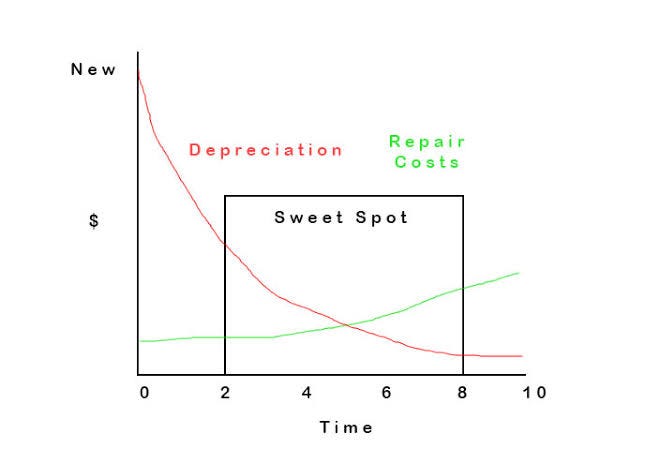
- Buy 3-5 Year Old Used — Major depreciation already hit; get 80% of the car for 60% price.
- Choose Low-Maintenance Brands — Avoid premiums (e.g., BMW vs. Toyota: +$20k over 5 years in costs). Use tools like Edmunds True Cost to Own.
The Wake-Up Call & Action Steps
Most Americans buy beyond means—the average $50k+ new car requires ~$138k income under the 35% rule, far above median salaries. If violating rules:
- Don't trade in (restarts cycle).
- Pay extra on principal.
- Drive paid-off car forever.
- Next time: Stick to 25% max price, 20/4/10.
Nate's core message: The "affordable" car is likely cheaper than you want—but financial freedom (no payments, investing freely) beats status symbols.
Run your numbers: Salary ÷ 4 = rough 25% max price. Prioritize wealth over wheels. Total read time: ~10 minutes.
China's Economic Crossroads: Stalling Growth, Tech Push, and Military Rise (as of Early 2026)
China's once-unstoppable economic engine is sputtering. After decades of debt-fueled infrastructure booms that built cities, highways, and high-speed rail, the old model—local governments borrowing heavily to build and grow—is breaking down. Hidden debts, a property slump, and stricter controls are starving traditional investment. Beijing now faces a tough pivot: revive growth while chasing tech self-reliance and military strength, amid global ripple effects. This summary draws on late-2025 developments, capturing a nation at a pivotal, uncertain juncture.
The Collapse of the Old Growth Engine
China's miracle relied on massive fixed asset investment (infrastructure, real estate, factories). But in 2025, this core driver contracted—potentially the first annual decline since records began in 1998 (or at least the sharpest slowdown in decades, per reports like NYT and Bloomberg).
- Local Government Bonds: 2025 quota was 4.4 trillion yuan (~$626 billion) for special-purpose bonds. Of this, ~1.38 trillion yuan went to repaying old debts, leaving just 3.02 trillion yuan for new projects—the lowest since 2019.
- Infrastructure Spending: Dropped sharply (e.g., ~12% YoY in Oct-Nov 2025 per Macquarie estimates). Bonds for actual infrastructure are drying up as Beijing clamps down on "hidden" local debt risks.
- Broader Pullback: Property crisis, weak confidence, aging population, slower urbanization, and saturated infrastructure mean "endless borrowing" no longer works. Fixed-asset investment fell more than expected (e.g., -1.7% YoY Jan-Oct in some data).
Beijing's push for fiscal sustainability and "quality-driven growth" ties local officials' hands. Stricter project screening demands measurable returns. Borrowing/spending power shifts toward the (healthier) central government, but it can't fully compensate.
Expert View: Michael Pettis (Peking University) warns Beijing must revive investment for 5% GDP growth in 2026, but justifying more infrastructure is "harder than ever." Without property rebound, manufacturing gets pushed harder—leading to global price pressures, tighter margins, and supply shocks.
This isn't a temporary dip. Analysts like Adam Wolf (Absolute Strategy) call it a structural break—restrictions likely persist into 2026 and beyond.
The High-Stakes Pivot to Technology
With traditional engines failing, China bets big on technological self-reliance to offset weakness and counter U.S. competition (especially in semiconductors, AI, advanced computing).
- National Venture Capital Guidance Fund (launched Dec 2025): Anchored by ~14.3 billion yuan from Ministry of Finance (via special sovereign bonds). Three major regional funds (Beijing-Tianjin-Hebei, Yangtze River Delta, Greater Bay Area) support it.
- Focus: "Hard tech" and emerging industries—integrated circuits, quantum technology, biomedicine, brain-computer interfaces, aerospace.
- Structure: 20-year horizon (10 years investing, 10 years exiting). 70%+ to seed/early-stage startups. Strict caps: targets valued <500 million yuan; no excessive valuations.
- Goal: Mobilize "patient capital" for innovation, guide private funds, achieve dominance in strategic sectors.
This is survival strategy—scarce resources redirected because infrastructure/property can't drive growth anymore. Success secures future edge; failure worsens vulnerabilities.
Military Modernization Accelerates
Amid economic strain, China advances defense self-sufficiency—reducing foreign reliance and signaling global contender status.
- Aerospace Engines: Via Aero Engine Corp of China (AECC, est. 2016), heavy investment + restructuring + (per Western claims) reverse engineering closed gaps. J-20 and J-35 stealth fighters now use domestic engines (e.g., WS-15 variants powering advanced J-20s by late 2025).
- Naval Power: Ship count surpasses U.S. Navy. Fujian (third carrier, first fully domestic design with electromagnetic catapults) commissioned into active service Nov 2025 (per WSJ/Xi ceremony). Gap in engine reliability/lifespan shrinks.
- Broader Implications: Reduced reliance on Russian imports; faster production of advanced fighters (300+ J-20s deployed, J-35 in serial production, sixth-gen prototypes like J-36 tested/revealed 2025).
These strides—economic necessity fueling strategic bets—heighten arms race tensions in Asia-Pacific.
Global Stakes & Existential Risks
China's shift ripples worldwide:
- Economy: Less infrastructure = lower commodity demand (e.g., steel, cement), disrupted supply chains, deflationary pressures on manufactured goods.
- Tech: Coordinated state VC could dominate AI/quantum/aerospace, reshaping competition.
- Security: Self-reliant defense erodes Western leverage, accelerates regional arms buildup, forces U.S./allies to rethink strategy.
Beijing stands at a crossroads: Old debt-fueled model untenable; tech/military push risky but essential. Resources are finite—debt rises, revenues soften, saturation bites. Every allocation is strategic.
For the first time in decades, China's trajectory feels uncertain—not "if" it grows, but whether it sustains ambitions without implosion. The world watches: Wall Street (trade/commodities), tech firms (competition), militaries (power balance). This is power, strategy, and survival on a global scale.
Bottom Line (Early 2026): China's economy isn't collapsing overnight, but the old playbook is dead. The pivot to tech and defense is aggressive and necessary—yet fragile amid fiscal constraints. Outcomes will shape the 21st century.
(Approx. 10-minute read at average pace.)
Commntary: the North-Koreafication of China continues, where military trumps economy, and self-reliance trumps getting rich
This summary breaks down the "rent vs. buy" debate using the 7% Rule, a mathematical framework designed to cut through the emotional pressure of 2026 real estate markets.
The Core Problem: Emotional Pressure vs. Math
At 31, many feel the squeeze: parents calling rent "thrown away money," friends posting house photos, and agents warning that "rates will only go up." However, in the 2026 market—with interest rates hovering around 6.3% to 6.5% and home prices remaining high—the math often tells a different story.
Buying a $425,000 home with a $45,000 down payment might seem like "building equity," but it carries massive "sunk costs" that are just as "gone" as rent.
The 7% Rule: Your Financial Compass
The 7% Rule calculates the "unrecoverable costs" of homeownership. If you can rent a similar home for less than this number, renting is the financially superior move.
1. Property Taxes (approx. 1.11%)
You don't build equity by paying the government. On a $500k home, that’s roughly $462/month gone forever.
2. Maintenance (approx. 1%)
Experts suggest budgeting 1% of the home's value for repairs (roofs, HVAC, plumbing). On $500k, that’s $417/month just to keep the house from falling apart.
3. Cost of Capital (approx. 5%)
This is the "hidden" cost:
Opportunity Cost: If you put $100k into a down payment, you lose the ~10% gains you’d get in the stock market. Since homes appreciate at ~5%, you are "losing" a net 5% on that cash.
Mortgage Interest: At 2026 rates (~6.5%), your interest payments are massive. In the early years of a loan, almost your entire monthly payment goes to the bank, not your equity.
The Formula:
$(Home Value \times 0.07) \div 12 = \text{Monthly Break-even Rent}$
Example: For a $500,000 home, the break-even is $2,917/month.
Why 2026 is Different
Rates are "Sticky": Rates are expected to average 6.3%, far from the 3% pandemic lows.
Rent is Stabilizing: While home prices continue to rise (~1%), median rents have actually seen periods of decline or slow growth, making rental affordability much better than buying.
The $120k Gap: Over 10 years, a renter who invests the difference (saved from avoid maintenance, taxes, and high interest) can end up $120,000 wealthier than a homeowner in the current climate.
Debunking the Myths
"Rent is Throwing Money Away": Ownership also "throws away" money on interest, taxes, and repairs. Both have unrecoverable costs; you just want to choose the one that throws away less.
"It’s a Tax Break": With current standard deductions ($14.6k - $29.2k), most people don't see a significant tax benefit from mortgage interest anymore.
"It's Forced Savings": You can "force" savings by setting up an automatic transfer to a brokerage account without the risk of an illiquid asset.
When SHOULD You Buy?
Buying isn't always bad; it just requires specific conditions to beat the math:
Duration: You plan to stay for 10+ years to offset transaction costs.
Down Payment: You have 30–40% down, which lowers interest and opportunity costs.
Low Rates: If rates eventually drop below 4%.
Intangibles: You value the freedom to renovate and the stability of not having a landlord more than the $120,000 gain from renting.
Summary Table: Rent vs. Buy Comparison
| Feature | Renting | Buying (2026 Market) |
| Unrecoverable Cost | Monthly Rent | Taxes + Maintenance + Interest |
| Flexibility | High (Can move for jobs) | Low (Locked in by selling costs) |
| Maintenance | $0 (Landlord's problem) | 1% of home value/year |
| Wealth Building | Liquid stocks/investments | Illiquid home equity |
The Bottom Line: Don't let emotions or agents drive your largest financial decision. Run the 7% Rule. If the math doesn't work, don't buy.
This summary explores a radical shift in global philanthropy: the transition from "expert-led" interventions to direct cash giving, and why trusting the poor with money is often more effective than providing them with services.
The Failure of "Traditional" Aid
For decades, the global philanthropic model followed a "top-down" approach. Between the 1960s and the early 2000s, billions of dollars were funneled into:
Infrastructure & Education: Building schools and providing supplies.
Job Training: Teaching specific skills to foster employment.
Microfinance: Providing small, high-interest loans to help people start businesses.
The Reality Check: When economists began using Randomized Control Trials (RCTs) to measure the impact of these programs, the results were sobering. School supplies didn't necessarily lead to better test scores; job training didn't reliably increase income; and microfinance—while successful at getting loans repaid—rarely lifted families out of poverty. These programs assumed that external experts knew what a struggling community lacked, but the data suggested otherwise.
The Ahenyo Experiment: A New Philosophy
In 2018, a non-profit tested a "ridiculous" idea in the village of Ahenyo, Kenya. They gave every adult $500—roughly an entire year’s salary—with no strings attached. No classes to attend, no business plans to submit, and no loans to repay.
Critics expected the money to be wasted on "temptation goods" like alcohol or to be spent so quickly that the villagers would end up right back where they started. Instead, two years later, the results were transformative:
Economic Growth: Business revenues rose by 65%.
Well-being: Families ate more nutritious meals and saved more money.
Social Impact: Rates of alcoholism, depression, and domestic violence decreased.
Macro Effects: A larger study found that every $1 given out generated more than $2 of total economic growth in the surrounding area.
Why Cash Works: The "Expertise of the Poor"
The success of direct giving challenges the fundamental assumption of traditional charity. Traditional aid assumes the philanthropist has the best knowledge; cash giving assumes the recipient has the best knowledge.
Poverty is highly individualized.
Person A might need to fix a leaking roof so they stop getting sick.
Person B might need to pay off a high-interest debt to free up monthly cash.
Person C might need to pay school fees so their child can eventually earn a higher wage.
A "job training" program helps none of these people as effectively as the cash that allows them to solve their specific, most urgent barrier to stability.
The Challenges: Is it a "Silver Bullet"?
While the initial results are stunning, researchers acknowledge that cash giving is not a perfect cure-all. Its long-term effects are still being studied, and the results can be "lumpy."
The Ugandan Case Study: A 2008 study showed that while cash transfers significantly boosted earnings for the first four years, those gains largely vanished by the nine-year mark.
Resilience Factors: Interestingly, when the COVID-19 pandemic hit, the families who had received cash years prior were more resilient than those who hadn't, suggesting that while income might fluctuate, the underlying "safety net" created by that initial cash infusion remained.
The Path Forward
The world currently has the resources to eliminate extreme poverty. Wealthy nations spend $200 billion annually on international aid, and private foundations hold over $1.5 trillion.
The bottleneck isn't a lack of money; it's a lack of trust. To move the needle on global poverty, institutions must be willing to stop acting as "managers" of the poor and start acting as "investors" in their autonomy. By shifting from specific programs to direct cash, philanthropy can move away from emotional guesswork and toward a model rooted in dignity and proven economic math.
Commentary: Providing free housing and possibly free food, is even better than cash money, in generating long-term growth, as in the case of Singapore, where there are no poor neighborhoods.
This summary explains the complex engineering and logic behind pedestrian push buttons, debunking the myth that they are "placebo" buttons. Using the specific setup found at intersections near Biloxi Beach, we can trace the journey of a single button press from the sidewalk to the "brains" of the traffic controller.
1. The Myth of the "Placebo" Button
Many pedestrians believe that pushing a crosswalk button does nothing—that the lights are on a fixed timer and the button is just there to give you a false sense of control. In reality, especially at busy highway intersections, the traffic controller often won't even trigger a walk signal unless the button is pressed.
The button doesn't provide "instant gratification" because it has to wait for the current vehicle traffic cycles to reach their limits before it can safely pivot to a pedestrian phase.
2. The Physical Connection: From Pole to Cabinet
When you press the button, you are physically completing a circuit.
Wiring: Each button has two wires connected to it.
Conduits and Pull Boxes: These wires run down the pole, through underground PVC pipes (conduits), and through "pull boxes" (underground access points) until they reach the large metal traffic signal controller cabinet on the corner.
The PLC Board: Inside the cabinet, these wires connect to a Programmable Logic Controller (PLC). The PLC's job is to detect "continuity"—essentially seeing that Point A has been connected to Point B by your finger on the button.
3. The Central Computer Unit (CCU) and the ADA
The PLC sends the signal to a Central Computer Unit (CCU). In modern systems, this unit is vital for compliance with the Americans with Disabilities Act (ADA).
Accessibility: The CCU handles the "Advanced Pedestrian System" features, such as the vibrating arrows, audible chirps, or speech messages that tell visually impaired pedestrians when it is safe to cross.
Reliability: In places like Mississippi, engineers often use "tried and true" wiring methods—using physical terminal blocks (L-blocks and Q-blocks) and surge protectors—to ensure the system remains functional for 50+ years, even during lightning strikes or power surges.
4. Reaching the "Brain" (The Controller)
After passing through surge protectors and backboards, the signal travels through a series of "cannon plugs" into the Traffic Signal Controller.
The Brain: This is the computer that manages the timing of every light at the intersection.
The MMU (The "Nagging Wife"): Beside the brain is the Malfunction Management Unit (MMU). It acts as a fail-safe. If the controller tries to do something dangerous (like giving a green light to two intersecting directions at once), the MMU "nags" the system into a flash mode (all red) and calls for a technician.
5. How the Queue Works
When the signal finally hits the Controller, it registers a "Pedestrian Call" (P-Call) for a specific "phase" (the direction you want to walk).
Entering the Queue: Think of this as taking a number at a deli. The moment you press the button once, you are in the queue.
One Press vs. One Thousand: Pressing the button repeatedly does not move you up in line. The computer has already acknowledged your "call." It is now calculating the "clearance intervals" for the cars currently moving. Once those cars have had their minimum green time, the computer will cycle the lights to serve your request.
Key Takeaway
Pedestrian buttons are sophisticated input devices for a massive, high-voltage nervous system. They are essential for safety, particularly at high-speed intersections where the walk signal is not automatic.
The Golden Rule: Press it once, trust the math, and wait for the computer to find a safe gap in the traffic for you.
This summary explores the long-term viability of Bitcoin, weighing its revolutionary architecture and "digital gold" status against the technical and social hurdles it must clear to survive for the next century.
1. The Evolution of Value
To understand if Bitcoin can last 100 years, we have to look at the history of money. Humans have used everything from salt and shiny metals to paper and digital bank digits to represent value. Bitcoin isn’t necessarily a "bizarre outlier"; it is simply the latest evolution in the human argument over what counts as valuable.
Since 2009, it has transitioned from a fringe experiment to a global asset held by trillion-dollar managers and even nation-states. Its longevity depends on whether it can move from a "financial fidget spinner" to a permanent fixture like gold or the internet.
2. Why Bitcoin is Built to Endure
The survival of any system depends on its independence and incentives. Bitcoin is a decentralized protocol, meaning no single CEO or government can turn it off. Its survival is built on three pillars:
Scarcity: There is a hard cap of 21 million coins, preventing the "inflationary printing" that often collapses fiat currencies.
The Node Network: Thousands of independent computers (nodes) across the globe enforce the rules. As long as one node exists, the network lives.
Economic Incentives: Miners are paid in Bitcoin to secure the network, and users run nodes so they don't have to trust a central bank to verify their wealth.
3. The Threats to a Century of Survival
A hundred years is enough time for empires to fall, and Bitcoin faces significant "boss battles" along the way:
Technical Risks
Quantum Computing: If quantum computers become powerful enough to break current encryption, Bitcoin’s security would be compromised. Developers would have to "upgrade" the code to be quantum-resistant.
The 2140 Problem: Around the year 2140, the last Bitcoin will be mined. From that point on, miners must be paid entirely through transaction fees. If fees aren't high enough, the incentive to secure the network might vanish.
Social and Philosophical Risks
Centralization of Power: While the code is decentralized, "whales" (large holders), corporations, or governments could exert undue influence over its future direction.
The Debt Dilemma: Modern society is built on debt and infinite growth. It is unclear if a deflationary currency (where the supply is fixed) can coexist with a global economy addicted to printing more money.
4. The "Anti-Fragile" Advantage
Despite these risks, Bitcoin has "first-mover" advantages that make it difficult to kill. It is the most secure blockchain in existence. Because its code is open-source, it can adapt—as seen with the Lightning Network, which was created to make transactions faster and cheaper.
Furthermore, trust in traditional systems is wavering. In an era of debt crises and high inflation, "trust in math" is becoming more appealing to many than "trust in governments."
Final Verdict: The Idea vs. The Asset
Even if Bitcoin itself were to eventually fade, the "genie is out of the bottle." It has fundamentally changed our collective imagination regarding:
Who controls money: (The people vs. the state).
How money is issued: (Fixed math vs. political whim).
Censorship resistance: (The ability to move value without permission).
Bitcoin's survival doesn't require it to be a perfect system; it simply needs to be better and more trustworthy than the alternatives. As of 2026, there is still nothing else quite like it.
Commentary: The more you use bitcoin, the more bitcoins there are, so it's not capped, because that's just how blockchain works, in which one exchange between two values create a third value.
This summary analyzes the seasonal risks and opportunities facing CarMax and the used car industry, specifically focusing on the high-stakes "tax refund season" of early 2026.
1. The "Tax Refund" Phenomenon
Every year, the used car market experiences a predictable "bump" in the first and second quarters. For low-to-middle income earners, a tax refund is often the largest single infusion of cash they receive all year.
The Independent Lot vs. CarMax: While customers at small independent lots might use a $3,500 refund to buy a car outright (avoiding a repo), CarMax customers use that same $3,500 as a down payment.
The Goal: Both business models rely on the same surge of liquidity. CarMax expects this seasonal influx to drive their quarterly performance.
2. The Danger of "Stocking Up"
Because this trend is so predictable, massive retailers like CarMax must "stock up" in anticipation. They fill their lots with inventory purchased at current market rates to meet the expected demand. However, this creates a high-risk scenario:
Forecasting Risk: If the tax season is weaker than expected—perhaps due to changes in tax laws, delayed refunds, or a tightening economy—CarMax is left holding "heavy" inventory that they cannot move.
The Auction Trap: During tax season, used car prices at auctions are "jacked up" because every dealer is competing for cars to sell to refund-rich buyers. If you buy at the peak and don't sell quickly, you are at a massive disadvantage.
3. The Post-Tax "Price Cliff"
The used car market follows a brutal seasonal cycle. Once tax season ends, prices don't just dip—they often "fall off a cliff."
Market Saturation: Everyone who was going to buy a car has already spent their money. Demand vanishes almost overnight.
Depreciation: If CarMax fails to capitalize during the narrow tax window, they are forced to sell their overstocked inventory in a crashing market. This leads to squeezed margins and potential losses.
4. Investor Sentiment: Is it "Baked In"?
A major question for the upcoming quarter is whether this seasonal bump is already "baked into" the CarMax stock price.
The Bull Case: Investors expect the tax bump and have already priced it in, leading to a steady climb.
The Bear Case: If CarMax forecasts a massive tax-driven quarter and misses the mark even slightly, the downside could be severe. The company is essentially betting on the consumer's willingness to take on debt using their refund as a lever.
Key Takeaway
For CarMax, the next quarter is a race against time. They must offload as much inventory as possible while consumer pockets are full, before the inevitable post-tax price crash devalues every car sitting on their lot.
This summary explores the recent, massive shift in career priorities for Gen Z (ages 18–28), who are increasingly trading college degrees for hard hats and welding masks.
1. The "Blue-Collar Renaissance"
In 2026, the cultural narrative around success is shifting. For decades, a four-year university degree was marketed as the only path to a stable middle-class life. However, Gen Z is rejecting this, leading to a surge in trade school enrollment.
Record Numbers: The number of young people (ages 17–21) seeking two-year vocational degrees has hit its highest level in over 30 years—double the rate seen in the year 2000.
The "Unlikely" Demographic: This isn't just a trend for those who "couldn't make it" in college. Many students are leaving prestigious universities mid-way because of high costs and a lack of practical ROI.
2. Why Gen Z is Choosing the Trades
Several factors are driving 19- and 20-year-olds into fields like HVAC, asphalt, plumbing, and electrical work:
The Debt Trap: With skyrocketing tuition costs, young people are wary of "major debt" that offers no guarantee of a job. Trades offer an "earn while you learn" model or significantly cheaper, shorter certifications.
Job Security & "Essential" Status: After witnessing the pandemic and recent white-collar layoffs, Gen Z craves "essential" roles. As one technician put it, "People need me. If the AC goes out, they call me."
AI-Proof Careers: While AI threatens to automate many office-based, "white-collar" tasks, experts believe AI will actually help rather than hurt the trades. AI can handle scheduling and administrative "grunt work," but it cannot physically crawl into an attic to fix a furnace or weld a pipe.
3. The Power of "Tool-Tok" and Social Media
Perhaps the biggest driver of this movement is social media. Young tradespeople are filming "Day in the Life" videos, garnering millions of views and rebranding manual labor as a "hit."
The New Influencer: Two out of three Gen Z-ers say social media has increased their interest in the trades—influencing them more than teachers, siblings, or parents.
Changing the Image: Creators like 19-year-old Antonio (asphalt) and various young HVAC techs show that trade work isn't just "dirty work"; it’s a path to financial freedom, entrepreneurship, and a sense of importance.
4. The Labor Gap: A Massive Opportunity
The "Great Retirement" of the Boomer generation has left a vacuum in the workforce.
Unfilled Roles: There are currently millions of unfilled trade jobs. Manufacturing alone has 500,000 openings, a number expected to balloon to 2 million by 2033.
Lower Competition, Higher Pay: Because the supply of skilled workers is low and demand is high, young people entering these fields often find they have significant leverage, better starting pay, and a faster track to owning their own businesses.
Key Takeaway
For Gen Z, the trades represent a "level playing field." Success in these roles isn't about who you know or where you went to school—it’s about your ambition, your experience, and your hard skills. By choosing the trades, this generation is finding a way to sleep well at night, knowing their skills are irreplaceable by a computer and their bank accounts aren't drained by student loans.
1. The Anatomy of a Legging Knife
If you imagine a tactical dagger, you’re mistaken. The mountain man was a pragmatist. A legging knife was almost always a utility knife.
The Blade: Usually 3 to 5 inches long, thin, and razor-sharp. It was typically a common kitchen or paring knife shipped by the thousands from Sheffield, England.
The Steel: High-carbon steel. While it rusted easily, it could be sharpened on a river stone to a surgical edge.
The Design: A simple wood, bone, or antler handle pinned to the tang. Crucially, it had no guard or pommel. A guard would snag on brush or get in the way of "choking up" on the blade for fine work.
2. The Scottish and Cultural Heritage
The practice of carrying a knife in the leg wasn't a "ninja trick"; it was a cultural memory.
The Sgian-Dubh: Many trappers were of Scottish or Scotch-Irish descent. They brought the tradition of the Sgian-Dubh ("black knife"), a small blade tucked into the top of the kilt hose (socks).
Evolution: When the kilt was traded for buckskin leggings, the tradition remained. The knife was tucked into the garter—the strap below the knee used to keep leggings from sagging.
Universal Use: This wasn't limited to the Scots; French voyageurs and Native Americans also adopted the practice because it was physically logical.
3. Practical Utility: Precision and "Cleanliness"
Why carry a second knife when you already have a big one on your belt?
The Scalpel vs. The Machete: A 10-inch butcher knife is terrible for peeling a potato, whittling a trap trigger, or removing a splinter. The legging knife was the mountain man's precision instrument.
The "Clean" Knife: A belt knife was used for messy work: skinning beavers, gutting deer, and scraping hides. It was perpetually covered in grease and blood. The legging knife was often reserved for "clean" tasks, such as eating dinner, cutting jerky, or repairing clothing.
The Patch Knife Debate: In muzzle-loading rifles, a cloth "patch" must be cut flush at the muzzle. A large knife risked nicking the barrel (ruining accuracy). The small, controllable legging knife was perfect for this critical task.
4. The Last Line of Defense
In the violent reality of the frontier, the legging knife served as a hold-out weapon.
Close-Quarter Grappling: If a man was pinned by a bear or an opponent, he couldn't reach a belt knife or swing a tomahawk. A small blade on the calf was accessible even when the upper body was immobilized.
Mercy and Necessity: It was the tool used for grim, quiet tasks, such as ending the suffering of a wounded animal, where wasting precious powder and lead was not an option.
5. How It Was Worn
Placement: Almost always on the outside of the calf. Placing it on the inside would cause it to rub against the other leg or clack against a saddle while riding.
The Sheath: Most sheaths were minimalist rawhide, custom-fitted to the knife by soaking the leather and letting it shrink-dry. Some men simply tucked the bare blade behind the garter, relying on friction and the curve of the calf to hold it.
Decoration: Like many mountain man items, the garter and knife handle were often decorated with beadwork or quills, serving as a symbol of personal identity and status.
The Modern Legacy
The legging knife disappeared as fashion shifted from leggings to loose trousers, and as folding "jack knives" became cheap and reliable. However, the concept lives on in:
Scuba Divers: Who still strap knives to their calves.
Tactical Boots: Which often feature integrated knife clips.
Ankle Holsters: Carrying on the tradition of the "backup" in the lower-leg "prime real estate."
The lesson of the legging knife is one of redundancy and adaptation. It proves that a 10-cent paring knife, when used by a man with the right skills, can be just as critical to survival as the finest rifle.
This summary explores South Korea’s demographic crisis—not as a simple social trend, but as a structural failure of advanced capitalism that serves as a warning for the entire developed world.
1. The Numbers: A Demographic Freefall
South Korea is currently the "canary in the coal mine" for global demographics. While a society needs a fertility rate of 2.1 to maintain a stable population, South Korea’s rate plummeted to 0.72 in 2023.
This is the lowest rate ever recorded for a modern, peaceful nation. The trajectory is staggering:
1960: 6.0 births per woman.
1990: 1.6 births per woman.
2023: 0.72 births per woman.
By 2050, the working-age population (15–64) is expected to shrink by 38%, while the elderly population will double. This creates an unsustainable "dependency ratio," where a dwindling number of workers must support a massive retired population.
2. The Economic "Lock-in"
The crisis is often blamed on "changing values" or women prioritizing careers. However, the data suggests a deeper economic impossibility. Young South Koreans are trapped in a three-way pincer movement:
A. The Housing Bubble
In Seoul, housing prices have reached double-digit multiples of median household income. In most developed nations, this ratio is 3 to 8. In South Korea, a young person must choose: save for a down payment for decades or start a family. Realistically, they cannot do both.
B. The Two-Tier Labor Market
The job market is split between high-security "permanent" roles and "irregular" work (which now accounts for 40% of employment). Irregular work offers no stability and low wages, making long-term planning like marriage or child-rearing a financial gamble.
C. The "Education Arms Race"
South Korea has the highest private tutoring expenditure in the world. Families spend roughly $3,000 annually per child on "shadow education" to keep them competitive. As parents have fewer children, they pour more resources into those few, raising the "cost of entry" for everyone else and further discouraging larger families.
3. The Gender and Corporate Barrier
Even for those who can afford a home, the "second shift" and corporate culture make motherhood a steep sacrifice.
Motherhood Penalty: South Korean women face some of the highest wage penalties in the OECD for having children.
The Domestic Gap: Women still perform roughly 80% of unpaid household work, even when working full-time.
Extreme Hours: South Koreans work nearly 500 hours more per year than Germans. The expectation of constant availability makes "work-life balance" a myth.
4. Why Traditional Solutions Failed
The South Korean government has spent over $270 billion on pro-natalist policies (cash bonuses, subsidized childcare) since 2006. It hasn't worked.
The reason is simple: You cannot solve a structural economic problem with a coupon. A $5,000 birth bonus is irrelevant when an apartment costs $800,000 and childcare costs $1,000 a month. Young people are making a rational, "anticipatory adaptation" to a system that makes family formation incompatible with financial security.
5. The Feedback Loop: A Warning for the West
As the population shrinks, the economy enters a dangerous feedback loop:
Labor Shortages: Drive automation, which further reduces stable middle-class jobs.
Debt Trajectory: National debt has risen from 30% to 50% of GDP to manage aging costs.
Fiscal Pressure: A shrinking tax base must pay more to support the elderly, leaving even less disposable income for young people to start families.
Key Takeaway
South Korea’s collapse represents the logical endpoint of an economic model that prioritizes aggregate GDP growth and corporate flexibility over individual welfare and social reproduction. This is not a "Korean problem"—it is a global one. Every developed nation facing rising housing costs and job insecurity is on the same path; South Korea just arrived at the destination first.
Commentary: Just give everyone free food and free housing, like how Singapore has free housing, and more families will have more children, even eight children per family.
This summary captures a debate between two different philosophies of wealth: the Small Business Model vs. the Real Estate Model, while highlighting the critical role of "landlord-friendly" geography.
1. The Debate: Small Business vs. Real Estate
The transcript presents a conflict between high-yield/high-effort investing and lower-yield/passive investing.
The Argument Against Real Estate
Low Immediate Cash Flow: A typical $400,000 single-family home might only net $167 a month in profit after expenses. Critics argue this is a massive risk for a tiny return.
The Small Business Alternative: A $400,000 small business typically nets 10% to 15% annually, providing tens of thousands of dollars in cash flow rather than just hundreds.
The Rebuttal: Real Estate as a Scalable System
Time Ownership: A small business "owns you." It requires 365-day-a-year attention.
Operational Efficiency: Real estate is far more scalable. You can manage 200 apartment units with only four employees. A 200-room hotel (a traditional business), by contrast, would require 100 employees.
Passive Nature: In real estate, the tenants pay the rent and the landlord handles the maintenance. Once the system is set up, it doesn't require "your life" every day.
2. Location is Everything: The "California Problem"
A significant portion of the discussion focuses on why where you buy is as important as what you buy. The speaker highlights a radical shift in tenant laws, specifically in California and Los Angeles.
Background Checks: In LA, you can no longer discriminate against tenants based on criminal history, including violent crimes or fraud.
The Eviction Nightmare: In "tenant-friendly" states like California or New York, evicting a tenant for non-payment or even criminal activity (like drug sales) can require a lengthy jury trial and massive legal fees.
The "Normal" State: The speaker advocates for "landlord-friendly" states like Florida, where the rule is simple: "No pay, no stay." In these jurisdictions, an eviction typically takes only 30 days.
3. The "Human Sense" Approach to Landlording
Despite favoring strict eviction laws, the speaker argues that the smartest landlords use their heads rather than just the courts.
Cash for Keys: It is often cheaper and faster to help a problem tenant move than to pay a lawyer.
Amicable Solutions: Successful landlords have been known to rent storage units for tenants, help them move, or give them a "parting" cash payment to end a lease peacefully. This avoids court fees, aggravation, and property damage.
4. Scaling the Portfolio
The final takeaway is for established investors holding between $1 million and $10 million in assets. To move to the next level ($30M–$50M), investors must stop looking at properties as "houses" and start looking at them as a systematized business that can be analyzed and optimized for growth.
Key Takeaway
Real estate isn't about the highest percentage return—it’s about the highest return on time. However, that "time freedom" is only possible if you invest in states with favorable laws and use pragmatic, "human" solutions to manage tenant conflict.
This summary explores the recent structural changes to the H-1B visa program in early 2026 and the "uncomfortable truths" regarding how corporations have historically used the system to undercut the American labor market.
1. The H-1B Program: Intent vs. Reality
The H-1B visa was designed for a specific purpose: to allow U.S. companies to hire international talent for highly specialized roles (like semiconductor scientists or niche PhDs) when no qualified American candidates can be found.
The Theory:
Company tries to hire locally.
Company fails to find a "unique" skill set.
Company pays legal/sponsorship fees to bring in an international expert.
The "Sinister" Reality:
Many corporations—including Big Tech giants like Amazon, Microsoft, and Meta—have allegedly used the program as a tool for labor cost arbitrage.
2. The "Recruiting Scam" and Ghost Jobs
One of the most frustrating experiences for modern job seekers is the "aggressive offshore recruiter." Brian, a corporate recruiter, explains the mechanics behind this:
Proof of Search: To get an H-1B approved, a company must "prove" they tried to find an American.
The Mock Interview: Aggressive third-party recruiting firms (often based in India) will contact American candidates for "Ghost Jobs." They have no intention of hiring you. They interview you, check a box to satisfy government requirements, and then report that you "weren't a fit."
The Goal: This allows them to bypass the local pool and place their pre-selected H-1B candidate, who is often a "friend of a friend" or part of a cheaper contracted shell company.
3. The 2026 Crackdown: $100,000 Application Fees
To close these loopholes, the Trump administration has introduced a massive hurdle: a $100,000 application fee for every new H-1B.
The Impact:
Cracking Down on Abuse: This fee makes "cheap labor" no longer cheap. If a company has to pay $100k upfront, the financial incentive to pass over a qualified American worker vanishes.
Protecting High-Paying Jobs: It aims to stop the trend of companies laying off thousands of U.S. workers (15,000 in one cited case) while simultaneously filing for thousands of H-1B visas.
Collateral Damage: Small companies with legitimate needs for rare talent may find this fee prohibitive, potentially stifling innovation in highly niche fields.
4. Staggering Statistics from 2025
Data from the Gateway Pundit and White House citations reveal the scale of the issue leading into 2026:
Amazon: Filed nearly 11,000 labor condition applications in 2024.
The "Replacement" Strategy: One major firm was approved for 5,000 H-1B visas in the same year they laid off 15,000 workers.
Regional Shifts: In Oregon, one company cut 2,400 staff while securing 1,700 H-1B approvals.
5. Advice for Candidates
Whether you are a U.S. worker or a legitimate international candidate, the landscape has changed:
For U.S. Workers: Be wary of aggressive third-party recruiters who don't seem to have read your resume. They may be using you to "check a box" for a visa application.
For H-1B Seekers: The "gaming the system" era is ending. To get a visa now, you must be truly differentiated. You need a unique, high-level skill set that makes you worth a $100,000 fee to a company.
Data Privacy: Applying for these "ghost jobs" often puts your personal data (phone, SSN, address) in the hands of data brokers. Use tools like DeleteMe to scrub your information from the web.
Key Takeaway
The H-1B program is being forcibly returned to its original intent: a "rare talent" visa rather than a "cheap labor" visa. While this protects American wages, it also means the bar for international talent has never been higher.
This guide outlines the "Grim Productivity" framework—a high-intensity, structured system designed to help you join the top 1% by mastering focus in a world of constant distraction. It is built on three pillars: Planning, Time Boxing, and Brutal Execution.
The Philosophy: Focus as a Competitive Advantage
In 2026, the greatest barrier to success isn't a lack of opportunity; it is distractedness. Most people are exploited by "dopamine loops" (social media and notifications). If you can beat distraction, you have already won.
The Grim framework uses Time Boxing to protect your goals. It isn't just about working more; it’s about protecting your body from burnout and your mind from clutter.
Phase 1: Yearly & Monthly Alignment
The reason most people fail is they have too many projects. Grim Productivity demands "Brutal Focus."
The Power of Two: You are allowed only two goals for the entire year: one Professional and one Private.
The Hierarchy: * Yearly Goal: (e.g., Start a profitable company).
Monthly Goal: (e.g., Write the business plan).
Weekly Goal: (e.g., Conduct market research).
The Silence Test: If you don't know your goals, take one full day off. No phone, no internet, no talking. Walk in nature until the answer appears. Silence has all the answers.
Phase 2: The Rules of Brutal Productivity
Your day is divided into 16 Time Boxes, each lasting 30 minutes. To master them, you must follow these rules:
Single-Tasking: Each time box has exactly one goal.
The Digital Wall: You cannot check your phone or messages while inside a time box.
The 10-Second Micro-Workout: After every 30-minute box, do 10 push-ups, crunches, or stretches. Movement keeps the mind sharp and honors your hunter-gatherer ancestry.
The 4-Minute Window: You may only check your phone for 4 minutes after every two time boxes (at the top of the hour).
The Silent Day: One day a week (usually Sunday) is for a "Dopamine Detox." No technology, no goals, and as little talking as possible. This "sharpens the blade" for the week ahead.
Phase 3: Cold Execution (The Daily Schedule)
The Grim schedule is designed to leverage your brain's peak performance in the morning and maintain your body in the afternoon.
The Morning: Deep Work (Boxes 1–8)
The first four hours of your day are for Deep Work.
Silence: No meetings, no emails, no talking.
Habit: Start with a designated reading time.
Nutrition: Practice intermittent fasting. Do not eat until noon.
The Afternoon: Operations & Health
12:00 PM: First Meal (High protein, low carb).
12:30 PM: The "No-Phone Walk." Your feet work fine without a screen.
1:00 PM – 2:00 PM: To-do lists and administrative tasks.
2:00 PM – 3:00 PM: Meetings. Never move these into your morning deep-work blocks.
3:00 PM: Full Workout. Your body needs intense movement to sustain mental clarity.
4:30 PM: The "Communication Box." Process all emails and messengers once per day, only during this box.
The Evening: Reflection
Journaling: End the day by journaling. This clears the mind for sleep and prepares you for the next day's execution.
Summary Table: The 16-Box Blueprint
| Time/Block | Activity | Rule |
| 08:00 - 12:00 | Deep Work (Blocks 1-8) | No phone, no meetings, total silence. |
| 12:00 - 12:30 | Break / First Meal | Intermittent fasting ends. |
| 12:30 - 01:00 | Silence Walk | No technology. |
| 01:00 - 02:00 | To-Do List | Operational execution. |
| 02:00 - 03:00 | Meetings | External communication. |
| 03:00 - 04:00 | Main Workout | High intensity. |
| 04:00 - 04:30 | High-Protein Meal | Body recovery. |
| 04:30 - 05:00 | Email/Messengers | Once-a-day batch processing. |
Key Takeaway
Distraction is self-destruction. By time-boxing your life and incorporating micro-movements, you protect your time from the dopamine exploits of the modern world. Master the sheet, and the sheet will master your goals.
The following summary distills the account provided into the core ethical, structural, and human rights issues surrounding the "voluntourism" industry.
The Illusion of Impact
The voluntourism industry is a multibillion-dollar sector marketed as a way to "change the world while finding yourself." In reality, it often functions as a high-priced commodity where wealthier individuals pay thousands of dollars for personal validation rather than community development.
The Resume Trap: Many volunteers, particularly students, are motivated by how the experience will look on college applications or resumes.
Lack of Skills: Volunteers are often entirely unqualified for the tasks they perform. In the instance described, students with no construction experience were tasked with building a library—a job they performed so poorly that local workers had to secretly redo their work every night.
The Economic Gap: While volunteers pay upwards of $3,000 for a few weeks, very little of that money typically reaches the local community or the institution (such as an orphanage).
The "Performance" of Poverty
Orphanages and volunteer sites often create a choreographed version of poverty to keep donations flowing. This leads to a disturbing "performance" by both the directors and the children:
Manipulation of Appearance: Children may rub dirt on their faces when they see volunteer vans arriving to look more "appealing" (needy) to donors.
Withholding Resources: Directors may lock donated toys in closets or leave children on old mattresses so that the next group of volunteers feels compelled to donate more.
The Food Divide: A stark contrast exists between the volunteers and the locals. While volunteers enjoy juice, eggs, and jam, the children often eat only beans and rice—sometimes performing songs and dances as "payment" for a decent meal.
Cultural and Physical Harm
A significant danger of voluntourism is the imposition of Western values without understanding local contexts, which can have life-threatening consequences.
Dangerous Advice: The narrative highlights a volunteer encouraging a local woman to "live openly" regarding her sexuality. In a community where this could lead to physical violence or death, the volunteer’s focus on their own moral compass blinded them to the actual danger they created for the local person.
Medical Neglect: Despite having funds from volunteer fees, some orphanage directors reportedly withhold medical care for children with malaria to avoid spending money, prioritizing profit over the children's lives.
The Dark Side: Trafficking and Exploitation
The most harrowing aspect of the industry is the lack of oversight and the potential for severe child abuse.
"Paper" Orphans: Roughly 80% of children in these orphanages are not actually orphans; they have at least one living parent. They are often recruited from poor families under false pretenses.
Lack of Documentation: By keeping children anonymous—without birth certificates or IDs—orphanages make them invisible to the law.
Predatory Behavior: The industry provides a "guise" for child abusers and sex traffickers. Because there is little to no background checking or regulation, predators can buy access to vulnerable children under the label of "volunteering."
Conclusion: The Allure of Emotional Validation
Despite these horrors, the industry grows because it is emotionally compelling. The feeling of a child running to sit on a volunteer's lap is a powerful "high" that allows participants to ignore the systemic harm they may be supporting. As long as there is no international verification or oversight, the industry continues to sell the opportunity to "help yourself" at the expense of the world's most vulnerable populations.
The following summary details how Dallas, Texas, transitioned from widespread street homelessness to a "Housing First" model that has successfully cleared downtown encampments while reducing unsheltered homelessness by 28%.
The Reality of the Street
Life on the streets of Dallas was defined by extreme hardship. Individuals recounted sleeping on concrete with only cardboard for padding, building shacks out of wire mesh, or living in tents on pallets to avoid the scorching 100-degree heat.
Zone One (Downtown): Previously, sidewalks were 75% occupied by tents and pallets, making them inaccessible to the public.
The Vicious Cycle: Many individuals fell into homelessness due to sudden life shocks—such as a death in the family or the loss of a caregiver role—leaving them without income or a safety net.
A New Strategy: From "Sweeps" to Decommissioning
Historically, cities used "sweeps," where police would forcibly remove people and throw away their belongings. Dallas shifted to Decommissioning, a multidisciplinary, housing-focused approach.
Targeted Outreach: Teams engage with encampments for up to 100 days before a site is cleared. They provide every resident with a path to a shelter bed or permanent housing.
A "Housing First" Philosophy: The city recognized that criminalization (arresting people for camping) does not solve the root cause. Arrests lead to short jail stays followed by a return to the street.
Multidisciplinary Teams: Response teams roam downtown at all hours, connecting people to services rather than leading with handcuffs.
The Continuum of Care
Dallas’s success relies on a network of organizations that treat homelessness as a system failure rather than a moral one.
1. The Stewpot: Essential Documentation and Services
A faith-based organization that provides the "foundational" requirements for stability:
ID Services: Helping people obtain birth certificates and Social Security cards, without which they cannot get jobs or housing.
Medical/Dental Care: Providing basic health services that prevent minor issues from becoming debilitating crises.
2. Austin Street Center: The "Exit Strategy"
A high-capacity shelter that has reoriented itself to be a temporary transit point rather than a permanent residence.
Housing Focused: The average stay has dropped significantly as the goal is now to move people into permanent homes within 40 to 110 days.
Success Rates: 95% of their guests are still in their housing solutions after 12 months.
3. Diversion Programs
One of the most cost-effective tools is Diversion—helping people before they hit the street.
Intervention: Providing one month of rent or mediating with family members.
Efficiency: This intervention costs roughly 1/10th of a shelter stay and keeps beds open for those in absolute crisis.
Economic and Safety Impact
The program has successfully countered the myth that providing homeless services increases crime. In the areas where these strategies were implemented:
Crime: Decreased by 26% to 55%.
Property Values: Increased by over 350%.
Business Relations: By setting hard deadlines for rehousing (e.g., "This area will be cleared by mid-August"), the city gained the trust and support of private stakeholders and business owners.
The Human Impact: "The Sound of the Keys"
The summary concludes with the profound psychological shift experienced by those who are rehoused.
Dignity through Art: Programs like the Dallas Street Choir and local art workshops allow individuals to express trauma and find community, proving that humans need more than just "basic needs" to thrive.
Autonomy: Residents described the "indescribable" feeling of walking into their own apartment, the joy of hearing keys turn in a lock, and the simple relief of having a "little hut" with privacy.
The Bottom Line
Dallas has demonstrated that when political will meets a structured, housing-focused strategy, street homelessness can be effectively ended. It is a shift from managing a problem to solving it through compassionate, evidence-based intervention.
Commentary: learn from San Jose mayor Mahan, in providing free housing to the homeless, using mass-manufactured Tiny Homes.
The following summary breaks down the financial philosophy that "wealth is not about what you earn, but what you own," and why the traditional advice to "take profits" is often a mathematical mistake.
1. Why Selling is a Wealth Killer
Most investors believe "buying low and selling high" is the goal. However, the truly wealthy avoid selling because exiting an asset triggers three immediate negative consequences:
The Compounding Reset: The moment you sell, your "growth engine" stops. You lose all future appreciation on the entire sum.
The Tax Toll: The system taxes movement, not status. Unrealized gains are "invisible" to the government. Selling converts wealth into taxable income, shrinking your capital base before you can even reinvest it.
Owner vs. Consumer: When you sell, the financial system stops viewing you as an owner (who gets preferential treatment) and starts viewing you as a consumer.
2. Paychecks vs. Balance Sheets
To build lasting wealth, you must shift your focus from Income to Collateral.
Income is Expensive: Paychecks, bonuses, and commissions are taxed at the highest rates before you even touch the money.
Collateral is Efficient: Assets (real estate, stocks, Bitcoin) grow quietly. The system rewards those who hold assets because it doesn't recognize wealth until it is "realized" through a sale.
3. The "Buy, Borrow, Die" Strategy
If the wealthy don't sell, how do they pay for life? They borrow against their assets instead of selling them.
| Action | Impact on Wealth | Tax Implication |
| Selling | Stops compounding; shrinks asset base. | Taxed (Capital Gains) |
| Borrowing | Keeps asset intact; compounding continues. | Tax-Free (Debt is not income) |
Banks do not lend based on how hard you work; they lend based on the predictability of your balance sheet. By using an asset as collateral, you gain liquidity (cash) without destroying the thing that creates the wealth.
4. Rich Debt vs. Poor Debt
The danger of debt is not the debt itself, but a mismatch between the debt and what backs it.
Poor Debt (Consumer Debt): Borrowing to buy things that lose value (cars, clothes, travel). This is serviced by your labor (paychecks), making it fragile and stressful.
Rich Debt (Asset-Backed Debt): Borrowing against a stable, appreciating asset. This debt is serviced by the asset (through appreciation or cash flow), not your daily work.
The Golden Rule: As long as the asset is growing faster than the cost of the interest on the debt, it is mathematically inefficient to pay the debt off early.
5. Engineering the Exit: The Interest Reserve
A common fear is: "How do I make the loan payments if I have no income?" The wealthy treat this as an engineering problem, not an income problem.
The Reserve Strategy: When borrowing against an asset, they don't just take what they need for a purchase. They borrow an additional "buffer" that is parked in a separate account specifically to auto-pay the interest.
Certainty: This removes the emotional stress of monthly payments. The asset continues to appreciate in the background while the "reserve" handles the cost of the loan.
6. Bitcoin as an Accelerant
While this strategy works with real estate (5-6% growth), the summary notes that Bitcoin acts as a timeline accelerant due to its historically high Compound Annual Growth Rate ($CAGR$). Because its growth has significantly outpaced the cost of capital over full cycles, it serves as a "clean" form of collateral with no tenants, employees, or maintenance costs.
Conclusion: Control Over Cash
Real financial freedom comes from stopping the reset cycle. Most people work hard, earn a profit, sell, pay taxes, and start over at zero. The wealthy stay in their positions, use their balance sheets as an engine, and optimize for control of assets rather than the size of a paycheck.
Commentary: wealth is having the ability to do what you want, and not having to work for rent, utility bills, and food, so the goal is not to get ever more money, but enough money for a person to retire, without ever worrying about daily expenses, again.
The Illusion of a "Good" Marriage
For four decades, Peter believed his marriage was successful. He was faithful, a good provider, and they rarely fought. However, following Susan’s death from pancreatic cancer, he realized that they had spent decades as roommates rather than soulmates.
The Trap of Comfort: Peter mistook comfort for connection. He believed that fulfilling the "big" obligations—paying bills and being reliable—was enough to sustain love.
The "Someday" Fallacy: Susan frequently suggested small ways to connect: pottery classes, dancing, or a dream trip to Scotland. Peter consistently dismissed these as too expensive, too impractical, or things they would do "later."
The "Strangers in the Same Bed" Phenomenon
As Peter repeatedly said "no" or "not now," Susan eventually stopped asking. She adapted by building a separate life with her own friends and interests.
Adapting to Absence: Peter explains that Susan’s silence wasn't peace; it was resignation. She accepted that he wasn't going to be the partner who shared her excitement.
Obligation vs. Desire: In her final weeks, Susan revealed a heartbreaking truth: She didn't want him to go to Scotland out of obligation; she wanted him to want to go because it mattered to her.
Indifference: The Silent Killer
Peter argues that the greatest threat to a relationship isn't a dramatic betrayal like cheating—it is indifference.
The Erosion of Intimacy: Relationships die from a "thousand small neglects." It happens when you stop asking questions because you think you already know the answers, or when you choose your phone or work over a conversation at breakfast.
The Invisible Partner: After Susan passed, Peter found her journals. They revealed a woman who felt like she was "screaming into a void," living with a man who was physically present but emotionally on another planet.
Lessons for the Living
Peter emphasizes that "being a good husband" is a low bar if it only means avoiding bad behaviors. Being a great partner requires active, intentional effort.
1. Close vs. Right
Susan’s final words to Peter were: "We wasted so much time being right instead of being close." Peter admits he often prioritized his own logic, his schedule, and his "reasons" over the simple act of being emotionally available.
2. Curiosity as a Tool
He urges couples to remain curious about one another. Even after decades, there are dreams and fears your partner hasn't shared. If you aren't asking about them, you are losing the person you love while they are still sitting right next to you.
3. The "No Do-Over" Reality
Death is a deadline. When one partner dies, the "someday" trips and "later" conversations vanish forever. Peter now lives with the weight of knowing that a week of his time and a bit of money could have given Susan her lifelong dream of visiting Scotland, but he chose "impracticality" over her joy.
Conclusion: Love is a Verb
Peter’s message is simple: Love is not a feeling you have; it is something you do. It is the choice to be engaged, to say "yes" to the small things, and to prioritize connection over comfort.
"I wasn't a good husband. I was an adequate husband... But that’s an incredibly low bar."
Commentary: reading the summary, while it appears the wife is grateful for his care and attention, she is still very happy to have had him in her life, despite the missed experiences.
This summary explores a landmark breakthrough by physicists at the Vienna University of Technology (TU Wien), who successfully captured the first direct physical visualization of Einstein’s theories of relativity in action.
1. The Breakthrough: Seeing the Invisible
For over a century, Albert Einstein’s Special Relativity has been a mathematical truth that defied visual confirmation. We knew that as objects approach the speed of light, space and time warp—but we couldn't see it because accelerating physical matter to those speeds is currently impossible.
The researchers at TU Wien bypassed this hurdle with a stroke of genius: instead of speeding up the object, they slowed down the light. By using a specially engineered optical medium to reduce light's speed, they created a laboratory environment where normal movement mimicked 99% of the speed of light ($0.99c$).
The Technical Setup
Slow Light: Light was slowed significantly within a controlled environment.
Ultrafast Lasers: They used laser pulses lasting only 300 picoseconds.
High-Speed Imaging: Cameras recording millions of frames per second captured how these pulses reflected off simple shapes like cubes and spheres.
2. The Terrell-Penrose Effect
The experiment provided the first physical proof of a concept proposed in 1959 known as the Terrell-Penrose Effect.
Standard textbooks often teach "Lorentz Contraction"—the idea that an object physically shortens in the direction of its motion. However, James Terrell and Roger Penrose predicted that our eyes wouldn't see a "flattened" object. Because light from the far side of a moving object takes longer to reach our eyes than light from the front, the object should appear rotated or twisted.
The Results:
The Cube: As it moved, it didn't just look shorter; it appeared to twist, revealing its back side to the camera as if it were turning toward the viewer.
The Sphere: It remained round but appeared skewed, as if its surface were sliding through space.
3. Scientific Importance: Perception vs. Reality
This experiment highlights a vital distinction in physics: the difference between a physical change and an optical illusion.
Lorentz Contraction (Physical): The object is physically shorter from the perspective of an outside observer.
Terrell-Penrose Effect (Visual): Because of the finite speed of light, the object appears rotated.
The TU Wien experiment elegantly turns abstract equations into imagery. It demonstrates that our perception of "the present" is always filtered through the timing of light. Seeing is not an instantaneous act; it is a function of the physics of light travel.
4. Why This Matters for the Future
The implications of this "window into relativity" extend across several fields:
Education: We now have actual footage of relativity, moving the subject from abstract formulas to intuitive, visible reality.
Astrophysics: Astronomers studying black hole jets or pulsars—which move at relativistic speeds—can use this data to better interpret the distorted light they see through telescopes.
Photonics: The ability to manipulate and capture "slow light" with such precision could lead to advancements in quantum optics and high-speed communication sensors.
Philosophy of Perception: It serves as a stark reminder that everything we see is a delayed signal. We never perceive the universe "as it is" in the absolute present; we see a reconstruction dictated by the speed of light.
Conclusion: Einstein Vindicated
The TU Wien team did not challenge Einstein; they honored him. By "bending light instead of rules," they proved that his vision of the universe is not just mathematically sound, but visually consistent. For the first time, we can watch the geometry of reality reshape itself frame by frame.
Commentary: Gravity is caused the merging of multiple universes. An object going into a black hole will experience one hundred years, but maybe only one year to outside observer. Similarly, information from a black hole (or white hole in this case) would travel one year, but a hundred years would have passed for outside environment.
The Laundry Loop Story — From Corporate Leader to Community‑Centered Laundromat Owner
1. Introduction: A Leap From Corporate to Entrepreneurship
Nicole, a 20‑year corporate executive with experience in healthcare, energy, and technology, made a major life pivot when she opened The Laundry Loop in Cypress, Texas. Motivated by a passion for health, wellness, and community service, she embraced entrepreneurship after asking herself a key question: “Is the juice worth the squeeze?”
Eighteen months after opening the laundromat—and as customer traction grew—she decided to leave her corporate job to focus fully on the business.
2. The Laundry Loop: Location, Vision, and Build‑Out
The Laundry Loop sits on the north side of Houston, in a dense, high‑traffic area surrounded by apartments, homes, and essential retail. The space was originally a blank slate, which Nicole rebuilt from the ground up.
Her vision was shaped by childhood memories of laundromats that felt uncomfortable or uninviting. She wanted to create the opposite:
Bright, clean, modern, and welcoming
A place customers don’t mind spending time in
A space with amenities that feel like home
The store’s design features:
High ceilings and bright lighting
A blue‑and‑soft‑green color palette
Clean, modern signage
Comfortable seating
A thoughtful layout that guides customers intuitively through the space
Nicole’s goal: deliver the best technology, the best machines, and the best customer experience in the area.
3. Customer Experience: Cleanliness, Coaching, and Consistency
Customer response has been overwhelmingly positive. Visitors consistently comment on:
The brightness and cleanliness
The friendliness of attendants
The ease of using machines with cash or card
The modern, safe, and organized environment
Nicole’s attendants act as “laundry coaches,” helping customers—especially first‑timers—navigate the equipment and payment systems.
To ensure consistency, Nicole leans heavily on her corporate background:
She builds repeatable processes
Creates training materials and SOPs
Conducts regular staff training
Ensures the store is fully stocked and ready daily
Her five attendants are well‑known to regular customers, who often ask for them by name.
4. The Neighborhood and Competition
The Laundry Loop sits in a competitive corridor where customers may pass several laundromats on their way in. Nicole embraces the competition but differentiates through:
Cleanliness after every wash
Attentive staff
Payment flexibility
A warm, community‑oriented environment
Her philosophy: Customers should feel the difference the moment they walk in.
5. Inside the Store: A Guided Tour
Equipment Mix
Four washer sizes, with the largest at the front
Three dryer sizes (80 lb, 50 lb, 35 lb)
Layout designed for intuitive flow and easy movement
Seating & Comfort
Nicole invested in comfortable, durable seating—something rarely seen in laundromats. Customers appreciate the comfort, and the investment has held up well.
Vending & Supplies
Nicole personally stocks the vending machines. She surveys customers to determine:
Preferred snacks
Drinks
Laundry products
She offers both full‑size detergent bottles and single‑use options.
Folding Tables
Wood‑top folding tables were chosen for:
Cleanability
A warm, organic aesthetic
Compatibility with Nicole’s homemade, non‑toxic cleaning products
Her health‑and‑wellness background influenced her cleaning approach—aiming for hospital‑grade cleanliness without harsh chemicals.
Restrooms
A standout feature: two exceptionally clean restrooms, secured with card readers. Nicole compares them to the famously clean Buc‑ee’s restrooms—an iconic Texas standard.
Restrooms are cleaned hourly and sit next to a community wall where local businesses can post flyers, job listings, and events.
Coco’s Corner: The Kids’ Zone
Named after Nicole’s niece who calls her “Coco,” this children’s area includes:
Books
Locked‑down iPads with educational apps
A cozy, inviting space for families
Nicole intentionally avoided TVs to encourage reading and learning.
Payment Center
Customers can pay with:
Cash
Credit/debit
EBT
Bill breakers
Coin‑to‑cash swaps
The signage and layout make the process simple and intuitive.
Wash‑Dry‑Fold Operations
Behind the counter, Nicole has built a highly organized WDF system:
Anti‑fatigue mats for staff comfort
Over‑the‑counter detergent and bag sales
SOP‑driven intake process
Tagging system for tracking and subtle marketing
Same‑day turnaround for orders before 9 a.m.
Delivery Integration
Laundry Loop offers pickup and delivery through:
Uber
Lyft
Drivers pick up, deliver, and photograph orders just like food delivery. Demand is growing, especially among busy families.
6. Leaving Corporate Life: The Turning Point
After 18 months of balancing corporate work and entrepreneurship, Nicole realized she needed to choose. The laundromat was gaining momentum, and she wanted to:
Tighten processes
Deepen staff training
Improve operations
Engage more with customers
Build the business intentionally
Leaving her corporate job allowed her to fully invest in the store’s growth.
7. Health & Wellness: A Surprising Connection
Nicole is also co‑owner of a holistic mental health practice. Her philosophy emphasizes the mind‑body connection, and she sees laundry as part of that:
What you put in your body matters
What you put on your body matters too
Detergents, cleaning agents, and fabric care all affect health. Educating customers about safe, effective laundry practices has become a passion.
8. Looking Ahead: What’s Next for Laundry Loop
Nicole’s future plans include:
1. Expanding Wash‑Dry‑Fold & Delivery
She wants to build her own delivery fleet rather than relying solely on third‑party services.
2. Growing Coco’s Corner
She envisions more programming around:
Literacy
Health
Wellness
Community partnerships
3. Deepening Community Engagement
She plans to invest in:
Local gymnastics programs
Youth sports
Schools
Neighborhood events
9. Building a Network: Mentorship & Industry Support
Nicole credits much of her early success to:
A mentor who encouraged her to enter the industry
Joining the Coin Laundry Association (CLA)
Attending the Clean Show
Leveraging webinars, including sessions on AI
Visiting other laundromats and meeting operators
She values the openness of the industry and the willingness of operators to share knowledge.
Conclusion
Nicole’s journey from corporate executive to laundromat owner is a story of intentional design, community focus, and entrepreneurial courage. The Laundry Loop stands out not just for its modern equipment and clean aesthetic, but for its heart: a place built to serve families, support literacy, promote wellness, and elevate the laundromat experience.
Her next chapter—expanding services, deepening community ties, and growing her brand—reflects the same thoughtful, people‑centered approach that has defined her success so far.
The geopolitical landscape has shifted dramatically following the recent regime change in Venezuela. With Nicholas Maduro’s removal and the installation of a U.S.-backed interim government, the relationship between Washington and Caracas is rapidly normalizing.
1. The U.S.-Venezuela Oil Pivot
Donald Trump recently announced that Venezuela’s interim authorities will turn over 30 to 50 million barrels of high-quality sanctioned oil to the United States.
Replenishing Stocks: U.S. crude oil stocks are currently at the bottom of their 5-year average (approx. 420 million barrels). This influx allows the U.S. to rebuild its strategic reserves without competing in the volatile open market.
Refinery Benefits: Despite Trump’s colorful description of Venezuelan oil as "garbage" or "tar," the U.S. Gulf Coast is uniquely equipped with "specialty plants" (complex refineries) designed specifically to process this heavy crude.
Corporate Re-entry: Chevron has already chartered 11 tankers to begin transport.
2 Analysts expect other giants like ExxonMobil and ConocoPhillips—who exited in 2007—to follow suit, bringing U.S. technology and investment back to Venezuelan soil.
2. Why This is Bad News for China
For years, China has been the primary beneficiary of U.S. sanctions on Venezuela. By ignoring Western blockades, Beijing was able to buy Venezuelan oil at a steep $20-per-barrel discount.
The Billion-Dollar Loss: The 50 million barrels diverted to the U.S. would previously have gone to China. Replacing this volume on the open market at full price will cost China an additional $1 billion.
Annual Impact: China typically imports 175 million barrels of Venezuelan oil annually. Losing the "sanction discount" means Beijing will have to pay roughly $3.5 billion more per year for the same amount of energy.
Secondary Sanctions: With the U.S. recently sanctioning Russian oil giants Rosneft and Lukoil, China is running out of "cheap" sanctioned sources. Beijing cannot risk its 98% of global export revenue by triggering secondary U.S. sanctions to save a few dollars on Russian or Venezuelan oil.
3. Why This is Worse News for Russia
Russia’s loss is not just financial; it is a total collapse of a strategic and ideological partnership.
Total Loss of Investment
Russia has invested billions in joint ventures and lent Venezuela massive sums of money to develop its infrastructure.
With the U.S. effectively "running" the country's energy sector, Russia is unlikely to see a penny of its debt repaid or any return on its investments.
Sanctions against Russia will now automatically block any attempted profit-sharing from the new Venezuelan administration.
The Global Price Crash
Russia’s economy is entirely dependent on oil revenue. As U.S. investment helps Venezuela modernize its wells and increase production, the global supply of oil will rise.
The Math of Ruin: Russia exports 6.9 million barrels per day.
A $5 drop in global oil prices (highly likely with an oversupplied market) costs Russia $12.6 billion per year.
A $10 drop in prices (down to $50/barrel) would drain over $25 billion from the Russian treasury annually.
Summary Table: Winners and Losers
| Country | Status | Primary Impact |
| USA | Winner | Secures low-cost supply; replenishes low stocks; benefits Gulf refineries. |
| Venezuela | Winner | Moves from communist ideology to capitalist markets; receives U.S. infrastructure investment. |
| China | Loser | Loses $3.5B annual discount; forced to buy at market rates; energy costs spike. |
| Russia | Biggest Loser | Loses billions in debt/investment; global oil price drops threaten their entire national budget. |
Final Thought
This shift represents a fundamental realignment of global energy. The U.S. is no longer just sanctioning its adversaries; it is actively integrating their former partners into the Western economic sphere, effectively using "oil diplomacy" to squeeze the budgets of both Moscow and Beijing.
A Practical Blueprint for Starting an Appliance Repair Business
1. Introduction: Why Appliance Repair Is a Unique Opportunity
Jeremiah from Drive to Repair lays out a straightforward, real‑world blueprint for getting into the appliance repair trade — the same path he used to build his own business. He emphasizes that appliance repair is unusually accessible compared to other trades like HVAC or plumbing. Those fields are excellent career paths, but they require licenses that can slow down or complicate starting your own business.
Appliance repair, by contrast, has almost no licensing barriers:
You do not need a license to repair washers, dryers, stoves, dishwashers, microwaves, or most refrigerator issues.
The only certification required is the EPA 608 Type I if you want to work on sealed refrigeration systems (compressors, refrigerant lines).
That certification is a simple online test.
This low barrier to entry means you can begin earning money immediately — today, tomorrow, or next week — as long as you have the skills and a way to get customers.
2. Step One: Learn the Trade — The Two Paths
Before you can make money, you need to know how to fix machines. Jeremiah outlines two main ways to learn:
Path A: Work for Another Company
This is the traditional route. You get paid while learning, and you gain experience in customers’ homes. Jeremiah recommends this path, especially for people who want structure and mentorship.
Path B: Flip Used Appliances (Jeremiah’s Path)
This is the DIY, entrepreneurial route — and the one he personally used.
You:
Find broken appliances
Bring them home
Diagnose and repair them
Resell them for a profit
This approach has several advantages:
You learn at your own pace
You can do it part‑time
You get on‑the‑job training while getting paid
You build confidence before entering customers’ homes
You develop hands‑on familiarity with every part of a machine
Jeremiah stresses that flipping appliances is one of the best ways to test whether the trade is right for you without quitting your job or making a big commitment.
3. The Economics of Flipping Appliances
Jeremiah breaks down the numbers:
Buy a broken dryer for $0–$50
Put in $0–$30 in parts
Touch up with paint if needed
Sell for $150+
Typical profit: around $100 per unit
Once you get efficient, you can make:
A few hundred dollars a month as a side hustle
A full‑time income if you scale up
Over $100 per hour when you factor in time spent per unit
He notes that some machines will have bigger problems — but fixing those builds deep confidence and skill.
4. Step Two: Start Getting Real Jobs
Once you’re comfortable repairing appliances, you can start earning money from customers.
Jeremiah recommends a staged approach:
Stage 1: Home Warranty Companies
Easy to sign up
They send you jobs
You get steady practice
Pay is decent, though not as high as private jobs
This is a great bridge between flipping and running your own service business.
Stage 2: Create a Google Business Profile
This is where the real money starts.
To get traction:
Do a few repairs for friends or family
Ask them to leave 5‑star reviews
Once you hit:
2–3 reviews → calls start trickling in
10 reviews → calls increase noticeably
100+ reviews → business explodes
Google reviews are the lifeblood of local service businesses.
5. Step Three: Build Momentum and Let It Snowball
Once you’re:
Skilled
Getting warranty jobs
Building Google reviews
…your business begins to snowball.
You’ll get:
More calls
Better customers
Higher‑paying jobs
More predictable income
Jeremiah emphasizes that appliance repair can become a stable, family‑friendly business with excellent work‑life balance if you stick with it.
6. How to Find Appliances to Flip
Jeremiah gives several practical methods:
Method 1: Curbside Finds
Drive around with a truck, trailer, or van. People often leave appliances on the curb for free.
Method 2: Facebook Marketplace & Craigslist
Many people give away broken appliances
Some sell them for $20
Craigslist still works well, especially with older generations
Method 3: Build a Network of Scrappers (Most Efficient)
This is Jeremiah’s preferred method today.
He:
Pays scrappers $20 per appliance
Has them send a photo first (appearance matters for resale)
Fixes the unit
Sells it for around $150
Typical profit: $70–$200 per unit, averaging around $100
This method:
Saves time
Provides a steady supply
Lets you focus on repairs, not hauling
To find scrappers:
Search Craigslist or Marketplace for junk removal ads
Message them offering more than the scrapyard pays
Some will gladly deliver appliances directly to you
7. Why Appliance Repair Is a Great Business
Jeremiah closes with encouragement for anyone considering the trade. Appliance repair offers:
Low startup costs
No licensing barriers
High hourly earning potential
Flexible scheduling
The ability to scale or stay small
A family‑friendly lifestyle
A path to self‑employment without massive risk
He emphasizes that hard work is required, but the rewards — financial and personal — can be significant.
8. Final Thoughts
Jeremiah’s blueprint is simple, practical, and proven:
Learn the trade
Flip appliances or work for a company
Get experience
Warranty companies
Build your brand
Google Business Profile + 5‑star reviews
Scale your income
Private jobs, flipping, or both
Optimize your workflow
Build a steady supply of appliances
Focus on efficiency and quality
His message is clear: If you’re willing to put in the work, appliance repair can change your life.
How a Simple Mailbox & Shipping Store Became a High‑Profit Business
1. Introduction: A Surprisingly Profitable, Surprisingly Simple Business
The video takes us inside Ship Las Vegas, a UPS/FedEx/USPS shipping and mailbox store owned by Lisa — a former Miss Las Vegas who has quietly built a highly profitable, scalable business model.
At first glance, the store looks plain: no fancy décor, no elaborate build‑out. But that simplicity is the point. This business is:
Low overhead
Easy to operate
Recurring‑revenue heavy
Scalable
High‑margin
By the end of the walkthrough, it becomes clear why Lisa is expanding aggressively — and why even Robert Kiyosaki told her she should own 40 of these stores.
2. The Core of the Business: Mailboxes as Mini Storage Units
The backbone of the business is mailbox rentals — the recurring revenue engine.
Mailbox Count & Pricing
Current units: 220 mailboxes
Another 220 on the way
Space for 1,000+ total
Pricing:
Small: $20/month
Medium: $30/month
Large: $35/month
Why Mailboxes Are So Profitable
Lisa compares them to mini storage units:
No maintenance
No repairs
No cleaning
No tenant damage
No turnover cost
No utilities
No labor to manage
Once someone signs up, they rarely leave because:
They don’t want to change their business address
They use it for LLC filings, banking, Amazon deliveries, etc.
It’s a street address, not a PO Box — which is required for many filings
Her vacancy rate is under 10%, which is why she keeps adding more units.
Mailbox Revenue Potential
With 220 boxes averaging ~$30/month:
$6,600/month from just one wall
With four walls:
$26,400/month
With a middle row:
$35,000–$40,000/month in recurring revenue
Before shipping, notary, or retail sales
This is why mailbox rentals are the foundation of the business.
3. Startup Costs: Surprisingly Low
The store is 1,400 sq ft, costing:
$2,500/month including CAM fees
Build‑out costs:
Previous tenant left odd half‑walls → $10,000 demo
Landlord covered tenant improvements → net cost: $0
Mailbox bank: $3,900
Counters and shelving: built by a local carpenter, not a GC → huge savings
This is a business where:
The space can be plain
Furniture is cheap
No plumbing or complex build‑out is needed
No expensive equipment is required
It’s one of the lowest‑cost brick‑and‑mortar businesses you can start.
4. Packages: High Volume, Low Storage Needs
Customers receive packages at their mailbox address. Anything that doesn’t fit in the box is stored in the back.
Surprisingly, the store doesn’t need much storage space because:
Packages turn over quickly
Customers pick up fast
Even with 200+ mailbox holders, the back room stays manageable
The only rare issue is when someone leaves the country for months and a giant mattress sits there — but even then, they keep paying.
If someone stops paying entirely:
After 30 days, everything becomes Return to Sender
No auctions, no storage wars
5. Additional Revenue Streams
A. Notary Services
Every staff member is a notary.
Cost to certify: $200 (good for 5 years)
Charge per stamp: $10
Revenue: thousands per month
100% margin after certification
No appointments needed → banks send customers to them
This is one of the highest‑margin services in the store.
B. Shipping Services (UPS, FedEx, USPS)
The store is an authorized retailer, meaning:
They pay corporate discounted rates
They set their own margins
Margins vary by carrier:
USPS: lowest
UPS: mid
FedEx: highest
Typical markup: 35–50%
Drop‑Off Packages
Even if the customer already has a label:
UPS pays $0.60 per package
FedEx pays $1.00 per package
USPS pays $0, but they accept it anyway to keep customers coming in
This creates:
Foot traffic
Upsells
Mailbox signups
Notary business
Shipping revenue
C. Retail: Boxes, Tape, Supplies
All shelving is cheap wood built by a local carpenter. Margins on boxes and packing supplies are strong, but the real value is convenience.
D. Community Book Exchange
Not a revenue stream — just goodwill.
Customers bring books, take books, and it creates a friendly, community‑centered vibe.
6. Operations: Why This Business Is So Easy to Run
Lisa emphasizes how simple the day‑to‑day is:
Hours: 9am–6pm, Monday–Saturday
No late nights
No emergencies
No after‑hours work
No inventory management beyond boxes
No food, no perishables
No cleaning beyond basic tidying
No customer drama
The only occasional issue:
A carrier loses a package
They help the customer file a claim
That’s it
Otherwise, it’s a low‑stress, low‑drama business.
7. Financial Performance
Lisa’s stores ramped up quickly:
Year 1 (after ramp‑up):
~$300,000 revenue
Current:
~$500,000 revenue per store
Top Performer in the Industry:
A mentor store does:
$1,000,000/year
In 1,200 sq ft
Mostly due to high FedEx volume
Located in a wealthy, high‑traffic zip code
This shows the ceiling is extremely high.
8. Scaling the Business
Lisa owns:
4 stores in Las Vegas
Actively acquiring more
Expanding into other states
Robert Kiyosaki visited her store and told her:
“If you don’t have 40 of these in two years, we’re done.”
He sees them as:
Mini storage units
Recurring revenue machines
Low‑risk, high‑margin assets
This pushed her to scale aggressively.
9. Teaching Others: SOPs, Marketing, and a Course
Cody Sanchez encouraged Lisa to create a course because:
She has the SOPs
She has the systems
She has the marketing playbook
She has the acquisition strategy
The course includes:
Her exact SOPs
What worked
What didn’t
Marketing tactics
Mistakes to avoid
How to acquire vs. build
How to negotiate with landlords
It’s essentially a blueprint for replicating her success.
10. Why This Business Works So Well
The mailbox‑and‑shipping model is powerful because it combines:
Recurring revenue
Mailboxes = predictable monthly income.
High‑margin services
Notary, shipping, supplies.
Low overhead
Cheap rent, cheap build‑out, minimal staff.
Low drama
No food, no late nights, no emergencies.
Scalability
Easy to replicate in new locations.
Sticky customers
People don’t want to change their address.
Community value
A safe, convenient, friendly place to ship and receive packages.
Conclusion
Lisa’s Ship Las Vegas stores demonstrate how a simple, unglamorous business can become a high‑profit, low‑stress, scalable empire. With mailbox rentals as the recurring revenue engine and shipping/notary services as high‑margin add‑ons, the model is both elegant and robust.
It’s no wonder entrepreneurs — and even Robert Kiyosaki — see this as one of the most underrated small businesses in America.
How to Make Money Scraping Craigslist — Tools, Tactics, and Real‑World Examples
1. Introduction: Craigslist Isn’t Dead — It’s a Goldmine
The creator opens by debunking a common myth: Craigslist is dying. Traffic may have shifted toward Facebook Marketplace, but Craigslist still gets millions of views and remains a massive, underutilized opportunity for entrepreneurs.
The video’s purpose is simple: Show how to scrape Craigslist, what to scrape, and how to turn that data into real money.
He uses a modern scraping tool (OxyLabs) to demonstrate how easy scraping has become — no coding required.
2. The Origin Story: How Scraping Made Him Money in College
Before diving into tactics, he shares a story that shaped his entire career.
The iPhone Unlock Arbitrage
Locked iPhones sold for ~$300
Unlocked iPhones sold for ~$350–$400
eBay sellers offered unlock services for $5
He built:
$10unlocks.com
$20unlocks.com
Then he:
Scraped Craigslist for every locked iPhone listing
Scraped seller emails
Sent automated messages explaining they could earn $50–$100 more by unlocking
Offered his $10 or $20 unlock service
Forwarded IMEI numbers to an eBay guy who charged him $5 per unlock
Pocketed the difference
He made hundreds per day, passively.
This experience taught him one lesson: Scraping = leverage.
3. Scraping Built His Next Business Too
Years later, he launched an iPhone parts wholesale company.
How did he get customers?
He scraped:
20,000 iPhone repair shops across the U.S.
Hired VAs to cold‑call them
Built a business worth over $10 million, which he sold in 2019
Again: Scraping → leads → revenue → exit.
4. Craigslist Is Still a Treasure Chest
Despite the rise of Facebook Marketplace, Craigslist remains:
Active
Under‑scrutinized
Full of motivated sellers
Full of buyers posting “WANTED” ads
Full of arbitrage opportunities
Because fewer people browse Craigslist today, many items are underpriced — a perfect setup for flipping.
5. The Tool: OxyLabs AI Scraper
He demonstrates how to scrape Craigslist using OxyLabs’ AI Scraper:
Why it’s powerful
No coding
Just paste a URL
Type what you want (price, title, location, etc.)
AI generates the schema
Scrapes hundreds of listings in under a minute
Exports to CSV
He scrapes:
Titles
Prices
Locations
URLs
Timestamps
Tags
Images
And more
Then he imports the data into Google Sheets for analysis.
6. Using ChatGPT to Analyze the Scraped Data
He uses ChatGPT to:
Identify underpriced items
Spot arbitrage opportunities
Suggest flips
Highlight mispriced goods
Cross‑reference with eBay or other marketplaces
This turns raw data into actionable insights.
7. Arbitrage Opportunities Everywhere
He explores Craigslist categories and shows how scraping reveals patterns:
A. “Need Gone” Listings
These are desperate sellers. Often:
Underpriced
Willing to negotiate
Want fast pickup
Perfect for flipping.
B. “Wanted” Listings
These are buyers saying:
“Take my money.”
You can:
Find sellers
Match them
Charge a finder’s fee
Build a lead‑gen business for flippers
Example:
Someone wants motorcycles
You scrape all motorcycle listings
Send leads to the buyer
Charge $5–$20 per lead
C. Arbitrage Between Platforms
Craigslist → Facebook Marketplace Craigslist → eBay Craigslist → OfferUp
Because Craigslist has fewer eyeballs, prices are often lower.
8. The Big Idea: Retail Arbitrage at Scale
He explains how to:
Scrape Craigslist
Identify underpriced items
List them on Facebook Marketplace before buying
Only purchase once a buyer commits
Pocket the difference
This is:
Zero‑risk
Zero‑inventory
Zero‑capital
Classic arbitrage.
9. High‑Ticket Arbitrage: Cars
He shows how to scrape the Cars & Trucks section:
Filters:
Posted today
By owner
No dealers
He scrapes:
Mileage
Condition
Year
Make/model
Price
Title status
Body type
Then he uploads the data to ChatGPT and asks:
“Which cars are mispriced and flippable?”
ChatGPT identifies:
Underpriced Jeeps
Underpriced Corvettes
Underpriced 4Runners
He explains:
You don’t need to flip cars yourself
You can sell leads to flippers or dealerships
Or list the car on Facebook Marketplace at a higher price
Again: More eyeballs = higher price.
10. The Law of Eyeballs
He explains a core principle:
“High supply + low demand = low price.”
Craigslist = low demand Facebook Marketplace = high demand
Therefore:
Buy on Craigslist
Sell on Facebook
Profit
This applies to:
Cars
Tools
Electronics
Furniture
Collectibles
Appliances
Anything.
11. More Business Ideas Using Scraped Craigslist Data
A. Build a Niche Job Board
Scrape:
Jobs
Gigs
Services
Populate your own job board. Charge businesses to post.
B. Lead‑Gen for Local Services
Scrape:
People needing repairs
People needing movers
People needing cleaners
People needing contractors
Sell leads to service providers.
C. Build a Marketplace Alert System
Scrape:
Free items
Underpriced items
Rare items
Send alerts to subscribers. Charge a monthly fee.
D. Build a “Wanted” Matching Service
Scrape:
Buyers
Sellers
Match them. Charge per match.
12. The Meta Lesson: Use the Tools You Already Have
He emphasizes that people often:
Have ideas
Have tools
But fail to connect them
You already use:
Facebook Marketplace
ChatGPT
Craigslist
Google Sheets
These are enough to build:
A flipping business
A lead‑gen business
A job board
A scraping‑powered marketplace
The missing piece is execution.
13. Final Thoughts
The creator wraps up with encouragement:
Scraping is powerful
Craigslist is still alive
Arbitrage opportunities are everywhere
Tools like OxyLabs make scraping easy
ChatGPT makes analysis easy
You can build multiple businesses from this
He also mentions:
OxyLabs offers free AI scraping
His link includes a discount code
And the tool is ideal for beginners and pros alike
Conclusion
This video is ultimately about unlocking hidden opportunities using data. Craigslist may look outdated, but that’s exactly why it’s profitable — fewer competitors, more arbitrage, and endless ways to turn scraped data into money.
Whether you want to flip items, sell leads, build a job board, or create a marketplace tool, scraping Craigslist is a powerful starting point.
In a blistering open letter, Venezuelan analyst Jesus Enrique Ros (known as the "Body Language Guy") delivers a raw, unapologetic message to Western liberals and Democrats who have criticized Venezuelans for celebrating the 47th President’s role in the removal of Nicolás Maduro.
Below is a summary of his key arguments and the deep-seated trauma behind them.
1. Survival Over Optics
Ros begins by mocking the "elite" perspective of Western critics—those "clutching oat milk lattes"—who are more disturbed by Donald Trump’s personal style than by a decade of humanitarian catastrophe. To the Western "woke mob," a Trump victory is an "optical tragedy." To a Venezuelan who has "spent the last decade eating sleep for dinner," it is a matter of life and death.
He argues that while academics debate the "intellectual inconsistencies" of populism, actual Venezuelans are celebrating the simple hope of not being shot in the face by Maduro’s colectivos (paramilitary groups) for walking down the street.
2. The Gruesome Reality of the Regime
Ros pulls no punches regarding the brutality of the Maduro government, citing horrific details that rarely make it into sanitized Western news cycles:
The "Hunger Games": He describes a nationwide reality of starvation where the local currency is less valuable than a used napkin.
Torture Dungeons: He references El Helicoide (a notorious prison/torture center) and shares anecdotes of political prisoners "disappeared" for months simply for being in the wrong WhatsApp group.
Unspeakable Violence: He mentions gruesome photos of murdered children and women forced into prostitution in prisons just to earn a piece of bread—realities he says Western liberals cannot fathom and "repeatedly ask for proof" of in a way that feels insulting to the victims.
3. The Betrayal of "International Law"
A major theme of the letter is the failure of the international community. Ros expresses total disdain for lectures on "international law" and "neoliberal frameworks."
"Where was your international law when our students were being murdered on the streets unarmed? Nobody said anything. You are all hypocrites."
He argues that Venezuelans have been betrayed by both the international community and their own political opposition for decades. Consequently, they no longer care about the "nuance" or the "narrative" of the person who helps them—they only care that the help finally arrived.
4. The "Sentient Head of Lettuce" Argument
Ros posits that a people who have been raped, tortured, and starved would "vote for a sentient head of lettuce" if it promised to stop the regime. Using a vivid analogy, he explains that if a man saves you from a bear attack, you don't stand over your bleeding shins and lecture him about his "shitty tweets from 2016." You say thank you.
5. Gratitude and "Trump Derangement Syndrome"
Ros expresses embarrassment for Venezuelans living in the U.S. who "enjoy the fruits of capitalism" but refuse to thank the President for Maduro’s removal because they find it "undignified" to thank a public servant.
On Hypocrisy: He compares this to refusing to thank a waiter or a house cleaner simply because they are "doing their job."
The Delusion of the Elite: He suggests that "Trump Derangement Syndrome" has reached a level where if the President cured cancer, people would protest for "humanity’s right to have cancer" just to avoid giving him a win.
6. A Light at the End of the Tunnel
The letter concludes with a defiant defense of the Venezuelan diaspora (nearly 9 million people) and those still in the country. Ros asserts that they are allowed to be happy that their dictator may finally face justice, even if the man who made it happen "makes your therapist rich."
For Ros and millions of others, the current political shift isn't about "right-wing populism"—it’s the first glimpse of light at the end of a very long, very dark, and very hungry tunnel.
This is the story of Oracle Corporation’s strategic "extraction" from California—a move that began as a silent, one-sentence regulatory filing and evolved into a roadmap for the future of American corporate agility.
The Silent Exit: December 2020
On a Friday afternoon, as the markets closed, Oracle quietly filed a single sentence with the SEC. After 43 years in Silicon Valley, the $200 billion tech giant was moving its headquarters to Austin, Texas.
There were no speeches, no press conferences, and no goodbyes. This "Extraction" was carefully timed to avoid public scrutiny. While the company cited "flexible work policies," the subtext was clear: California’s regulatory and fiscal environment was no longer the default choice for the world's most powerful companies.
The Hawaii Disconnect
Adding to the intrigue, co-founder Larry Ellison did not follow the company to Texas. Instead, he relocated to the Hawaiian island of Lanai, which he 98% owns. This move signaled a new era: a founder could command a global empire from a private paradise, while the corporate "home" became a strategic piece on a tax and regulatory chessboard.
The Second Domino: Nashville 2024
The Texas move proved to be a transitional step. In April 2024, Ellison casually revealed yet another relocation: Nashville, Tennessee.
This wasn't just about taxes; it was a strategic industry pivot. Following Oracle’s $28 billion acquisition of Cerner, the company tied its future to the healthcare sector. Nashville is the healthcare capital of the U.S., home to 18 publicly traded healthcare firms.
The Nashville Deal:
Investment: $1.2 billion riverfront campus.
Jobs: 8,500 new positions with an average salary of $110,000.
Incentives: $65 million in state grants—but with "clawback" provisions if Oracle fails to hit job milestones.
The Fallout: California’s "Death of a Surplus"
Oracle’s departure was a symptom of a larger, systemic exodus. Between 2020 and 2022, over 350 companies moved their headquarters out of California.
1. The Real Estate Shockwave
The impact on San Francisco’s commercial real estate has been cataclysmic.
Office Vacancy: Surged from 4% in 2019 to 37% in 2024.
Property Devaluation: Towers once worth $60 million sold for $6 million—a 90% drop. Iconic hotels like the Union Square Hilton lost over $1 billion in value.
2. The Fiscal Seesaw
California’s reliance on the "top 1%" created extreme volatility.
May 2022: A record $97.5 billion surplus.
December 2023: A staggering $68 billion deficit. The state lost $161 billion in taxable income in a single reporting year as high earners moved to Florida, Texas, and Nevada.
The Paradox: Why California Survives
Despite the headlines, California’s economic engine remains a global powerhouse. For every Oracle that leaves, the state’s structural advantages keep the floor from falling out:
Venture Capital: California still captures 49% of all U.S. VC dollars ($81 billion in 2024).
Fortune 500s: The state still hosts 58 Fortune 500 headquarters—more than any other state.
Operational Reality: While Oracle is "headquartered" elsewhere, it still employs three times more people in California than in Texas. The talent density of Silicon Valley remains unmatched.
The Verdict: A Battle on the Razor’s Edge
The Oracle story is a warning that legacy is not a moat. The competition for corporate headquarters has become a "full-contact sport." States like Tennessee and Texas are no longer afterthoughts; they are aggressive competitors offering streamlined permitting and business-friendly environments.
California built the modern technology economy, but its future now depends on a single question: Can it adapt its fiscal and regulatory math before its deep-rooted talent pool decides to follow the executive suites out the door?
Oracle’s exit is over, but the reshaping of the American business landscape has only just begun.
1. The Collapse of Land Use Sales Revenue
China is currently grappling with two intertwined structural crises: a persistent property downturn and a local government fiscal emergency.
Historical Decline: Revenue from residential land sales in 2025 dropped by approximately 65% from its 2020 peak.
2 Official Strain: Ministry of Finance data shows that revenue from state-owned land transfers fell nearly 11% year-on-year in late 2025, reaching roughly $416 billion.
The Disappearance of Private Buyers: Since the 2021 liquidity crisis, private developers have largely exited land auctions. To prevent a total market freefall, state-owned enterprises (SOEs) and local government financing vehicles (LGFVs) stepped in, propping up nearly 50% of the remaining transaction value.
Weakening State Support: Even this "state-led" support is faltering. LGFVs are facing their own cash-flow pressures, and land premiums plummeted from 13.4% in Q1 2025 to just 2.1% by the end of the year.
Outlook for 2026: Analysts expect a shift toward a "low-volume, high-quality" model, with investment concentrating almost exclusively in top-tier cities while poorer provinces slip further into de facto bankruptcy.
2. Escalating Tensions: China vs. Japan
Beijing has launched sweeping new export controls against Japan, marking a significant deterioration in Asia's most vital economic relationship.
The "Dual Use" Ban
China’s Ministry of Commerce announced an immediate ban on the export of all "dual use" items to Japan for military purposes.
The Taiwan Link
Beijing explicitly linked these measures to Japanese Prime Minister Sai Tekkai’s suggestions that Tokyo might deploy its military if China attempts to seize Taiwan. China accused Japan of violating the "One China" principle and interfering in internal affairs.
The Rare Earth Weapon
Most ominously, reports suggest Beijing is reviewing tighter licensing for medium and heavy rare earths.
Dependency: Japan relies on China for about 70% of its rare earth imports (critical for EVs, defense, and high-tech electronics).
6 Retaliation Risks: While Japan has stockpiles, experts warn they cannot sustain a long-term disruption. However, Japan holds its own "nuclear option": it could label semiconductors as dual-use and ban their export to China in return.
3. The South Korean Pivot
While freezing out Japan, Beijing is attempting to "thaw" relations with South Korea.
World War II Card: Both Xi Jinping and President Lee invoked shared historical memories of resistance against Japanese militarism to build a common front.
9 Security & Trade: Despite the warm rhetoric, regional friction remains regarding North Korea’s recent ballistic missile launches and China’s previous restrictions on critical materials like graphite and urea.
Beijing’s Strategy: Analysts believe China is using this "window of dominance" in strategic materials to pressure U.S. allies in the region, offering stable access to resources to those who "stand on the right side of history."
Summary Table: Regional Dynamics
| Country | Status with China | Key Tension / Opportunity |
| Japan | Hostile | Massive export bans; "Dual use" items restricted; Taiwan sovereignty dispute. |
| South Korea | Thawing | Renewed annual summits; Historical alignment vs. Japan; High economic dependency. |
| Local Govts | Crisis | 65% drop in land revenue; reliant on SOE "bailout" auctions; high bankruptcy risk. |
The Roman Dodecahedron — An Artifact Rome Never Explained
1. Introduction: A Mystery Buried in Silence
Roman dodecahedra are among the strangest artifacts ever found from the ancient world. Only about 130 are known to exist. None appear in Roman texts, manuals, art, or inscriptions. No emperor, engineer, or scholar ever mentioned them.
Yet they are:
Hollow bronze objects
With 12 pentagonal faces
Each face pierced by a circular hole of different size
With 20 knobs soldered at the vertices
Crafted with advanced lost‑wax casting
They appear nowhere in Italy or the Roman East. Instead, they cluster in Britain, Gaul, Germania, and the Low Countries — the empire’s western frontier.
For centuries, they were dismissed as curiosities. But recent discoveries have forced historians to reconsider everything.
2. Why They Shouldn’t Exist
Roman manufacturing was standardized and mass‑produced. But dodecahedra:
Were made in small numbers
Show no consistent measurements
Have no known practical function
Are too fragile for tools or weapons
Show no wear consistent with daily use
They are too complex to be toys, too inconsistent to be measuring devices, and too carefully crafted to be decorative trinkets.
The silence in Roman records is the most suspicious part. Rome documented everything — tools, rituals, military gear, household objects. But not these.
3. The Norton Disney Discovery (2023): The Turning Point
In 2023, a perfectly preserved dodecahedron was excavated in Norton Disney, England — not by a hobbyist, but in a controlled archaeological dig.
This changed everything because it was found in context, buried deliberately with:
3rd‑century coins
Pottery fragments
Iron tools
Structural remains of a villa or workshop
It wasn’t lost. It was intentionally buried.
The object itself was pristine:
Mirror‑like bronze patina
No corrosion
Perfect soldering
Balanced geometry
Light‑reactive shadows
Experts from major museums immediately requested access.
Its condition and placement suggested:
It was valued
It was hidden
It may have been decommissioned or ritually retired
This raised a disturbing question: Why would someone bury an object Rome never acknowledged?
4. The Collapse of Traditional Theories
For decades, scholars proposed mundane explanations:
Candlestick holder
Knitting gauge
Military rangefinder
Surveying tool
But the Norton Disney find — and subsequent testing — dismantled these ideas.
Candlestick?
No soot, no wax, open bottoms.
Knitting tool?
Roman knitting didn’t require gauges; no fibers found.
Rangefinder?
No standardization, no military context, no accompanying equipment.
Toy or decoration?
Too complex, too expensive, too geographically specific.
Every practical explanation fails.
5. The Frontier Pattern: A Clue Hidden in Geography
Dodecahedra appear only in regions where:
Rome ruled politically
But Celtic spiritual traditions persisted
They are found near:
Burials
River crossings
Settlement boundaries
These are liminal spaces — spiritually charged zones in Celtic belief systems.
Many dodecahedra show:
No wear
No repeated handling
No utilitarian residue
This suggests ceremonial use, not daily use.
Rome often suppressed local ritual practices. Objects tied to forbidden rites would not be documented — they would be ignored or removed.
This may explain the empire’s silence.
6. Light, Shadow, and Ritual: Scientific Testing
Modern researchers began testing how dodecahedra behave under:
Sunlight
Fire
Heat
Controlled indoor lighting
They discovered:
Holes project moving circular beams
Shadows form rotating pentagonal patterns
Effects intensify during equinoxes
Geometry aligns with solar movement
This suggests:
Astronomical tracking
Ritual timing
Seasonal ceremonies
Residue analysis on several authentic pieces revealed:
Burnt organic matter
Copper salts
Animal blood proteins
Botanical traces (lavender, thyme, pine resin)
These substances appear in:
Funerary rites
Purification rituals
Embalming mixtures
This implies the objects were used in rituals involving fire, scent, and possibly sacrifice.
7. A Medieval Manuscript Adds Fuel to the Fire
In 2024, researchers re‑examined a damaged 12th‑century manuscript, CEX 134: Mistar Delore.
It referenced:
A “divine sphere”
With “12 pierced faces crowned at each point”
Used by “whispering ones of the forest”
To “hear the voices of the stone sleepers”
And to be buried “when the stars turn thrice upon the wolf’s shadow”
UV imaging revealed diagrams resembling:
Pentagonal shadow paths
Light‑tracking patterns
This suggested:
The object survived in oral tradition
It was tied to rituals involving the dead
It was intentionally buried at specific celestial times
The manuscript may preserve fragments of pre‑Roman spiritual knowledge.
8. The 2025 Metallurgical Bombshell
A leaked 2025 research paper revealed:
The Norton Disney dodecahedron’s bronze alloy matched pre‑Roman Celtic metallurgy
It dated to 150 years before Roman occupation
This overturned the assumption that dodecahedra were Roman at all.
Inside the hollow chamber, scientists found:
Calcium phosphate
Amber resin
Rendered animal fat
Isotopes matching cremated human bone
This strongly suggests:
Necromantic or funerary rituals
Use in ceremonies involving the dead
A role far older than Rome
Museums quietly removed some displays after the leak.
9. The Academic Silence: An Inconvenient Artifact
Despite their uniqueness, dodecahedra have:
No major funded research projects
No comprehensive institutional studies
Minimal museum interpretation
Some archaeologists privately admit:
The objects don’t fit Roman categories
They threaten tidy narratives
They are considered “career killers”
Younger researchers argue that institutional bias has stalled progress for decades.
Meanwhile, independent researchers are uncovering:
Astronomical alignments
Ritual residue patterns
Burial correlations
Sound resonance effects
The mystery is being solved from the outside in.
10. What the Evidence Now Suggests
Taken together, the emerging picture is this:
1. Dodecahedra were not Roman inventions.
They likely originated in Celtic ritual culture.
2. They were ceremonial, not practical.
Used briefly, then hidden or buried.
3. They were tied to light, shadow, fire, scent, and possibly the dead.
4. Rome suppressed or ignored them.
Because they were associated with forbidden or indigenous rites.
5. Their geometry had cosmological significance.
Linked to cycles, seasons, or communication with the spiritual world.
6. The Norton Disney find is the key.
It provided context, residue, and dating that changed everything.
Conclusion
The Roman dodecahedron is no longer just an archaeological oddity. It is a window into a suppressed spiritual world — a hybrid artifact bridging Celtic ritual practice and Roman metallurgy, buried deliberately to protect or retire its power.
The mystery is far from solved, but the evidence now points toward:
Ritual use
Astronomical alignment
Funerary or necromantic significance
Pre‑Roman origins
Cultural suppression
It is one of the most enigmatic objects ever found in Europe — and one Rome seemingly chose to forget.
1. The CIA’s "Neither Confirm Nor Deny"
On December 31, 2025, the CIA responded to a Freedom of Information Act (FOIA) request filed by John Greenwald Jr. of The Black Vault. Greenwald had requested any records referencing "3I/ATLAS" from June 1, 2025, to the present.
The agency issued a Glomar response, stating they could "neither confirm nor deny" the existence of such records. Crucially, the CIA added that the very fact of these documents existing (or not) is itself classified.
What is a Glomar Response?
The term originates from the 1970s. The CIA used a ship called the Hughes Glomar Explorer to secretly recover a sunken Soviet submarine.
2. Why This Response is Anomalous
Greenwald, who has filed thousands of FOIA requests over 30 years, points out that the CIA rarely uses this tactic for "natural" phenomena or routine intelligence. He provided two contrasting examples where the CIA simply stated "no records exist":
Case F-2022-00699: A potential 2012 attack on the US Embassy in Colombia.
Case F-2021-01807: An Iranian F-14 scramble to investigate a UFO near a nuclear plant.
In both cases involving national security and sensitive "sources and methods," the CIA gave a straight answer. The decision to "Glomar" 3I/ATLAS suggests that if records do exist, they involve information far more sensitive than standard military intelligence.
3. The Comparison: Comet Hale-Bopp
In 1999, the Defense Intelligence Agency (DIA) released intelligence reports regarding the Hale-Bopp comet. The documents revealed that the US was monitoring Chinese observatories' predictions of the comet's trajectory.
The contrast is stark: The DIA was willing to release redacted intelligence on a 1990s comet, yet in 2026, the CIA treats 3I/ATLAS as a classified secret. This raises a pivotal question: If 3I/ATLAS is just a natural comet, why the difference in transparency?
4. Scientific Curiosities: "The Black Swan"
Despite NASA’s insistence that 3I/ATLAS "walks and talks like a comet," Harvard physicist Avi Loeb suggests a different interpretation. Loeb argues that the government may be treating this as a "Black Swan" event—a low-probability but high-impact scenario that necessitates classified monitoring.
Unusual Observations:
Hubble Images: Recent photos from November and December 2025 show three evolving "jets" jutting out from the object at perfect 120-degree angles.
Techno-signature Search: The Breakthrough Listen Project (led by Dr. Andrew Siemion) used the Green Bank Telescope to scan the object during its closest approach to Earth on December 18, 2025.
The Results: Out of 470,000 candidate signals, only nine remained after filtering.
Ultimately, these were attributed to human radio interference. While no artificial emissions were detected, scientists noted that with only three interstellar objects ever discovered, 3I/ATLAS warrants "thorough investigation."
5. Current Status and Future Data
3I/ATLAS is currently moving through the constellation of Cancer. While it is no longer visible to the naked eye, it remains a primary target for smart telescopes and international space agencies.
ESA’s JUICE Mission: The Jupiter Icy Moons Explorer attempted to observe the object in November. However, due to thermal constraints, that data is not expected to reach Earth until February 2026.
NASA’s Juno: There is potential for the Juno spacecraft (orbiting Jupiter) to observe it, though fuel constraints make a redirect difficult.
Summary of the Mystery
The situation surrounding 3I/ATLAS presents a significant disconnect between public scientific messaging and private intelligence behavior:
NASA claims it is an ordinary, natural comet.
Scientific Observations show geometric symmetry (120-degree jets) that is rare in nature.
The CIA has effectively "locked" the file, signaling that information about this object is tied to national security.
As we wait for the JUICE mission data in February, the question remains: Is the CIA hiding a discovery, or simply monitoring a "Black Swan" just in case?
This summary explores the rapid transformation of the Austin-San Antonio corridor into a unified "mega-region," as discussed by Henry Cisneros and Bob Revard.
1. The Scale of Growth: From Corridor to Mega-Region
The stretch of land from North Austin (Pflugerville) to South San Antonio (Floresville) has already surpassed the population of 25 U.S. states.
Current Population: 5.3 million people.
2050 Projection: 8.3 million people.
The Comparison: This region is mirroring the evolution of the Dallas-Fort Worth Metroplex. The growth is described as "inevitable" due to larger economic forces, leaving local leaders with a choice: prepare proactively or face a significant decline in quality of life.
2. Factors Driving the "Texas Legend"
The region has become a global hotspot for several key reasons:
Business Climate: A favorable tax structure and a reputation for being business-friendly.
Demographics: The population is notably younger and growing internally, supplemented by massive in-migration from the U.S. coasts.
The Innovation Riches: A concentration of top-tier universities and massive industrial anchors, such as the Tesla gigafactory (Austin) and the Samsung semiconductor plant (Taylor).
Cost of Living: Despite rising prices, the corridor remains a "bargain" compared to the East and West Coasts.
3. Infrastructure: The Critical Pressure Points
The authors warn that the region is currently "outgrowing its infrastructure" at an alarming rate.
Transportation: I-35 is reaching a point of "absolute gridlock." There is an urgent call for mass transit and rail solutions to prevent a permanent loss of economic productivity.
Water Scarcity: Central Texas is naturally water-scarce. While San Antonio has successfully frozen its total water usage through conservation despite population growth, the region must look toward desalination and expanded aquifer protection to survive future droughts.
Power Hunger: The arrival of massive data centers (like Microsoft) creates an unprecedented strain. One data center can use more power than a major automotive manufacturing plant.
4. Cultural Integrity and Social Equity
A major concern raised is the "Old Austin vs. New Austin" dichotomy and its potential to repeat in San Antonio.
Dislocation: The rapid development of East Austin led to the massive dislocation of the Latino population, turning the area into a prohibitively expensive zone for longtime residents.
Diversity and Demographics: San Antonio is a minority-majority city (approximately 63% Hispanic or Latino, 6% Black or African American, and 23% White, non-Hispanic).
Preserving Character: Leaders emphasize that San Antonio must act with foresight to ensure that its Mexican and Spanish heritage, arts, and history are treated as "basic utilities"—essential infrastructure that must be protected alongside water and power.
5. The Great Springs Project
To combat urban sprawl, there is a push for the Great Springs Project. This initiative aims to link:
Barton Springs (Austin)
San Marcos Springs
Comal Springs (New Braunfels)
The Blue Hole (San Antonio) The goal is to create a continuous green trail and "green lung" for the mega-region before subdivisions and retail developments make such a connection impossible.
6. The Call for Regional Governance
The authors conclude that the most significant gap in Central Texas is the lack of a regional organizational structure.
The DFW Model: They point to the "North Texas Commission" as a successful example of a venue where mayors, university presidents, and business leaders collaborate across city lines.
The Solution: A public-private partnership is needed to think beyond individual city limits. The future of Central Texas depends on whether leaders can move past "cocktail party excitement" to create a system that executes long-term regional plans.
For decades, the fourth dimension has been a staple of science fiction—from the "bulk space" in Interstellar to the "Tesseract" in the Marvel Cinematic Universe. However, a new generation of quantum physicists is moving beyond fiction to actively engineer four-dimensional spatial realities in the lab.
1. Dimensionality: The "Flatland" Analogy
To understand a fourth spatial dimension, physicists use the 19th-century analogy of Flatland.
The Concept: Imagine a 2D world inhabited by flat shapes (like a square) living on a sheet of paper. They know left, right, forward, and back, but have no concept of "up."
The Interaction: If a 3D sphere passes through Flatland, the square only sees a series of changing 2D circles. He cannot see the sphere's true form, only its "shadow" or "slice."
The 4D Leap: Just as "up" is perpendicular to the 2D plane, a fourth spatial dimension would be a direction (let’s call it Q) that is perpendicular to our X, Y, and Z axes. While we cannot see it, we can measure how 4D physics "casts a shadow" into our 3D world.
2. The Quantum Hall Effect: A Hidden Passageway
The key to "building" a fourth dimension lies in the Quantum Hall Effect, discovered in the 1980s.
The Experiment: When electrons are confined to an atomically thin (2D) layer and subjected to a magnetic field, they begin to move in "skipping orbits."
The Revelation: The electrons act as insulators in the middle but conductors along the edges. To move along the edge, the particles effectively "skip" using a mathematical coordinate that shouldn't exist in a 2D plane.
Topological Materials: This behavior led to the discovery of topological materials—substances where the behavior of the surface is dictated by a deeper mathematical structure that is independent of the material's impurities.
3. Engineering a 4D Circuit
In 2024, researchers including Hannah Price and Chong Yadong successfully constructed a physical structure that behaves according to 4D mathematics.
How it works:
The Unfolded Cube: If you unfold a 3D cube into a 2D cross, the edges are no longer touching. However, you can use wires to reconnect those edges so that, electrically, the cross still "thinks" it is a cube.
Synthetic Dimensions: Chong’s team applied this logic to a 4D grid. They built a complex, multi-layered stack of circuit boards and used intricate wiring (using capacitors and inductors) to connect nodes in a way that allows current to flow in four independent directions.
The Result: The circuit is physically 3D, but its connectivity is 4D. It successfully manifested "surface states" that only exist in 4D Quantum Hall equations.
4. Why Does This Matter? (Beyond the Cool Factor)
While these experiments are currently conducted in "synthetic" or "engineered" environments, the implications are practical and profound.
Superior Conductors: In these higher-dimensional states, impurities on a surface don't stop electrons. If an electron hits an obstacle, it can "skip" through a higher dimension to get around it. This could lead to near-perfect electrical conductors.
Quantum Computing: These 4D topological states are incredibly stable. This "robustness" is exactly what is needed to protect fragile quantum information from "noise," potentially powering the next generation of super-fast quantum computers.
Dimension Hopping: Theoretical physicists like Mohiko Azawa suggest that if we can wire a 4D circuit, we can wire a 6D or even a 10D circuit. We are essentially building "playgrounds" to test laws of physics that don't naturally exist in our corner of the universe.
5. Are We Living in "Flatland"?
The scientists involved remain agnostic about whether the actual universe has more than three spatial dimensions (as String Theory suggests). However, they have proven that we don't need to "find" the fourth dimension in outer space—we can manufacture it using quantum mechanics.
As researcher Hannah Price notes, this is an exercise in "imagination and creativity." We have learned how to create "hidden tunnels" for particles to travel through, effectively turning the abstract math of hyperspace into a tangible tool for future innovation.
1. The "Seven Wars in Seven Months" Claim
In a striking statement, President Trump asserted that he has successfully ended seven wars within just seven months of his current term. He described these conflicts as "raging" with thousands of casualties, positioning his administration as the most effective peacemaking force in modern history.
Critique of the UN: The President leveled sharp criticism at the United Nations, claiming they "did not even try to help" in any of these conflicts. He argued that the U.S. had to act because the international community was too preoccupied with "political correctness" to take decisive action.
A Shift in Heritage: He warned that by failing to secure borders and address energy independence, Western nations are "destroying their heritage." He called for an immediate end to the "failed experiment" of open borders to prevent countries from "going to hell."
2. Venezuela: A Humanitarian Counter-Perspective
While the U.S. administration emphasizes hard-line policy and rapid conflict resolution, the United Nations is focusing on the ground-level survival of the Venezuelan people.
Support Systems: The UN’s Humanitarian Country Team continues to operate in Venezuela, focusing on the most vulnerable. This includes psychosocial support hotlines and the mapping of essential services.
Food Security: The World Food Program (WFP) remains active, providing general food distribution and emergency responses to those impacted by recent flooding.
Context of Crisis: This work highlights the "socialist fever dream" (as described by critics like Jesus Enrique Ros) that has left the nation's economy in a state of collapse, making international aid a literal lifeline for millions.
3. The Digitalization of Illegal Migration in the UK
A new and controversial trend has emerged in the United Kingdom: smuggling "travel vlogs." Migrants and people smugglers are using social media to post video tutorials on how to illegally enter Britain.
The Content of the Vlogs:
Truck Jumping: Footage shows migrants running alongside moving "lorries" (trucks) and jumping onto them to cross the English Channel.
Smuggling Ads: Smugglers are using platforms to advertise services, such as paying £18,000 to be registered as a "second driver" on a commercial truck to bypass border checks.
The "Incentive" Debate: Commentators argue that the internet is "normalizing and celebrating" these dangerous acts. Critics point to a perceived lack of shame among those posting, suggesting they do not fear repercussions from British or French authorities.
The Political Backlash:
Social Division: There is growing frustration among British citizens over the "open door" perception. Critics argue that while homeless UK citizens struggle, illegal immigrants are often provided with hotel accommodations, three meals a day, and access to the National Health Service (NHS).
A Warning to the West: Analysts suggest the UK and US are following similar social trends regarding immigration. While the US is currently moving toward a "strong stamp" on border control under Trump, the UK's current leadership under Keir Starmer is being criticized for policies that allegedly exacerbate social division and place the border in a "laughable state."
4. Conclusion: A West in Flux
The overarching theme of these reports is a Western world struggling to balance humanitarian conscience with national security. Between the rapid-fire peacemaking claims of the U.S. executive and the "endemic" smuggling issues in the UK, the "conscience of guilt" that has historically defined Western border policy is being challenged by a new wave of populist, "protection-first" rhetoric.
In 2026, the "Texas Triangle"—the region anchored by Dallas-Fort Worth, Houston, and the Austin-San Antonio corridor—has evolved into more than just a geographic zone.
Currently, 23 million people (75% of all Texans) live in the Triangle, generating nearly 77% of the state’s economic output. Here is a breakdown of these three distinct regions and the real estate landscape as we head into the new year.
1. The "State" of Dallas-Fort Worth (DFW): The Corporate Powerhouse
DFW is the financial and logistical heart of Texas. It is characterized by a polished, fast-paced energy and acts as a global hub for aviation (via DFW Airport), telecommunications, and major corporate headquarters.
Vibe: Professional, family-oriented, and suburban-centric.
Real Estate (Late 2025): The median home price sits between $400,000 and $420,000.
Hot Spots: Frisco, Plano, and McKinney remain relocation magnets due to their master-planned communities and top-tier schools.
Market Status: Competitive, but inventory is gradually building, offering more choices than during the post-pandemic peak.
2. The "State" of Houston: The Global Energy Capital
Houston is a resilient, diverse metropolis driven by oil, gas, the Port of Houston, and a world-class medical center.
Vibe: Industrious, multicultural, and opportunity-rich.
Real Estate (Late 2025): This is the affordability leader among the major hubs, with median prices between $325,000 and $340,000.
Hot Spots: Katy, The Woodlands, and Sugar Land are favored for larger lot sizes and newer construction.
Market Status: Buyer-friendly with plenty of inventory, allowing for significant room to negotiate.
3. The "South Central State": Austin-San Antonio Corridor
This is the "creative engine" of Texas, where Silicon Hills tech innovation meets military strength and deep historic roots.
The Austin Market: After the pandemic boom, Austin has entered a "healthy normalization" phase.
Metro Median: ~$440,000.
City Proper: $510,000 – $540,000 (down 6–10% from previous highs).
Opportunities: Homes are sitting on the market for 60–90 days. Buyers are successfully asking for seller concessions, such as repair credits, closing costs, and mortgage rate buy-downs.
The San Antonio Market: Remains the affordability champion for families and military relocations, with median prices around $300,000 to $315,000.
The 2026 "Big Picture" for Texas
Despite their differences, three factors bind the Triangle together:
Job Growth: Continuous corporate relocations are fueling relentless population growth (projected to hit 30+ million by 2040).
No State Income Tax: This remains the primary driver for domestic migration.
Infrastructure Catch-up: Billions are being funneled into I-35 widening. While high-speed rail between Dallas and Houston has faced federal setbacks, private and alternative planning continues to keep the dream of "connectivity" alive.
Strategy for Buyers and Investors
For Buyers: Focus on "needs vs. wants" and do not fear negotiation. In the current balanced market, the "crush" of multiple offers is largely gone.
For Sellers: Be prepared for longer days on the market and consider offering concessions (like rate buy-downs) to attract qualified buyers.
For Investors: Suburbs near major job centers (like Taylor’s Samsung plant or Austin’s Tesla factory) offer the highest rental demand and appreciation potential.
This summary explores the rise, peak, and "rebalancing" of Austin, Texas—a city that became the face of the pandemic-era migration before hitting a significant wall in 2025.
The Rise: From Silicon Hills to Global Tech Hub
For decades, Austin was the "vibrant underdog" of the tech world. Between 1990 and 2000, it earned the nickname Silicon Hills due to the presence of Dell, Motorola, and IBM. This momentum surged between 2010 and 2020, adding 171,000 residents to the city and over half a million to the metro area.
When the pandemic hit, the "Austin Dream" went viral. Remote workers from high-cost coastal cities (primarily California) flocked to Texas for:
No state income tax.
Lower housing costs (initially).
High-profile corporate moves: Tesla and Oracle relocated their headquarters, and figures like Joe Rogan became the city's unofficial ambassadors.
The Peak: 2022 and the Affordability Crisis
The growth was so rapid that it eventually broke the city's primary draw: affordability.
The Price Spike: Median home prices jumped from $399,000 in early 2020 to a peak of $555,000 in April 2022. This two-year increase surpassed the growth of the entire previous decade combined.
The Tax Trap: While Texas has no income tax, it has some of the nation's highest property taxes. In 2024, the rate was approximately $0.48 per $100 (a 34% increase from 2021).
Future Strain: The Austin City Council recently proposed raising the rate to $0.60 per $100—a further 25% hike that has sparked significant political backlash from Governor Greg Abbott and local taxpayers.
The Infrastructure Wall: I-35 and Congestion
Austin’s roads were never designed for a top-10 US city.
Gridlock: Austin is currently ranked as the 22nd most congested city in the US.
The Commute: Data shows a substantial decrease in the distance a driver can travel from the city center in 30 minutes compared to 2019.
The $5 Billion Band-Aid: A massive I-35 expansion project is underway, but many locals fear the "induced demand" phenomenon will only worsen traffic in the long run.
The Job Market Shift: Is "Silicon Hills" Fading?
By May 2025, the Wall Street Journal questioned if Austin’s reign as a tech hub was ending.
Sector Decline: Tech employment fell 1.6% in 2024, and startup employment dropped nearly 5%.
Corporate Course Correction: * Meta canceled major office leases.
Amazon paused warehouse projects.
Tesla cut over 2,600 local jobs in a 2024 restructuring.
Oracle shocked the city by relocating its headquarters to Nashville after just four years.
The Return-to-Office Factor: As "Work From Home" ended, many pandemic-era transplants moved back to California or New York to be near their primary headquarters.
The Status in 2025-2026: A New Reality
Austin is no longer the "Boom Town" it once was. In 2025, it was officially surpassed by Fort Worth as the 4th largest city in Texas and fell to the 12th largest in the US.
| Metric | Pandemic Peak (2020-2022) | Current State (2025-2026) |
| Growth Rate | Nation-leading | 0.4% (Lower than all major TX cities) |
| Home Prices | Skyrocketing ($555k) | Declining at an "alarming" rate |
| Rent | Soaring | One of the only US cities where rents are falling |
| Venture Capital | Abundant | Dried up due to high interest rates |
What’s Next?
The current decline in home prices and rents is a double-edged sword: it provides relief for residents but signals a cooling economy. However, Austin is not in a "crisis." Its employment rate remains above the national average, and it continues to attract residents, albeit at a more sustainable, moderate pace.
Much like Phoenix, Denver, and Nashville, Austin is currently rebalancing after an unsustainable "sugar high" of growth.
1. The Iranian Uprising: A Crisis of Legitimacy
Since late December 2025, Iran has been engulfed by a wave of protests that experts describe as the most significant threat to the regime since the 1979 Revolution. Unlike previous movements, this uprising is driven by a total erosion of trust and a catastrophic economic failure.
Economic Collapse: The Iranian rial has plunged to record lows against the U.S. dollar. Inflation has reached 40%, with food inflation hitting a staggering 70%. The cost of basic goods has risen by as much as 110%.
Widespread Dissent: Protests have been reported in 26 of Iran’s 31 provinces. What began as a strike by shopkeepers in Tehran over currency devaluation has evolved into a national movement, with students and workers chanting "Death to the dictator," aimed directly at Supreme Leader Ali Khamenei.
Corruption: Public anger is fueled by high-profile corruption cases. There is a pervasive belief that the ruling elite are exploiting sanctions to enrich themselves through money laundering while the average citizen faces destitution.
2. A Paralyzed Regime
Geopolitical experts note a sense of "hopelessness" within the Iranian leadership. The regime appears to be "sliding toward collapse" for several key reasons:
No "Silver Bullet": Intelligence experts, including former Israeli military intelligence head Danny Citrinowicz, argue the regime has no viable solution for the structural economic rot.
Ideological Bankruptcy: The core promise of the Islamic Republic—sacrificing economic comfort for the advancement of Islamist ideology and the destruction of Israel—has been proven hollow. Iran is economically weaker and militarily more vulnerable than it was decades ago.
Internal Rivalries: Observers report that the elite are no longer unified, with internal jostling and finger-pointing further destabilizing the government.
3. The "Trump Factor" and Limited Options
A critical difference in the 2026 protests is the external pressure from the United States. President Donald Trump has issued a severe warning that has effectively neutered the regime's ability to use its typical "brutal putdown" tactics.
The Threat of Force: Following the U.S. military operation that ousted Maduro in Venezuela, Trump warned Tehran: "If they start killing people like they have in the past, I think they're going to get hit very hard by the United States."
Failed Appeasement: On January 10, the regime proposed an "economic relief package" consisting of monthly vouchers worth roughly $7.40. This "band-aid" (equivalent to about one day's pay) has been widely mocked by protesters and has failed to quell the unrest.
4. Putin’s "Week from Hell"
For Vladimir Putin, the collapse of the Khamenei regime would be a catastrophic geopolitical defeat. Iran has served as Russia’s primary strategic partner in the Middle East and a vital "force multiplier."
Strategic Loss: Russia has invested billions in Iranian gas, energy, and infrastructure. Perhaps more importantly, Iran has been a key military supplier, providing the Shahed drones and technical expertise used by Russia in the Ukraine conflict.
Geopolitical Isolation: Without Iran, Russia loses its ability to keep the Caucasus (Azerbaijan, Armenia, and Chechnya) geographically isolated and under its influence.
Financial Impact: In April 2025, Russia signed a $4 billion deal to develop seven Iranian oilfields. A new, potentially Western-friendly government would likely void these contracts, stripping Putin of a critical source of revenue for his war chest.
5. The "Moscow Exit"
Intelligence reports shared by The Times suggest that Ali Khamenei has already formulated a "Plan B." The Supreme Leader reportedly has an exit route out of Tehran for himself and 20 family members, with assets and cash secured abroad. His intended destination is Moscow.
While Putin might provide sanctuary, a Supreme Leader in exile is of little use to him. The fall of Tehran, following closely on the heels of the fall of Damascus (Assad) and Caracas (Maduro), would effectively signal the end of Russia’s influence in the Middle East and Latin America.
Conclusion: A Global Realignment
The potential collapse of Iran is not merely a domestic issue; it is the final pillar of a crumbling anti-Western axis. If the Khamenei regime falls, it opens the door for a massive realignment in the Middle East, potentially granting the U.S. and Israel unprecedented influence over Iranian energy reserves and regional security.
How U.S. Policy, Money Printing, and Government Spending Are Reshaping Investing in 2026
1. Introduction: A New Phase of Market Intervention
In 2025, President Trump publicly told Americans to “go out and buy stocks now,” and the market surged to repeated all‑time highs. Critics called it manipulation; investors who understood the signals made money.
Now, at the start of 2026, the same pattern is emerging again.
President Trump has promised:
“An economic boom the likes of which the world has never seen.”
Treasury Secretary Scott Prescent reinforced it:
“2025 was setting the table. The feast is in 2026.”
The message is clear: The U.S. government is actively supporting the stock market — through policy, money printing, and deficit spending.
Understanding these forces is becoming essential for investors.
2. Why 2026 Is Different
Three major forces are converging:
1. Lower interest rates are likely coming
Trump wants the Federal Funds Rate at 1%, near pandemic‑era lows.
2. Government stimulus is shifting toward the stock market
Not stimulus checks — but:
Policy changes that benefit specific industries
Direct government investment in public companies
Money printing that inflates asset prices
3. The government and Federal Reserve are working to prevent a market collapse
The Fed is now openly supporting government spending through money creation.
These forces create a new investing environment where:
The investor benefits
The consumer pays the price
The government backstops the system
3. Interest Rates: Why Trump Wants Them Lower
There are two types of interest rates:
A. Retail Rates
Mortgages
Car loans
Credit cards
Student loans
B. The Federal Funds Rate
The wholesale rate banks use to borrow from each other.
Trump wants the Federal Funds Rate slashed to 1%, but he cannot directly order the Fed to do it because:
The Federal Reserve is not part of the federal government
The President cannot dictate Fed policy
However, the Fed Chair’s term ends May 15, 2026, and Trump has said he will appoint someone who agrees with him.
Lower rates would:
Make borrowing cheaper
Encourage Wall Street to borrow more
Push more money into the stock market
Increase demand for stocks
Drive prices higher
This is one of the key reasons the administration is forecasting a boom.
4. Government Stimulus: Not Checks — Policy + Investment
Most people think “stimulus” means checks. But the real stimulus in 2026 is policy‑driven and investment‑driven.
A. Policy Changes
1. Rare Earth Minerals
China restricted exports of rare earth metals. These metals are essential for:
iPhones
Computers
Defense systems
EVs
AI hardware
The U.S. responded by:
Passing executive orders to boost domestic rare earth production
Fast‑tracking permits
Funding new mining and processing operations
2. AI and Data Centers
AI exploded in 2025–2026. To support it, the government:
Eased regulations for data center construction
Created incentives for semiconductor and chip manufacturing
Prioritized domestic tech infrastructure
B. Direct Government Investment in Stocks
This is the most unusual shift.
The U.S. government has invested:
Hundreds of millions into rare earth company MP Materials
Billions into Intel to support domestic chip production
This is unprecedented. The government is now:
Changing policy to benefit certain industries
Investing taxpayer money into those same industries
Supporting their stock prices directly
For investors, this is a major signal.
5. Money Printing: Why It Benefits Investors
The Federal Reserve ended quantitative tightening on December 1, 2025.
On December 2, the Fed:
Printed $13 billion
Then committed to printing $40 billion per month going forward
Money printing causes inflation. Inflation raises prices. Higher prices mean:
Consumers spend more
Businesses earn more revenue
Investors receive the profits
The worker’s wages rarely keep up. The investor captures the upside.
This is why: Inflation hurts consumers but enriches investors.
And in 2026, money printing is accelerating.
6. Deficit Spending: The Government’s $2 Trillion Boost
The U.S. government is expected to run a $2 trillion deficit in 2026.
That means:
$5 trillion in tax revenue
$7 trillion in spending
Government spending is the largest driver of the U.S. economy.
When the government spends money:
Corporations receive contracts
Consumers receive benefits
Stock prices rise
But someone must fund the deficit.
Historically, lenders included:
Foreign governments
Banks
Corporations
Individual investors
But recently, fewer groups want to lend to the U.S. government due to:
Inflation fears
Low interest rates
Concerns about debt sustainability
So the Federal Reserve has stepped in.
7. The Fed’s New Role: Backstopping the Government
When other lenders hesitate, the Fed prints money and buys government debt.
This means:
The government can spend unlimited amounts
The Fed will fund it
The stock market receives indirect support
If the Fed ever stopped printing:
The government could default
The global economy would collapse
The stock market would crash
So the Fed has effectively committed to:
Funding government deficits
Supporting government spending
Supporting the stock market
This is why the administration is confident about 2026.
8. What This Means for Investors
The system is now structured to benefit investors above all others.
Consumers
Pay higher prices
Earn wages that don’t keep up
Lose purchasing power
Investors
Benefit from inflation
Benefit from government spending
Benefit from money printing
Benefit from policy changes
Benefit from direct government investment in stocks
This doesn’t guarantee markets will always rise. Crashes and recessions still happen.
But the long‑term direction is clear: The system is designed to support asset prices.
9. Where the Opportunities Are
The video highlights several areas where government policy and spending are concentrated:
1. Rare Earth Minerals
Domestic production is being prioritized
Government is investing directly
Demand is rising due to tech and defense
2. AI and Data Centers
Explosive growth
Government incentives
Billions in federal investment
3. Semiconductors
Intel receiving government funding
Domestic chip manufacturing is a national priority
4. Broad Market Exposure
For passive investors:
S&P 500 ETFs (e.g., SPY)
Total market ETFs
These benefit from:
Money printing
Deficit spending
Lower interest rates
10. Final Takeaway
The U.S. economy in 2026 is being shaped by:
Lower interest rates
Government policy
Direct government investment
Money printing
Massive deficit spending
Federal Reserve support
This creates a system where:
Investors are rewarded
Consumers bear the cost
Asset prices are supported
Certain industries receive targeted boosts
Understanding these forces helps investors position themselves ahead of the curve rather than being left behind.
Inside the Hive — How Ocado’s Robot Warehouse Redefines Automation
1. A Warehouse Built for Machines, Not Humans
In south‑east London sits one of the most advanced grocery‑packing warehouses in the world. Instead of human workers walking aisles to pick items, the entire facility—the size of seven football fields—is engineered from the ground up for robots.
Every day, more than a million grocery items move through this system. The speed and density are astonishing: the robot “boxes” zip around at 14 km/h, passing within 5 millimetres of each other. The scale is so massive that it’s difficult to capture on camera.
This is Ocado’s Hive—a fully automated grid where thousands of robots coordinate to fulfill online grocery orders with extraordinary efficiency.
2. The Hive: A 3D Grid of Products and Robots
The Hive is a giant metal lattice filled with totes—open plastic boxes stacked up to 21 layers deep. Inside these totes are 58,000 different types of products, from cereal to cleaning supplies.
Above the grid, around 2,300 robots race back and forth. Each robot can move:
X direction (left–right)
Y direction (forward–back)
Z direction (down into the grid)
Using a cable‑hoist system, a robot lowers a gripper into the grid, retrieves the correct tote, and lifts it back to the surface.
Every robot has sensors and a downward‑facing laser that counts grid cells as it moves: “I passed a cell, I passed a cell…” This allows the system to track location with extreme precision.
Ocado uses massive datasets to predict customer demand and place high‑frequency items near the top of the grid for faster access. As a result, a product can arrive from a supplier, be stored, picked, packed, and loaded into a delivery van within five hours.
3. From Hive to Packing: Humans and Robots Working Together
Once a robot retrieves a tote, it delivers it to a packing station. Here, two systems take over:
A. Human packers
They handle:
Very heavy items
Very fragile items
Oversized products
B. Robotic packing arms
These robotic arms are sophisticated machines in their own right. Each arm:
Has its own controller
Uses two 3D cameras to scan the tote
Identifies the product
Chooses the best grasp point
Picks the item
Places it into a customer’s order
The arms must make real‑time decisions about:
Weight distribution
Fragility
Packaging shape
Avoiding crushing soft items with heavy ones
They operate on live customer orders, meaning every decision affects a real delivery happening that day.
4. The Hive Mind: One Intelligence, Thousands of Bodies
While each packing arm is clearly an individual robot, the Hive itself is more complicated.
All 2,300 grid robots are coordinated by a central AI system called the Hive Mind.
The Hive Mind:
Tracks every item from the moment it enters the warehouse
Assigns tasks to each robot
Calculates optimal routes
Ensures robots pass each other with only 5mm of clearance
Stops robots instantly if sensor data looks suspicious
Sends alerts to human operators
If a robot stops unexpectedly, grid operators use overhead CCTV to diagnose the issue and send wireless commands to fix it remotely.
The robots themselves don’t “think” in the human sense—they follow the Hive Mind’s instructions precisely. Their onboard systems simply execute movement profiles and safety checks.
5. Where Does Intelligence Live? A Philosophical Twist
The video ends with a thought‑provoking comparison.
When you look at the Hive, you might think:
“Okay, 2,300 robots.”
But is that the right way to think about it?
The narrator compares the Hive to:
A termite colony
A human microbiome
In both cases, individual units (termites, bacteria) act semi‑independently, but the system behaves like a single organism.
Similarly:
The Hive Mind is the brain
The grid robots are limbs
The packing arms are hands
The warehouse is the body
So is this a warehouse full of robots? Or one giant robot with 2,300 ways to interact with the world?
It’s a compelling argument that challenges how we define intelligence, autonomy, and identity in complex automated systems.
6. Conclusion
Ocado’s Hive represents one of the most advanced examples of large‑scale robotic automation in the world. It blends:
High‑speed robotics
Real‑time AI coordination
Predictive data modeling
Human‑robot collaboration
Philosophical questions about distributed intelligence
The result is a system capable of moving a million items a day with extraordinary precision—reshaping what grocery fulfillment can look like when the environment is designed entirely for machines.
Comment: I thought the robots have their own AI, with the Hive Mind AI just there to solve problems by the individual robot AI, while the humans can solve problems the Hive Mind AI can't solve.
The 3D Printer That Creates Objects All at Once
1. A New Kind of 3D Printing
Traditional 3D printers build objects layer by layer—slowly, mechanically, and with limitations:
You need supports
Overhangs are tricky
Surfaces show layer lines
Printing takes minutes to hours
But researchers at Berkeley have demonstrated a radically different approach called computed axial lithography (CAL). Instead of printing in layers, CAL creates an entire 3D object in one shot, seemingly appearing out of nowhere.
The process:
A vial of liquid resin is placed in a rotating machine.
A projector shines a series of precisely calculated images into the resin.
After ~30 seconds, the resin is poured out.
A fully formed 3D object remains—solid, smooth, and support‑free.
It looks like magic, but it’s physics and math.
2. The Magic Trick: Turning 2D Light Into 3D Objects
To understand CAL, you first need to understand CT scans.
How CT Scans Work
X‑rays pass through your body from many angles.
Detectors measure how much intensity is lost.
Each angle gives a 1D “projection” of density.
Combining many projections reconstructs a 2D slice.
Stacking slices reconstructs a 3D image.
This process is called tomographic reconstruction.
CAL Reverses the CT Scan
Instead of:
shining rays → reconstructing an image
CAL does:
starting with an image → shining rays that encode it
If you shine light patterns into a rotating medium, and the medium only reacts when light intensity exceeds a threshold, you can “write” a 3D shape inside it.
3. From Light Patterns to Solid Objects
Imagine:
A sheet of photo paper that turns white only when enough light hits it.
You shine beams at different angles with different intensities.
Where the total light exposure crosses a threshold, the paper turns white.
Now extend that idea into three dimensions.
The Resin Is the 3D Photo Paper
The resin:
Stays liquid under low light
Solidifies only when cumulative light exposure crosses a critical threshold
Allows precise edges and internal voids
Can be reused after printing
This threshold behavior is the key. Without it, the entire resin volume would harden.
4. The Printing Process Step‑by‑Step
Prepare the 3D model It’s sliced into many 2D layers (just like normal 3D printing).
Compute the projections Using tomographic math, the printer calculates what 2D light patterns must be projected at each rotation angle.
Rotate the resin vial The resin spins smoothly.
Project the images A standard digital projector shines the computed images into the resin.
Threshold curing Only regions receiving enough cumulative light solidify.
Drain the resin The liquid pours out, leaving the solid 3D object behind.
The result:
No layers
No supports
Smooth surfaces
Complex internal geometries
Objects printed in seconds
5. What CAL Can Do That Other Printers Can’t
A. Overprinting
You can print new material around an existing object:
Add a handle to a screwdriver bit
Embed components
Print around delicate structures
Traditional printers struggle with this.
B. Microscopic Printing
Because CAL doesn’t rely on mechanical movement:
You can print extremely tiny structures
With smooth surfaces
Without worrying about nozzle size or layer height
C. Complex Internal Cavities
Since the entire volume forms at once:
You can create hollow shapes
Interlocking parts
Enclosed channels
Shapes impossible with layer‑based printing
6. Why You Can’t Do This With Regular Resin
The video’s creator tries to replicate CAL using:
A rotating vial
Standard UV resin
A UV flashlight
A violet laser
The result?
A ring of cured resin around the edges
No 3D shape in the center
Why It Fails
Standard resin absorbs too much light It’s designed to cure only in thin layers.
It reacts to any light There’s no threshold behavior. Even low‑intensity light causes curing.
Inhibitors block deep penetration SLA resins contain additives to prevent unwanted curing.
CAL resin is engineered differently It uses:
Oxygen inhibition
Controlled photochemistry
Threshold‑based polymerization
Only when light exposure exceeds oxygen’s ability to quench the reaction does the resin solidify.
This is why CAL requires special resin.
7. The Chemistry Behind the Magic
CAL resin contains:
Photoinitiators (activated by light)
Oxygen (which deactivates initiators)
The reaction only proceeds when:
Light activation rate > oxygen quenching rate
This creates:
Sharp boundaries
Clean edges
No accidental curing
Reusable leftover resin
It’s a clever exploitation of chemical kinetics.
8. Why CAL Matters
Volumetric printing could transform:
Medical devices
Microfluidics
Soft robotics
Custom prosthetics
Rapid prototyping
Embedded electronics
Art and sculpture
Because:
It’s fast
It’s precise
It handles complex shapes
It avoids mechanical constraints
And because the Berkeley team is making the technology open source, it may become accessible far sooner than expected.
9. The Future of 3D Printing
CAL doesn’t replace all 3D printing. But it opens a new category:
Volumetric Additive Manufacturing
Where:
Objects appear fully formed
Printing takes seconds
Geometry is unrestricted
Resin is reusable
No supports are needed
It’s a fundamentally different way of thinking about fabrication.
10. Conclusion
Computed axial lithography is one of the most exciting breakthroughs in 3D printing in years. By reversing the logic of CT scans and using threshold‑based resin chemistry, researchers can create entire 3D objects in a single exposure.
The result feels like science fiction:
A vial of liquid
A spinning motion
A projected image
And a solid object appears
It’s fast, elegant, and opens the door to designs impossible with traditional printers.
The Berkeley team is pushing the technology toward open‑source accessibility, hinting at a future where anyone could print complex objects in seconds.

Comments
Post a Comment